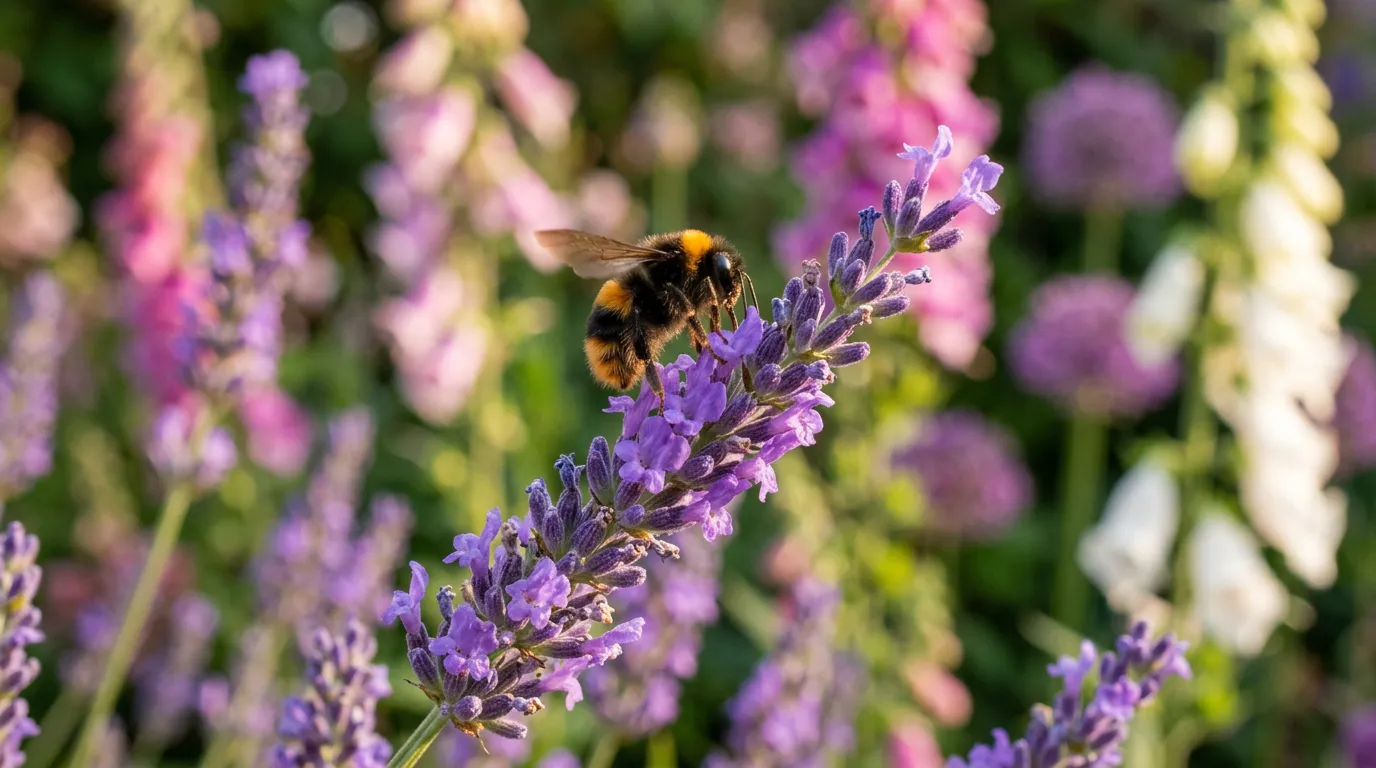
How to Attract Birds to Your Garden
Practical guide to attracting wild birds to UK gardens. Covers feeders, food types, bird baths, nest boxes, planting for birds, and seasonal feeding advice.
Key takeaways
- UK gardens support over 60 bird species with the right food, water, and shelter
- Sunflower hearts are eaten by 90% of garden bird species and leave no mess
- A feeding station with two feeders and water costs under thirty pounds to set up
- Nest boxes put up by February attract breeding pairs from March onward
- Berry-bearing shrubs and seed-producing plants provide natural food year-round
- The RSPB records 7-10 species per garden during the annual Big Garden Birdwatch
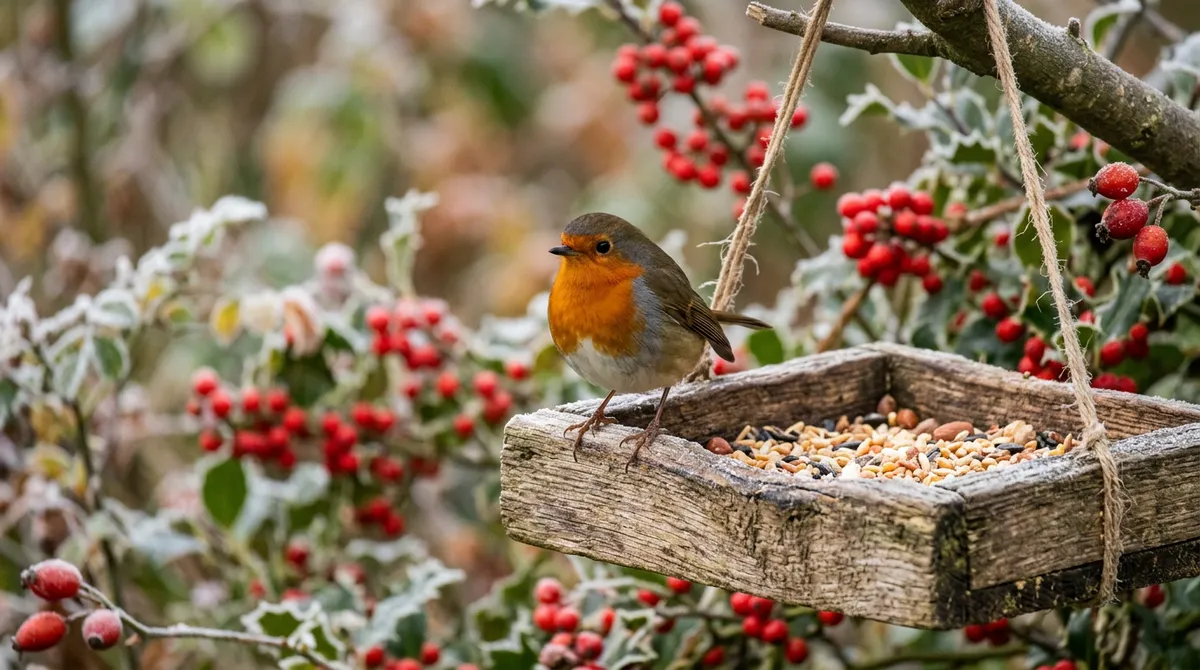
A garden with birds in it feels alive. The flash of a goldfinch on a feeder, a blackbird singing from the rooftop at dusk, a blue tit family exploring the hedge in spring. UK gardens collectively cover more area than all the nature reserves combined. What you plant, feed, and build in your garden directly affects bird populations. The BTO Garden BirdWatch survey tracks exactly which species are thriving and which need help.
The good news is that attracting birds is straightforward and cheap. A basic feeding station costs under thirty pounds. A nest box costs ten. The right shrubs and plants provide food and shelter for decades. This guide covers everything from choosing feeders to planting for birds year-round. See our wildlife section for more on creating a wildlife-friendly garden, including our guide to bee-friendly plants.
Setting up a feeding station
A feeding station is the fastest way to attract birds. Most gardens see new visitors within 48 hours of putting out food.
Types of feeder
- Tube feeders - clear plastic or metal tubes with perches. Best for seeds and sunflower hearts. Attracts tits, finches, and sparrows. Choose metal mesh tubes over plastic. They last longer and are easier to clean.
- Fat ball feeders - wire cages holding suet balls. Essential for winter feeding. Attracts tits, starlings, woodpeckers, and nuthatches.
- Ground feeders - low trays or mesh platforms at ground level. Attracts robins, blackbirds, dunnocks, and thrushes that will not use hanging feeders.
- Nyjer seed feeders - thin tubes with tiny ports. Specifically for goldfinches and siskins. Nyjer seed is too small for other feeders.
- Window feeders - suction-cup mounted. Perfect for small gardens and flats. Gives close-up views. Attracts tits and robins.
Where to position feeders
Place feeders 2m from cover (a hedge, shrub, or tree). This gives birds escape routes from sparrowhawks and cats while maintaining clear sight lines. Avoid placing directly against dense cover where cats can ambush.
Hang feeders at 1.5-2m height. Too low and ground predators reach them. Too high and you cannot refill easily.
Space different feeder types apart. Some species (robins, dunnocks) are ground feeders. Others (tits, finches) prefer height. Providing both levels attracts the widest range.
Gardener’s tip: Move feeders 1-2 metres every few weeks. This prevents droppings building up in one spot, which spreads disease. It also reduces ground contamination below the feeders.
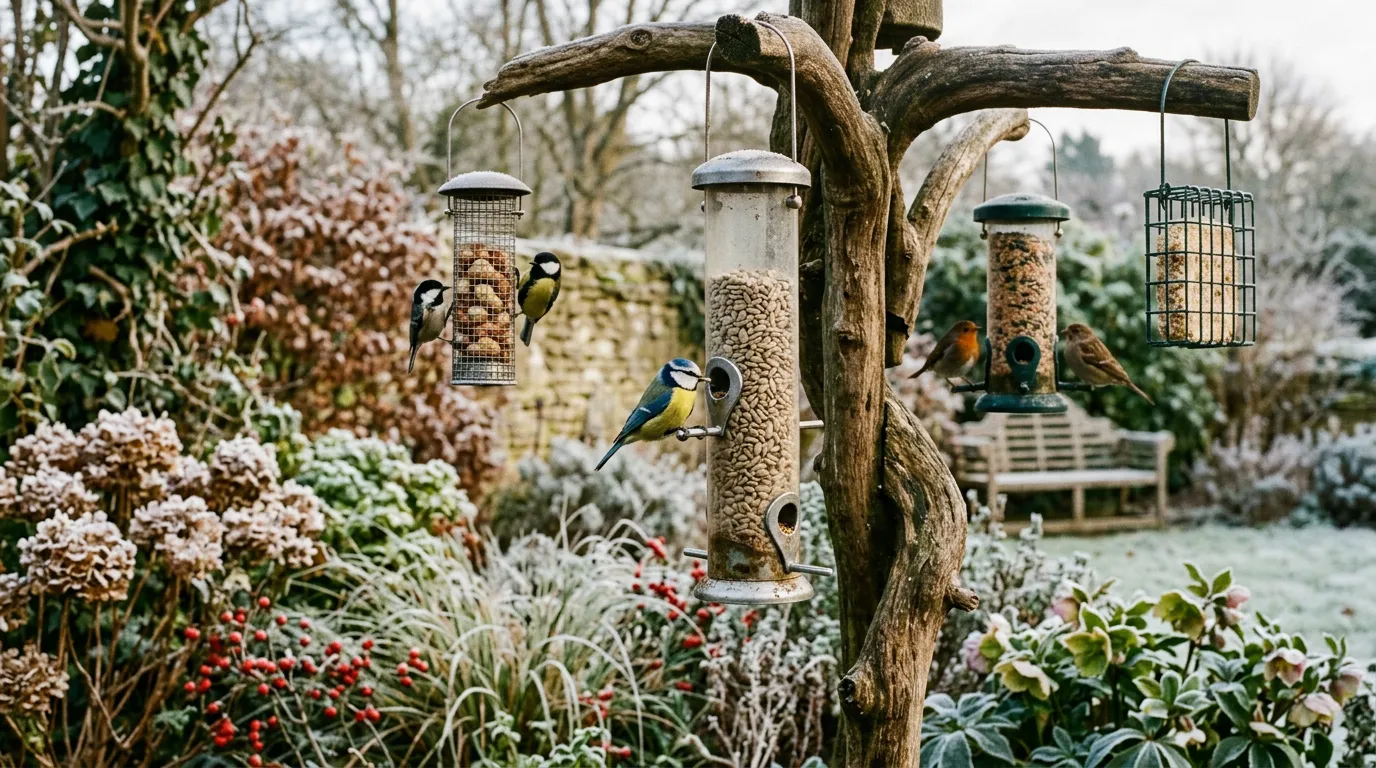 A feeding station with tube feeder, fat ball cage, and ground tray. Multiple feeder types attract the widest range of species.
Best bird foods
Sunflower hearts
Sunflower hearts (shelled sunflower seeds) are the single best food for UK garden birds. Over 90% of species eat them. They are high in fat and protein. Unlike whole sunflower seeds, they leave no husks or mess beneath the feeder. Buy in 12.5kg bags for the best value.
Fat balls and suet
Fat balls provide essential energy in winter when birds need 10-20% of their body weight in food each day to survive cold nights. Buy fat balls without netting. Netting traps birds’ feet. Place them in wire cages instead.
Suet blocks in feeders last longer than fat balls and attract woodpeckers, nuthatches, and treecreepers as well as the usual visitors.
Mealworms
Dried mealworms attract insect-eating species: robins, wrens, dunnocks, and blackbirds. Soak in warm water for 30 minutes before offering. Soaked mealworms are safer for fledglings than dry ones, which can cause dehydration.
Other foods
- Nyjer seed - tiny black seeds for goldfinches and siskins. Needs a specialist feeder with small ports.
- Peanuts - high energy. Use a wire mesh feeder so birds take small pieces. Never put out whole peanuts in spring. Fledglings choke on them.
- Mixed seed - avoid cheap mixes heavy on wheat and barley. Birds flick these out looking for sunflower seeds, creating waste. Buy quality mixes with sunflower hearts, millet, and flaked maize.
- Kitchen scraps - mild grated cheese, cooked rice, cake crumbs, and fruit (apples, pears) are all fine. Avoid salted, processed, or mouldy food.
| Food | Species attracted | Season | Cost per kg |
|---|---|---|---|
| Sunflower hearts | Almost all species | Year-round | Two to three pounds |
| Fat balls | Tits, starlings, woodpeckers | Autumn-spring | One to two pounds |
| Mealworms | Robins, wrens, blackbirds | Year-round | Five to eight pounds |
| Nyjer seed | Goldfinches, siskins | Year-round | Three to four pounds |
| Peanuts | Tits, nuthatches, woodpeckers | Year-round (mesh feeder) | Two to three pounds |
Warning: Never put out milk, salted food, desiccated coconut, or cooked porridge oats. Milk causes digestive problems. Salt is toxic to birds. Desiccated coconut swells inside the stomach. Cooked oats set hard around the beak.
Water for birds
A bird bath is as important as food. Birds need water daily for drinking and bathing. Bathing keeps feathers in good condition for insulation and flight. In winter, when natural water freezes, a bird bath can be the only available water source.
Choosing a bird bath
- Ground-level dishes attract blackbirds, thrushes, and robins
- Pedestal baths are safer from cats and attract a wider range
- Depth: 2-8cm. Shallow at one end, deeper at the other. Birds bathe in the shallow end and drink from the deep end
- Material: stone, concrete, or ceramic. Avoid metal in summer (heats up) and smooth plastic (slippery)
Maintenance
- Refill every 2-3 days
- Scrub weekly with a stiff brush (no chemicals)
- In winter, break ice daily or float a tennis ball overnight (the ball’s movement prevents freezing)
- Place in an open position with clear sight lines. Birds are vulnerable while bathing.
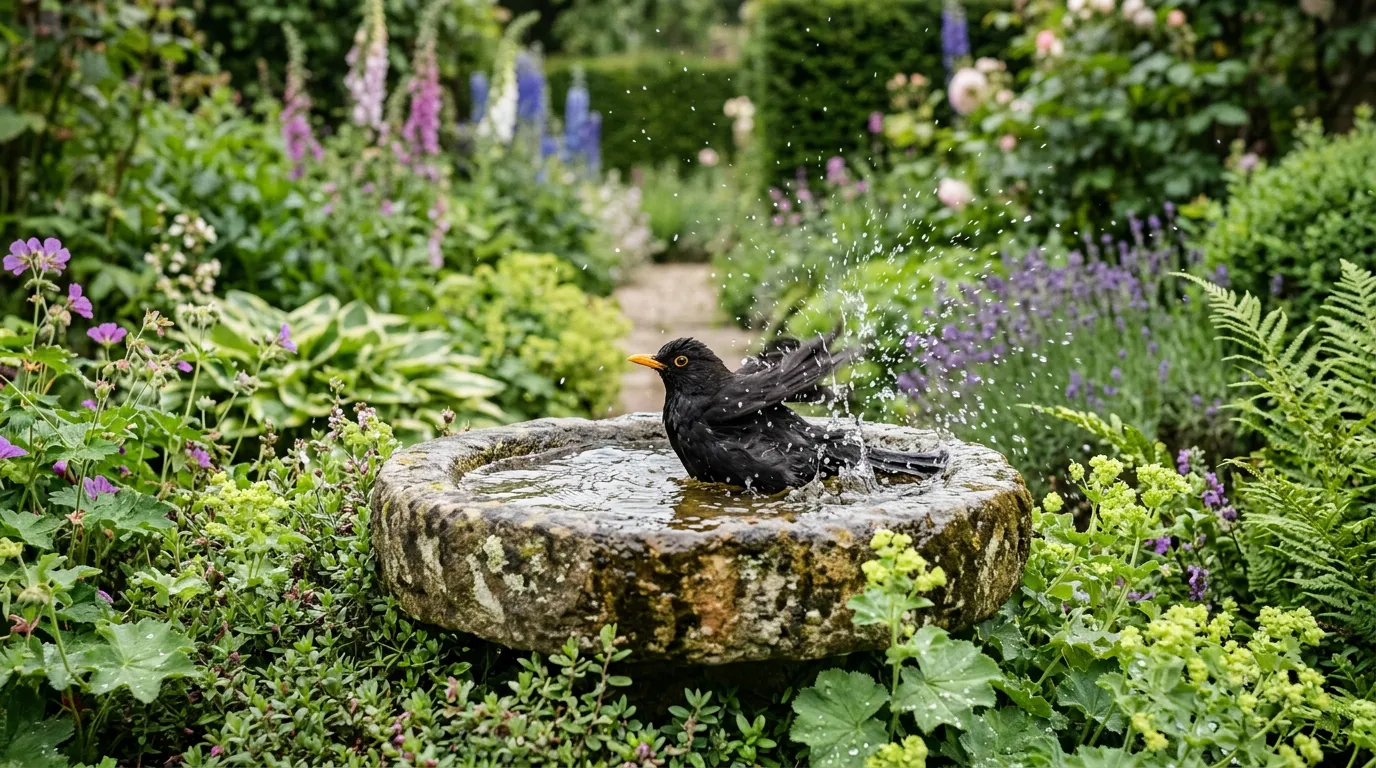 A stone bird bath at ground level. Blackbirds and thrushes prefer bathing at ground level rather than raised pedestals.
Nest boxes
Nest boxes boost breeding success by providing safe, weatherproof nesting sites. Many UK gardens lack natural cavities in mature trees, making boxes essential.
Types of nest box
- Hole-fronted (25mm hole) - blue tits, coal tits, marsh tits
- Hole-fronted (28mm hole) - great tits, tree sparrows, nuthatches
- Hole-fronted (32mm hole) - house sparrows, starlings
- Open-fronted - robins, wrens, pied wagtails, spotted flycatchers
Positioning
- Face the entrance north or east to avoid direct sun and prevailing rain
- Mount 2-3 metres above ground
- Tilt the box very slightly forward so rain runs off, not in
- Place away from feeders. Nesting birds need peace.
- One box per species territory. Blue tits and great tits defend their nesting area, so space boxes 15-20 metres apart for the same species.
Timing
Put boxes up by February at the latest. Birds survey potential sites from mid-January. Earlier is better. Boxes mounted in autumn weather naturally and look more established by spring. Clean old nests out in October after the breeding season ends.
Making or buying
A basic wooden nest box costs five to fifteen pounds. Make your own from untreated timber (15mm thick minimum). Do not use treated or painted wood. Drill a small drainage hole in the base. Do not add a perch. Perches help predators reach inside.
Planting for birds
The right plants provide food, shelter, and nesting sites permanently. A well-planted garden feeds birds naturally even without feeders. A compost heap in a quiet corner also provides insect food for robins and wrens year-round.
Berry-bearing plants
Berry plants feed thrushes, blackbirds, waxwings, and fieldfares through autumn and winter:
- Cotoneaster - red berries from October. Semi-evergreen. One of the best bird-attracting shrubs. Grows on any wall, even north-facing.
- Pyracantha (firethorn) - masses of orange or red berries. Thorny growth deters cats. Excellent nesting site. Grows against walls and fences.
- Holly - red berries on female plants (needs a male nearby for pollination). Evergreen shelter. Dense, prickly growth protects roosting birds.
- Rowan (mountain ash) - orange-red berry clusters from August. One of the first berries to ripen, feeding birds before other sources are ready.
- Hawthorn - native hedging plant. Red haws from September. Excellent nesting habitat.
- Crab apple - small fruit persists into winter. Attracts blackbirds, fieldfares, and redwings.
Seed-bearing plants
Leave seed heads standing through autumn and winter:
- Sunflowers - goldfinches and greenfinches feed on the seed heads
- Teasel - goldfinches feed on the spiny seed heads through winter
- Lavender - seeds attract finches after flowering
- Ornamental grasses - seed heads provide winter food for small birds
Shelter and nesting
Dense, thorny, or evergreen planting provides safe roosting and nesting sites. The Wildlife Trusts have region-specific advice on creating bird-friendly habitats across the UK.
- Native hedging - mixed hawthorn, blackthorn, and field maple. The single best habitat improvement for garden birds. A native hedge also makes a beautiful backdrop for a cottage garden planting plan.
- Ivy - provides berries, shelter, nesting sites, and insect food. Leave some ivy on walls and fences for birds. It also thrives in shady areas where other plants struggle.
- Climbing roses and honeysuckle - dense twiggy growth supports nests. Honeysuckle berries feed birds in autumn.
| Plant | Food type | Season | Shelter value | Best birds |
|---|---|---|---|---|
| Cotoneaster | Berries | Oct-Dec | Good | Blackbirds, thrushes |
| Pyracantha | Berries | Oct-Feb | Excellent (thorny) | Blackbirds, waxwings |
| Holly | Berries | Nov-Feb | Excellent | Thrushes, fieldfares |
| Sunflower | Seeds | Aug-Oct | None | Goldfinches, greenfinches |
| Hawthorn hedge | Haws + nesting | Sep-Dec + spring | Excellent | Wide range |
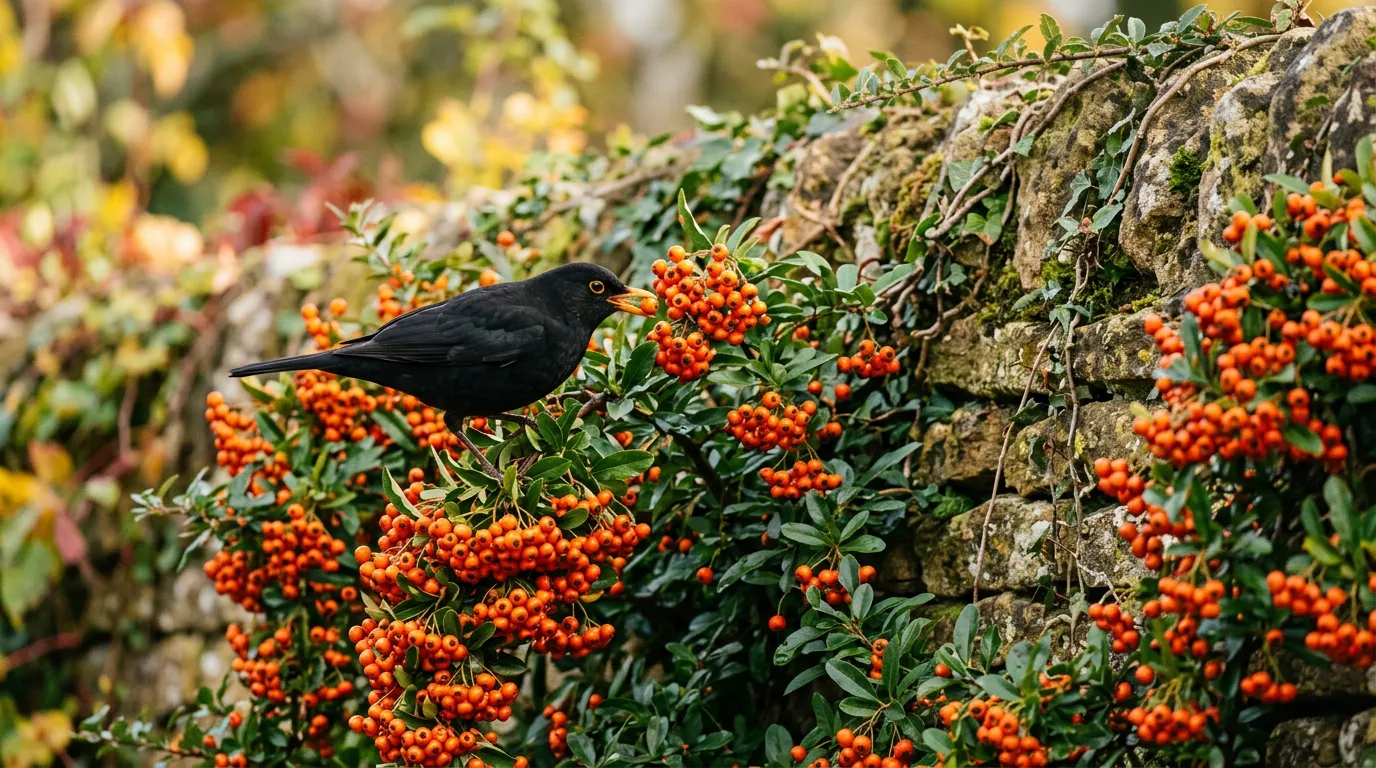 Pyracantha berries provide autumn and winter food. The thorny growth also offers safe nesting sites in spring.
Dealing with predators
Cats
Domestic cats kill an estimated 27 million birds per year in the UK. Protect garden birds by:
- Placing feeders 2m from cover (cats cannot spring that distance)
- Using baffles on feeder poles (cone-shaped guards that stop cats climbing)
- Keeping bird baths in open areas with clear sight lines
- If you own a cat, fit a bell or a CatBib collar cover
Sparrowhawks
Sparrowhawks are natural predators. They hunt garden birds, especially in winter. This is normal and healthy. Do not try to deter them. If a sparrowhawk visits regularly, move feeders closer to dense cover so small birds can dive to safety.
Squirrels
Grey squirrels empty feeders, break cheap plastic feeders, and deter birds. Use squirrel-proof feeders with weight-activated perches that close when a squirrel lands. Cage-style feeders with metal mesh keep squirrels out while allowing small birds through.
Seasonal bird feeding guide
| Season | Food focus | Special notes |
|---|---|---|
| Spring (Mar-May) | Mealworms, sunflower hearts, seed mix | No whole peanuts (choking risk for fledglings). Reduce fat balls. |
| Summer (Jun-Aug) | Sunflower hearts, mealworms, water | Fresh water essential in heat. Soaked mealworms for fledglings. |
| Autumn (Sep-Nov) | Seed mix, fat balls, berry plants | Birds build fat reserves. Increase food quantity. |
| Winter (Dec-Feb) | Fat balls, suet blocks, sunflower hearts | Feed daily. Break ice on water. Essential survival period. |
Month-by-month bird garden calendar
| Month | Task |
|---|---|
| January | RSPB Big Garden Birdwatch. Feed daily. Keep water ice-free. |
| February | Put up nest boxes. Continue winter feeding. |
| March | Reduce fat-based food. Increase mealworms for nesting birds. See what to plant in March for seed-bearing flowers to sow now. |
| April | Stop cleaning nest boxes (birds nesting). Watch for first fledglings. |
| May | Offer soaked mealworms for parent birds feeding young. |
| June | Keep water topped up in dry weather. Fledglings visiting feeders. |
| July | Maintain feeding. Adult birds moulting and need extra nutrition. |
| August | Leave seed heads on garden plants. |
| September | Increase food as winter migrants arrive (fieldfares, redwings). |
| October | Clean out nest boxes after breeding season. Hang fat balls. |
| November | Full winter feeding routine. Suet and fat balls daily. |
| December | Check feeders are stocked. Break ice daily. Birds most vulnerable. |
Common mistakes
Feeding irregularly
Birds rely on consistent food sources, especially in winter. Starting and stopping feeding forces birds to find new territory. Once you start winter feeding, maintain it daily until spring. If going away, ask a neighbour to fill feeders.
Ignoring hygiene
Dirty feeders spread diseases like trichomonosis, which has decimated greenfinch populations. Clean feeders monthly with a mild disinfectant solution. Rinse thoroughly. Move feeders regularly to prevent droppings building up. If you see sick birds (fluffed up, lethargic), remove feeders for 2 weeks to break the disease cycle.
Placing feeders near glass
Window strikes kill thousands of birds annually. If feeders are near windows, stick bird silhouettes or UV-reflective dots on the glass. Alternatively, place feeders either within 50cm of the window (birds cannot build up fatal speed) or more than 3m away.
Only feeding in winter
Birds benefit from feeding year-round. Spring and summer feeding supports breeding adults working hard to raise chicks. Mealworms and sunflower hearts are particularly valuable during the nesting season.
Cutting hedges in nesting season
Never cut hedges between March and August. It is an offence under the Wildlife and Countryside Act 1981 to disturb nesting birds. Check for active nests before any hedge work, even outside this period.
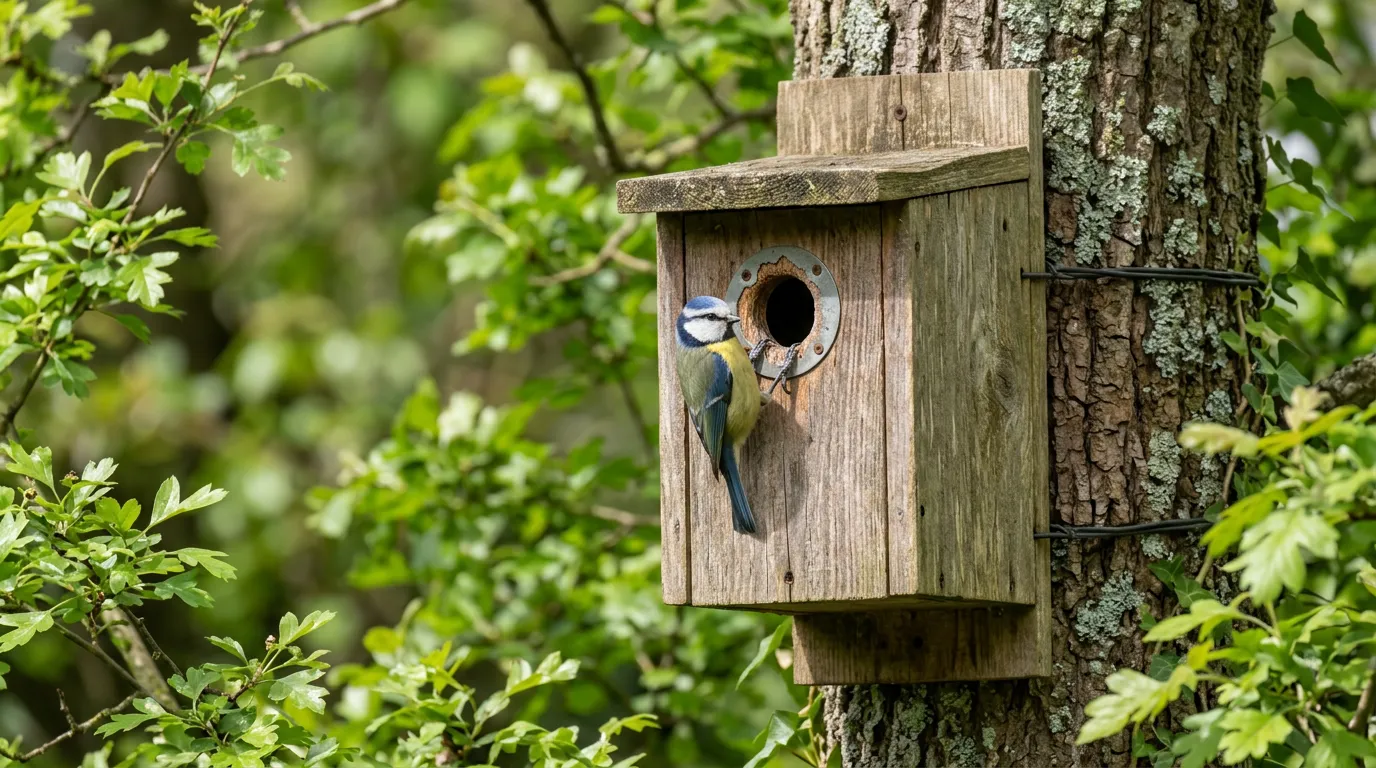 A 25mm hole nest box attracts blue tits and coal tits. Mount 2-3m high, facing north or east, by February.
Frequently asked questions
What food attracts the most birds UK?
Sunflower hearts attract the broadest range of species. Over 90% of UK garden birds eat them, including tits, finches, robins, blackbirds, and sparrows. They leave no husks or mess. Supplement with fat balls for winter energy and mealworms for insect-eating species like robins and wrens.
Should I feed birds all year round?
Yes, year-round feeding benefits birds in every season. Winter feeding is critical for survival. Spring and summer feeding supports breeding adults and growing fledglings. Adjust the food mix seasonally: more fat in winter, more mealworms in spring. Avoid whole peanuts during nesting season.
What is the best bird feeder for a small garden?
A window-mounted suction feeder works in the smallest spaces. For small gardens, a pole-mounted feeding station holds multiple feeders in minimal ground area. Choose squirrel-proof feeders with metal construction if grey squirrels visit. Position 2 metres from the nearest shrub for cat safety.
How do I attract robins to my garden?
Robins prefer feeding alone at ground level or on low tables. Offer mealworms, grated cheese, and small seeds scattered on the ground or a low tray. They are territorial and avoid busy hanging feeders. Provide an open-fronted nest box mounted 1-2m high in a sheltered spot with climbing plants for cover.
Where should I put a bird bath?
Place in an open position where birds see approaching cats and sparrowhawks. Near but not directly under trees or shrubs, giving escape routes. Avoid placing beneath feeders where droppings contaminate the water. Provide 2-8cm depth with a rough surface for grip. Clean and refill every 2-3 days.
When should I put up nest boxes?
Put up nest boxes by February at the latest. Birds begin surveying potential nest sites from mid-January. Boxes mounted in autumn weather naturally and attract more interest in spring. Face the entrance north or east, mount 2-3 metres above ground. Clean out old nesting material in October.
What plants attract birds to gardens?
Berry-bearing shrubs like cotoneaster, pyracantha, holly, and rowan feed birds through autumn and winter. Sunflowers and teasels provide seeds. Dense hedging of hawthorn or privet offers shelter and nesting. Native trees support the insect populations that feed insectivorous birds year-round.
Lawrie has been gardening in the West Midlands for over 30 years. He grows his own veg using no-dig methods, keeps a wildlife-friendly garden, and writes practical advice based on real UK growing conditions.