Growing Tomatoes in the UK: A Beginner's Guide
Everything you need to grow tomatoes in a British garden. Covers sowing times, variety selection, feeding, watering, and common problems for UK conditions.
Last updated: 6 March 2026
Key takeaways
- Sow seeds indoors mid-February to mid-March at 18-21C for 7-14 day germination
- Greenhouse tomatoes produce 3-5kg per plant, outdoor bush types yield 2-3kg
- Feed twice weekly with high-potash fertiliser once the first truss sets fruit
- Blight is the biggest disease risk for outdoor UK tomatoes, peaking July to August
- Consistent watering prevents blossom end rot, the most common growing problem
- Choose UK-bred varieties like Gardener's Delight and Shirley for reliable crops
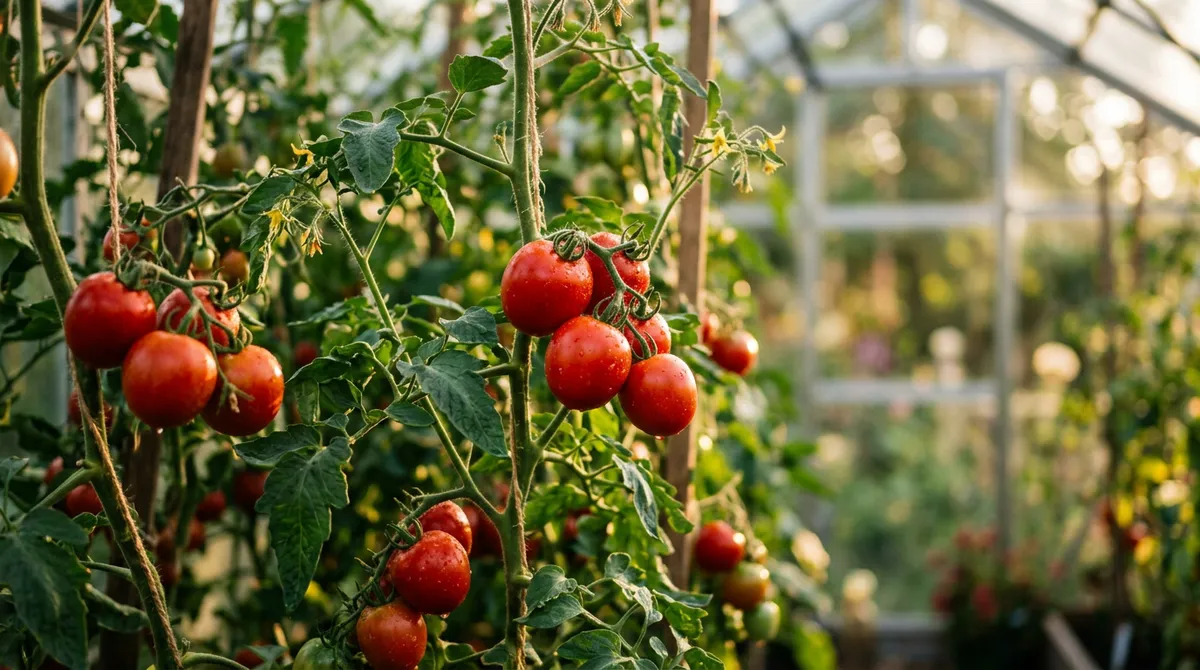
Tomatoes are the most popular crop grown by UK gardeners. Over 80% of allotment holders grow at least one variety. If you are new to growing food, see our guide to starting a vegetable garden. They thrive in greenhouses, polytunnels, and sheltered south-facing spots outdoors. With the right timing, variety selection, and feeding regime, even a complete beginner can harvest kilos of fruit from a single plant.
This guide covers everything from sowing your first seeds through to picking ripe fruit in September. It is based on UK growing conditions, with specific advice for greenhouse and outdoor growers. You can find more growing guides across our site.
When to sow tomato seeds in the UK
Sow tomato seeds indoors between mid-February and mid-March. See our full guide to what to plant in March for other crops to start at the same time. Use a heated propagator set to 18-21C. Seeds germinate in 7-14 days at this temperature. A sunny windowsill works if you don’t have a propagator, but germination is slower and less reliable below 18C.
Timing matters more than most beginners realise. Sow too early and you get leggy, weak seedlings with nowhere to go. Sow too late and the plants won’t have enough growing season to produce ripe fruit before temperatures drop in October.
In northern England and Scotland, aim for early March. The shorter growing season means starting too early creates problems. Southern growers can push to mid-February if they have a heated greenhouse.
Key dates for UK tomato growers:
| Stage | Timing |
|---|---|
| Sow seeds indoors | Mid-February to mid-March |
| Prick out seedlings | When first true leaves appear (2-3 weeks after sowing) |
| Pot on to 9cm pots | Late April |
| Plant out or move to final position | Late May (after last frost) |
| First fruit ripens | Late June to mid-July |
| Main harvest | July to September |
| Pick green fruit for indoor ripening | Late September |
Gardener’s tip: Fill your seed trays the night before sowing and let the compost warm to room temperature. Cold, wet compost slows germination by up to a week.
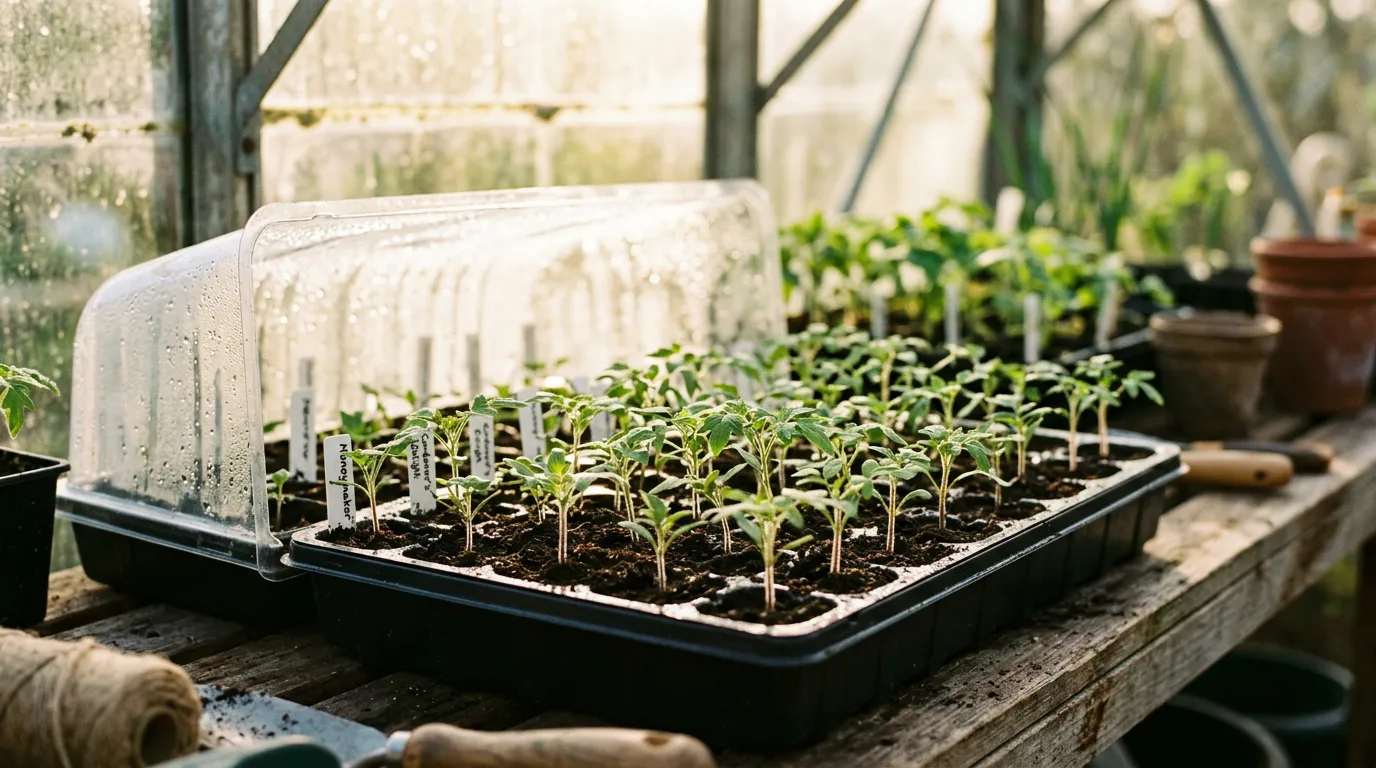 Tomato seedlings in a heated propagator, ready for pricking out once the first true leaves appear.
Choosing the right variety
Not all tomato varieties suit British conditions. The UK growing season runs from late May to September, roughly 16-18 weeks. Choose cultivars bred for cooler climates and shorter seasons. The RHS tomato growing guide has additional variety suggestions for British gardens.
There are two main plant types. Cordon (indeterminate) varieties grow as a single tall stem and need support, side-shooting, and pinching out. Bush (determinate) varieties stay compact and need less attention, making them better for beginners growing outdoors.
Reliable outdoor varieties
- Gardener’s Delight - cherry tomato, heavy cropper, sweet flavour. The most widely grown outdoor variety in the UK. Produces trusses of 6-12 small fruits.
- Moneymaker - medium-sized, reliable in cool summers. An old British favourite introduced in the 1950s. Not the most flavourful, but consistent.
- Tumbling Tom - trailing cherry, ideal for hanging baskets and containers in small gardens. Bush type, no pinching out needed. Red and yellow forms available.
- Sungold - orange cherry, exceptionally sweet, vigorous grower. One of the best-tasting cherry tomatoes available. Cordon type.
- Red Alert - early ripening bush variety. Produces fruit within 50 days of planting out. Good for northern gardens with shorter seasons.
Best greenhouse varieties
- Shirley - medium-sized, disease resistant, consistent performer. Bred specifically for UK greenhouse conditions. The workhorse variety.
- Alicante - classic flavour, does well under glass. Medium-sized fruit with good disease resistance.
- Big Boy - large beefsteak type, needs warmth to ripen fully. Each fruit weighs 200-400g. Best in heated greenhouses.
- Sungold - also excellent under glass, where it produces even sweeter fruit than outdoors.
- Ferline - bred with blight resistance. A good choice if you keep your greenhouse doors open in summer, which increases blight exposure.
Variety comparison
| Variety | Type | Fruit size | Best for | Yield per plant |
|---|---|---|---|---|
| Gardener’s Delight | Cordon | Cherry (15g) | Outdoors / greenhouse | 3-4kg |
| Moneymaker | Cordon | Medium (75g) | Outdoors | 2-3kg |
| Tumbling Tom | Bush | Cherry (20g) | Containers / baskets | 2kg |
| Shirley | Cordon | Medium (80g) | Greenhouse | 4-5kg |
| Big Boy | Cordon | Beefsteak (300g) | Heated greenhouse | 3-4kg |
| Red Alert | Bush | Small (40g) | Short seasons / outdoors | 2-3kg |
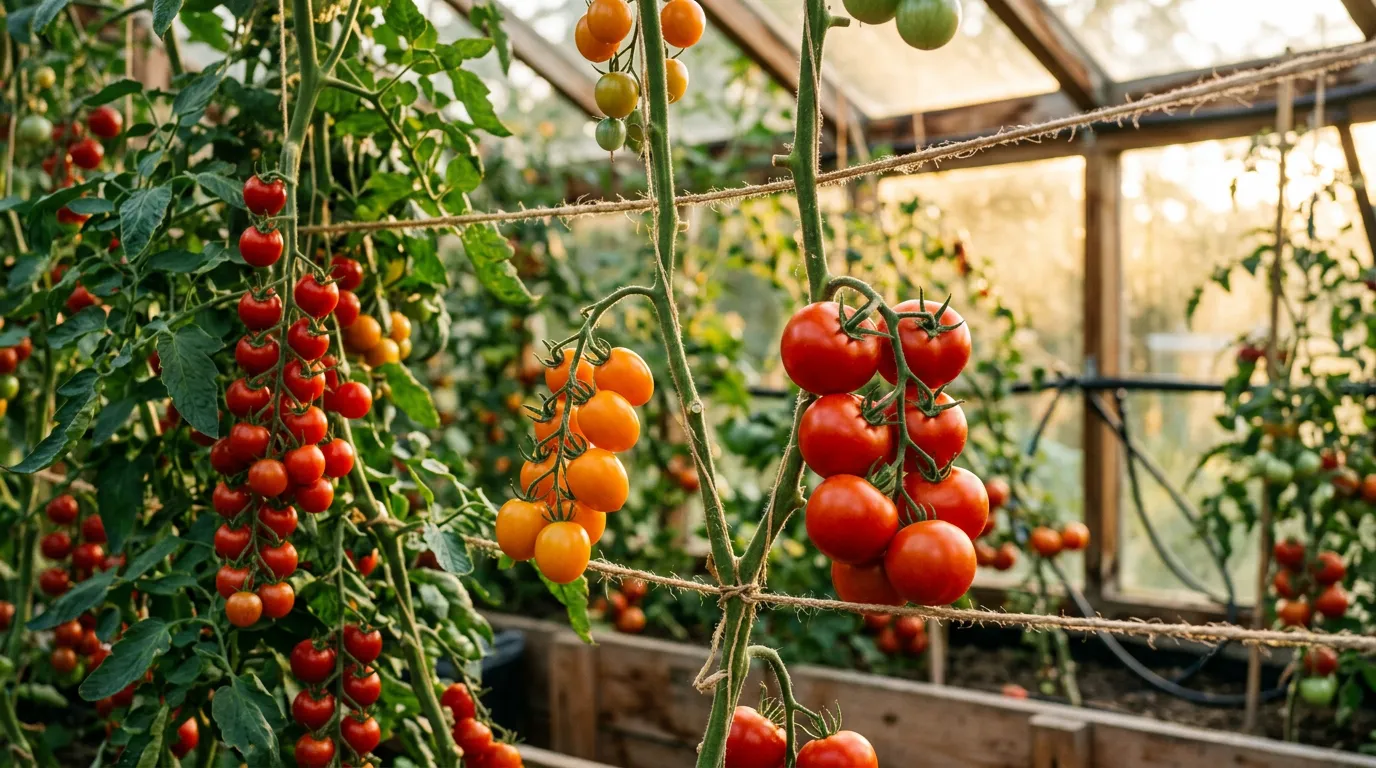 Cherry and medium-sized varieties ripening in a UK greenhouse. Mixing types gives a range of flavours and harvest sizes.
Sowing and potting on
Fill 7cm pots or module trays with seed compost. Sow two seeds per pot, 1cm deep. Water gently with a fine rose and place in a propagator at 18-21C.
Once seedlings emerge, move them to the brightest spot available. A south-facing windowsill works, but turn the pots daily to stop seedlings leaning toward the light. If you have grow lights, keep them 10-15cm above the seedlings for 14-16 hours per day.
Pricking out
When the first true leaves appear (the serrated ones, not the smooth seed leaves), prick out into individual 9cm pots. Hold seedlings by a leaf, never by the stem. Bury the stem up to the seed leaves. Tomato stems grow roots along their length when buried, creating a stronger root system.
Hardening off
Before planting out, harden off seedlings over 10-14 days. Place pots outside during the day and bring them in at night. Start with 2-3 hours of outdoor exposure and increase daily. Skip this step and the sudden temperature change will stunt growth for weeks.
Gardener’s tip: Wait until night temperatures stay consistently above 10C before planting tomatoes outdoors. In most of England, that means late May. In Scotland, early June.
Soil, compost, and feeding
Tomatoes are hungry plants. They need rich, well-drained soil with a pH between 6.0 and 6.8.
Growing medium options
In-ground planting: Dig in plenty of well-rotted manure or garden compost the autumn before planting. Add a handful of bonemeal to each planting hole for phosphorus, which supports root development.
Grow bags: The standard 40-litre grow bag supports two tomato plants (not three, despite what the packaging says). Cut large holes in the top and insert bottomless 15cm pots to increase the root volume. Replace grow bags annually as the compost loses structure.
Large pots: Use 10-litre pots minimum for cordon varieties, 5 litres for bush types. Raised beds also work well for tomatoes, with the warmer soil promoting earlier fruiting. Fill with multi-purpose compost mixed 50/50 with garden compost or perlite for drainage.
Feeding schedule
Do not feed tomato seedlings or young plants. They have enough nutrients in fresh compost. Over-feeding young plants produces lush leaf growth but delays fruiting.
Start feeding with a high-potash tomato feed (such as Tomorite or Chempak No.4) once the first truss of fruit has set. Feed twice weekly through the growing season. Follow the dilution rate on the bottle. More is not better.
| Growth stage | Feed | Frequency |
|---|---|---|
| Seedling to planting out | None | N/A |
| Planting out to first fruit set | None | N/A |
| First fruit set onwards | High-potash liquid feed | Twice weekly |
| Heavy cropping | High-potash liquid feed | Twice weekly (do not increase) |
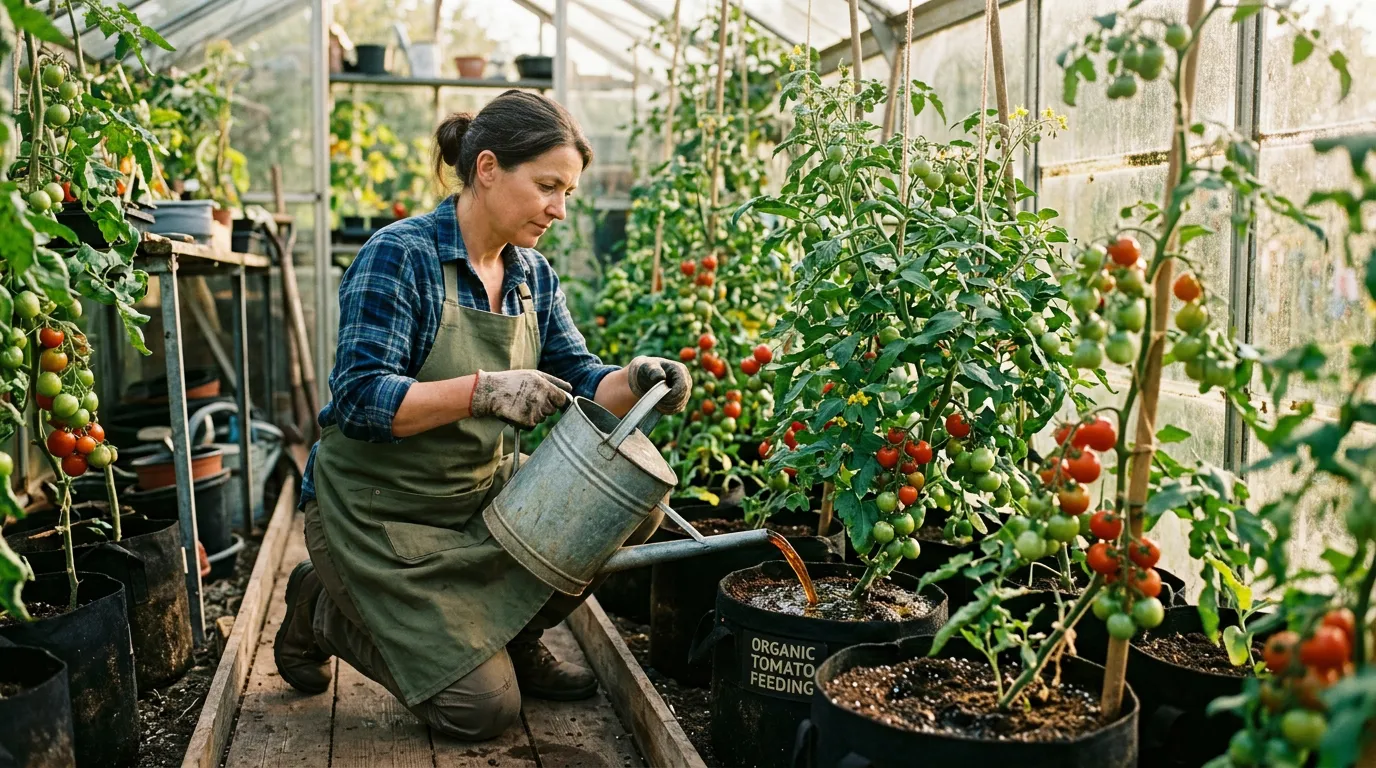 Feeding tomato plants at the base with liquid feed. Start when the first truss of fruit has set, not before.
Watering
Inconsistent watering causes blossom end rot, the most common tomato problem in UK gardens. The trick is regularity, not volume.
Water at the base of the plant, never over the leaves. Wet foliage encourages blight, which is the biggest disease risk for UK tomato growers. Early morning watering is best. It gives the plant moisture for the day and allows any splashed leaves to dry before evening.
Watering guidelines
- Hot weather (above 25C): water once daily, early morning
- Mild weather (15-25C): water every 2-3 days
- Greenhouse tomatoes: check daily. Greenhouses dry out faster than outdoor beds
- Container plants: may need watering twice daily in peak summer. Push your finger 3cm into the compost. If it’s dry, water.
Mulching around the base with straw, bark chips, or grass clippings retains moisture and reduces watering frequency. Apply a 5cm layer after the soil has warmed in late May.
Warning: Never let tomato plants wilt and then flood them with water. The sudden uptake causes fruit to split. Consistent, moderate watering produces better fruit than alternating drought and flood.
Training and pruning
Cordon varieties
Cordon tomatoes grow as a single main stem. They need:
- A support stake or string - push a 1.5m cane into the soil next to each plant at planting time. Tie the stem loosely with soft twine as it grows.
- Side-shooting - remove the shoots that grow in the angle between the main stem and leaf branches. Pinch them out when they are 2-3cm long. Check every few days in summer. Missed side-shoots grow quickly and divert energy from fruit production.
- Stopping - in early August, pinch out the growing tip of the main stem. This directs the plant’s remaining energy into ripening existing fruit rather than producing new trusses that won’t ripen before autumn.
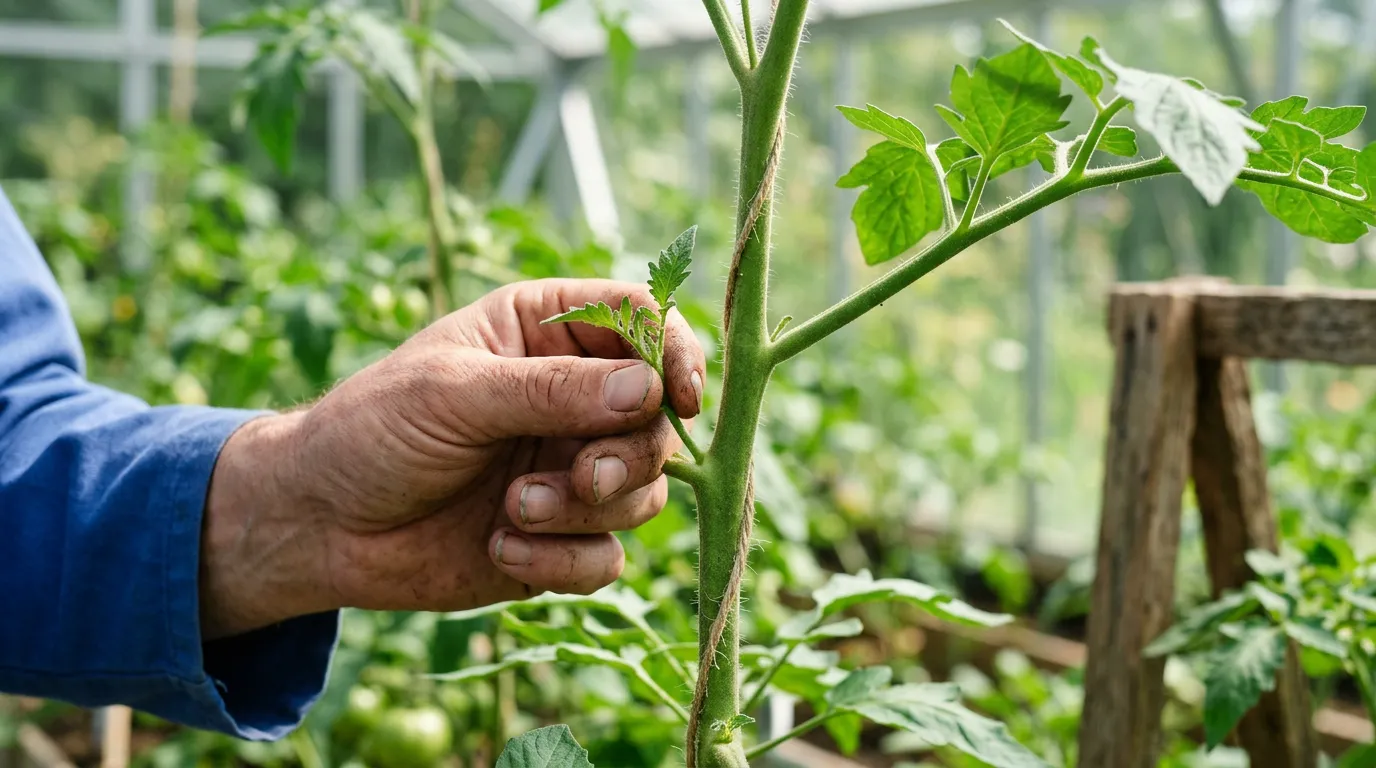 Pinching out a side shoot. Remove these when they are 2-3cm long to direct energy into fruit production.
Bush varieties
Bush tomatoes need no pruning, staking, or side-shooting. They grow outward as a sprawling mound. Place straw or a grow bag under the plant to keep fruit off the soil.
Common problems
Blight
Potato blight (Phytophthora infestans) affects tomatoes and potatoes alike. It spreads in warm, humid conditions, typically July and August in the UK. Outdoor tomatoes are most at risk. The disease shows as brown patches on leaves and stems, followed by fruit rot. The RHS blight identification guide has detailed photos to help you spot the symptoms early.
Prevention: grow under cover where possible. Space plants 60cm apart for airflow. Remove lower leaves as the plant grows. Water at the base, never over foliage. If you see blight, remove and bin affected material immediately. Do not compost it.
Blight-resistant varieties like Ferline, Crimson Crush, and Mountain Magic offer some protection but are not immune.
Blossom end rot
A dark, sunken patch on the bottom of the fruit. It looks like disease but is actually a calcium uptake problem caused by irregular watering. The calcium is usually present in the soil. The plant just cannot absorb it when water supply is inconsistent.
Prevention: water consistently. Mulch around the base to retain moisture. Do not over-feed with nitrogen fertilisers, which compete with calcium uptake.
Greenback
The top of the fruit stays green and hard while the rest ripens. More common in older varieties and hot greenhouse conditions above 30C.
Prevention: maintain good ventilation. Open greenhouse doors and vents on warm days. Shade the greenhouse with wash or netting if temperatures regularly exceed 30C.
Leaf curl
Leaves rolling inward on hot days is normal and not a sign of disease. The plant reduces its leaf surface area to conserve water. If leaves stay curled in cooler conditions, check for aphid infestation on the undersides.
Whitefly
A common greenhouse pest. Small white insects cluster on leaf undersides and fly up when disturbed. They weaken plants and excrete sticky honeydew.
Control: hang yellow sticky traps above the plants. Introduce the parasitic wasp Encarsia formosa as biological control. Avoid chemical sprays, which kill the bees and pollinators that help fruit set.
Month-by-month tomato calendar
| Month | Task |
|---|---|
| January | Order seeds from catalogues. Clean pots and seed trays. |
| February | Sow seeds indoors in heated propagator at 18-21C (southern growers). |
| March | Sow seeds (northern growers). Prick out February sowings. |
| April | Pot on into 9cm pots. Keep in bright, frost-free conditions. |
| May | Harden off. Plant in greenhouse mid-May. Outdoors late May after last frost. |
| June | Tie in cordon stems. Remove side-shoots weekly. Begin watering regularly. |
| July | Start feeding when first truss sets. Watch for blight in humid weather. |
| August | Stop cordon plants (pinch out growing tip). Continue feeding and watering. |
| September | Harvest ripe fruit. Pick green tomatoes for indoor ripening. |
| October | Clear spent plants. Compost healthy material. Clean greenhouse glass. |
Harvesting and storing
Pick tomatoes when they are fully coloured and come away from the truss with a gentle twist. They should feel slightly soft but not squishy. If a tomato doesn’t detach easily, it is not ready.
A single cordon tomato plant in a UK greenhouse produces 3-5kg of fruit in an average season. Bush varieties grown outdoors yield 2-3kg per plant. Feeding, watering, and variety choice all affect the final total.
Ripening green tomatoes
In September, when temperatures drop, pick remaining green fruit and ripen indoors. Place them in a fruit bowl with a ripe banana. The banana releases ethylene gas, which accelerates ripening. Alternatively, wrap individual fruits in newspaper and store in a cool room (15-18C). Check every few days and remove any that show rot.
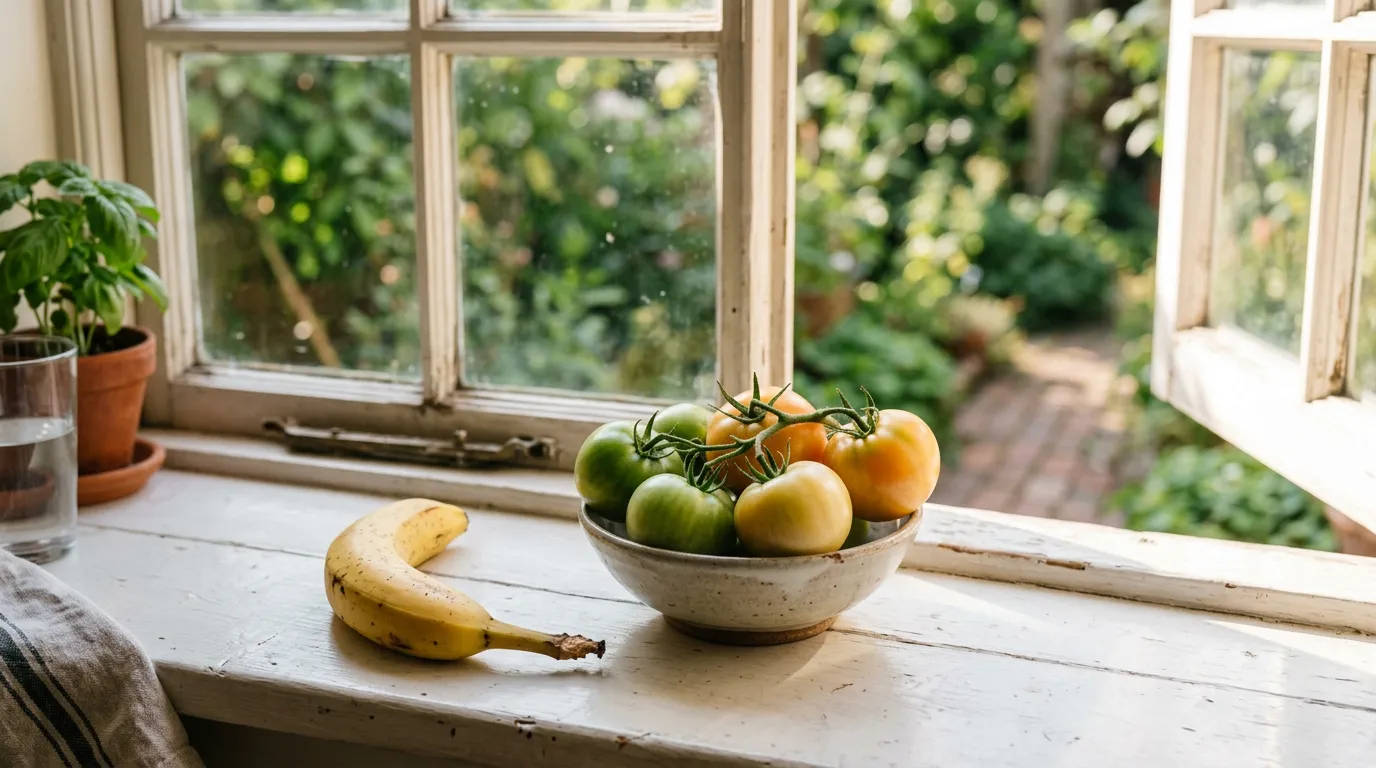 Green tomatoes ripening indoors on a windowsill with a banana. The ethylene gas from the banana speeds up the process.
Never store tomatoes in the fridge. Temperatures below 12C destroy the flavour compounds. Keep them at room temperature and eat within a few days of ripening.
Gardener’s tip: Green tomatoes that are fully sized but still firm will ripen indoors within 2-3 weeks. Tiny green fruit that hasn’t reached full size will not ripen and should be composted, or used in green tomato chutney.
Frequently asked questions
When should I sow tomato seeds in the UK?
Sow indoors between mid-February and mid-March. Use a heated propagator set to 18-21C for the fastest germination, which takes 7-14 days. In northern England and Scotland, early March is the best time. Starting too early produces leggy seedlings that struggle when planted out.
Can I grow tomatoes outside in the UK?
Yes, bush varieties grow well outdoors in sheltered spots. Choose varieties bred for UK conditions such as Gardener’s Delight, Tumbling Tom, or Moneymaker. They need a south-facing position sheltered from wind. Outdoor tomatoes produce less fruit than greenhouse-grown plants but still yield 2-3kg per plant.
How often should I water tomato plants?
Water once daily in hot weather, every 2-3 days in cooler periods. Always water at the base of the plant, never over the leaves. Inconsistent watering causes blossom end rot, the most common tomato problem. Container-grown plants may need twice-daily watering in peak summer.
What is the best tomato feed to use?
A high-potash liquid feed like Tomorite works well. Start feeding when the first truss of fruit has set, not before. Apply twice weekly at the dilution rate on the bottle. Do not increase the concentration or frequency. Over-feeding produces leaf growth at the expense of fruit.
How do I prevent tomato blight?
Grow under cover where possible to reduce blight risk. Space plants 60cm apart for good airflow, remove lower leaves regularly, and keep foliage dry when watering. Blight spreads fastest in warm, humid conditions during July and August. Blight-resistant varieties like Ferline and Crimson Crush offer additional protection.
How many tomatoes will one plant produce?
A cordon plant in a greenhouse produces 3-5kg of fruit per season. Outdoor bush types yield 2-3kg per plant in an average UK summer. Yield depends on variety, feeding, watering, and weather. A well-tended Shirley plant in a heated greenhouse can exceed 5kg.
Lawrie has been gardening in the West Midlands for over 30 years. He grows his own veg using no-dig methods, keeps a wildlife-friendly garden, and writes practical advice based on real UK growing conditions.