Raised Bed Gardening for Beginners
How to build and plant a raised bed garden in the UK. Covers materials, sizes, soil mix, what to grow, crop rotation, and year-round maintenance for beginners.
Key takeaways
- Raised beds warm 2-3 weeks earlier than ground soil, extending UK growing seasons
- Standard size is 1.2m wide by 2.4m long by 30cm deep, reachable from both sides
- Fill with 50% topsoil and 50% garden compost for the ideal growing medium
- A single bed produces 20-30kg of vegetables per season for two people
- Timber, brick, and galvanised steel are the most durable UK raised bed materials
- Rotate crops across beds on a 4-year cycle to prevent soil-borne disease
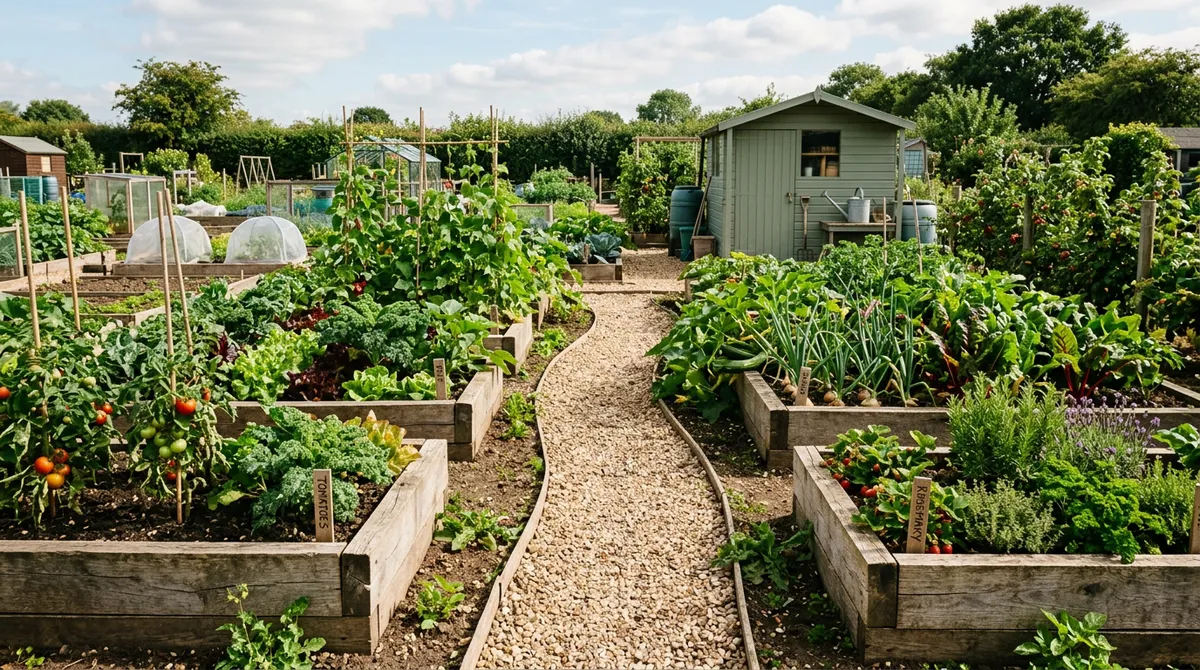
Raised beds solve the three biggest problems UK gardeners face: heavy clay soil, poor drainage, and a short growing season. If clay is your main challenge, also see our guide on how to improve clay soil. The RHS raised bed guide covers the fundamentals well. By lifting the growing surface 30cm above ground level, you control the soil quality, improve drainage, and gain 2-3 weeks of warmth at each end of the season. The soil in a raised bed reaches 7C while surrounding ground is still at 4-5C.
You do not need a large garden. Even a small garden has room. A single bed measuring 1.2m by 2.4m produces 20-30kg of vegetables per season. Two beds supply enough salad, herbs, and vegetables for a family through summer. They work on patios, lawns, and even over concrete. This guide covers everything from building your first bed to harvesting your first crop. For more growing advice, see our growing guides.
Choosing the right size
The most important measurement is width. You must be able to reach the centre from either side without stepping on the soil. Compacting the soil defeats the purpose of a raised bed.
Standard dimensions
| Dimension | Recommended | Why |
|---|---|---|
| Width | 1.2m | Reachable from both sides |
| Width (against wall) | 60cm | Reachable from one side only |
| Length | 1.8-2.4m | Practical for most gardens |
| Height | 30cm | Suits most vegetables |
| Height (deep root crops) | 45cm | Carrots, parsnips, potatoes |
| Path width between beds | 45-60cm | Wheelbarrow access |
A 1.2m x 2.4m bed has 2.88 square metres of growing space. That is enough for 12 tomato plants, or 48 lettuce heads, or a mixed planting of salad, herbs, and climbing beans.
How many beds?
Start with one or two beds in your first year. Our guide to starting a vegetable garden covers the best beginner crops to try. Learn what grows well in your garden before expanding. Most families find 3-4 beds provide a good year-round supply. Allotment-style production typically needs 6-8 beds.
Gardener’s tip: Orient beds north-south so both sides receive equal sunlight through the day. Tall crops like climbing beans go on the north side to avoid shading lower plants.
Materials for raised beds
Timber
Softwood timber is the most popular choice for UK raised beds. It is affordable, easy to cut, and creates a warm, natural look.
- Untreated larch - naturally rot-resistant, lasts 10-15 years. Silver-grey weathered appearance. The premium choice.
- Douglas fir - similar durability to larch, slightly cheaper. Weathers to a silver-brown.
- Pressure-treated softwood - tanalised pine. Lasts 15-20 years. Modern treatments are safe for vegetable growing. The most cost-effective option.
- Scaffold boards - cheap and widely available. Last 5-8 years. Good for temporary or budget builds.
Avoid: railway sleepers (may contain creosote, a carcinogen), pallet wood (unknown chemical treatments), and untreated pine (rots in 2-3 years).
Use 150mm x 50mm (6” x 2”) boards for a 30cm bed (two boards high). Fix corners with 50mm x 50mm posts screwed into each board. Pre-drill to prevent splitting.
Other materials
- Brick or block - permanent, long-lasting, attractive. Needs foundations below frost line. More expensive but lasts decades.
- Galvanised steel - modern look, lasts 20+ years. Corrugated panels bolt together quickly. Warms fast in spring (good), but can overheat in summer (water more).
- Stone - dry stone or mortared. Beautiful but expensive and labour-intensive. Suits cottage and traditional gardens.
- Recycled plastic boards - maintenance-free, lasts indefinitely. Looks less natural but never rots.
| Material | Cost per bed | Lifespan | Ease of build | Look |
|---|---|---|---|---|
| Pressure-treated timber | Thirty to sixty pounds | 15-20 years | Easy | Natural |
| Untreated larch | Fifty to ninety pounds | 10-15 years | Easy | Premium natural |
| Scaffold boards | Fifteen to thirty pounds | 5-8 years | Easy | Rustic |
| Galvanised steel | Sixty to one hundred and twenty pounds | 20+ years | Moderate | Modern |
| Brick | One hundred to two hundred pounds | 30+ years | Skilled | Traditional |
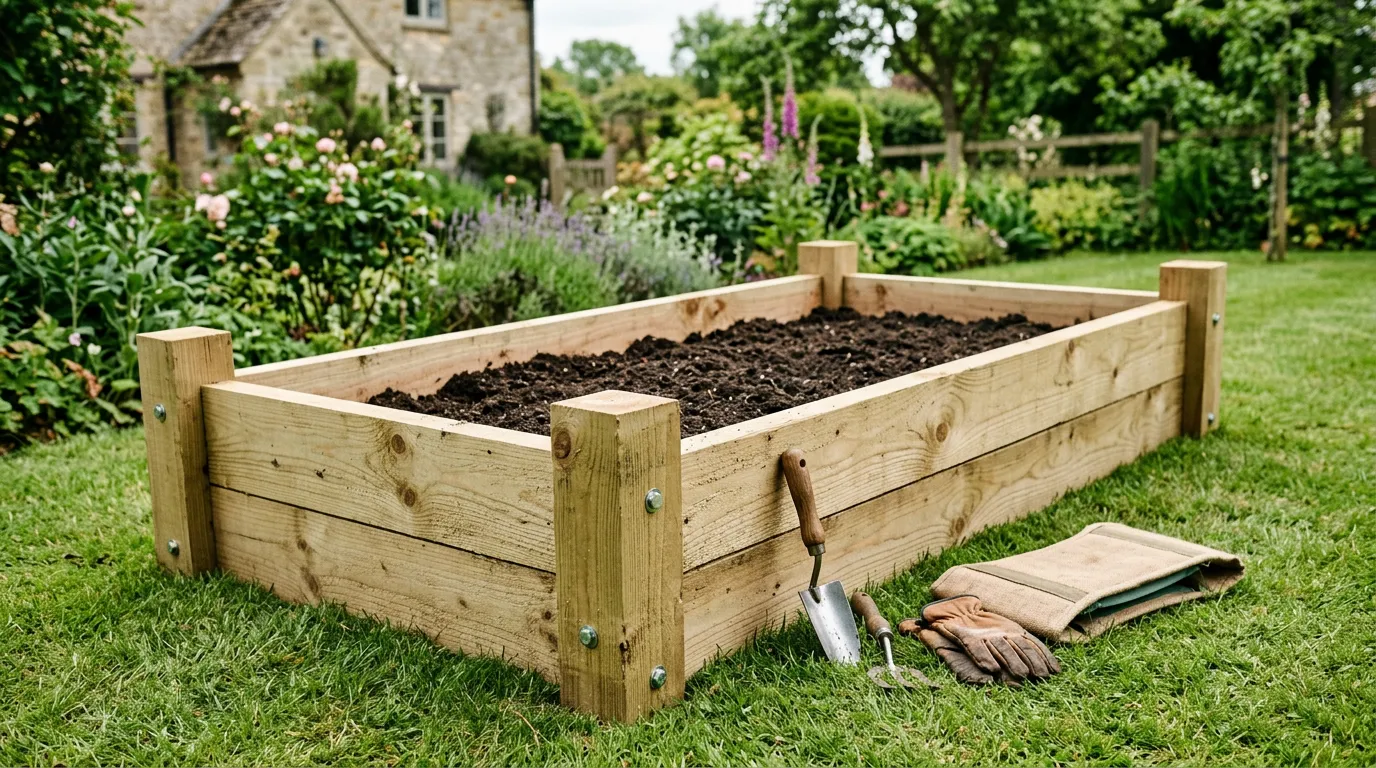 A newly built raised bed using pressure-treated timber. Two boards high gives 30cm depth, enough for most vegetables.
Filling your raised bed
The soil mix
The standard raised bed mix is 50% topsoil and 50% garden compost by volume. This provides:
- Enough nutrients for a full growing season
- Good water retention without waterlogging
- Open structure for healthy root growth
- The right balance of minerals and organic matter
For a 1.2m x 2.4m x 0.3m bed, you need approximately 860 litres of total fill (accounting for settling). Order 500 litres of topsoil and 400 litres of bagged compost, or use homemade garden compost.
Filling method
- If placing on grass, lay cardboard on the turf first. It smothers the grass and decomposes within 6 months.
- Mix topsoil and compost together before filling. Do not layer them. Even mixing produces the best growing medium.
- Fill to 5cm above the rim. The soil settles 10-15% in the first few months.
- Water thoroughly after filling and allow to settle for a week before planting.
Annual top-up
Raised bed soil level drops 3-5cm each year as organic matter breaks down. Top up every spring with a 5cm layer of fresh compost. This feeds the soil, maintains the level, and replenishes organic matter. After 3-4 years, a well-maintained raised bed develops rich, dark, productive soil.
Warning: Never use builder’s sand, subsoil, or pure compost to fill raised beds. Builder’s sand compacts. Subsoil has no nutrients. Pure compost holds too much water and shrinks excessively as it decomposes.
What to grow in raised beds
Raised beds suit almost every vegetable, herb, and cut flower. The warmer, better-drained soil extends your growing options beyond what open ground allows.
Best vegetables for raised beds
Quick crops (ready in 4-8 weeks):
- Lettuce and salad leaves
- Radishes
- Spring onions
- Baby spinach
- Rocket
Main crops (ready in 8-16 weeks):
- Tomatoes - cordon types with support canes
- Potatoes - excellent in 45cm deep beds, warm soil produces early crops
- Courgettes - one plant per bed corner, they spread
- Climbing French beans - grow up a wigwam of canes
- Beetroot
- Carrots (in 45cm deep beds)
- Chard
Herbs:
- Basil, coriander, parsley, chives, dill
- Dedicate one end of a bed to herbs. They are compact and productive.
Companion planting in raised beds
| Companions | Benefit |
|---|---|
| Tomatoes + basil | Basil repels whitefly |
| Carrots + spring onions | Onion scent deters carrot fly |
| Climbing beans + lettuce | Beans shade lettuce in hot weather |
| Courgettes + nasturtiums | Nasturtiums attract aphids away from crops |
| Strawberries + borage | Borage attracts pollinators for fruit set |
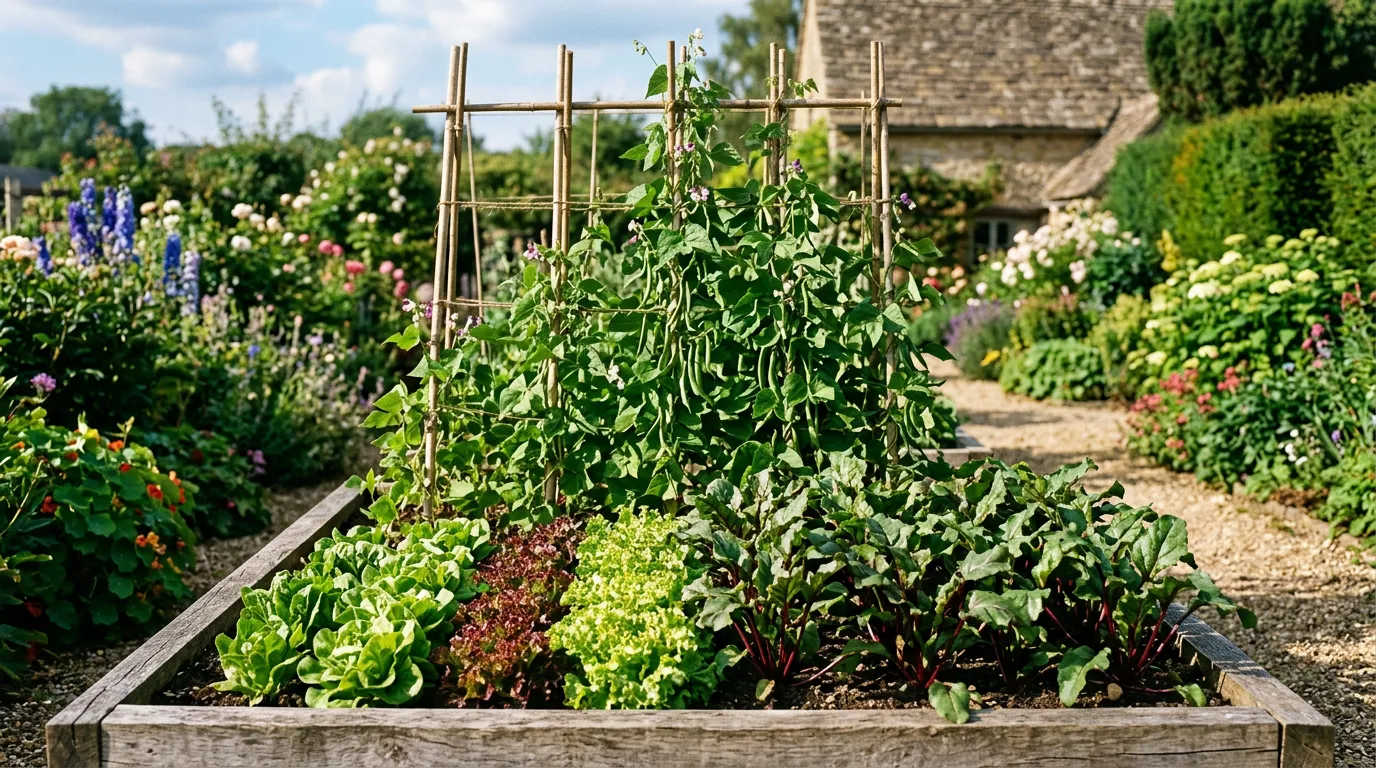 A productive raised bed in mid-summer. Rows of lettuce and beetroot with climbing beans on a cane wigwam at the back.
Planting and spacing
Raised beds use intensive spacing rather than traditional wide rows. You plant closer together because the improved soil supports higher density. This also means less bare soil for weeds to colonise.
Square metre gardening
Divide your bed into a mental grid of 30cm squares. Each square holds a different crop at its recommended spacing:
| Crop | Plants per 30cm square | Spacing |
|---|---|---|
| Lettuce | 4 | 15cm apart |
| Carrots | 16 | 7.5cm apart |
| Beetroot | 9 | 10cm apart |
| Spring onions | 16 | 7.5cm apart |
| Tomato | 1 (needs full square) | 30cm |
| Courgette | 1 (needs 60cm square) | 60cm |
| Climbing bean | 4-6 per wigwam | Central wigwam |
| Radish | 16 | 7.5cm apart |
Succession planting
Sow quick crops like lettuce and radish every 2-3 weeks from March to September. As one batch finishes, another is ready to harvest. This keeps the bed productive all season rather than having a single glut followed by empty space.
When early crops like peas and broad beans finish in June-July, replant immediately with late-season crops: beetroot, carrots, chard, and salad leaves. A raised bed should never sit empty during the growing season.
Crop rotation
Rotate crops across your beds on a 4-year cycle to prevent soil-borne disease, balance nutrient demands, and reduce pest build-up.
4-year rotation plan
| Year | Bed 1 | Bed 2 | Bed 3 | Bed 4 |
|---|---|---|---|---|
| Year 1 | Legumes (peas, beans) | Brassicas (cabbage, kale) | Roots (carrots, beetroot) | Potatoes / tomatoes |
| Year 2 | Brassicas | Roots | Potatoes / tomatoes | Legumes |
| Year 3 | Roots | Potatoes / tomatoes | Legumes | Brassicas |
| Year 4 | Potatoes / tomatoes | Legumes | Brassicas | Roots |
Why this order works: legumes fix nitrogen in the soil. Brassicas follow because they are heavy nitrogen feeders. Roots follow brassicas because they prefer less-rich soil. Potatoes break up the soil with their growth, preparing it for the next cycle.
With fewer than 4 beds, rotate as best you can. Even moving crops one bed along each year helps. The principle is to avoid growing the same family in the same soil two years running.
Watering and feeding
Watering
Raised beds drain faster than ground-level soil. In warm weather, they need watering every 2-3 days. In hot spells above 25C, water daily. Push a finger 5cm into the soil. If dry, water thoroughly until it drains from the base.
Drip irrigation is the most efficient watering method for raised beds. A simple soaker hose laid along the bed surface, connected to an outdoor tap with a timer, waters evenly with no waste. Cost: twenty to forty pounds per bed.
Mulching
Apply a 5cm mulch of compost, straw, or grass clippings once plants are established (late May). Mulching reduces watering frequency by 50%, suppresses weeds, and feeds the soil as it breaks down.
Feeding
Fresh compost in the soil mix provides enough nutrients for most crops through the first season. From mid-summer, feed heavy croppers like tomatoes and courgettes with a liquid tomato feed every two weeks.
Each spring, the annual compost top-up replaces the nutrients used during the previous growing season. After 2-3 years of this cycle, raised bed soil becomes exceptionally fertile.
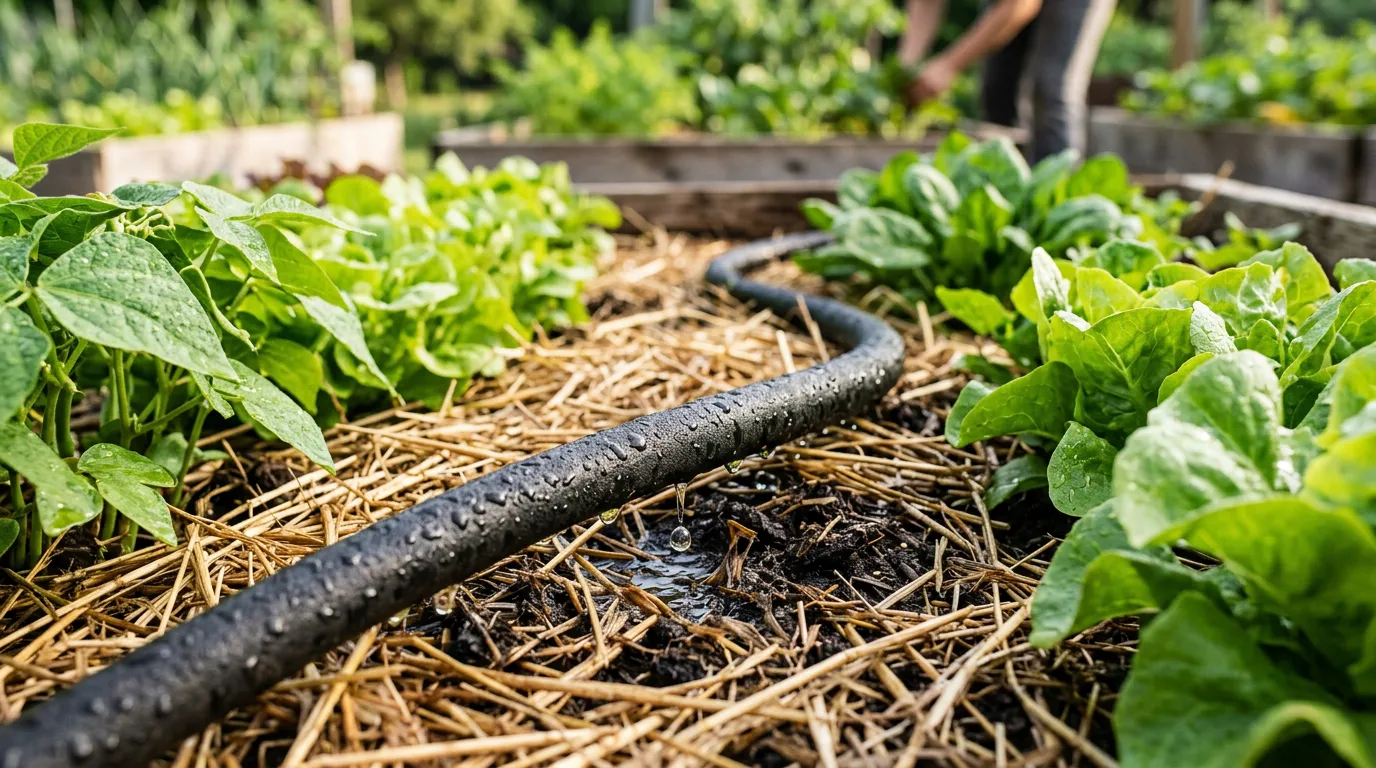 A soaker hose providing drip irrigation through straw mulch. This combination cuts watering effort by half.
Month-by-month raised bed calendar
| Month | Task |
|---|---|
| January | Plan crop layout and order seeds. Repair any damaged bed frames. |
| February | Top up beds with 5cm fresh compost. Cover with black plastic to warm soil. |
| March | Remove covers. Sow lettuce, radish, peas, and broad beans directly. Start tomatoes indoors. |
| April | Sow beetroot, carrots, spring onions. Plant out lettuce seedlings. |
| May | Plant out tomatoes, courgettes, and beans after last frost. Apply mulch. |
| June | Succession sow salads. Tie in climbing beans. Begin feeding tomatoes. |
| July | Peak harvest. Sow autumn crops in gaps as early crops finish. |
| August | Continue harvesting. Sow overwintering onions and garlic for next year. |
| September | Clear spent crops. Sow green manure (field beans or clover) on empty beds. |
| October | Harvest remaining crops. Leave green manure growing through winter. |
| November | Spread autumn leaves over bare soil as winter mulch. |
| December | Order next year’s seeds. Clean and store canes and supports. |
Common mistakes with raised beds
Building too wide
A bed wider than 1.2m forces you to step on the soil to reach the centre. This compacts the soil, destroying the drainage and aeration that makes raised beds effective. If your bed is against a wall or fence, keep the width to 60cm maximum.
Skimping on soil depth
A 15cm raised bed looks cheaper to fill but limits what you can grow. Root vegetables need 30cm minimum. Tomatoes and courgettes need 30cm for healthy root systems. Build to 30cm and fill properly. The extra cost pays back in better harvests.
Not lining the base on grass
Grass and perennial weeds grow up through raised bed soil within weeks. Lay thick cardboard on the base before filling. It smothers existing growth and decomposes naturally. Do not use plastic sheeting, which blocks drainage.
Ignoring slug protection
Raised beds are easier to protect from slugs than ground-level beds. Apply copper tape around the outside of the frame. The slight elevation and exposed sides make it harder for slugs to climb in unnoticed. Many gardeners miss this simple step.
Overplanting in year one
New raised bed gardeners often plant too many different crops in their first year. Start with 4-5 easy crops: lettuce, radish, beans, tomatoes, and strawberries. Learn what works in your specific conditions before expanding to a full rotation.
Frequently asked questions
How deep should a raised bed be?
30cm deep suits most vegetables including tomatoes, beans, lettuce, and courgettes. Root crops like carrots and parsnips need 45cm for full-length roots. Beds built over concrete or paving need a minimum of 45cm depth to provide adequate root space and drainage.
What is the best soil mix for raised beds?
Mix 50% topsoil with 50% garden compost by volume. This blend provides nutrients, good drainage, and moisture retention in the right balance. Add 10% perlite to beds dedicated to Mediterranean herbs for extra drainage. Top up with 5cm of fresh compost each spring.
What wood should I use for raised beds?
Untreated larch or Douglas fir lasts 10-15 years without any chemical treatment. Pressure-treated softwood is safe for vegetable growing with modern treatments and lasts 15-20 years. Avoid railway sleepers which may contain creosote, and pallet wood which may carry unknown chemical treatments.
How much does it cost to build a raised bed?
A basic 1.2m x 2.4m timber bed costs thirty to sixty pounds for materials depending on the wood you choose. Filling requires around 860 litres of soil mix, costing forty to seventy pounds. Total startup cost per bed: seventy to one hundred and thirty pounds. Costs per bed reduce when building multiple beds.
Do raised beds need drainage?
Yes, free drainage is essential. Place beds directly on soil where water drains downward naturally. On concrete or paving, add a 10cm gravel layer at the base before filling with soil. Raised beds that sit in standing water cause root rot within days.
What grows best in raised beds?
Salad crops, herbs, root vegetables, and climbing beans all thrive. The warmer, well-drained soil suits tender crops like tomatoes, courgettes, and peppers. Quick-growing crops like lettuce, radish, and spring onions make the most efficient use of the concentrated growing space.
How often should I water raised beds?
Water every 2-3 days in warm weather, daily during hot spells above 25C. Raised beds drain faster than ground soil and dry out more quickly. Check moisture by pushing a finger 5cm into the soil. Mulch with 5cm of compost or straw to cut watering frequency in half.
Lawrie has been gardening in the West Midlands for over 30 years. He grows his own veg using no-dig methods, keeps a wildlife-friendly garden, and writes practical advice based on real UK growing conditions.