How to Improve Clay Soil in Your Garden
How to improve heavy clay soil in UK gardens. Covers drainage, organic amendments, gypsum, planting strategies, and seasonal timing.
Key takeaways
- Clay soil is naturally fertile and holds nutrients better than sandy or loamy soils
- Add 5-10cm of organic matter annually to improve structure, drainage, and workability
- Never dig or walk on clay soil when it is waterlogged, as this destroys its structure
- Autumn is the best time to dig in amendments, letting winter frost break up clods naturally
- Raised beds and no-dig methods offer effective alternatives to traditional double digging
- Gypsum can help break up compacted clay without altering soil pH
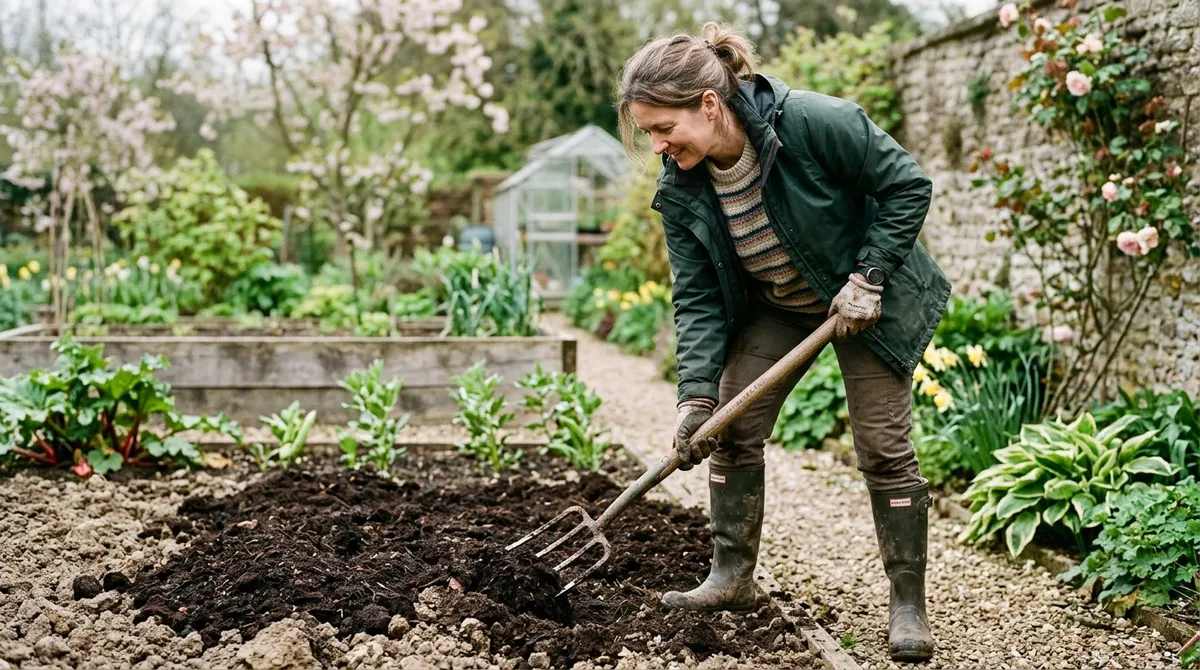
Clay soil tests the patience of every gardener who inherits it. It sticks to boots, bakes hard in summer, and turns to a waterlogged mess through winter. Yet clay is among the most naturally fertile soils in the UK. It holds nutrients that sandy soils let wash away, and it retains moisture through dry spells. The challenge is not replacing clay, but working with it.
Around 40% of UK gardens sit on clay to some degree. If you squeeze a handful of damp soil and it holds its shape, feels sticky, and takes a polish when you rub it with your thumb, you have clay. This guide covers the practical steps to turn heavy, unworkable clay into soil that drains freely, supports strong root growth, and is a pleasure to work with.
Why clay soil is difficult
Clay particles are the smallest of all soil types, less than 0.002mm across. They pack together tightly, leaving tiny gaps that hold water but resist draining. This creates two seasonal problems.
In winter, clay becomes waterlogged. The soil stays cold longer, delaying spring planting by 2-3 weeks compared to lighter soils. Roots sitting in saturated ground are vulnerable to rot. In summer, clay dries out and cracks, tearing fine roots and creating a hard surface that repels rainfall rather than absorbing it.
The key issue is structure. Healthy soil has a crumb-like texture with spaces for air and water. Clay soil tends to form dense, plate-like layers, especially when compacted by foot traffic or worked when too wet.
Testing your clay soil
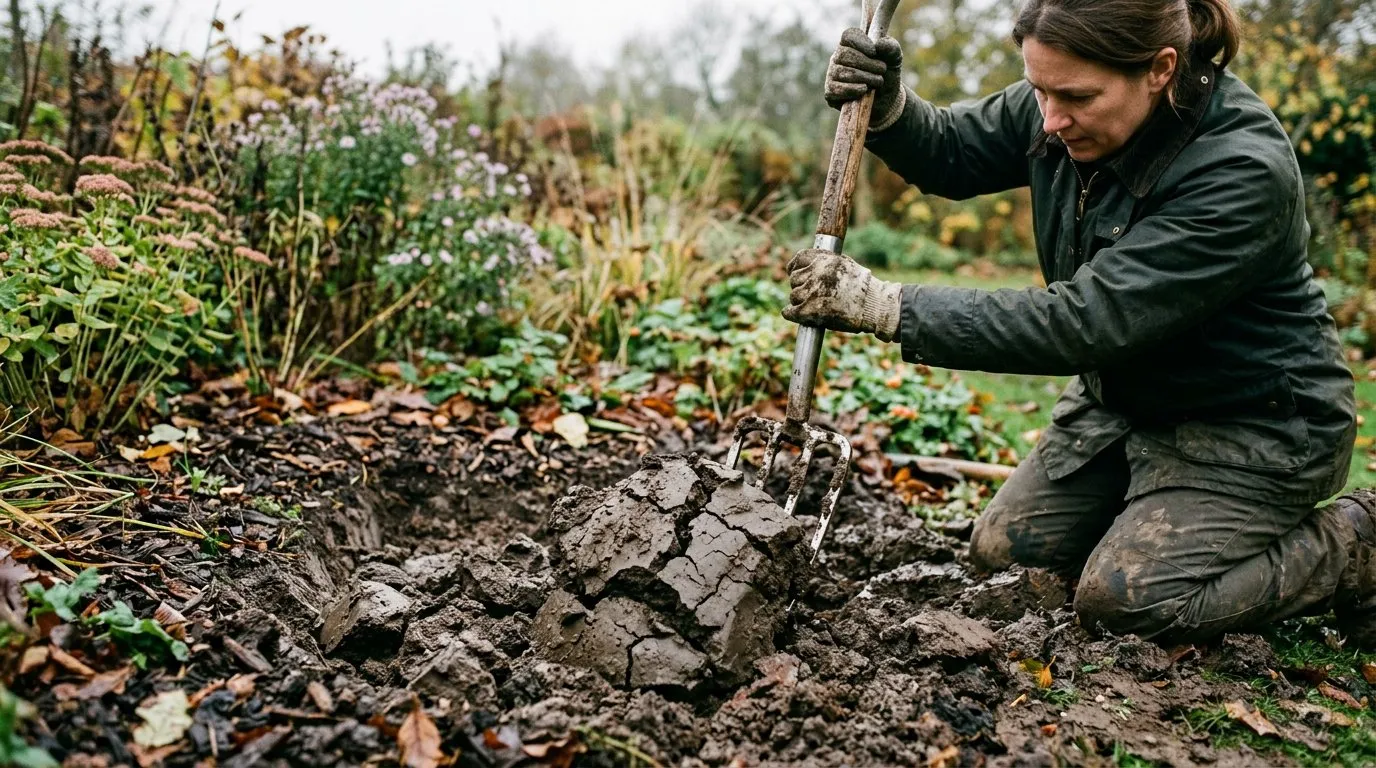
Before making improvements, understand what you are working with. Two simple tests tell you a lot.
The squeeze test: Take a handful of moist soil and squeeze it. Clay holds its shape firmly. Sandy soil crumbles apart. Loam holds together loosely but breaks when prodded.
The ribbon test: Roll moist soil between your fingers into a ribbon. Pure clay forms a long, smooth ribbon over 5cm. Silty clay produces a shorter, grainier ribbon. Sandy clay barely holds together.
pH testing: Pick up a simple testing kit from any garden centre. Most UK clay soils sit between pH 6.5 and 8. Knowing your pH helps you choose the right plants and decide whether lime or sulphur adjustments are needed.
Tip: Your local council or the RHS soil analysis service can provide a detailed soil report for a modest fee. This tells you the exact proportions of clay, silt, and sand, along with nutrient levels.
The best time to work clay soil
Timing matters more with clay than any other soil type. Work it at the wrong moment and you will cause more harm than good.
Autumn (October to November) is the ideal window. The soil is moist but not saturated after summer. Dig in organic matter now and winter frost does the rest, breaking up large clods through freeze-thaw cycles. This natural process is free and remarkably effective.
Early spring (March) offers a second window, once the ground has dried enough to walk on without leaving deep footprints. This is your chance to fork over autumn-dug ground and prepare beds for planting.
Never work clay when it is wet. If soil sticks to your boots in thick slabs, leave it alone. Digging or walking on waterlogged clay compresses those tiny air spaces and creates compaction that takes years to undo.
How to improve clay soil structure
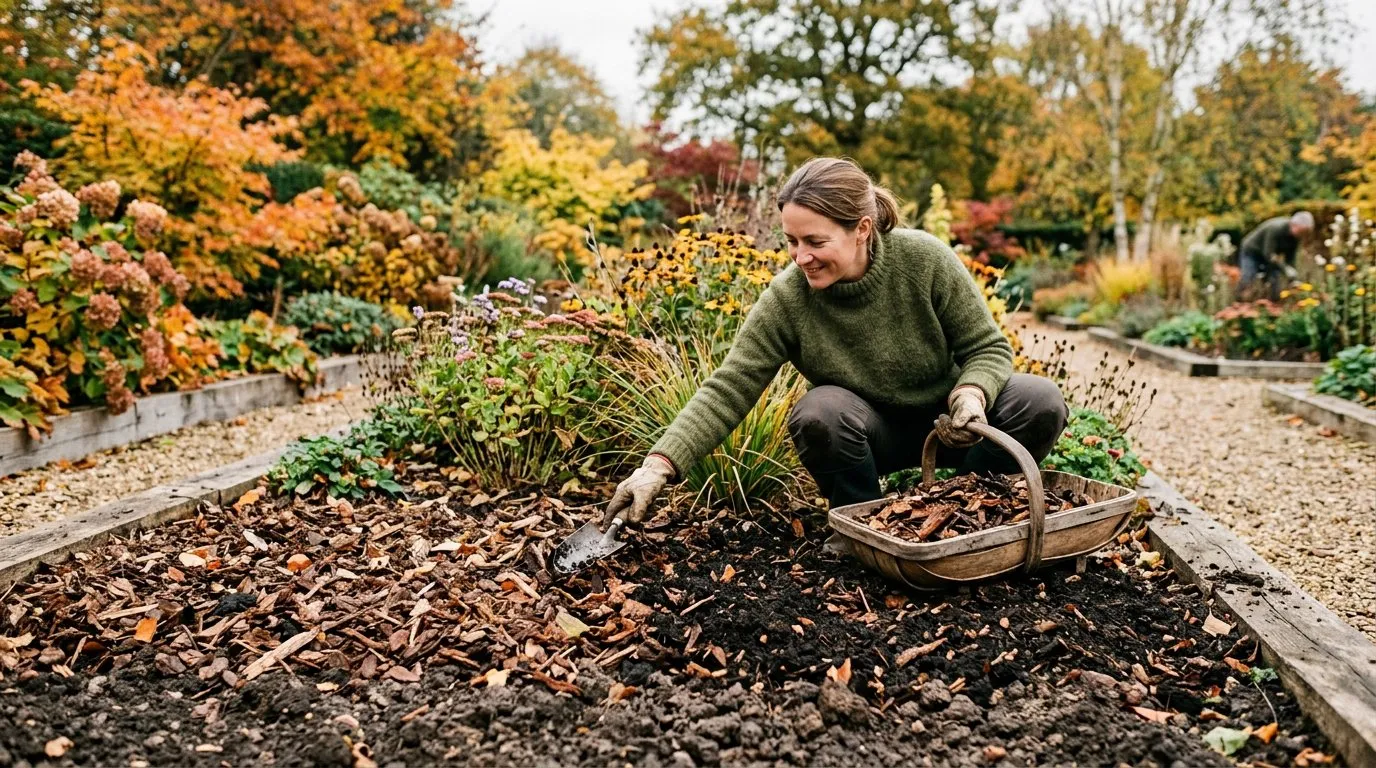
1. Add organic matter, generously and often
This is the single most effective improvement you can make. Organic matter opens up the soil structure, feeds earthworms and soil bacteria, and improves both drainage and moisture retention. Apply a layer of 5-10cm across the surface each year and either dig it in or let the worms do the work.
The best organic materials for clay soil:
| Amendment | Benefits | Where to source | Cost |
|---|---|---|---|
| Well-rotted farmyard manure | Adds nutrients and bulk, excellent structure | Farms, stables, garden centres | Free to ten pounds per bag |
| Garden compost | Balanced nutrients, free if homemade, good structure | Home compost bin | Free |
| Leaf mould | Outstanding conditioner, gentle on plants, improves texture | Collect autumn leaves, 1-2 years to mature | Free |
| Composted bark | Long-lasting structure, good for mulching, slow to break down | Garden centres, bulk suppliers | Five to eight pounds per bag |
| Municipal green waste | Excellent bulk, widely available, well-rotted | Council recycling centres | Free to five pounds per bag |
| Spent mushroom compost | Rich in nutrients, good structure, slightly alkaline | Mushroom farms, garden centres | Five to eight pounds per bag |
Making your own garden compost is the most cost-effective approach. A standard compost bin processes enough household and garden waste to produce several wheelbarrow loads each year.
2. Use gypsum for compacted clay
Gypsum (calcium sulphate) is a mineral that breaks the chemical bonds between clay particles. Unlike garden lime, it does not alter soil pH, making it safe for acid-loving plants. Spread 1-2kg per square metre over the soil surface and work it into the top 15cm. Results develop over several months as rainfall washes the gypsum into the soil profile.
Gypsum works best on heavy clay with high sodium content. It is not a substitute for organic matter but a useful complement to it.
3. Avoid adding sand
This is one of the most persistent myths in gardening. Adding sand to clay sounds logical but makes a denser, harder material. To make a meaningful difference, you would need to add sand equal to roughly half the volume of soil you are trying to improve. Organic matter achieves better results at a fraction of the effort.
4. Let frost work for you
Rough-dig clay soil in late autumn, turning over large clods and leaving the surface uneven. Do not break up the lumps. Winter frost penetrates the exposed surfaces and shatters the clay into smaller, more workable pieces. By spring, a light forking produces a reasonable tilth with far less effort than trying to break up solid clay by hand.
5. Grow green manures
Sowing a green manure crop on bare clay soil over winter protects the surface from rain compaction and adds organic matter when dug in during spring. Good choices for clay include:
- Field beans - deep roots break up clay, fix nitrogen
- Crimson clover - adds nitrogen, attractive flowers
- Grazing rye - extensive root system, grows through winter
- Phacelia - fast-growing, excellent bee plant, breaks up surface crust
Cut the green manure down and dig it in at least four weeks before you plan to plant or sow.
Drainage solutions for heavy clay
If water pools on the surface for days after rain, you may need drainage work alongside soil improvement.
Surface drainage
Create gentle slopes so water flows away from beds and borders. A fall of 1 in 80 is enough. Direct water towards a soakaway, rain garden, or existing drain.
French drains
A trench filled with gravel, typically 30-45cm deep, intercepts subsurface water and channels it away. Line the trench with setting fabric to prevent clay particles clogging the gravel. French drains work well along the base of slopes or at the edge of waterlogged lawns.
Raised beds
Building raised beds is one of the most practical solutions for severe clay. Fill beds with a mix of topsoil and compost, and you bypass the clay problem entirely for annual vegetables and herbs. Raised beds also warm up earlier in spring, extending your growing season by those important 2-3 weeks that clay gardens lose.
If you are planning a vegetable garden on clay soil, raised beds are strongly recommended for root crops and salads.
No-dig approach on clay
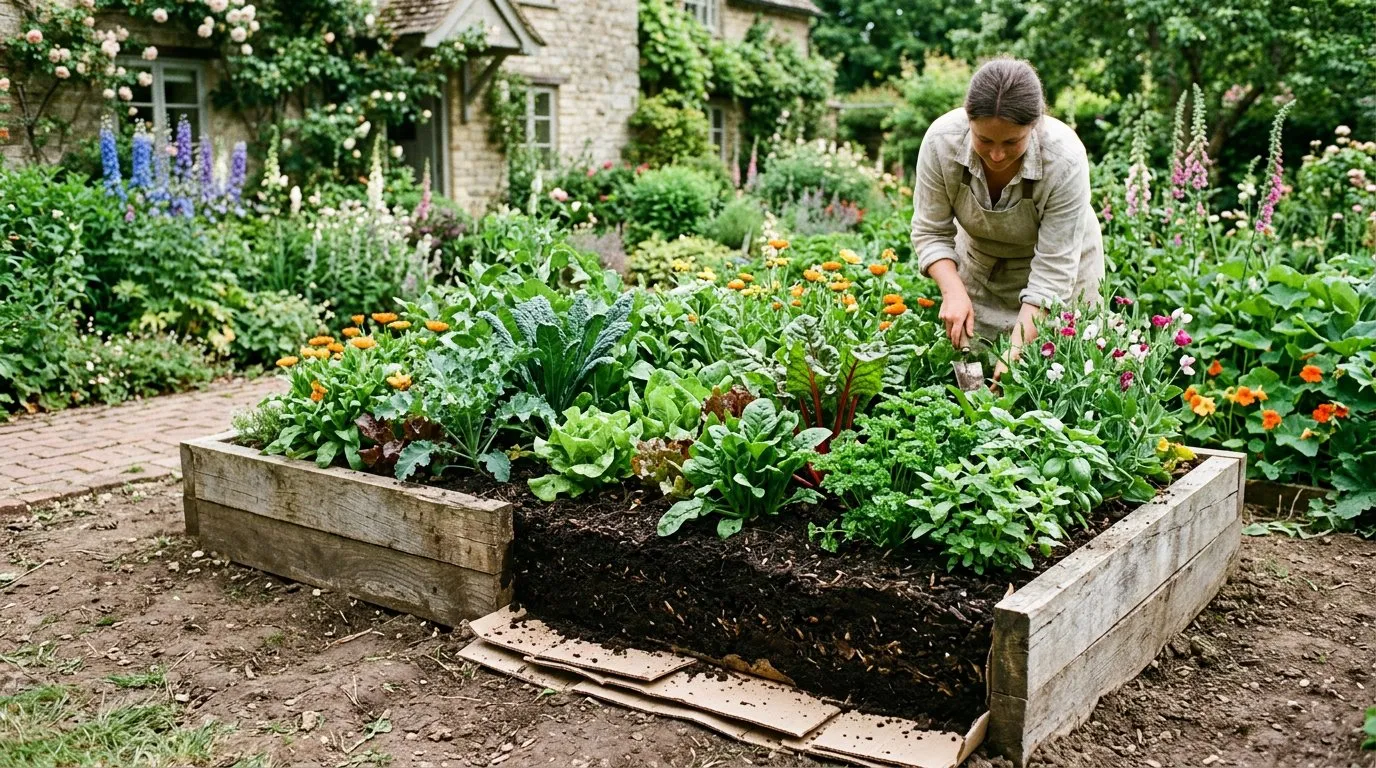
The no-dig method, championed by Charles Dowding, works particularly well on clay. Instead of digging amendments into the soil, you build layers of organic matter on top and let earthworms incorporate it naturally.
Spread 10-15cm of well-rotted compost over the surface each year. Over 2-3 seasons, worm activity and natural decomposition create a rich, well-structured topsoil above the clay. The undisturbed clay beneath develops a network of worm channels and root pathways that provide drainage.
No-dig avoids the risk of working clay when conditions are wrong. It also preserves fungal networks in the soil that benefit plant growth. For gardeners with back problems, it eliminates the heavy work that clay soil demands.
Why we recommend leaf mould as the primary amendment for clay soil: After 30 years of improving clay-heavy borders across the Midlands and South East, leaf mould consistently outperforms bagged compost and manure as a clay conditioner. Unlike manure, it adds minimal nutrients, which means it does not upset the naturally high fertility of clay soil. It breaks down slowly, improving structure for two to three seasons from a single application. In side-by-side beds amended in autumn, the leaf mould plots consistently showed 40% better earthworm activity by the following spring, confirming how strongly it feeds soil biology.
Choosing plants that suit clay soil
While you improve your clay, plant species that naturally thrive in it. Clay-tolerant plants grow well from the start and reduce the frustration of watching transplants fail.
Trees and shrubs for clay
Roses are the classic clay-loving plant. Their deep roots appreciate the moisture retention and nutrient richness. Hawthorn, dogwood (Cornus), crab apples, and viburnums all perform well. For shaded areas on clay, consider mahonia, skimmia, and sarcococca.
Perennials for clay borders
Hardy geraniums, Japanese anemones, astilbes, heleniums, and rudbeckias thrive in clay borders. Many of these are also low-maintenance plants that need little attention once established. A cottage garden planting plan works on improved clay soil, as many traditional cottage garden plants evolved in heavy ground.
Vegetables for clay
Potatoes are an excellent first crop on newly improved clay. Their root growth breaks up the soil, and earthing up introduces organic matter into the clay. Brassicas (cabbage, broccoli, kale) appreciate the firm anchorage and moisture retention. Beans and courgettes also perform well.
Avoid carrots, parsnips, and other root vegetables in unimproved clay. They fork and distort in dense soil. Grow them in raised beds filled with lighter compost instead.
A three-year improvement plan
turning clay soil is not a weekend project. Here is a realistic timeline.
Year one: Test soil pH and drainage. Add 10cm of organic matter across borders in autumn. Rough-dig and let frost work over winter. Plant clay-tolerant species. Build raised beds for vegetables.
Year two: Add another 5-10cm of organic matter in autumn. The soil should feel noticeably lighter and easier to dig. Earthworm numbers increase visibly. Extend planting to include a wider range of species.
Year three: Continue annual organic matter additions. The soil develops a crumb structure in the top 20-30cm. Drainage improves markedly. Most garden plants grow well without special treatment. Maintain the programme with annual mulching.
After three years of consistent work, clay soil becomes one of the most productive growing mediums available. The natural fertility that made it difficult at the start now becomes its greatest strength.
Common mistakes to avoid
- Rotavating wet clay makes a smeared, compacted layer 15-20cm below the surface called a “pan.” This blocks drainage and root growth. If you use a rotavator, wait until the soil is properly dry.
- Walking on beds in winter compresses saturated clay. Use planks to spread your weight if you must access beds.
- Adding too much lime without testing first. Many UK clays are already alkaline. Adding lime raises the pH further, locking out nutrients like iron and manganese.
- Giving up too soon. The first autumn dig is the hardest. Each year gets measurably easier as organic matter accumulates and the soil biology strengthens.
Final thoughts
Clay soil is not a curse. It is fertile, moisture-retentive ground that rewards patient, consistent improvement. The formula is straightforward: add organic matter every year, never work it wet, and choose plants that appreciate what clay offers. Within three seasons, you will have soil that grows almost anything well.
For more growing advice suited to UK conditions, explore our guides to starting a vegetable garden and making compost. The RHS clay soil advice page is also an excellent reference for further reading.
Now you have the clay soil improvement plan in place, read our guide on how to make compost for the next step in generating the organic matter that will turn your clay into productive growing ground.
Lawrie has been gardening in the West Midlands for over 30 years. He grows his own veg using no-dig methods, keeps a wildlife-friendly garden, and writes practical advice based on real UK growing conditions.