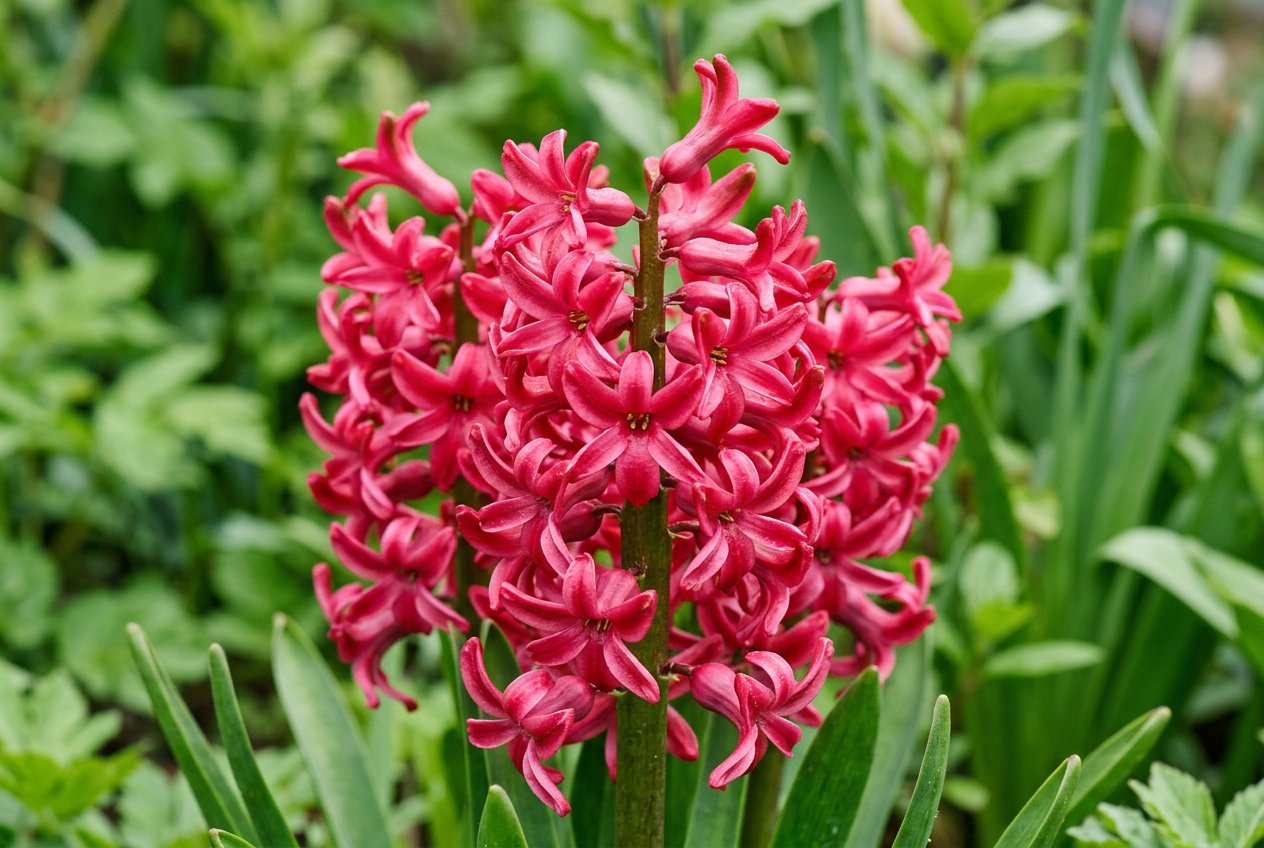
Hyacinthus 'Jan Bos'
Hyacinthus orientalis 'Jan Bos'
A vivid cerise-red hyacinth producing dense compact flower spikes from March. One of the earliest hyacinths to flower. The intense colour pairs beautifully with white and blue varieties. Strongly fragrant. Excellent for containers and indoor forcing. Reliable in UK gardens.
Where to plant
Best aspect
Border position
When to plant and expect flowers
Plant
Flowers
How to grow hyacinthus 'jan bos'
Plant 10cm deep in October or November. For the largest flowers, buy 'prepared' bulbs for indoor forcing. In borders, flower size decreases after the first year but plants become more natural-looking. Wear gloves when handling bulbs as they can cause skin irritation.
Soil requirements
Soil type
loam, sand, chalk
Moisture
well drained
pH
neutral, alkaline
Aftercare
Allow foliage to die back naturally after flowering. Remove spent flower heads to prevent self-seeding.
Propagation
- Offsets in autumn
- Seed
Wildlife value
Toxicity
Contains oxalic acid. Bulbs cause skin irritation (hyacinth itch). Ingestion causes nausea and vomiting.
Common problems
- Hyacinth itch (skin irritation from handling)
- Grey mould (Botrytis)
- Bulb rot in wet soil
- Flower size declines after first year
Similar bulbs to grow
Related guides
How to Attract Birds to Your Garden
Practical guide to attracting wild birds to UK gardens. Covers feeders, food types, bird baths, nest boxes, planting, and seasonal feeding.
Autumn Gardening Jobs: Complete UK Checklist
Month-by-month autumn gardening checklist for UK gardens. Covers planting, bulbs, lawn care, pruning, composting, and wildlife tasks for Sep to November.
Balcony Gardening Ideas for the UK
Practical balcony gardening ideas for UK flats and apartments. Container choices, weight limits, wind protection, and the best plants for exposed spaces.