Allotment Shed Ideas and Storage
Allotment shed ideas and storage solutions from 30 years on UK plots. Covers size rules, tool racks, seed storage, potting benches, and security.
Key takeaways
- Most councils limit allotment sheds to 8x6ft (2.4x1.8m) and 2.1m eave height — check your tenancy agreement
- Wall-mounted tool racks and pegboard free up 80% of floor space compared to leaning tools against walls
- Store seeds in airtight glass jars in a cool, dry, dark spot — viability drops 50% in damp conditions
- A fold-down potting bench gives you a full workspace without permanently blocking floor area
- Fit a hasp-and-staple lock with a closed-shackle padlock — most allotment thefts are opportunistic
- Treat timber sheds with spirit-based preservative every 12 months between May and September
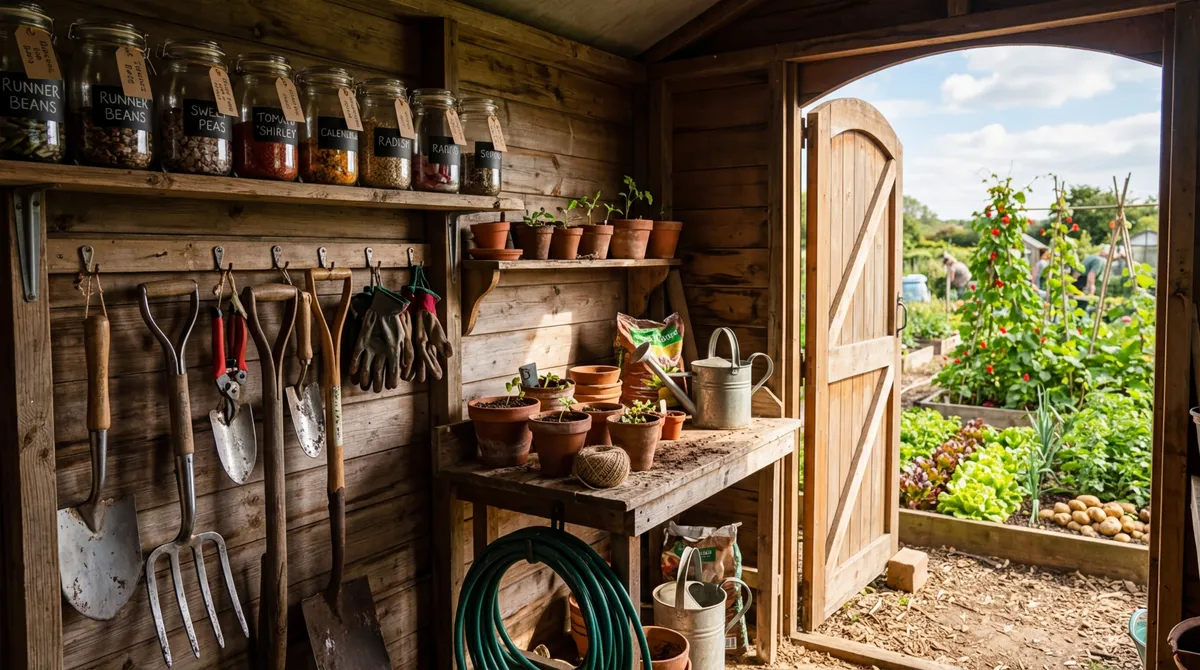
Allotment shed storage and organisation determines whether you spend your plot time growing or rummaging. A tidy shed with tools on walls, seeds in jars, and a clear potting area saves 10-15 minutes every visit. That adds up to 12-15 extra growing hours per season.
This guide covers allotment shed rules, tool storage systems, seed preservation, potting bench setups, security, and annual maintenance. Everything here comes from 30 years of managing allotment plots in Staffordshire. If you are still setting up your plot, our guide to allotment layout ideas covers bed placement and where to position the shed for minimal shading.
What size shed can you have on an allotment?
Most UK council allotment sites limit sheds to 8x6ft (2.4x1.8m). Some allow 6x4ft only on half-plots. The eave height limit is typically 2.1m, with the ridge no higher than 2.5m. These rules exist because allotment land is for growing food, not storage.
Check your tenancy agreement before buying or building. The National Allotment Society publishes guidance on standard tenancy terms, but individual councils set their own limits. Exceeding the permitted size can result in a formal notice to dismantle the structure within 28 days.
| Plot type | Typical shed limit | Floor area | Notes |
|---|---|---|---|
| Half plot (5 rods) | 6x4ft (1.8x1.2m) | 2.2 sq m | Enough for basic tool storage |
| Full plot (10 rods) | 8x6ft (2.4x1.8m) | 4.5 sq m | Room for bench and shelves |
| Established tenant | Up to 10x8ft | 7.4 sq m | By agreement only |
Position the shed at the north end of your plot so it casts shadow away from growing beds. Face the door south or south-east for maximum natural light inside. A guttered roof feeding a water butt gives you a free rainwater supply — a 6x8ft roof collects around 2,700 litres per year in an average UK rainfall area.
Choosing or building an allotment shed
You have three options: buy new, buy second-hand, or build from reclaimed materials. Each has trade-offs.
Buying new costs £200-£600 for a basic tongue-and-groove 8x6ft shed from a garden centre or online supplier. Delivery to the allotment gate is usually included, but you carry the panels to your plot. Two people can assemble a flat-pack shed in 3-4 hours.
Second-hand sheds appear on Freecycle, Facebook Marketplace, and Gumtree for £50-£150. Disassembly and transport is your problem. Check the base rail and floor for rot before committing — a rotten base rail means a full rebuild.
Building from reclaimed materials is common on allotments. Pallet wood, old fence panels, and reclaimed window frames create characterful sheds for under £50 in screws and fixings. Line the interior with roofing felt or breathable membrane to keep rain out. Our garden shed guide covers construction materials in more detail.
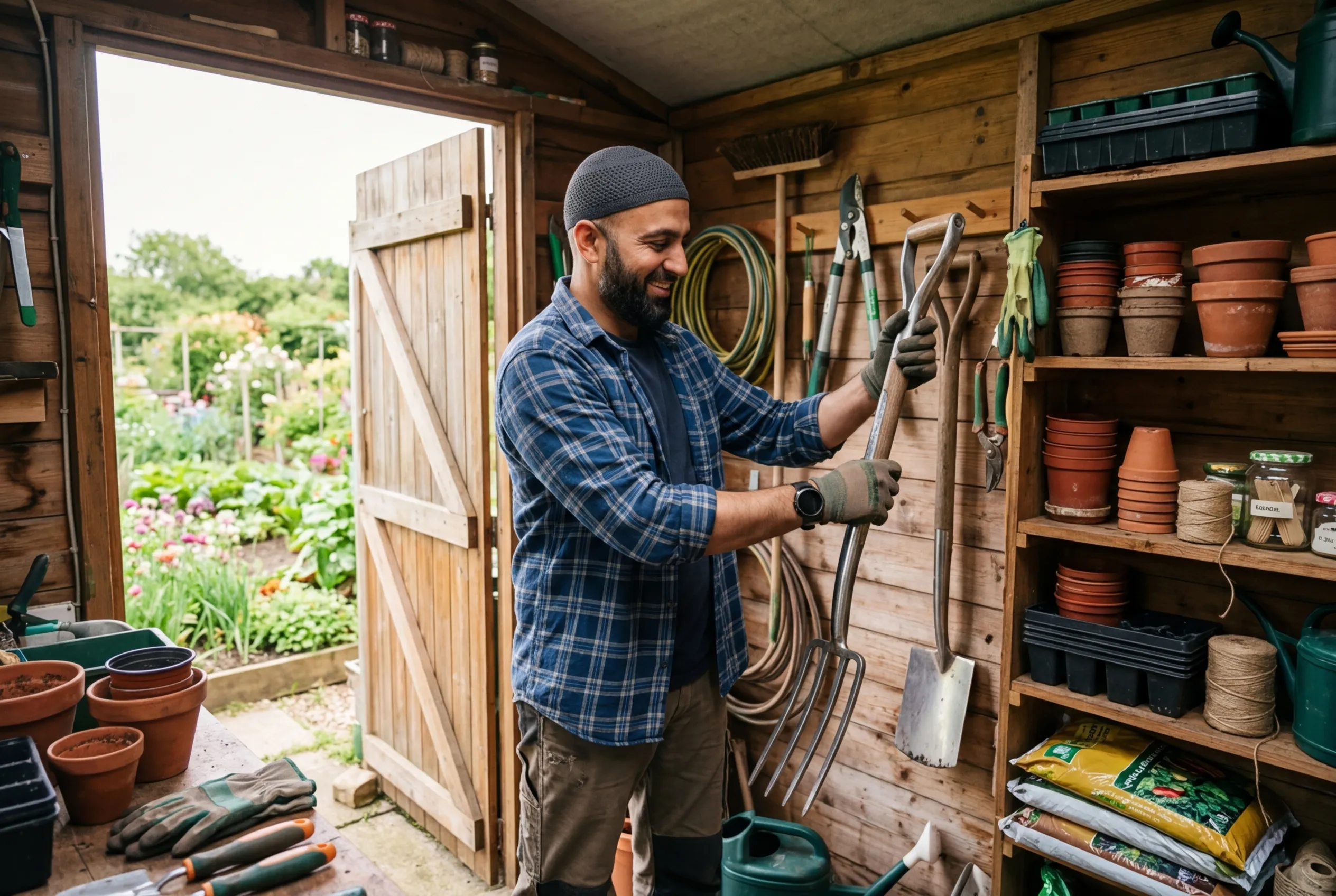
Wall-mounted racks keep every tool visible and accessible — no more rummaging through piles
How to organise tools in an allotment shed
Tool organisation is the single biggest improvement you can make. Wall-mounted storage frees 80% of floor space compared to leaning tools against walls. Here are the systems that work best, ranked by cost.
Pegboard
A 1.2m x 0.6m sheet of pegboard costs £8-£12 from any DIY store. Mount it on 25mm spacer battens so hooks slot in properly. Pegboard holds hand trowels, secateurs, dibbers, twine, labels, and small packets. It is the cheapest and most flexible option — rearrange hooks as your tool collection changes.
Wall-mounted tool racks
Wooden or metal tool racks with spring-grip clips hold long-handled tools vertically. A 1m rack holds 8-10 tools: spades, forks, rakes, hoes, and edging shears. Mount the rack at shoulder height so tool handles sit above your head. This keeps the floor completely clear.
Magnetic strips
A 60cm magnetic knife strip (£5-£8) mounted on the wall holds secateurs, pruning knives, hand forks, and metal plant labels. Magnetic strips work brilliantly for small metal tools that otherwise vanish into drawers. They also keep blades visible, which is a safety benefit when children visit the plot.
Ceiling hooks
Screw heavy-duty cup hooks into the roof joists for items used less often: bamboo canes, netting, fleece rolls, and hosepipe. Ceiling storage uses otherwise dead space. Keep frequently used tools on the walls and seasonal items overhead.
If your tools are blunt after winter storage, our guide on how to sharpen garden tools covers the techniques and equipment you need.
Seed storage that actually preserves viability
Seeds stored loosely in a damp shed lose viability fast. Moisture and temperature swings are the two main killers. A packet of tomato seeds viable for 4 years in a sealed jar drops to 1 year in an open packet left on a shelf.
The method that works: Store seeds in airtight glass jars (Kilner-style or old jam jars with rubber seals). Add a sachet of silica gel to each jar to absorb residual moisture. Label every jar with the variety name, supplier, and date purchased. Keep jars in the darkest, coolest part of the shed — a low shelf away from windows.
| Storage method | Seed viability | Cost |
|---|---|---|
| Open packet on shelf | 1 year typical | Free |
| Sealed plastic box | 2 years | £3-£5 |
| Glass jar with silica gel | 3-5 years | £1-£2 per jar |
| Fridge in sealed jar | 5-7 years | Free if space available |
Temperature matters. Every 5 degrees Celsius reduction in storage temperature roughly doubles seed longevity. If you can take jars home and store them in the fridge over winter, do it. Otherwise, an insulated box inside the shed buffers the worst temperature swings.
Setting up a potting bench in a small shed
A potting bench transforms an allotment shed from pure storage into a functional workspace. You can prick out seedlings, pot up plants, mix compost, and label trays without bending over on the ground.
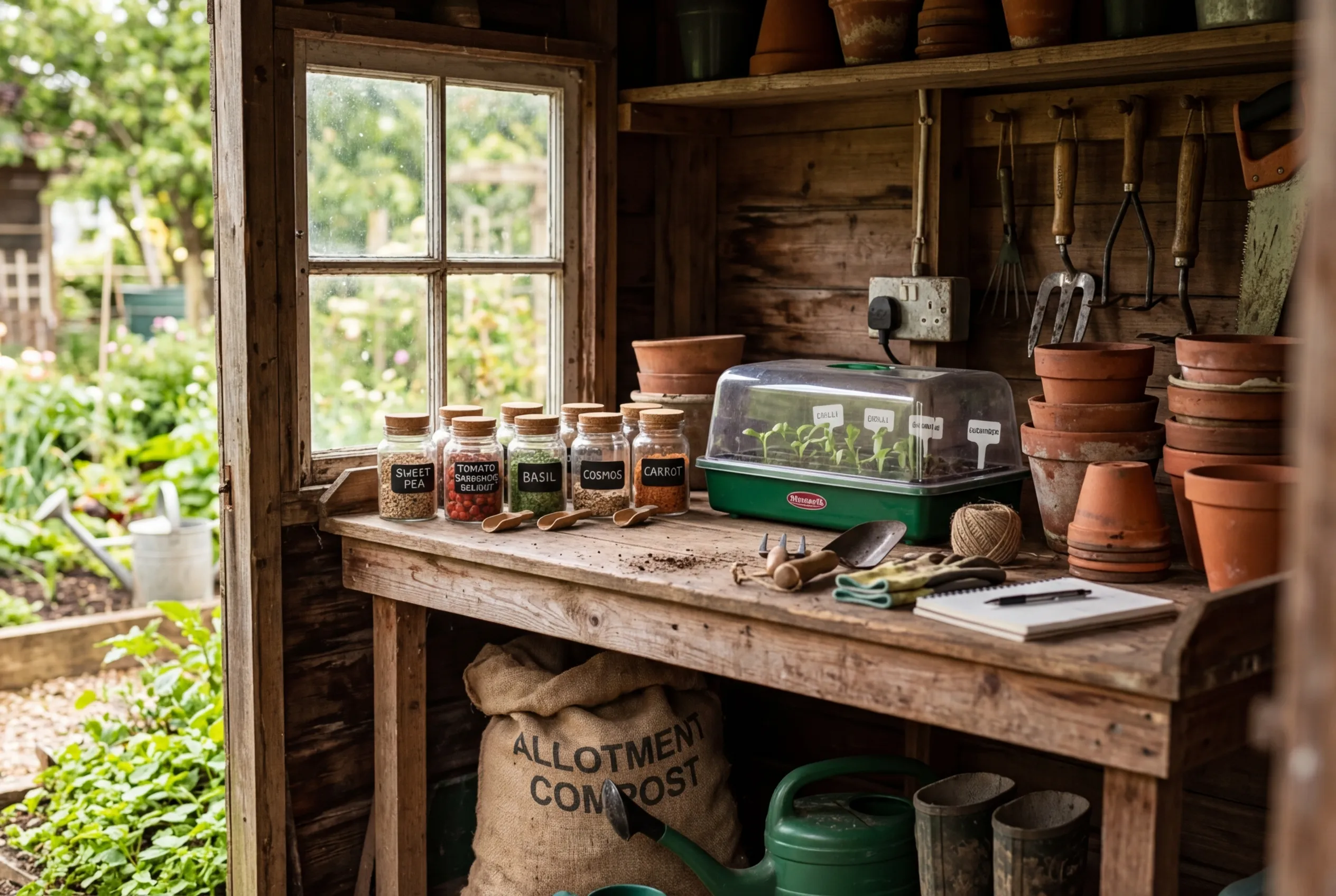
A fold-down bench and labelled seed jars create a proper propagation station in a small shed
Fold-down bench (best for 6x4ft sheds)
Mount a 600mm-deep plywood or solid timber shelf on heavy-duty folding brackets at waist height (850-900mm). When not in use, fold it flat against the wall. Total cost: £15-£25 in timber and brackets. This approach leaves floor space free for the wheelbarrow and mower.
Fixed bench (8x6ft sheds and larger)
A permanent bench along the short end wall (1.8m wide x 600mm deep) gives you a full potting station. Add a raised back edge (50mm lip) to stop compost rolling off. Mount shelving above for seed trays, labels, and a small propagator. Keep a bin beneath for spent compost and debris.
Essential bench equipment: a potting scoop, sieve for compost, dibber, waterproof labels, a permanent marker, and a bucket of clean water. Store these within arm’s reach of the bench surface.
Allotment shed security
Allotment theft is a persistent problem across the UK. Power tools, copper piping, and quality hand tools are the most targeted items. Most thefts are opportunistic — a visible padlock and basic precautions deter the majority.
Lock: Fit a hasp-and-staple secured with coach bolts from inside the shed. Use a closed-shackle padlock rated CEN grade 3 or above. Closed-shackle padlocks resist bolt cutters because the shackle is almost entirely enclosed within the lock body. Budget £15-£25 for a decent padlock.
Tool marking: Engrave your plot number into metal tool heads using a rotary engraving pen (£10-£15). Apply UV marker to wooden handles. Police-backed schemes like Immobilise let you register serial numbers for power tools.
Don’t store valuables. Leave battery packs, power tools, and anything expensive at home. The allotment shed should contain replaceable hand tools and consumables only. If you must leave a strimmer or mower on site, chain it to a ground anchor inside the shed.
Lean-to extensions and covered areas
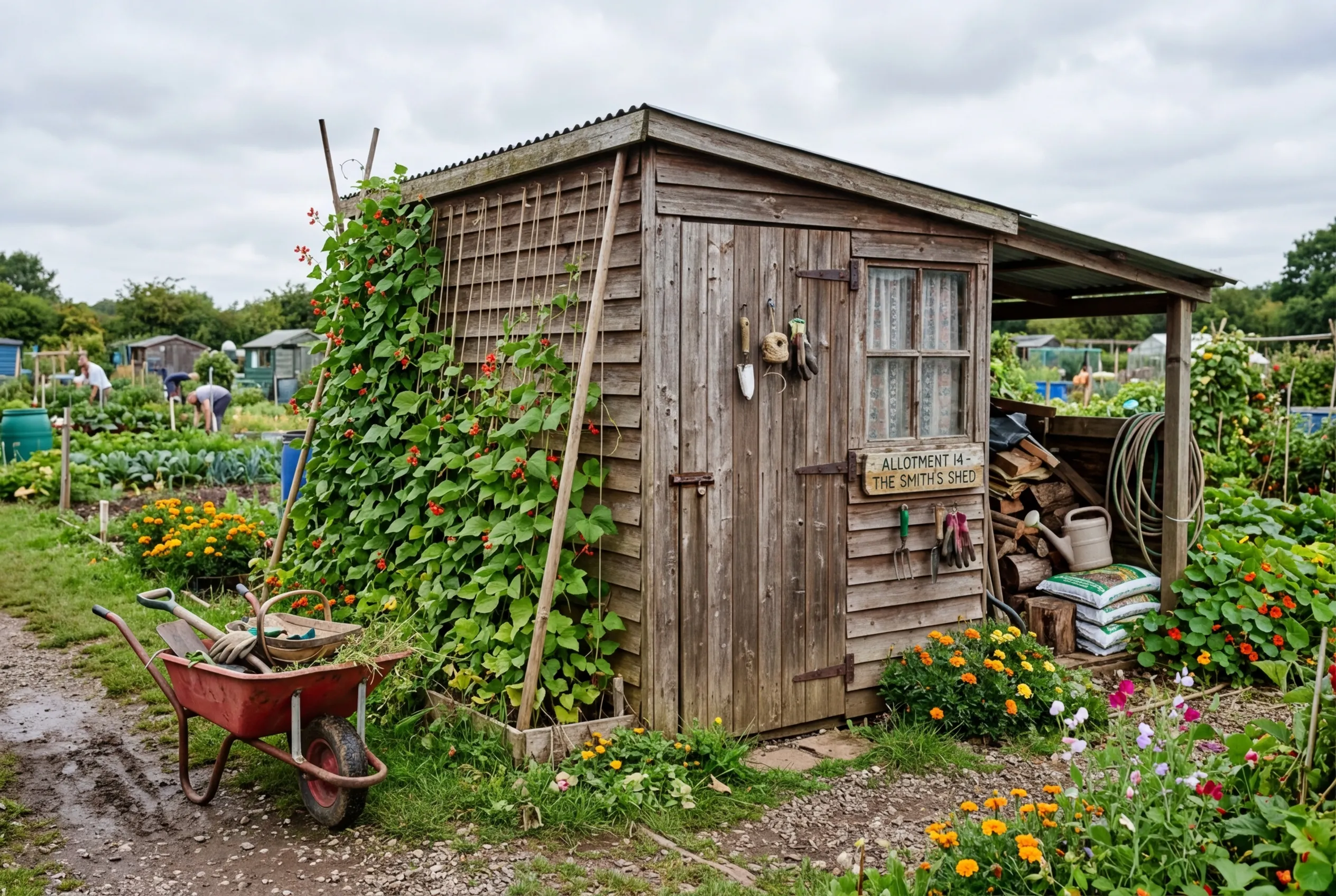
A lean-to extension adds dry storage for bulky items without increasing the shed footprint
A lean-to roof attached to one side of the shed creates sheltered storage for wheelbarrows, compost bags, cane bundles, and cold frames. This keeps bulky items dry without consuming internal shed space.
Construction is straightforward. Fix a horizontal batten along the shed wall at 1.8m height. Run rafters from this batten down to posts at 1.2m height, creating a sloping roof. Cover with corrugated bitumen sheet (Onduline or similar) at £8-£12 per sheet. A 2.4m x 1.2m lean-to costs under £40 in materials.
Check your allotment tenancy agreement — some sites count lean-to structures toward the total permitted footprint. Others treat them as open-sided and exempt. The National Allotment Society has template tenancy agreements that clarify these definitions. If you need more general garden storage solutions, our dedicated guide covers options beyond the allotment.
Essential allotment shed equipment checklist
This checklist covers the tools and supplies every allotment shed should contain. Tick off what you have and fill the gaps.
| Item | Purpose | Budget |
|---|---|---|
| Spade and fork | Digging, turning compost | £20-£40 each |
| Hand trowel and fork | Planting, weeding | £5-£15 set |
| Hoe (Dutch or draw) | Weed control between rows | £10-£20 |
| Rake | Soil levelling, seedbed prep | £10-£15 |
| Secateurs | Pruning, harvesting | £10-£30 |
| Watering can (10L) | Targeted watering | £5-£10 |
| Wheelbarrow | Moving compost, soil, harvests | £30-£60 |
| Twine and labels | Plant support, identification | £3-£5 |
| Seed trays and pots | Propagation | £5-£10 |
| Fleece and netting | Frost and pest protection | £5-£15 |
| Spirit-based preservative | Annual shed treatment | £15-£25 (5L tin) |
| Closed-shackle padlock | Security | £15-£25 |
Total startup budget for a fully equipped shed: £150-£300 if buying new tools. Reduce this by sourcing second-hand tools from car boot sales and allotment community sales. Good quality second-hand Spear & Jackson or Bulldog tools outlast cheap new ones.
Shed maintenance: keeping it standing for 15-20 years
Timber sheds on allotments take a battering. Exposed to wind, rain, and frost with no surrounding buildings for shelter, they rot faster than garden sheds at home. Annual maintenance is not optional.
Every spring (May-June):
- Treat all external timber with a spirit-based preservative (Barrettine or Ronseal). Apply when wood is dry and temperature is above 10 degrees Celsius.
- Pay extra attention to the base rail, door frame, and end grain where moisture enters first.
- Check roofing felt for tears or lifted edges. Re-nail or patch with bitumen adhesive.
- Clear soil, leaves, and debris from the base perimeter. Organic material banked against the base rail traps moisture and accelerates rot.
Every autumn (October):
- Tighten loose screws and re-nail any sprung boards.
- Oil door hinges and the padlock mechanism.
- Check the floor for soft spots — probe with a screwdriver. Soft timber means rot has started.
- Ensure the water butt is draining properly and not overflowing against the shed wall.
A well-maintained tongue-and-groove shed lasts 15-20 years on an allotment. A neglected one can fail in 5-7 years. The annual cost of a tin of preservative (£15-£25) is trivial compared to replacing the entire structure.
If you are new to allotment gardening, our beginner’s guide covers first-year crops and soil improvement. For the full process of getting a plot, see how to start an allotment in the UK.
Frequently asked questions
What size shed am I allowed on an allotment?
Most councils limit allotment sheds to 8x6ft (2.4x1.8m) with a maximum eave height of 2.1m. Some sites allow up to 10x8ft for established tenants. Check your tenancy agreement before ordering, as exceeding the limit can result in a notice to remove the structure within 28 days.
Do I need planning permission for an allotment shed?
Allotment sheds rarely need planning permission. They fall under permitted development if they stay within site-specific size limits. However, allotment land is owned by the council, so the tenancy agreement governs what you can build. Listed site designations or conservation areas may impose additional restrictions.
How do I stop an allotment shed from being broken into?
Fit a hasp-and-staple with a closed-shackle padlock rated to CEN grade 3 or above. Closed-shackle padlocks resist bolt cutters because the shackle is recessed. Coach-bolt the hasp from inside so screws cannot be removed externally. Mark all tools with your plot number using an engraving pen or UV marker.
What is the best way to store seeds in a shed?
Store seeds in airtight glass jars with silica gel packets in a cool, dark, dry spot. Temperature fluctuations and moisture are the main killers of seed viability. A sealed jar in a shaded cupboard keeps most vegetable seeds viable for 2-4 years. Label every jar with the variety and date.
How do I organise tools in a small allotment shed?
Mount pegboard or a wooden tool rack on the longest wall. Hang long-handled tools (spades, forks, rakes) vertically using spring-grip clips. Use hooks for hand trowels, secateurs, and twine. Install a shelf above head height for items used less often. Keep the floor clear for the wheelbarrow and mower.
Can I put a potting bench in an allotment shed?
A fold-down potting bench works in sheds as small as 6x4ft. Mount it on heavy-duty hinges at waist height on the end wall. When folded up, it sits flat against the wall and takes no floor space. A fixed bench needs at least an 8x6ft shed to avoid blocking access to stored items.
How often should I treat an allotment shed?
Treat all timber surfaces with a spirit-based wood preservative every 12 months. Apply between May and September when wood is dry and temperatures are above 10 degrees Celsius. Pay extra attention to the base rail and end grain where moisture enters first. A well-treated shed lasts 15-20 years.
Lawrie has been gardening in the West Midlands for over 30 years. He grows his own veg using no-dig methods, keeps a wildlife-friendly garden, and writes practical advice based on real UK growing conditions.