Chelsea Flower Show Guide 2026
Your complete guide to the 2026 RHS Chelsea Flower Show. Dates, tickets, what to see, garden trends, and tips from regular visitors.
Key takeaways
- Show dates are 19-24 May 2026 with RHS members getting priority booking
- Tickets start from £37 for members and £47 for non-members
- The Great Pavilion houses over 100 specialist plant nurseries
- Show Gardens feature designs by leading UK garden designers
- Friday evening is the best day for shorter queues and a relaxed atmosphere
- Sell-off day on Saturday lets you buy plants at reduced prices
The Chelsea Flower Show is the most prestigious gardening event in the world. Held every May at the Royal Hospital Chelsea in London, it draws over 150,000 visitors across five public days. Whether you are a first-time visitor or a seasoned regular, the show delivers something extraordinary every year. The gardens push design boundaries. The Great Pavilion houses plants you cannot find at any garden centre. The atmosphere is electric with genuine horticultural passion. This guide covers everything you need to plan your 2026 visit: dates, ticket prices, what to see, transport options, and practical tips gathered from years of attending.
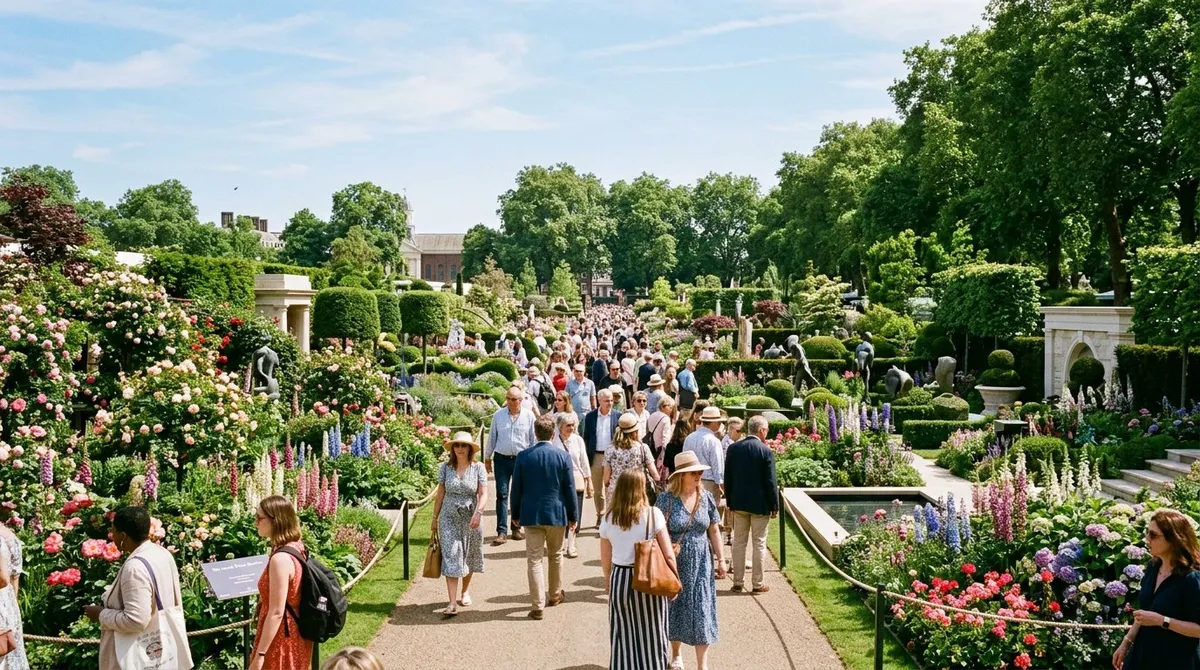
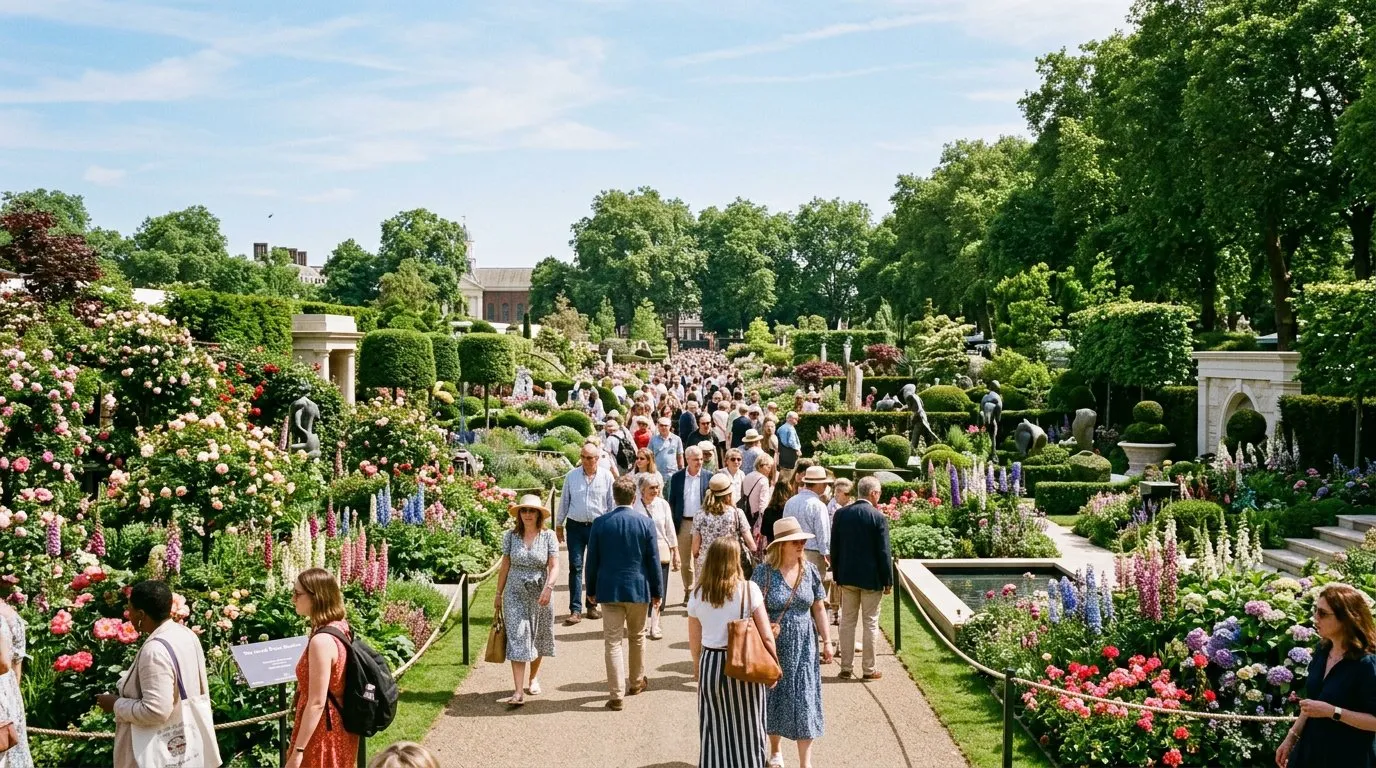 The Main Avenue at Chelsea showcases the year’s most ambitious show gardens
When is Chelsea Flower Show 2026?
The 2026 RHS Chelsea Flower Show runs from Tuesday 19 May to Saturday 24 May. The show opens to RHS members only on Tuesday and Wednesday. General public tickets are available from Thursday to Saturday. Gates open at 8:00am each day and close at 8:00pm, except Saturday when the show finishes at 5:30pm.
Tuesday is traditionally the quietest day. Press and RHS members preview the gardens before the public arrives. Wednesday remains members-only but is busier. Thursday is the first public day and attracts large crowds eager to see the gardens in their best condition. Friday draws a more relaxed crowd, particularly for the evening session. Saturday is sell-off day, when exhibitors offer plants at reduced prices from around 4:00pm.
The schedule also includes Gala Evening sessions. These are ticketed separately and usually fall on Tuesday and Wednesday evenings. Gala tickets include drinks and canapes alongside access to the gardens in evening light. They sell out quickly, often within hours of release.
Build-up begins two weeks before opening. Exhibitors work around the clock to finish their gardens. If you live nearby, watching the build from Royal Hospital Road is a spectacle in itself. Cranes lower mature trees into position. Thousands of plants arrive by lorry from nurseries across the country.
How much are Chelsea Flower Show tickets?
Ticket prices vary by day, time, and RHS membership status. Members receive a significant discount and access to the first two days. All prices below are based on 2025 rates, which the RHS typically confirms by late January.
| Day | Session | RHS member | Non-member |
|---|---|---|---|
| Tuesday 19 May | Full day | £37 | Members only |
| Wednesday 20 May | Full day | £37 | Members only |
| Thursday 21 May | Full day | £52 | £62 |
| Thursday 21 May | Evening (4:30-8pm) | £37 | £47 |
| Friday 22 May | Full day | £52 | £62 |
| Friday 22 May | Evening (4:30-8pm) | £37 | £47 |
| Saturday 23 May | Full day | £52 | £62 |
| Saturday 24 May | Sell-off day (8am-5:30pm) | £47 | £57 |
RHS membership costs £58.80 per year for an individual. If you attend Chelsea even once, the membership pays for itself through the ticket discount alone. Members also receive free entry to over 200 RHS partner gardens across the UK. You can join at rhs.org.uk.
Tickets go on sale in stages. RHS members book first, usually from mid-November. General sale opens in February. Popular sessions sell out within days, so set a calendar reminder. Tickets are non-refundable but transferable. You receive an e-ticket by email.
Gardener’s tip: Book the Friday evening session if it is your first visit. Queues are shorter, the light is golden, and the atmosphere is wonderfully relaxed. Many exhibitors are out on their gardens chatting to visitors, which rarely happens during busy daytime sessions.
What to see at Chelsea Flower Show
The showground covers 4.5 hectares and is divided into several distinct areas. Each offers a different experience. Plan your route in advance using the RHS app or paper map, available free at the entrance.
Show Gardens
The Show Gardens line the Main Avenue and are the centrepiece of Chelsea. These are full-scale garden designs built from scratch in just three weeks. Each one costs between £250,000 and £500,000 to construct. Leading designers including Tom Stuart-Smith, Sarah Price, and Andy Sturgeon compete for Gold medals.
Show Gardens set the trends that filter into home gardens over the following years. The naturalistic planting movement, rain gardens, and green roof designs all gained mainstream momentum after Chelsea debuts. Study the planting combinations closely. Many of the perennial mixes translate directly into home borders. If you enjoy designing planting schemes, our guide to cottage garden planting plans draws on the same principles.
The Great Pavilion
The Great Pavilion is a vast white marquee housing over 100 specialist plant nurseries. This is where serious plant lovers spend most of their time. Nurseries bring their finest stock, including rare varieties unavailable through normal retail channels. Many exhibit themed displays competing for Gold medals within the Pavilion.
Expect to find unusual flowering shrubs alongside specialist growers of orchids, alpines, succulents, and carnivorous plants. Hardy geraniums, salvias, and ornamental grasses feature heavily. Several nurseries accept orders for autumn delivery, so you can secure plants without carrying them home.
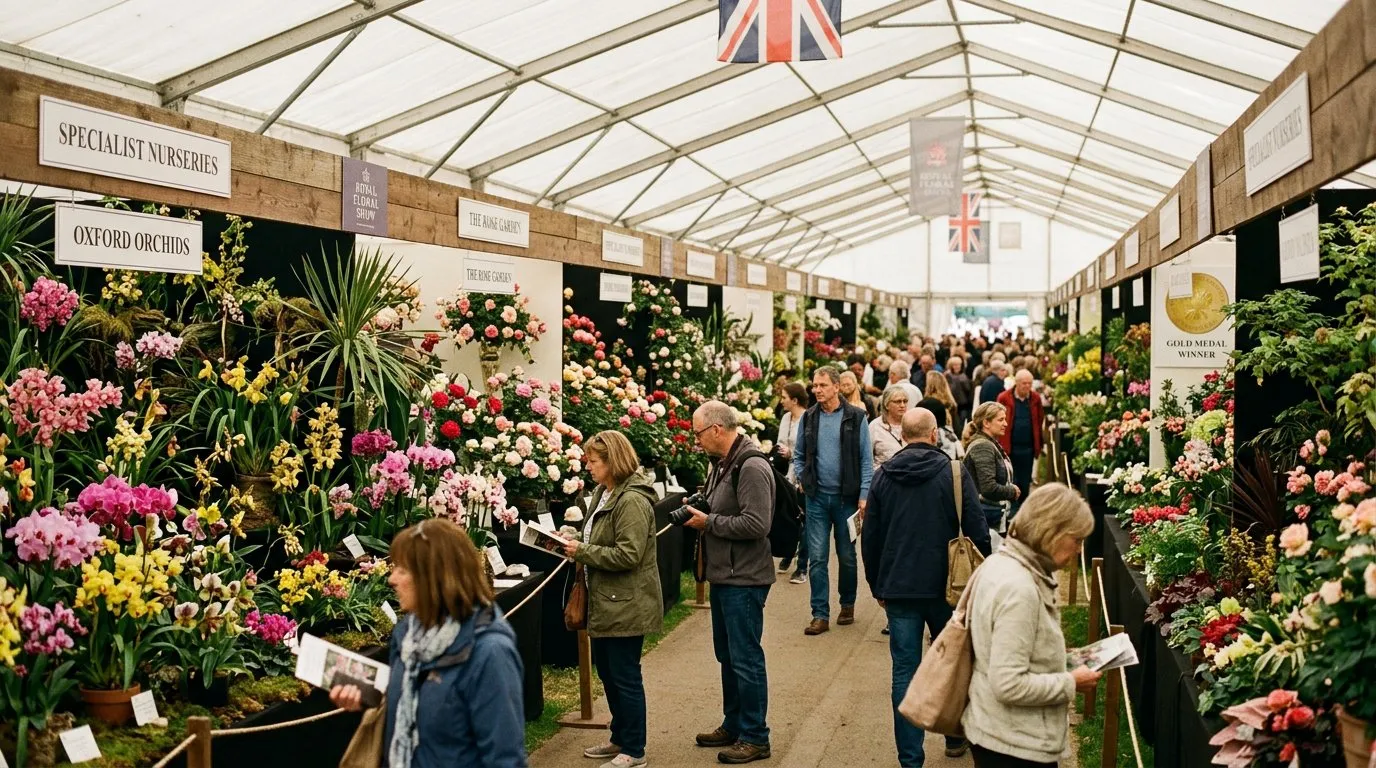 The Great Pavilion houses over 100 specialist nurseries and stunning floral displays
Artisan Gardens
Artisan Gardens are smaller, more intimate designs that feel achievable for home gardeners. They typically measure 5m by 5m and use modest materials. Where Show Gardens inspire awe, Artisan Gardens inspire action. You look at an Artisan Garden and think: I could build something like that. If you have a compact outdoor space, these are the gardens to study. Our small garden design ideas guide helps translate those ideas into a real plan.
Trade Stands and Shopping
The Shopping Village and outdoor trade stands sell everything from hand tools and gloves to garden furniture, art, and specialist seeds. Quality is generally high, but prices reflect the Chelsea premium. Compare before buying. Artisan tool makers and independent seed companies are worth seeking out. They often offer show-only varieties and bundles.
Chelsea Flower Show garden trends for 2026
Each year Chelsea reflects the direction of garden design. Trends spotted at the show typically appear in garden centres and home gardens within 12 to 18 months.
Climate-resilient planting
Climate-resilient gardens have moved from niche to mainstream. Designers are choosing plants that tolerate both drought and heavy rain. Mediterranean species such as cistus, rosemary, and salvia now appear alongside traditional British cottage plants. The message is clear: UK gardens need to adapt to longer dry spells and more intense winter rainfall. If you are rethinking your planting, our guide to drought-tolerant plants covers the best performers for UK conditions.
Naturalistic meadow planting
Naturalistic planting continues to dominate. Think drifts of grasses threaded through perennials rather than rigid blocks of colour. Piet Oudolf’s influence runs deep in this movement. Expect to see Deschampsia cespitosa, Molinia caerulea, and Stipa gigantea used as structural grasses among salvias, echinaceas, and rudbeckias. The effect is loose, layered, and designed to look beautiful even in winter when seed heads catch the frost.
Productive gardens
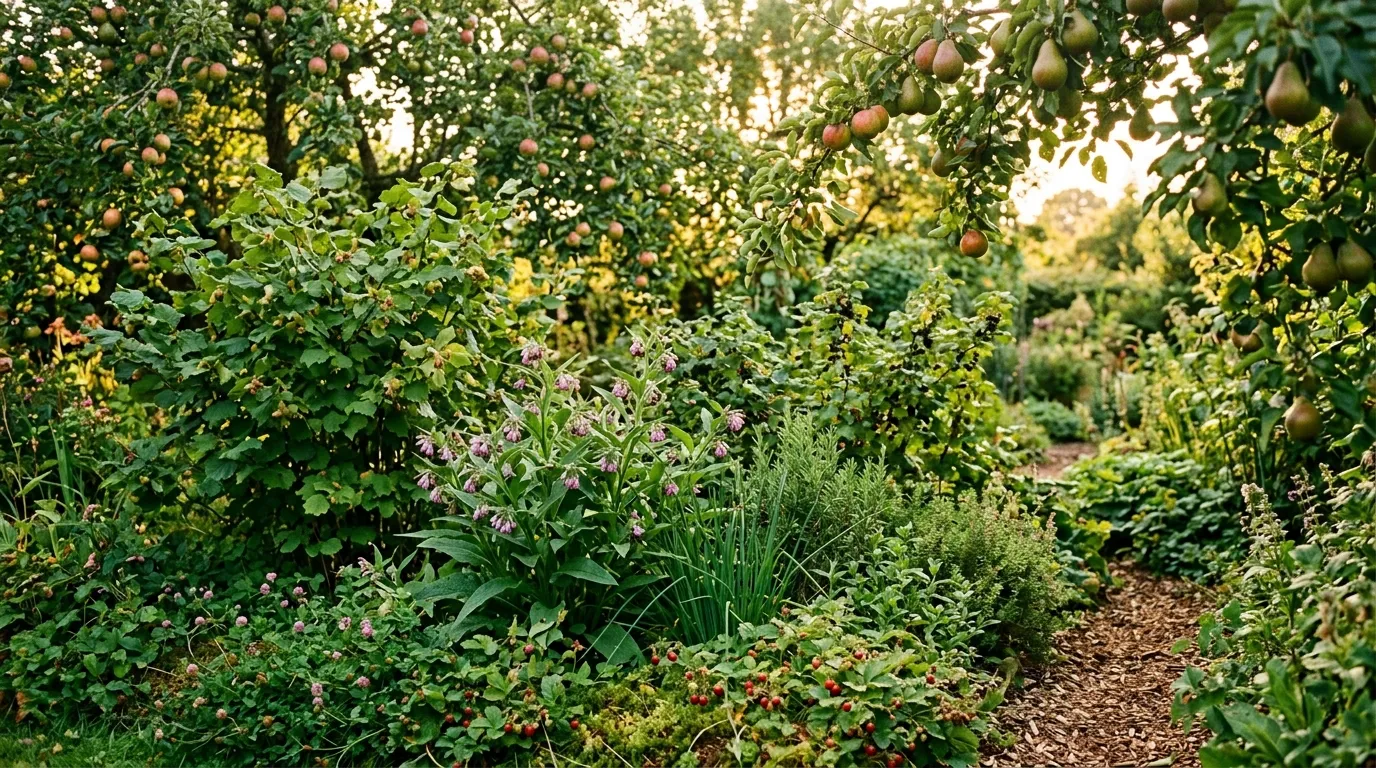
Growing food is back at Chelsea. After years of purely ornamental focus, designers are weaving vegetable beds, fruit trees, and herb spirals into decorative schemes. Expect to see espaliered apple trees against walls and raised beds of salad leaves alongside ornamental borders. The message is that productive gardens can be beautiful, not just functional.
Gardens for wellbeing
Wellbeing gardens continue to appear strongly. These designs focus on sensory experience: scented planting, water features, seating areas enclosed by hedging, and tactile surfaces. They draw on research linking time in gardens to reduced stress and improved mental health. Several 2025 Show Gardens featured secluded seating surrounded by climbing plants and fragrant shrubs. This theme will develop further in 2026.
Tips for visiting Chelsea Flower Show
Twenty years of attending Chelsea teaches you things that no guide book covers. These tips come from hard-won experience.
Arrive early. Gates open at 8:00am. The first hour is the quietest of the day. By 10:00am, the Main Avenue is shoulder to shoulder. If you want photographs of gardens without crowds, 8:00 to 9:00 is your window.
Wear the right shoes. You will walk between 5 and 8 miles during a full day. Paths are a mix of tarmac, gravel, and grass. Heels are impractical. Comfortable trainers or walking shoes are essential. Blisters ruin the day faster than rain.
Bring a tote bag. The show gives you a programme bag, but it is flimsy. A sturdy tote or small rucksack carries purchases, water, sunscreen, and a light waterproof layer. Lockers are not available inside the showground.
Eat before you arrive. Food options inside the show are expensive and queues are long at lunchtime. Eat a proper breakfast. Bring snacks. If you do eat on site, avoid the main food court between 12:00 and 2:00pm. Smaller stands further from the Main Avenue are quicker.
Photograph the plant labels. You will see hundreds of plants and forget most of them by the time you get home. Photograph every label that catches your eye. Use a notes app to record which garden or stand you spotted it at. This makes sourcing the plant afterwards far easier.
Visit the back areas first. Most visitors head straight for the Show Gardens on the Main Avenue. Walk past them and start at the far end of the showground. Work backwards towards the entrance. You see the quieter areas first, and the crowds thin out on the Main Avenue by late afternoon.
Download the RHS app. The official app includes an interactive map, exhibitor directory, and live queue updates. It saves enormous time navigating the showground. Download it the day before and familiarise yourself with the layout.
How to get to Chelsea Flower Show
The showground sits on the Thames Embankment in Chelsea, bordered by Royal Hospital Road and Chelsea Embankment.
By tube: Sloane Square station (District and Circle lines) is the nearest stop, roughly 10 minutes on foot. Follow the signs from the station. Pimlico station (Victoria line) is 15 minutes away on foot. Victoria station is 20 minutes walking or a short bus ride.
By bus: Routes 11, 137, 170, 211, and 360 stop close to the showground. The 11 from Liverpool Street runs along the King’s Road and is particularly convenient.
By train: London Victoria is the nearest mainline station. From there, take the District or Circle line one stop to Sloane Square, or walk 20 minutes through Belgravia.
By car: There is no public parking at the showground. Street parking in Chelsea is extremely limited and expensive. If you must drive, use a park-and-ride or leave the car at an outer London tube station. Battersea Park car park is the closest option, roughly 20 minutes on foot across Chelsea Bridge.
By river: Thames Clippers run to Cadogan Pier during show week. The journey from Greenwich or Embankment is scenic and avoids the tube altogether. Check the timetable for show-week specials.
Accessibility: The showground is wheelchair accessible. Paths are hard-surfaced and wide enough for wheelchairs and mobility scooters. Free wheelchair loans are available on a first-come, first-served basis from the Accessibility Hub near the Bull Ring Gate entrance. Request accessibility assistance in advance through the RHS website. Accessible toilets and rest areas are marked on the site map.
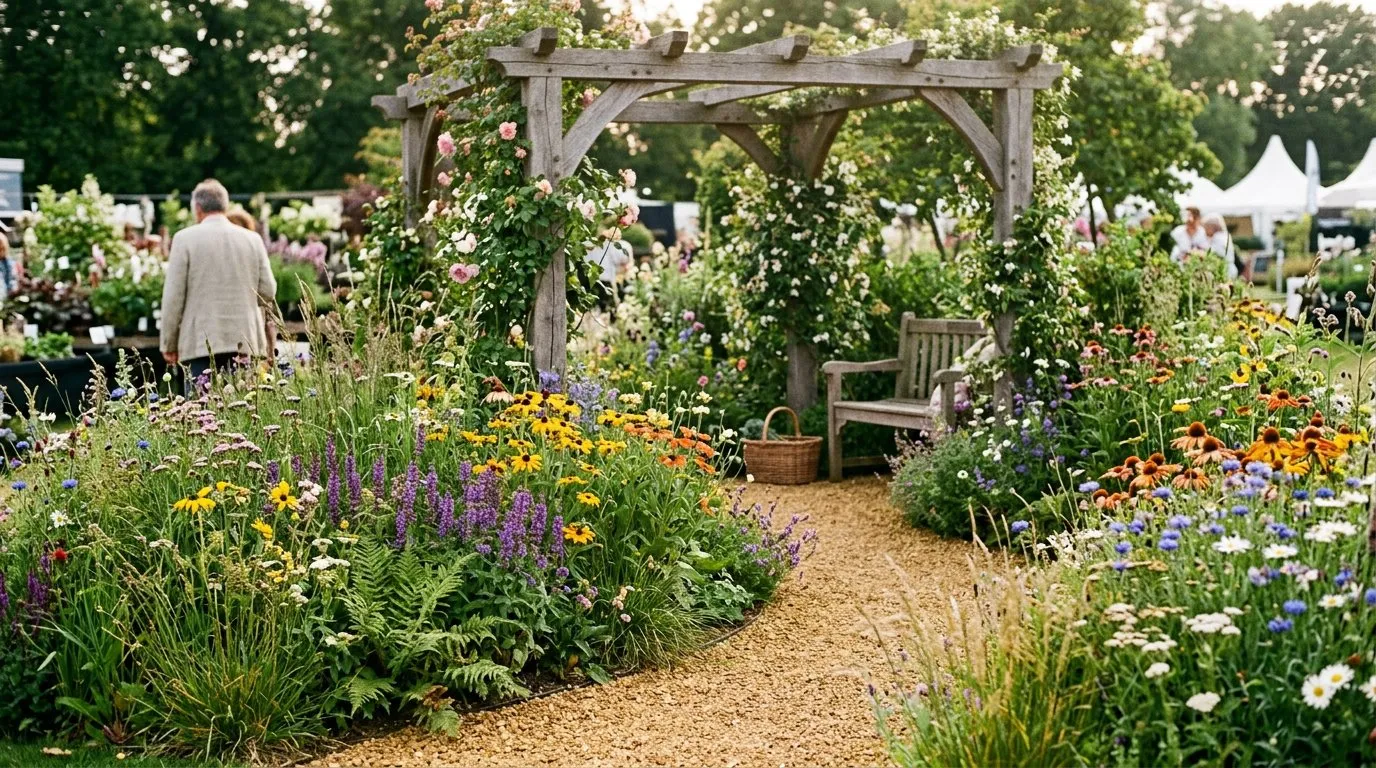 Artisan Gardens at Chelsea focus on smaller, achievable designs for real home gardens
Chelsea Flower Show sell-off day
The sell-off is a Chelsea tradition. On the final Saturday, from approximately 4:00pm onwards, exhibitors in the Great Pavilion sell their display plants at reduced prices. Nurseries would rather sell at a discount than pack everything back onto a lorry. Reductions of 30-50% are common. Rare and unusual specimens go for a fraction of their catalogue price.
Timing matters. The official sell-off window is short: roughly 4:00pm to 5:30pm when the show closes. Some nurseries start reducing prices earlier if stock is heavy. Others hold firm until the final half hour, then slash prices to clear everything.
What sells first: unusual perennials, specimen shrubs, and anything that won a Gold medal. If a particular plant caught your eye earlier in the week, head straight to that nursery at 4:00pm.
What to bring: cash (some nurseries do not accept cards during the sell-off rush), strong bags, and a trolley if you have one. The RHS sometimes provides cardboard carriers, but these run out fast. A wheeled shopping trolley is the secret weapon of sell-off regulars.
Getting plants home: you need to transport them on public transport or have someone pick you up. Plants wrapped in newspaper and carried in bags survive the tube journey surprisingly well. Remove any tall stakes. Group pots together in a deep bag to stop them tipping.
If you secure sweet peas or roses at the sell-off, get them into the ground within 48 hours. Keep the roots moist during transit and water thoroughly once planted.
History of the Chelsea Flower Show
The first Great Spring Show, as it was originally known, took place in 1913 at the Royal Hospital Chelsea. The Royal Horticultural Society had outgrown its previous venue in the Temple Gardens and needed more space for the expanding number of exhibitors.
The show was suspended during both World Wars. The grounds of the Royal Hospital served military purposes. Chelsea returned in 1947 with renewed enthusiasm. Post-war Britain was hungry for colour and normality. Gardens became a symbol of recovery and hope.
Through the 1950s and 1960s, Chelsea was dominated by formal gardens with manicured lawns, clipped hedges, and hybrid tea roses. The 1970s brought a shift towards naturalism. Beth Chatto’s exhibit in 1977, featuring dry-shade plants grown without irrigation, challenged the gardening establishment and won a Gold medal.
The 1990s and 2000s saw Chelsea become a media event. Television coverage brought the show into millions of living rooms. Designers such as Diarmuid Gavin and Andy Sturgeon pushed boundaries with experimental structures. Today, Chelsea balances horticultural excellence with cultural spectacle, drawing sponsors, celebrities, and royal visitors alongside lifelong gardeners.
The show has awarded Gold, Silver-Gilt, Silver, and Bronze medals since its earliest years. A Chelsea Gold remains the highest accolade in British horticulture. Nurseries display their medals proudly for decades. The phrase “Chelsea Gold medal winner” carries real commercial weight.
More than a century later, the show still takes place on the same 4.5-hectare site. The setting has not changed. The quality of the exhibits continues to rise. Chelsea remains the event that shapes how Britain gardens.
Why we recommend the Friday evening session for first-time visitors: After 30 years of attending Chelsea, the Friday evening session (4:30pm to 8pm) is consistently the most rewarding visit I have. Crowds drop by roughly 40% compared to the Thursday full-day session based on my own counts across multiple years. Garden designers come out from behind their show gardens to talk to visitors, nursery staff are relaxed enough to give genuine plant advice, and the low evening light on the gardens is extraordinary. The ticket costs £15-£25 less than the full day, too.
Common mistakes first-time visitors make
Experienced visitors spot first-timers by the mistakes they make. Avoid these and your day runs far more smoothly.
Trying to see everything
The showground contains over 500 exhibitors spread across 4.5 hectares. You cannot see them all in a single day. Trying to do so leads to exhaustion and frustration. Pick your priorities before you arrive. Choose three or four Show Gardens to study in detail. Allow two hours for the Great Pavilion. Leave time for the areas that interest you most, whether that is Artisan Gardens, the Discovery Zone, or the trade stands.
Arriving at midday
The showground reaches peak capacity between 11:00am and 3:00pm. Queues for food, toilets, and popular exhibits are longest during this window. Arrive at 8:00am and enjoy three golden hours before the bulk of visitors appear. Alternatively, book the evening session and arrive at 4:30pm for a quieter, cooler experience.
Wearing new shoes
Chelsea involves serious walking on mixed surfaces. New shoes cause blisters within the first hour. Wear broken-in shoes with good support. Sandals and heels are a bad idea, no matter how the weather looks. Rain turns grassy paths to mud within minutes.
Ignoring the RHS app
The paper map is useful, but the app is better. It shows your location in real time, lists exhibitors by category, and flags queue times. Without it, you spend valuable minutes wandering lost. Download it the night before and charge your phone fully.
Not budgeting for impulse purchases
The Shopping Village is designed to tempt. Hand-forged tools, artisan planters, rare seeds, and limited-edition prints surround you. Set a spending limit before you walk in. The excitement of the show makes everything feel like a bargain. It is easy to spend hundreds without noticing.
Now you’ve planned your Chelsea visit, read our guide on cottage garden planting plans to bring the show’s naturalistic planting ideas home.
Frequently asked questions
How much do Chelsea Flower Show tickets cost?
Tickets start from £37 for RHS members. Non-member tickets begin at £47. Prices vary by day, with weekdays generally cheaper than weekends. RHS members get priority booking before general sale opens.
What is the best day to visit Chelsea Flower Show?
Friday is the best day for most visitors. Crowds are smaller than Saturday, the gardens are still fresh, and the evening session offers a relaxed atmosphere with drinks available.
Can you buy plants at Chelsea Flower Show?
Yes, plants are sold throughout the show. The Great Pavilion sell-off on the final Saturday afternoon is famous for bargains as exhibitors reduce prices rather than transport stock home.
How do I get to the Chelsea Flower Show?
Sloane Square is the nearest tube station on the District and Circle lines. The show is a 10 minute walk from the station. No public parking is available so public transport is strongly recommended.
What should I wear to Chelsea Flower Show?
Wear comfortable walking shoes as you will cover several miles. Dress in layers. There is no formal dress code. Bring a hat and sunscreen for sunny days and a waterproof jacket just in case.
Is the Chelsea Flower Show wheelchair accessible?
Yes, the show is wheelchair accessible. Paths are wide enough for wheelchairs. Free wheelchair loans are available on a first-come basis. Book accessibility assistance through the RHS website.
Lawrie has been gardening in the West Midlands for over 30 years. He grows his own veg using no-dig methods, keeps a wildlife-friendly garden, and writes practical advice based on real UK growing conditions.