Decking Ideas and Design for the UK
UK decking guide covering timber, composite, and hardwood options. Includes costs per square metre, building regulations, anti-slip, and maintenance.
Key takeaways
- Pressure-treated softwood decking costs £40-£120 per square metre installed and lasts 10-15 years
- Composite decking costs more upfront (£80-£160/m2) but lasts 25+ years with no annual treatment
- Raised decks over 300mm above ground level need building regulations approval
- Anti-slip strips or grooved boards prevent algae-related slips in the wet UK climate
- A 4m x 3m deck costs £500-£1,500 in softwood or £1,000-£2,500 in composite materials only
- East or west-facing decks get the best balance of morning or evening sun without overheating
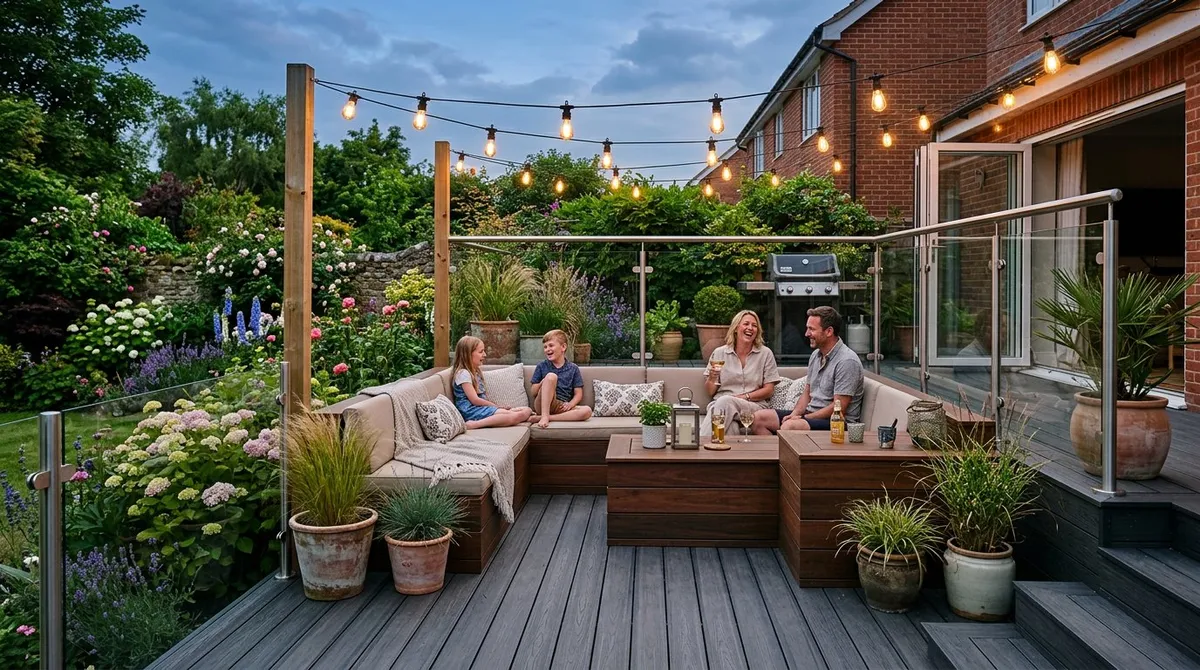
Decking creates a flat, dry outdoor living space in gardens where the ground is uneven, sloping, or muddy. A well-built deck extends the house outward. It creates a defined zone for eating, sitting, and entertaining that works from April to October in most of the UK.
The choice between timber and composite, ground-level and raised, simple rectangle and multi-level design affects the budget, maintenance burden, and lifespan of the finished deck. This guide covers every option with real UK prices, practical maintenance schedules, and the building regulations that apply. For ideas on what to build on or beside your deck, see our guides to pergola ideas and outdoor kitchens.
Timber vs composite vs hardwood
The board material is the biggest decision. It determines the upfront cost, maintenance commitment, lifespan, and appearance of the finished deck.
Softwood (pressure-treated pine)
Pressure-treated Scandinavian redwood or pine is the most common decking timber in the UK. Tanalised treatment forces preservative deep into the wood, protecting against rot and insect attack. The initial green tint weathers to grey within 12 months unless you apply a coloured stain.
Softwood decking costs £40 to £120 per square metre installed. It is easy to cut, drill, and fix with standard tools. The boards accept stain and oil readily. With annual treatment, softwood decking lasts 10-15 years.
The downsides are real. Softwood splinters as it ages. It needs sanding every 2-3 years. The surface grows algae quickly in the UK climate, becoming dangerously slippery from October to March without regular cleaning. Knots can loosen and pop, creating trip hazards.
Hardwood (balau, ipe, iroko)
Tropical hardwoods are denser, harder, and far more durable than softwood. Balau and ipe last 25-40 years without preservative treatment. The grain is tight and attractive. Splinters are rare.
Hardwood decking costs £100 to £200 per square metre installed. It is heavier and harder to cut, requiring carbide-tipped saw blades and pre-drilling for every screw. Stainless steel fixings are mandatory because standard screws corrode against the tannins.
Source hardwood from FSC-certified suppliers. Uncertified tropical timber contributes to deforestation. The Forest Stewardship Council label confirms responsible sourcing.
Composite (Trex, Millboard, Cladco)
Composite decking blends recycled wood fibre with plastic polymers. The result is a board that does not rot, splinter, warp, or need staining. Most composites carry a 25-year warranty. Textured surfaces mimic timber grain convincingly.
Composite costs £80 to £160 per square metre installed. Premium brands like Millboard reach £200/m2 but are almost indistinguishable from real timber. Budget composites can look plasticky and feel hot underfoot in direct sun.
Composite boards expand and contract with temperature. Follow the manufacturer’s gap specifications precisely. Boards laid too tight buckle in summer. Boards laid too loose look untidy and trap debris.
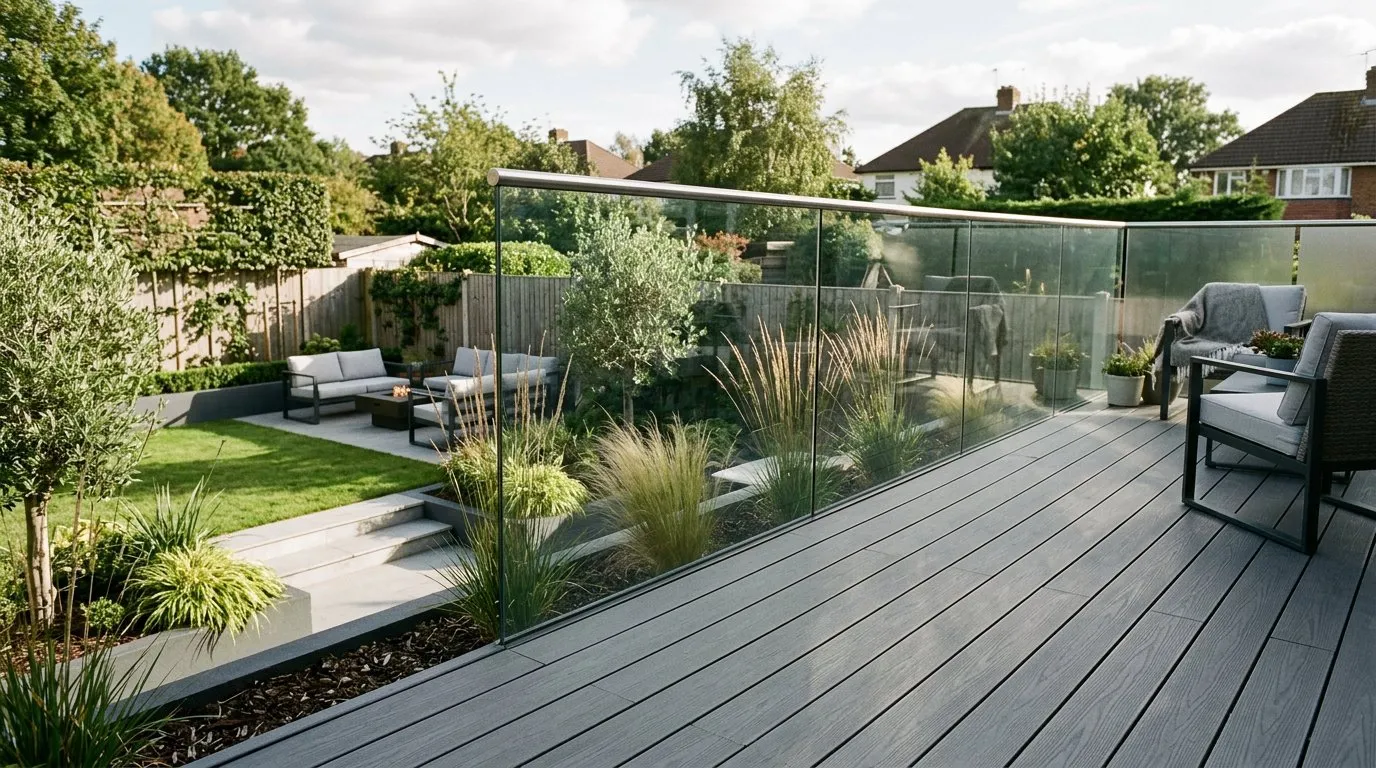
Grey composite decking boards paired with a frameless glass balustrade create a sleek, low-maintenance finish that suits contemporary UK gardens.
Decking material comparison
| Feature | Softwood | Hardwood | Composite |
|---|---|---|---|
| Cost per m2 (installed) | £40-£120 | £100-£200 | £80-£160 |
| Lifespan | 10-15 years | 25-40 years | 25-30 years |
| Annual maintenance | Sand, clean, stain/oil | Clean, oil (optional) | Clean only |
| Slip resistance | Poor (needs strips) | Moderate | Good (textured) |
| Splinters | Yes, increasing with age | Rare | None |
| Colour options | Stain to any colour | Natural tones only | Wide factory range |
| Environmental impact | Low (UK-grown available) | High (tropical) unless FSC | Moderate (recycled content) |
| DIY suitability | Easy | Difficult | Moderate |
| Heat in summer sun | Moderate | Moderate | Can be hot (dark colours) |
For most UK gardens, the choice comes down to softwood now and replace in 15 years, or composite once and forget about it. Hardwood suits those who value natural timber and are prepared to pay a premium.
Why we recommend composite decking for most UK gardens: After working with both timber and composite installations over 30 years, composite boards consistently outperform softwood in the long run. In the first five years after installation, softwood decks require an average of three sanding sessions and annual staining. Composite boards in the same period need only brushing twice a year. On a typical 20m2 deck, the maintenance time saving alone amounts to 15-20 hours over five years.
Ground-level vs raised decking
Ground-level decking sits within 300mm of the ground surface. It needs no planning permission and is exempt from building regulations in most cases. The frame sits on concrete pads, adjustable pedestals, or compacted hardcore. Ventilation underneath is essential to prevent rot.
Raised decking sits more than 300mm above ground level. This is common on sloping sites, over basement areas, or where the house floor is significantly above garden level. Raised decking needs proper structural engineering. Posts must be concreted into the ground. Handrails are required on any deck more than 600mm above finished ground level.
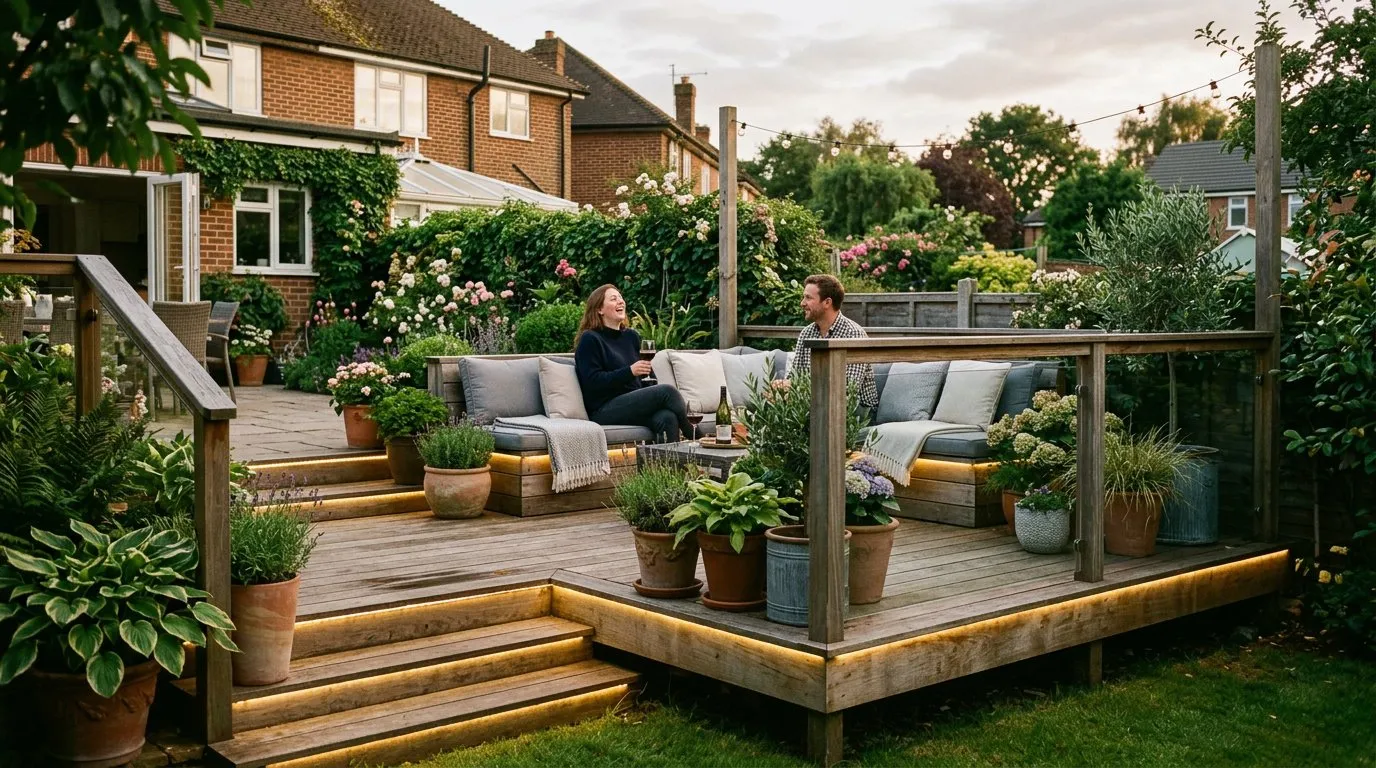
A raised timber decking platform with built-in seating, LED riser lights, and potted plants creates a defined outdoor living space in a UK back garden.
Building regulations for raised decks
Raised decks over 300mm above ground level require building regulations approval. This is separate from planning permission. The application ensures the structure is safe, including:
- Joist and beam sizing for the span and expected load
- Post foundations deep enough to resist lateral movement
- Handrail height of at least 1,100mm with a maximum gap of 100mm between balusters
- Proper ledger board attachment to the house wall (if applicable)
A structural engineer’s calculation costs £200-£500 and is worth the investment. A poorly built raised deck is a safety hazard. The Planning Portal has full guidance on when building regulations apply.
Decking layout and design ideas
The simple rectangle
A 4m x 3m rectangular deck adjacent to the house is the most popular configuration. It works as a dining area for four to six people or a lounging space. Boards running away from the house make the garden feel longer. Boards running parallel to the house make the deck feel wider.
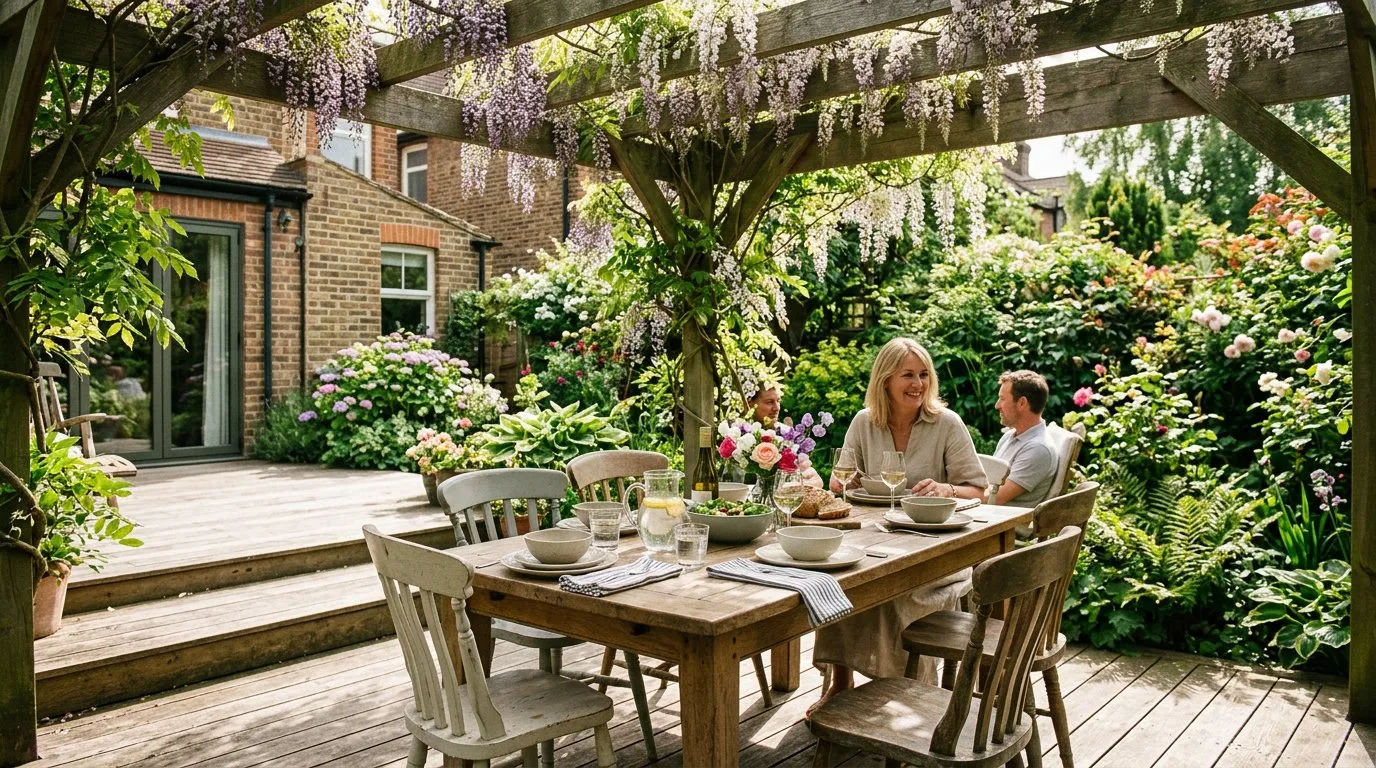
A timber deck dining area beneath a wisteria-covered pergola turns an ordinary UK suburban garden into an inviting outdoor eating space.
Multi-level decks
On sloping sites, two or three levels connected by steps create distinct zones: dining on the upper level, seating below, planting beds alongside. Each level should be a minimum of 2m x 2m to be functional. Step risers between 150mm and 200mm are the most comfortable.
Wraparound decks
An L-shaped or U-shaped deck wrapping around a corner of the house connects different rooms to the garden. The kitchen doors open onto a dining area. The living room doors open onto a lounging area. This layout works particularly well with patio garden spaces where every square metre counts.
Integrated features
Built-in benches along the perimeter save floor space and provide hidden storage underneath. Integrated planters soften the edges and bring greenery onto the deck. Cut-outs for existing trees preserve established planting while adding character. Recessed LED lights in the deck boards or risers provide low-level garden lighting without freestanding fixtures.
Anti-slip solutions for UK decking
Slippery decking is the single biggest complaint from UK homeowners. Algae, moss, and lichen thrive on timber surfaces in the damp British climate. From October to March, an untreated softwood deck can be genuinely dangerous.
Anti-slip strips are aluminium channels with a textured insert, screwed to the surface of each board. They cost £3-£5 per metre and are the most effective retrofit solution. Choose strips that match the board width.
Grooved or reeded boards have channels running along the surface that channel water and provide grip. They are better than smooth boards but still need regular cleaning. Grooves trap debris and can harbour algae if neglected.
Textured composite boards have a moulded grain pattern that provides grip without grooves. Premium composites like Millboard are specifically designed for slip resistance. They outperform timber in wet conditions.
Regular cleaning is the most important prevention. Brush the deck with a stiff broom fortnightly during autumn and winter. Use a proprietary decking cleaner and algae treatment twice a year: once in spring and once in autumn. A pressure washer on a low setting (below 100 bar) removes stubborn algae without damaging the wood.
Maintenance schedules by material
| Task | Softwood | Hardwood | Composite |
|---|---|---|---|
| Sweep and brush | Weekly | Weekly | Weekly |
| Algae treatment | Twice yearly | Once yearly | Once yearly |
| Sanding | Every 2-3 years | Every 5 years (optional) | Never |
| Staining or oiling | Annually | Every 2-3 years (optional) | Never |
| Check fixings | Annually | Annually | Annually |
| Replace damaged boards | As needed | Rarely needed | Rarely needed |
| Full replacement | 10-15 years | 25-40 years | 25-30 years |
Softwood maintenance takes a full weekend every spring. Sand the entire surface with 80-grit paper (or a belt sander), clean with decking cleaner, let it dry for 48 hours, then apply two coats of decking oil or stain. Skip a year and the wood greens, greys, and starts to deteriorate.
Composite maintenance is a 30-minute job. Brush off debris, wash with soapy water, and check the fixings. No sanding, no staining, no oil. This is why many homeowners accept the higher upfront cost.
Decking costs: full budget breakdown
A realistic budget for a 12m2 (4m x 3m) deck, including substructure, fixings, and finishing.
| Item | Softwood | Composite | Hardwood |
|---|---|---|---|
| Decking boards | £200-£400 | £500-£1,200 | £600-£1,500 |
| Joists and subframe | £150-£300 | £150-£300 | £200-£400 |
| Fixings (screws, clips) | £30-£60 | £60-£120 | £50-£100 |
| Concrete pads/pedestals | £50-£100 | £50-£100 | £50-£100 |
| Weed membrane | £15-£30 | £15-£30 | £15-£30 |
| Finishing (oil/stain) | £30-£60 | None | £30-£60 |
| Anti-slip strips | £50-£100 | None (textured) | £50-£100 |
| Materials total | £525-£1,050 | £775-£1,750 | £995-£2,290 |
| Labour (if fitted) | £600-£1,500 | £800-£1,800 | £1,000-£2,000 |
| Total installed | £1,125-£2,550 | £1,575-£3,550 | £1,995-£4,290 |
Add £500-£1,500 for steps, handrails, built-in seating, or integrated planters. Raised decks over 600mm add 30-50% to the total cost due to structural requirements and handrails.
Colour and finish options
Colour choice affects how the deck feels in the garden. It also affects heat absorption in summer.
Light grey and silver suit contemporary gardens and reflect heat. They show dirt more readily but make small gardens feel larger.
Mid-brown and teak tones are the most popular and versatile. They complement brick, stone, and most planting schemes. They look natural alongside timber fences and garden buildings.
Dark grey and charcoal create a dramatic, modern look. They absorb more heat and can feel uncomfortably hot underfoot in direct summer sun. Bare feet on dark composite boards in July is an unpleasant experience. Use lighter colours for south-facing decks.
Natural timber grey is the colour untreated softwood reaches after 12-18 months. Some homeowners prefer this weathered look to annual staining. If you choose to let timber grey naturally, still apply a UV-protective clear oil to prevent surface cracking.
Planting around and through decking
Planting softens the hard edges of decking and integrates it into the garden. Cut-outs in the deck surface allow existing trees, shrubs, or new planting to grow through.
Beside the deck: low evergreen shrubs like lavender, box, or pittosporum define the edge without blocking views. Ornamental grasses (miscanthus, stipa) add movement and soften straight lines. Climbing plants on trellis panels behind built-in seating create a green backdrop.
In integrated planters: built-in raised planters at deck corners or along edges hold herbs, trailing plants, or seasonal colour. Line timber planters with pond liner to prevent rot. Include drainage holes to avoid waterlogging.
Through the deck: leave a 50-100mm gap around tree trunks to allow growth. Use a flexible rubber collar to stop debris falling through. Existing trees add instant maturity and shade to a new deck. For ideas on what to grow in difficult spots, see our guide to plants for shade.
Common mistakes with garden decking
1. Poor ventilation underneath
Air must circulate beneath the deck to prevent moisture build-up, rot, and fungal growth. Leave a minimum 150mm gap between the ground and the underside of the joists. Lay weed membrane on the ground beneath to suppress vegetation. Never board in the sides completely: leave ventilation gaps of at least 50mm.
2. Incorrect joist spacing
Joist centres of 400mm suit standard 32mm-thick boards. Wider spacing causes boards to flex and bounce underfoot. Composite boards often need 300-350mm centres because they flex more than timber. Always follow the board manufacturer’s joist spacing recommendations.
3. No slope for drainage
A deck must slope away from the house at a minimum fall of 1:80 (12mm per metre). A level deck pools water against the house wall, creating damp problems. On ground-level decks, slope the joists. On raised decks, use the ledger board as the high point.
4. Skipping the weed membrane
Weeds and grass growing up through deck boards look terrible and are hard to remove. Lay a heavy-duty weed membrane over the ground before building the subframe. Overlap sheets by 150mm and pin them down. This also prevents cats and foxes nesting underneath.
5. Choosing the wrong colour for the aspect
Dark decking on a south-facing terrace absorbs heat and becomes too hot for bare feet. Light decking in a shaded north-facing garden shows algae and staining more visibly. Match the colour to the aspect and accept the maintenance trade-offs. For budget-conscious designs, mid-tones offer the best balance.
Now you have chosen your deck style, read our guide on pergola ideas for the next step in creating a complete outdoor living space.
Frequently asked questions
How much does decking cost in the UK?
Softwood decking costs £40 to £120 per square metre installed. Composite costs £80 to £160 per square metre. Hardwood costs £100 to £200. A typical 4m x 3m softwood deck costs £500 to £1,500 for materials alone, or £1,200 to £3,000 fully installed by a professional.
Does decking need planning permission UK?
Ground-level decking under 300mm high does not need planning permission under permitted development rules. Raised decks over 300mm require building regulations approval. Decking within 2m of a boundary must not exceed 300mm in height. Check the Planning Portal for the full rules.
Is composite decking worth it?
Composite decking costs roughly double the price of softwood upfront. Over 20 years, the total cost including annual maintenance, staining, sanding, and board replacement is lower than softwood. Composite does not splinter, rot, or need treatment. For a deck you want to last 25 years with minimal effort, composite is worth the extra cost.
How do I stop decking being slippery?
Fit anti-slip strips to each board, or choose composite boards with a textured surface. Clean the deck with a stiff brush and algae remover twice a year, in spring and autumn. Shaded, north-facing decks need the most attention. Grooved softwood boards channel water but still need regular cleaning to prevent algae colonising the grooves.
How long does timber decking last?
Pressure-treated softwood lasts 10-15 years with annual sanding and treatment. Neglect maintenance and it deteriorates within 5-7 years. Hardwood like balau or ipe lasts 25-40 years with occasional oiling. Composite boards carry warranties of 25-30 years and typically last longer.
What is the best direction for a deck to face?
West-facing decks catch evening sun and suit after-work relaxation. South-facing decks get the most sun but can overheat. East-facing decks are ideal for morning coffee in the sun. North-facing decks stay cool and shaded, which limits their use in the UK. Choose light-coloured boards for south-facing decks to reduce heat absorption.
Can I build decking myself?
Ground-level softwood decking is a manageable DIY project. It requires a level base, joists at 400mm centres, and stainless steel screws. A 4m x 3m deck takes a weekend. Raised decks, complex shapes, and structural designs should be built by a professional. Always check that the subframe is level before fixing boards.
Lawrie has been gardening in the West Midlands for over 30 years. He grows his own veg using no-dig methods, keeps a wildlife-friendly garden, and writes practical advice based on real UK growing conditions.