Making a Fairy Garden Step by Step
How to make a fairy garden step by step. Best miniature plants, containers, and accessories for UK gardens, plus seasonal care from a hands-on grower.
Key takeaways
- A fairy garden costs five to twenty pounds and takes under an hour to plant
- Broken terracotta pots, stone troughs, and old tree stumps make the best containers
- Mind-your-own-business, baby tears, and creeping thyme are the top miniature plants for UK conditions
- Alpine sedums and miniature ferns survive outdoors year-round in most UK regions
- Children aged 4 and up can build a fairy garden with minimal adult help
- Water lightly twice a week in summer and protect from hard frost in winter

Making a fairy garden step by step is one of the most rewarding miniature gardening projects for families in the UK. A single shallow container, a handful of tiny plants, and an hour of planting time produces a living scene that children return to for months.
The RHS recommends fairy gardens as one of their top gardening activities for children. The project teaches planting, watering, and basic plant care in a space small enough for a child to manage alone. Costs start from five pounds if you use a reclaimed container and propagate your own plants. Even a shop-bought setup rarely exceeds twenty pounds.
What is a fairy garden?
A fairy garden is a miniature planted landscape built inside a container, broken pot, or natural hollow. The idea combines real plants with small-scale accessories to create a scene that looks like a tiny world. Think of it as a living doll’s house made from moss, pebbles, and groundcover plants.
The concept originated in the Victorian tradition of miniature gardens, but modern fairy gardens lean towards naturalistic planting rather than ornamental fussiness. The best ones use real plants that stay small naturally, rather than trimming standard plants down to size. A 30cm terracotta pot holds enough space for 4-6 plant species, a pebble path, and a few accessories.
Fairy gardens work outdoors year-round in most UK regions. They also make excellent sensory garden features. The mix of textures, scents from thyme and chamomile, and the invitation to touch and rearrange makes them particularly good for young children.
What is the best container for a fairy garden?
The container sets the scale for everything else. Bigger containers hold moisture longer, support more plants, and give you more room to create paths and features.
| Container | Size | Cost | Drainage | Best For |
|---|---|---|---|---|
| Broken terracotta pot | 30-50cm | £1-£5 | Excellent | Tiered planting, natural look |
| Stone trough | 40-60cm | £10-£30 | Good | Permanent garden feature |
| Old tree stump | 30-50cm hollow | Free | Natural | Woodland fairy gardens |
| Wooden crate | 30-40cm | £3-£8 | Line with plastic | Rustic, portable |
| Window box | 60-80cm long | £5-£15 | Good | Windowsills, balconies |
| Belfast sink | 40-60cm | £5-£20 (reclaimed) | Drill holes | Cottage gardens |
Broken terracotta pots are my first choice. A pot cracked across the middle creates a natural front opening that reveals the scene inside. The broken edge forms terraces at different levels, giving depth to the planting. Car boot sales and recycling centres sell cracked pots for next to nothing.
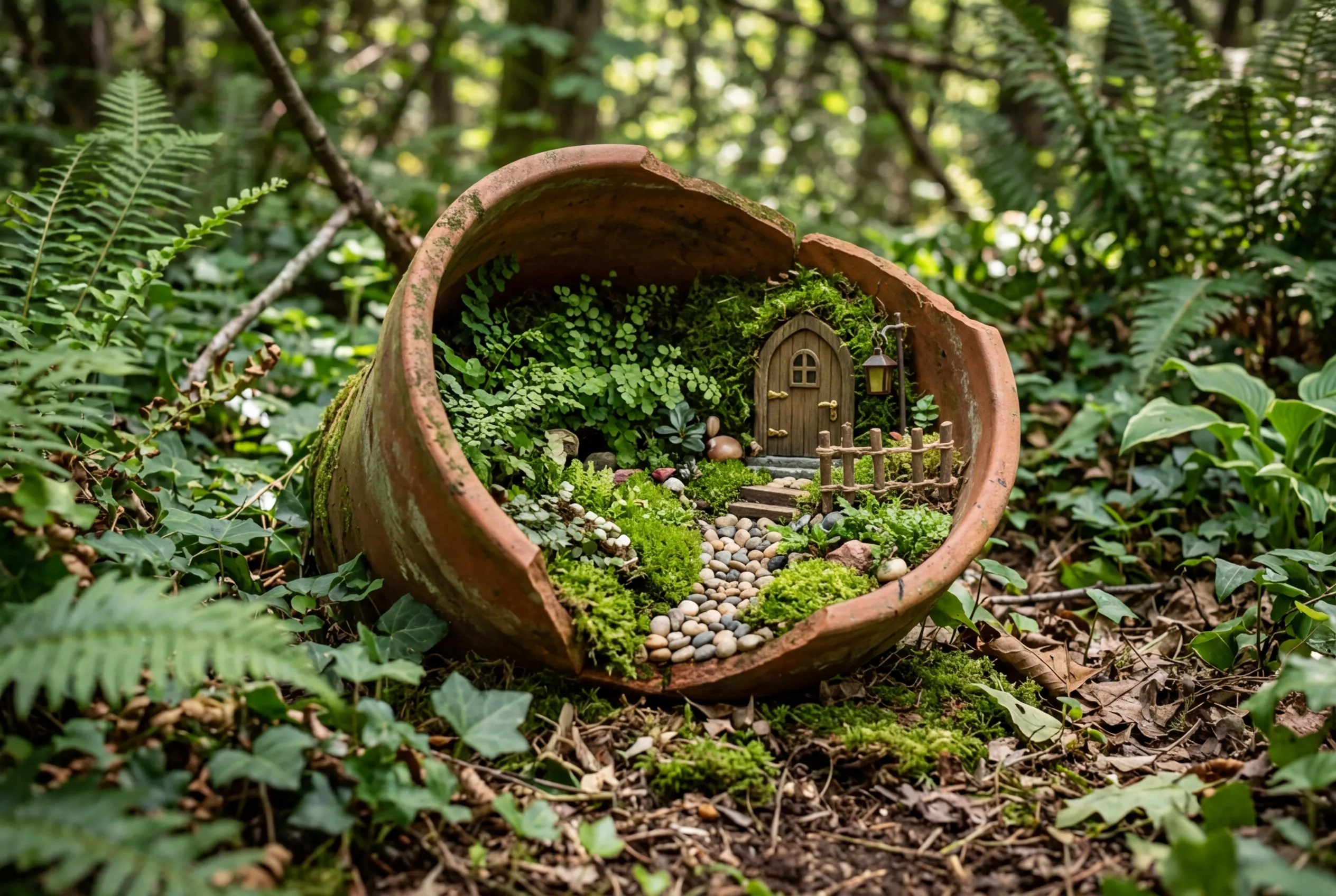 A broken terracotta pot turned on its side creates natural terraces for a fairy garden. The crack becomes a feature, not a flaw.
Tree stumps with rotted-out centres make spectacular natural containers. The bark provides built-in texture, and the wood retains moisture well. Drill a few drainage holes through the base if the wood is still solid. Old stumps from felled garden trees are perfect. If you have a small garden, a single stump fairy garden becomes a focal point without taking up border space.
What are the best miniature plants for fairy gardens?
The right plants make or break a fairy garden. You need species that stay naturally small, tolerate shallow compost, and survive UK weather outdoors. Avoid anything labelled “dwarf” that still grows above 15cm. True miniature plants stay under 5cm and spread sideways rather than upwards.
| Plant | Height | Spread | Sun/Shade | Hardiness | Role |
|---|---|---|---|---|---|
| Mind-your-own-business (Soleirolia) | 1-3cm | 30cm+ | Shade/part shade | Hardy to -10C | Groundcover, lawn effect |
| Baby tears (Soleirolia ‘Aurea’) | 1-2cm | 20cm+ | Part shade | Hardy to -10C | Golden groundcover |
| Creeping thyme (Thymus serpyllum) | 2-5cm | 25cm | Full sun | Hardy to -15C | Fragrant paths, sun areas |
| Alpine sedum (Sedum acre) | 3-5cm | 20cm | Full sun | Hardy to -20C | Rock gardens, dry areas |
| Miniature fern (Asplenium trichomanes) | 5-10cm | 10cm | Shade | Hardy to -15C | Woodland scenes |
| Dwarf mondo grass (Ophiopogon ‘Nanus’) | 5-8cm | 10cm | Part shade | Hardy to -15C | Grass-like tufts |
| Moss (Hypnum cupressiforme) | 1-2cm | Spreading | Shade | Hardy | Carpet, forest floor |
| Corsican mint (Mentha requienii) | 1cm | 15cm | Part shade | Hardy to -10C | Scented carpet |
Mind-your-own-business is the single most useful fairy garden plant. It forms a dense, bright green carpet that looks exactly like a miniature lawn. It grows in shade or part shade, tolerates heavy clay, and fills gaps within weeks. The golden form (‘Aurea’) adds a second tone without any extra effort.
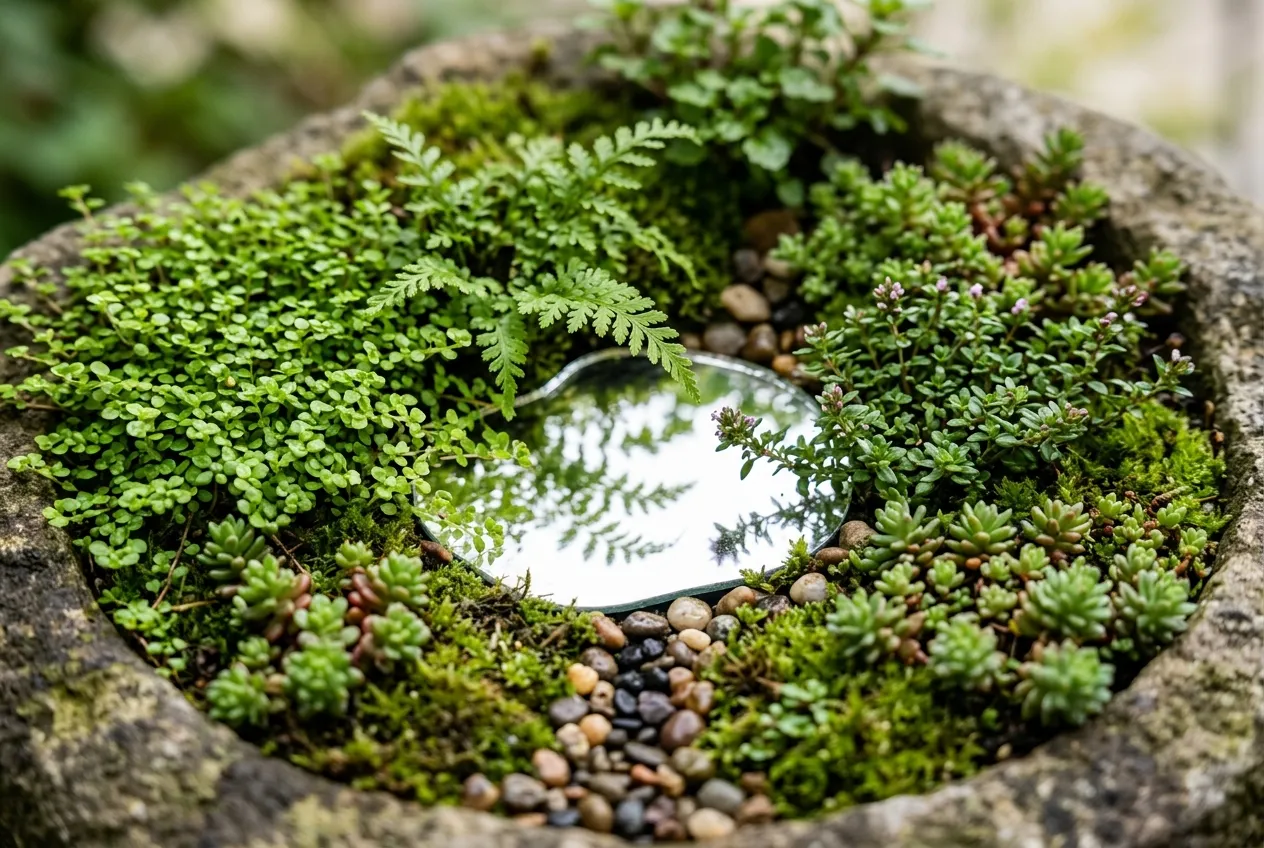 Baby tears, miniature ferns, and alpine sedums arranged around a mirror pond. These plants stay under 5cm tall and handle UK winters outdoors.
For sunny positions, creeping thyme is unbeatable. It releases scent when touched, flowers in summer with tiny purple blooms, and tolerates drought better than any other miniature plant. Alpine sedums add succulent texture and survive in almost no soil. Both are excellent choices if you enjoy growing succulents on a smaller scale.
How do you make a fairy garden step by step?
This method works for any container. The whole process takes 30-60 minutes depending on the complexity of your design. Children aged four and up can do most of the planting themselves.
What you need:
- Container with drainage holes (30cm minimum)
- Gravel or broken crocks for drainage (a small handful)
- Multipurpose compost mixed with horticultural grit (3:1 ratio)
- 4-6 miniature plants (see table above)
- Pebbles, small stones, or aquarium gravel for paths
- Accessories: mini fence, door, bench, or figures (optional)
Step 1: Prepare the container. Cover drainage holes with broken crocks or mesh to stop compost washing out. Add 2-3cm of gravel across the base. This prevents waterlogging, which kills sedums and thyme fast.
Step 2: Add the compost mix. Fill to within 2cm of the rim with a 3:1 mix of multipurpose compost and horticultural grit. The grit improves drainage and stops the compost compacting in a shallow container. Press down gently but do not compact it hard.
Step 3: Plan the layout. Place plants in their pots on the compost surface before planting. Move them around until you are happy with the arrangement. Put taller plants (ferns, mondo grass) at the back or sides. Low groundcover (mind-your-own-business, moss) goes at the front and between features.
Step 4: Plant. Remove each plant from its pot and tease out the roots gently. Make a hole with your finger, set the plant in, and firm the compost around it. Water each plant in as you go. Leave 3-5cm gaps between species for paths and accessories.
 Planting a fairy garden together. Children handle the small plants easily, and the whole project takes under an hour.
Step 5: Add paths and features. Lay fine gravel or tiny pebbles for paths. Press them gently into the compost surface. Add accessories last: mini fences, doors, bridges, or figures. A small mirror buried flush with the compost surface makes a convincing pond.
Step 6: Water and settle. Give the whole container a gentle soak with a fine-rose watering can. This settles the compost around roots and washes soil off the pebble paths. Place the finished fairy garden in its permanent position.
This project works brilliantly alongside other gardening projects for children. Children who build a fairy garden often go on to want their own small patch of the garden to look after.
What accessories work best in a fairy garden?
The accessories bring the scene to life, but restraint matters. Too many items crowd the plants and make the garden look cluttered rather than enchanting.
Natural materials last longer outdoors. Pebbles, shells, pine cones, acorn cups, and twigs survive rain and frost without deteriorating. Wooden items (mini fences, doors, bridges) look best but rot within 12-18 months. Treat them with a child-safe wood preservative or accept them as replaceable.
Best accessories for outdoor fairy gardens:
- Small mirror or piece of foil for a pond
- Fine aquarium gravel for paths (2-3mm grain)
- Miniature wooden fence sections (widely available online for under two pounds)
- Small slate pieces for stepping stones
- Pine cone halves for trees
- Acorn cup bird baths
- Seashells for decorative borders
- LED fairy lights (battery-powered, for evening display)
Avoid plastic accessories in gardens with young children who might put small items in their mouths. The National Trust often runs fairy trail events that inspire natural decoration ideas using foraged materials.
How do you look after a fairy garden through the year?
Fairy gardens need light, regular maintenance. Neglected containers become overgrown within a single growing season as the groundcover plants spread beyond their intended areas.
Spring (March-May): Top up compost where it has settled or washed away. Divide any plants that have outgrown their space. Replace dead plants and refresh accessories. This is the best time to replant a fairy garden from scratch if needed.
Summer (June-August): Water twice a week or more in hot spells. Shallow containers dry out fast in direct sun. Trim creeping thyme after flowering to keep it compact. Pinch back mind-your-own-business if it is swamping other plants.
Autumn (September-November): Remove fallen leaves that smother small plants. Reduce watering as growth slows. Move delicate containers to a sheltered spot near a house wall before the first hard frost.
Winter (December-February): Water once a fortnight at most. Protect from heavy frost by wrapping the container with bubble wrap or moving it under cover. Hardy plants like sedum and thyme survive outdoors in most UK regions. Mind-your-own-business dies back in hard frost but regrows from the roots in spring.
If your fairy garden includes a mirror pond feature, you might also enjoy building a full-scale container pond as a companion project.
Can you make a fairy garden with children?
Fairy gardens are one of the best gardening projects for children in the UK. The small scale makes every task manageable for small hands, and the creative element keeps children engaged far longer than standard planting.
Children aged four to six can plant miniature species, arrange pebble paths, and place accessories with minimal help. Older children (seven to ten) can plan the layout, choose plants, and take ownership of ongoing watering and care. The project teaches soil preparation, plant spacing, watering, and observation without the effort or patience needed for a full-size garden.
Fairy gardens also work well as a terrarium alternative for children who want a garden project they can keep in their bedroom. Use a large glass jar or fish bowl with indoor-suitable plants like Selaginella and Fittonia instead of the outdoor species listed above.
Frequently asked questions
What plants are best for a fairy garden?
Mind-your-own-business, baby tears, and creeping thyme are the best fairy garden plants. All three stay under 5cm tall, spread to fill gaps naturally, and survive UK winters outdoors. Alpine sedums add colour with almost no care. Miniature ferns like Asplenium trichomanes work well in shaded fairy gardens. Avoid fast-growing herbs like mint, which overwhelm a miniature scene within weeks.
How do you make a fairy garden step by step?
Choose a container, add drainage material, fill with compost, plant miniature species, then add accessories. Start with a 30cm or larger container. Add 2-3cm of gravel at the base. Fill with a mix of multipurpose compost and horticultural grit at a 3:1 ratio. Plant the largest species first, working down to groundcover. Finish with pebble paths, mini fencing, and decorative items.
What is the best container for a fairy garden?
A broken terracotta pot is the best fairy garden container. The breakage creates natural terraces and planting pockets. Stone troughs, old tree stumps, wooden crates, and large shallow bowls all work well. The container must be at least 30cm across and have drainage holes. Avoid anything smaller than 25cm, as the compost dries out too fast.
How long does a fairy garden last?
A well-maintained fairy garden lasts 2-3 years before it needs replanting. Creeping plants eventually outgrow the space and need dividing. Wooden accessories rot within 12-18 months outdoors. Stone and resin accessories last indefinitely. Top up compost annually in spring and replace any plants that have died back over winter.
Can you keep a fairy garden indoors?
Yes, but indoor fairy gardens need different plants. Use Selaginella, miniature ferns, and Fittonia for indoor containers. These need bright indirect light and consistent moisture. Outdoor fairy garden plants like thyme and sedum need full sun and fresh air, so they fail indoors within weeks. An indoor fairy garden works like a terrarium.
Do fairy gardens need full sun?
Part shade is ideal for most fairy gardens. Morning sun with afternoon shade prevents the compost from drying out too fast and stops delicate plants like baby tears from scorching. Sedums and thyme tolerate full sun. Ferns and mind-your-own-business prefer shade. Match your plant choice to the light your container gets.
How often should you water a fairy garden?
Water a fairy garden twice a week in summer and once a fortnight in winter. The shallow compost in a container dries out faster than a standard pot. Check the top centimetre of compost with your finger. If it feels dry, water gently with a small can or spray bottle. Overwatering causes root rot in sedums and thyme.
Lawrie has been gardening in the West Midlands for over 30 years. He grows his own veg using no-dig methods, keeps a wildlife-friendly garden, and writes practical advice based on real UK growing conditions.