Garden Design Trends UK
Top garden design trends shaping UK gardens in 2026. Covers naturalistic planting, rewilding, gravel gardens, outdoor rooms, and climate-resilient design.
Key takeaways
- Naturalistic New Perennial planting dominates UK garden design, with 73% of Chelsea 2025 show gardens using prairie-style schemes
- Gravel gardens cost 40-60% less to maintain annually than traditional lawns and need no mowing or irrigation
- Front garden rewilding with wildflower strips and rain gardens is the fastest-growing UK design trend
- Climate-resilient gardens using Mediterranean and drought-tolerant plants reduce water use by up to 70%
- Biophilic design connects indoor and outdoor spaces, adding 5-12% to UK property values
- Sustainable materials like British sandstone and reclaimed brick are replacing imported natural stone
Garden design trends in the UK are shifting decisively towards naturalistic planting, rewilding, and climate-resilient gardens that work with British weather rather than against it. The days of manicured lawns and bedding schemes are giving way to gravel gardens, prairie-style borders, and front gardens buzzing with pollinators.
This guide covers the eight design trends shaping UK gardens right now. Each one is practical, tested in real British conditions, and achievable on a normal household budget. Whether you have a large suburban plot or a small garden, at least three of these trends will transform how your outdoor space looks, feels, and performs.
What is naturalistic planting and why is it everywhere?
Naturalistic planting, often called the New Perennial movement, uses drifts of grasses and perennials arranged to mimic wild meadows. The style was pioneered by Piet Oudolf and now dominates UK garden design. A total of 73% of Chelsea Flower Show 2025 gardens featured prairie-style mixed planting.
The approach works because it suits the UK climate. Hardy perennials like echinacea, rudbeckia, and stipa grasses tolerate our wet winters and dry summers without intervention. You plant in bold sweeps of 5-7 of each species rather than dotting single specimens. The result is a garden that looks intentional rather than chaotic.
Maintenance is surprisingly low. Cut everything back to 100mm in late February, let it regrow. Most naturalistic schemes need no irrigation after the first summer. See our ornamental grasses guide for the best species to anchor a naturalistic border.
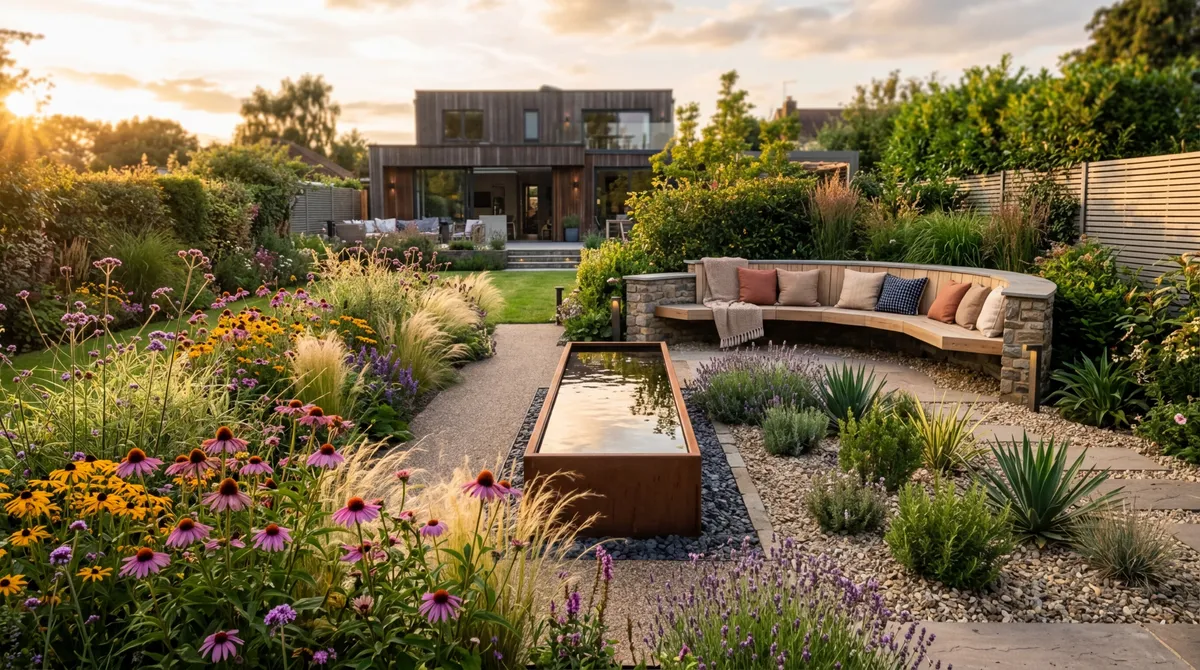
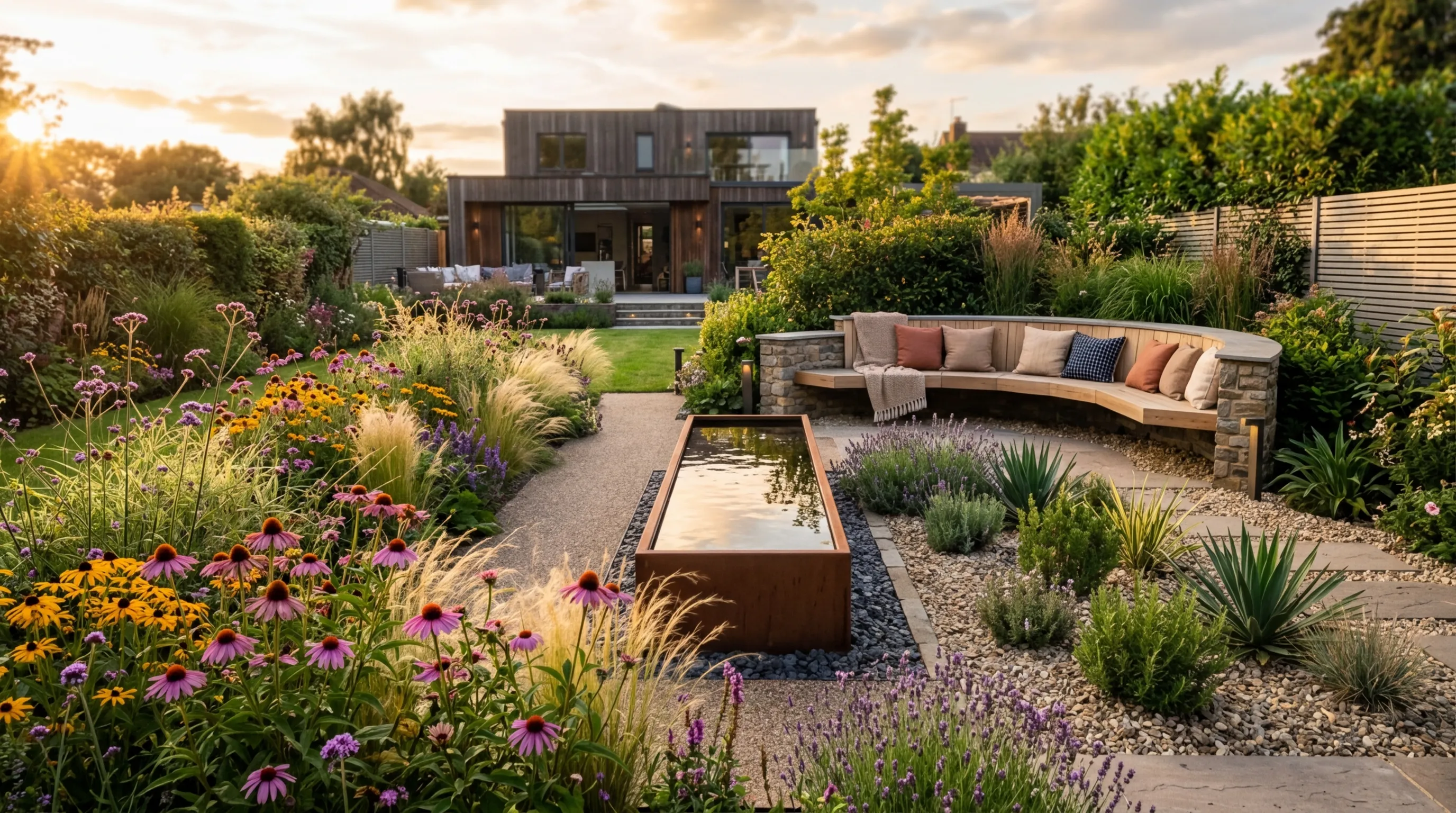 A 2026-style UK garden combining naturalistic perennial planting, cor-ten steel water feature, and built-in seating
How do you rewild a front garden?
Front garden rewilding is the fastest-growing UK garden design trend. Councils across England are backing pollinator pathway schemes, and homeowners are replacing driveways and formal planting with wildflower meadows, native hedgerows, and rain gardens.
Start by removing or reducing hard standing. Replace concrete or block paving with permeable gravel or planting. Sow a wildflower lawn using a native seed mix: ox-eye daisy, red campion, field scabious, and yellow rattle. Yellow rattle is essential because it parasitises grass, suppressing growth and allowing wildflowers to compete.
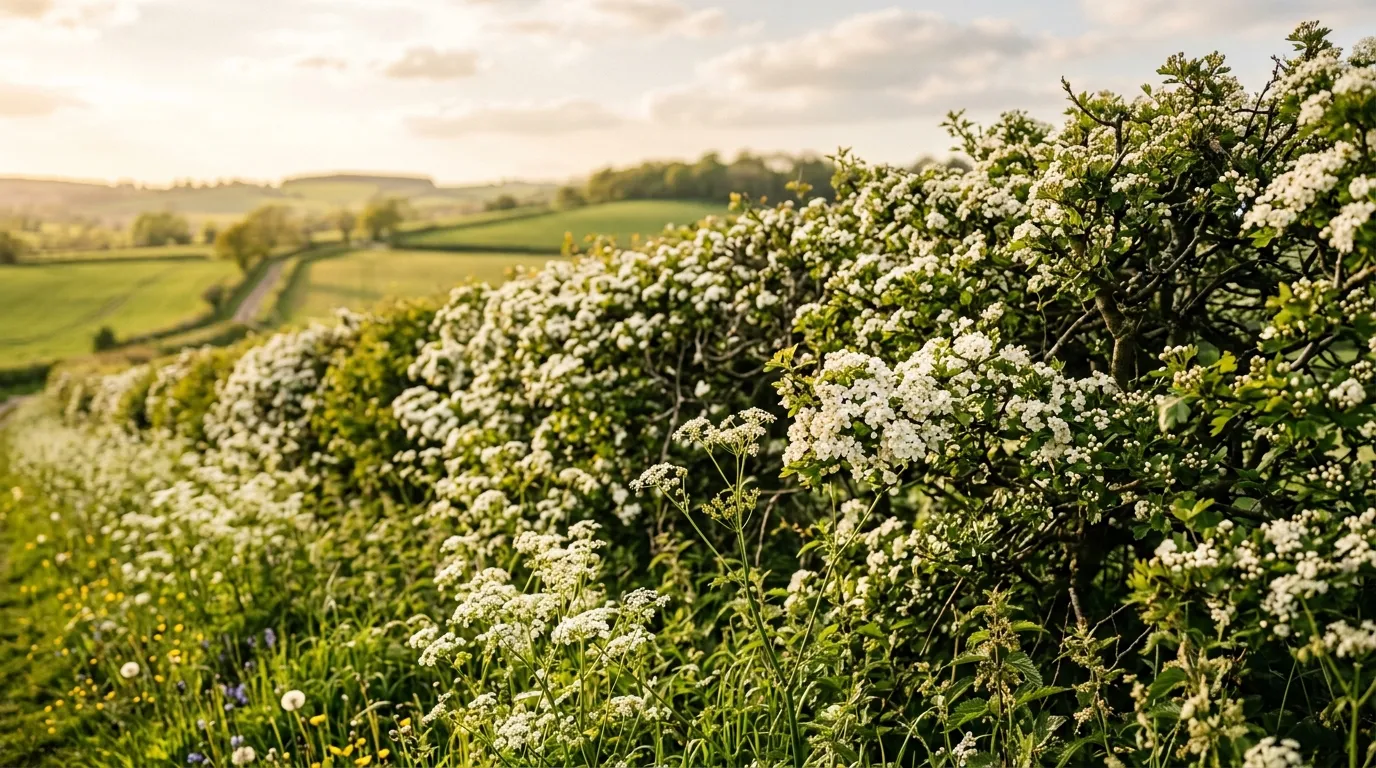
Add a native hedgerow of hawthorn, blackthorn, and field maple along the boundary. This provides nesting habitat for birds and foraging for bees. A single hawthorn bush supports over 300 insect species. The Society of Garden Designers now includes ecological metrics in their annual awards, reflecting how mainstream this approach has become.
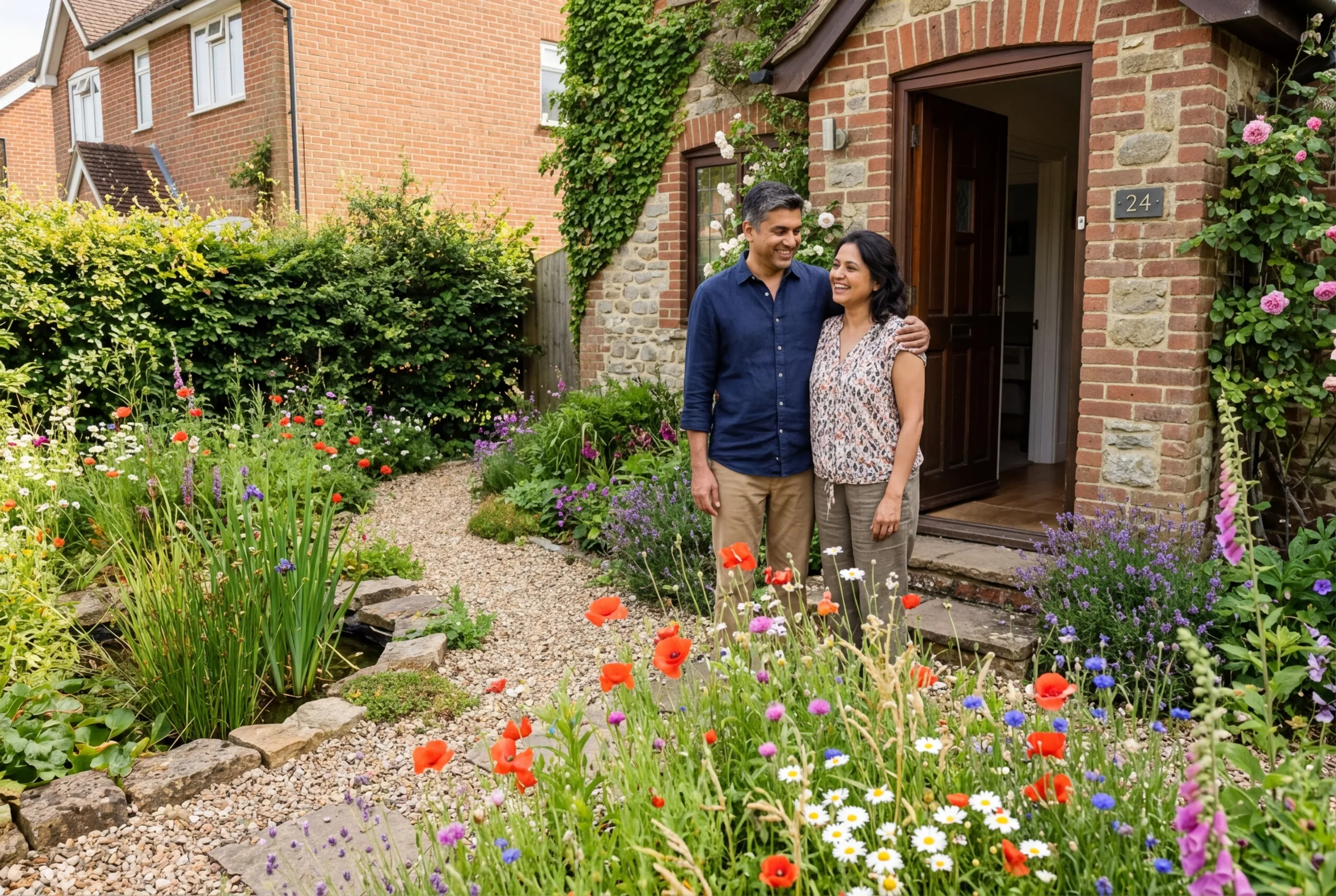 A rewilded front garden in a UK suburb with wildflower meadow, native hedgerow, and rain garden swale replacing the traditional lawn
What is the best drought-tolerant garden design?
Gravel gardens are the most practical drought-tolerant design for UK conditions. They cost 30-60 pounds per square metre installed and need no mowing, no watering, and no weekly attention. Annual maintenance costs run 40-60% lower than a traditional lawn.
The technique is straightforward. Lay a weed membrane, add 50-75mm of angular gravel (not rounded pea gravel, which rolls underfoot), and plant directly through the membrane. The gravel acts as a mulch, keeping roots cool and suppressing weeds. Choose drought-tolerant plants like lavender, rosemary, santolina, and stipa grasses.
Beth Chatto proved this approach works on UK clay. Her famous gravel garden at Elmstead Market in Essex has never been irrigated since planting in 1991, despite sitting on heavy Essex clay. For specific plant choices, the RHS garden design pages offer regional recommendations based on your soil type and aspect.
Are outdoor living rooms still trending?
Outdoor living rooms remain one of the strongest UK garden design trends, driven by the pandemic-era investment in gardens and now embedded as a permanent fixture. The key shift in 2026 is integration. Gardens are designed as extensions of the house rather than separate spaces.
Built-in seating using sleepers or rendered block walls costs less than freestanding furniture and creates permanent structure. Add weatherproof cushions rated to BS EN 15619 for UV resistance. Overhead structures like pergolas or shade sails define the room and provide shelter from light rain.
Lighting is the single biggest upgrade for an outdoor living area. Warm LED strip lights at 2700K along steps and beneath seating create atmosphere without glare. Uplights at the base of trees add drama. Budget 500-800 pounds for a professional lighting scheme in a medium garden, or 150-300 pounds for a DIY approach using plug-in festoon lights and solar spike lights.
How does biophilic design work in gardens?
Biophilic design blurs the boundary between indoors and outdoors. It started in architecture and interior design, but garden designers now use the same principles to connect living spaces with planting. This trend is strongest in urban courtyard and small garden projects where every square metre matters.
The core elements are green walls, container planting at multiple heights, and physical connections like folding glass doors or level thresholds between kitchen and patio. You want to see, smell, and touch plants from inside the house. Even a single large fern in a pot by an open door counts.
RICS and Knight Frank research shows biophilic gardens add 5-12% to UK property values. In London, a well-designed courtyard garden can add 15,000-30,000 pounds to a flat’s value. The investment pays for itself.
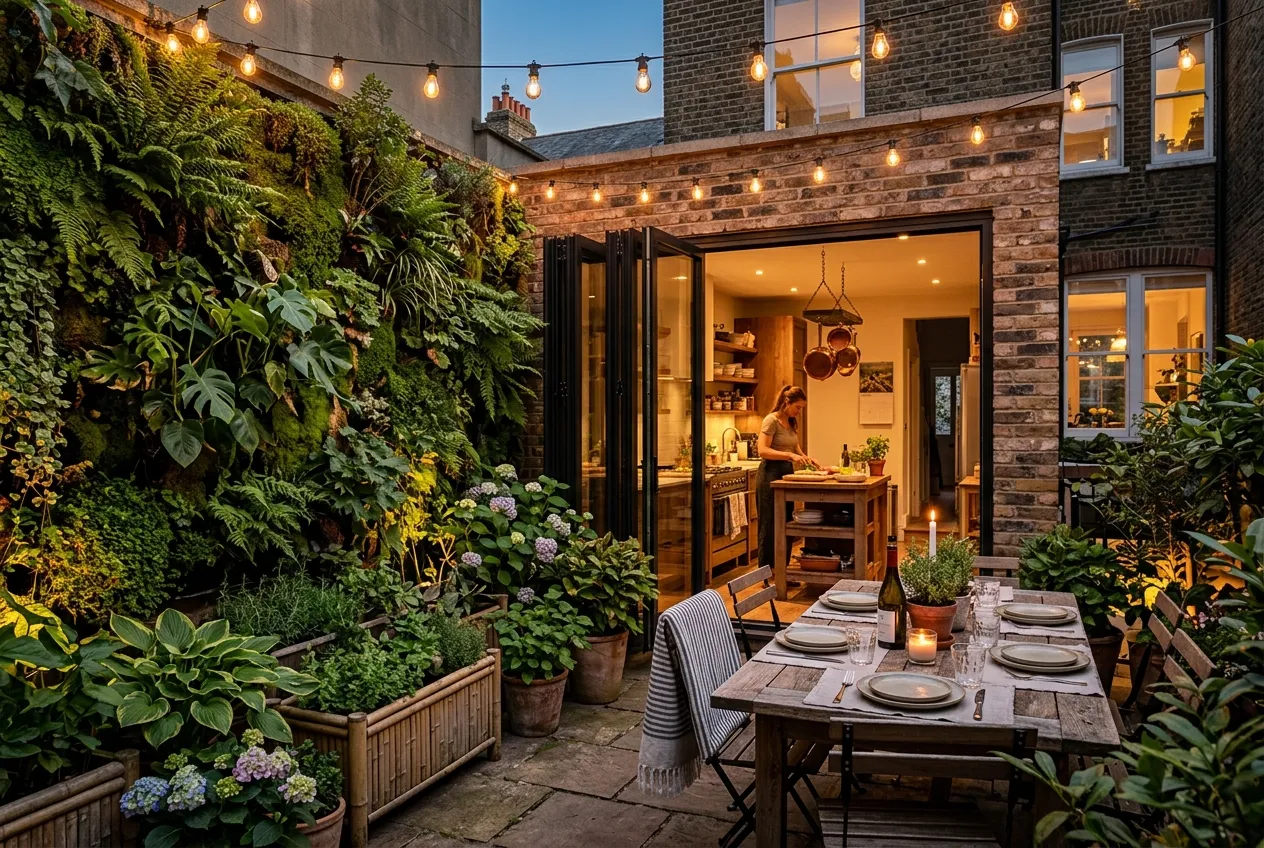 Biophilic courtyard design connects indoor and outdoor spaces with green walls, container planting, and warm evening lighting
Which climate-resilient plants should you choose?
Climate resilience is no longer optional in UK garden design. The Met Office reports that UK summers are now 0.9 degrees Celsius warmer than the 1961-1990 average. The RHS has recorded a 340% increase in drought-tolerant plant sales since 2020. Gardens need plants that tolerate both summer drought and winter waterlogging.
Ornamental grasses are the foundation of climate-resilient design. Miscanthus sinensis, Calamagrostis x acutiflora, and Stipa gigantea all handle the full range of UK conditions. They provide year-round structure, movement in wind, and winter seed heads for birds.
Mediterranean plants perform better in the UK than many gardeners expect. Lavandula angustifolia, Cistus, Phlomis, and Euphorbia characias all survive UK winters to at least minus 10 degrees Celsius. The key is sharp drainage. On heavy clay, raise beds by 150-200mm and incorporate 200mm of grit beneath to prevent winter root rot. Our guide to climate-resilient plants covers over 40 species tested in UK conditions.
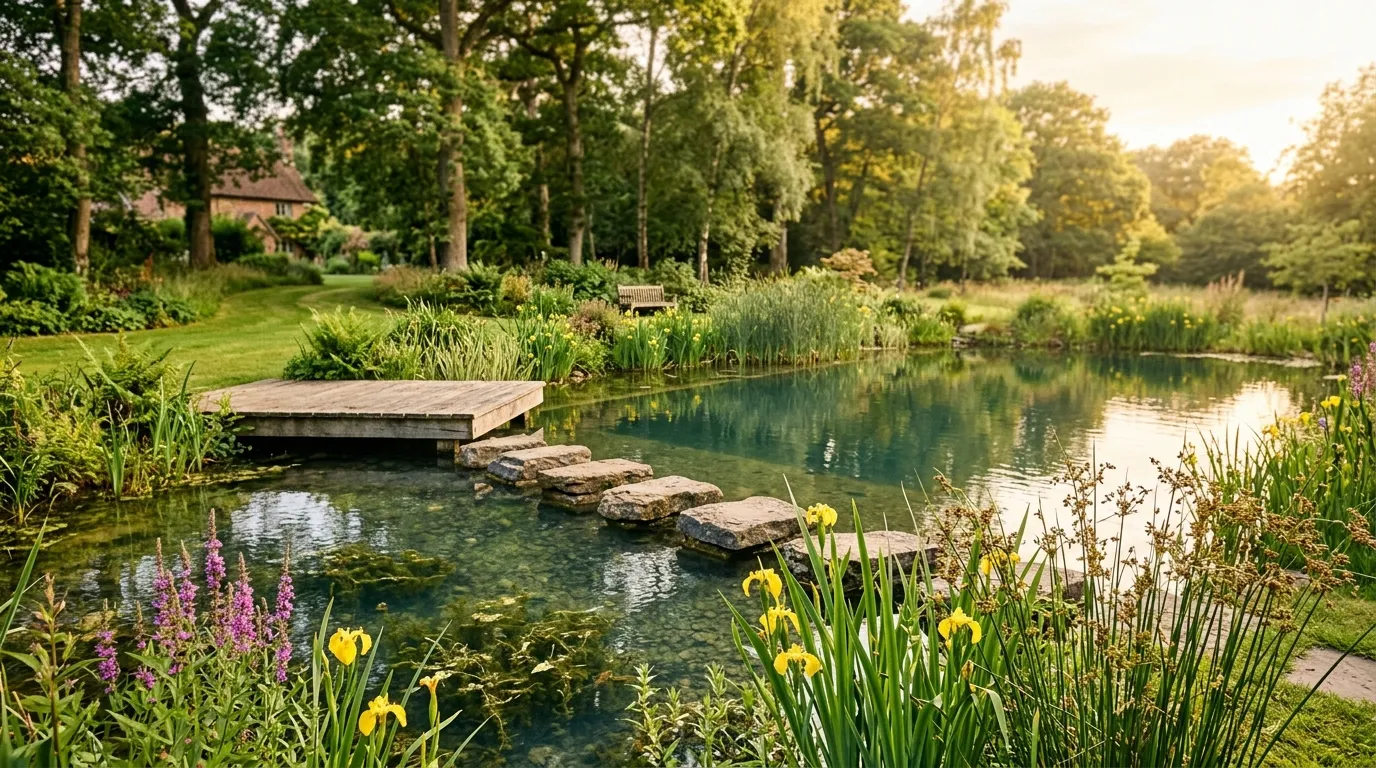
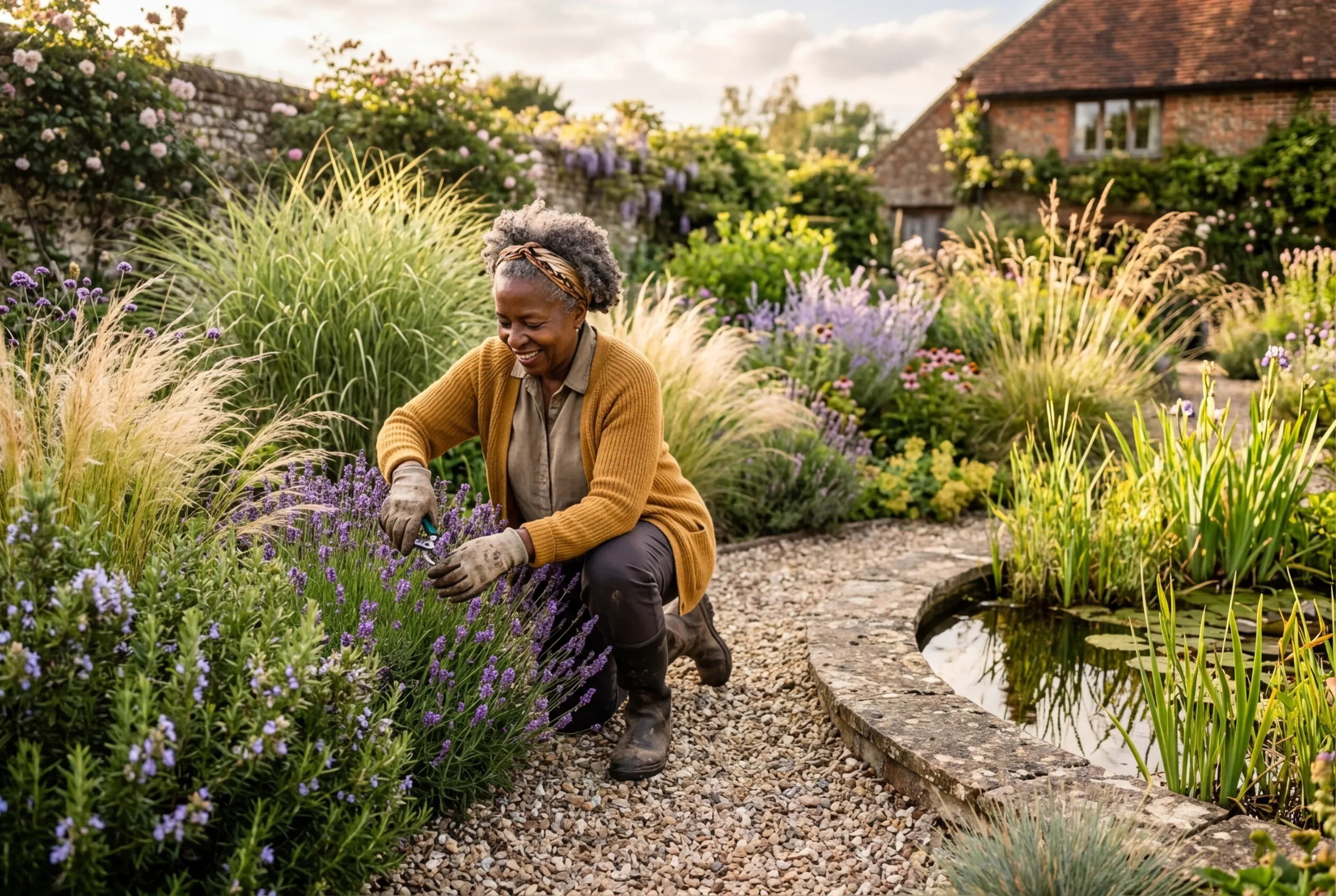 A climate-resilient UK garden featuring ornamental grasses, drought-tolerant Mediterranean planting, gravel mulch, and a wildlife pond
What sustainable materials are garden designers using?
Sustainable hard landscaping is replacing imported stone and composite decking across UK garden projects. British sandstone from Yorkshire and the Forest of Dean costs 35-55 pounds per square metre, comparable to imported Indian sandstone but with a fraction of the carbon footprint.
Reclaimed brick is another trend gaining ground. Victorian engineering bricks from demolition sites cost 0.50-1.50 pounds each and age beautifully in garden paths and raised beds. They are frost-proof, incredibly hard-wearing, and carry genuine character that new materials cannot match.
Permeable paving is now a practical requirement rather than a design choice. Since 2008, covering more than 5 square metres of front garden with impermeable surfacing requires planning permission. Permeable resin-bound gravel, porous block paving, and cellular grass grids all meet the drainage rules while looking better than standard concrete.
Garden design trends comparison
| Trend | Cost per m2 | Difficulty | Maintenance | Longevity | Best For |
|---|---|---|---|---|---|
| Naturalistic planting | 15-30 pounds | Moderate | Low | 10+ years | Borders, large gardens |
| Front garden rewilding | 10-25 pounds | Easy | Very low | 15+ years | Front gardens, wildlife |
| Gravel garden | 30-60 pounds | Easy | Very low | 20+ years | Any size, full sun |
| Outdoor living room | 80-200 pounds | Hard | Low | 15+ years | Entertaining, families |
| Biophilic courtyard | 60-150 pounds | Moderate | Medium | 10+ years | Urban, small spaces |
| Climate-resilient planting | 15-35 pounds | Moderate | Low | 10+ years | Any garden, future-proofing |
| Sustainable materials | 35-80 pounds | Hard | Very low | 25+ years | Paths, patios, walls |
| Water features | 50-300 pounds | Moderate | Low | 15+ years | Focal points, wildlife |
How do you combine these trends in one garden?
The strongest UK gardens in 2026 blend three or four of these trends rather than committing to just one. A typical approach layers naturalistic planting as the backbone, adds a gravel section for low-maintenance areas, incorporates one outdoor living zone, and uses sustainable British materials throughout.
Start by designing from scratch with a simple plan on paper. Divide the garden into zones: a social area closest to the house, a productive or wildlife area at the far end, and naturalistic planting linking the two. Use gravel paths rather than concrete to connect the zones.
Budget matters. A full garden redesign with professional landscaping costs 5,000-15,000 pounds for an average UK plot. But you can phase the work over two to three years. Start with the hard landscaping and structural planting in year one, add the naturalistic perennials and grasses in year two, and refine with lighting, water features, and accessories in year three.
The trend is clear: UK gardeners want gardens that look beautiful, support wildlife, resist climate extremes, and demand less of their time. Every trend on this list delivers at least three of those four goals. Pick the combination that matches your plot, your budget, and the amount of time you actually want to spend outside with secateurs in hand.
Frequently asked questions
What are the biggest garden design trends in 2026?
Naturalistic planting, gravel gardens, and front garden rewilding lead UK trends. The New Perennial movement dominates show gardens, with 73% of Chelsea 2025 entries using prairie-style mixed planting. Climate resilience drives the shift: drought-tolerant Mediterranean plants, ornamental grasses, and rain gardens replace water-hungry lawns and bedding schemes. Outdoor living rooms and biophilic design remain strong in urban plots.
How much does a gravel garden cost to install?
A gravel garden costs 30-60 pounds per square metre installed. This includes a weed membrane, 50-75mm depth of decorative gravel, and planting. A 20-square-metre front garden conversion costs 600-1,200 pounds total. Annual maintenance runs 40-60% lower than a traditional lawn because you eliminate mowing, edging, and irrigation costs entirely.
Is rewilding my front garden legal in the UK?
Yes, front garden rewilding is legal across England, Scotland, and Wales. No planning permission is needed to replace a lawn with wildflowers. If you remove existing hard standing like a driveway, you may need permission if it changes drainage. Some local councils encourage rewilding through pollinator pathway schemes and provide free wildflower seeds.
What plants work best in a naturalistic planting scheme?
Echinacea purpurea, Rudbeckia fulgida, Stipa tenuissima, and Verbena bonariensis form the backbone. Mix tall transparent plants like Verbena with mid-height block planting of echinacea and ground-level grasses. All are hardy to minus 15 degrees Celsius and thrive in most UK soils. Add Salvia nemorosa and Achillea for early summer colour.
How do I make my garden more climate resilient?
Replace thirsty plants with drought-tolerant species and improve drainage. Use lavender, rosemary, and ornamental grasses as the core planting. Mulch borders with 75mm of bark or gravel to retain moisture. Install a rain garden to capture roof runoff. Choose deep-rooted perennials that access water 300mm below the surface rather than shallow-rooted bedding plants.
Does biophilic garden design add value to a property?
Yes, biophilic gardens add 5-12% to UK property values. RICS and Knight Frank research confirms that green walls, mature planting, and strong indoor-outdoor connections are the highest-value features. In London, a professional courtyard garden can add 15,000-30,000 pounds to a property. The investment typically pays for itself within 3-5 years.
What is the best low-maintenance garden design?
A gravel garden with drought-tolerant perennials needs the least upkeep. It requires no mowing, no irrigation, and just two cut-backs per year in March and late autumn. Combine stipa grasses, lavender, and sedum over a weed membrane with 50mm of angular gravel. This design works on any soil type and thrives in full sun or light shade.
Lawrie has been gardening in the West Midlands for over 30 years. He grows his own veg using no-dig methods, keeps a wildlife-friendly garden, and writes practical advice based on real UK growing conditions.