Garden Fence Ideas and Inspiration
Garden fence ideas for UK homes. Covers materials, styles, paint colours, climbers, living fences, and how to make fences a design feature.
Key takeaways
- Close-board fencing lasts 15-20 years and handles wind better than flat panels
- Dark fence colours (charcoal, slate, deep green) make gardens look larger by pushing boundaries back
- Climbers like star jasmine, clematis, and climbing hydrangea turn fences into living walls
- Fence panels up to 2 metres need no planning permission in rear gardens — front gardens are limited to 1 metre
- Horizontal slat fencing creates a contemporary look and costs twenty to forty pounds per panel
Fences are the most visible feature in most UK gardens. They define every boundary, create the backdrop for every border, and set the visual tone of the entire space. Yet most people treat fences as functional afterthoughts — generic panels in raw timber that grey and warp within a few years.
A fence is a design opportunity. The right style, colour, and planting turns a boundary into a feature. This guide covers fence types, colours, climbers, and ideas that work in real UK gardens.
Fence types compared
Overlap panels
The standard budget option. Thin horizontal strips overlap each other in a wavy frame. Light, cheap, and quick to install.
Cost: eight to twelve pounds per 1.83m panel. Lifespan: 8-12 years. Weakness: poor in wind. The flat surface catches gusts and panels blow out. Not suitable for exposed gardens.
Close-board (featherboard)
Individual vertical boards nailed to horizontal rails, with each board overlapping the next. The strongest and most durable fence type.
Cost: fifteen to thirty pounds per 1.83m panel (or built on-site from individual boards). Lifespan: 15-20 years with pressure-treated timber. Strength: individual boards flex in wind rather than catching it as a flat panel. Handles exposed sites well. Boards can be replaced individually when damaged. Our guide to garden fence repair and maintenance covers replacing boards, fixing posts, and preventing rot.
Slatted (horizontal)
Horizontal timber slats with gaps or no gaps, creating a clean contemporary look. Increasingly popular in modern garden design.
Cost: twenty to forty pounds per panel. Lifespan: 12-15 years. Best for: contemporary gardens, screening, and feature sections. The horizontal lines draw the eye sideways, making narrow gardens feel wider.
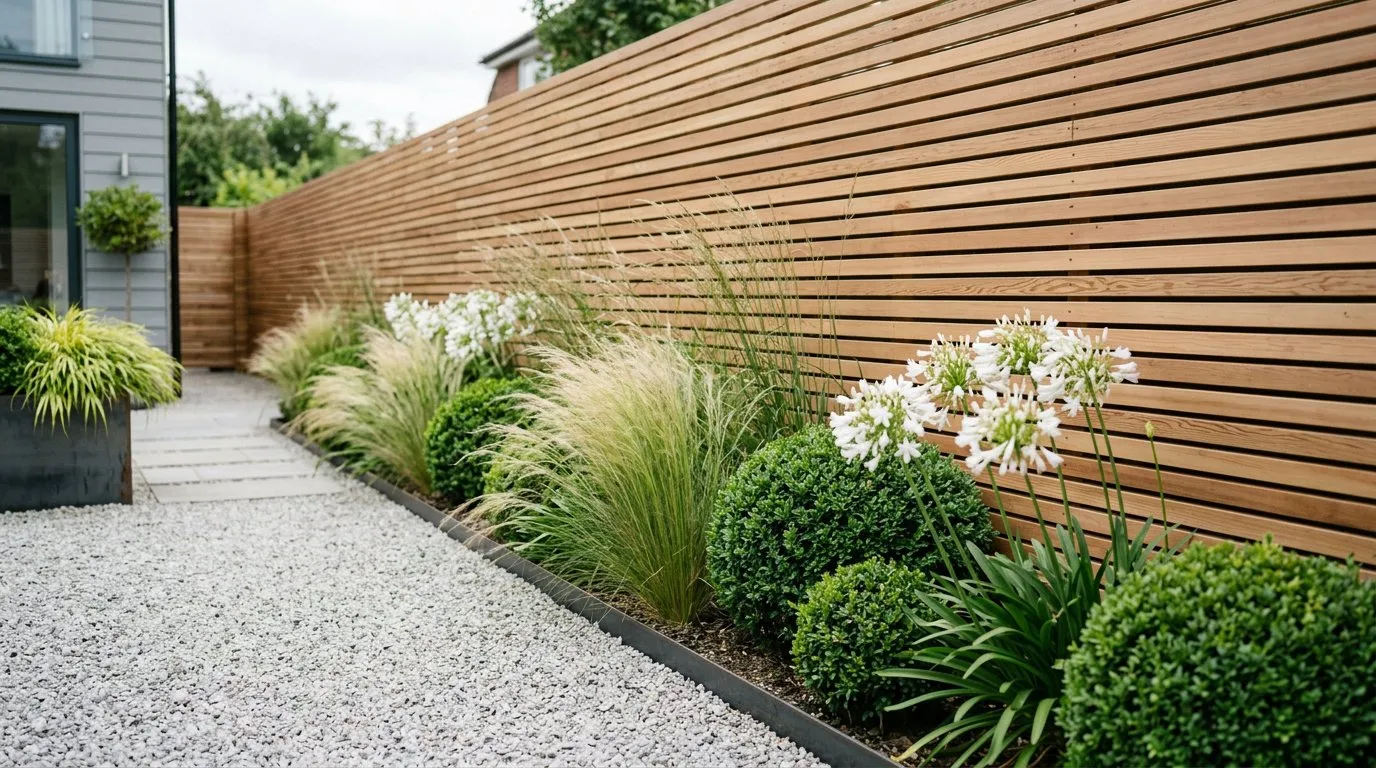 Horizontal slat fencing creates a clean contemporary look and draws the eye sideways in narrow gardens
Hit-and-miss
Alternating boards on either side of the rails, creating a fence that provides privacy from straight on but allows air and light through at an angle.
Cost: twenty to thirty pounds per panel. Lifespan: 15-20 years. Best for: exposed and windy sites. Wind passes through rather than hitting a solid face.
Comparison table
| Type | Cost per panel | Lifespan | Wind resistance | Privacy | Style |
|---|---|---|---|---|---|
| Overlap | Eight to twelve pounds | 8-12 years | Poor | Full | Budget |
| Close-board | Fifteen to thirty pounds | 15-20 years | Excellent | Full | Traditional |
| Slatted (horizontal) | Twenty to forty pounds | 12-15 years | Moderate | Full or partial | Contemporary |
| Hit-and-miss | Twenty to thirty pounds | 15-20 years | Excellent | Moderate | Modern traditional |
| Trellis | Ten to twenty pounds | 8-12 years | Good (wind passes through) | Partial | Decorative, topping |
Fence colours that change gardens
Paint is the easiest and cheapest way to change a fence. A single coat changes the entire mood of the garden for twelve to eighteen pounds per tin. For more ideas on quick garden improvements, see our guide to garden ideas for every budget.
Dark colours (best for most gardens)
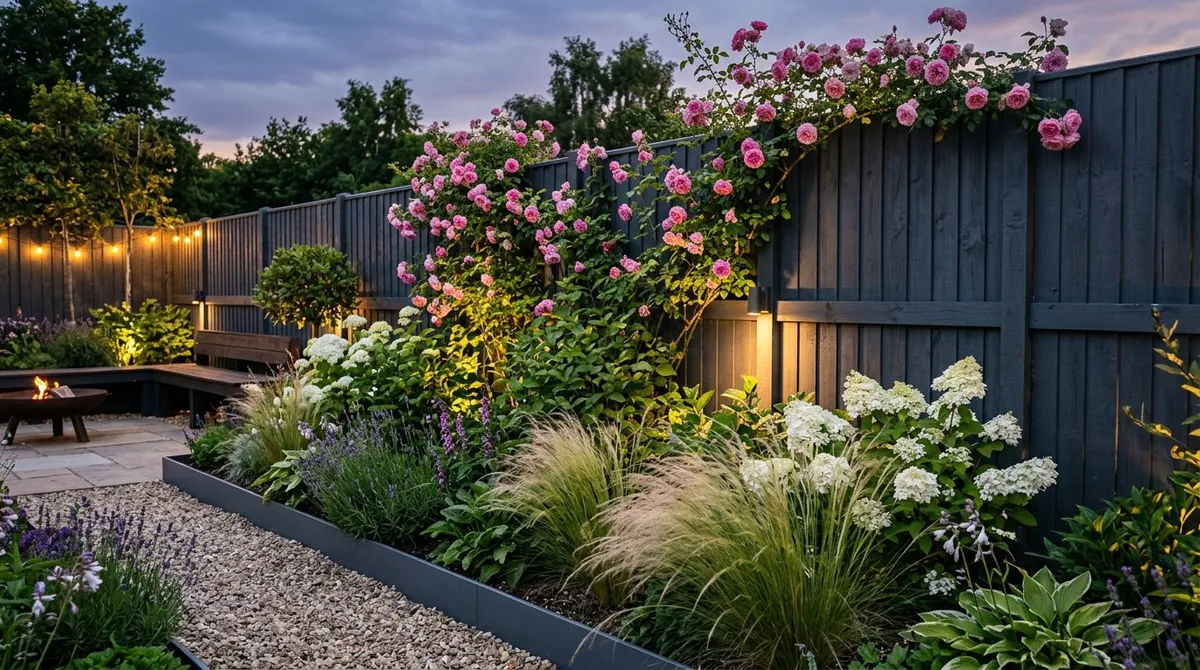
Charcoal, slate grey, dark blue, and deep green make fences visually recede. The boundary feels further away, making the garden appear larger. Dark colours also make green foliage and flowers stand out vividly against them.
This is the single most effective trick in garden design. A garden with charcoal fences looks dramatically larger and more considered than the same garden with raw timber panels.
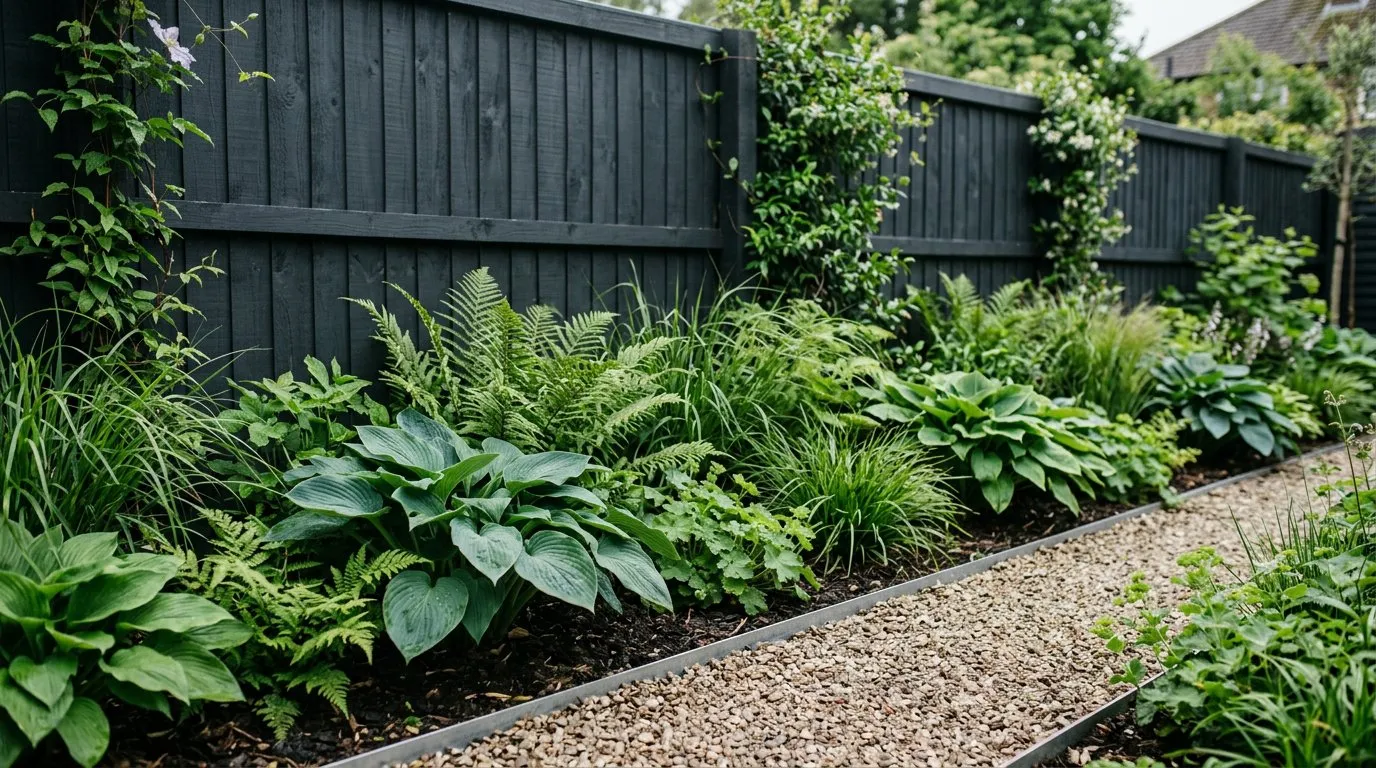 Dark paint makes the boundary recede and green foliage stand out vividly against it
Light colours
Pale grey, soft blue, and off-white reflect light into shady gardens. Use in north-facing or enclosed spaces where every lumen counts. Light fences make small, dark gardens feel brighter and more open.
What to avoid
Orange wood stain is the default finish on most UK fences and the worst choice for garden design, especially in front gardens where the fence sets the tone for the entire property. It dominates the view, clashes with most planting, and dates within two years as it fades unevenly. Strip or overcoat it with a dark opaque paint.
Black works in very modern, architectural gardens but absorbs too much light for most situations. Dark grey achieves the same effect while reflecting enough light to keep the garden pleasant.
Tip: Always apply a wood preserver or primer before painting. This prevents the timber absorbing moisture through the paint and extends the life of both fence and finish. Expect to repaint every 3-5 years.
Climbers and planting on fences
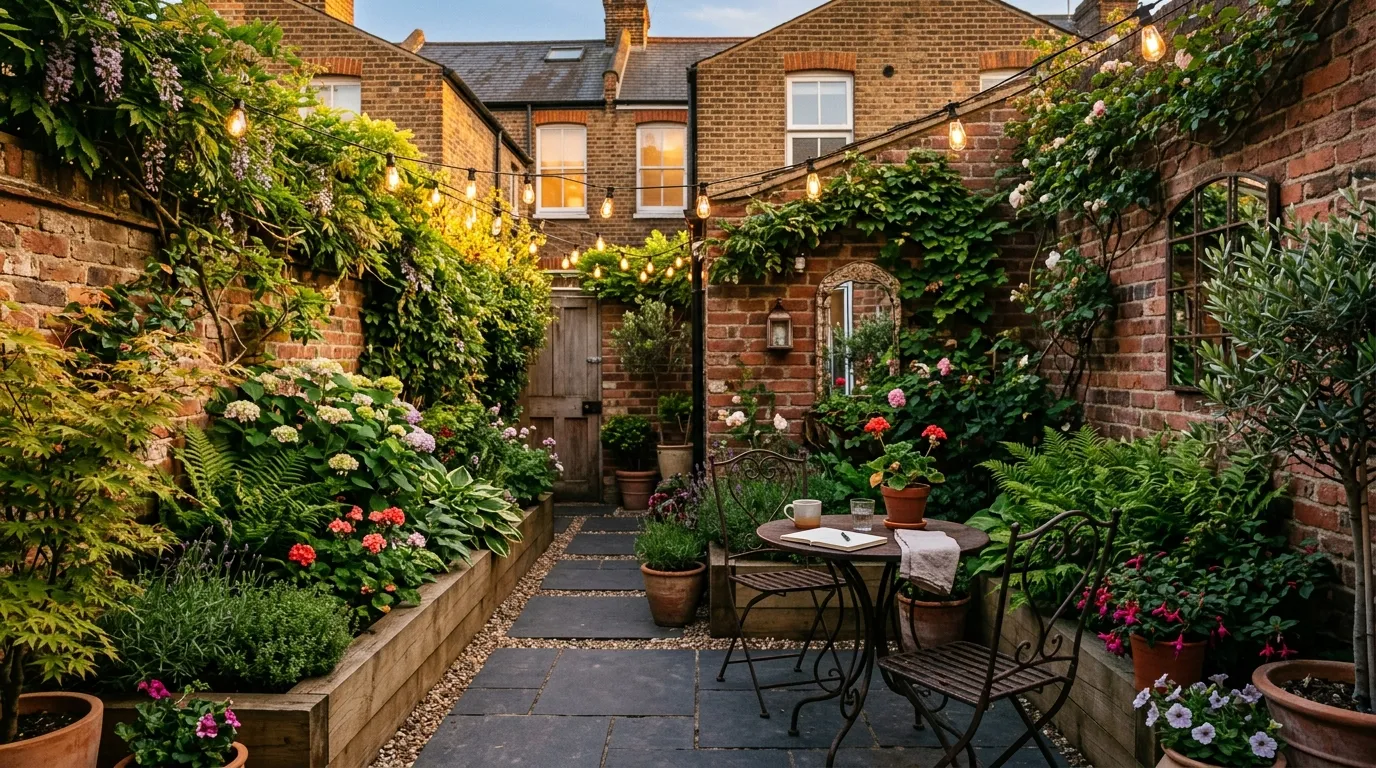
The most beautiful fences in Britain are barely visible. Climbing plants turn plain panels into living walls of flowers, fragrance, and wildlife habitat. A cottage garden planting plan works particularly well alongside fences where plants can scramble and soften the boundary.
Best climbers for UK fences
| Climber | Aspect | Flowers | Evergreen | Growth rate |
|---|---|---|---|---|
| Star jasmine (Trachelospermum) | South/west | Jun-Aug, white, fragrant | Yes | Moderate |
| Clematis montana | Any | May-Jun, white/pink | No | Fast |
| Climbing hydrangea | North/east | Jun-Jul, white | No | Slow then fast |
| Honeysuckle | Any | Jun-Sep, fragrant | Semi | Fast |
| Climbing rose | South/west | Jun-Oct | No | Moderate |
| Ivy (Hedera) | Any | Oct (flowers) | Yes | Fast |
| Wisteria | South/west | May-Jun, scented | No | Fast once established |
Star jasmine is the current favourite for UK fences. Evergreen, fragrant, neat, and increasingly hardy as winters warm. It needs a south or west-facing fence and horizontal wires for support.
Why we recommend star jasmine for UK fences: After 30 years of testing climbers in British gardens, star jasmine consistently outperforms alternatives on south and west-facing fences. It establishes fully within two seasons, stays evergreen through mild UK winters, and produces fragrant white flowers for eight weeks from June. Unlike roses, it needs no annual pruning and never outgrows a 1.8m panel.
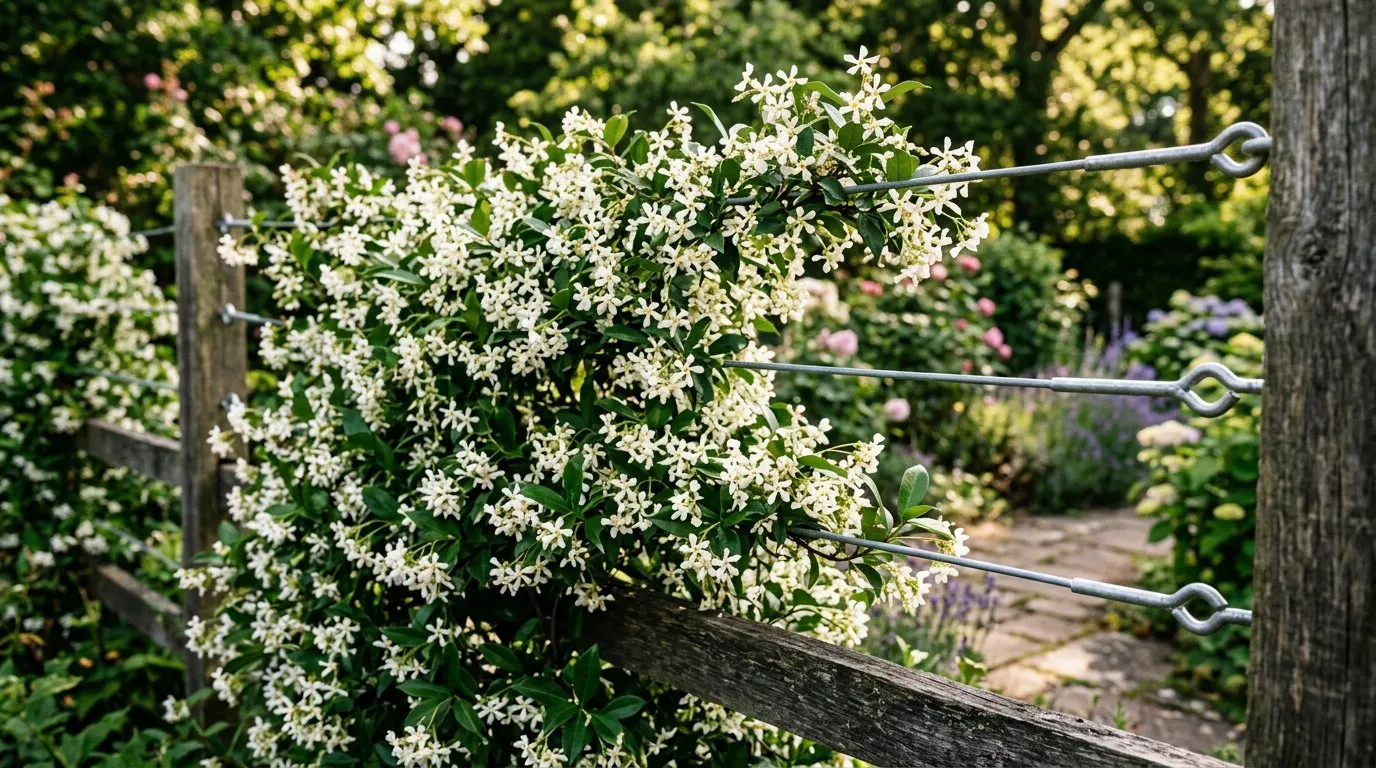 Star jasmine trained on horizontal wires covers a fence panel within two seasons and flowers from June to August
Climbing hydrangea is the best choice for shady or north-facing fences. Self-clinging, needs no wires, and produces lace-cap white flowers in June. It is slow to establish (2-3 years) then grows vigorously. See our guide to shade-friendly plants for more options.
Supporting climbers
Most climbers need something to grip. Fix horizontal galvanised wires at 30cm intervals up the fence using vine eyes screwed into the posts. Alternatively, screw trellis panels to the top of the fence or flat against its face.
Keep a 5-10cm gap between the climber support and the fence surface. This allows air circulation behind the foliage, reducing rot on the timber and fungal disease on the plant.
Living fences and green screens
Pleached trees
A row of pleached trees creates a raised screen on clear stems — privacy at head height with open ground beneath. Hornbeam and lime are the traditional choices. Cost: sixty to one hundred and fifty pounds per tree for semi-mature specimens. Space at 2-3 metre intervals.
Instant hedging
Pre-grown hedge troughs provide an immediate 1.5-1.8m screen. Privet, laurel, and beech are available as instant hedging. Cost: eighty to one hundred and fifty pounds per metre. More expensive than bare-root whips but saves 3-4 years of waiting.
Mixed native hedging
A native hedge of hawthorn, blackthorn, field maple, and holly creates a boundary richer in wildlife than any fence. It provides nesting sites for birds, food for insects, and seasonal interest with blossom, berries, and autumn colour. The Royal Horticultural Society has detailed guidance on training and pruning established climbers.
Fence toppers and extensions
If your fence feels too low but replacing it is too expensive, add a topper.
Trellis — 30-60cm trellis panels bolted to the top of existing posts extend height while allowing light through. Train climbers along them for screening.
Willow or hazel hurdles — natural woven panels wired to the top of fences. Rustic appearance, 3-5 year lifespan.
Planting above fence line — tall shrubs, bamboo, or ornamental grasses planted along the fence create a screen that extends beyond the fence height without any construction.
Warning: Fences over 2 metres require planning permission in rear gardens. Adding trellis or lattice to a 1.8m fence that takes the total height above 2m technically requires planning approval, though enforcement varies.
Fences also play a key role in pet containment. If you have a dog, check gaps at the base and ensure panels are secure — our guide to designing a dog-friendly garden covers fencing heights and escape-proofing. For cat owners, cat-proofing your garden explains roller bars and angled toppers that keep cats safely within the boundary.
Now you’ve mastered fence styles and design, read our guide on garden fence repair and maintenance for the next step.
Frequently asked questions
What is the best type of garden fence?
Close-board fencing is the most durable and wind-resistant option for UK gardens. Individual vertical boards flex in wind rather than catching it as a flat panel. Pressure-treated close-board lasts 15-20 years with minimal maintenance. Damaged boards can be replaced individually.
What colour should I paint my garden fence?
Dark colours like charcoal, slate grey, and deep green make gardens appear larger by pushing the boundary back visually. They create a neutral backdrop that makes green foliage and colourful flowers stand out. Avoid orange wood stains which dominate the view and date quickly.
How high can a garden fence be without planning permission?
Rear garden fences can be up to 2 metres high without planning permission in England and Wales. Front garden fences adjacent to a highway are limited to 1 metre. Listed buildings and conservation areas may have additional restrictions that limit height or materials.
What is the cheapest garden fence?
Overlap fence panels at eight to twelve pounds each are the cheapest option. A 10-metre boundary needs about 6 panels plus posts, costing one hundred to two hundred pounds in total. They last 8-12 years. Close-board costs more upfront but lasts 15-20 years, often making it cheaper over time.
What climbers grow well on fences?
Star jasmine, clematis, climbing hydrangea, honeysuckle, and climbing roses all thrive on UK garden fences. Fix horizontal wires at 30cm intervals or attach trellis panels for support. Most climbers cover a 1.8-metre fence panel within 18-24 months of planting.
How do I stop a fence blowing down?
Set fence posts in postcrete or concrete at a minimum depth of 60cm. Use posts of at least 75mm x 75mm section. Choose close-board or hit-and-miss panels which flex in wind rather than catching gusts. Fit gravel boards at ground level to prevent rot weakening the base.
Lawrie has been gardening in the West Midlands for over 30 years. He grows his own veg using no-dig methods, keeps a wildlife-friendly garden, and writes practical advice based on real UK growing conditions.