Garden Path Ideas UK
Garden path ideas for UK homes. Covers materials, costs, laying techniques, curved vs straight paths, edging, and planting alongside paths.
Key takeaways
- Gravel paths at five to fifteen pounds per square metre are the cheapest permanent option and suit any garden style
- Brick paths create warmth and heritage character — reclaimed bricks cost from one to two pounds each
- Curved paths make gardens feel larger by preventing the eye from seeing the full extent at once
- Path width matters — 90cm minimum for a main path, 60cm for secondary paths between beds
- Planting along path edges with creeping thyme, Erigeron, and Alchemilla softens hard lines beautifully
A path does more for a garden than connect two points. It guides movement, creates rhythm, frames planting, and divides space. The difference between a garden that feels designed and one that feels random is often nothing more than a well-placed path.
This guide covers materials, costs, laying techniques, and design ideas for UK gardens of every size and style. Whether you want a formal brick walkway or an informal stepping stone trail through a wildflower patch, the principles are the same. The Royal Horticultural Society has additional guidance on path construction.
Path materials compared
The right material depends on your budget, garden style, and how much traffic the path carries.
| Material | Cost per sq m | Durability | DIY difficulty | Best style |
|---|---|---|---|---|
| Gravel (10-20mm) | Five to fifteen pounds | 10+ years (top up) | Easy | Any style |
| Bark chip | Three to five pounds | 1-2 years | Very easy | Woodland, informal |
| Brick (new) | Thirty to sixty pounds | 50+ years | Moderate | Cottage, heritage |
| Brick (reclaimed) | Twenty to forty pounds | 50+ years | Moderate | Period, character |
| Natural stone | Forty to eighty pounds | 50+ years | Hard | Premium, timeless |
| Concrete pavers | Fifteen to thirty pounds | 25+ years | Moderate | Modern, practical |
| Porcelain | Thirty to fifty pounds | 30+ years | Hard | Contemporary |
| Stepping stones | Two to eight pounds each | 20+ years | Easy | Informal, through lawn |
Gravel paths
The most versatile and affordable option. Gravel works in cottage gardens, contemporary designs, Mediterranean schemes, and utility areas. It drains instantly, needs no mortar, and takes an afternoon to lay.
How to lay: excavate 10cm deep. Lay landscape membrane. Install timber, metal, or brick edging. Spread 5cm of 10-20mm gravel and compact. Top up every 2-3 years as gravel migrates.
Best gravel types: golden self-binding gravel compacts firm underfoot. Cotswold buff suits traditional gardens. Slate grey suits modern schemes. Avoid large pebbles (20mm+) which are uncomfortable to walk on.
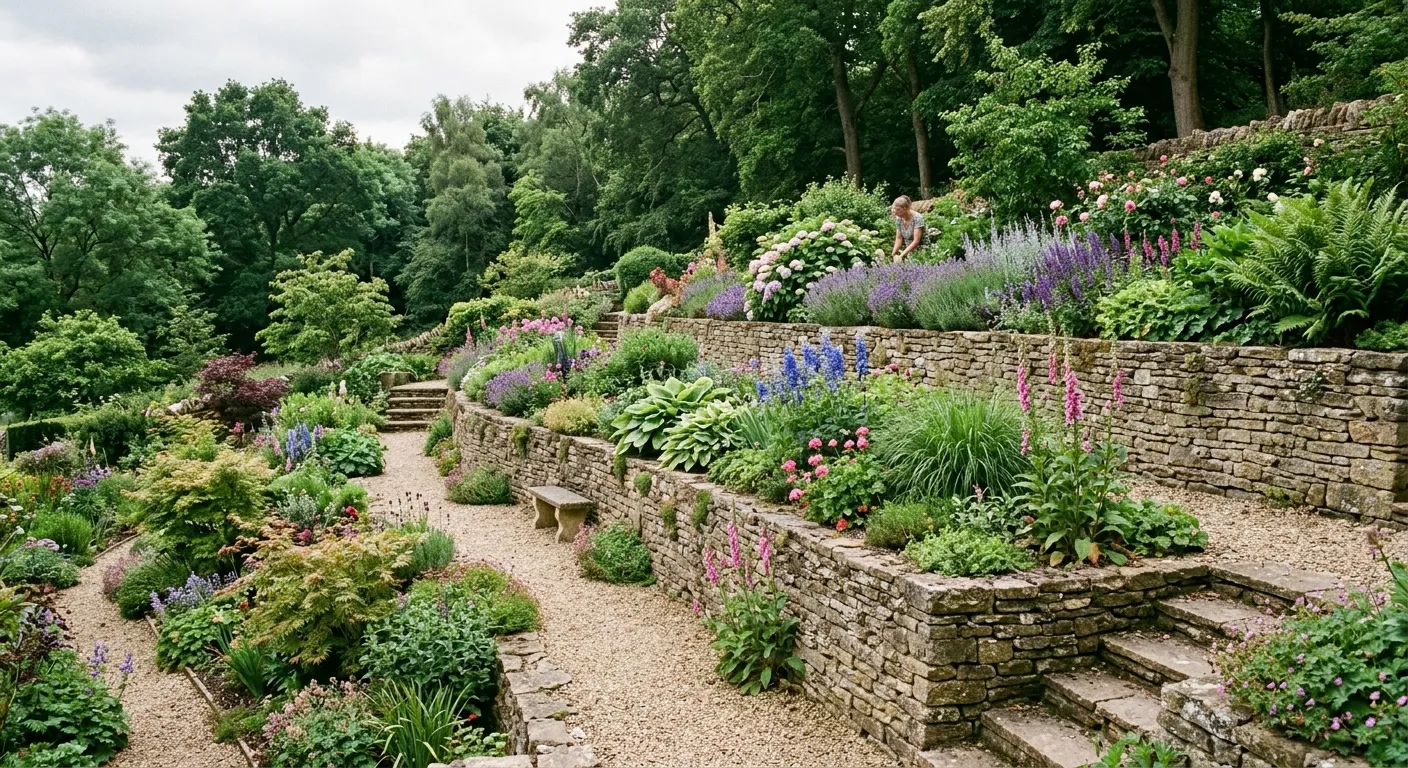
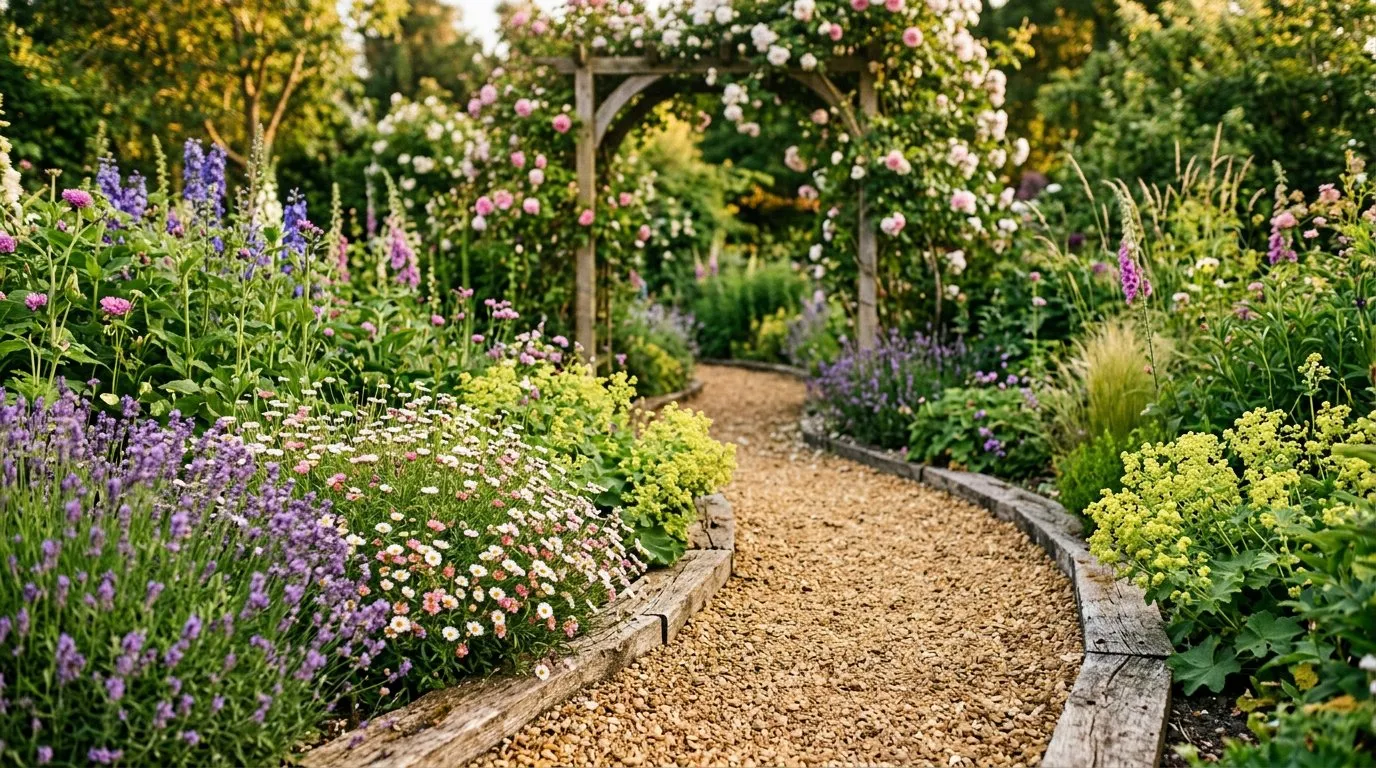 A gravel path with timber edging and planting tumbling over the edges creates a relaxed cottage garden feel
Brick paths
Brick creates warmth, texture, and heritage character that no other material matches. Reclaimed bricks from salvage yards cost one to two pounds each and carry the patina of age that new bricks take decades to develop.
Laying patterns: herringbone is strongest and most attractive for paths. Running bond (bricks in parallel rows) is simpler. Basketweave suits wider paths and patios.
Method: excavate 15cm deep. Lay 10cm compacted sub-base. Spread 3cm sharp sand. Lay bricks in your chosen pattern. Brush kiln-dried sand into joints. Compact with a plate vibrator.
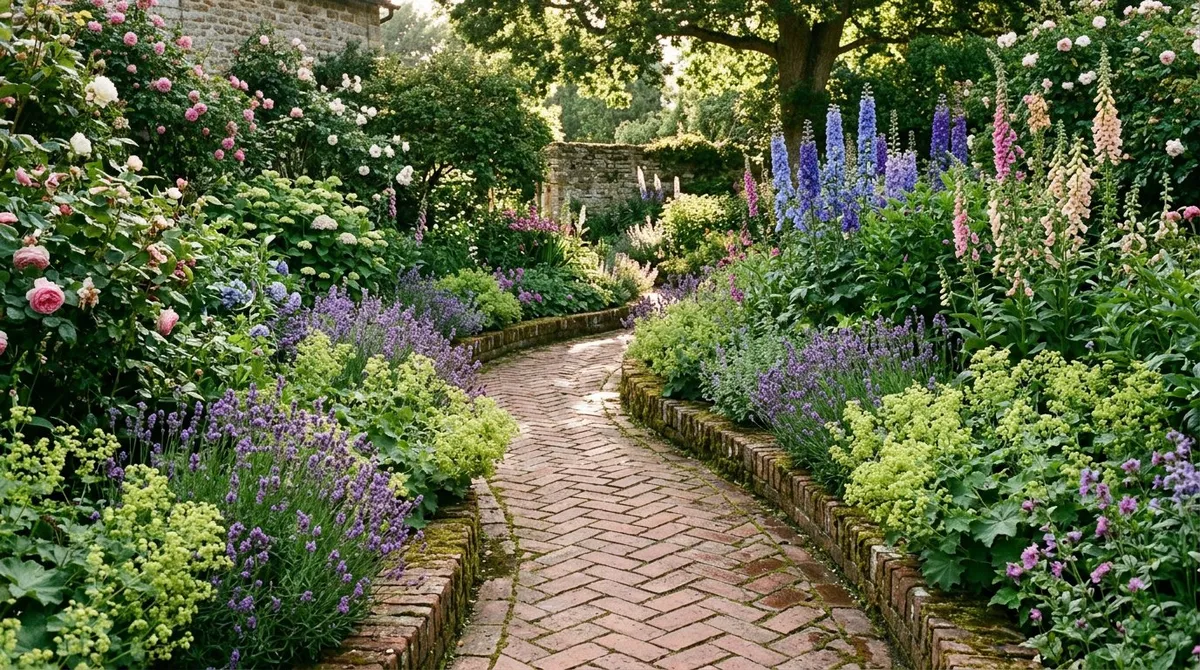
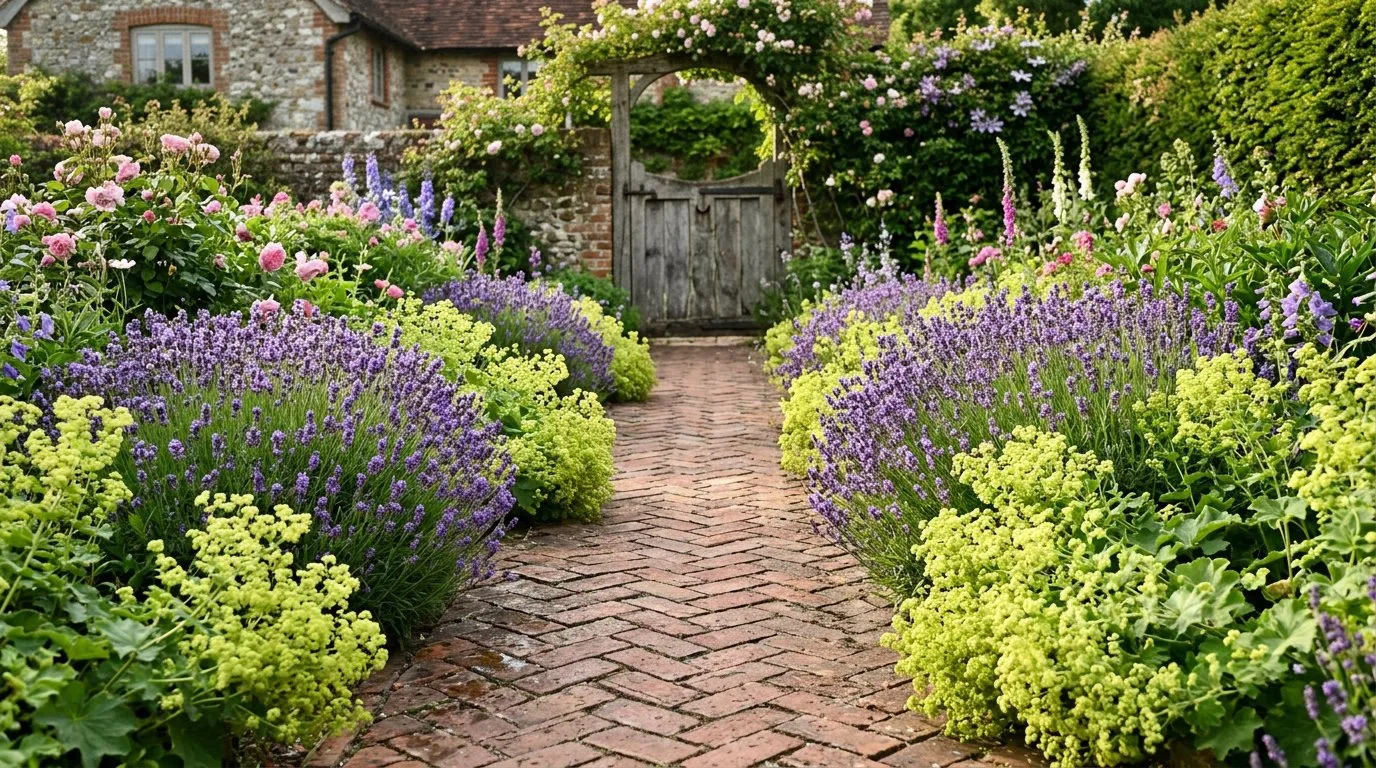 A brick herringbone path with lavender and lady’s mantle softening the edges is the classic cottage garden walkway
Brick paths suit cottage garden planting plans where lavender, geraniums, and alchemilla spill over the edges.
Natural stone
The premium choice. York stone, sandstone, and limestone create paths that age beautifully over decades. Natural variation in colour and texture gives every path unique character.
Cost: forty to eighty pounds per square metre for sawn flagstones. Random-sized pieces cost less and create an informal patchwork effect. Reclaimed York stone costs more but has unmatched character.
Method: lay on a full mortar bed over compacted sub-base. Point joints with a matching mortar mix. This is the hardest path to lay well — uneven bedding creates trip hazards and pooling water. The same sub-base and bedding method applies to full patios. Our guide on how to lay a patio covers the process step by step.
Stepping stones
The simplest path of all. Individual stones or pavers set into a lawn, ground cover, or gravel. Each stone should be large enough for a full footstep (minimum 40cm x 40cm) and spaced at a natural walking stride (55-65cm centre to centre).
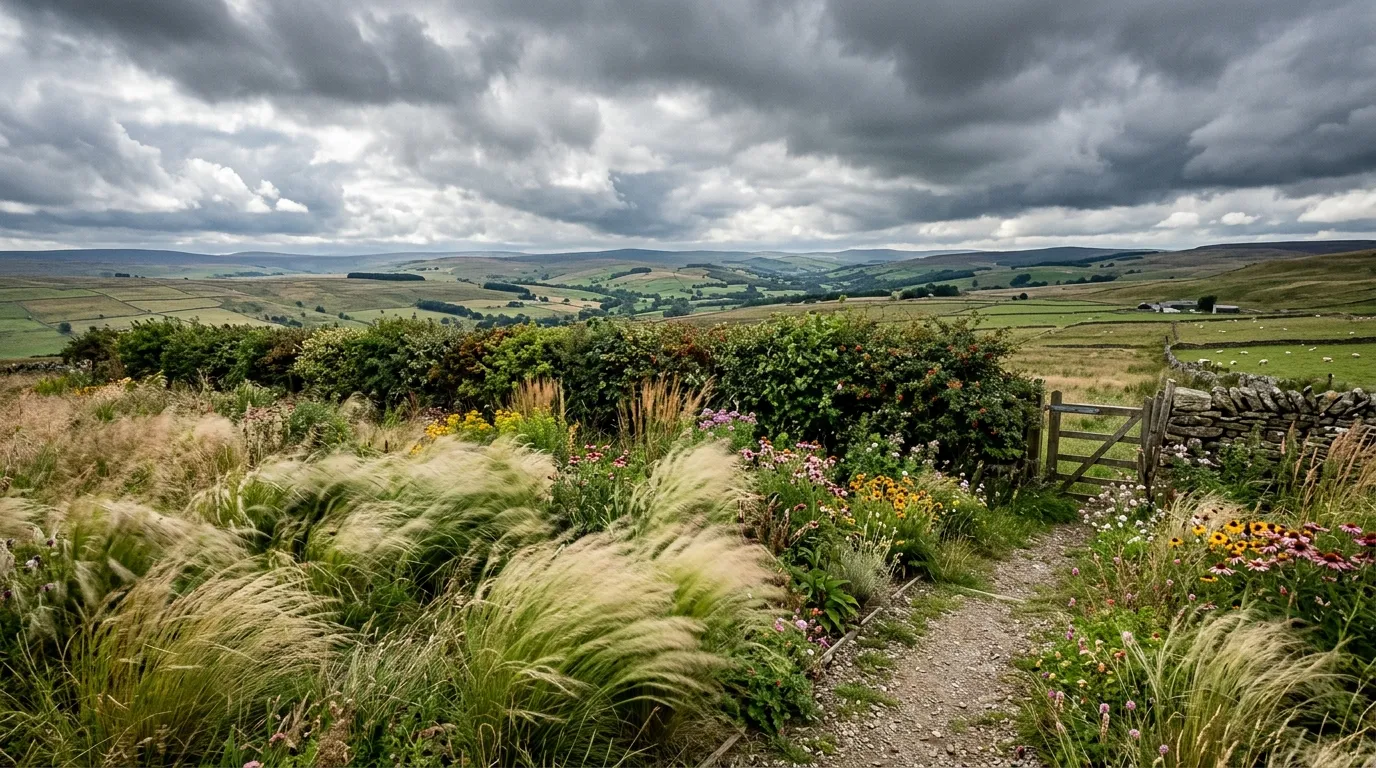
Stepping stones through a mini meadow or wildflower lawn create an appealing path that barely interrupts the planting.
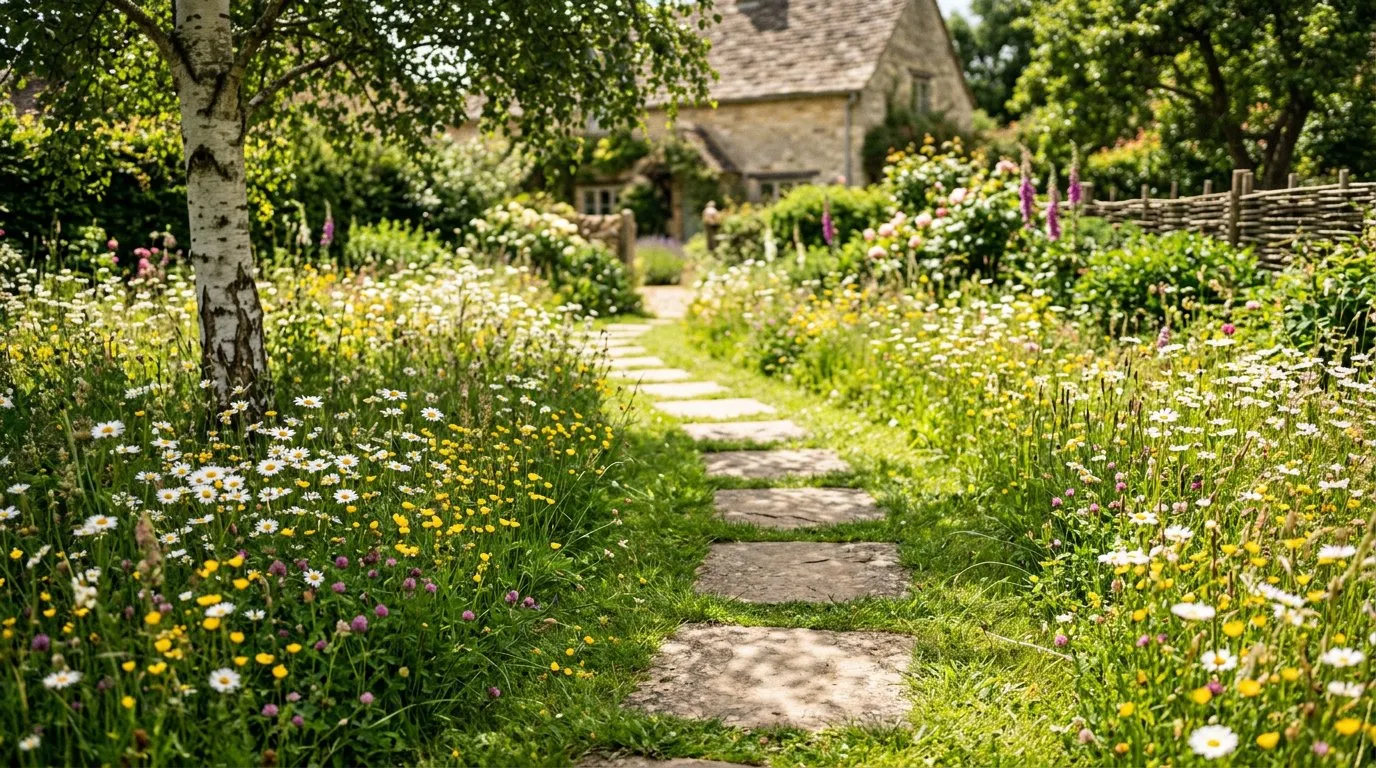 Stepping stones through a wildflower lawn create a charming path that barely disturbs the planting
Curved vs straight paths
Straight paths
Straight paths create formality, direction, and purpose. They work in symmetrical gardens, along boundaries, and as the main route from house to gate. A straight path lined with lavender or box hedging is one of the most elegant garden features possible.
Where to use: front gardens, formal layouts, direct routes, narrow gardens where curves waste space.
Curved paths
Curves make gardens feel larger because the eye cannot see the whole path at once. The destination is hidden, creating anticipation and a sense of discovery. Curves also allow paths to flow around obstacles — trees, raised beds, focal points — without awkward angles.
The rule: every curve needs a reason. A path that curves for no visible purpose looks like a mistake. Curve around a tree, a planted bed, a water feature, or a change in level. If there is nothing to curve around, make the path straight.
Where to use: informal gardens, longer paths, gardens with natural obstacles, any garden where you want to increase the sense of space.
Tip: Lay a hosepipe on the ground to test curved path lines before excavating. Walk the route several times. Adjust until the curve feels natural and comfortable. Then mark with sand and dig.
Path design ideas
The cottage garden path
A brick path in herringbone pattern with planting tumbling over both edges. Lavender, Alchemilla mollis (lady’s mantle), Erigeron karvinskianus (Mexican fleabane), and creeping thyme soften the hard edges and create a fragrant walk. Allow plants to encroach up to 10cm onto the path surface.
The gravel garden path
A winding gravel path through drought-tolerant planting — ornamental grasses, lavender, rosemary, and sedums growing directly in the gravel. No formal beds. The path and planting merge into each other, creating a Mediterranean feel.
The woodland path
Bark chip or stepping stones through shade planting — ferns, hostas, hellebores, and bulbs under a tree canopy. Low-level solar lights along the path edges provide evening ambience. See our guide to shade plants for species recommendations.
The contemporary path
Large-format porcelain pavers (600mm x 600mm or larger) with tight joints and metal strip edging. Clean lines, no planting on the path, architectural planting alongside. Ornamental grasses and clipped shrubs create a minimal, modern look.
The productive path
A gravel or bark chip path between raised vegetable beds, wide enough for a wheelbarrow (minimum 90cm). Timber edging keeps material contained. Herb plants — thyme, chamomile — spill from the beds onto the path edges, releasing fragrance when brushed.
Path edging
Edging serves two purposes: it keeps path material from spreading and creates a clean visual line.
| Edging type | Cost per metre | Durability | Style |
|---|---|---|---|
| Metal strip (steel) | Five to ten pounds | 20+ years | Contemporary, invisible |
| Brick | Eight to fifteen pounds | 50+ years | Traditional, formal |
| Timber (treated softwood) | Two to four pounds | 8-12 years | Informal, budget |
| Cobbles | Ten to twenty pounds | 50+ years | Heritage, cottage |
| Corten steel | Fifteen to twenty-five pounds | 30+ years | Designer, architectural |
Metal strip edging is the most popular current choice. It creates an invisible barrier between path and bed, keeping gravel contained and lawn edges sharp. It bends easily for curves. Metal strip also works brilliantly as fence edging where path meets boundary.
Why we recommend Corten steel edging for permanent paths: After 30 years of specifying path edging in UK gardens, Corten steel is the one product that consistently satisfies clients for decades. It develops a rich rust patina within one season, blends with any planting, and holds its shape permanently without the shifting that affects cheaper aluminium strip. At fifteen to twenty-five pounds per metre it costs more than standard steel, but not one installation has needed replacing in over fifteen years of use.
Planting alongside paths
The planting either side of a path is as important as the path itself.
Let plants soften edges. The best garden paths have planting spilling gently over the edge. Creeping thyme, Erigeron, Alchemilla mollis, lavender, and Geranium Rozanne all perform this role beautifully.
Create fragrance along walked routes. Position aromatic plants where people brush past them — lavender, rosemary, catmint, Sarcococca (winter box). Walking releases the oils and creates a sensory experience.
Use height to create enclosure. Tall planting on both sides of a narrow path creates a garden tunnel effect. Grasses, foxgloves, delphiniums, and climbing roses over an arch all work.
Frame the view. A path that leads to a focal point — a bench, a pot, a tree, a view — feels purposeful. Without something at the end, a path feels aimless. Position something worth walking toward at every path’s conclusion.
If you have dogs, paths serve a practical purpose too. A well-defined route channels foot traffic and reduces lawn wear from paws — our guide to designing a dog-friendly garden covers surfaces, layouts, and planting that work for pets and people.
Tip: Paths through borders should be at least 60cm wide. Account for plants growing over the edges — if plants encroach 10cm from each side, a 60cm path becomes a 40cm squeeze. Build in extra width from the start.
Now you’ve mastered garden path ideas, read our guide on garden lighting ideas for outdoor spaces for the next step.
Frequently asked questions
What is the cheapest garden path material?
Bark chip costs three to five pounds per square metre and is the cheapest option, though it decomposes and needs annual topping up. Gravel at five to fifteen pounds per square metre is the cheapest permanent path material. Both are straightforward DIY projects requiring no specialist tools.
How wide should a garden path be?
Main paths carrying regular foot traffic need a minimum width of 90cm, ideally 1.2m to allow two people to walk side by side. Secondary paths through borders need 60cm minimum. Utility paths to compost bins and sheds can be narrower. Allow extra width where planting will encroach over edges.
Should garden paths be curved or straight?
Curved paths suit informal gardens and make spaces feel larger by hiding the end point. Straight paths create formality and directness. Every curve should have a purpose — bending around a tree, a bed, or a feature. A curve with no reason looks like a mistake.
What is the best path for a sloping garden?
Use textured materials with good grip on slopes — brick, sawn stone with a riven surface, or bark chip retained by timber edging. Regular cleaning prevents algae build-up on shaded paths and patios. Our guide on how to clean a patio covers methods for every surface. Avoid loose gravel on slopes as it washes downhill in rain. For steep gradients, build steps with risers of 10-15cm and treads of 30cm minimum depth.
How do I lay a garden path?
Excavate to 10-15cm depth along the path line. Lay and compact a sub-base of MOT Type 1 aggregate. Add a sand or mortar bedding layer of 3-5cm. Lay your chosen surface material. Install edging along both sides. For gravel paths, lay weed membrane directly then spread 5cm of gravel.
What edging keeps paths tidy?
Metal strip edging in steel or aluminium is the neatest and most durable option for most gardens. It creates an invisible barrier that keeps path material contained and prevents lawn encroachment. Brick edging suits traditional gardens. Timber edging works well for informal bark and gravel paths.
Lawrie has been gardening in the West Midlands for over 30 years. He grows his own veg using no-dig methods, keeps a wildlife-friendly garden, and writes practical advice based on real UK growing conditions.