How to Create a Gravel Garden UK
Learn how to create a gravel garden in the UK with drought-tolerant plant choices, design tips, and step-by-step guidance from real clay-soil trials.
Key takeaways
- A 6m x 4m gravel garden costs roughly 360 to 720 pounds to build, including gravel, membrane, plants, and edging
- Heavy clay soil needs 10-15 cm of sharp grit dug into the top 30 cm before laying gravel
- 20mm pea gravel or angular flint at 5-7 cm depth gives the best balance of drainage and weed suppression
- Lavender, stipa tenuissima, alliums, sedum, and eryngium are the most reliable gravel garden plants in the UK
- No watering needed after the first establishment year, even in dry summers
- Beth Chatto proved the concept in Essex on pure gravel with no irrigation since 1992
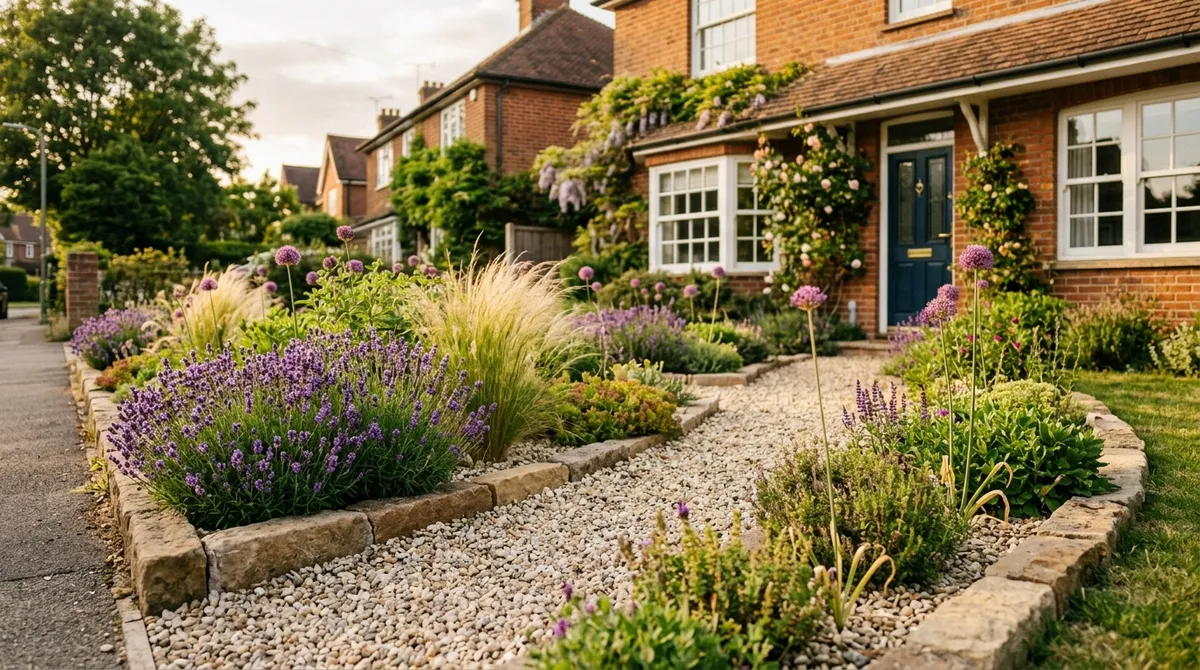
A gravel garden in the UK transforms even the poorest, driest soil into a thriving, low-maintenance planting scheme that needs no watering after the first year.
Beth Chatto proved this at her famous garden in Essex. In 1992 she converted an old car park into a gravel garden on pure stony rubble. She never irrigated it. Thirty years later, it remains one of the most visited gardens in Britain and the definitive proof that gravel gardening works in the UK climate. Her approach drew on Mediterranean planting principles: choose plants adapted to the conditions rather than fighting the soil with irrigation and feeding.
The idea is simple. Strip away the lawn, improve the drainage, spread gravel, and plant drought-tolerant species that look after themselves. The result is a garden that costs 15-30 pounds per square metre to create and almost nothing to maintain. It suits front gardens particularly well, where a patch of struggling lawn often looks worse than bare earth.
How to plan a gravel garden
Start by assessing your site. Gravel gardens perform best in full sun with at least six hours of direct light daily. South and west-facing aspects are ideal. East-facing works if not shaded by buildings. North-facing is possible but limits your plant choices to shade-tolerant species.
Measure the area. A typical front garden of 4m x 6m needs roughly 1.5 tonnes of gravel at 5-7 cm depth. That costs 120-180 pounds delivered in bulk bags. Add plants, edging, and membrane and the total sits between 360 and 720 pounds.
Decide on a layout. The best gravel gardens are not flat expanses of stone. They use curved edges, clusters of planting, and pathways to create structure. Place taller grasses like stipa gigantea or miscanthus at the back. Use mounding plants like santolina and lavender for mid-height structure. Let creeping thyme and sedum spill across the gravel at the front.
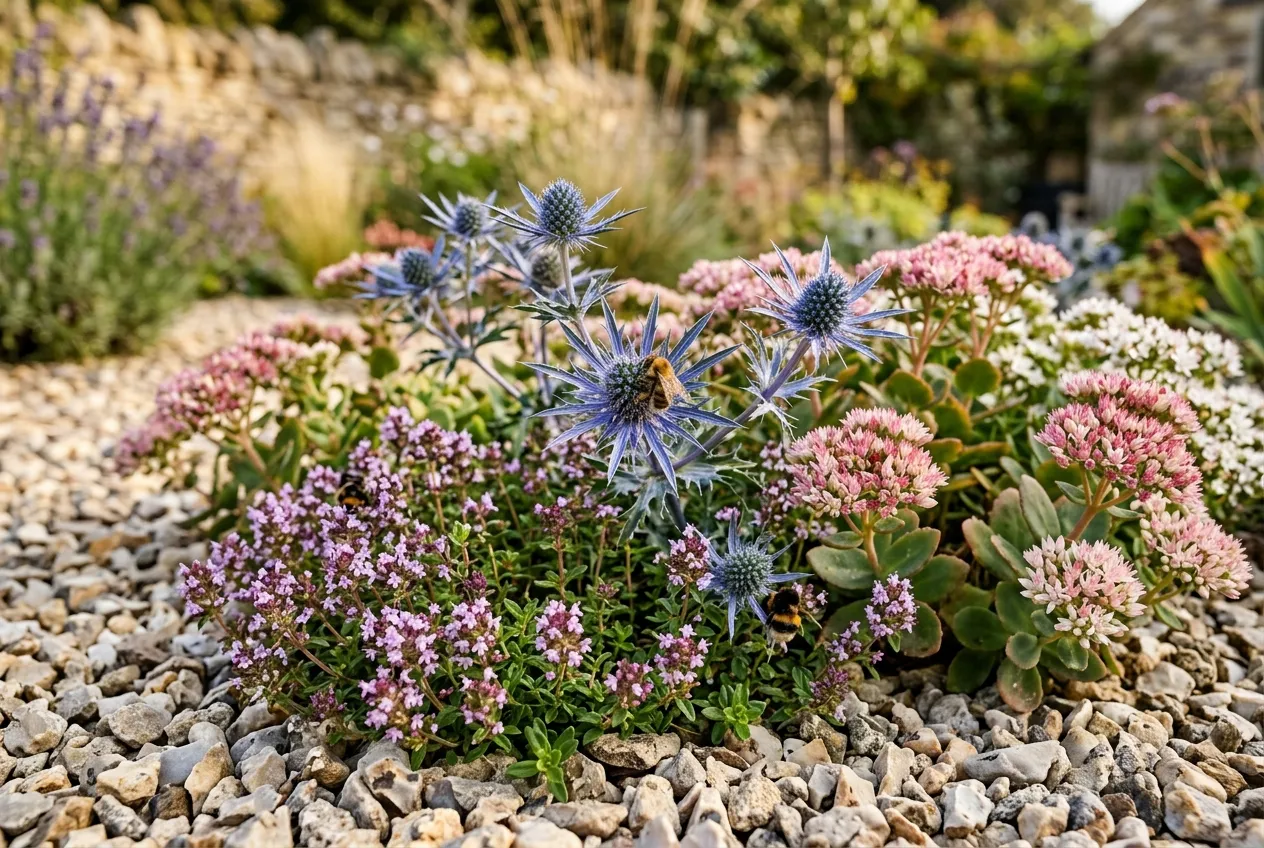
Eryngium, thyme, and sedum thrive in gravel conditions with minimal care.
How to prepare soil for a gravel garden
Soil preparation is the most important step. Get this right and your plants establish quickly. Skip it and you lose half of them in the first wet winter.
On free-draining sandy or chalky soil, preparation is minimal. Clear the area, remove perennial weeds (especially bindweed and couch grass), and rake level. Sandy soil already drains well enough for Mediterranean plants.
On heavy clay soil, drainage work is essential. Dig the top 30 cm and mix in 10-15 cm of sharp horticultural grit (not builder’s sand, which clogs clay further). This opens the soil structure and stops water pooling around plant roots in winter. On my Staffordshire clay plot, I shifted over 2 tonnes of grit across 24 square metres. It took a full weekend, but every plant survived the following winter.
For severely compacted or waterlogged clay, consider raising the entire bed by 15-20 cm above the surrounding ground level with a mix of topsoil and grit. This is more work initially but gives guaranteed drainage.
The weed membrane debate
Landscapers default to weed membrane. It is not always the right choice for a gravel garden.
Arguments for membrane: It blocks perennial weeds like bindweed and dock, reducing maintenance in the first two years. It prevents gravel sinking into soft soil.
Arguments against: It stops desirable self-seeding, which gives gravel gardens their natural character. It traps leaf litter on the surface, creating a layer of organic matter where annual weed seeds germinate anyway. Over time, it degrades into strips of visible plastic.
Beth Chatto’s gravel garden uses no membrane. Neither does mine. A 5-7 cm depth of gravel over well-prepared soil suppresses weeds effectively. Hand-pull the few that appear in the first year. By year two, the planted ground cover fills gaps and outcompetes most weeds. If you have serious perennial weed problems, use membrane as a short-term measure and remove it after two growing seasons.
How to choose the right gravel
The type of gravel defines the look, feel, and function of your garden. Here are the main options available in the UK.
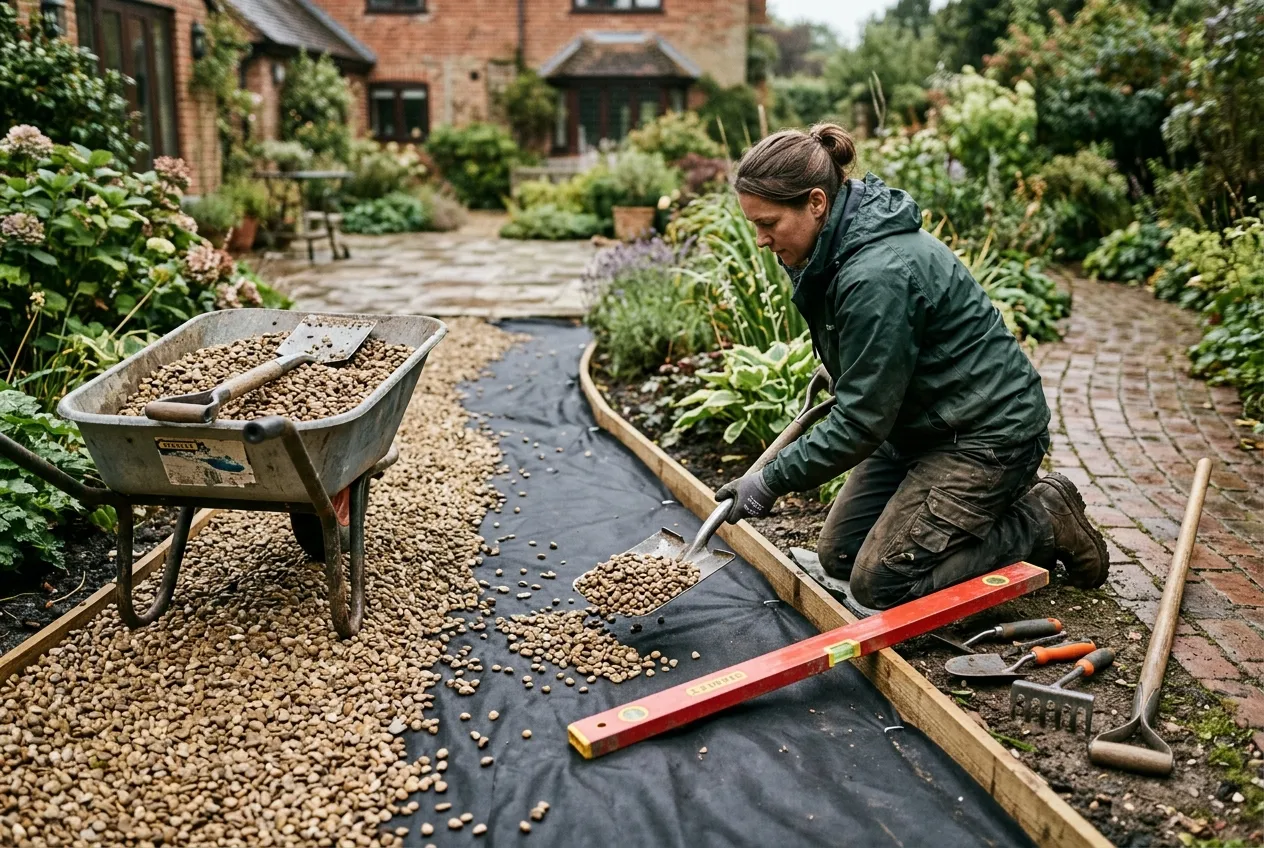
Laying gravel at 5-7 cm depth over prepared ground. A spirit level checks the edging is true.
| Gravel Type | Size | Cost per 25 kg Bag | Colour | Best Use | Notes |
|---|---|---|---|---|---|
| Pea gravel | 10-20mm | 3-5 pounds | Golden/honey | General planting areas | Rounded, comfortable underfoot, natural look |
| Angular flint | 20mm | 4-6 pounds | Grey/blue-grey | Slopes and paths | Locks together, does not migrate |
| Cotswold chippings | 10-20mm | 5-7 pounds | Warm cream/buff | Cottage-style gardens | Softer appearance, suits stone buildings |
| Slate chippings | 20-40mm | 6-8 pounds | Blue-grey/plum | Modern and contemporary | Flat shards, bold contrast with green plants |
| Yorkshire gravel | 20mm | 3-5 pounds | Mixed natural | Informal and wildlife gardens | Varied tones, blends with most settings |
Lawrie’s recommendation: 20mm pea gravel or angular flint suits most UK gardens. Anything smaller than 10mm sticks to shoes and migrates indoors. Anything larger than 40mm looks like a building site and is uncomfortable to walk on. Buy in bulk bags (850 kg covers roughly 8-10 square metres at 5 cm depth) rather than 25 kg bags for areas over 10 square metres.
Best plants for a gravel garden UK
The key principle is simple: choose plants that tolerate drought, poor soil, and full sun. Mediterranean and South African species dominate, but plenty of British natives thrive in gravel too. For a broader list of species suited to dry, free-draining soil, see our guide to drought-tolerant plants.
Structural plants (60-150 cm):
- Stipa tenuissima (Mexican feather grass) - 60 cm, wispy movement, self-seeds freely
- Verbena bonariensis - 150 cm, purple flowers June to October, loved by butterflies
- Eryngium (sea holly) - 60-90 cm, steel-blue flower heads, tolerates salt spray
- Echinacea purpurea - 90 cm, pink-purple coneflowers, excellent for pollinators
Mounding plants (30-60 cm):
- Lavender (Lavandula angustifolia) - 60 cm, aromatic, RHS Award of Garden Merit. See our full guide to growing lavender for pruning advice
- Santolina (cotton lavender) - 50 cm, silver foliage, yellow button flowers
- Artemisia (wormwood) - 45 cm, silvery aromatic leaves, drought-proof
Ground cover (under 30 cm):
- Creeping thyme (Thymus serpyllum) - 5 cm tall, spreads to 45 cm, fragrant when walked on
- Sedum (stonecrop) - 10-30 cm, succulent leaves, autumn flowers for bees
- Alliums - bulbs planted through gravel, flowers May-June, structural seed heads last months
Many of these plants also suit sandy soil conditions and work well as ground cover alternatives to lawn.
Lawrie’s observation: After three years on my clay-over-grit gravel garden, the toughest survivors are stipa, eryngium, sedum, and thyme. Lavender needs the best drainage of anything I have planted. Position it on the highest, most free-draining spot. Verbena bonariensis self-seeds so freely that you will be pulling it out within two years, which is a good problem to have.
Step-by-step: how to create a gravel garden
Step 1: Clear the site. Remove all existing turf, weeds, and debris. Spray or dig out perennial weeds at least three weeks before planting. Every scrap of bindweed root left in the soil will resurface.
Step 2: Improve drainage. On clay, dig in 10-15 cm of sharp grit to the top 30 cm. On sandy soil, skip this step.
Step 3: Install edging. Steel, stone, or timber edging defines the garden boundary and stops gravel migrating onto paths and walkways. Bed edging into mortar for a permanent finish. Set the top level 2-3 cm above the planned gravel surface.
Step 4: Lay membrane (optional). If using membrane, overlap sheets by 15 cm. Pin at 50 cm intervals. Cut X-shaped slits where plants will go.
Step 5: Position plants. Arrange pots on the surface before planting. Group in odd numbers (3s and 5s). Leave 30-60 cm between plants depending on mature spread. Step back and assess the layout before committing.
Step 6: Plant through the gravel. Scrape back gravel, cut membrane if present, dig a hole twice the pot width, water the hole, plant at the same depth as the pot, and backfill with a mix of excavated soil and grit.
Step 7: Spread gravel. Tip bulk bags or barrow 25 kg bags across the area. Rake to a consistent 5-7 cm depth. Work around plants, leaving a 3-4 cm gap around stems to prevent collar rot.
Step 8: Water thoroughly. Soak all new plants well. Water regularly (twice weekly in dry spells) for the first growing season only.
Gravel garden maintenance calendar
| Month | Task | Time |
|---|---|---|
| March | Cut back ornamental grasses to 10 cm. Divide congested perennials. | 2 hours |
| April-May | Hand-weed seedlings. Top up gravel around edges. | 1 hour/month |
| June | Deadhead lavender after first flush. Stake tall verbena if exposed. | 1 hour |
| July-Aug | No watering needed (established gardens). Remove dead flower heads. | 30 mins/month |
| September | Plant new bulbs through gravel. Collect seed from favourite plants. | 2 hours |
| October-Nov | Leave seed heads standing for wildlife and winter structure. Clear fallen leaves off gravel. | 1 hour |
| December-Feb | Minimal work. Plan changes for spring. Order new plants. | 30 mins |
Total annual maintenance sits around 20-30 hours. Compare that to a lawn requiring mowing every week from April to October. For more ways to reduce garden upkeep, see our low-maintenance garden guide.
Common mistakes to avoid
Too little gravel. Three centimetres is not enough. Weeds root easily and membrane shows through. Always lay 5-7 cm minimum.
Wrong grit for clay. Builder’s sand makes clay worse. Use sharp horticultural grit (angular particles, 2-6mm) that opens the soil structure rather than filling it.
Planting too densely. Gravel gardens need visible stone between plants. It is part of the aesthetic. Leave 40-60 cm gaps and let plants fill them naturally over two to three seasons.
Ignoring winter drainage. UK gravel gardens get far more rain than Mediterranean ones. Every plant must tolerate wet winters, not just dry summers. Test new introductions in a single spot before committing to a drift.
Choosing the wrong gravel colour. Bright white stone looks artificial in most UK settings. Honey-toned pea gravel or grey flint blends naturally with British light conditions.
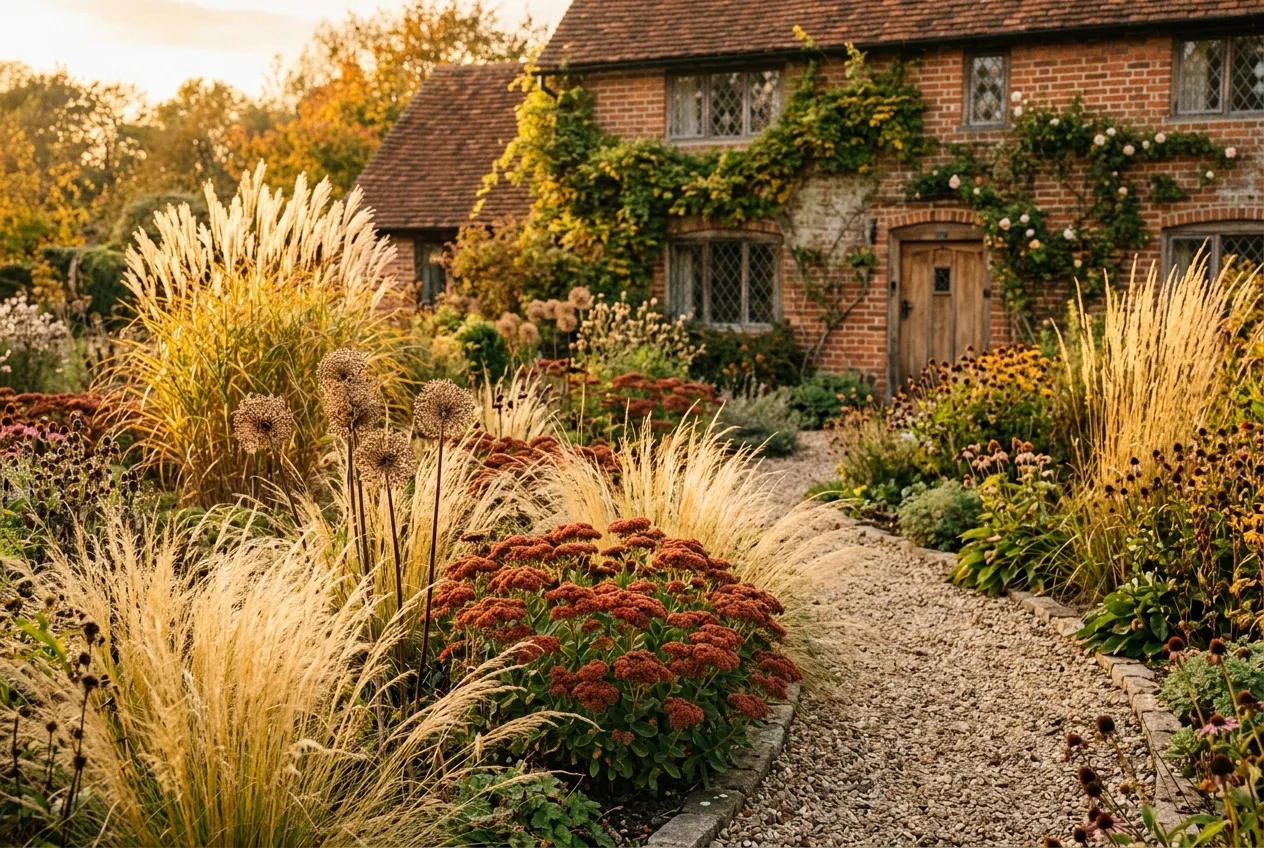
A mature gravel garden in October. Stipa, sedum, and allium seed heads provide structure and colour well into winter.
Frequently asked questions
How deep should gravel be in a gravel garden?
Lay gravel 5-7 cm deep for the best results. Anything less than 5 cm exposes the membrane and lets weeds root. More than 7 cm makes it difficult for self-sown seedlings to establish, which reduces the natural look over time.
Do gravel gardens work on clay soil?
Yes, but clay needs preparation first. Dig 10-15 cm of sharp grit into the top 30 cm to improve drainage. Without this step, Mediterranean plants like lavender and santolina rot in waterlogged winter clay.
What is the best gravel for a garden UK?
20mm pea gravel or angular flint works best. Pea gravel is rounded and comfortable underfoot. Angular flint locks together and stays put on slopes. Avoid anything smaller than 10mm as it sticks to shoes and migrates.
Do I need a weed membrane under gravel?
A weed membrane is optional, not essential. It blocks perennial weeds but also prevents beneficial self-seeding and traps organic matter on the surface. Many successful gravel gardens use a thick gravel layer alone over well-prepared soil.
How much does a gravel garden cost UK?
Budget 15-30 pounds per square metre. A 24 square metre garden costs 360 to 720 pounds for gravel, membrane, edging, and plants. Pea gravel costs roughly 3-5 pounds per 25 kg bag. Bulk delivery by the tonne is cheaper for larger areas.
What plants grow best in a gravel garden?
Lavender, stipa tenuissima, alliums, sedum, eryngium, and thyme are the most reliable choices. All tolerate drought, poor soil, and full sun. Native wildflowers like verbascum and echium also thrive in gravel conditions.
Do gravel gardens need watering?
Water new plants regularly for the first growing season. After that, established gravel garden plants need no supplementary watering, even in dry UK summers. The gravel mulch traps moisture in the soil beneath and reduces evaporation by up to 70 percent.
Further reading
- Best Plants for Sandy Soil UK - many gravel garden favourites also suit sandy conditions
- How to Grow Lavender UK - pruning, soil preparation, and variety guide
- Front Garden Ideas UK - gravel gardens suit front plots perfectly
- Drought-Tolerant Plants for UK Gardens - full species guide for dry conditions
- Best Ground Cover Plants UK - low-growing alternatives to fill gravel gaps
Sources: RHS Gravel Gardens | Beth Chatto Gardens
Lawrie has been gardening in the West Midlands for over 30 years. He grows his own veg using no-dig methods, keeps a wildlife-friendly garden, and writes practical advice based on real UK growing conditions.