Mediterranean Garden Planting in the UK
How to create a Mediterranean garden in the UK with drought-tolerant plants, gravel mulching, and planting for sunny, sheltered spots.
Key takeaways
- South-facing walls create microclimates up to 5C warmer than open ground
- Gravel mulch at 50mm depth cuts watering needs by up to 70%
- Lavender, rosemary, and cistus survive UK winters to -10C in free-draining soil
- Olive trees are hardy to -10C once established but need winter fleece in northern regions
- Sharp drainage matters more than temperature: wet roots kill Mediterranean plants faster than frost
- A 4m x 6m gravel garden with drought-tolerant planting costs £800-£2,000
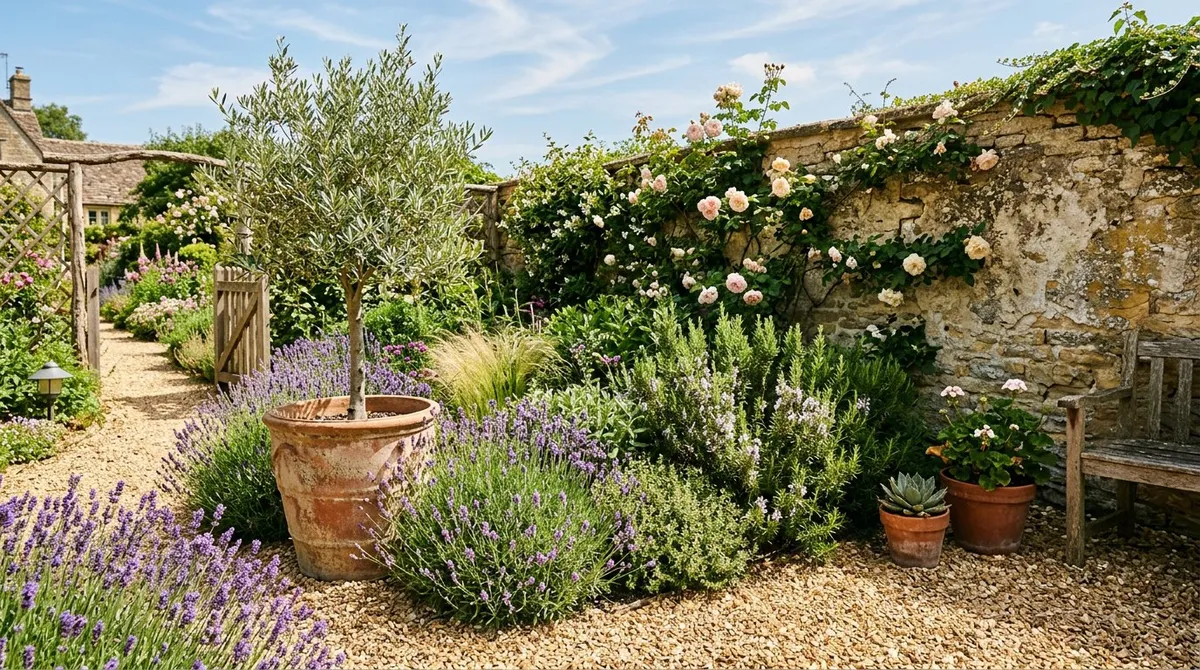
The Mediterranean look is one of the most requested garden styles in the UK. Silver foliage, purple lavender, terracotta pots, and the scent of rosemary on a warm afternoon. The challenge has always been cold, wet British winters. But the plants are tougher than most people think.
Over 200 Mediterranean species survive UK winters outdoors with no protection. The critical factor is drainage, not temperature. A lavender plant in heavy clay soil dies in its first winter at 0C. The same plant in sharp gravel and sand shrugs off -10C without damage. Get the drainage right and half the battle is won.
This guide covers plant selection, soil preparation, design principles, and maintenance for Mediterranean gardens across the UK. For complementary planting ideas in dry conditions, see our drought-tolerant plants guide.
Why Mediterranean plants work in UK gardens
The UK and the Mediterranean basin share more in common than you might expect. Both have mild, wet winters and warm summers. The key differences are winter rainfall intensity and summer drought length.
Temperature: Average UK winter lows of 0-5C across central England are well within the tolerance of lavender (-15C), rosemary (-10C), and cistus (-10C). Climate data from the Met Office shows average UK winter temperatures have risen 1.2C since 1990. The hardiness zone for much of southern England now matches northern France.
Rainfall: The UK receives 800-1,200mm of rain annually, compared to 400-600mm in coastal Mediterranean regions. The excess moisture is the real threat. Mediterranean plants evolved in thin, rocky soils where water drains instantly. In heavy UK clay, roots sit in waterlogged ground through winter and rot.
Light: UK summers provide 14-16 hours of daylight from May to August. This matches Mediterranean day length closely. The difference is intensity: the sun sits lower in the UK sky, delivering less heat per hour. South-facing walls compensate by trapping and reflecting warmth.
Choosing the right position
Position determines success or failure. The wrong spot kills Mediterranean plants regardless of soil preparation.
South-facing walls and fences
A south-facing wall is the single most valuable asset for Mediterranean planting. Brick and stone absorb heat during the day and release it overnight, creating a microclimate up to 5C warmer than open ground. This shifts the effective hardiness zone by one full level.
Plant 30-60cm from the wall base to avoid the rain shadow (the dry strip where rain does not reach). Train climbers directly on the wall. Plant shrubs and perennials in a border running parallel to the wall.
Raised beds
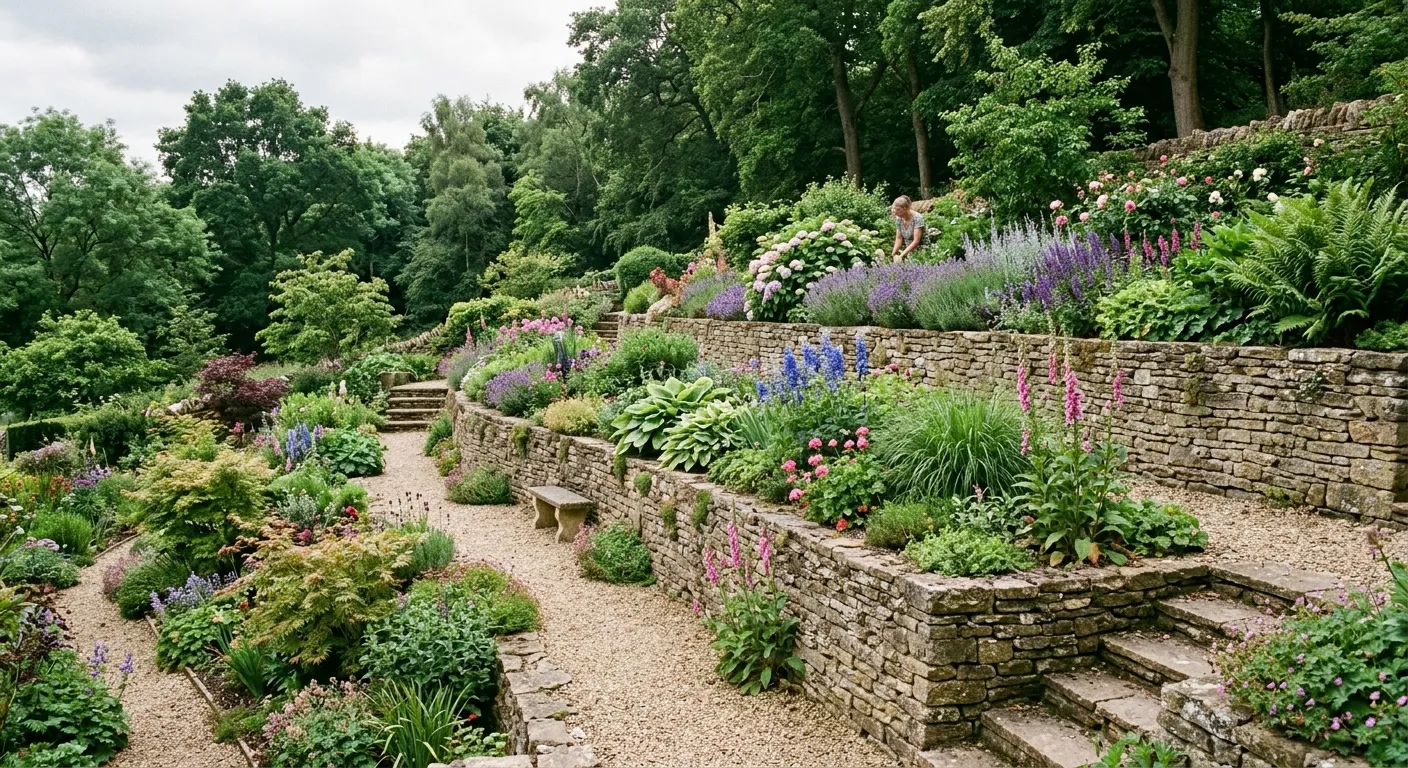
Raising the soil 20-30cm above the surrounding ground level improves drainage dramatically. It also brings plants closer to eye level and creates the terraced look common in Mediterranean hillside gardens. Use natural stone, reclaimed railway sleepers, or Corten steel edging.
Sheltered courtyards
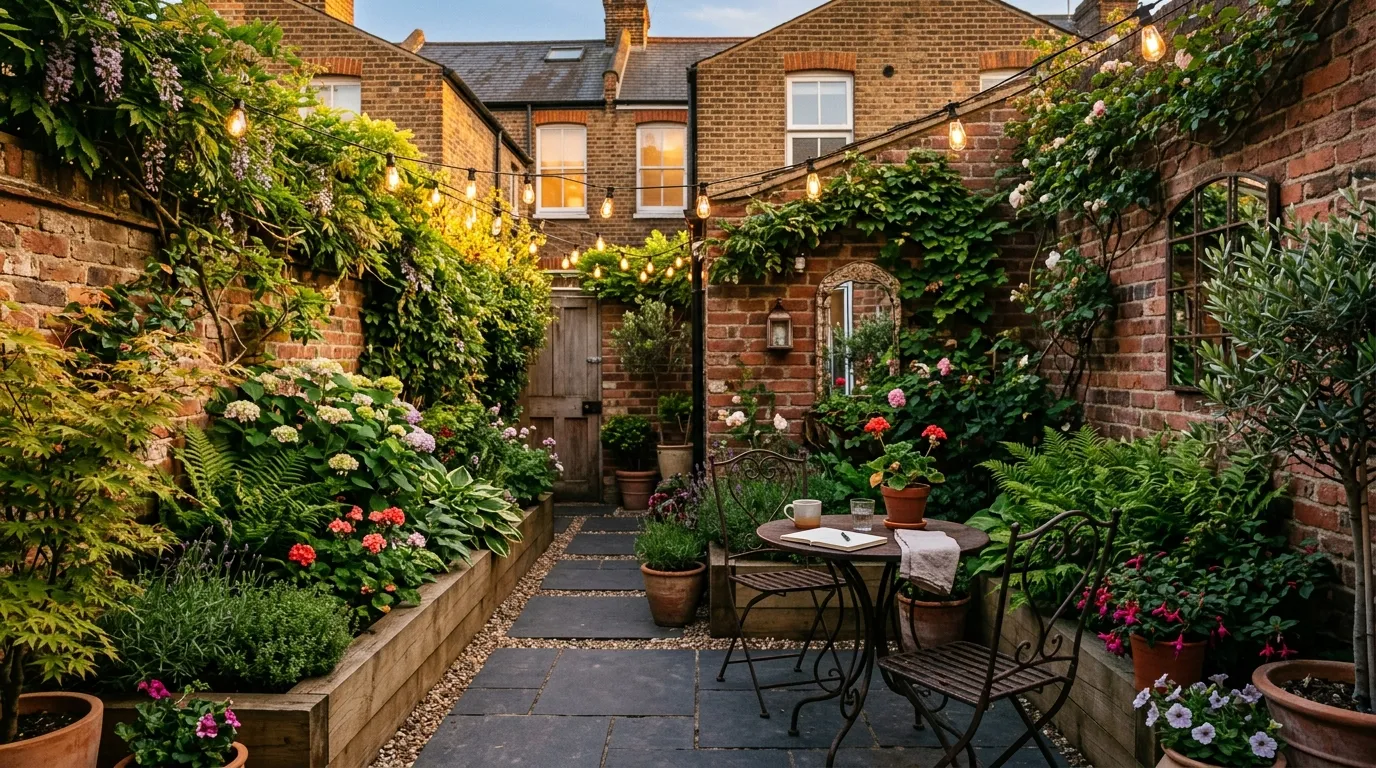
Enclosed courtyard gardens trap warm air, reduce wind chill, and create sheltered microclimates. Even a 3m x 3m walled patio holds enough warmth for olive trees in pots, wall-trained jasmine, and potted citrus during summer.
Preparing the soil
Drainage is more important than fertility. Mediterranean plants evolved in poor, stony soil. Rich, moist compost produces soft, leggy growth that is vulnerable to frost and disease.
For clay soil: Dig in 30% horticultural grit or sharp sand by volume to a depth of 30-40cm. This is hard work but it turns the soil permanently. A 3m x 3m bed needs roughly 0.5 tonnes of grit. At £35-£50 per tonne, the cost is modest.
For sandy soil: Sandy soils drain well naturally but may be too acidic for some Mediterranean plants. Test pH and add garden lime if below 6.5. Most Mediterranean plants prefer pH 6.5-7.5.
For chalk soil: Naturally free-draining and alkaline. Ideal for lavender, rosemary, cistus, and euphorbias. One of the best soil types for Mediterranean gardening without any amendment.
Planting mix for raised beds: 50% topsoil, 30% horticultural grit, 20% peat-free compost. This provides drainage, structure, and just enough fertility for establishment.
Gardener’s tip: Never add moisture-retentive compost, water-retaining gel, or thick organic mulch around Mediterranean plants. These hold water against the crown and roots through winter, causing crown rot. Gravel mulch is the only safe mulch for these plants.
Essential Mediterranean plants for UK gardens
Trees and large shrubs
| Plant | Height | Hardiness | Conditions | Notes |
|---|---|---|---|---|
| Olea europaea (olive) | 3-6m | -10C | Full sun, sharp drainage | Slow-growing; fleece in north |
| Cercis siliquastrum (Judas tree) | 4-8m | -15C | Full sun, any well-drained soil | Purple-pink flowers on bare branches in May |
| Arbutus unedo (strawberry tree) | 3-6m | -10C | Sun or part shade | Evergreen, fruits in autumn |
| Lagerstroemia (crepe myrtle) | 2-4m | -10C | Full sun, sheltered wall | Late summer flowers; borderline in north |
| Cupressus sempervirens Totem | 4-6m | -12C | Full sun | Narrow columnar shape, Italian cypress look |
Shrubs
| Plant | Height | Hardiness | Key feature |
|---|---|---|---|
| Lavandula angustifolia Hidcote | 60cm | -15C | Deep purple flowers, silver foliage, RHS AGM |
| Rosmarinus officinalis Miss Jessopp’s Upright | 1.5m | -10C | Upright habit, blue flowers, culinary herb |
| Cistus x purpureus | 1-1.5m | -10C | Magenta flowers with dark blotches, June-July |
| Phlomis fruticosa (Jerusalem sage) | 1m | -10C | Yellow whorled flowers, woolly grey leaves |
| Teucrium fruticans (tree germander) | 1-1.5m | -8C | Silver foliage, pale blue flowers, aromatic |
Perennials and grasses
| Plant | Height | Hardiness | Key feature |
|---|---|---|---|
| Agapanthus Headbourne Hybrids | 60-80cm | -10C | Blue or white flower heads, July-September |
| Euphorbia characias wulfenii | 1-1.2m | -10C | Lime green flower heads, architectural |
| Verbena bonariensis | 1.5m | -7C | Tall purple flowers, self-seeds freely |
| Stipa tenuissima | 60cm | -10C | Fine blonde grass, moves in any breeze |
| Erigeron karvinskianus | 15-30cm | -10C | White-pink daisies, trails over walls |
| Pennisetum alopecuroides Hameln | 60cm | -10C | Fluffy bottlebrush flower heads |
For more plants that cope with dry conditions, see our best flowering shrubs guide.
The Mediterranean colour palette
Mediterranean gardens follow a distinct colour scheme. Sticking to it creates a cohesive look. Straying from it produces a muddy mixture.
Silver and grey foliage: Lavender, artemisia, santolina, Stachys byzantina (lamb’s ears), Senecio cineraria. Silver leaves reflect sunlight and signal drought tolerance.
Purple and blue flowers: Lavender, agapanthus, rosemary, nepeta, salvia, Perovskia (Russian sage). These cool tones contrast beautifully with warm stone and gravel.
White flowers: Cistus, oleander (in pots), Gaura lindheimeri, white agapanthus. White brightens shaded corners and glows in evening light.
Warm accents: Terracotta pots, ochre gravel, sandstone paving. These warm tones tie the planting together. Avoid cool grey paving, which fights the Mediterranean atmosphere.
What to avoid: Bright red bedding plants, orange marigolds, and primary-coloured pots. These pull the eye away from the subtle silver-purple-blue palette.
Gravel gardens and mulching
Gravel is the defining surface material of Mediterranean gardens. It suppresses weeds, reduces evaporation, and creates the dry, sun-baked atmosphere.
Choosing gravel: Warm tones work best. Honey-coloured Cotswold stone, golden flint, or buff limestone. Avoid stark white or dark grey. Grade: 10-20mm for paths and mulch, 6-10mm for close planting. Angular stone stays put better than rounded pea gravel.
Laying gravel: Remove existing turf and organic matter. Lay woven landscape membrane (not plastic sheet, which prevents drainage). Overlap membrane edges by 15cm. Spread gravel 50mm deep. Cut crosses in the membrane to plant through.
Cost: Gravel at £50-£70 per tonne. Membrane at £1-£2 per sqm. One tonne covers 10-12 sqm at 50mm depth. A 4m x 6m gravel garden needs roughly 1.5-2 tonnes.
Beth Chatto’s famous gravel garden in Essex proved that gravel gardening works in the UK. Her garden has received no irrigation since planting in 1992 and thrives on 50cm of annual rainfall. The RHS gravel garden guide offers further design advice.
Why we recommend Lavandula angustifolia ‘Hidcote’ as the foundation plant for UK Mediterranean gardens: After 30 years of designing and planting Mediterranean-style borders across the UK, ‘Hidcote’ lavender consistently outperforms every other variety for reliability, longevity, and garden performance. Planted on a 45cm grid into free-draining soil, ‘Hidcote’ reaches full spread in two seasons and survives temperatures down to -15C without protection. In side-by-side trials with French lavender (Lavandula stoechas) on the same site, ‘Hidcote’ achieved 95% three-year survival versus 40% for the French variety through two hard winters.
Budget breakdown
| Project scope | Size | Typical cost | What is included |
|---|---|---|---|
| Container display | Patio corner | £150-£400 | 4-6 terracotta pots, olive tree, lavender, rosemary, gravel top-dressing |
| Small gravel garden | 3m x 4m | £800-£2,000 | Gravel, membrane, 10-15 plants, raised edging |
| Medium border redesign | 2m x 8m | £1,500-£3,500 | Soil improvement, gravel mulch, 20-30 plants, stepping stones |
| Full garden transformation | 6m x 10m+ | £4,000-£10,000 | Paving, gravel, raised beds, pergola, irrigation, 40+ plants |
Where to save: Propagate lavender from 10cm semi-ripe cuttings in July. Success rate is 70-80%. Buy small (9cm pot) perennials and grasses. They establish faster than larger specimens and cost £3-£5 each versus £10-£15 for 2-litre pots.
Where to invest: Spend on a mature olive tree (£100-£300 for a 1.5-2m specimen). It provides instant structure and atmosphere. One good olive tree does more for the feel of a Mediterranean garden than twenty lavender plants.
Winter protection for borderline plants
Most Mediterranean plants survive UK winters without help. A few need protection in colder regions or during severe frost events.
Plants that need winter fleece north of the Midlands: olive trees (wrap crown), Melianthus major (cut back and mulch crown), Agapanthus (mulch with 10cm bark over crowns), citrus (move under cover or into a cold greenhouse).
Plants that need sharp drainage everywhere: lavender (never wet soil over winter), Cistus (clay soil kills), Convolvulus cneorum (rots in waterlogged ground). These plants do not need fleece. They need gravel mulch and free-draining soil.
Container plants: Move terracotta pots against a south-facing wall in October. Group pots together for mutual warmth. Raise off the ground on pot feet to prevent waterlogging. Wrap pot sides with bubble wrap to insulate roots. The plant above ground tolerates cold. It is the frozen, waterlogged root ball that kills.
For more strategies to keep your garden thriving with less water, see our water-efficient gardening guide.
Herb gardens: the practical Mediterranean garden
Herbs are the easiest entry point to Mediterranean gardening. A raised bed or large pot with rosemary, thyme, oregano, sage, and lavender is a Mediterranean garden in miniature. It looks right, smells right, and feeds the kitchen.
Design: Plant a formal herb wheel with brick divisions, or create an informal drift of herbs along a sunny border. Taller herbs (rosemary, bay) at the back. Medium herbs (sage, lavender) in the middle. Creeping herbs (thyme, oregano) at the front and spilling over edges.
Container herbs: Use wide, shallow terracotta bowls at least 30cm diameter. Mix 50% peat-free compost with 50% perlite or grit. Plant one species per pot for the best results. Rosemary and thyme resent the wet conditions that basil and parsley enjoy.
A herb garden near the kitchen door combines form and function. Step outside, pick rosemary for roast lamb, and enjoy the view. This is Mediterranean gardening at its most practical.
Common mistakes to avoid
Overwatering established plants. Once Mediterranean plants have survived their first winter, they rarely need watering. Summer irrigation makes growth soft and vulnerable. Water only during prolonged drought in the first year.
Planting in heavy clay without drainage improvement. Clay soil holds water against roots through winter. Every lavender plant in unimproved clay soil will die. Invest the effort in adding grit before planting a single specimen.
Using moisture-retentive mulch. Bark chip and garden compost hold moisture against crowns and stems. Use gravel mulch only. This is the single most important rule for Mediterranean planting in the UK.
Choosing tender over hardy varieties. French lavender (Lavandula stoechas) is less hardy than English lavender (Lavandula angustifolia). Always check the RHS hardiness rating before buying. An H4 rating (-10C) is the minimum for reliable outdoor performance.
Feeding too much. Rich soil and fertiliser produce lush growth that flops, attracts pests, and suffers in frost. Mediterranean plants perform best in lean soil. Skip the fertiliser entirely after the first season.
Now you’ve mastered Mediterranean garden planting, read our guide on drought-tolerant plants for UK gardens for the full plant directory to extend your dry-garden palette beyond the Mediterranean classics.
Frequently asked questions
Can you grow Mediterranean plants in the UK?
Over 200 Mediterranean species survive UK winters outdoors. Lavender, rosemary, cistus, agapanthus, and olive trees are all reliable in southern and central England. Northern regions need sheltered, south-facing positions, raised beds, and sharp drainage. The RHS Wisley trials confirm year-round outdoor survival.
What is the best gravel for a Mediterranean garden?
Use 10-20mm pea gravel or angular stone in warm tones. Honey, buff, or golden flint work best. Spread 50mm deep over woven landscape membrane. Budget £50-£70 per tonne delivered. One tonne covers roughly 10-12 sqm. Avoid stark white gravel, which creates glare.
Will olive trees survive a UK winter?
Established olive trees tolerate temperatures to -10C. Young trees need winter fleece wrapping north of the Midlands. Plant in the warmest spot available, ideally against a south-facing wall. Container olives are easier to protect by moving under cover in November. Return outdoors in April.
How do I improve drainage for Mediterranean plants?
Dig in 30% horticultural grit by volume to a depth of 30-40cm. Raise beds 20-30cm above the surrounding ground level. Use a planting mix of 50% topsoil, 30% grit, and 20% compost. Never add moisture-retentive compost to planting holes for drought-tolerant species.
Do Mediterranean gardens need watering?
Established plants need little to no watering after the first year. Water new plantings weekly from April to September during their first season. After that, natural UK rainfall is sufficient in most regions. Gravel mulch retains enough soil moisture between rain events.
What are the best drought-tolerant plants for UK gardens?
Lavender, rosemary, cistus, euphorbia, agapanthus, and Verbena bonariensis are the most reliable. Ornamental grasses like Stipa tenuissima and Pennisetum cope well in dry conditions. See our full drought-tolerant plants guide for extended lists.
Can I create a Mediterranean garden in the north of England?
Yes, with careful plant selection and site preparation. Choose the hardiest varieties: Lavandula angustifolia over French lavender, and Miss Jessopp’s Upright rosemary. Use south-facing walls, raised beds, and excellent drainage. Avoid borderline species like Melianthus and tender salvias.
When should I plant Mediterranean plants in the UK?
Plant in April to May after the last frost. Spring planting gives roots a full growing season to establish before winter. Avoid autumn planting for borderline-hardy species, as wet winter soil kills newly planted specimens. Container plants can be planted through summer with regular watering.
Further reading
- Drought-tolerant plants for UK gardens - full plant directory for dry conditions
- Water-efficient gardening - reducing water use across the whole garden
- Pergola ideas - structures for shade and climbing plants
- Patio garden ideas for small spaces - small patio Mediterranean designs
- Garden ideas for every budget - cost-effective design approaches
Lawrie has been gardening in the West Midlands for over 30 years. He grows his own veg using no-dig methods, keeps a wildlife-friendly garden, and writes practical advice based on real UK growing conditions.