Patio Garden Ideas for Small Spaces
Practical ideas for patio gardens in small UK spaces. Covers container sizes, best plants, vertical growing, food production, and seasonal plans.
Key takeaways
- 45cm pots suit most shrubs and perennials — 30cm for annuals, 20cm for herbs
- Vertical growing on walls and fences triples your planting space
- A single 50-litre grow bag produces 3-4kg of tomatoes or 2kg of salad leaves per season
- Terracotta looks best but dries out fastest — use plastic inner pots for less watering
- Group pots in odd numbers (3s and 5s) at varying heights for the most natural look
- Balconies typically support 150-250 kg per square metre — check before loading with pots
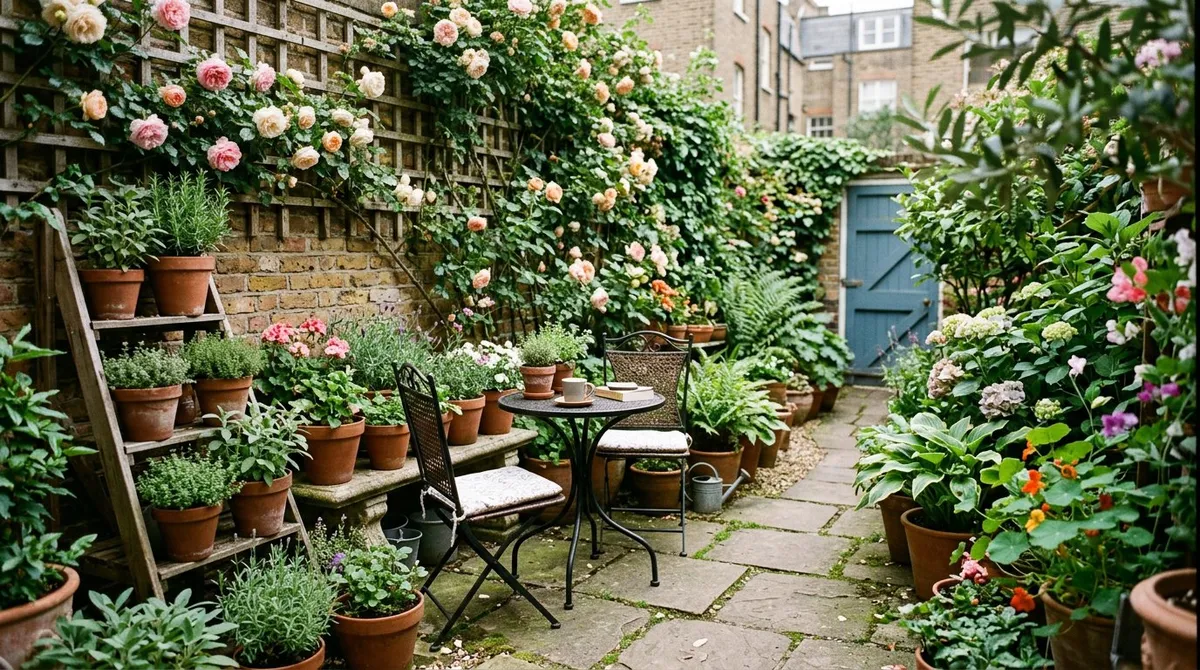
Most garden design articles treat patios as a blank canvas for furniture and fairy lights. This guide takes a different approach. A patio is a growing space. Even 3 metres square holds enough pots for herbs, flowers, salad crops, and a trained fruit tree. The limit is not space but how you use the vertical dimension.
Everything here applies to UK conditions. Frost-hardy plant choices, compost that holds moisture through a British heatwave, and containers that survive winter outdoors. If you have a courtyard, balcony, or rented garden with only hard standing, this is your starting point. For larger spaces, our small garden design guide covers layout and planting at a wider scale.
What size containers work best for patios?
Container size is the single biggest factor in patio growing success. Too small and plants dry out and starve. Too large and you waste compost and cannot move them.
| Plant type | Minimum pot diameter | Why |
|---|---|---|
| Herbs (thyme, mint, chives) | 20cm | Shallow roots, low water demand |
| Bedding annuals | 25-30cm | One season of growth, moderate roots |
| Perennials and grasses | 35-45cm | Multi-year root growth, winter hardiness |
| Shrubs (box, lavender, hebe) | 45cm+ | Long-term root space, weight stability |
| Climbers (clematis, jasmine) | 45-50cm | Deep root run needed for wall training |
| Fruit trees (dwarf rootstock) | 45-60cm | Heavy cropping needs large root mass |
| Tomatoes and courgettes | 40-50cm or 50L grow bag | Heavy feeders, heavy drinkers |
The RHS container gardening advice recommends 45cm as the minimum for any permanent planting. Anything smaller dries out too fast in summer and freezes solid in winter, killing roots. Our guide to container vegetable gardening covers soil mixes and feeding schedules in detail.
Choosing container materials
Each material has trade-offs. The best choice depends on your priorities.
| Material | Weight | Moisture retention | Frost resistance | Cost | Best for |
|---|---|---|---|---|---|
| Terracotta | Heavy | Low (porous) | Low (can crack) | Medium | Sunny spots, Mediterranean herbs |
| Glazed ceramic | Heavy | Medium | Medium | High | Feature pots, permanent plants |
| Plastic | Light | High | High | Low | Balconies, frequent movers |
| Fabric (grow bags) | Very light | Low | Not applicable | Low | Seasonal veg, temporary use |
| Metal (galvanised) | Medium | High | High | Medium | Modern designs, raised troughs |
| Wood (treated) | Heavy | Medium | Medium | Medium | Raised beds, large planters |
Practical tip: Use a plastic inner pot inside a decorative terracotta or ceramic outer. You get the look of terracotta with the moisture retention of plastic. Swap the inner pot when you change seasonal displays without disturbing the outer.
For balconies, weight matters. A 50-litre terracotta pot filled with wet compost weighs around 40kg. Check your balcony’s load rating before adding multiple containers. Most UK balconies support 150-250 kg per square metre.
Best plants for small UK patios
The best patio plants tolerate pot culture, look good for months, and do not outgrow their containers within a season.
Evergreen structure plants
These give your patio a backbone that looks good year-round.
Box (Buxus) clips into balls, cones, or low hedges. Grows slowly in pots, needing a trim twice a year. Hardy to minus 15C. Use a 45cm pot minimum. Check for box blight resistance when buying (varieties like ‘Faulkner’ have better tolerance).
Japanese acers provide year-round interest: fresh green leaves in spring, deep colour in autumn, and sculptural bare branches in winter. They prefer dappled shade and shelter from wind. ‘Bloodgood’ and ‘Dissectum’ are the most popular UK choices.
Fatsia japonica has large evergreen leaves and tolerates shade. Grows to 1.5m in a 45cm pot. One of the best structural plants for a north-facing patio.
Flowering plants for seasonal colour
Layer your pots with seasonal performers to keep the patio colourful year-round.
Spring: Tulips, daffodils, and muscari in 30cm pots. Plant in October for April flowering. Our tulip growing guide and daffodil planting guide cover varieties and depths.
Summer: Lavender, geraniums, petunias, and salvias in south-facing spots. Fuchsias, begonias, and hostas for shadier positions.
Autumn: Heuchera, ornamental grasses, and Japanese anemones carry colour into October. Nerines flower in September and pair well with terracotta pots.
Winter: Cyclamen, winter pansies, heathers, and hellebores keep the patio alive through the darkest months. Skimmia provides red berries and scented flowers.
Growing food on a patio
A patio produces more food than most people expect. You do not need an allotment to eat home-grown salad, herbs, and tomatoes daily from June to October.
Herbs: Rosemary, thyme, sage, chives, and mint grow in 20cm pots on any sunny windowsill or patio shelf. A single rosemary plant lasts years in a 30cm pot. Mint needs its own container as it spreads aggressively.
Salad leaves: Lettuce, rocket, and baby spinach grow from seed to harvest in 4-6 weeks. Sow in succession every fortnight from April to August for continuous picking. A 40cm trough produces 4-5 cuts per sowing. See our lettuce growing guide.
Tomatoes: One tomato plant in a 50-litre grow bag or 40cm pot produces 3-4kg of fruit. Cherry varieties like ‘Sungold’ and ‘Gardener’s Delight’ are the most reliable for UK patios. Place against a south-facing wall for warmth.
Other crops: Runner beans grow up a single bamboo wigwam in a 45cm pot. Courgettes produce 10-15 fruits per plant in a 50-litre container. Strawberries trail well from hanging baskets and raised planters.
| Crop | Container size | Yield per plant | Harvest months |
|---|---|---|---|
| Cherry tomatoes | 40-50cm pot | 3-4kg | July-October |
| Salad leaves | 40cm trough | 4-5 harvests | May-October |
| Runner beans | 45cm pot + support | 2-3kg | July-September |
| Herbs (mixed) | 20-30cm pot | Continuous picking | April-November |
| Strawberries | 30cm pot or basket | 400-500g | June-August |
| Courgettes | 50L pot or bag | 10-15 fruits | July-September |
Vertical growing for patio walls
Walls and fences are wasted growing space on most patios. Going vertical triples your planting area without using floor space. Our dedicated guide to vertical gardening ideas covers every method from living walls to tower planters.
Wall-mounted planters: Attach metal or plastic troughs to fences and walls at different heights. Trailing plants like ivy, fuchsia, and lobelia cascade downward. Herbs like thyme and oregano grow well in shallow wall-mounted troughs.
Trellis panels: Fix trellis to walls or fences and train climbing plants. Jasmine, clematis, and honeysuckle provide flowers and scent. Espaliered fruit trees produce full-sized apples or pears flat against a wall. A single espalier apple tree needs just 30cm of floor depth and a 2m width of wall.
Stacking and tiering: Use plant stands, step shelves, or tiered pot holders to display multiple containers in a small footprint. A corner shelf unit holds 6-8 pots in the space of one. Place tallest pots at the back, shortest at the front.
Hanging baskets: Bracket-mounted baskets above head height add colour without losing floor area. Trailing geraniums, petunias, and begonias work best. Line with moss or coconut fibre and water daily in summer.
Design tricks for making a small patio feel bigger
A few visual techniques make a 3m x 3m patio feel twice the size.
Lay paving diagonally. Placing slabs at 45 degrees to the house wall draws the eye along the longer diagonal. This creates an optical illusion of greater depth. Light-coloured paving (cream, buff, pale grey) reflects more light and feels airier than dark stone. If you are starting from scratch, our guide on how to lay a patio covers the full process.
Use fewer, larger pots. Ten small pots create visual clutter. Three or four 45cm containers look more considered and leave usable floor space. Group pots in odd numbers at varying heights.
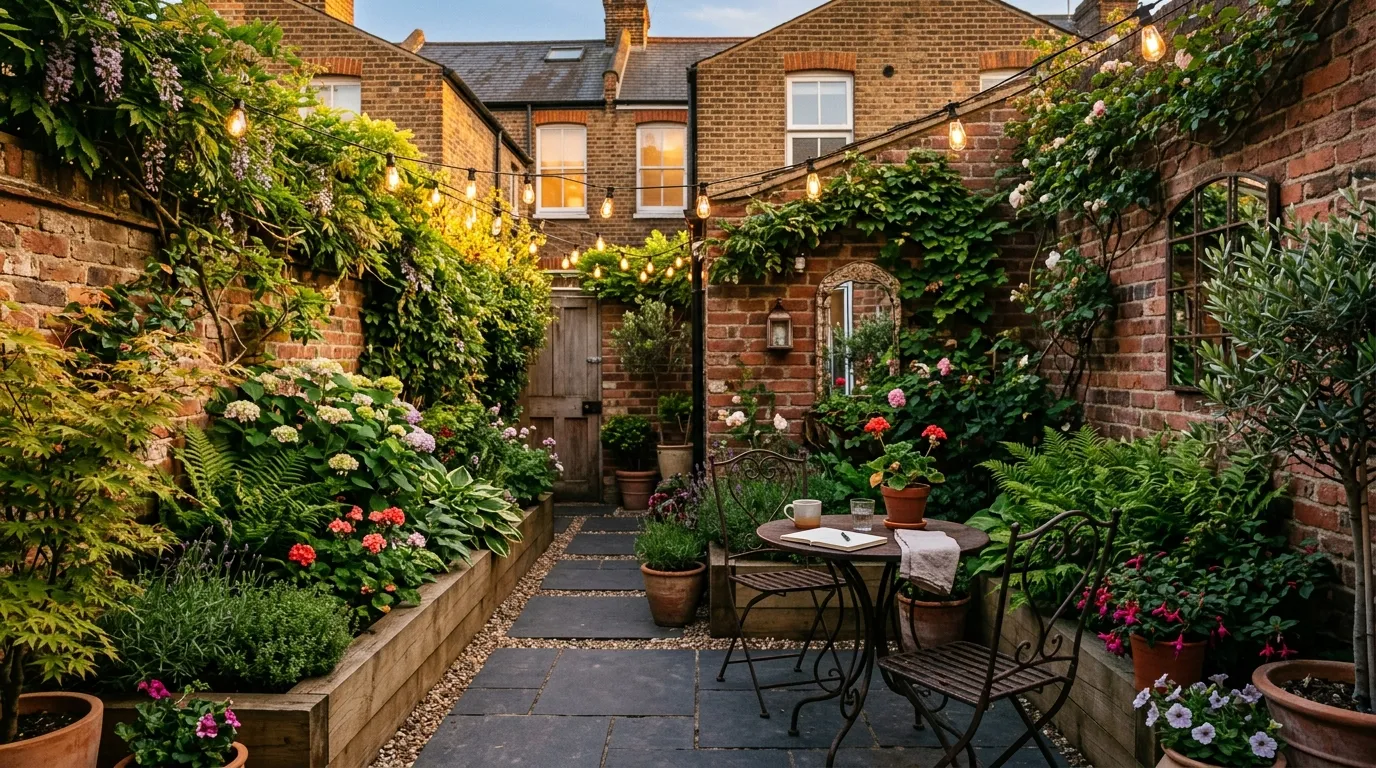
Add a mirror. A large, weatherproof mirror on a boundary wall or fence doubles the perceived depth. Position it opposite planting to reflect greenery. Frame it with climbers for a natural look. Outdoor mirrors need a minimum IP44 rating or a simple wooden frame covering the edges.
Keep the centre clear. Push containers and furniture to the edges. A clear central area feels spacious even on a tiny patio. One small bistro table and two chairs take less visual space than a full dining set.
Choose one colour palette. Restrict pot colours and plant hues to a single family (blues and whites, or warm reds and oranges). Mixed colours in a small space feel chaotic.
Attracting wildlife to a patio garden
Why we recommend ‘Sungold’ cherry tomatoes for patio growing in the UK: After 30 seasons of trialling tomato varieties in containers, ‘Sungold’ consistently produces the highest yield-to-effort ratio of any variety I have grown on a British patio. In a 50-litre grow bag against a south-facing wall, a single plant regularly yields 4.5kg from July to October with nothing more than weekly feeding and daily watering. The fruit is sweet enough to eat straight from the vine, which means it actually gets eaten rather than left to split.
Even a small patio supports pollinators and beneficial insects alongside birds. Container gardens provide nectar and shelter that links isolated garden habitats across urban areas.
For bees: Plant lavender, thyme, sedum, verbena bonariensis, and single-flowered dahlias. The RHS Plants for Pollinators list rates lavender and verbena among the top 10 patio plants for bees. Avoid double-flowered varieties as bees cannot access the pollen.
For birds: A shallow water dish on the patio provides drinking and bathing water year-round. Seed-bearing plants like sunflowers in large pots attract finches. Berry-producing shrubs like cotoneaster and pyracantha in 45cm pots feed thrushes and blackbirds through winter.
For insects: A small log pile or bug hotel in a shaded corner shelters solitary bees, ladybirds, and lacewings. Leave dead stems standing through winter as overwintering habitat for hoverflies. Even a few square metres of planting makes a measurable difference in a concrete-heavy urban area.
If you share your patio with a dog, choose containers and plants that are safe for pets — our guide to pet-safe garden plants lists non-toxic options that work well in containers and small spaces.
Seasonal care calendar for patio containers
| Season | Key tasks |
|---|---|
| Spring | Repot root-bound plants into the next size up. Top-dress permanent pots with fresh compost. Start feeding with balanced liquid fertiliser fortnightly. Plant summer bedding after the last frost. |
| Summer | Water daily (twice in heatwaves). Feed weekly with tomato feed for flowering and fruiting plants. Deadhead regularly. Move shade-loving plants out of direct afternoon sun. |
| Autumn | Reduce watering. Switch tender plants (citrus, olive) to a sheltered position. Plant spring bulbs in containers. Move pots against house walls for frost protection. |
| Winter | Raise pots on feet to prevent waterlogging. Wrap vulnerable pots in bubble wrap or hessian. Water only when compost feels dry 3cm down. Clear debris to prevent fungal disease. |
For detailed month-by-month growing jobs, see our spring, summer, autumn, and winter gardening guides.
Now you’ve mastered patio gardening, read our guide on container vegetable gardening for the next step in growing food in a small space.
Frequently asked questions
What are the best plants for a small patio UK?
Lavender, box, Japanese acers, hostas, and heuchera work well in containers. For seasonal colour, layer bulbs, summer bedding, and winter cyclamen. Herbs like rosemary, thyme, and sage thrive on sunny patios and provide kitchen harvests.
How do I make a small patio look bigger?
Use pale-coloured paving and fewer, larger pots. Lay slabs diagonally. Place a mirror on a boundary wall. Keep the centre clear and push planting to edges. A single colour palette creates calm rather than visual clutter.
Can I grow vegetables on a patio?
Tomatoes, salad leaves, runner beans, courgettes, and herbs all grow well in containers. A single 50-litre pot produces 3-4kg of tomatoes per season. Our container vegetable gardening guide covers crop selection and feeding.
How often should I water patio containers?
Daily in summer, especially terracotta pots in full sun. Twice daily in heatwaves for small pots and hanging baskets. Weekly in spring and autumn. In winter, water only when the top 3cm of compost feels dry.
What size pots do I need for a patio garden?
45cm diameter minimum for shrubs and perennials. Annuals suit 30cm pots. Herbs grow in 20cm containers. Fruit trees need 45-60cm pots. Larger pots retain moisture longer and reduce watering frequency.
Is terracotta or plastic better for patio pots?
Both have trade-offs. Terracotta looks better but dries out faster and can crack in frost. Plastic retains moisture and weighs less. Use a decorative terracotta outer with a plastic inner pot for the best of both.
Further reading
- Container vegetable gardening — growing food in pots and grow bags
- Small garden design ideas — layout and planting for compact gardens
- Best climbing plants — vertical growing options for walls and fences
- Raised bed gardening — alternative to containers for bigger spaces
- Drought-tolerant plants — low-water options for sunny patios
Lawrie has been gardening in the West Midlands for over 30 years. He grows his own veg using no-dig methods, keeps a wildlife-friendly garden, and writes practical advice based on real UK growing conditions.