Water Feature Ideas for UK Gardens
Water feature ideas for UK gardens. Covers self-contained fountains, wildlife ponds, solar pumps, frost protection, costs from £30 to £5,000, and planting.
Key takeaways
- Self-contained water features start at £30 for solar and £80 for mains-powered, needing no plumbing
- Wildlife ponds attract frogs, newts, and dragonflies within the first season of installation
- Solar pumps work reliably in UK summers but stop in shade and produce no flow in winter
- Drain exposed pipes and lift pumps above the ice line before the first frost in November
- A 2m x 1.5m wildlife pond costs £100-£300 in liner and edging materials
- Moving water produces 5-10 decibels less noise than road traffic, masking urban sound effectively
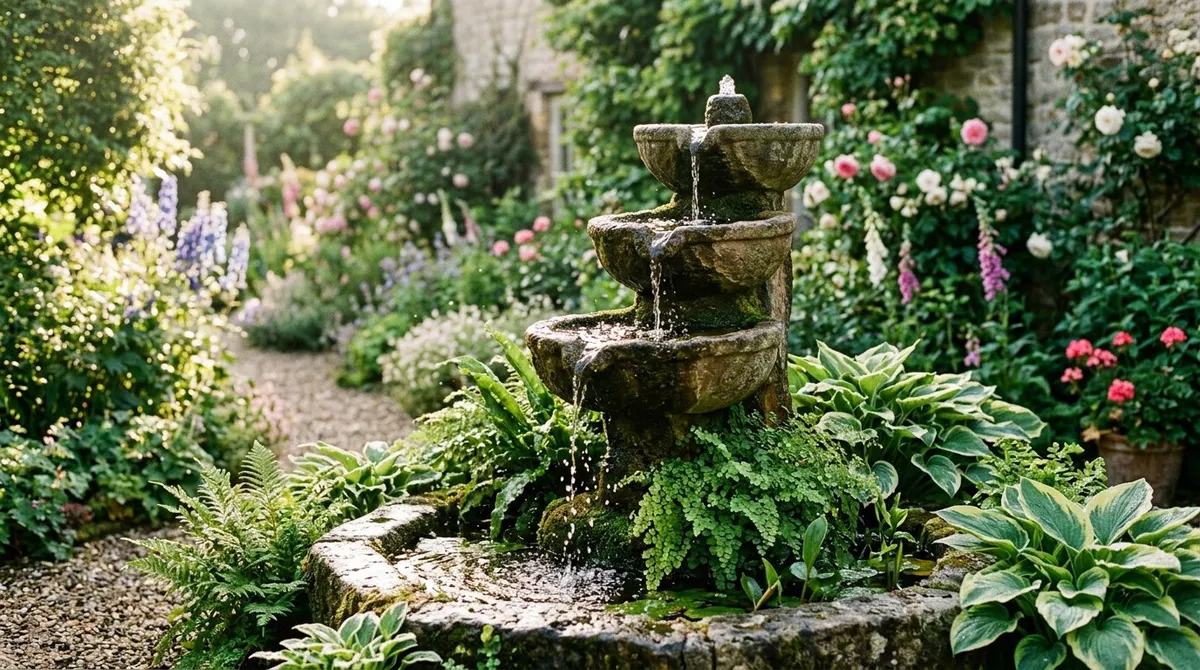
A water feature brings a garden to life in a way nothing else can. The sound of moving water masks traffic noise, attracts wildlife, and creates a focal point that draws the eye. Even a small solar fountain in a bowl changes the atmosphere of a patio entirely.
UK conditions suit water features well. Rainfall keeps them topped up for much of the year. The temperate climate supports a wide range of aquatic and marginal plants. Wildlife colonises new water within weeks. The main challenge is winter frost, which is manageable with basic preparation each November.
This guide covers every type of garden water feature, from a £30 solar fountain to a bespoke stone installation. We include realistic costs, pump options, planting ideas, child safety, and the winter care that UK conditions demand. For a wildlife-focused approach, our guide to building a wildlife pond covers habitat creation in detail.
Types of garden water feature
Water features divide into two broad categories: self-contained features that recirculate water in a closed system, and open water features like ponds and rills that sit in or on the ground.
Self-contained features
These are the simplest option. Water circulates from a hidden reservoir through a pump and over a decorative surface: a millstone, a stack of pebbles, a wall-mounted spout, or a tiered bowl. No excavation. No pond liner. No open water.
Self-contained features suit small gardens, patios, courtyards, and families with young children. They plug into a standard outdoor socket or run from a solar panel. Setup takes 30 minutes to an hour.
Popular self-contained types:
- Pebble fountains: water bubbles up through a stack of pebbles or a drilled stone into a hidden sump below. Natural-looking and safe.
- Wall-mounted spouts: a lion head, copper spout, or modern blade pours water into a trough below. Ideal for courtyard gardens and narrow spaces.
- Tiered bowls: water cascades from bowl to bowl. Available in stone, resin, and metal. Lightweight resin versions suit balconies and roof terraces.
- Millstone features: water rises through the centre of a millstone and flows across the surface. A classic look that suits cottage and traditional gardens.
- Corten steel blades: water sheets down a weathered steel panel. Contemporary and striking. Suits modern gardens with clean lines.
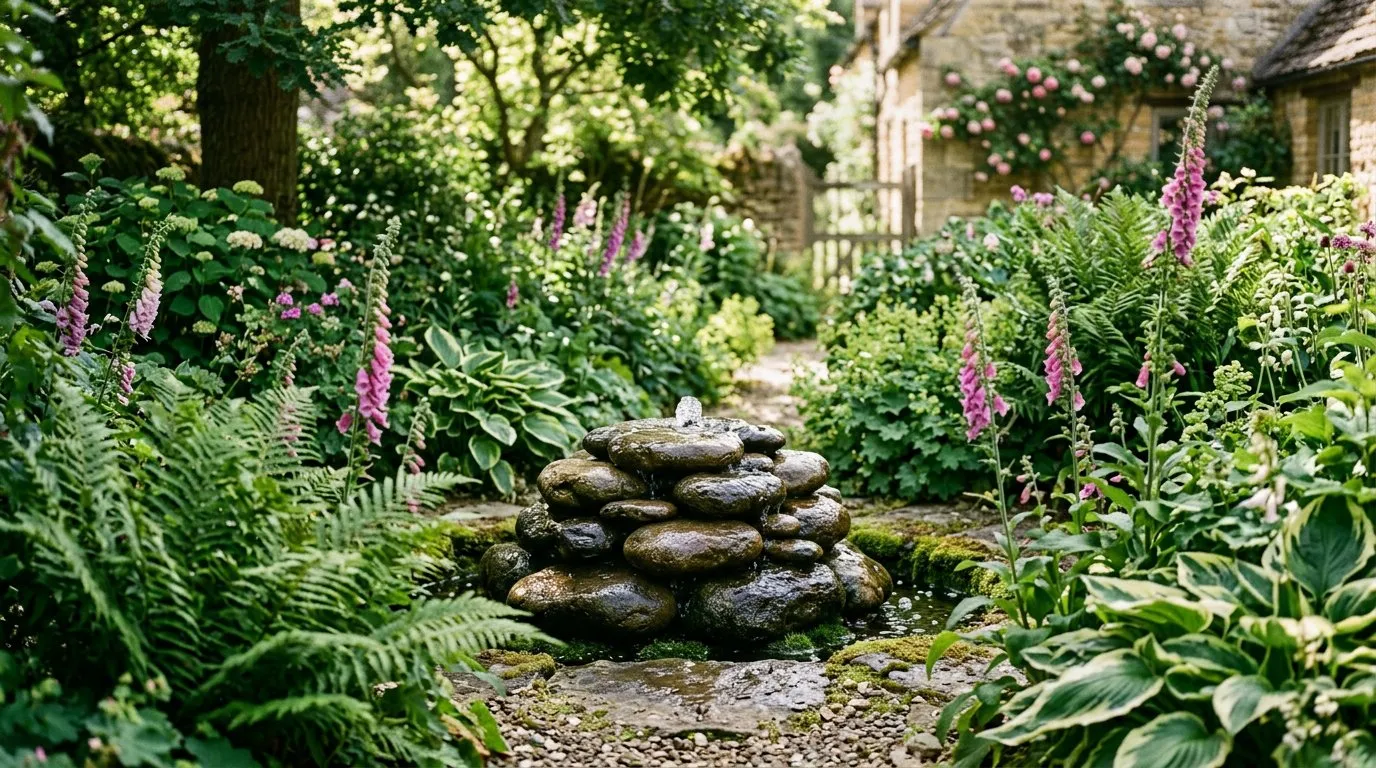 A natural stone pebble water feature nestled among ferns and foxgloves — one of the safest options for families with children.
Ponds
A garden pond creates the greatest wildlife benefit. Even a container pond in a washing-up bowl attracts insects and amphibians. A 2m x 1.5m lined pond supports a full ecosystem within a single season.
Wildlife ponds have no pump, no filter, and no fish. Plants do all the work: oxygenating the water, providing cover, and preventing algae. Shallow margins with gently sloping sides allow hedgehogs, frogs, and birds to enter and exit safely. Our guide to the best pond plants covers species selection.
Ornamental ponds prioritise visual impact. They may include fish, a fountain, formal edging, and controlled planting. They need a pump and filter to maintain water clarity. Running costs are higher, but the effect is dramatic.
Raised ponds use brick, stone, or timber walls to contain the water above ground level. They bring the water surface to a comfortable viewing height and are safer for families with small children. They also suit sloping sites and patio gardens where digging is impractical.
Rills and channels
A rill is a narrow channel of moving water, typically 150-300mm wide and 100-150mm deep. Water flows from a header pool to a lower pool, powered by a submersible pump. Rills create a strong linear element in formal garden designs.
Rills suit long, narrow gardens. They draw the eye along the length of the space. Lined with slate, stone, or stainless steel, they add a sense of movement without the maintenance of a full pond. They work particularly well alongside paths and through Japanese-style gardens where water symbolises flow and renewal.
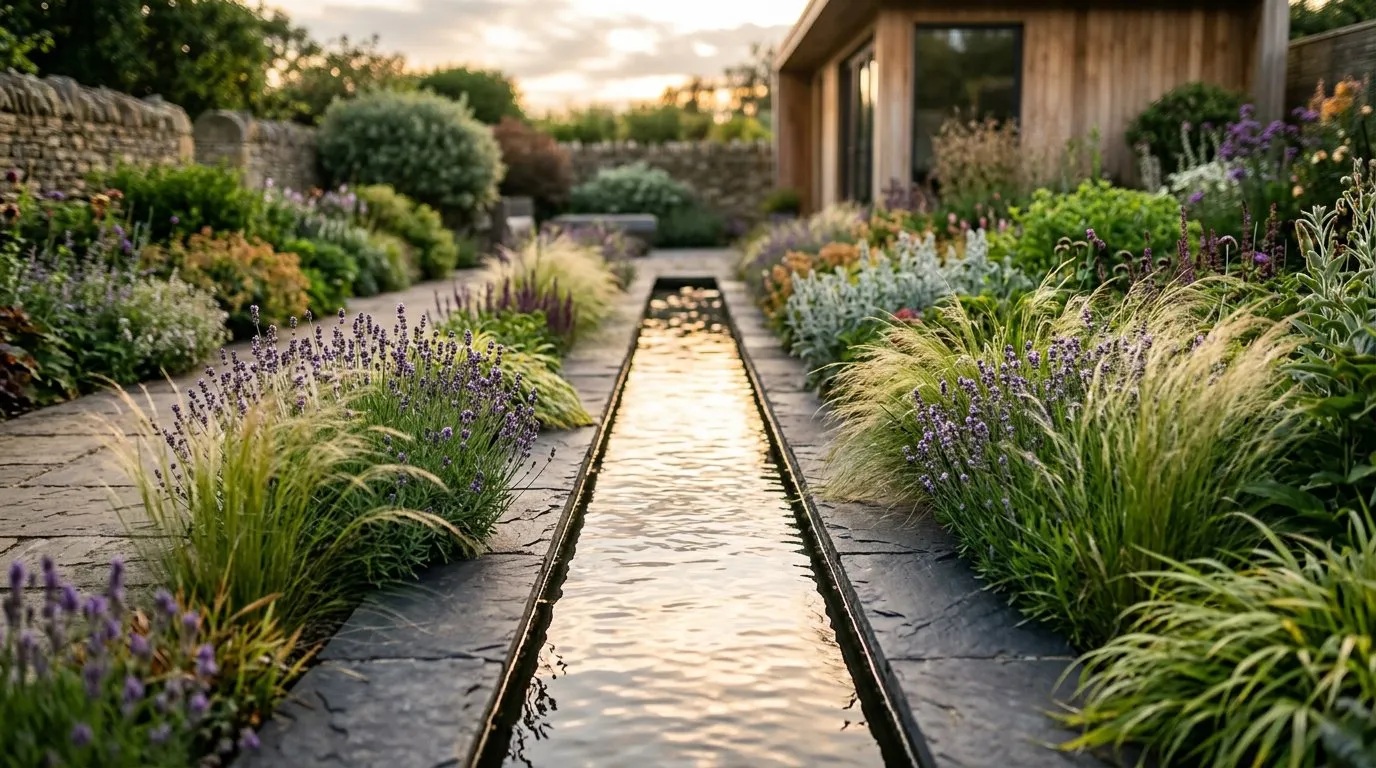 A slate-lined rill draws the eye through the garden, flanked by lavender and ornamental grasses in golden hour light.
Water feature cost comparison
| Feature type | Materials cost | Installation (DIY) | Installation (professional) | Running cost per year |
|---|---|---|---|---|
| Solar pebble fountain | £30-£80 | 30 minutes | Not needed | Free (solar) |
| Mains pebble fountain | £80-£250 | 1 hour | £100-£200 | £15-£30 (electric) |
| Wall-mounted spout | £100-£400 | 1-2 hours | £150-£300 | £15-£30 |
| Tiered bowl fountain | £80-£300 | 30 minutes | Not needed | £15-£25 |
| Corten steel blade | £300-£1,200 | 2-3 hours | £200-£400 | £20-£40 |
| Wildlife pond (2m x 1.5m) | £100-£300 | 1-2 days | £500-£1,000 | Free (no pump) |
| Ornamental pond with pump | £200-£600 | 1-2 days | £800-£2,000 | £40-£80 |
| Raised pond (brick/stone) | £500-£1,500 | 2-3 days | £1,500-£3,000 | £0-£60 |
| Formal rill (3m length) | £300-£800 | 2 days | £1,000-£2,500 | £30-£50 |
| Bespoke stone feature | £1,000-£5,000+ | Professional only | £2,000-£5,000+ | £30-£60 |
The cheapest entry point is a solar fountain kit at £30. For a genuinely impressive feature that turns a garden, budget £500 to £1,500 including materials and professional help with the electrics.
Solar vs mains-powered pumps
The pump is the heart of any moving water feature. The choice between solar and mains power affects reliability, running cost, and placement options.
Solar pumps
Solar-powered pumps need no wiring and no electrician. A solar panel connected to a submersible pump sits in or near the water. Modern panels produce enough power for a spray height of 30-80cm in direct UK sunlight.
The limitation is obvious. Solar pumps stop when clouds block the sun. They produce no flow at night. In a British winter, they are essentially dormant. Performance varies enormously between April and November.
Battery-backup solar pumps store charge during the day and run for 2-4 hours after sunset. They cost £40-£100 and solve the evening problem but not the winter one. For a feature that runs year-round, solar alone is not enough.
Solar suits seasonal features, wildlife ponds with occasional aeration, and positions far from a mains supply. It does not suit a feature you want running reliably every day of the year.
Mains pumps
Mains-powered submersible pumps run continuously and reliably. A small pump (600-1,200 litres per hour) costs £30-£80 and uses 10-20 watts. Annual electricity cost is £15-£30. They need an outdoor waterproof socket on an RCD-protected circuit.
If no outdoor socket exists, a qualified electrician can install one for £150-£300. The socket should be positioned close to the feature but above any potential water level. IP66-rated weatherproof enclosures protect the connection.
For pond pumps running a filter, choose a model rated for continuous use. Check the maximum head height, which determines how high the pump can push water. A feature with a 1m head needs a pump rated for at least 1.2m to allow for friction losses in the pipework.
Wildlife benefits of water features
Water is the single most effective wildlife attractor you can add to a garden. The RSPB recommends a pond as the number one improvement for garden biodiversity.
Amphibians: common frogs, smooth newts, and toads colonise new ponds within the first breeding season (February to April). They need shallow margins for spawning and rough vegetation nearby for shelter. Our frog and toad guide covers how to support amphibians.
Dragonflies and damselflies: these appear within weeks of a pond filling. They hunt mosquitoes, midges, and aphids. Emergent plants like iris and rushes provide perching and egg-laying sites.
Birds: robins, blackbirds, starlings, and finches bathe and drink at shallow water edges. A sloping pebble beach into the water gives safe access. Moving water attracts birds from further afield because they can hear it.
Hedgehogs: a gently sloping ramp into the water allows hedgehogs to drink and exit safely. Steep-sided ponds are a drowning trap for hedgehogs. Always include an escape route: a half-submerged log, a stone ramp, or a section of chicken wire draped over the edge.
Insects: bees, hoverflies, and butterflies drink from shallow water. A few flat stones breaking the water surface give them a safe landing platform. Place these in full sun where insects are most active.
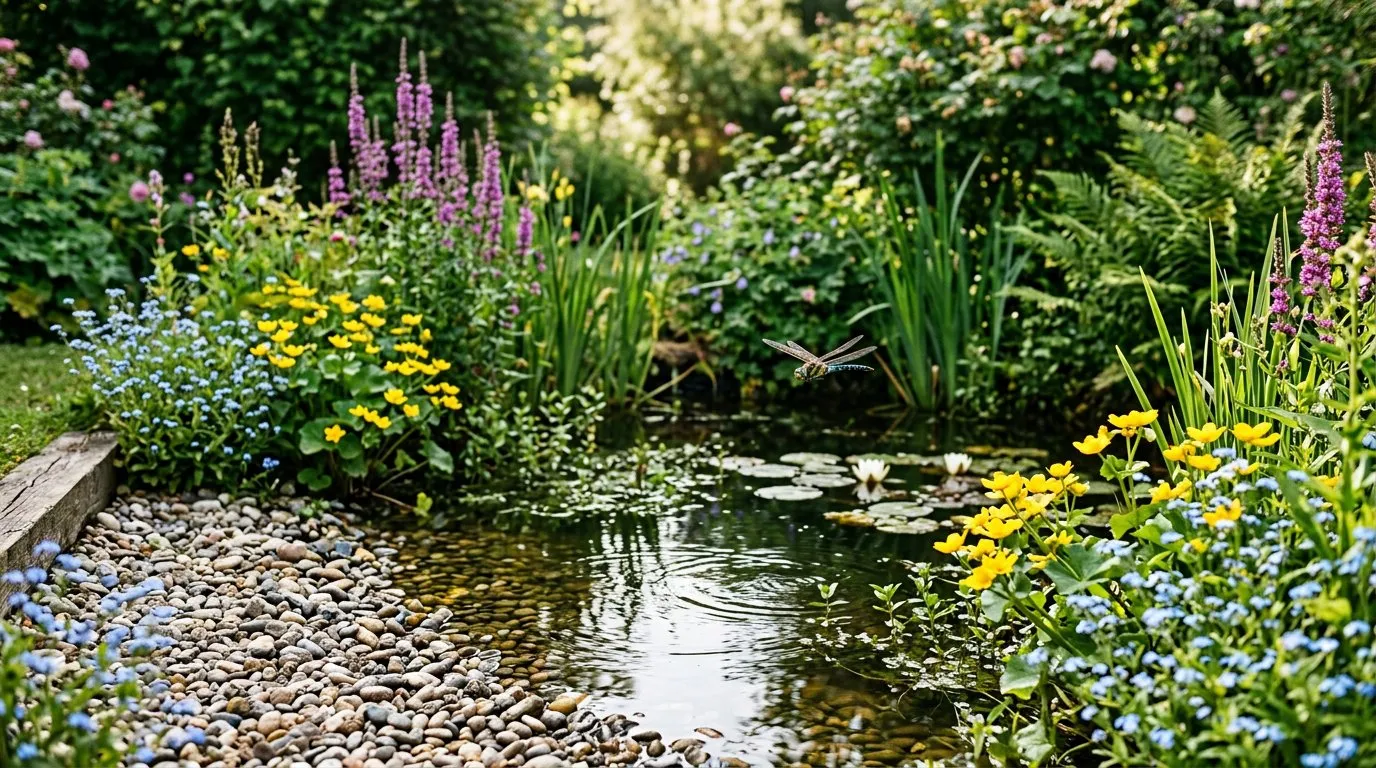 A wildlife pond planted with marsh marigold and water forget-me-not, with a pebble beach for safe access — expect dragonflies within weeks.
Why we recommend a 2m x 1.5m wildlife pond over any self-contained feature for long-term garden value: After 30 years of installing and advising on garden water features, a properly constructed wildlife pond consistently delivers more lasting benefit than any pump-driven alternative. In the first season alone, a pond I installed in a suburban Surrey garden attracted three species of newt, common frogs, and a nesting pair of moorhens. Running costs are zero, maintenance is under two hours per year, and biodiversity benefits compound every season.
Planting around and in water features
Plants turn a water feature from a piece of hardware into a living part of the garden. They also perform essential biological functions in ponds.
Aquatic plant zones
| Zone | Water depth | Plant examples | Function |
|---|---|---|---|
| Deep water (centre) | 30-90cm | Water lily, water hawthorn | Shade surface, reduce algae |
| Marginal (shelf) | 0-15cm | Marsh marigold, water forget-me-not, iris | Filter nutrients, wildlife habitat |
| Bog (moist soil) | Saturated, not submerged | Primula, astilbe, ligularia | Transition to dry garden |
| Oxygenating (submerged) | 15-60cm | Hornwort, water crowfoot | Oxygenate water, compete with algae |
For wildlife ponds, native UK species from the RHS aquatic plants list outperform exotic imports. Marsh marigold, purple loosestrife, ragged robin, and water mint are all excellent choices. Avoid invasive species like floating pennywort and parrot’s feather, which are illegal to plant in the wild under the Wildlife and Countryside Act.
Planting around self-contained features
Self-contained features have no planting zone in the water itself. Instead, plant around the base to soften the edges and blend the feature into the garden.
In shade: ferns, hostas, and brunnera thrive in moist conditions near a fountain. They complement the look and feel of water.
In sun: lavender, grasses, and low shrubs frame a feature without blocking it. Trailing plants like creeping Jenny soften stone and pebble edges.
Against walls: climbing plants on either side of a wall-mounted spout create a green frame. Hydrangea, jasmine, or clematis work well depending on aspect. See our shade plants guide for north-facing walls.
Frost protection and winter care
UK winters test every water feature. Ice expands and cracks stone, splits pipework, and damages pumps. A 20-minute routine each November prevents expensive repairs.
Self-contained features
Drain the reservoir completely before the first hard frost. Remove the pump and store it indoors in a bucket of clean water (this keeps the seals from drying out). Turn off the mains supply at the outdoor socket.
Stone and ceramic bowls that cannot be drained should be covered with a weatherproof tarpaulin or moved into a shed. Water trapped in porous stone freezes and cracks the material. Frost-proof resin and fibreglass features survive outdoors without draining.
Ponds
Do not drain a pond for winter. Wildlife overwinters in the mud at the bottom. Instead, float a tennis ball or a purpose-built pond ice preventer on the surface. These absorb the pressure of expanding ice and prevent the surface from freezing solid.
If ice forms, never smash it. The shockwave travels through the water and can injure or kill fish and hibernating amphibians. Place a pan of hot water on the ice to melt a hole for gas exchange.
Remove submersible pumps from ponds that freeze. Ice around a running pump damages the impeller and seals. Store pumps in a bucket of clean water indoors. Reinstall in March when the risk of hard frost passes.
Pipework
Drain any exposed pipework that holds water. Water sitting in a pipe at 0-1 degrees above ground expands when temperatures drop and splits the pipe overnight. Use a drain valve at the lowest point of each pipe run.
Noise, neighbours, and placement
Moving water creates sound. This is usually a benefit: it masks road traffic, neighbourhood noise, and the general hum of urban life. However, placement matters.
Volume: a gentle trickle from a pebble fountain produces 30-40 decibels at 1m, roughly the level of a quiet conversation. A tall cascade or multi-tiered feature reaches 50-60 decibels. For context, light rainfall is about 50 decibels.
Placement: position features away from boundary fences shared with neighbours. Sound carries further at night when background noise drops. A feature that feels pleasantly soothing during the day can sound intrusive at 11pm in a neighbouring bedroom.
Night use: for mains features, install a timer to turn the pump off at 9-10pm and back on in the morning. Solar features solve this automatically: they stop at dusk.
For maximum sound-masking effect, position the feature between the seating area and the noise source. A small fountain between your patio and a busy road makes a surprising difference to perceived quietness.
Algae prevention
Green water and blanket weed are the two most common problems in UK water features. Both result from excess nutrients combined with sunlight.
Shade the water surface. Floating plants like water lilies cover 50-70% of a pond surface, starving algae of light. In self-contained features, position the unit in partial shade rather than full south-facing sun.
Balance the planting. Submerged oxygenating plants compete directly with algae for dissolved nutrients. Hornwort and water crowfoot are the most effective UK-native oxygenators.
Avoid overfeeding fish. Uneaten fish food is the main nutrient source for algae in ornamental ponds. Feed only what fish consume in 2-3 minutes. Remove uneaten food immediately.
Barley straw. A small net bag of barley straw or liquid barley straw extract inhibits new algae growth. It does not kill existing algae but prevents regrowth after cleaning. Replace every 6 months.
UV clarifiers are electric units fitted inline with the pump. They kill suspended algae (green water) by exposing it to ultraviolet light. Effective but add £50-£150 to the setup and £10-£20 per year in bulb replacements and electricity.
Common mistakes with water features
1. Placing a pond in full sun with no shade planting
A pond in full south-facing sun with no surface cover turns green within weeks. Algae thrive in warm, nutrient-rich, sunlit water. Position ponds where they receive 4-6 hours of sun, not all-day exposure. Plant water lilies or floating plants to shade 50-70% of the surface.
2. Steep-sided ponds without escape ramps
A pond with vertical sides is a death trap for hedgehogs, frogs, and cats. Animals that fall in cannot climb out. Build at least one side with a gentle slope (no steeper than 1:3 ratio). A half-submerged log or rough stone ramp gives wildlife a way out.
3. Leaving pumps in frozen water
Ice forming around a running pump damages the impeller, seals, and motor. Submersible pumps in ponds and features that freeze must be removed in November and stored in water indoors. Reinstall in March when frost risk passes.
4. Choosing solar for year-round features
A solar pump runs only in direct sunlight. In a UK winter, that means almost never. If you want a feature that runs reliably from January to December, choose mains power. Solar suits seasonal features and summer-only use.
5. Ignoring child safety around open water
Open water is a serious drowning risk for children under five. If young children use the garden, choose self-contained features with no standing water, or fit a rigid galvanised steel grid just below the pond surface. The grid supports an adult’s weight but prevents a child falling into the water.
Now you’ve chosen your water feature, read our guide on building a wildlife pond for a step-by-step approach to creating the most wildlife-friendly water feature in your garden.
Frequently asked questions
What is the best water feature for a small UK garden?
A self-contained wall-mounted or bowl fountain suits small gardens best. These features need no pond, no digging, and run from a single plug socket or solar panel. Sizes start at 40cm wide and fit on patios, balconies, and courtyard walls. Pebble fountains are another excellent option for compact spaces.
Do water features attract mosquitoes?
Moving water does not attract mosquitoes. Mosquitoes breed only in still, stagnant water. A pump circulating water continuously prevents mosquito breeding entirely. If you have a still wildlife pond, stock it with fish or add a small solar fountain to keep the surface agitated.
How do I stop water features freezing in winter?
Drain exposed pipework and self-contained features before the first hard frost in November. Remove submersible pumps and store them in water indoors. For ponds, float a tennis ball on the surface to absorb ice pressure. Never smash ice by force: the shockwave injures fish and hibernating amphibians below.
Are solar water features any good?
Modern solar pumps work well in direct UK sunlight from April to September, producing spray heights of 30-80cm. They stop in heavy cloud and produce no flow at night or in winter. Battery-backup models store 2-4 hours of evening charge. For reliable year-round operation, mains-powered pumps are the better choice.
How much does a garden water feature cost UK?
Solar fountain kits start at £30 for a floating or pebble type. Self-contained mains features cost £80 to £500. A lined wildlife pond costs £100 to £300 in materials for a 2m x 1.5m size. Professional installations with stone, lighting, and planting range from £1,000 to £5,000 or more depending on specification.
Do I need a pump for a garden pond?
Wildlife ponds do not need a pump. Plants oxygenate the water, filter nutrients, and prevent algae naturally. Fish ponds need a pump and filter to maintain water clarity and oxygen levels. Any moving water feature (fountain, rill, cascade) requires a pump to circulate the water.
Is a water feature safe with young children?
Self-contained pebble fountains and wall-mounted features have no open standing water and are safe for families. Open ponds present a drowning risk for toddlers. Cover open ponds with a rigid galvanised steel grid fitted just below the water surface, or choose a raised pond with walls at least 600mm high.
How do I prevent algae in a water feature?
Shade the water with floating plants covering 50-70% of the surface. Add submerged oxygenating plants like hornwort to compete with algae for nutrients. Avoid overfeeding fish. Position features in partial shade rather than full sun. Barley straw extract inhibits new algae growth naturally.
Lawrie has been gardening in the West Midlands for over 30 years. He grows his own veg using no-dig methods, keeps a wildlife-friendly garden, and writes practical advice based on real UK growing conditions.