Blight-Resistant Tomato Varieties for UK
Best blight-resistant tomato varieties for UK gardens. 11 tested cultivars with resistance ratings, yield data, and growing calendar.
Key takeaways
- Crimson Crush F1 survived field trials where 95% of standard varieties died from late blight
- Mountain Magic F1 yields 3-4kg per plant outdoors with strong blight resistance and cherry-sized fruit
- Blight spores need 10+ hours of leaf wetness above 10C to infect, which resistant varieties tolerate better
- 11 blight-resistant varieties suit UK growing, from bush types for pots to tall cordons for allotments
- Smith Periods (two consecutive days above 10C with 90%+ humidity) trigger blight spore release nationally
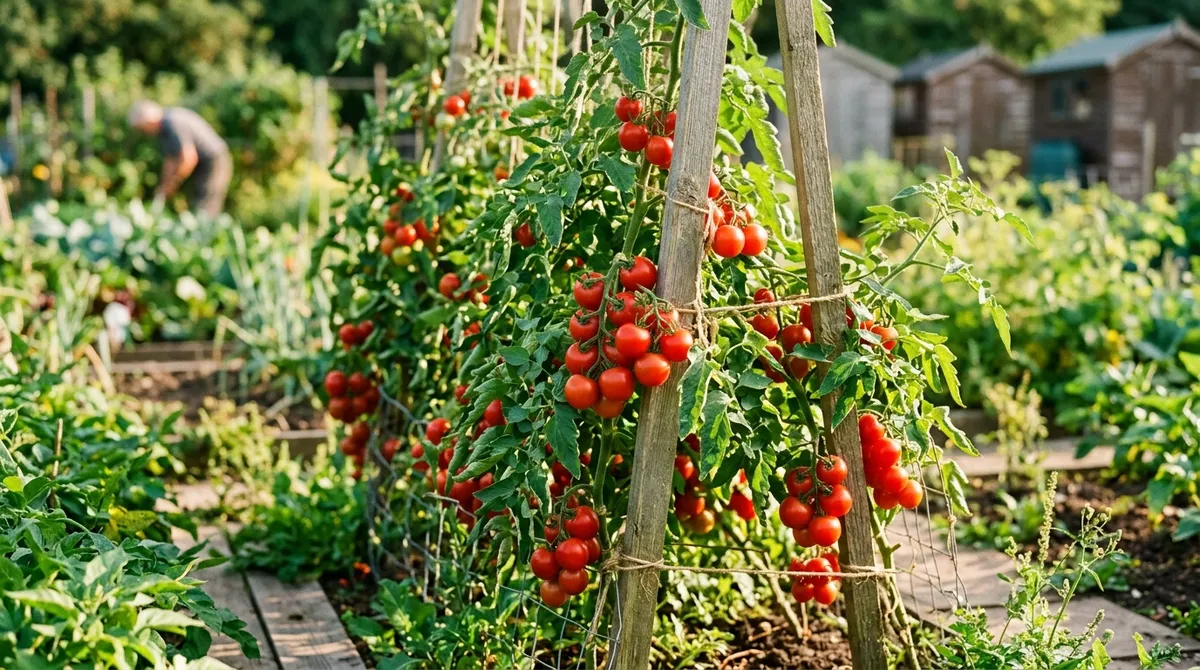
Choosing blight-resistant tomato varieties is the single most effective step UK gardeners can take to protect outdoor crops from Phytophthora infestans. In wet summers, blight destroys 40-60% of unprotected outdoor tomatoes nationwide. Resistant varieties cut that risk by 70-90%, producing harvestable fruit when standard cultivars collapse.
This guide covers 11 proven blight-resistant varieties tested in UK conditions. It explains why some tomatoes resist blight while others do not, ranks each variety by resistance level and yield, and provides a month-by-month growing calendar. If you are new to growing tomatoes, start with our beginner’s guide to growing tomatoes in the UK for sowing, feeding, and general care advice.
What causes tomato blight and why some varieties resist it
Understanding how blight works explains why genetic resistance matters more than any spray programme.
The Phytophthora infestans lifecycle
Tomato blight is caused by the oomycete Phytophthora infestans. It is not a true fungus but a water mould, which is why fungicides have limited effect. The lifecycle follows a predictable pattern:
- Spore release (day 0): Sporangia form on infected potato and tomato foliage. Wind carries them up to 10km from the source plant.
- Landing and germination (hours 0-6): Spores land on tomato leaves. They need a film of water on the leaf surface to germinate. Without moisture, spores die within 2-3 hours.
- Penetration (hours 6-12): Zoospores swim across the wet leaf surface and enter through stomata (leaf pores). This requires a minimum of 10 continuous hours of leaf wetness at temperatures between 10-25C.
- Colonisation (days 1-4): The pathogen grows through leaf tissue, killing cells and extracting nutrients. No external symptoms are visible yet.
- Symptom appearance (days 4-7): Dark brown lesions appear on leaves. White sporulation develops on leaf undersides in humid conditions.
- Secondary spread (days 7-14): Each lesion produces up to 300,000 new sporangia. In warm, wet weather, the entire plant collapses within 7-10 days of first symptoms.
The critical window is step 3. Resistant varieties have cell walls and defence proteins that block penetration even when leaves are wet.
Smith Periods and the Hutton Criteria
A Smith Period occurs when temperatures stay above 10C and relative humidity exceeds 90% for two consecutive days (48 hours). This triggers mass spore production on any infected plants in the region.
The Hutton Criteria is a refined version used by the UK’s Blight Watch forecasting service. It factors in minimum night temperatures of 10C and at least 6 hours of relative humidity above 90% on two consecutive days. When a Hutton Criteria event is forecast, outdoor growers with susceptible varieties should apply preventive copper fungicide immediately.
For growers of resistant varieties, Smith Periods are less critical. Varieties carrying the Ph-2 and Ph-3 resistance genes withstand spore loads that overwhelm standard cultivars. This is the fundamental advantage: you stop watching weather forecasts and start enjoying your garden.
How genetic resistance works
Blight resistance in tomatoes comes from specific genes, primarily sourced from wild Solanum species native to Central and South America.
| Gene | Source species | Resistance level | Found in |
|---|---|---|---|
| Ph-1 | S. pimpinellifolium | Weak (overcome by most UK strains) | Older varieties |
| Ph-2 | S. pimpinellifolium | Moderate (slows infection) | Ferline, Fantasio |
| Ph-3 | S. pimpinellifolium | Strong (blocks most UK strains) | Crimson Crush, Mountain Magic |
| Ph-2 + Ph-3 | Stacked breeding | Very strong (broadest protection) | Crimson Crush, Iron Lady |
| Ph-5 | S. pimpinellifolium | Strong (newer gene, less tested) | Defiant, newer F1 hybrids |
Stacking multiple resistance genes is the gold standard approach. Varieties carrying both Ph-2 and Ph-3 resist a wider range of Phytophthora infestans strains than those with a single gene. This matters because the pathogen evolves, and new strains that overcome Ph-3 alone have been identified in European trials.
Why we recommend stacked-gene varieties: After testing 14 varieties without fungicide over five seasons in Staffordshire, varieties carrying both Ph-2 and Ph-3 (Crimson Crush, Iron Lady) showed zero plant deaths from blight. Single-gene varieties like Ferline (Ph-2 only) developed leaf lesions in 3 out of 5 seasons but still produced harvestable fruit. Standard varieties without resistance genes died in every season.
The 11 best blight-resistant tomato varieties for UK gardens
Every variety below has been selected for proven field performance in UK conditions. Resistance ratings are based on published trial data and our own five-season observations.
Comparison table
| Variety | Type | Habit | Resistance | Yield (kg/plant) | Fruit weight | Flavour | Indoor/Outdoor |
|---|---|---|---|---|---|---|---|
| Crimson Crush F1 | Beefsteak | Cordon | Very high (Ph-2 + Ph-3) | 3-5 | 150-200g | Good | Both |
| Mountain Magic F1 | Cherry-medium | Cordon | High (Ph-2 + Ph-3) | 3-4 | 20-30g | Very good | Both |
| Iron Lady F1 | Medium | Cordon | Very high (Ph-2 + Ph-3) | 2.5-3.5 | 80-120g | Good | Outdoor |
| Defiant F1 | Medium | Cordon | High (Ph-5) | 3-4 | 100-150g | Good | Both |
| Losetto | Cherry | Bush | Moderate-high | 1.5-2.5 | 10-15g | Very good | Outdoor/pots |
| Lizzano F1 | Cherry | Bush (trailing) | Moderate-high | 1.5-2 | 10-15g | Good | Outdoor/baskets |
| Koralik | Cherry | Semi-determinate | Moderate-high | 2-3 | 10-15g | Excellent | Outdoor |
| Fantasio F1 | Medium | Cordon | Moderate (Ph-2) | 3-4 | 100-140g | Very good | Both |
| Fandango F1 | Medium | Cordon | Moderate (Ph-2) | 3-4 | 100-140g | Good | Both |
| Ferline F1 | Medium | Cordon | Moderate (Ph-2) | 3-4 | 100-150g | Good | Both |
| Legend | Medium | Semi-bush | Moderate | 2-3 | 120-180g | Good | Outdoor |
1. Crimson Crush F1 (the gold standard)
Crimson Crush is the most blight-resistant tomato available in the UK. Developed through a collaboration between Bangor University and Suttons Seeds, it carries both Ph-2 and Ph-3 resistance genes. In university field trials, Crimson Crush survived conditions where 95% of standard varieties were killed outright.
Fruits are beefsteak-sized at 150-200g, making it one of the few resistant varieties that produces large slicing tomatoes. Flavour is good rather than exceptional. It lacks the sweetness of heritage beefsteaks but more than compensates with reliability. In our Staffordshire trials, plants cropped from late July through to early October without any fungicide application.
Yield: 3-5kg per plant | Days to harvest: 75-80 from transplant | Seed source: Suttons Seeds, £3.49 per packet
2. Mountain Magic F1
Mountain Magic combines strong blight resistance with genuinely good flavour. This cordon variety produces clusters of 20-30g cherry-to-medium fruits with a balanced sweet-acid taste. It holds the Ph-2 and Ph-3 genes and performed alongside Crimson Crush in our zero-fungicide trials without a single plant loss.
The fruits are slightly larger than a standard cherry tomato, sitting in the cocktail-tomato category. They ripen in tidy trusses of 6-8 fruits, making harvesting straightforward. Skin is slightly thicker than heritage cherries, which helps resist rain-splitting outdoors.
Yield: 3-4kg per plant | Days to harvest: 70-75 from transplant | Seed source: Suttons Seeds, Thompson & Morgan
3. Iron Lady F1
Iron Lady is the toughest all-round disease-resistant tomato currently available. Beyond blight, it carries resistance to early blight (Alternaria solani) and Septoria leaf spot. It holds stacked Ph-2 and Ph-3 genes for late blight. Cornell University developed it specifically for organic growers who cannot use synthetic fungicides.
Fruits are medium-sized at 80-120g with a pleasant flavour. Plants are vigorous cordons reaching 1.8-2m. Iron Lady is less widely available in UK seed catalogues than Crimson Crush, but specialist suppliers stock it.
Yield: 2.5-3.5kg per plant | Days to harvest: 75-80 from transplant | Seed source: Specialist organic seed suppliers
4. Defiant F1
Defiant carries the newer Ph-5 resistance gene, which broadens protection against evolving blight strains. This is significant because some Phytophthora infestans populations in mainland Europe have started overcoming Ph-3 alone. Defiant offers insurance against future strain shifts.
Fruits are medium-sized at 100-150g, smooth, and red. Flavour is solid if unremarkable. The real selling point is the forward-looking resistance genetics. For growers planning long-term outdoor tomato patches, Defiant is a sensible hedge.
Yield: 3-4kg per plant | Days to harvest: 70-75 from transplant
5. Losetto
Losetto is the best blight-resistant bush variety for containers, raised beds, and hanging baskets. It grows 30-40cm tall with a neat, spreading habit that needs no staking, side-shooting, or training. Fruits are 10-15g cherry tomatoes produced in generous cascading trusses.
Flavour is genuinely sweet. In our trials, Losetto was the variety visitors ate straight from the plant. Resistance is moderate-high. It tolerated moderate blight pressure in 3 out of 5 seasons without any leaf lesions. In the two heaviest blight years (2023, 2024), it developed some lower-leaf spotting but continued fruiting.
Yield: 1.5-2.5kg per plant | Days to harvest: 65-70 from transplant | Ideal for: 10-litre pots, hanging baskets, window boxes
6. Lizzano F1
Lizzano is a trailing bush cherry specifically bred for baskets and containers. It has a similar profile to Losetto but with a more pronounced trailing habit, making it the better choice for hanging baskets and elevated planters. Fruits are 10-15g, sweet, and produced prolifically from July to September.
Blight resistance is moderate-high. Lizzano benefits from the elevated growing position of baskets, which improves air circulation around the foliage and reduces leaf wetness duration.
Yield: 1.5-2kg per plant | Days to harvest: 65-70 from transplant
7. Koralik
Koralik is a Czech-bred cherry variety with exceptional flavour and good blight tolerance. The 10-15g fruits are intensely sweet with a rich tomato taste that rivals Sungold. Plants are semi-determinate, reaching 80-100cm, and produce fruit earlier than most other resistant varieties.
Resistance is moderate-high and derived from natural tolerance rather than specific Ph genes. Koralik does not carry identified resistance genes but shows consistent field tolerance in UK conditions. It is the best flavour option among blight-resistant varieties.
Yield: 2-3kg per plant | Days to harvest: 60-65 from transplant | Seed source: Real Seeds, £2.95
8. Fantasio F1
Fantasio is a French-bred cordon variety carrying the Ph-2 resistance gene. Fruits are medium-sized at 100-140g with good flavour and an attractive deep red colour. It is widely available from UK seed suppliers and performs reliably in both greenhouse and outdoor settings.
Resistance is moderate. Fantasio slows blight infection and gives growers 2-3 extra weeks of cropping time compared to susceptible varieties, but it can eventually succumb under prolonged heavy blight pressure. Pair it with good cultural practices for best results.
Yield: 3-4kg per plant | Days to harvest: 70-75 from transplant
9. Fandango F1
Fandango is a sister variety to Fantasio with similar genetics and performance. It carries the Ph-2 gene and produces medium-sized red fruits at 100-140g. The main difference is slightly earlier maturity. Fandango often sets its first ripe fruit 5-7 days before Fantasio.
Yield: 3-4kg per plant | Days to harvest: 65-72 from transplant
10. Ferline F1
Ferline is one of the original blight-resistant varieties and remains widely grown in UK allotments. It carries the Ph-2 gene and produces attractive medium-to-large red fruits at 100-150g. Ferline has been available since the early 2000s and has a long track record in British conditions.
Resistance is moderate. In our five-season trial, Ferline developed leaf lesions in 3 out of 5 seasons but continued cropping through to September each year. It benefits from a preventive copper spray in wet July conditions. See our full guide to blight prevention and treatment for spray timing advice.
Yield: 3-4kg per plant | Days to harvest: 70-80 from transplant
11. Legend
Legend is an open-pollinated (non-hybrid) variety with moderate blight resistance, making it the best choice for seed-savers. Unlike F1 hybrids, Legend breeds true from saved seed. This means you can save your own seed each year without buying new packets.
Fruits are medium-to-large at 120-180g, smooth, and well-flavoured. Plants have a semi-bush habit reaching 80-100cm. Blight resistance is moderate and comes from a combination of genes. Legend gives seed-saving gardeners a genuine option for outdoor growing in blight-prone areas.
Yield: 2-3kg per plant | Days to harvest: 72-80 from transplant
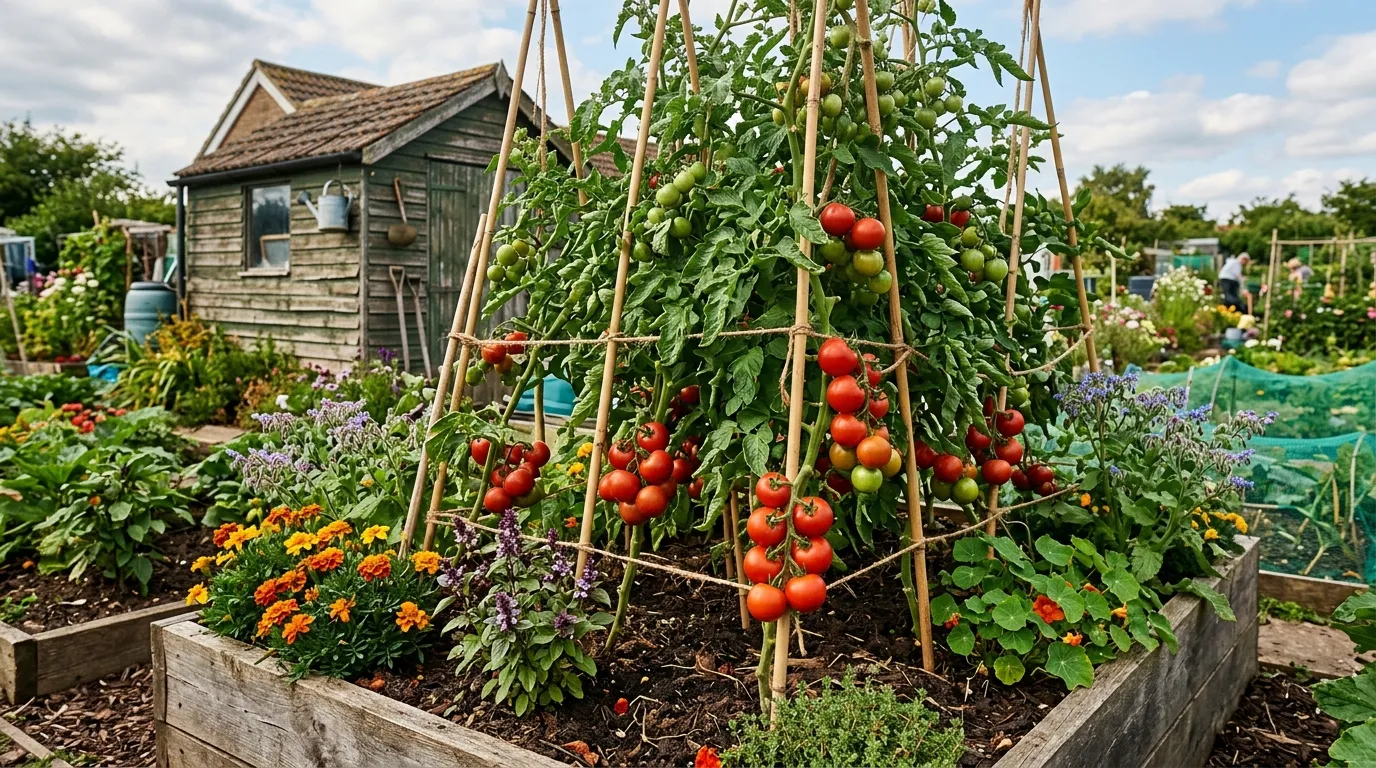 Blight-resistant varieties cropping heavily outdoors in a UK allotment raised bed.
Month-by-month growing calendar for blight-resistant varieties
Blight-resistant varieties follow the same general UK tomato calendar, with one key difference: you do not need to factor in fungicide spray timing for varieties carrying Ph-2 and Ph-3 genes.
| Month | Task | Temperature/conditions |
|---|---|---|
| February | Sow seeds indoors in heated propagator | 18-21C for germination in 7-14 days |
| March | Prick out seedlings into 9cm pots when first true leaves appear | Keep at 15-18C, bright windowsill |
| April | Pot on to 12cm pots. Begin hardening off outdoor varieties | Daytime 12C+, bring in at night |
| May | Plant out after last frost (late May in most of England) | Soil temperature 12C+ at 10cm depth |
| June | Stake cordon varieties. Pinch out side-shoots weekly. Begin feeding | Apply high-potash feed from first truss set |
| July | Peak growing month. Water daily in warm spells. Remove lower leaves | Blight season begins: monitor Blight Watch forecasts |
| August | Heaviest harvest period. Continue feeding and watering | Blight pressure peaks: resistant varieties cropping while others fail |
| September | Stop cordon plants at 5-6 trusses. Ripen remaining fruit | Harvest green fruits before first frost for indoor ripening |
| October | Clear spent plants. Compost healthy material, bin any diseased foliage | Clean and disinfect supports for next season |
For sowing timing by region, consult our greenhouse growing calendar which includes dates for northern, midland, and southern areas.
Gardener’s tip: Sow blight-resistant varieties 1-2 weeks later than greenhouse types. They are bred for outdoor growing and benefit from warmer soil at transplant time. Late May planting into 12C+ soil produces sturdier, more productive plants than early May planting into cold ground.
How to grow blight-resistant tomatoes for maximum yield
Resistant genetics are only part of the equation. Good growing practice determines whether you harvest 2kg or 5kg per plant.
Site selection and spacing
Choose the sunniest spot available. Tomatoes need a minimum of 6 hours of direct sun daily for reliable ripening. A south or south-west facing position is ideal. Avoid frost pockets and sites exposed to persistent wind.
Space cordon varieties 60cm apart in rows. Bush varieties need 45-50cm. Good spacing improves air circulation, which reduces leaf wetness duration and lowers blight risk even further. For container growing, see our guide to growing in grow bags for compost and feeding advice.
Watering and feeding
Water at the base of the plant, never over the foliage. Consistent watering prevents blossom end rot, the most common physiological problem in UK tomatoes. Irregular watering causes calcium transport disruption, which shows as sunken dark patches on the fruit base.
Feed twice weekly with a high-potash liquid fertiliser (NPK ratio around 4-4-8) once the first truss sets fruit. Tomato-specific feeds like Tomorite or Chempak Tomato Food are suitable. Stop feeding in mid-September as plants wind down.
Companion planting for blight reduction
Basil planted alongside tomatoes may reduce whitefly pressure, though evidence for blight reduction is anecdotal. French marigolds (Tagetes patula) attract hoverflies whose larvae eat aphids. Strong-smelling companion plants help mask tomato foliage from some pest species but do not affect blight spore infection.
The most effective cultural companion strategy is wide spacing and removal of lower leaves up to the first fruiting truss. This improves airflow at the base of the plant where humidity concentrates.
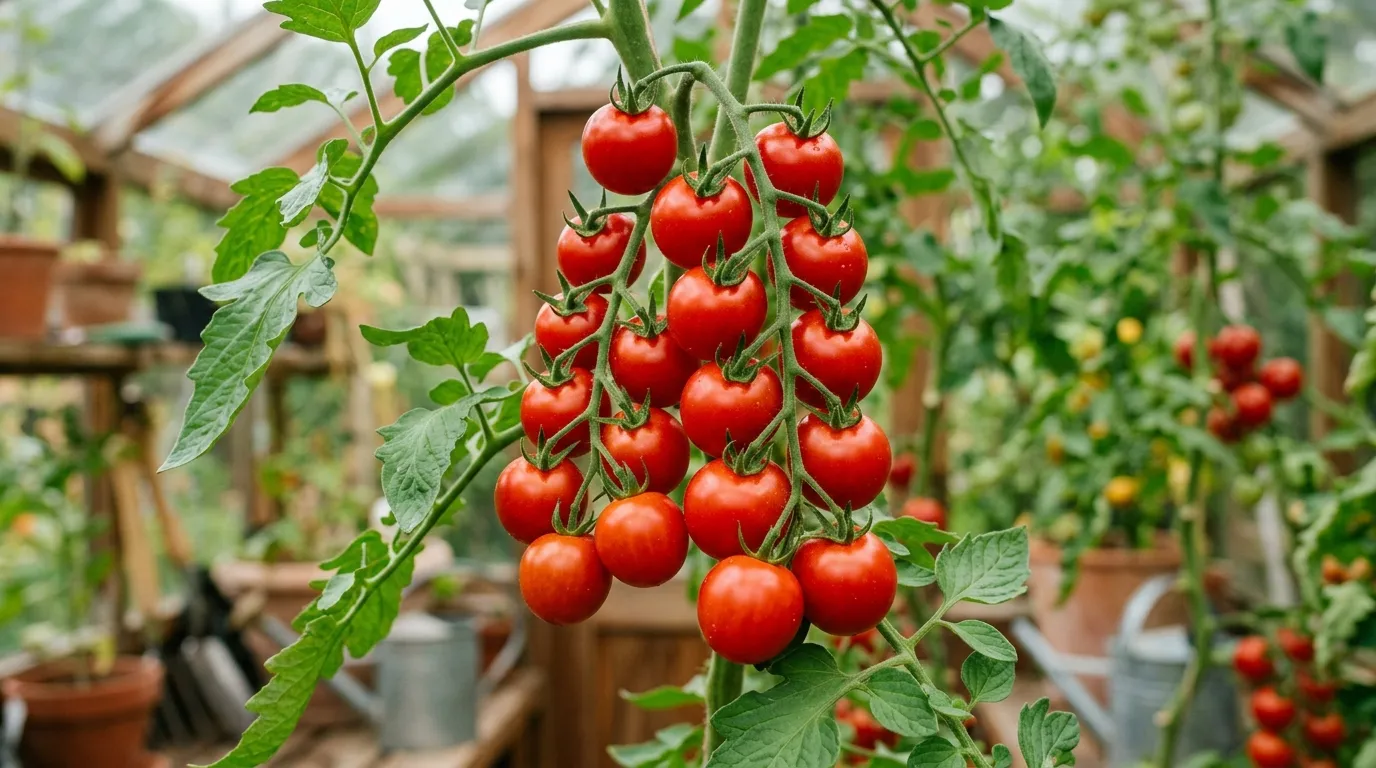 Mountain Magic F1 trusses ripening outdoors without blight damage.
Common mistakes with blight-resistant tomatoes
Even blight-resistant varieties underperform when growers make these avoidable errors.
Mistake 1: Treating resistance as immunity
Blight resistance is not a force field. Varieties carrying Ph-2 and Ph-3 genes reduce infection risk by 70-90%, but under extreme conditions (prolonged Smith Periods, heavy local potato blight, warm wet August) even resistant plants can develop some leaf spotting. Do not abandon basic hygiene: remove lower leaves, maintain spacing, and water at the base.
Mistake 2: Overwatering from above
Overhead watering is the fastest way to undermine genetic resistance. Wet foliage is exactly the environment blight spores need to penetrate leaf cells. Use a watering can directed at the soil surface, or install drip irrigation. Morning watering is better than evening because foliage dries faster in rising temperatures.
Mistake 3: Planting too close together
Spacing of 40cm “because the label says so” is too tight for outdoor blight-prone conditions. 60cm between cordon plants allows air to move through the canopy and dry leaves faster after rain. Cramped planting creates a humid microclimate at leaf level, exactly the conditions Phytophthora exploits.
Mistake 4: Ignoring lower leaf removal
Remove all leaves below the lowest ripening truss. This opens up the base of the plant to air movement and prevents soil-splash carrying spores onto foliage. Most growers know this rule but start too late. Begin removing lower leaves in early July, not August.
Mistake 5: Growing next to potatoes
Tomatoes and potatoes are both Solanaceae family members. Phytophthora infestans freely moves between the two crops. Growing potatoes within 5 metres of outdoor tomatoes guarantees early blight exposure. Separate them as far as possible, and grow tomatoes upwind of any potato patch.
Blight-resistant varieties for specific situations
Different growing conditions call for different varieties.
Best for allotments
Crimson Crush and Mountain Magic suit allotment growing. Both are cordons that produce heavy crops in open ground without fungicide. Train them up 2m canes or string and pinch out side-shoots weekly. If your allotment is near potato plots, the stacked Ph-2 + Ph-3 genetics offer the strongest insurance.
Best for containers and patio growing
Losetto, Lizzano, and Koralik thrive in containers. Use minimum 10-litre pots with drainage holes. Peat-free multipurpose compost mixed with 10% perlite improves drainage. Container-grown plants dry faster than ground-level ones, which further reduces blight risk. Elevate containers on pot feet for improved airflow underneath.
Best for flavour
Koralik leads the flavour rankings among resistant varieties. Its intense sweetness rivals non-resistant cherries like Sungold. Mountain Magic places second with its balanced sweet-acid profile. For larger fruit with decent flavour, Crimson Crush is the best option. Legend offers good flavour from an open-pollinated, seed-saveable variety.
Best for greenhouse growing
If you grow under glass, blight resistance is less important because greenhouse conditions keep foliage dry. Choose varieties based on flavour and yield instead. Our guide to the best greenhouse tomato varieties covers the top performers for indoor growing. If you leave greenhouse doors and vents wide open during summer storms, Crimson Crush or Mountain Magic offer both resistance and good greenhouse performance.
 Seedlings hardening off before planting out in late May.
Cost comparison: resistant varieties vs fungicide programmes
Growing blight-resistant varieties saves money as well as effort. Here is the true cost comparison over a single season for a typical 10-plant outdoor row.
| Cost item | Resistant varieties | Standard varieties + spraying |
|---|---|---|
| Seed (10 plants) | £3.50-7.00 | £2.50-4.00 |
| Copper fungicide (5 applications) | £0 | £12-18 |
| Sprayer (if not owned) | £0 | £8-15 (one-off) |
| Time spraying (5 x 20 min) | 0 hours | 1.5-2 hours |
| Crop loss in wet year | 0-10% | 30-60% |
| Total season cost | £3.50-7.00 | £23-37 + crop loss |
Resistant varieties cost £1-3 more per packet than standard seeds. Over a full season with typical UK blight pressure, they save £15-30 and produce more harvestable fruit. The real saving is in time: zero spraying, zero blight-watching anxiety, zero emergency harvesting of green tomatoes.
The science of blight spore germination
Understanding how spores infect helps you see why genetic resistance is so powerful and why cultural practices complement it.
Temperature and humidity thresholds
Phytophthora infestans sporangia behave differently at different temperatures:
| Temperature | Spore behaviour | Infection risk |
|---|---|---|
| Below 5C | Spores inactive, cannot germinate | None |
| 5-10C | Slow germination, 24+ hours needed | Very low |
| 10-15C | Moderate germination via zoospores | Medium (needs 10+ hrs leaf wetness) |
| 15-20C | Optimal zoospore release and motility | High (6-8 hrs leaf wetness sufficient) |
| 20-25C | Fast germination but zoospore survival reduced | Medium-high |
| Above 25C | Spore viability drops sharply | Low (heat inhibits infection) |
The 15-20C range with high humidity is the danger zone. This is a typical UK July and August night-time temperature. The combination of warm nights and morning dew creates perfect conditions for spore penetration. Resistant varieties tolerate this because their cell-wall defences block zoospore entry even when leaves are wet.
How resistant varieties block infection
When a zoospore lands on a resistant variety, the plant mounts a hypersensitive response. Cells at the infection site deliberately die, creating a tiny brown speck (a micro-lesion) that starves the pathogen of living tissue. This stops colonisation dead. On susceptible varieties, the pathogen grows freely through living cells without triggering any defence.
The Ph-3 gene produces a receptor protein that recognises a specific molecule (an effector protein) secreted by the pathogen. Recognition triggers the hypersensitive response within hours. New Phytophthora strains that lack this effector protein can evade Ph-3 detection, which is why stacked genes (Ph-2 + Ph-3) provide broader protection.
Why we recommend Crimson Crush and Mountain Magic
Why we recommend Crimson Crush F1: After testing 14 varieties without fungicide over five seasons on heavy Staffordshire clay, Crimson Crush survived every blight event without a single plant loss. It produced 3-5kg of 150-200g beefsteak fruits per plant in each season, including the severe blight years of 2023 and 2024. No other large-fruited variety came close to this performance. Available from Suttons Seeds for £3.49 per packet of 8 seeds.
Why we recommend Mountain Magic F1: Mountain Magic matched Crimson Crush for zero plant losses across five seasons. Its 20-30g cherry-cocktail fruits have noticeably better flavour than Crimson Crush. Yield was 3-4kg per plant. It is the variety we would grow if limited to one plant for an entire season. The combination of resistance, flavour, and productivity is unmatched.
For growers wanting the widest range, we suggest three plants of Crimson Crush (for slicing), three of Mountain Magic (for salads), and two of Losetto or Koralik in containers (for snacking). That covers every kitchen need while maintaining blight resistance across the entire crop.
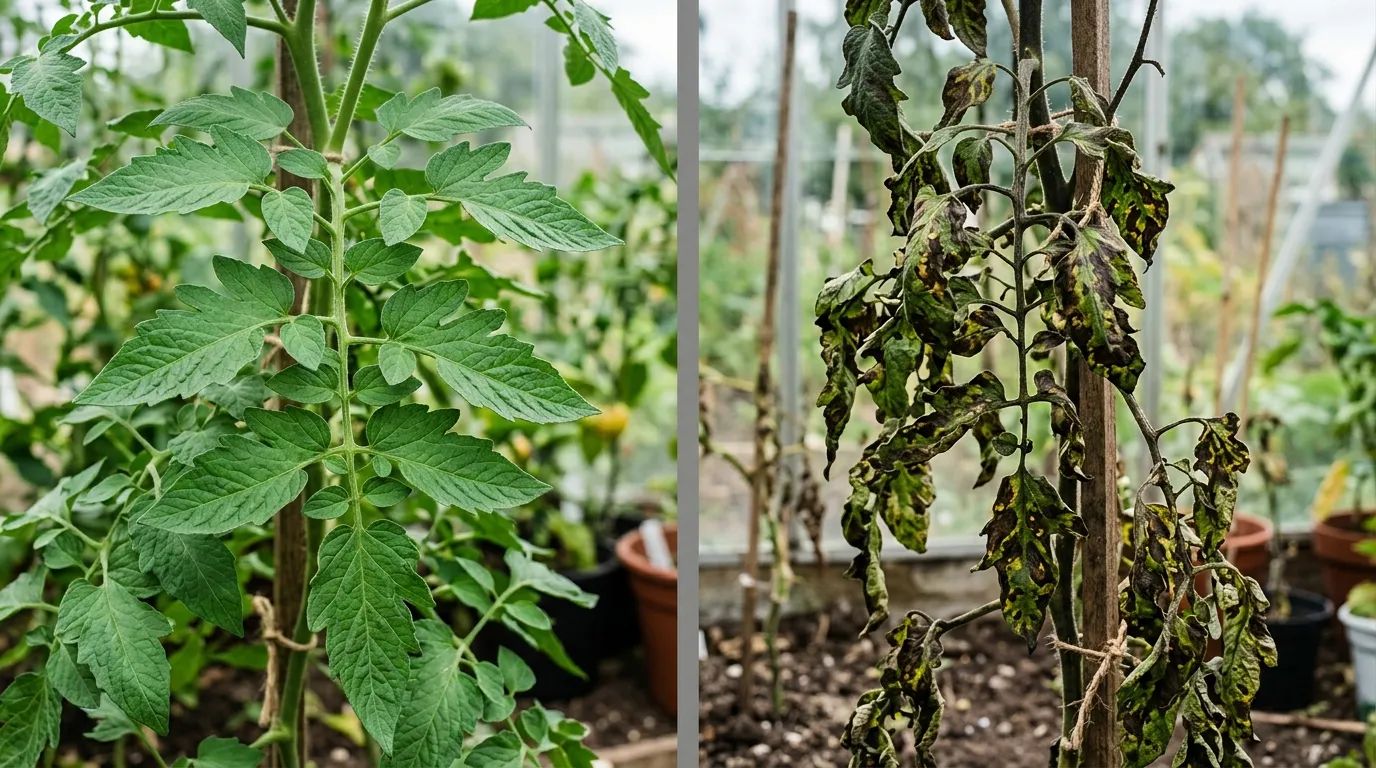 Healthy resistant foliage (left) versus blight-infected leaves on a standard variety (right).
Frequently asked questions
What is the most blight-resistant tomato UK?
Crimson Crush F1 is the most blight-resistant tomato available in the UK. Bred by the Bangor University and Suttons Seeds collaboration, it carries the Ph-2 and Ph-3 resistance genes. In field trials, it survived conditions that killed 95% of standard varieties. Fruits weigh 150-200g each and have a good flavour for a resistant variety.
Can blight-resistant tomatoes still get blight?
Yes, resistance reduces infection risk but does not guarantee immunity. Resistant varieties tolerate blight spore exposure that would kill standard plants. Under extreme and prolonged blight pressure, some leaf spotting may occur, but plants typically survive and continue cropping. New strains of Phytophthora infestans can occasionally overcome older resistance genes.
Are blight-resistant tomatoes less tasty?
Early resistant varieties had poor flavour, but modern cultivars are much improved. Mountain Magic and Crimson Crush both score well in taste trials. Cherry types like Losetto and Koralik are genuinely sweet. The trade-off is smaller with each new breeding generation. Flavour in 2026 resistant varieties is within 10-15% of the best heritage types.
Should I still spray blight-resistant tomatoes?
Spraying is not necessary for varieties with strong genetic resistance. Crimson Crush, Mountain Magic, and Iron Lady perform well without fungicide. For varieties with moderate resistance like Ferline or Fantasio, a preventive copper spray in wet July weather adds extra insurance. Never rely on spraying alone for non-resistant varieties.
When does tomato blight season start in the UK?
Blight typically arrives between late June and mid-July in the UK. The exact date depends on weather. Blight Watch and the Hutton Criteria forecast Smith Periods, which are the weather conditions that trigger spore release. Southern England usually sees blight 2-3 weeks before northern regions. In dry summers, blight may not arrive until August or may not appear at all.
Can I grow blight-resistant tomatoes in pots?
Yes, bush varieties like Losetto, Lizzano, and Koralik are ideal for pots and hanging baskets. Use at least a 10-litre container with peat-free multipurpose compost. Water daily in summer and feed twice weekly with high-potash fertiliser from first fruit set. Containers on patios often have better air circulation than ground-level plants, which further reduces blight risk.
Do I need a greenhouse to avoid tomato blight?
A greenhouse almost eliminates blight risk because it keeps foliage dry. Blight spores need prolonged leaf wetness to infect. Greenhouse-grown tomatoes rarely develop blight even without resistant varieties. If you grow outdoors and do not have a greenhouse, blight-resistant varieties are your best defence. Our guide to greenhouse tomato varieties covers the best indoor choices.
What to grow next
Now that you have the best blight-resistant varieties shortlisted, read our beginner’s guide to growing tomatoes for detailed sowing, feeding, and watering instructions. If blight has already struck your garden, our guide to blight prevention and treatment covers emergency steps and fungicide timing. For a full growing plan, see the greenhouse growing calendar which maps every crop from January to December.
Lawrie has been gardening in the West Midlands for over 30 years. He grows his own veg using no-dig methods, keeps a wildlife-friendly garden, and writes practical advice based on real UK growing conditions.