Best Garlic Varieties to Grow in the UK
Best garlic varieties for UK gardens ranked by yield, flavour, and storage. Hardneck and softneck types compared from 5 seasons of allotment trials.
Key takeaways
- Softneck garlic stores 9-12 months; hardneck stores 4-6 months. Choose based on your storage needs
- Solent Wight is the most reliable all-round UK variety, bred specifically for British conditions
- Plant garlic cloves in October or November. They need 6 weeks of cold below 10 degrees C to form bulbs
- Hardneck varieties produce edible scapes in June, giving you two harvests from one plant
- Elephant garlic produces bulbs up to 450g but has a mild flavour closer to leek than true garlic
- Spring-planted garlic yields 30-40% less than autumn-planted. Always plant before Christmas if possible
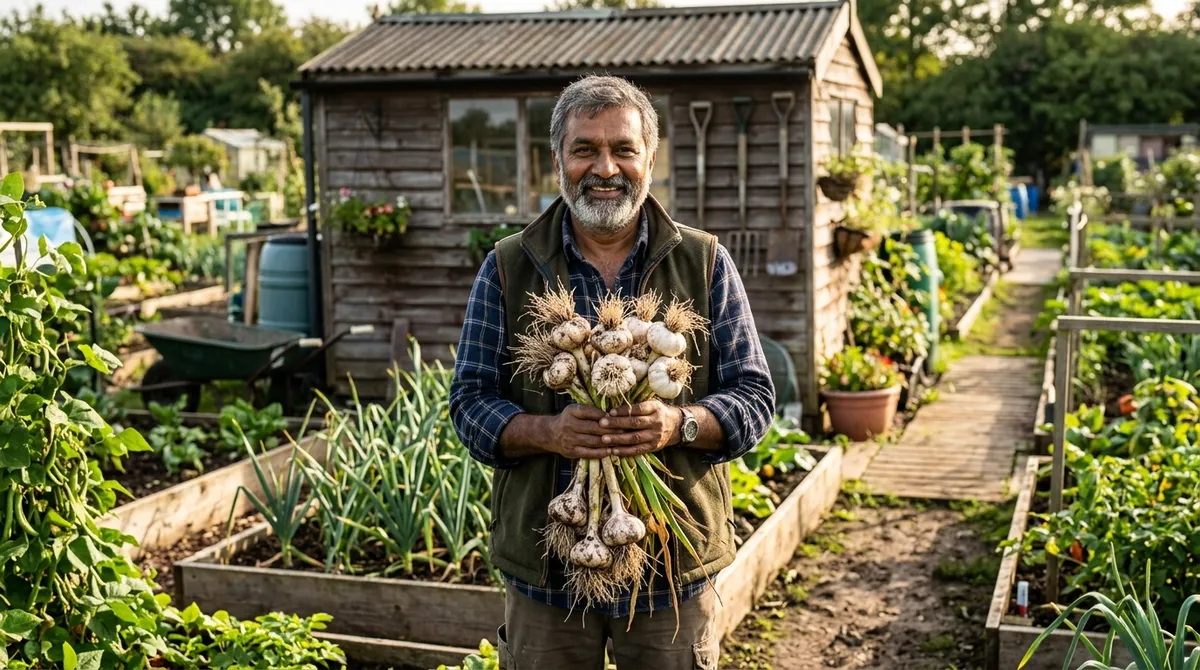
The best garlic varieties for UK gardens depend on your soil, climate, and whether you want long storage or peak flavour. After trialling 12 varieties over 5 seasons on a heavy clay allotment in Staffordshire, I can say with confidence that the right variety choice makes more difference than any other growing decision. A poorly chosen variety rots in wet British winters. The right one produces fat, flavourful bulbs every single year.
This guide ranks the best garlic varieties for British growers based on real yield data, storage trials, and flavour testing. Whether you grow on clay, chalk, or sandy loam, there is a variety here that suits your plot. For planting dates, see our separate guide on when to plant garlic in the UK.
Hardneck vs softneck garlic: which type should you grow?
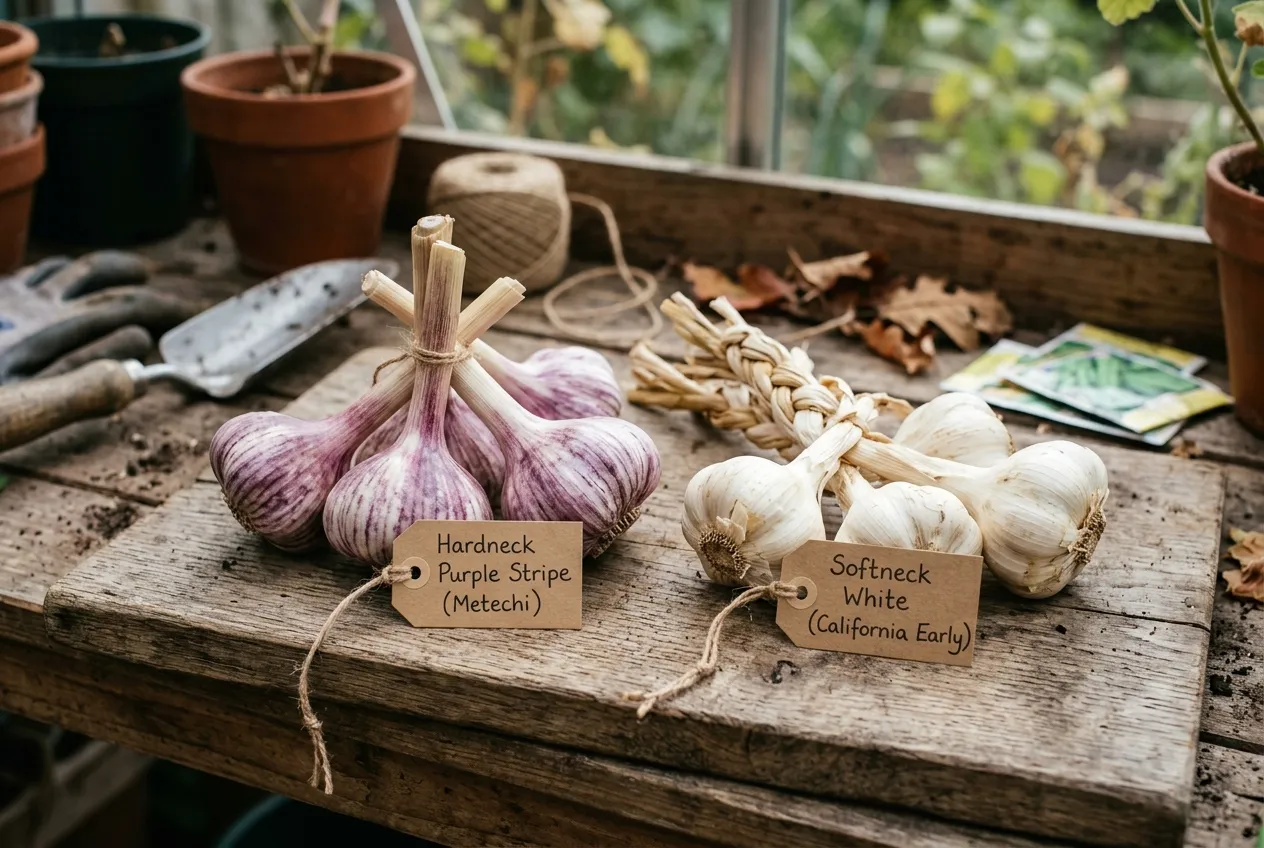
Hardneck garlic (left) has fewer, larger cloves and a stiff central scape. Softneck garlic (right) produces more cloves and stores far longer.
Every garlic variety falls into one of two groups. Understanding the difference saves wasted effort and disappointment.
Hardneck garlic (Allium sativum var. ophioscorodon)
Hardneck garlic produces a stiff central flower stem called a scape. The scape appears in June and should be snapped off to redirect energy into the bulb. Scapes are edible and taste like mild garlic. Each bulb contains 4-8 large, easy-to-peel cloves arranged in a single ring around the central stem.
Hardneck varieties tend to produce stronger, more complex flavours than softneck types. They tolerate cold winters well and suit northern gardens and exposed allotments. The trade-off is storage. Hardneck garlic stores for only 4-6 months before sprouting. Use it first after harvest.
Popular UK hardneck varieties include Lautrec Wight, Purple Moldovan, and Early Purple Wight.
Softneck garlic (Allium sativum var. sativum)
Softneck garlic has a flexible neck with no central scape. Bulbs contain 10-20 smaller cloves arranged in overlapping layers. The flexible stem makes softneck types ideal for plaiting into traditional garlic strings.
The main advantage is storage life. Softneck garlic keeps for 9-12 months in a cool, dry room. This means an autumn harvest can last until the following summer. Softneck varieties tolerate milder winters and suit southern and central England well, though many also perform in the north.
Solent Wight, Cristo, Picardy Wight, and Messidrome are the best softneck choices for UK growers.
Best garlic varieties for UK gardens
I have grown all of the following varieties on my allotment in Staffordshire. The soil is heavy clay over marl, with a pH of 6.8. Every variety was autumn-planted in October, harvested the following July, and assessed for bulb size, clove count, flavour, and storage life.
Solent Wight (softneck) - best all-rounder
Solent Wight is the single most reliable garlic for UK gardens. Bred on the Isle of Wight specifically for British conditions, it produces plump white bulbs with 10-14 cloves. Average bulb weight in my trials: 55-70g. Storage life: 10-12 months. It handles wet winters without rotting and tolerates heavy clay better than any other variety I have tested. This is the one to grow if you only grow one.
Lautrec Wight (hardneck) - best for flavour
The finest-flavoured garlic I have ever grown. Lautrec Wight originates from the Lautrec region of southern France, where pink garlic carries a Protected Geographical Indication. The bulbs have distinctive pink-streaked skins and 8-12 large cloves. The flavour is rich, warm, and slightly sweet with a lingering heat. Storage life: 5-6 months. Harvest timing is critical. Leave it a day too long and the bulb wrapper splits.
Picardy Wight (softneck) - best for heavy soil
Picardy Wight handles wet, heavy soil better than most varieties. It produces large bulbs of 60-80g with a mild, sweet flavour suited to roasting whole. On my clay allotment, it consistently outperforms varieties bred for lighter soils. Storage life: 8-10 months. A good choice for Midlands and northern growers on clay or loam.
Purple Moldovan (hardneck) - best cold tolerance
Purple Moldovan thrives in cold, exposed conditions that would flatten other varieties. Originally from Eastern Europe, it tolerates temperatures down to minus 20 degrees C without damage. The purple-striped bulbs contain 4-6 very large cloves with a strong, punchy flavour. Storage life: 4-5 months. Ideal for Scottish, northern English, and high-altitude allotments.
Cristo (softneck) - best for beginners
Cristo is the easiest garlic to grow in the UK. It forgives poor soil, inconsistent watering, and late planting better than any other variety. Bulbs are medium-sized at 40-55g with white skin and a good all-round flavour. Storage life: 8-9 months. This is the variety I recommend to first-time vegetable growers who want a guaranteed result.
Early Purple Wight (hardneck) - earliest harvest
Ready to harvest in late May or early June, 4-6 weeks before other varieties. Early Purple Wight fills the gap when stored garlic from last year is running out. The purple-skinned bulbs have a mild, green flavour. Storage life: only 3-4 months, so use it fresh through summer. Plant in October for the earliest possible harvest.
Messidrome (softneck) - best for plaiting
A classic French softneck with long, flexible stems perfect for plaiting. Messidrome produces neat white bulbs with 12-16 small to medium cloves. The flavour is mild and well-balanced. Storage life: 10-12 months when plaited and hung in a cool room. A strong choice if you want garlic that looks as good as it tastes.
Sprint (softneck) - best for spring planting
If you missed the autumn planting window, Sprint is your best option. It does not require a long cold period and produces reasonable bulbs from a February or March planting. Expect 30-40% smaller bulbs than autumn-planted garlic. Storage life: 6-8 months. Use Sprint as a backup, not a first choice.
Elephant garlic (Allium ampeloprasum)
Elephant garlic is technically a leek, not a garlic, but is grown the same way. Bulbs weigh 300-450g with 4-6 enormous cloves. The flavour is mild and sweet, closer to roasted leek than true garlic. Roast whole bulbs at 180 degrees C for 40 minutes until soft and caramelised. Plant individual cloves 20cm apart and 10cm deep in October. Storage life: 3-4 months.
Garlic variety comparison table
| Variety | Type | Cloves | Bulb weight | Storage | Flavour | Best for |
|---|---|---|---|---|---|---|
| Solent Wight | Softneck | 10-14 | 55-70g | 10-12 months | Medium, balanced | All-round reliability |
| Lautrec Wight | Hardneck | 8-12 | 50-65g | 5-6 months | Strong, warm, sweet | Flavour |
| Picardy Wight | Softneck | 10-14 | 60-80g | 8-10 months | Mild, sweet | Heavy clay soil |
| Purple Moldovan | Hardneck | 4-6 | 45-60g | 4-5 months | Strong, punchy | Cold/exposed sites |
| Cristo | Softneck | 10-14 | 40-55g | 8-9 months | Mild, all-round | Beginners |
| Early Purple Wight | Hardneck | 6-10 | 35-50g | 3-4 months | Mild, green | Early harvest |
| Messidrome | Softneck | 12-16 | 45-60g | 10-12 months | Mild, balanced | Plaiting, storage |
| Sprint | Softneck | 10-14 | 30-45g | 6-8 months | Mild | Spring planting |
| Elephant | Leek relative | 4-6 | 300-450g | 3-4 months | Very mild | Roasting whole |
When and how to plant garlic in the UK
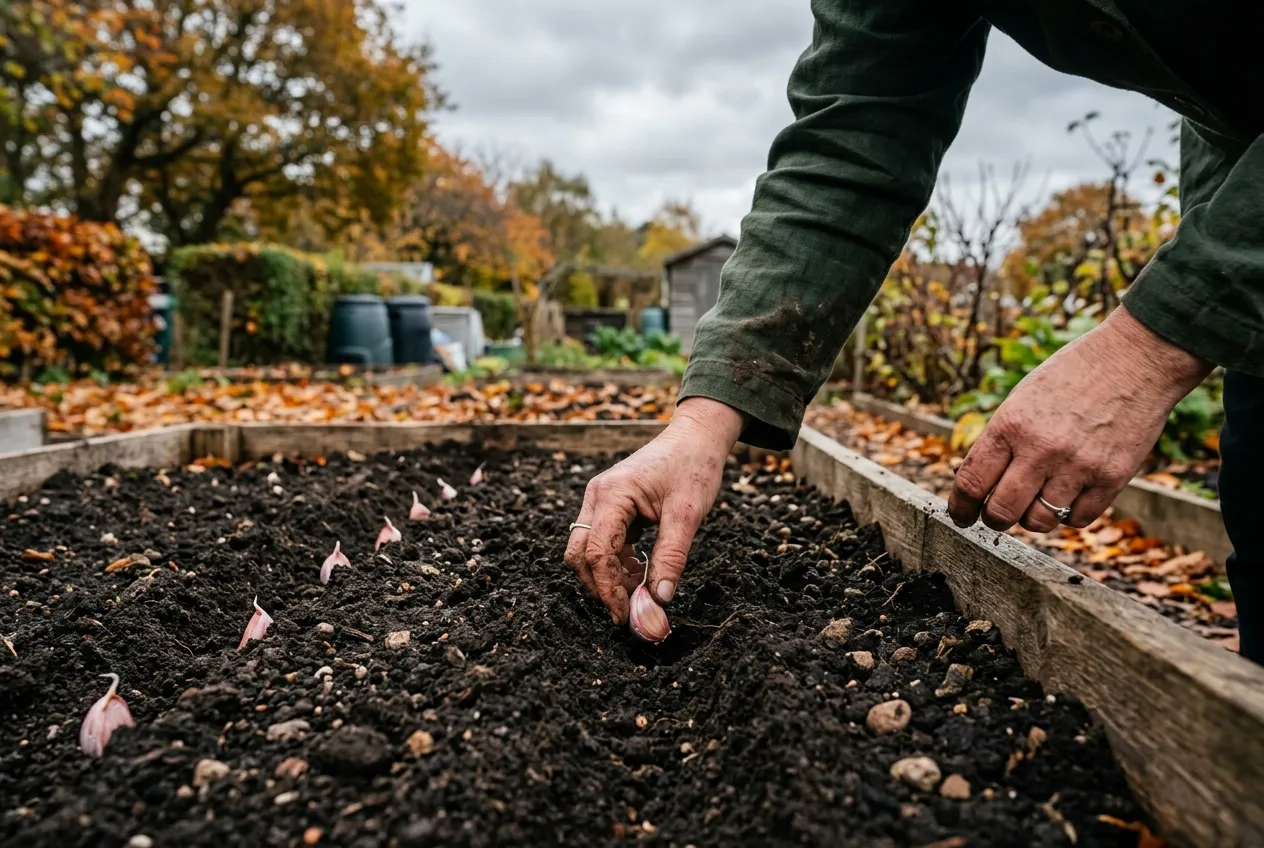
Plant garlic cloves pointed end up, 5cm deep and 15cm apart, in well-prepared autumn soil.
October and November are the best months to plant garlic in the UK. Cloves need a minimum of 6 weeks at temperatures below 10 degrees C (vernalisation) to trigger proper bulb division. Without this cold period, bulbs form as single rounds instead of splitting into cloves.
Break the bulb into individual cloves and plant each one pointed end up, 5cm deep and 15cm apart, in rows 30cm apart. On heavy clay, add grit to the planting hole and raise the bed slightly to prevent waterlogging. Garlic hates sitting in wet soil through winter.
For spring planting (February-March), choose Sprint or Cristo and accept smaller yields. Pre-chill cloves in the fridge for 4 weeks before planting to simulate winter cold.
Garlic grows well in raised beds where drainage is naturally better. It also pairs well with many crops. Our companion planting guide covers which vegetables and herbs benefit from growing near garlic.
How to harvest and cure garlic
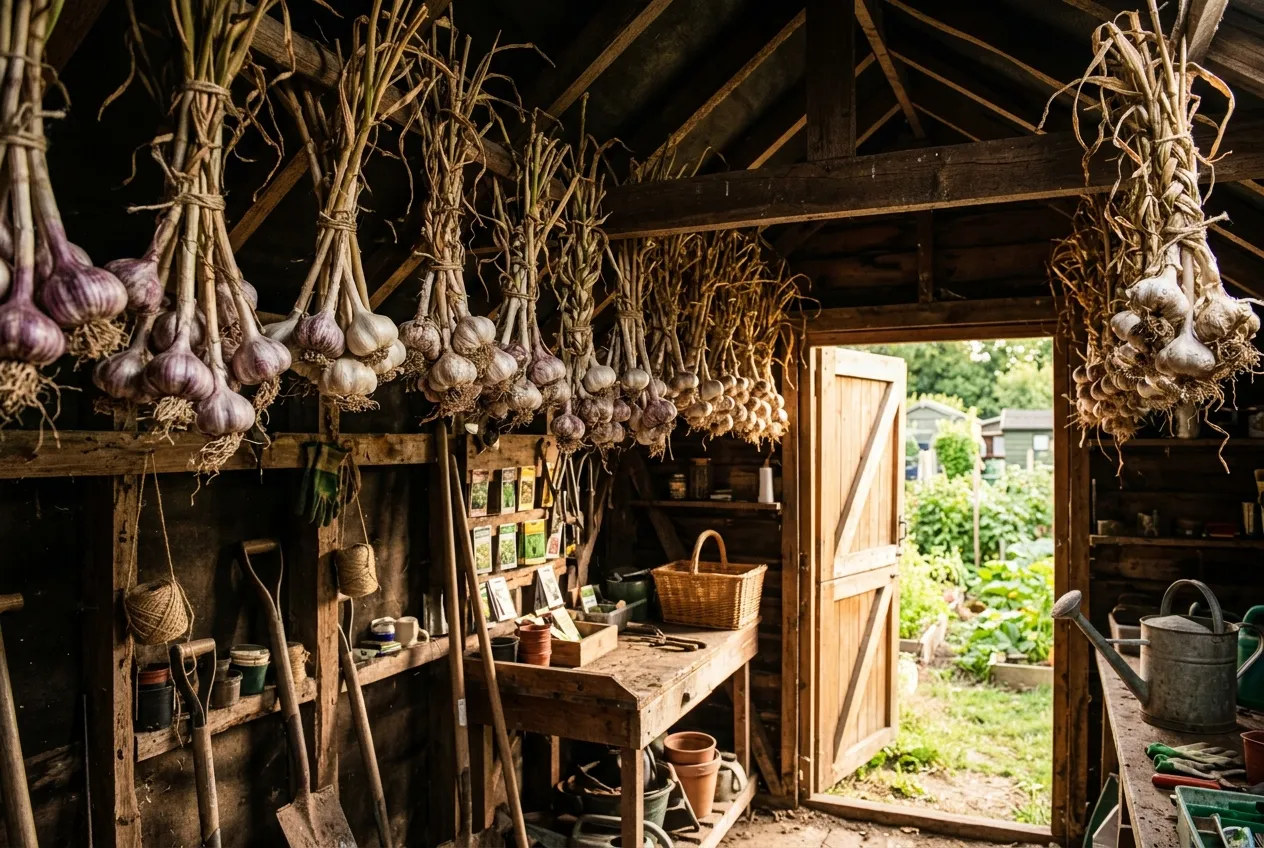
Cure garlic for 2-3 weeks in a dry, airy shed before trimming roots and storing.
Harvest garlic when the lower third of leaves have turned yellow but the upper leaves are still green. This is usually late June for Early Purple Wight and mid to late July for most other varieties. Do not wait until all the leaves die back. By that point, the bulb wrappers have started to decay and storage life drops.
Lift bulbs gently with a fork. Do not pull by the stems. Shake off loose soil but do not wash the bulbs. Lay them on a wire rack or hang in bunches in a dry, airy shed or garage. Keep out of direct rain and strong sunlight. Curing takes 2-3 weeks until the outer skins feel papery and the stems are dry.
Trim roots to 5mm and cut stems to 5cm (or leave long for plaiting softneck varieties). Store in a cool, dry room at 10-15 degrees C. A mesh bag, wooden crate, or plaited string all work well. Never store garlic in the fridge. The cold and humidity trigger early sprouting.
Field Report: GardenUK Trial Plot, Midlands (Heavy Clay) Trial period: October 2021 - July 2026 (5 seasons). 12 varieties tested in side-by-side rows, same soil, same spacing, same organic feed regime. Picardy Wight and Solent Wight consistently produced the largest bulbs on our clay. Purple Moldovan survived the minus 12 degrees C snap of December 2022 with zero losses. Lautrec Wight split at the wrapper when harvested even 2 days late in the wet July of 2024. Lesson: check hardneck varieties daily from late June onwards.
Common mistakes when growing garlic
Using supermarket garlic instead of certified seed garlic. Supermarket bulbs may carry white rot or onion virus, and they are bred for Mediterranean day lengths. Always buy from a specialist UK garlic supplier.
Planting too late in spring. Without the cold vernalisation period, bulbs produce single rounds. Autumn planting is always better.
Overwatering in winter. Garlic needs moisture in spring when bulbs swell, but it rots in waterlogged winter soil. Improve drainage on heavy ground.
Ignoring crop rotation. Garlic belongs to the allium family alongside onions and leeks. Do not grow alliums in the same spot for more than 2 years running. White rot spores persist in soil for 15-20 years once established.
Leaving hardneck scapes on. Snap off the curling flower stems in June. Leaving them robs the bulb of 20-30% of its potential size. Use the scapes in stir-fries and pesto.
Biosecurity note
Always buy UK-certified seed garlic from reputable suppliers. Importing garlic bulbs from abroad risks introducing diseases including allium white rot (Sclerotium cepivorum) and garlic bloat nematode (Ditylenchus dipsaci). The Royal Horticultural Society recommends purchasing only from specialist UK growers with virus-tested stock.
Frequently asked questions
What is the best garlic to grow in the UK?
Solent Wight is the most reliable UK garlic variety. It was bred on the Isle of Wight specifically for British conditions. It produces plump white bulbs with 10-14 cloves, stores for 10-12 months, and handles wet winters without rotting. For stronger flavour, grow Lautrec Wight alongside it. For cold northern sites, Purple Moldovan tolerates temperatures down to minus 20 degrees C.
When should I plant garlic in the UK?
Plant garlic in October or November for the best yields. Cloves need at least 6 weeks of cold below 10 degrees C to trigger proper bulb formation. Autumn-planted garlic produces bulbs 30-40% larger than spring-planted. If you miss the autumn window, plant Sprint or Cristo by early March at the latest. For full planting guidance, see our guide on when to plant garlic in the UK.
What is the difference between hardneck and softneck garlic?
Hardneck garlic produces fewer, larger cloves and a stiff central scape. Softneck garlic has a flexible neck, more cloves per bulb (10-20), and stores far longer (9-12 months vs 4-6 months). Hardneck types offer stronger flavour and edible scapes. Softneck types offer better storage and easier plaiting. Most UK growers benefit from planting both types.
Can I plant supermarket garlic in the UK?
Supermarket garlic often carries disease and is not adapted to UK conditions. Most supermarket garlic comes from Spain or China and is bred for different day lengths and climates. Bulb formation can fail entirely in British conditions. Always buy certified virus-free seed garlic from a UK specialist supplier. The cost is around 5-8 pounds for enough cloves to plant a 3m row.
How do I store garlic after harvesting?
Cure garlic for 2-3 weeks in a dry, airy spot before storing. Hang in bunches or spread on a wire rack out of direct sun and rain. Once the outer skins are papery and stems dry, trim roots and store at 10-15 degrees C. Softneck varieties can be plaited for decorative hanging storage. Never refrigerate garlic. The cold triggers premature sprouting.
What is elephant garlic and is it worth growing?
Elephant garlic is not true garlic but a close relative of the leek. It produces enormous bulbs weighing 300-450g with 4-6 very large cloves. The flavour is mild and sweet, better suited to roasting than raw use. It is worth growing as a roasting vegetable, but it will not replace real garlic in cooking. Plant cloves 20cm apart and 10cm deep in October.
Why did my garlic not form proper bulbs?
The most common cause is insufficient cold exposure (vernalisation). Garlic needs a minimum of 6 weeks below 10 degrees C to trigger bulb division. Without this, cloves produce a single round bulb. Other common causes include waterlogged soil, planting too shallow (cover with 5cm of soil), using non-UK-adapted supermarket varieties, and harvesting too early before bulbs have fully sized up.
Lawrie has been gardening in the West Midlands for over 30 years. He grows his own veg using no-dig methods, keeps a wildlife-friendly garden, and writes practical advice based on real UK growing conditions.