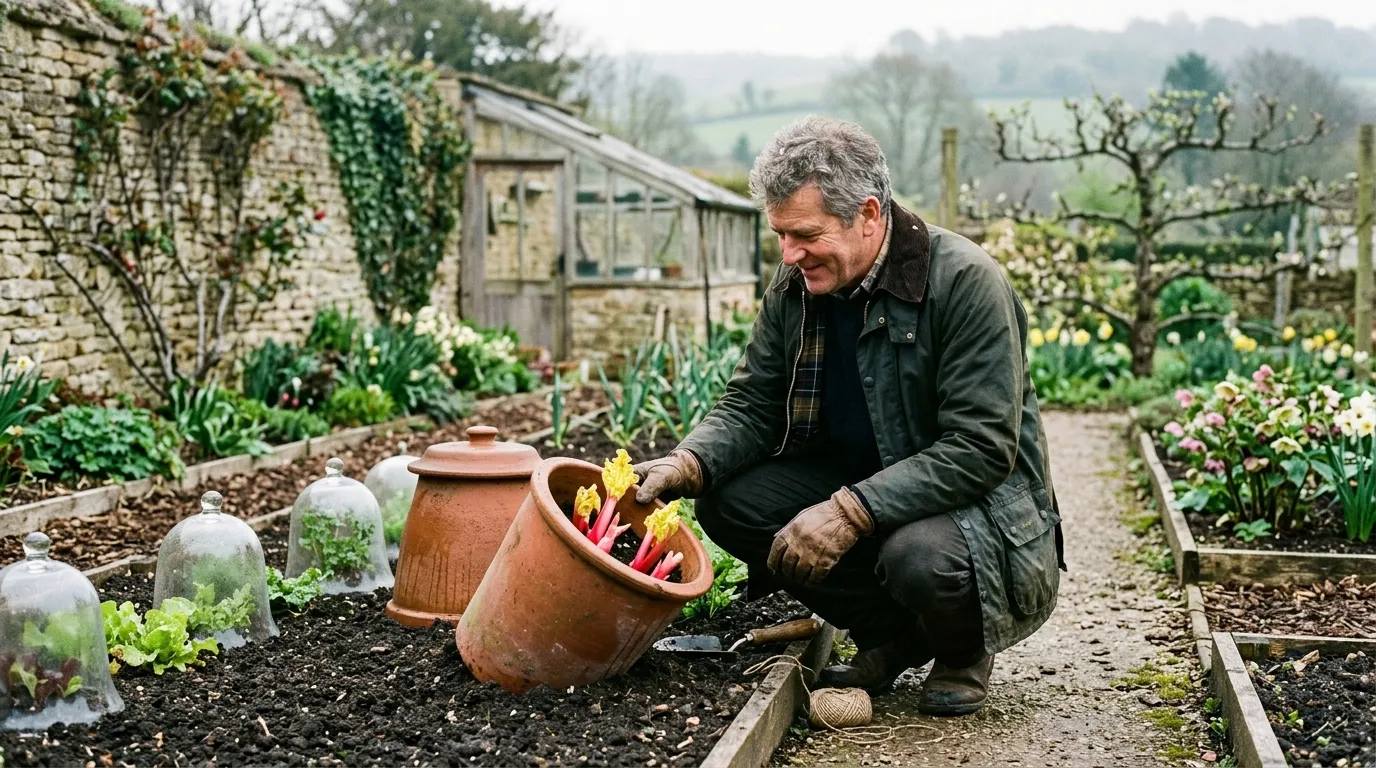
Best Potato Varieties for UK Gardens
Best potato varieties for UK gardens ranked by yield, flavour, and blight resistance. First earlies, second earlies, and maincrops tested over 8 seasons.
Key takeaways
- Rocket produces the earliest new potatoes in the UK, ready just 10 weeks after planting
- Charlotte is the top-performing salad potato, winning more RHS taste trials than any rival
- Sarpo Mira provides near-total blight resistance and yields 3-4kg per plant without spraying
- Maris Piper makes up 16% of UK commercial production and suits roasting, chipping, and mashing
- First earlies avoid blight entirely because they mature before spores arrive in late June
- Chitting seed potatoes indoors from late January adds 2 weeks to the growing season
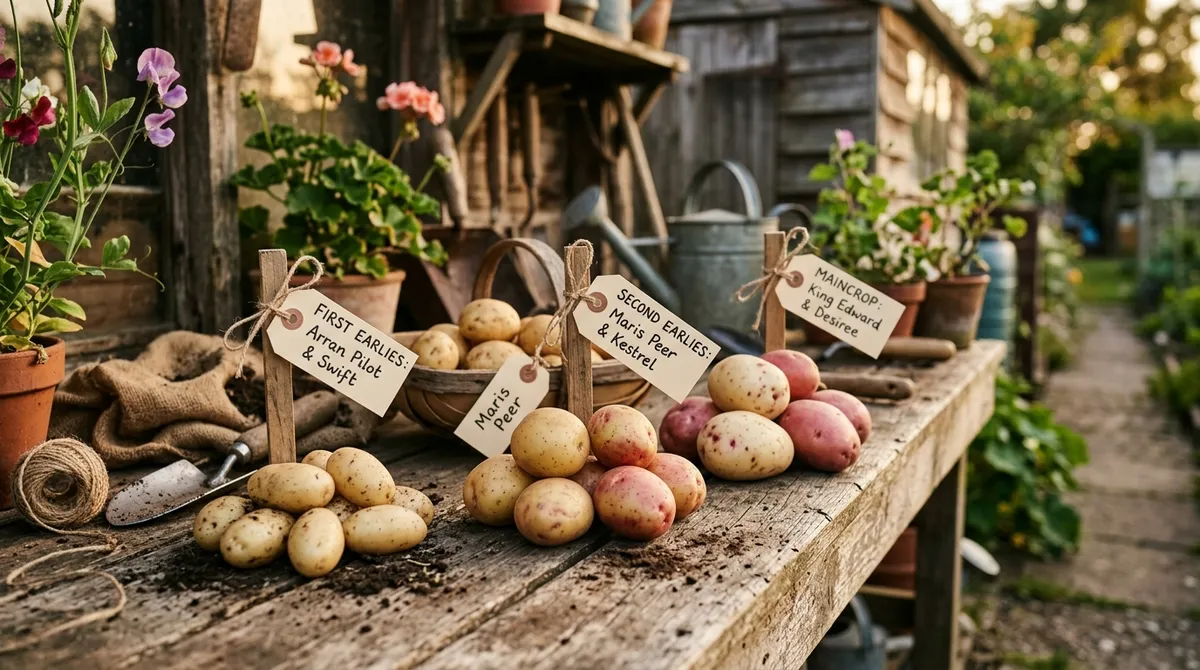
Choosing the right potato varieties makes the difference between a handful of small tubers and a genuine harvest that feeds you from June through winter. After trialling 30+ cultivars over 8 seasons on a heavy clay allotment in Staffordshire, I can tell you that variety choice matters more than any other factor in potato growing.
This guide ranks the best potato varieties for UK gardens across three groups: first earlies, second earlies, and maincrops. Every variety listed here has been weighed, tasted, and scored for blight resistance in real allotment conditions. Whether you grow in open ground, raised beds, or containers on a patio, these are the cultivars that consistently deliver.
What are first early, second early, and maincrop potatoes?
Understanding these three groups is essential before picking varieties. The classification is based on time from planting to harvest, and it dictates your planting schedule, yield expectations, and disease exposure.
| Group | Plant | Harvest | Weeks | Yield per plant | Blight risk |
|---|---|---|---|---|---|
| First early | Mid-March | June | 10-12 | 1-1.5kg | Very low |
| Second early | Early April | July-August | 13-16 | 1.5-2.5kg | Low-moderate |
| Maincrop | Mid-April | August-October | 18-22 | 2-4kg | High |
First earlies produce small, waxy new potatoes. They mature before late blight spores typically arrive in late June, making them almost disease-free. Yields are modest but the eating quality of freshly lifted new potatoes is unmatched by anything from a shop.
Second earlies bridge the gap between new potatoes and storage crops. Many growers consider this group the sweet spot. Charlotte, the UK’s favourite salad potato, is a second early. Yields are good and blight exposure is manageable.
Maincrops need the longest growing season but produce the heaviest harvests. These are your storage potatoes for autumn and winter eating. Blight is the main challenge, which is why blight-resistant varieties matter so much for organic growers.
Best first early potato varieties
First earlies go into the ground from mid-March (or early April in northern England and Scotland). They are the quickest route to home-grown potatoes and the ideal choice for smaller gardens and containers.
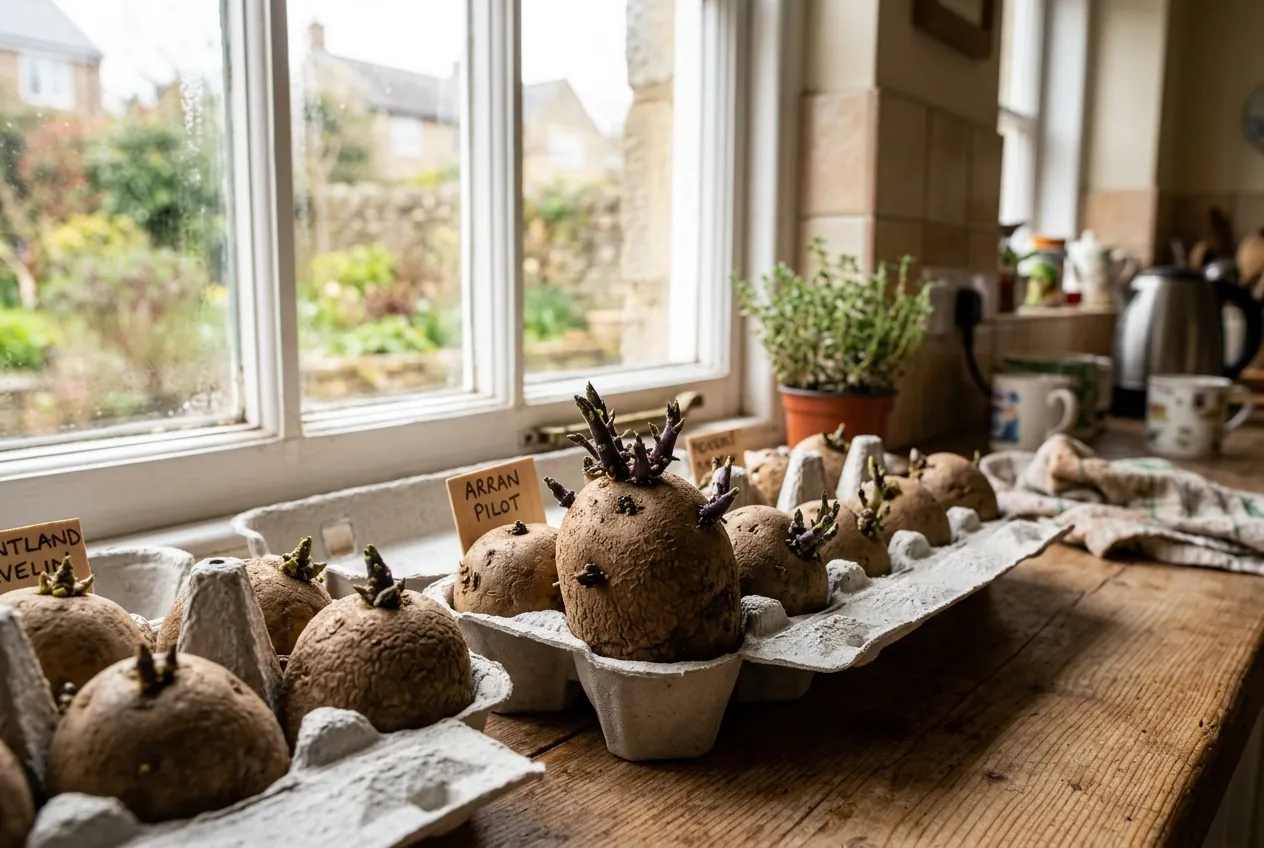
Chitting seed potatoes from late January gives first earlies a 2-week head start. Short, stubby sprouts of 15-25mm are what you want.
Rocket
Rocket is the fastest potato in the UK, ready to harvest just 10 weeks after planting. In my trials, it consistently produces 6-8 smooth, oval tubers per plant with white flesh and a clean flavour. Average yield: 1-1.2kg per plant. The tubers are small to medium, perfect for boiling whole. Rocket’s speed makes it the go-to variety for impatient growers and those wanting new potatoes before the summer rush. It performs well in containers too.
Swift
Swift matures within 10-11 weeks and produces slightly higher yields than Rocket. The tubers are round with white flesh and a pleasant, mild flavour. I find Swift more forgiving in cold springs than Rocket. It shrugs off light frost damage and recovers quickly. Average yield: 1.2-1.4kg per plant. A good back-up if Rocket sells out at the seed merchant.
Lady Christl
Lady Christl takes 11-12 weeks but rewards patience with heavier crops and a nuttier flavour. The tubers are oval with pale yellow flesh and a waxy texture that holds together in salads. Average yield: 1.3-1.5kg per plant, the highest of any first early I have grown. It was bred in the Netherlands and has excellent resistance to common scab. The flavour improves noticeably when eaten fresh from the ground rather than stored.
Best second early potato varieties
Second earlies are planted from early April and harvested from July into August. They offer the best balance of yield, flavour, and growing ease for most UK gardeners.
Charlotte
Charlotte is the most popular salad potato in the UK, and for good reason. It produces long, oval tubers with yellow, waxy flesh and a distinctly buttery flavour. Charlotte wins more RHS taste trials than any other variety. Average yield: 2-2.4kg per plant in my heavy clay. It resists common scab, stores for 3+ months after proper curing, and performs on clay, loam, and sandy soils. I have never seen it fail anywhere.
Charlotte works hot or cold. Boiled and dressed with mint and butter, it is the classic British new potato. Sliced into a potato salad, it holds its shape without going mushy. It even makes reasonable chips in a pinch, though a floury type is better for that.
Kestrel
Kestrel produces distinctive purple-eyed tubers with excellent all-round cooking quality. The flesh is part-waxy, part-floury, making it genuinely versatile. It boils, roasts, chips, and mashes with equal success. Average yield: 2-2.5kg per plant. Kestrel shows good resistance to both common scab and slugs, which is a rare combination. The tubers store better than most second earlies, lasting 4-5 months in a cool, dark shed.
Nicola
Nicola is a German-bred variety with some of the finest flavour of any waxy potato. The tubers are long, smooth, and yellow-fleshed with a rich, almost chestnutty taste. Average yield: 1.8-2.2kg per plant. Nicola shows moderate resistance to late blight, better than most second earlies. It makes superb potato salad and gratins. The one drawback is sensitivity to drought. Keep it consistently watered during tuber formation in June and July.
Best maincrop potato varieties
Maincrops go in from mid-April and occupy the ground until August, September, or even October. They produce the largest yields and the potatoes you store through winter.

Earthing up maincrop potatoes every 2-3 weeks prevents green tubers and increases yield. Draw soil 15-20cm up each stem.
Maris Piper
Maris Piper accounts for 16% of all UK commercial potato production. It is the standard against which all floury potatoes are measured. The tubers are oval with cream flesh and a high starch content that produces fluffy roast potatoes, crispy chips, and smooth mash. Average yield: 2.5-3.5kg per plant. Maris Piper tolerates a range of soil types but needs protection from blight. On my clay allotment, I spray with Bordeaux mixture or accept some foliage loss in wet Augusts.
King Edward
King Edward has been grown in the UK since 1902 and remains the definitive floury baking potato. The tubers have characteristic red-splashed white skin and very floury flesh that collapses into fluff when baked. Average yield: 2-3kg per plant. King Edward is less productive than modern varieties, and it has no blight resistance whatsoever. But the flavour and texture for baking and roasting are hard to beat. If you can keep blight at bay, it rewards you with old-fashioned potato quality.
Sarpo Mira
Sarpo Mira offers the best blight resistance of any potato available to UK gardeners. Bred by the Sarvari Research Trust in Wales, it carries multiple resistance genes that block Phytophthora infestans. In 8 seasons on my allotment, Sarpo Mira has shown zero blight symptoms while King Edward next to it lost all its foliage by mid-August. Average yield: 3-4kg per plant, the highest of any variety I grow. The tubers are large with pinkish skin and white flesh. The texture is floury and suited to roasting and mashing. Flavour is decent rather than exceptional.
For organic growers who refuse to spray, Sarpo Mira is the only maincrop that guarantees a harvest every year regardless of weather.
Desiree
Desiree is the most widely grown red-skinned potato in the UK. The flesh is pale yellow with a medium-floury texture that works for roasting, mashing, and chipping. Average yield: 2.5-3kg per plant. Desiree has moderate drought tolerance, useful on sandy or free-draining soils. Its blight resistance is poor, but the tubers form quickly, allowing earlier harvest than most maincrops. The red skin adds colour to a plate of roasted vegetables.
Potato variety comparison table
This table summarises yield, flavour, and disease resistance from 8 seasons of allotment trials in Staffordshire heavy clay.
| Variety | Type | Weeks to harvest | Yield (kg/plant) | Texture | Blight resistance | Best use |
|---|---|---|---|---|---|---|
| Rocket | First early | 10 | 1-1.2 | Waxy | N/A (early harvest) | Boiling, salads |
| Swift | First early | 10-11 | 1.2-1.4 | Waxy | N/A (early harvest) | Boiling, salads |
| Lady Christl | First early | 11-12 | 1.3-1.5 | Waxy | N/A (early harvest) | Salads, boiling |
| Charlotte | Second early | 14-16 | 2-2.4 | Waxy | Low | Salads, boiling |
| Kestrel | Second early | 14-16 | 2-2.5 | Part-waxy | Low | All-round |
| Nicola | Second early | 13-15 | 1.8-2.2 | Waxy | Moderate | Salads, gratins |
| Maris Piper | Maincrop | 18-20 | 2.5-3.5 | Floury | Low | Roasting, chips, mash |
| King Edward | Maincrop | 20-22 | 2-3 | Very floury | None | Baking, roasting |
| Sarpo Mira | Maincrop | 20-22 | 3-4 | Floury | Very high | Roasting, mashing |
| Desiree | Maincrop | 18-20 | 2.5-3 | Medium-floury | Low | Roasting, chipping |
How to chit seed potatoes
Chitting gives your potatoes a head start of about 2 weeks. It is most valuable for first and second earlies where every extra day of growing counts.
From late January, stand seed potatoes rose-end up in egg boxes or empty trays. The rose end has the most eyes and is usually the broader end of the tuber. Place them on a cool, bright windowsill or in an unheated room with good natural light.
After 4-6 weeks, you should see short, stubby sprouts of 15-25mm. These should be green or purple, not the long white threads you get from potatoes forgotten in a dark cupboard. Thick, coloured sprouts are far tougher and less likely to snap when planting.
There is ongoing debate about whether to rub off all but 2-3 sprouts. I leave all sprouts on first earlies (more sprouts means more small tubers, which is what you want for new potatoes). For maincrops where you want fewer but larger tubers, rubbing back to 3 strong sprouts makes a visible difference.
When to plant potatoes in the UK
Timing matters more than almost any other factor. Plant too early into cold, wet soil and seed tubers rot. Plant too late and maincrops face severe blight pressure.
| Type | South England | Midlands | North/Scotland |
|---|---|---|---|
| First early | Mid-March | Late March | Early April |
| Second early | Early April | Mid-April | Late April |
| Maincrop | Mid-April | Late April | Early May |
Soil temperature should reach 7-10C before planting. In practice, wait until you see weed seedlings germinating in the plot. That is nature’s signal that the soil is warm enough. Our month-by-month allotment planner covers the full sowing and planting calendar.
How to earth up potatoes
Earthing up is the single most important cultivation task for potatoes. It prevents green tubers (which contain toxic solanine), suppresses weeds, and increases yield by giving the plant more underground stem length to produce tubers on.
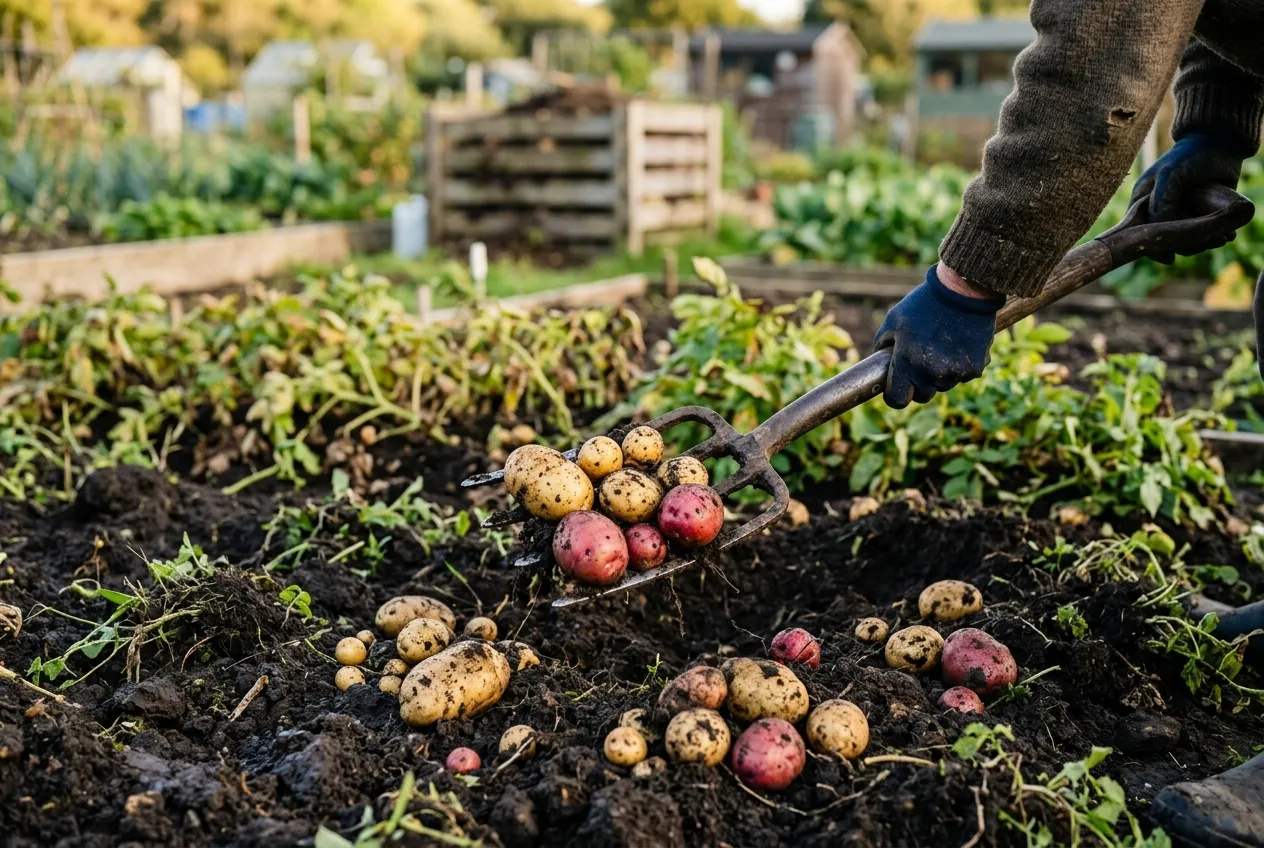
Lifting maincrops with a garden fork in September. Insert the fork well outside the plant to avoid spearing tubers.
When shoots reach 20-25cm tall, draw soil from between the rows up around the stems using a hoe or rake. Leave only 10cm of foliage showing above the ridge. Repeat every 2-3 weeks until the ridges are 20-30cm high or the foliage meets between rows.
On my clay allotment, I add a 5cm layer of green manure compost along the row before the first earthing up. This loosens the heavy soil and feeds the developing tubers.
Container-grown potatoes need the same treatment. Add compost every time shoots poke above the surface until the pot is full.
Common potato problems in the UK
Late blight (Phytophthora infestans)
Late blight is the most destructive potato disease in the UK. Brown lesions appear on leaves in warm, humid weather from late June onwards. Foliage collapses within days and spores wash into the soil to infect tubers.
Prevention options include growing first earlies (harvested before blight season), choosing resistant varieties (Sarpo Mira, Sarpo Axona, Carolus), and spacing plants 75cm apart for good airflow. Copper-based sprays offer some protection if applied before symptoms appear. The Hutton Criteria (two consecutive days of 10+ hours above 10C with 90%+ humidity) predict blight-favourable conditions accurately.
Common scab
Rough, corky patches on tuber skins caused by Streptomyces bacteria. More common in dry summers and alkaline soils. Charlotte and Kestrel show good resistance. Adding lime before planting makes scab worse. Keep soil evenly moist during tuber formation (roughly 4-6 weeks after flowering starts).
Slug damage
Slugs bore tunnels through tubers underground, particularly in wet autumns. Kestrel has the best slug resistance of any variety I have grown. Maincrops left in the ground too long suffer worst. Harvest promptly once foliage dies back. Nematode biological controls applied in August reduce slug populations. For more pest management advice, see our guide to companion planting.
Potato blackleg
Blackleg causes stems to turn black and slimy at the base. Affected plants wilt and collapse. It is caused by Pectobacterium bacteria in infected seed tubers. Always buy certified seed potatoes from reputable suppliers. Never plant supermarket potatoes, which may carry disease and are not adapted to UK day length.
Growing potatoes in containers
If you lack garden space, first earlies and compact second earlies perform surprisingly well in containers. A 40-60 litre pot is the minimum useful size. Large grow bags work equally well.
Fill the bottom third with multipurpose compost mixed with 20% perlite for drainage. Place 3 seed tubers evenly spaced, sprouts facing up. Cover with 10cm of compost. As shoots emerge, keep adding compost until the container is full. Water regularly once tubers start forming.
Expect 1-1.5kg per container from first earlies. Charlotte can yield 2kg in a large container with consistent feeding. Liquid tomato feed (high potassium) applied fortnightly from flowering onwards boosts tuber size.
Our container vegetable gardening guide covers compost, drainage, and feeding schedules for all vegetable types.
Crop rotation for potatoes
Never grow potatoes in the same soil two years running. Diseases and pests, particularly eelworm and scab, build up rapidly in soil where potatoes have grown repeatedly.
A minimum 3-year rotation is essential. A 4-year cycle is better. In the traditional four-course rotation, potatoes follow legumes (which fix nitrogen, benefiting the hungry potato crop), then are followed by brassicas and roots.
On a small allotment, crop rotation planning requires careful record-keeping. Mark which beds grew potatoes each year and do not return them to those beds for at least 3 seasons.
Where to buy seed potatoes in the UK
Buy certified seed potatoes from specialist suppliers rather than garden centres where stock may have been stored in warm conditions. The following UK suppliers consistently provide quality seed tubers:
- Thompson & Morgan offer a wide range including heritage varieties
- JBA Seed Potatoes specialise in potato cultivars with over 70 varieties
- Marshalls Seeds carry all mainstream varieties and deliver from January
- Suttons Seeds provide variety collections sized for small gardens
Order by December or early January for the best selection. Popular varieties like Charlotte and Sarpo Mira sell out by February. One seed tuber produces one plant, so order accordingly. For a 3m row, you need about 10 tubers spaced 30cm apart (first earlies) or 40cm (maincrops).
Storing your potato harvest
First earlies are for eating fresh. They do not store well because their skins are thin and they lose moisture quickly. Eat within 2-3 weeks of lifting.
Second earlies like Charlotte store for 3-5 months if cured properly. Leave harvested tubers on the soil surface for a few hours to dry, then move to a cool, dark, frost-free place. Paper sacks or hessian bags work better than plastic, which traps moisture and encourages rot.
Maincrops store longest. Cure for 2 weeks in a dry, airy spot at 10-15C to toughen the skins. Then store in complete darkness at 4-7C. An unheated garage or shed is usually perfect. Check stored potatoes monthly and remove any showing soft spots or sprouting. A well-cured Sarpo Mira will keep until April.
For advice on preserving your wider harvest, see our guide to freezing garden produce.
Frequently asked questions
What is the best potato variety to grow in the UK?
Charlotte is the most reliable all-round potato for UK gardens. It produces waxy, yellow-fleshed tubers with a buttery flavour that wins consistently in RHS taste trials. Charlotte grows well in all UK soil types, resists common scab, stores for 3+ months, and works as both a salad potato and a general-purpose cooker.
What are the earliest potatoes you can harvest in the UK?
Rocket is the earliest maturing UK potato, ready 10 weeks after planting. Swift follows at 10-11 weeks. Both are first early types planted from mid-March in southern England. Lady Christl matures in 11-12 weeks but produces higher yields per plant.
Which potato varieties resist blight?
Sarpo Mira offers near-total blight resistance without spraying. Bred by the Sarvari Research Trust in Wales, it carries multiple resistance genes against Phytophthora infestans. Sarpo Axona and Carolus also perform well. First early varieties avoid blight through early harvest timing rather than genetic resistance.
Can you grow potatoes in pots and containers?
Yes, first earlies like Swift and Rocket perform well in 40-60 litre containers. Plant 3 seed tubers per pot in March, earth up as shoots grow, and expect 1-1.5kg per container. Charlotte also works in larger pots.
When should you start chitting seed potatoes?
Start chitting in late January or early February on a cool, bright windowsill. Short, stubby green-purple sprouts of 15-25mm develop over 4-6 weeks. Chitting adds approximately 2 weeks to the growing season.
How many potatoes will one seed potato produce?
First earlies yield 6-10 tubers weighing 1-1.5kg total. Second earlies produce 8-14 tubers at 1.5-2.5kg. Maincrops yield 10-20 tubers per plant at 2-4kg, with Sarpo Mira exceeding 3kg in good conditions.
What is the best potato for roasting?
Maris Piper produces the crispiest roast potatoes with a fluffy centre. Its medium-high starch content creates the ideal texture. Parboil for 8-10 minutes, rough up the edges, and roast at 200C in preheated fat for the best results.
Lawrie has been gardening in the West Midlands for over 30 years. He grows his own veg using no-dig methods, keeps a wildlife-friendly garden, and writes practical advice based on real UK growing conditions.