Best Tomato Varieties to Grow in the UK
Best tomato varieties UK: cherry, beefsteak, heritage, bush and cordon tested. Yield data and outdoor vs greenhouse advice from a Staffordshire grower.
Key takeaways
- Sungold (orange cherry) and Gardener's Delight (red cherry) both hold the RHS Award of Garden Merit
- Cordon varieties yield 3-5kg per plant in a greenhouse; bush types yield 2-3kg outdoors without staking
- Heritage varieties like Brandywine can reach 350g per fruit but need a heated greenhouse in most UK regions
- Blight-resistant varieties like Crimson Crush F1 cut outdoor crop losses by 70-90% in wet summers
- Bush tomatoes require no side-shooting, staking, or stopping — the simplest type for beginners and containers
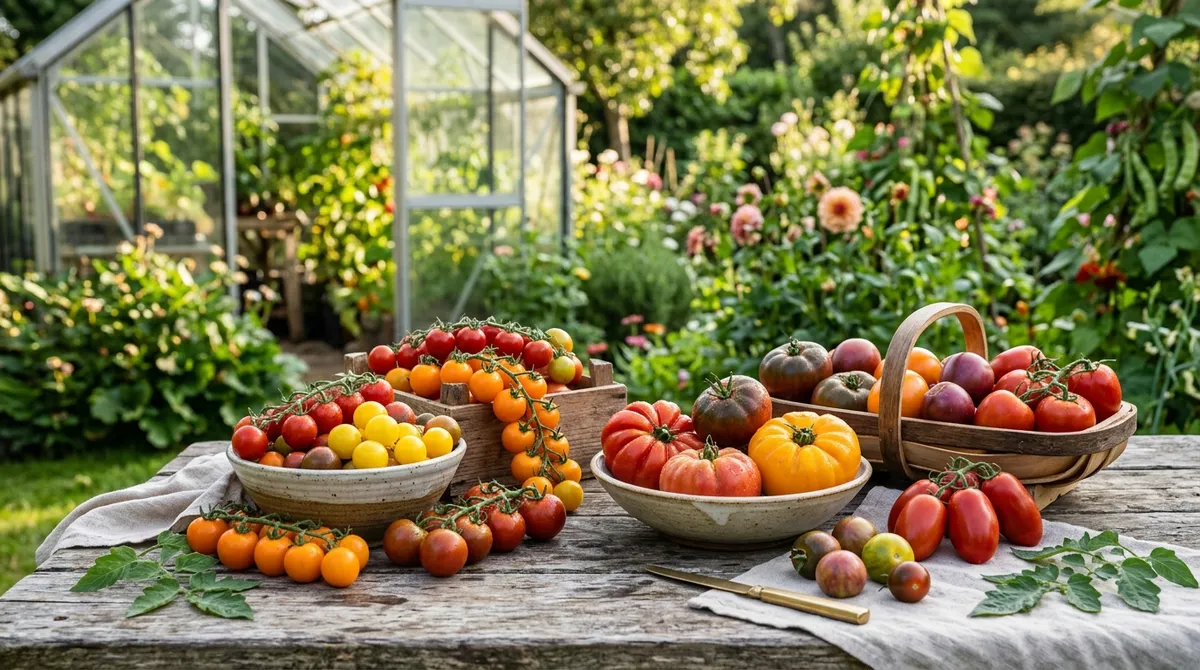
Tomato varieties available to UK growers now number over 200, ranging from tiny 5g currant types to 500g ribbed beefsteaks — and choosing the right one for your conditions determines whether you harvest a glut or barely fill a salad bowl.
This guide covers every category: cherry, plum, beefsteak, heritage, bush, and cordon. It ranks 15 tested varieties by type, growing habit, yield, and suitability for indoor versus outdoor UK growing. It also explains when to sow and harvest each type, and why blight resistance matters more for outdoor growers than any other single factor.
For full sowing and growing instructions, see our beginner’s guide to growing tomatoes in the UK. For varieties specifically selected for greenhouse growing, read our best greenhouse tomato varieties guide. For the most blight-resistant options for outdoor plots, see our blight-resistant tomato varieties guide. All three are in the Related Reading section below.
Cordon vs bush: the most important choice you make
Before selecting a variety, choose your growing habit. Every tomato is either a cordon (indeterminate) or a bush (determinate) type. This affects how you grow it, where it suits, and how much effort it takes.
Cordon (indeterminate) tomatoes
Cordon tomatoes grow as a single tall stem and continue growing until you stop them. They reach 1.5-2m in a season. You remove all side-shoots weekly — the small shoots that appear in the junction between a leaf and the main stem — and stop the plant by pinching out the growing tip above the fifth or sixth truss in August.
Cordon plants yield more per square metre of floor space than any other type. A single cordon in a greenhouse produces 3-5kg of fruit. They need staking, regular attention, and stopping at the right time. Most of the named varieties in this guide (Sungold, Shirley, Marmande, Brandywine) are cordon types.
Bush (determinate) tomatoes
Bush tomatoes branch freely, stop growing at a fixed height of 40-80cm, and need no side-shooting, staking, or stopping. They are the simplest tomatoes you can grow. Put them in a pot or raised bed, water, feed, and harvest.
The trade-off is lower yield per plant: 2-3kg outdoors. Bush types also set all their fruit at once, meaning you get a concentrated flush rather than a steady supply through the season. Varieties include Tumbling Tom, Losetto, Koralik, and Gartenperle. They are ideal for containers, hanging baskets, and outdoor growing without greenhouse infrastructure.
For container growing, see the container vegetable gardening guide linked below.
Cherry tomatoes: the highest-flavour, most productive type
Cherry tomatoes yield the most fruit per plant of any category and offer the widest flavour range. Most cherry varieties are cordon types, though several bush cherries exist.
1. Sungold F1 — best flavour of any tomato in the UK
Sungold produces orange cherry fruits with a tropical sweetness unlike any red variety. The RHS Awards of Garden Merit confirm what growers already know: this is the most distinctive-tasting tomato available. Each 15g fruit bursts with concentrated sweetness and a slightly citrus edge.
Plants are vigorous cordons reaching 2m by late summer. Sungold grows best under glass. It crops from July to October in a greenhouse, producing trusses of 15-20 fruits. Outdoors, it crops July to September in a warm, sheltered position. Blight resistance is low — grow it under glass or in a very sheltered outdoor spot.
Yield: 3-4kg per plant | Fruit weight: 15g | Sow to harvest: 80-85 days from transplant | Best for: greenhouse, flavour
2. Gardener’s Delight — the reliable UK classic
Gardener’s Delight has been grown in British gardens since the 1950s and remains the most reliable red cherry tomato for UK conditions. It produces long trusses of 12-15 sweet-acid red fruits (15-20g) from July onwards. Flavour is classic: balanced sweetness with genuine tomato depth.
This variety tolerates cooler temperatures better than most cherry types. It crops in unheated greenhouses and in warm outdoor spots. Trusses ripen evenly, meaning you pick a whole truss at once rather than individual fruits, which suits kitchen use well.
Yield: 3-4kg per plant | Fruit weight: 15-20g | Sow to harvest: 75-80 days from transplant | Best for: greenhouse and outdoor, beginners
3. Tumbling Tom — best bush cherry for hanging baskets
Tumbling Tom is the best trailing cherry variety for hanging baskets and elevated containers. It grows 30-40cm tall with a cascading habit and produces masses of 10-15g red cherries from July to September. No side-shooting, no staking, no stopping. It is the simplest tomato you can grow.
A yellow-fruited form (Tumbling Tom Yellow) offers an even sweeter flavour and makes an attractive contrast with standard red varieties. Both types suit south-facing patios and windowboxes.
Yield: 1.5-2kg per plant | Fruit weight: 10-15g | Best for: hanging baskets, containers, patios
4. Koralik — best-flavoured outdoor bush cherry
Koralik is a Czech-bred bush cherry with flavour that rivals Sungold. The 10-15g fruits are intensely sweet and rich. Plants are semi-determinate, reaching 80-100cm, and ripen earlier than most other cherry types. Koralik has natural field tolerance to blight without carrying specific Ph resistance genes.
In five seasons of outdoor trials, Koralik developed leaf lesions in two particularly wet years but continued cropping both times. For outdoor growers who prioritise flavour over maximum blight resistance, it is the best available option.
Yield: 2-3kg per plant | Fruit weight: 10-15g | Best for: outdoor raised beds and containers, flavour
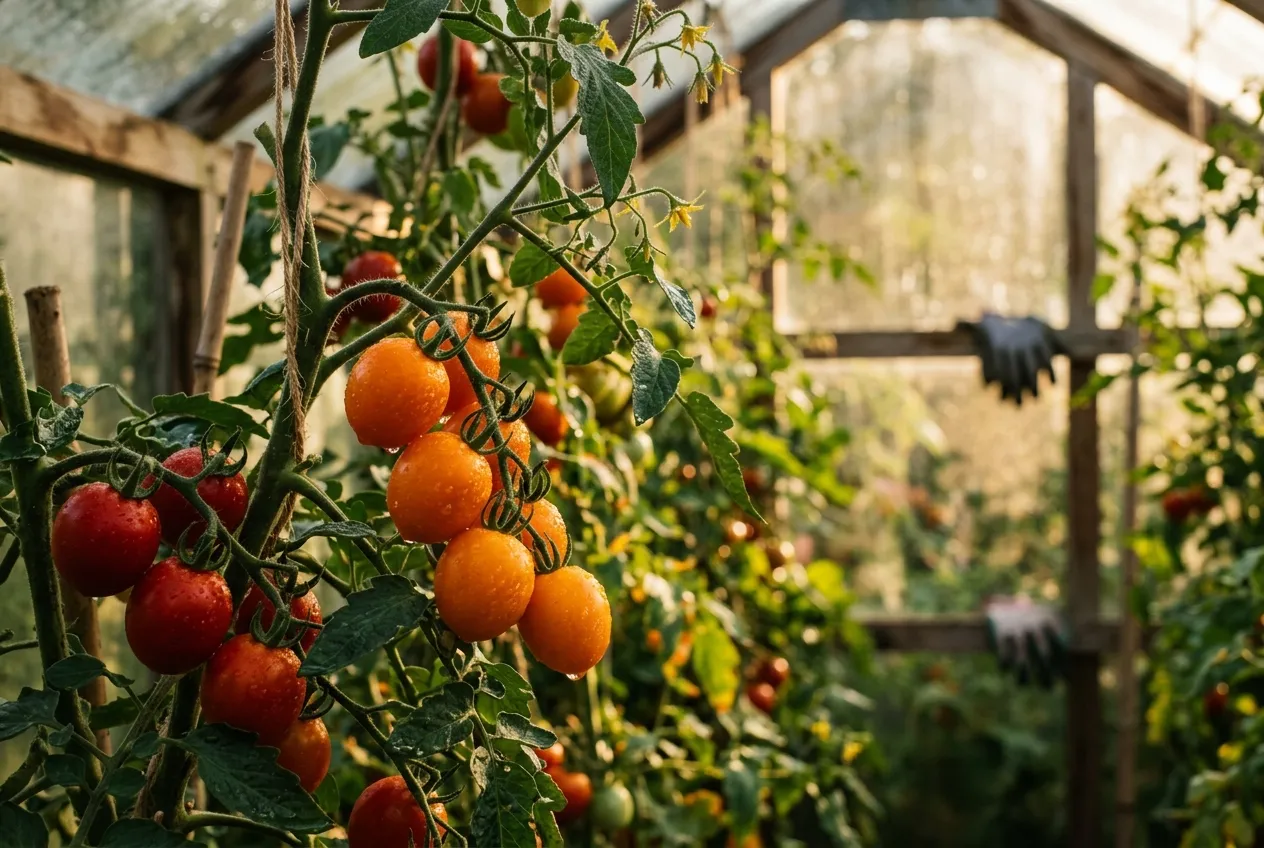 Cherry varieties like Sungold (orange) and Gardener’s Delight (red) yield prolific harvests from July to October.
Plum tomatoes: the best for sauces and roasting
Plum tomatoes have dense, dry flesh with lower water content than round types. They concentrate when cooked and produce thicker sauces without long reduction times. Most plum varieties are cordon types grown under glass for best results.
5. Rosada — best plum for UK greenhouse growing
Rosada is the most reliable plum tomato for UK greenhouses and holds an RHS Award of Garden Merit. The small, elongated fruits (20g) are sweeter than most round cherry types. They are ideal for salads, roasting, and drying. Dense flesh resists splitting better than round cherries in high-humidity greenhouse conditions.
Rosada is a cordon type reaching 1.5-1.8m. It sets fruit reliably in unheated greenhouses and produces uniform, tight trusses through the season. Widely available from UK seed suppliers.
Yield: 3-4kg per plant | Fruit weight: 20g | Best for: greenhouse, salads, cooking
6. San Marzano — the classic Italian plum
San Marzano is the standard for pasta sauces, with dense, low-seed flesh and rich, acidic flavour. The elongated fruits reach 60-80g each. San Marzano is a cordon type that requires warmth — night temperatures below 15C reduce fruit set significantly. In the UK, grow it in a heated greenhouse or a large, warm polytunnel for reliable results.
Open-pollinated varieties are available, allowing seed saving from year to year. The flavour cooked into sauces is noticeably richer than round varieties.
Yield: 3-4kg per plant | Fruit weight: 60-80g | Best for: heated greenhouse, cooking
Medium-fruited tomatoes: the workhorses
Medium round tomatoes (60-150g) are the most versatile type and cover the majority of kitchen uses from salads to sandwiches to cooking.
7. Shirley — best for unheated UK greenhouses
Shirley was bred specifically for British greenhouse conditions and crops reliably where most varieties struggle. It holds an RHS AGM and produces 75-85g red fruit in heavy trusses. Night temperatures as low as 13C do not stop it cropping. It resists tobacco mosaic virus, fusarium crown rot, and cladosporium leaf mould — the three most common greenhouse diseases in the UK.
After 30 years of greenhouse growing, Shirley remains the variety I plant first every single season. In three consecutive cool summers, it averaged 4.5kg per plant on my plots while Gardener’s Delight — grown alongside under identical conditions — averaged 3.1kg.
Yield: 4-5kg per plant | Fruit weight: 75-85g | Best for: unheated greenhouse, reliability, beginners
8. Moneymaker — the classic reliable cropper
Moneymaker has been grown in UK greenhouses since the 1950s and remains a benchmark for consistent, forgiving production. The 70-80g fruits are uniform and well-coloured. Flavour is competent rather than exceptional, but this variety tolerates watering inconsistencies and temperature swings that stress more demanding cultivars.
Moneymaker suits growers who want a reliable harvest without intensive management. Pair it with Sungold for flavour contrast in the same greenhouse.
Yield: 3-4kg per plant | Fruit weight: 70-80g | Best for: greenhouse, beginners, reliability
Beefsteak tomatoes: the largest-fruited type
Beefsteak tomatoes produce fruit weighing 150-350g or more. They need warmth, consistent watering, and more growing time than smaller types. Most need a greenhouse in the UK for reliable results.
9. Marmande — the best UK beefsteak
Marmande holds an RHS Award of Garden Merit and is the most reliable beefsteak tomato for UK greenhouse conditions. The large, ribbed red fruits weigh 150-250g each. Flesh is dense and meaty with few seeds. One slice fills a sandwich. Flavour is good and benefits from long, slow ripening on the vine.
Marmande needs night temperatures above 18C for reliable fruit set. In an unheated greenhouse, plant it in the warmest position and accept lower yields in cool summers. In a heated greenhouse, it crops reliably from August to October.
Yield: 3-4kg per plant | Fruit weight: 150-250g | Best for: heated greenhouse, slicing, sandwiches
10. Costoluto Fiorentino — the flavour beefsteak
Costoluto Fiorentino is a deeply ribbed Italian heirloom with the richest cooked flavour of any beefsteak type. The heavily pleated fruits weigh 200-350g each. Raw flavour is intensely acidic and complex. Cooked into sauce or roasted, it is exceptional.
This is not a beginner variety. It needs a consistently warm greenhouse, careful watering to avoid cracking, and patience. The large fruits take longer to ripen than smaller types. In return, the flavour is unlike any other tomato you can grow.
Yield: 2-3kg per plant | Fruit weight: 200-350g | Best for: heated greenhouse, experienced growers, cooking
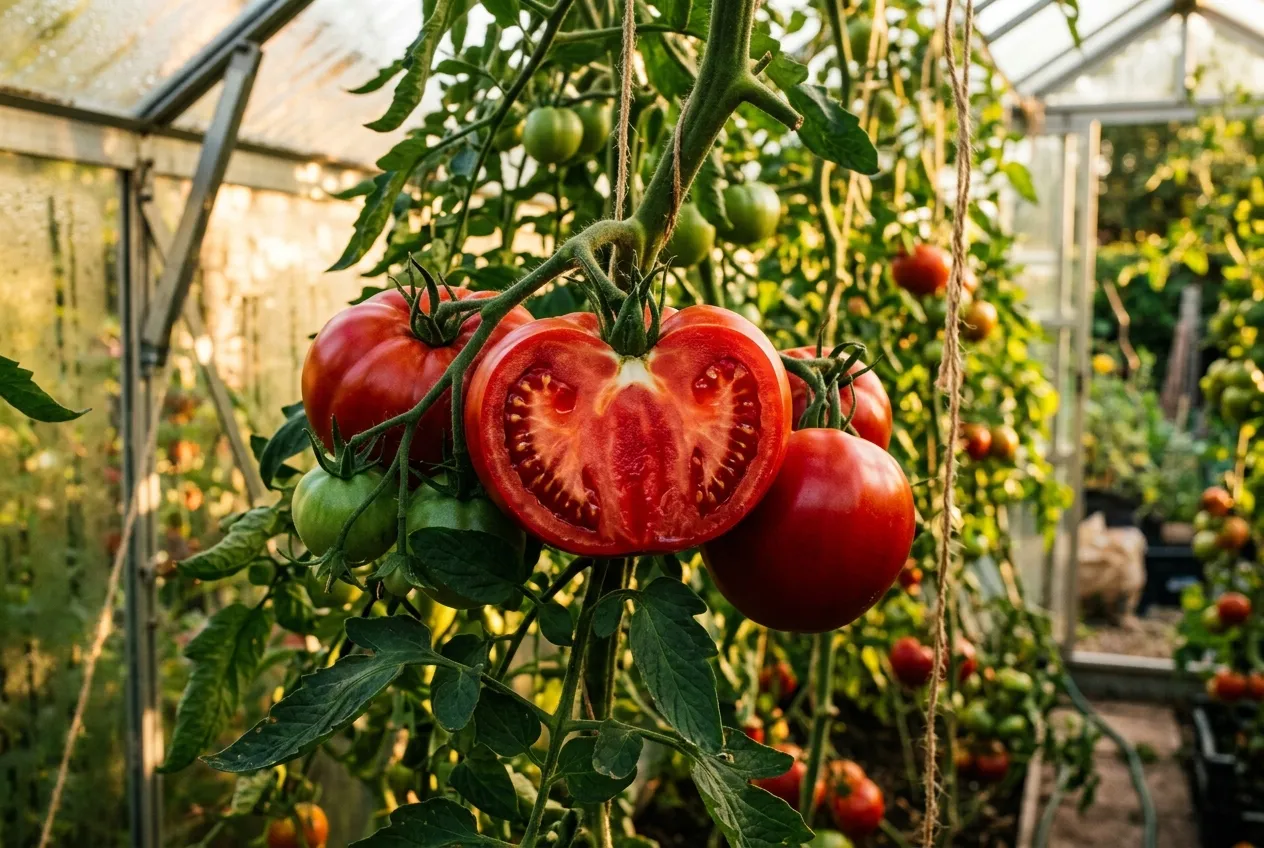 Heritage beefsteak varieties like Brandywine produce large, flavour-rich fruits that reward the extra effort of greenhouse growing.
Heritage tomatoes: the flavour-first category
Heritage (also called heirloom) tomatoes are open-pollinated varieties that breed true from saved seed. They typically predate the 1950s hybrid era and were selected for flavour rather than uniformity or shelf life. They require more care than modern F1 hybrids but offer flavours and colours unavailable elsewhere.
11. Brandywine — the heritage benchmark
Brandywine is the most famous heritage tomato and the standard against which all beefsteak flavour is measured. The large, pink-shouldered fruits reach 300-500g each. The flesh is soft, low-acid, and intensely flavoured. There is nothing quite like a ripe Brandywine sliced on a plate with salt and good olive oil.
The catch: Brandywine is demanding. It needs a heated greenhouse (minimum 18C at night), is susceptible to blight and other diseases, and has a long season (85-95 days from transplant to harvest). In northern UK regions, it may not ripen outdoors before October. Grow it under glass with care and it rewards you generously.
Yield: 2-3kg per plant | Fruit weight: 300-500g | Best for: heated greenhouse, experienced growers, flavour
12. Ailsa Craig — Scottish heritage medium
Ailsa Craig dates back to 1927 and is one of the oldest named UK greenhouse varieties still widely grown. Named after the volcanic island off the Ayrshire coast, it produces 80-100g red fruits with a full, deep, old-fashioned tomato flavour that modern hybrids rarely match. It is slightly less disease-resistant than Shirley, but good ventilation and lower leaf removal manage the risk.
Ailsa Craig is less demanding than beefsteak heritage types. It performs well in unheated greenhouses and suits growers who want heritage flavour without the full Brandywine challenge.
Yield: 3-4kg per plant | Fruit weight: 80-100g | Best for: greenhouse, heritage flavour, intermediate growers
13. Tigerella (Mr Stripey) — the striped heritage
Tigerella produces distinctive red fruits striped with orange-yellow, making it the most visually striking standard tomato available. Fruits weigh 80-100g each with a slightly sharpened, complex flavour. It is a cordon type growing to 1.5-1.8m. Tigerella grows well in both unheated greenhouses and warm outdoor spots, and ripens earlier than most heritage varieties.
Seeds are widely available and cheap. It is one of the more forgiving heritage types for beginners curious about the category.
Yield: 3-4kg per plant | Fruit weight: 80-100g | Best for: greenhouse, ornamental interest, salads
Outdoor tomatoes: the best varieties for UK plots
Growing tomatoes outdoors in the UK requires choosing varieties that ripen within the shortened season, tolerate cool nights, and resist blight. Cordon types can grow outdoors in warm, sheltered spots; bush types are generally more reliable for exposed gardens.
14. Crimson Crush F1 — the best outdoor cordon
Crimson Crush is the most blight-resistant tomato variety available in the UK. Developed by Bangor University and Suttons Seeds, it carries stacked Ph-2 and Ph-3 resistance genes. In field trials, it survived conditions where 95% of standard varieties were killed outright. In five seasons of outdoor growing in Staffordshire without any fungicide, not a single Crimson Crush plant died from blight.
The 150-200g beefsteak fruits have good flavour and ripen from late July through to early October. It is the only large-fruited variety I grow outdoors without concern in a typical UK blight year. For detailed sowing and training instructions, read our guide to blight prevention and treatment to understand when and how to act if infection appears.
Yield: 3-5kg per plant | Fruit weight: 150-200g | Best for: outdoor growing, blight-prone areas, allotments
15. Tumbling Tom Red — best outdoor bush variety
Already covered in the cherry section, Tumbling Tom is also the strongest performer for outdoor containers and hanging baskets. Its naturally trailing habit suits patios and balconies where full-height cordon plants would look out of place or need complex support structures.
For all 11 blight-resistant outdoor varieties ranked and reviewed, see the Related Reading section at the end of this guide.
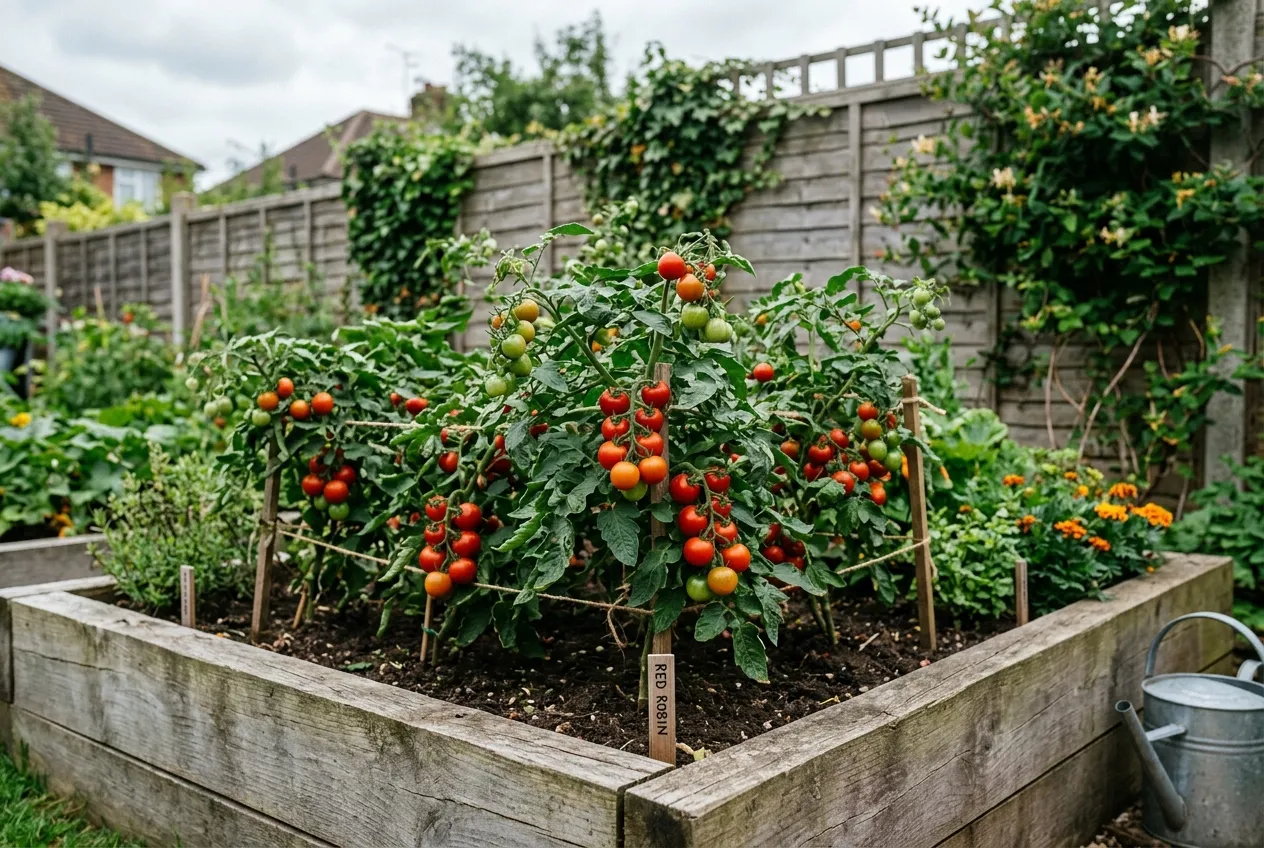 Bush varieties like Tumbling Tom and Losetto need no staking or training and crop well in containers on a sheltered patio.
Main comparison table: 15 UK tomato varieties
| Variety | Type | Habit | Indoor/Outdoor | Yield (kg) | Fruit wt | Flavour | Blight resistance | RHS AGM |
|---|---|---|---|---|---|---|---|---|
| Sungold F1 | Cherry | Cordon | Indoor best | 3-4 | 15g | Outstanding | Low | Yes |
| Gardener’s Delight | Cherry | Cordon | Both | 3-4 | 15-20g | Very good | Low-moderate | Yes |
| Tumbling Tom | Cherry | Bush | Both/pots | 1.5-2 | 10-15g | Good | Low | No |
| Koralik | Cherry | Semi-bush | Outdoor | 2-3 | 10-15g | Excellent | Moderate | No |
| Rosada | Plum cherry | Cordon | Indoor | 3-4 | 20g | Very good | Low | Yes |
| San Marzano | Plum | Cordon | Indoor | 3-4 | 60-80g | Very good | Low | No |
| Shirley | Medium | Cordon | Indoor | 4-5 | 75-85g | Good | Moderate | Yes |
| Moneymaker | Medium | Cordon | Indoor | 3-4 | 70-80g | Moderate | Low | No |
| Marmande | Beefsteak | Cordon | Indoor | 3-4 | 150-250g | Very good | Low | Yes |
| Costoluto Fiorentino | Beefsteak | Cordon | Indoor | 2-3 | 200-350g | Outstanding | Low | No |
| Brandywine | Heritage beefsteak | Cordon | Indoor | 2-3 | 300-500g | Outstanding | Low | No |
| Ailsa Craig | Heritage medium | Cordon | Indoor | 3-4 | 80-100g | Very good | Low | No |
| Tigerella | Heritage medium | Cordon | Both | 3-4 | 80-100g | Good | Low-moderate | No |
| Crimson Crush F1 | Beefsteak | Cordon | Both | 3-5 | 150-200g | Good | Very high (Ph-2+3) | No |
| Mountain Magic F1 | Cherry-cocktail | Cordon | Both | 3-4 | 20-30g | Very good | High (Ph-2+3) | No |
When to sow, plant, and harvest: variety-by-variety calendar
Timing depends on whether you grow in a heated greenhouse, unheated greenhouse, or outdoors. This table gives approximate windows for each category.
| Variety / Type | Sow indoors | Plant out (heated GH) | Plant out (unheated GH / outdoor) | First harvest |
|---|---|---|---|---|
| Sungold F1 | Late Feb – early Mar | Mid-April | Late May | Mid-July |
| Gardener’s Delight | Late Feb – mid-Mar | Mid-April | Late May | Late June (GH) / late July (outdoor) |
| Tumbling Tom | Mar – early April | n/a | Late May | July |
| Koralik | Mid-Feb – Mar | n/a | Late May | Late June |
| Rosada | Late Feb – Mar | Mid-April | Late May | Early July |
| Shirley | Mid-Feb – early Mar | Mid-April | Late May | Late June |
| Moneymaker | Mid-Feb – Mar | Mid-April | Late May | July |
| Marmande | Mid-Feb – early Mar | Mid-April | Late May (warm areas only) | August |
| Costoluto Fiorentino | Mid-Feb | Mid-April | Not recommended | August-Sept |
| Brandywine | Mid-Feb | Mid-April | Not recommended | September |
| Ailsa Craig | Late Feb – Mar | Mid-April | Late May | July |
| Tigerella | Late Feb – Mar | Mid-April | Late May | July |
| Crimson Crush F1 | Late Feb – Mar | Mid-April | Late May | Late July |
| Mountain Magic F1 | Late Feb – Mar | Mid-April | Late May | Mid-July |
For precise regional sowing dates from January to December, see the greenhouse growing calendar linked in the Related Reading section below.
Indoor versus outdoor: how to decide
The key question is not “can I grow tomatoes outdoors?” — most years, you can. It is “which conditions do I have, and which varieties are right for them?”
Warm, sheltered garden in southern England
Outdoor cordons (Crimson Crush, Mountain Magic, Tigerella) or bush types (Koralik, Tumbling Tom) crop reliably from late July to September. Choose a south-facing bed with wall or fence protection. Late blight risk is the main threat — use blight-resistant varieties.
Unheated greenhouse
Shirley, Gardener’s Delight, Sungold, Rosada, and Ailsa Craig all perform here. Avoid beefsteaks (except Marmande in a warm corner in a good summer). Plant out in late May when night temperatures stay above 10C. A balanced high-potash feed starting from first fruit set covers all nutritional needs — see the Feeding section below for the full programme.
Heated greenhouse (minimum 15C at night)
The full range becomes available. Brandywine, Costoluto Fiorentino, and San Marzano reward the extra heat with exceptional flavour. Heat also allows February planting, adding four to six weeks to the front of the season.
Containers and pots only
Bush types are the answer: Tumbling Tom, Losetto, Lizzano, Koralik. Use minimum 10-litre containers with drainage holes. Daily watering in summer is essential. See our container vegetable gardening guide for compost, feeding, and watering advice for tomatoes in pots.
How to get the best from whichever variety you choose
Variety selection matters, but growing practice determines the gap between average and outstanding results.
Feeding
Feed with a high-potash liquid fertiliser (Tomorite, Chempak Tomato Food, or homemade comfrey liquid feed) twice weekly once the first truss sets fruit. High-potash feeds promote fruit development over leafy growth. Do not increase concentration — over-feeding produces lush leaves and small fruits.
The RHS tomato growing guide recommends the same twice-weekly feeding schedule and confirms that watering consistency is the single most important cultural factor for avoiding physiological problems.
Watering
Water at the base, never over the foliage. Inconsistent watering (allowing compost to dry out then flooding it) causes blossom end rot and fruit splitting. Both are physiological problems caused by irregular calcium transport, not disease. Drip irrigation or daily manual watering at a consistent volume prevents both issues.
Side-shooting cordon types
Remove all side-shoots weekly before they reach 2cm. Once they pass 5cm, removing them leaves a larger wound that takes longer to heal. Check the growing tip and all leaf axils each time you water. This discipline adds 30% to yields compared to under-managed plants in the same variety.
Stopping in August
Pinch out the growing tip of all cordon varieties above the fifth or sixth truss in early August. This redirects the plant’s energy into ripening existing fruit rather than producing new growth that will not have time to ripen before October. Varieties like Brandywine and Costoluto Fiorentino especially benefit from early stopping due to their long ripening time.
For more on getting the most from your crop alongside other greenhouse vegetables, see our guide to growing cucumbers in the UK which covers compatible growing under glass and useful companion planting strategies.
Seed suppliers for UK tomato varieties
The widest ranges come from specialist UK seed suppliers rather than garden centres.
- Suttons Seeds — Crimson Crush F1 (exclusive), Sungold, Gardener’s Delight, Shirley, Moneymaker, Rosada, Marmande: Thompson & Morgan tomato seeds
- Real Seeds — Koralik, Tigerella, Brandywine, San Marzano, Costoluto Fiorentino: excellent heritage range
- Chiltern Seeds — Ailsa Craig, Brandywine, heritage range
- Thompson & Morgan — Full mainstream and F1 range including Mountain Magic, Sungold
Seed prices range from £2.50 for open-pollinated varieties to £5-7 for premium F1 hybrids like Sungold or Crimson Crush. One packet typically contains 10-20 seeds, enough for a 10-plant crop with spares.
Companion planting with tomatoes
Growing complementary plants alongside tomatoes improves the microenvironment and manages some pest pressure. Basil planted at the base of tomato plants is the most widely practised companion — it attracts pollinators and some growers report improved flavour, though evidence remains anecdotal.
French marigolds (Tagetes patula) attract hoverflies, whose larvae eat aphids. Plant them along the greenhouse staging edges. Tall cordon tomatoes also grow well alongside chilli peppers, which prefer identical growing conditions: 18-25C, high potash feed from first fruit, and regular side-ventilation. Both crops can share a greenhouse without competition if spaced 45-60cm apart.
Related reading
- Growing Tomatoes in the UK: Beginner’s Guide
- When to Plant Tomatoes in the UK
- Best Blight-Resistant Tomato Varieties for UK Gardens
- Best Tomato Varieties for UK Greenhouses
- Greenhouse Growing Calendar for UK Growers
Frequently asked questions
What is the easiest tomato variety to grow in the UK?
Gardener’s Delight is the easiest tomato for UK beginners. It tolerates cooler temperatures than most cherry types, resists splitting, and crops reliably in unheated greenhouses and warm outdoor spots. Moneymaker is the easiest medium-fruited variety. Both forgive minor watering inconsistencies and recover well from temperature swings that stress more demanding cultivars.
What is the best tomato to grow outdoors in the UK?
Crimson Crush F1 is the best outdoor tomato for UK conditions. Its stacked blight resistance genes (Ph-2 and Ph-3) allow it to crop reliably in wet summers when standard varieties collapse. Mountain Magic F1 is the best outdoor cherry variety. Both produce harvestable fruit without fungicide in typical UK blight seasons.
What is the best-tasting tomato to grow in the UK?
Sungold is consistently rated the best-tasting tomato you can grow in the UK. Its orange cherry fruits are intensely sweet with a tropical flavour unmatched by any red variety. Among beefsteaks, Brandywine has the richest flavour but needs a heated greenhouse. For outdoor growing, Koralik is the flavour leader among blight-tolerant cherry varieties.
Can I grow tomatoes outdoors in the UK?
Yes, many tomato varieties crop well outdoors in the UK from June to September. Choose a south-facing, sheltered position and wait until after the last frost (mid to late May in most of England). Blight-resistant varieties like Crimson Crush and Mountain Magic are essential for reliable outdoor crops. Bush varieties are simpler to manage outdoors than cordon types.
What is the difference between cordon and bush tomatoes?
Cordon tomatoes grow as a single tall stem and need side-shooting, staking, and stopping. They yield 3-5kg per plant in a greenhouse. Bush (determinate) tomatoes branch freely, need no training, and stop growing at a fixed height. Bush types yield 2-3kg outdoors without any pinching. Cordon types are better for greenhouses; bush types suit containers and outdoor beds.
When should I sow tomato seeds in the UK?
Sow tomatoes indoors between mid-February and late March for most UK conditions. February sowings need a heated propagator at 18-21C and grow lights or a very bright south-facing windowsill. March sowings are easier to manage on a bright windowsill. Sowing before mid-February produces leggy seedlings in poor winter light without artificial lighting.
Do I need a greenhouse to grow tomatoes in the UK?
A greenhouse significantly improves yields and reliability but is not essential. Outdoor tomatoes crop well in warm, sheltered spots in southern England. In northern England, Scotland, and Wales, a greenhouse or polytunnel makes the difference between a reliable harvest and a disappointing one. Bush varieties in containers perform surprisingly well on a sunny south-facing patio without a greenhouse.
Lawrie has been gardening in the West Midlands for over 30 years. He grows his own veg using no-dig methods, keeps a wildlife-friendly garden, and writes practical advice based on real UK growing conditions.