Foraging in Your Garden: Edible Plants
Edible wild plants already growing in UK gardens. Covers identification, harvesting, cooking, and encouraging useful native plants you can eat.
Key takeaways
- Most UK gardens contain 10-15 edible wild plants commonly pulled up as weeds
- Dandelion leaves, nettles, chickweed, and hairy bittercress are among the most nutritious greens available
- Elderflower cordial, blackberry jam, and sloe gin are classic garden forage recipes
- Garden foraging avoids the legal restrictions and contamination risks of public foraging
- Encouraging edible natives like wild garlic and primroses adds beauty and free food to your garden
Foraging in your own garden reveals free food you probably spray, mow, or pull up every week. Dandelion leaves are more nutritious than spinach. Nettles make a soup that rivals any green vegetable. Elderflowers change into cordial worth six pounds a bottle. Blackberries ripen on brambles you have been cursing all summer.
Garden foraging is the simplest form of food growing — you are not growing anything, you are noticing what already grows. This guide covers the edible plants most commonly found in UK gardens, how to harvest them safely, and how to bring them to the table.
Why forage from your own garden?
Foraging from public land comes with legal restrictions, contamination risks, and identification challenges. Your own garden solves all three.
You know the ground. No pesticides, no dog fouling, no mystery chemicals. You control what goes on (and does not go on) the soil.
No legal concerns. The Wildlife and Countryside Act 1981 restricts picking wild plants on public land. Your garden is your own.
Continuous supply. Public foraging spots get stripped. Your garden regenerates privately. Dandelions you pick today regrow next week.
Encouragement is possible. Unlike public land, you can actively encourage edible species in your garden. Plant wild garlic under a hedge. Let nettles colonise a back corner. The line between foraging and gardening blurs beautifully.
Spring foraging (March-May)
Nettles
The most versatile wild green in Britain. Young nettle tips (the top 4-6 leaves) collected in March and April make superb soup, pesto, and tea. Rich in iron, calcium, and vitamins A and C.
How to harvest: wear thick gloves. Pick the top 10cm of young stems before flowering. Avoid mature plants with tough, fibrous stems.
How to cook: blanching for 60 seconds in boiling water destroys the sting completely. Use in soup (nettle, potato, and onion is the classic), as a spinach substitute, or dried for tea.
Wild garlic (ramsons)
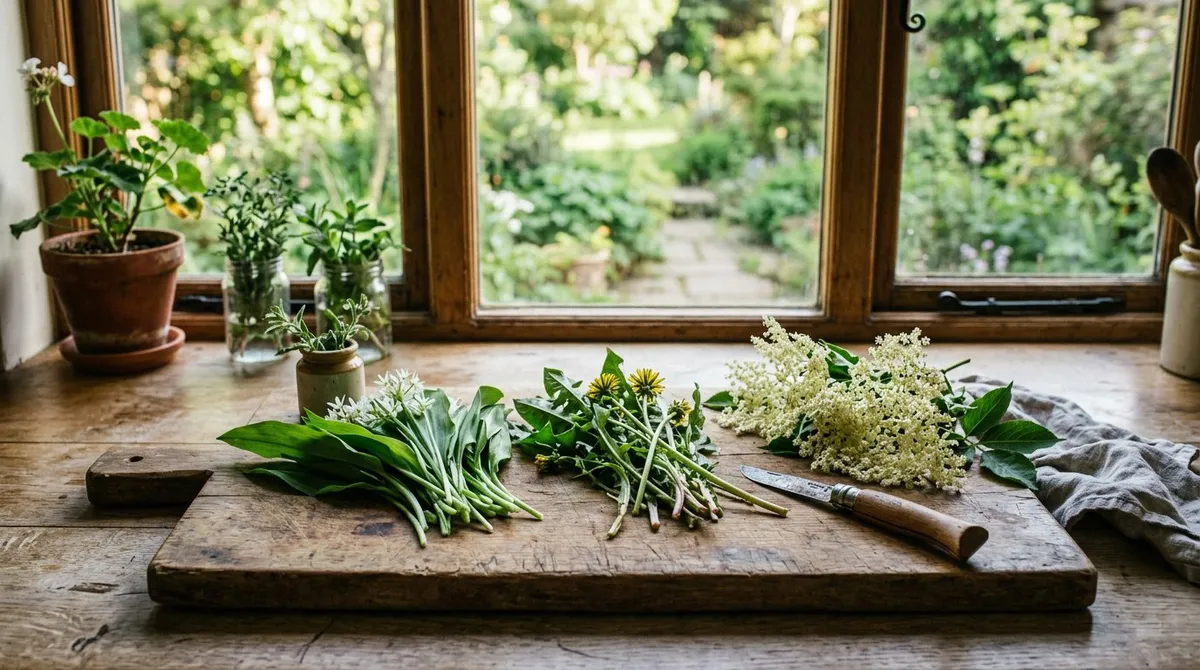
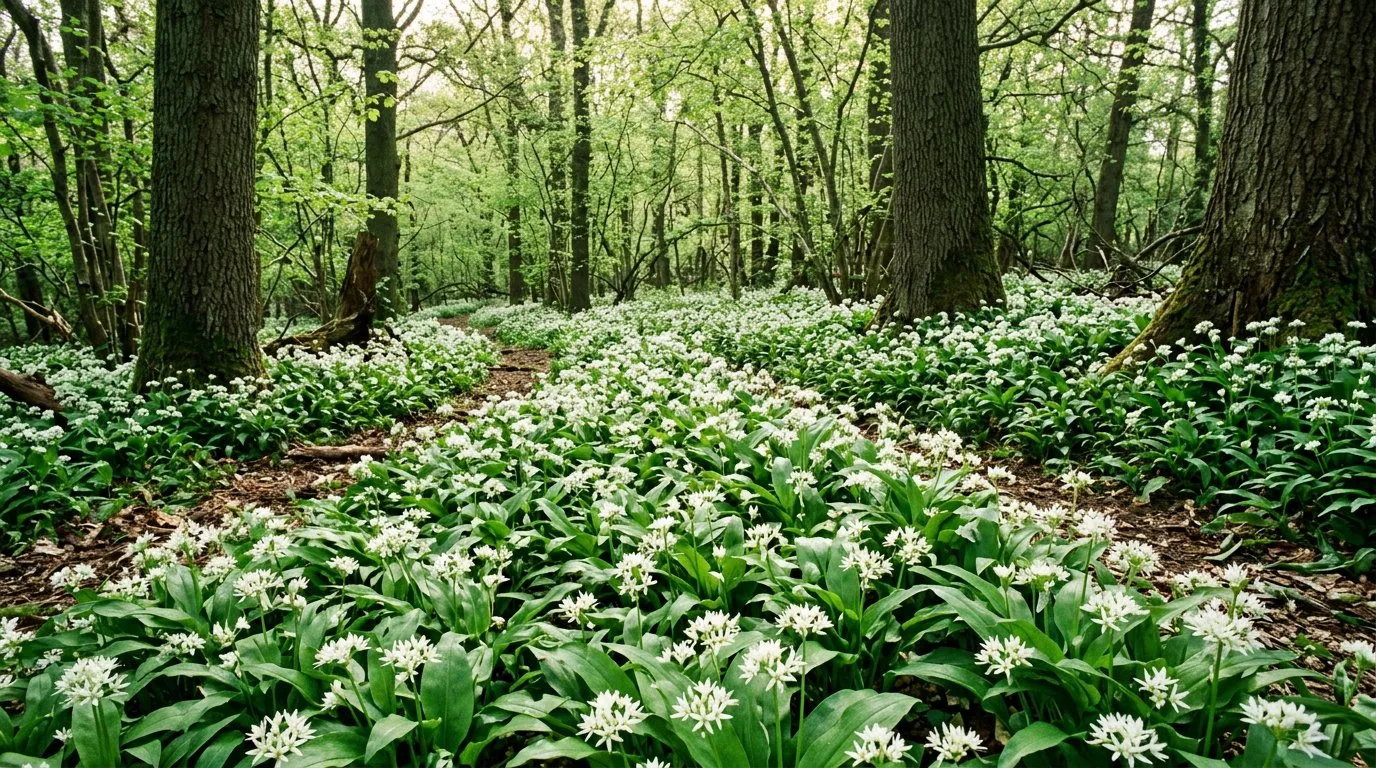 Wild garlic in spring. The leaves and flowers are both edible — crush a leaf and the garlic scent confirms identification.
Broad green leaves carpeting shady areas from March to May with a strong garlic scent. Both leaves and white flowers are edible.
How to harvest: pick individual leaves rather than pulling the plant. Leave the bulb to regrow next year. Check identification carefully — the leaves resemble lily of the valley, which is poisonous. Wild garlic smells strongly of garlic when crushed; lily of the valley does not.
How to cook: chop raw into salads, blend into pesto with olive oil and pine nuts, or wilt into risotto. Wild garlic pesto freezes well in ice cube trays.
Hairy bittercress
The tiny weed that appears in pots, borders, and between paving from late winter. Peppery flavour similar to watercress. Entirely edible — leaves, stems, and small white flowers.
How to harvest: pull entire plants before they set seed (they fire seeds explosively). Wash and use whole.
How to cook: add raw to salads and sandwiches. Use as a watercress substitute. Scattered on soup as a garnish.
Dandelion
Every part of the dandelion is edible: leaves, flowers, and roots. Young leaves in spring are tender with a pleasant bitter edge, similar to rocket.
How to harvest: pick young leaves before flowering for the mildest taste. Mature leaves become increasingly bitter.
How to cook: young leaves in salads, wilted as greens, or in a traditional French salade de pissenlit with bacon, croutons, and a mustard vinaigrette. Flower heads make fritters when dipped in batter and fried.
Summer foraging (June-August)
Elderflowers
Elder trees grow in almost every UK garden, hedge, and woodland edge. The creamy-white flower heads in June fill the air with a sweet, musky scent.
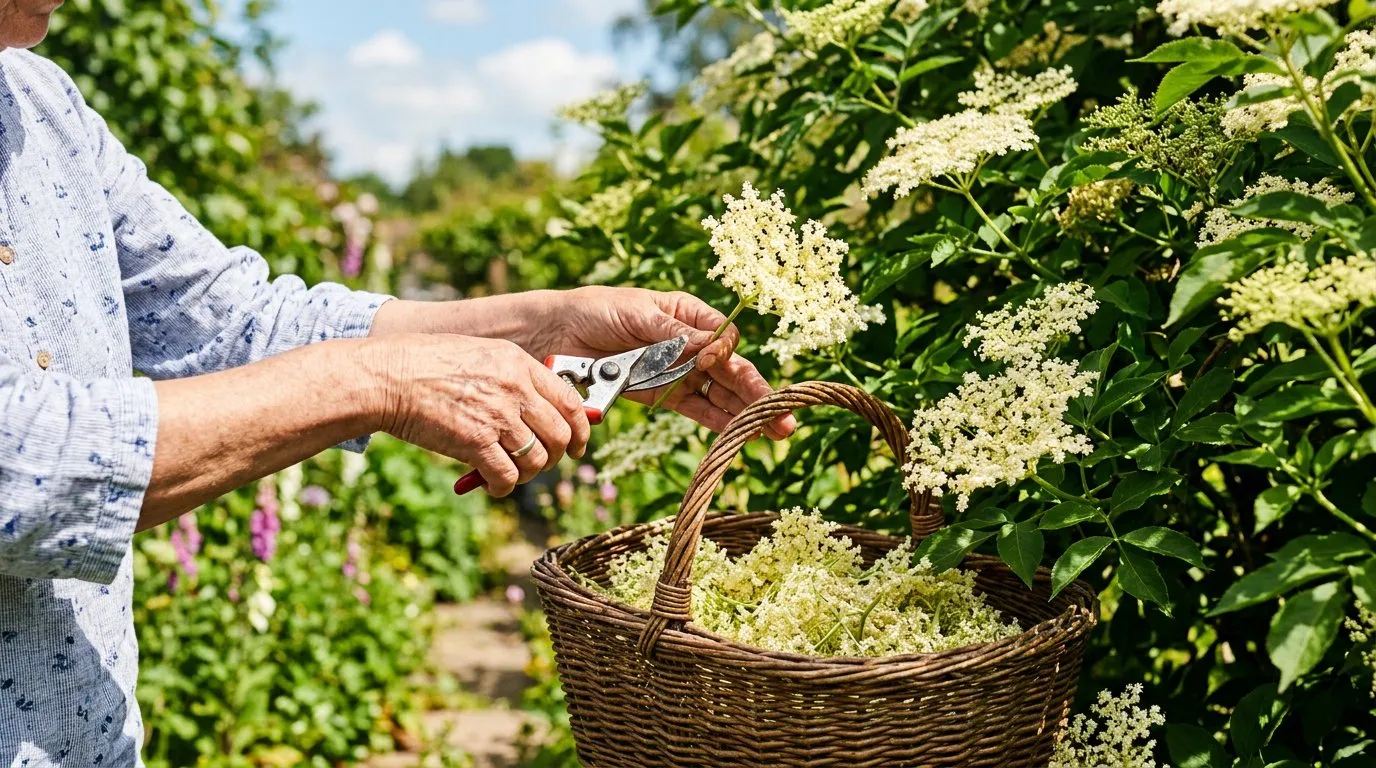 Elderflower harvest in June. Pick fully open heads on a dry morning for the strongest fragrance.
How to harvest: pick on a dry, sunny morning when the pollen is at its most fragrant. Choose fully open flower heads with no brown edges. Shake gently to remove insects.
How to cook: elderflower cordial is the classic — steep flowers in a sugar syrup with lemon for 24 hours, strain, and bottle. Makes roughly 2 litres per batch, worth six pounds per bottle in shops. Elderflower fritters, dipped in light batter and fried, are a seasonal treat.
Why we recommend harvesting elderflowers on a warm, dry morning: After 30 years of making elderflower cordial, picking between 9am and 11am on a sunny day consistently produces the most fragrant batches. The pollen is at its peak before the heat of the afternoon fades the scent. Cordial made from flowers picked in damp or overcast conditions tastes noticeably flatter, and the batch loses roughly a third of its shelf life.
Edible flowers
Many common garden flowers are edible and add colour and flavour to summer dishes.
| Flower | Flavour | Use |
|---|---|---|
| Nasturtium | Peppery | Salads, stuffing leaves |
| Borage | Cucumber | Drinks, salads |
| Calendula | Mild, slightly peppery | Salads, rice (poor man’s saffron) |
| Viola/pansy | Sweet, mild | Salads, cake decoration |
| Lavender | Floral, intense | Baking, infusions |
| Rose petals | Sweet, floral | Jelly, Turkish delight, salads |
Ensure flowers have not been sprayed with chemicals. Grow them organically if you intend to eat them.
Fat hen and good King Henry
Two related wild greens that appear in cultivated ground through summer. Both taste similar to spinach and are used the same way. Fat hen was a staple green vegetable in Britain before spinach arrived from Asia.
Autumn foraging (September-November)
Blackberries
The most abundant wild fruit in Britain. Brambles colonise fences, hedges, and neglected corners of every UK garden. For gardeners who want to cultivate rather than forage, our guide to growing blackberries covers thornless varieties that produce larger fruit from trained canes. Ripe berries are dark purple-black and pull away from the stem easily.
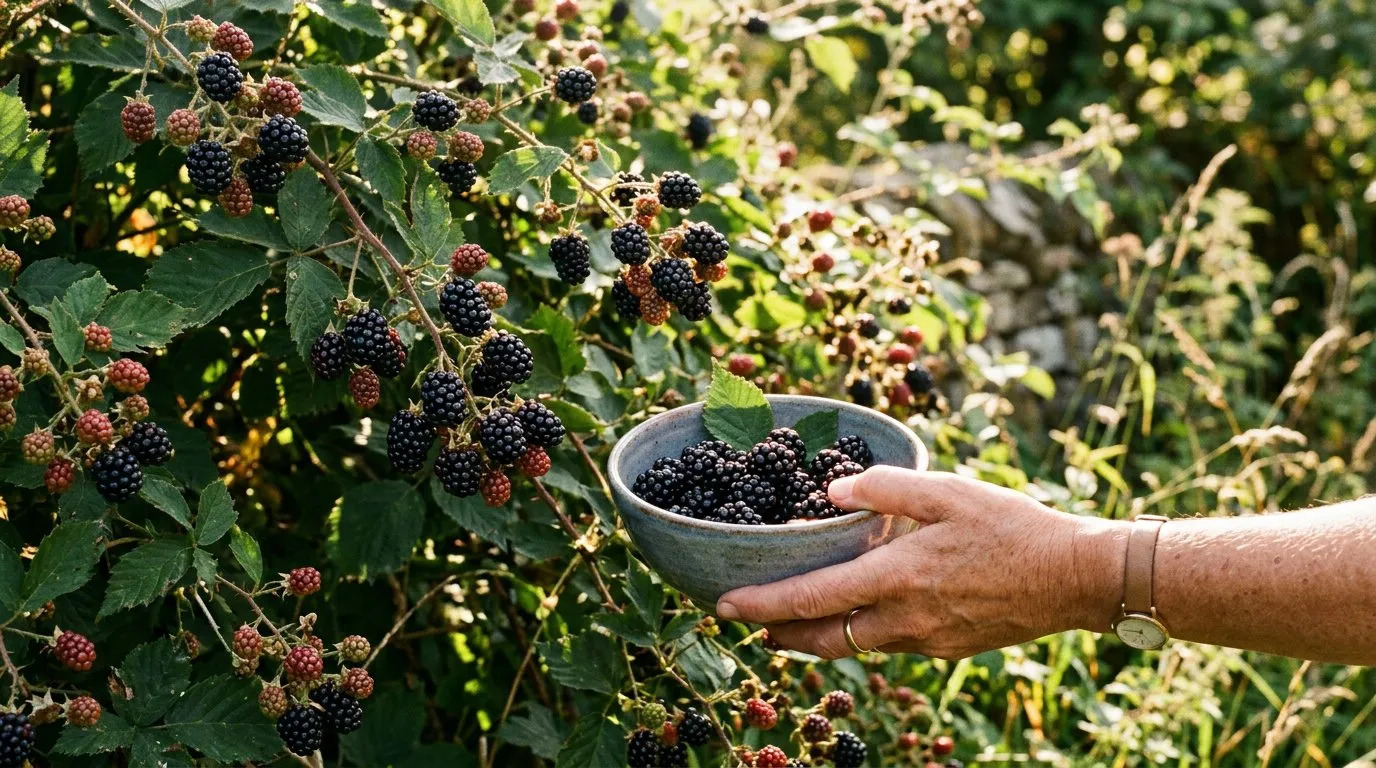 Late August blackberries ready for picking. Dark purple-black berries pull away from the stem easily when ripe.
How to harvest: pick from August to October. Avoid berries below knee height (where animals may have contaminated them — less relevant in your own garden). Traditional lore says do not pick after Michaelmas (29 September) when the devil spits on them — in practice, late berries are simply past their best.
How to use: eat fresh, make jam, bake into crumbles and pies, freeze for smoothies, or infuse into vodka for blackberry liqueur.
Rosehips
The fruit of wild and garden roses, ripening from September. Rich in vitamin C — roughly 20 times more than oranges by weight.
How to harvest: pick firm, bright red hips after the first frost softens them. Some varieties produce larger hips than others — Rosa rugosa hips are particularly generous.
How to use: rosehip syrup is the classic preparation. Simmer chopped hips in water, strain through muslin to remove the irritant hairs inside, then boil with sugar.
Sloes
The small, dark blue-purple fruit of blackthorn, ripening in October and November. Intensely sour when raw but turned by sugar and gin into sloe gin — one of the great British drinks.
How to harvest: pick after the first frost, or freeze overnight to simulate frost. Prick each berry with a thorn or pin before adding to gin.
How to use: sloe gin (fill a bottle one-third with sloes, add sugar, top with gin, shake daily for a month). Also makes sloe vodka, sloe jelly, and sloe wine.
Encouraging edible natives
Shift your garden management to support edible wild plants alongside cultivated crops.
Leave a wild patch. A 2-3 square metre area left unmown and unweeded becomes a productive foraging patch within one season. Nettles, dandelions, chickweed, and fat hen colonise naturally.
Plant wild garlic. Buy bulbs or young plants and establish them under deciduous trees or hedges where they naturalise. Once established, they spread to form productive colonies. They also create beautiful spring ground cover alongside other wildlife-friendly plants.
Keep an elder. If you have an elder tree, value it. The flowers and berries together provide two distinct harvests and make products worth ten to fifteen pounds in shops.
Reduce chemical use. Any plant you intend to eat must be free from pesticide and herbicide residue. Moving toward organic garden management opens up the entire garden as a foraging resource.
Safety warning: Only eat plants you can identify with absolute certainty. Several poisonous plants resemble edible species. If in doubt, leave it. Use a reliable field guide such as Richard Mabey’s Food for Free or the Wild Food UK website for identification.
Now you’ve mastered foraging from your garden, read our guide on growing blackberries for the next step.
Frequently asked questions
What common weeds can you eat?
Dandelion leaves, nettles, chickweed, hairy bittercress, fat hen, and ground elder are all edible weeds found commonly in UK gardens. Harvest young leaves before flowering for the mildest flavour. Always identify with certainty before eating any wild plant.
Is it safe to eat plants from my garden?
Safe if you can positively identify the plant and the area has not been treated with pesticides or herbicides within the past 12 months. Start with easy species like dandelions, nettles, and blackberries that are hard to misidentify. Avoid eating anything from areas near busy roads.
What garden flowers are edible?
Nasturtium, borage, viola, calendula, primrose, and lavender flowers are all edible. Use in salads as garnishes, or crystallise with sugar for cake decoration. Only eat flowers grown without chemical pesticides. Avoid flowers from florists, which may be treated.
When can I forage in my garden?
Garden foraging runs from February through November. Nettles and wild garlic appear in spring. Elderflowers bloom in June. Edible flowers peak in summer. Blackberries, rosehips, and sloes ripen in autumn. Even winter offers stored and dried items from the autumn harvest.
How do I encourage edible wild plants in my garden?
Leave a 2-3 square metre patch unmown and unweeded — nettles, dandelions, and chickweed will colonise naturally within one season. Plant wild garlic bulbs under hedges. Keep elder trees rather than removing them. Reduce chemical use across the entire garden.
What is the difference between foraging and gardening?
Foraging harvests plants that grow without deliberate cultivation — wild species that appear naturally. Gardening plants and tends crops intentionally. Garden foraging combines both approaches: you actively encourage wild edible species in your garden while harvesting whatever useful plants volunteer on their own.
Lawrie has been gardening in the West Midlands for over 30 years. He grows his own veg using no-dig methods, keeps a wildlife-friendly garden, and writes practical advice based on real UK growing conditions.