How to Grow Borage in the UK
Grow borage in the UK with this hands-on guide. Covers sowing, companion planting with strawberries, edible flowers, and pollinator value.
Key takeaways
- Borage is a hardy annual that grows 60-90cm tall and flowers from June to October
- Sow seed directly outdoors from March to May — germination takes 7-14 days
- One of the best UK pollinator plants, each flower refills nectar every two minutes
- The blue star-shaped flowers are edible and taste of cucumber
- Excellent companion plant for strawberries — borage increases fruit yield by attracting pollinators
- Self-seeds freely and returns every year without replanting
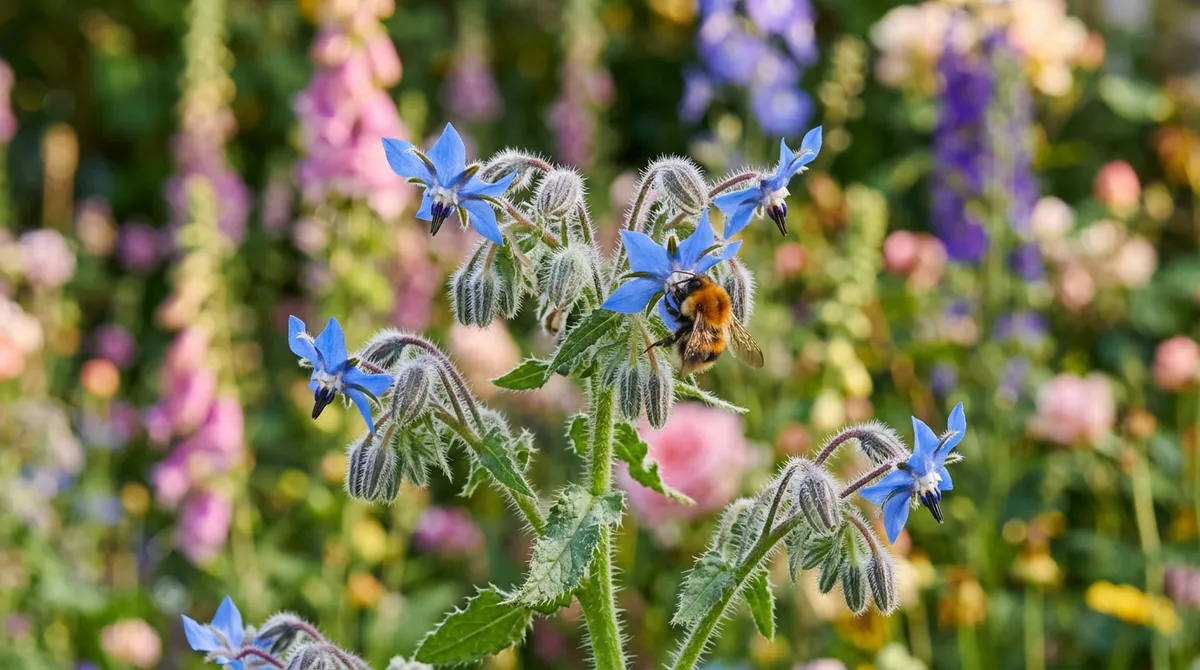
Borage is a hardy annual herb that grows wild across much of southern England and thrives in gardens throughout the UK. It produces clusters of bright blue star-shaped flowers from June to October, each one a magnet for bees and other pollinators. The flowers taste of cucumber, the plant self-seeds without help, and it makes one of the best companion plants for strawberries.
This guide covers everything you need to grow borage successfully in a UK garden, from sowing seed to managing its enthusiastic self-seeding habit. If you grow edible crops, borage earns its space many times over.
When and how to sow borage seed
Sow borage seed directly outdoors from late March to May. Borage dislikes root disturbance and grows best when sown where it will flower. Choose a spot in full sun with well-drained soil. Borage tolerates poor, stony ground and does not need rich compost.
Scatter seed thinly and cover with 1-2cm of soil. Water gently and keep the soil moist until germination, which takes 7-14 days at soil temperatures above 7 degrees Celsius. Thin seedlings to 30-45cm apart once they have two pairs of true leaves. The thinned seedlings do not transplant well because borage develops a long taproot early.
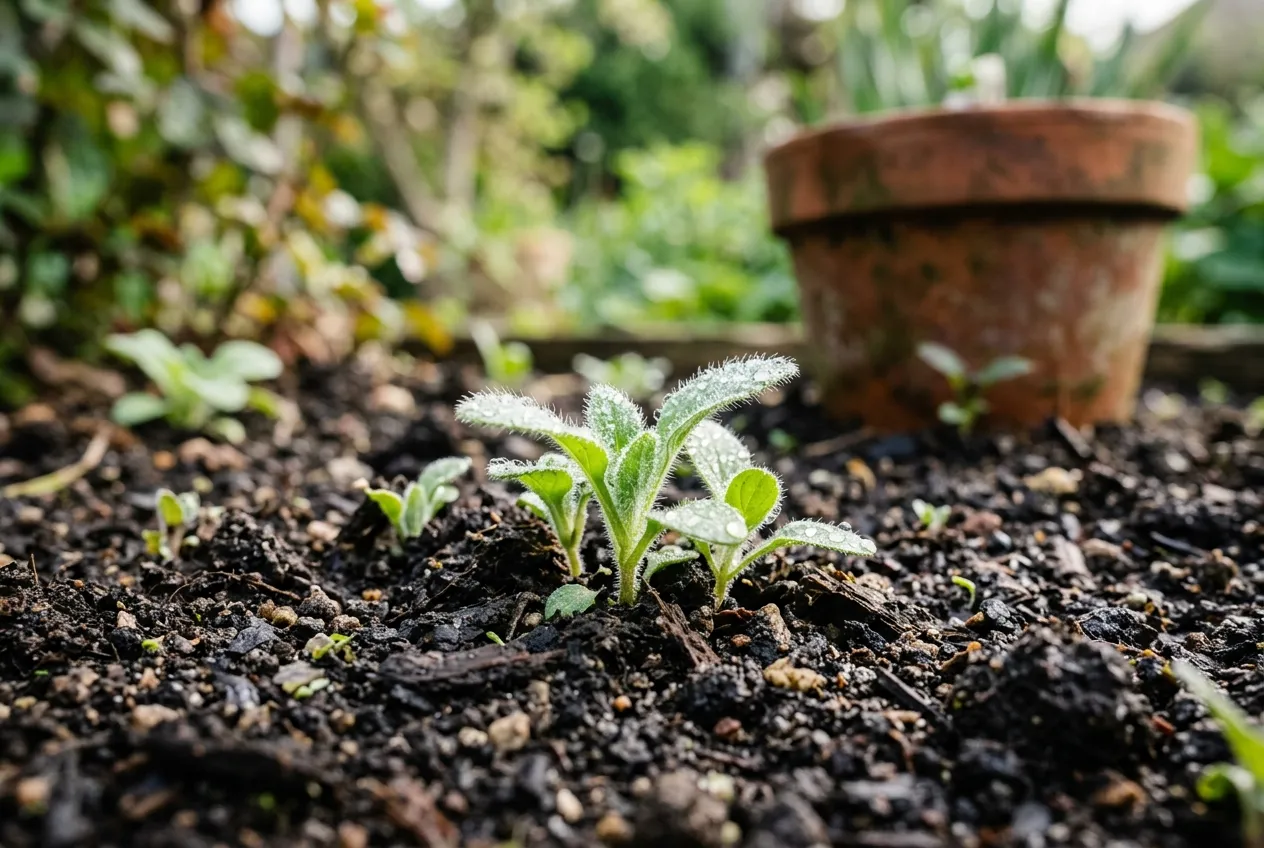 Borage seedlings are easy to spot by their distinctive hairy cotyledon leaves
For a longer flowering season, make a second sowing in June. This gives you fresh plants flowering into late autumn while the spring-sown batch is finishing. Borage grows fast and reaches flowering size in 6-8 weeks from sowing.
If you are new to growing from seed, our guide to growing herbs in the UK covers the basics of direct sowing and indoor starting.
What soil and position does borage need?
Borage is not fussy about soil. It grows in clay, loam, sand, and chalk, provided the ground drains freely. Waterlogged soil is the only condition borage genuinely dislikes. In heavy clay, add horticultural grit before sowing to improve drainage.
Full sun produces the most flowers and the strongest plants. Borage tolerates partial shade but grows leggy and flowers less in low light. A south or west-facing border is ideal.
Do not feed borage with high-nitrogen fertiliser. Rich soil produces lush foliage at the expense of flowers. The plant performs best in moderately poor ground, which is one reason it thrives on neglected plots and allotments.
Borage reaches 60-90cm tall and 40-60cm wide. The stems are thick and covered in stiff, bristly hairs. Plant it towards the back of a border or give it a dedicated patch in the kitchen garden where its size will not shade smaller crops.
Why borage is a pollinator powerhouse
Borage is one of the most valuable pollinator plants you can grow in a British garden. The Bumblebee Conservation Trust lists it as a top food source for UK bumblebee species.
Each borage flower refills its nectar supply approximately every two minutes. This is remarkably fast compared to most garden plants, where nectar takes hours to replenish. The result is a near-constant food source that bees return to throughout the day.
A single healthy borage plant produces over 100 flowers across the growing season. The flowers open in succession over several months, providing forage from June until the first hard frosts in October or November. Honeybees, buff-tailed bumblebees, red-tailed bumblebees, and several solitary bee species all visit borage regularly.
For more ways to support pollinators, see our guide to bee-friendly plants for UK gardens.
Companion planting borage with strawberries
The most popular use of borage as a companion plant is alongside strawberries. Borage attracts pollinating insects in large numbers, and strawberries depend on insect pollination for full fruit set. Poorly pollinated strawberry flowers produce small, misshapen fruit.
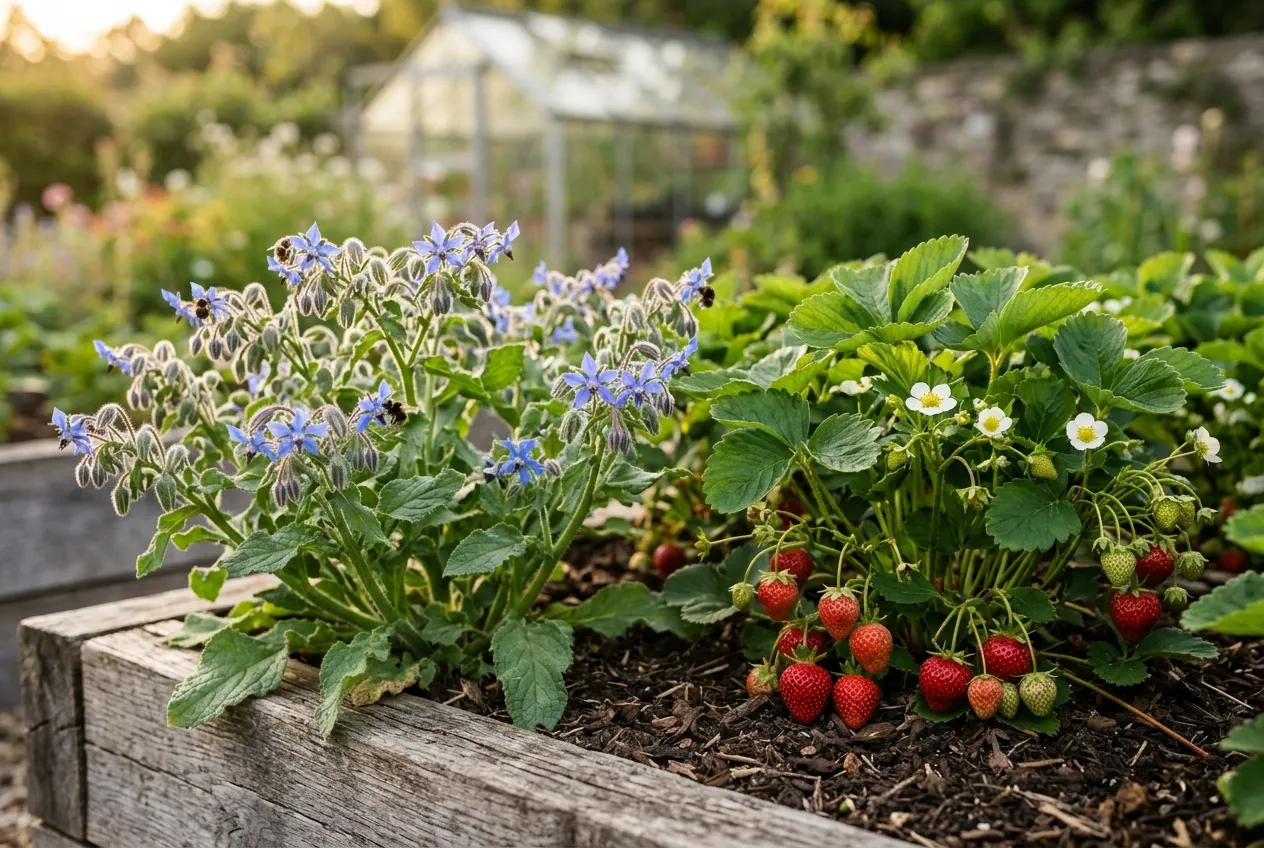 Borage planted alongside strawberry beds draws pollinators in and improves fruit set
Plant borage at the ends of strawberry rows or in gaps between plants. One borage plant per metre of row is enough to make a difference. The borage flowers from June onwards, which coincides perfectly with the main strawberry flowering period.
Borage also works well alongside tomatoes, courgettes, and squash for the same reason: all are insect-pollinated crops that benefit from increased bee traffic. For a full guide to beneficial plant pairings, read our companion planting guide.
Using borage flowers in food and drinks
Borage flowers are edible and have a mild cucumber flavour. They have been used in British kitchens since the medieval period. The RHS confirms borage as safe to eat and lists it among the top edible flowers for UK gardens.
Pick flowers in the morning when they are fully open. Pinch the blue star from the green calyx at the back. The petals are delicate and bruise easily, so handle them gently.
Three ways to use borage flowers:
| Use | Method | Best for |
|---|---|---|
| Ice cubes | Freeze individual flowers in water in ice cube trays | Summer drinks, Pimm’s, lemonade |
| Salad garnish | Scatter fresh flowers over green salads and grain bowls | Colour and mild cucumber flavour |
| Crystallised petals | Brush with egg white, dust with caster sugar, dry at 50C | Cake decoration, desserts |
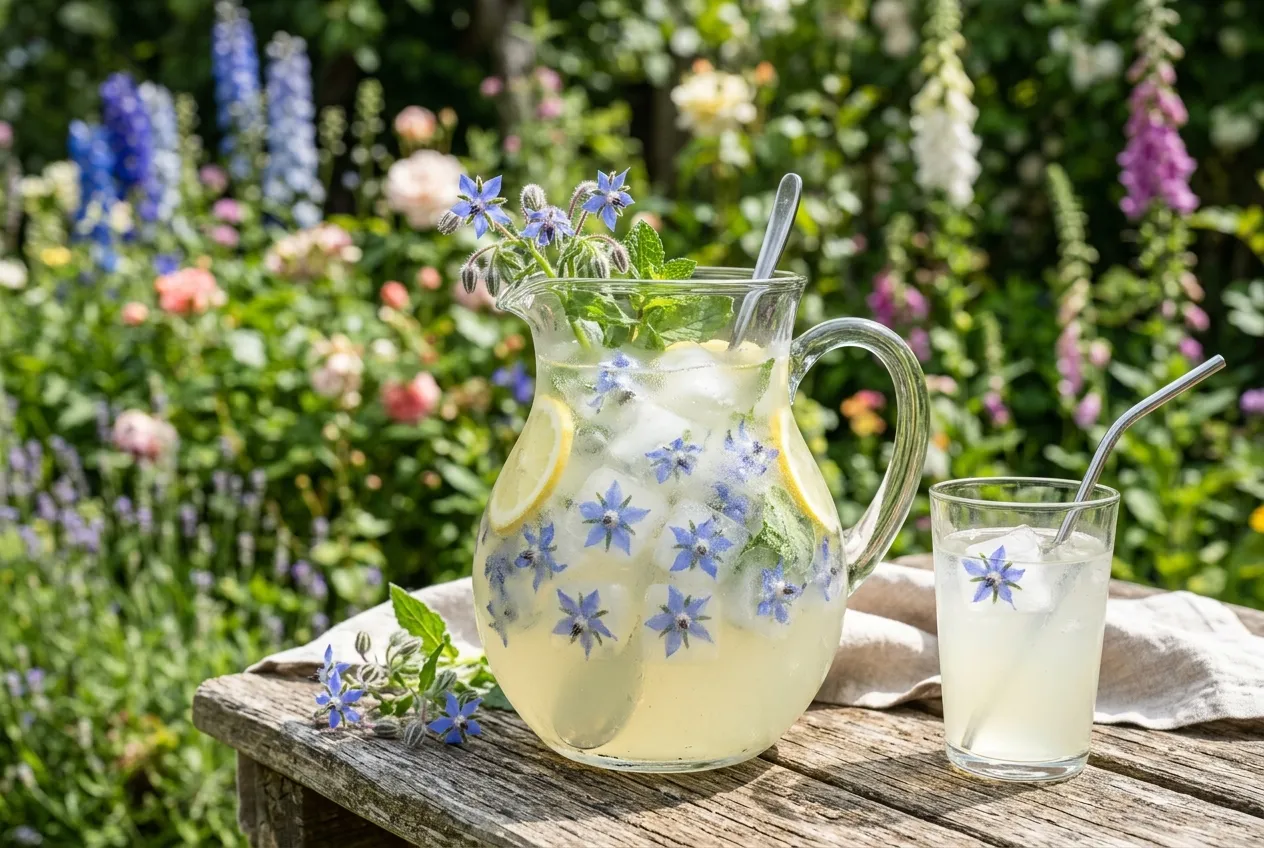 Borage flower ice cubes add colour and a subtle cucumber note to summer drinks
Young borage leaves are also edible and taste strongly of cucumber. Use them in sandwiches, blend into smoothies, or chop finely into yoghurt dips. The leaves become increasingly hairy and tough as they mature, so pick them when small.
For more ideas on growing and cooking with flowers, see our edible flowers guide.
How to manage borage self-seeding
Borage is an annual that dies after setting seed in autumn. However, it drops hundreds of seeds around the parent plant. These germinate the following spring without any help, and most gardeners find borage effectively permanent once introduced.
This is a strength if you want a low-effort pollinator patch. It becomes a problem if borage starts appearing in paths, lawns, and between paving. Managing self-seeding is the main ongoing task with borage.
To encourage self-seeding: Leave spent flower stems in place through autumn. Do not disturb the soil around the base of the plant until spring. Seedlings appear from March onwards and are easy to recognise by their rounded, hairy first leaves.
To limit self-seeding: Deadhead regularly through the season, cutting flower stems before the seeds mature and drop. In autumn, pull out the entire plant including the root. A spring hoe through beds where you do not want borage removes most volunteer seedlings before they establish.
Self-sown borage seedlings transplant poorly due to the taproot. Thin them in situ rather than trying to move them. If you want borage in a new spot, sow fresh seed there instead.
Green manure growers also value borage: its deep taproot breaks up compacted soil and brings minerals to the surface. See our green manures guide for more plants that improve soil structure.
Growing borage in containers
Borage grows in pots but needs a deep container. The taproot reaches 30cm or more, so use a pot at least 30cm deep and 25cm wide. Fill with free-draining multipurpose compost mixed with a handful of perlite or grit.
Place the container in full sun. Water when the top 3cm of compost feels dry. Borage in pots dries out faster than in open ground and may need daily watering in summer.
Container borage stays smaller than ground-planted specimens, typically reaching 40-50cm tall. It flowers slightly less but still attracts pollinators reliably. This makes it a useful addition to a herb garden on a patio or balcony.
One advantage of container growing: self-seeding is naturally limited because seeds fall onto hard surfaces rather than bare soil.
Common problems with borage
Borage is remarkably trouble-free. It rarely suffers from serious pests or diseases in UK conditions.
Aphids occasionally cluster on young shoot tips in early summer. A strong jet of water knocks them off. Ladybirds and hoverflies usually control aphid populations within a week or two without intervention.
Powdery mildew can appear on leaves in late summer, especially in dry conditions with poor airflow. It looks unsightly but rarely kills the plant. Remove badly affected leaves and ensure plants are not overcrowded. Mildew is cosmetic at the end of the season when the plant is finishing naturally.
Slugs may nibble young seedlings in spring. Protect newly emerged plants with copper tape, beer traps, or a ring of grit until they reach 10cm tall. Once established, the hairy stems and leaves deter most slugs.
Flopping stems are the most common complaint. Tall borage leans heavily, especially after rain. Stake plants with a simple bamboo cane and garden twine, or grow borage alongside sturdy companions that provide support. Choosing a sheltered spot out of strong wind helps.
Borage varieties to grow
The standard species, Borago officinalis, is the one most widely grown and the best for UK gardens. It produces the classic blue star-shaped flowers. Seed is available from most UK seed suppliers at around 2 pounds per packet.
Borago officinalis ‘Alba’ is a white-flowered variety. It has the same growing habit, flavour, and pollinator value as the blue form. Grow both together for a striking display.
Borago pygmaea is a perennial species with pale blue flowers. It grows to only 30cm tall and suits rock gardens or the front of borders. It is less common in UK garden centres but available from specialist nurseries. It does not self-seed as aggressively as the annual species.
Monthly borage growing calendar
| Month | Task |
|---|---|
| March | Sow seed outdoors once soil warms above 7C |
| April | Thin seedlings to 30-45cm spacing |
| May | Second sowing for late-season flowers |
| June | First flowers appear; begin harvesting for kitchen use |
| July-September | Peak flowering and pollinator activity; deadhead to extend season |
| October | Allow some plants to set seed for next year; clear spent plants |
| November-February | No action needed; seeds dormant in soil |
For a wider planting schedule, our garden-to-table growing guide covers seasonal timings for herbs, vegetables, and edible flowers together.
Frequently asked questions
Lawrie has been gardening in the West Midlands for over 30 years. He grows his own veg using no-dig methods, keeps a wildlife-friendly garden, and writes practical advice based on real UK growing conditions.