How to Grow Chicory and Radicchio UK
UK guide to growing chicory and radicchio. Covers forcing chicons, radicchio varieties, sowing times, winter hardiness to -10C, and harvesting methods.
Key takeaways
- Most chicory and radicchio types survive UK winters down to -10C without protection
- Sow June to July for autumn and winter harvests when other salads have finished
- Witloof chicory roots can be forced indoors from November to produce pale chicons in 3-4 weeks
- Radicchio develops its deepest red colour after exposure to autumn frosts
- Sugarloaf chicory forms 1kg heads and stores for 2-3 weeks in a cool shed
- All types prefer full sun and free-draining soil with a pH of 6.0-7.5
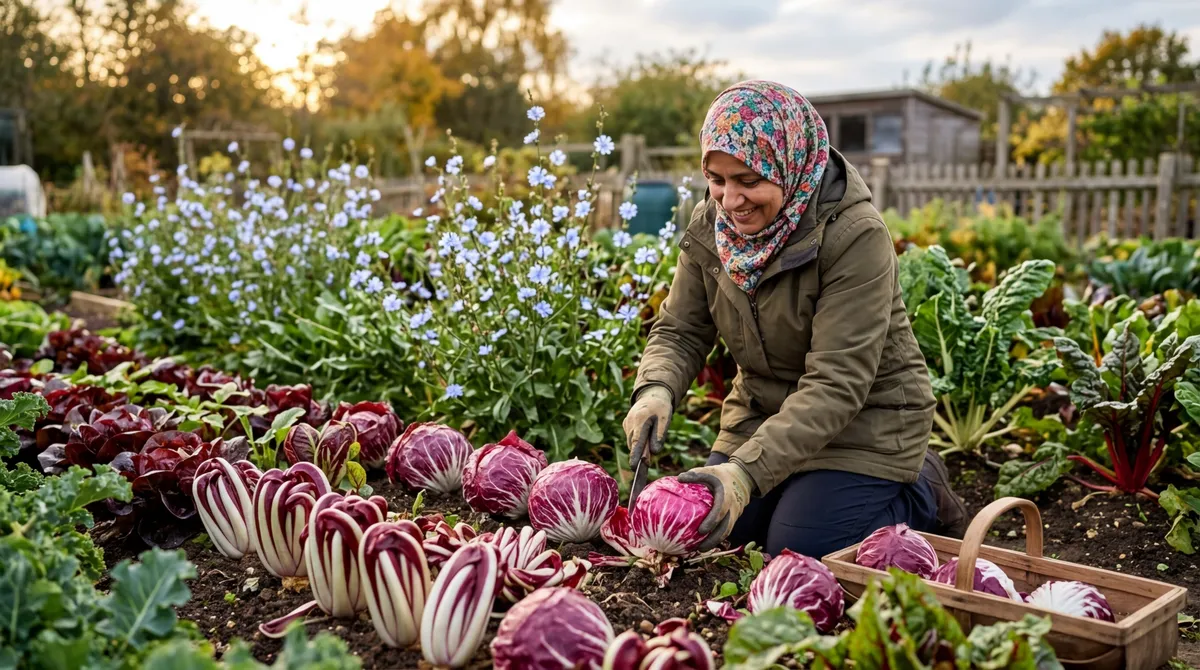
Chicory and radicchio are the most underrated crops in UK kitchen gardens. These frost-hardy plants fill the gap from October to March when lettuce and other salads have long finished. They survive temperatures down to -10C and produce bitter leaves that improve after frost. Witloof types give you forced chicons through the darkest months of winter.
The chicory family is much broader than most UK gardeners realise. It includes the deep red balls of radicchio di Chioggia and the elegant pointed leaves of Treviso. There are also large sugarloaf heads, forced chicons (Belgian endive), and the asparagus-like shoots of puntarelle. All belong to Cichorium intybus and all grow well in British conditions. The RHS lists chicory as a straightforward vegetable for UK gardens, and we agree.
This guide covers every type worth growing, when to sow, and how to force chicons. It also covers harvesting right through winter.
What types of chicory and radicchio can you grow in the UK?
There are five main types of chicory grown in UK gardens. Each has a different use, harvest method, and season. Growing two or three types gives you bitter salad leaves and cooking ingredients from autumn through to spring.
Witloof (Belgian chicory) for forcing
Witloof chicory is grown for its roots, which are forced in darkness to produce pale, torpedo-shaped chicons. The plants spend summer growing a deep taproot in open ground. In November, you dig up the roots, trim the foliage, and force them in pots in a dark, cool place. Chicons emerge in 3-4 weeks. Each root gives one main chicon of 10-15cm. The flavour is mild and nutty with a gentle bitterness. Brussels Witloof and Zoom F1 are reliable UK varieties.
Radicchio di Chioggia
Chioggia is the classic round radicchio with deep red leaves and white veins, forming tight balls the size of a grapefruit. Sow in June or July and the heads mature by October. The red colour intensifies after the first frosts. Hardy to -10C. Cut the mature heads and they store in a cool shed for 2-3 weeks. Palla Rossa and Rossa di Chioggia are the most reliable varieties for UK conditions.
Radicchio di Treviso
Treviso radicchio produces long, pointed leaves like a cos lettuce in deep burgundy red with prominent white ribs. There are early (precoce) and late (tardivo) types. Early Treviso matures in autumn and is hardier than Chioggia. Late Treviso (tardivo) is the prized variety used in Italian risotto, but it needs a longer growing season and is trickier in northern UK gardens. Both types are hardy to -8C.
Sugarloaf chicory (pan di zucchero)
Sugarloaf chicory forms large, upright, pale green heads that look like a cos lettuce and weigh up to 1kg. The outer leaves are mildly bitter; the blanched inner heart is crisp, sweet, and excellent in salads. Sugarloaf is the mildest-flavoured chicory and the best gateway variety for anyone new to bitter leaves. Sow in June or July. Heads mature in 10-12 weeks. Hardy to -8C and stores well after cutting.
Catalonia and puntarelle
Puntarelle is a sprouting chicory that produces hollow, asparagus-like shoots from the centre of the plant in late winter. The shoots are a Roman speciality, traditionally eaten raw in a dressing of anchovy, garlic, and lemon juice. Catalonia chicory is the parent plant, producing a mass of dandelion-like leaves used in Italian cooking. Both are hardy to about -5C and benefit from cloche protection in colder UK regions. Sow in June.
Chicory and radicchio variety comparison
Choosing the right type depends on what you want to harvest and when you need it. This table compares the main types for UK growers.
| Type | Sow | Harvest | Hardiness | Head weight | Best for |
|---|---|---|---|---|---|
| Witloof (Belgian) | May-June | Nov-Mar (forced) | -10C | 80-120g (chicon) | Winter forcing indoors |
| Radicchio di Chioggia | June-July | Oct-Dec | -10C | 200-400g | Red salad balls, grilling |
| Radicchio di Treviso (precoce) | June-July | Oct-Jan | -8C | 150-300g | Salads, risotto |
| Radicchio di Treviso (tardivo) | May-June | Dec-Feb | -6C | 100-200g | Gourmet cooking |
| Sugarloaf (pan di zucchero) | June-July | Sept-Nov | -8C | 500g-1kg | Mild salad, storing |
| Puntarelle/Catalonia | June | Feb-Apr (shoots) | -5C | N/A (shoots) | Raw shoots, cooking greens |
| Grumolo | July | Mar-Apr | -10C | Small rosette | Spring salad rosettes |
Variety note: Grumolo is a lesser-known chicory that overwinters as a low rosette and produces a flush of small, tender leaves in early spring. It is extremely hardy and fills the March-April gap before spring lettuce is ready.
When and how to sow chicory and radicchio
Sow chicory and radicchio from mid-June to mid-July for autumn and winter harvests. This is the single most important rule. Spring sowings bolt rapidly in the lengthening days and rarely form heads. Late June to early July sowing gives plants enough time to mature before winter, while the shortening days prevent bolting.
Sowing in modules
Start seeds in modules filled with peat-free seed compost. Sow one seed per cell at a depth of 1cm. Keep at 15-20C. Seeds germinate in 7-10 days. Chicory dislikes root disturbance, so modules are better than open trays. Transplant when seedlings have 4-5 true leaves, spacing 30cm apart with 35cm between rows.
Direct sowing
In warm, settled weather, sow direct into prepared soil. Make drills 1cm deep, water the drill, and sow thinly. Thin seedlings to 30cm apart once they have 4 true leaves. Direct-sown plants develop a stronger taproot, which is important for Witloof types destined for forcing.
Soil and position
Chicory prefers full sun and free-draining soil with a pH of 6.0-7.5. It grows adequately in partial shade but produces smaller heads. Avoid freshly manured ground for Witloof types, as excess nitrogen causes the roots to fork. Dig in garden compost the previous autumn instead. On heavy clay, add horticultural grit to improve drainage. Chicory tolerates poorer soil than most salad crops and rarely needs additional feeding during the growing season.
For timing your chicory sowing alongside other crops, consult our seed sowing calendar.
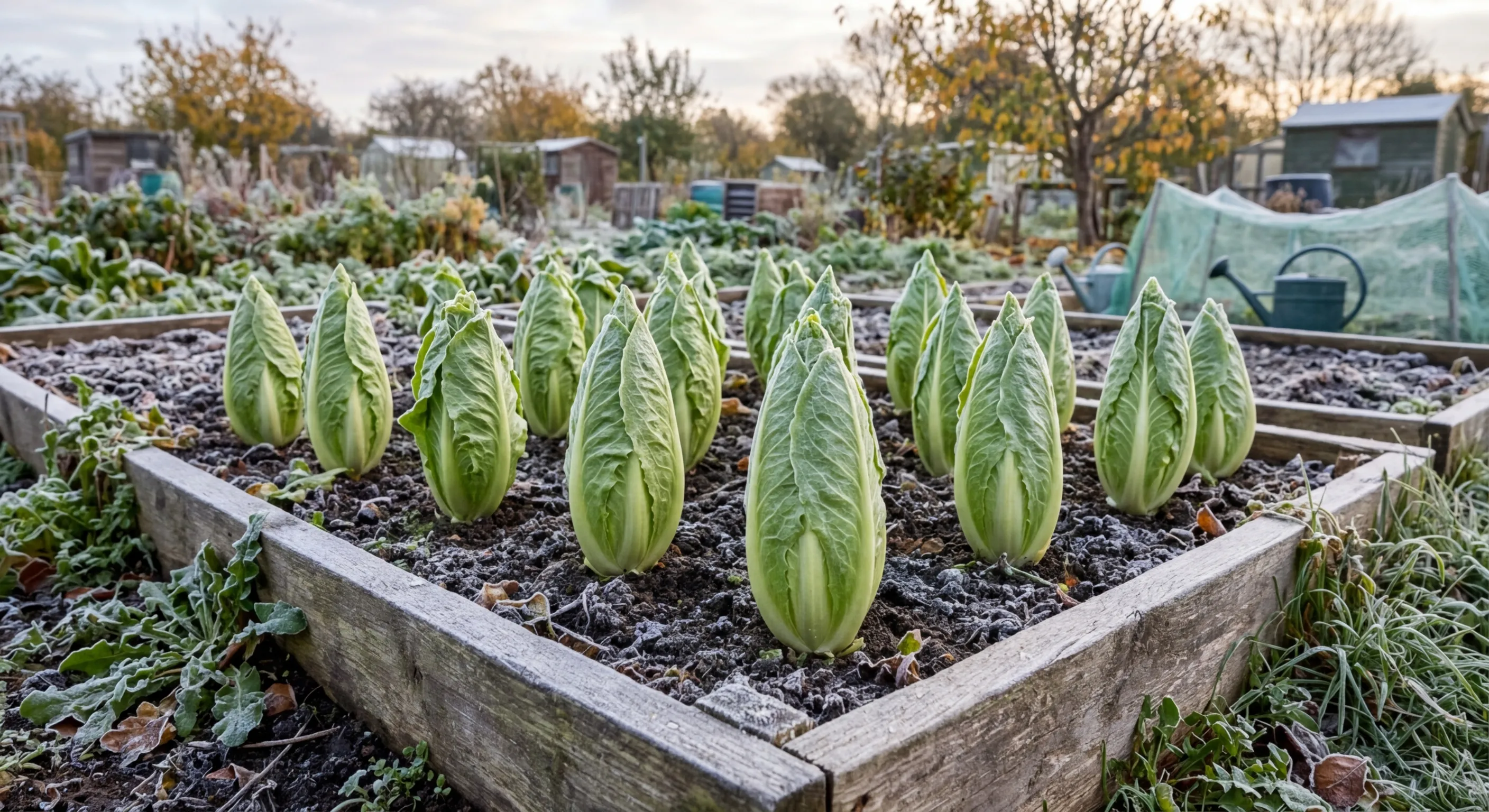
Sugarloaf chicory in a raised bed, standing firm through the first autumn frosts. These tall, pointed heads weigh up to 1kg each.
How to force chicory for winter chicons
Forcing Witloof chicory is one of the most rewarding winter gardening tasks. You harvest fresh, crisp chicons from November to March without any light, heat, or growing space outdoors.
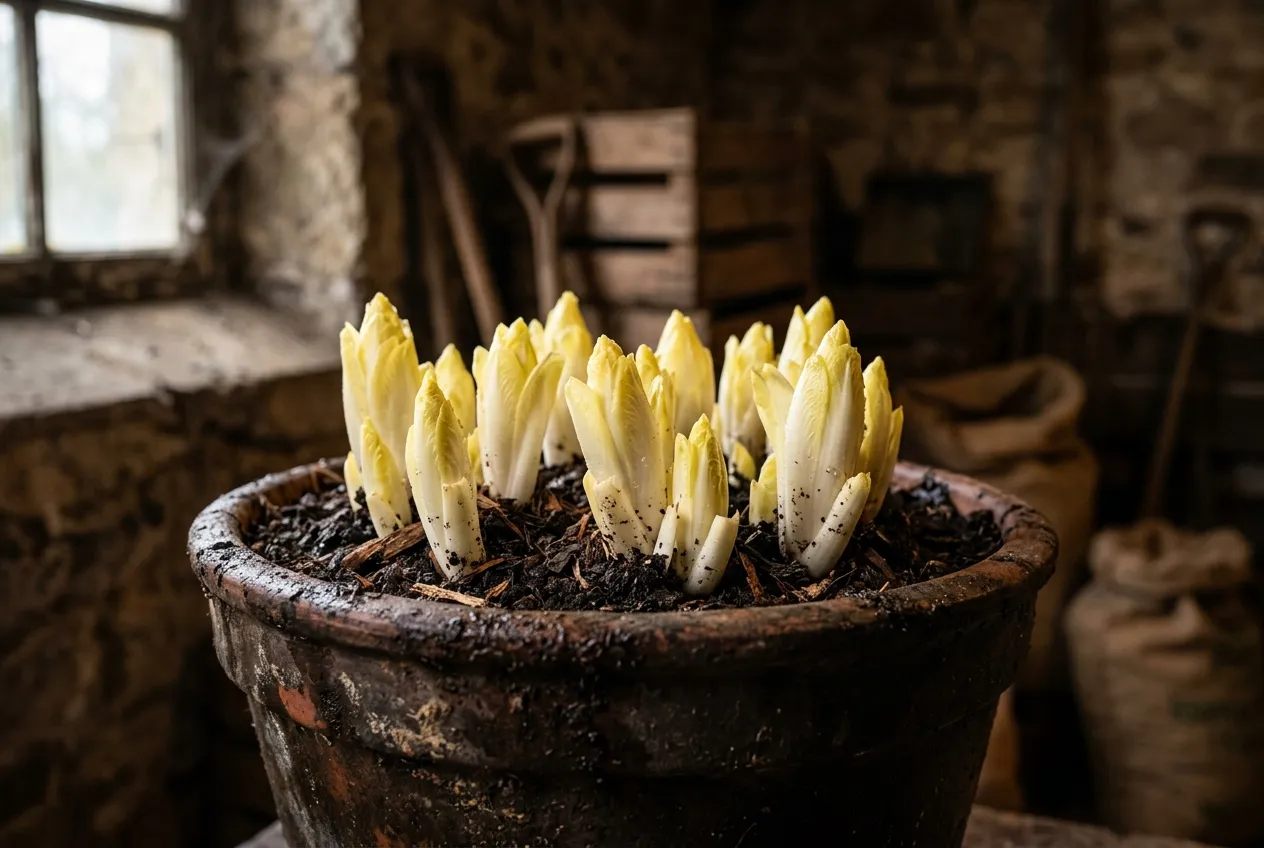
Forced chicory chicons growing in complete darkness. The pale, creamy-yellow shoots are ready to cut when they reach 10-15cm tall.
Step-by-step forcing method
-
Grow the roots: Sow Witloof chicory in May or June. Let the plants grow all summer without harvesting any leaves. The goal is a fat taproot at least 3cm across at the crown.
-
Lift the roots: In November, after the first frosts, dig up the roots carefully with a fork. Shake off excess soil.
-
Trim the foliage: Cut all leaves back to 2cm above the crown. Trim the bottom of the root so each one is about 20cm long. Discard any roots thinner than 2cm.
-
Plant in pots: Stand 3-5 roots upright in a deep pot (at least 25cm). Fill around them with moist compost or sand. Water lightly.
-
Exclude all light: Cover the pot with an upturned pot of the same size, blocking the drainage holes with tape. Alternatively, place in a black bin bag. Total darkness is essential; any light turns the chicons green and bitter.
-
Keep cool: Place in a shed, garage, or cellar at 10-15C. Warmer temperatures speed growth but produce looser, less crisp chicons.
-
Harvest: Chicons are ready in 3-4 weeks. Cut the main chicon at the base when it reaches 10-15cm. Some roots produce a smaller second chicon. Spent roots go on the compost heap.
Force a batch of 5 roots every 3-4 weeks from November onwards. You will have fresh chicons continuously until March. Store roots awaiting forcing in a box of damp sand in a cool shed.
How to grow radicchio for autumn and winter colour
Radicchio is straightforward to grow once you accept the late sowing window. The key stages are sowing in summer, watering through dry spells, then waiting for cold weather to trigger colour change.
Growing radicchio step by step
Sow Chioggia or Treviso types in late June or early July. Transplant or thin to 30cm apart. Water consistently through August dry spells, as uneven moisture causes loose, poorly formed heads. By September, the outer leaves spread wide and green. The magic happens in October when cold nights and frost trigger the production of anthocyanin pigments. The inner leaves tighten into dense heads of deep red and white.
Do not panic when radicchio looks like a large, floppy green plant in August. This is normal. The red colouring and tight head formation only begin after temperatures drop below 10C consistently. Patience is everything.
Once the heads feel firm when gently squeezed, they are ready to harvest. Cut at the base, leaving a 2cm stump. Chioggia types often regrow a smaller second head from the stump. Treviso types are cut once. Both store for 2-3 weeks in a cool place.
For more winter harvesting ideas, see our guide to winter salads.
Harvesting and storing chicory and radicchio
Each type has a different harvest method and storage life. Timing your harvest correctly makes a significant difference to flavour and keeping quality.
Harvest guide by type
-
Witloof chicons: Cut the main chicon at the base when 10-15cm tall. Use immediately or wrap in damp kitchen paper and refrigerate for up to 10 days.
-
Radicchio di Chioggia: Cut the entire head at the base when firm. Outer wrapper leaves protect the inner head during storage. Keeps 2-3 weeks in a cool shed at 2-5C.
-
Radicchio di Treviso: Cut the whole head. Early Treviso stores for 2 weeks. Late Treviso (tardivo) stores for up to 3 weeks and actually improves in flavour after a few days.
-
Sugarloaf: Cut the entire head at the base. The large heads keep 2-3 weeks in a cold shed or garage. The outer leaves may brown in storage but the inner heart stays crisp and sweet.
-
Puntarelle: Harvest the hollow shoots from the centre when they reach 15-20cm in late winter. The outer dandelion-like leaves are also edible, cooked like spinach. Keep cutting shoots and the plant produces more.
-
Grumolo: Pick the small rosettes of leaves in March and April as a cut-and-come-again crop. Two or three harvests per plant.
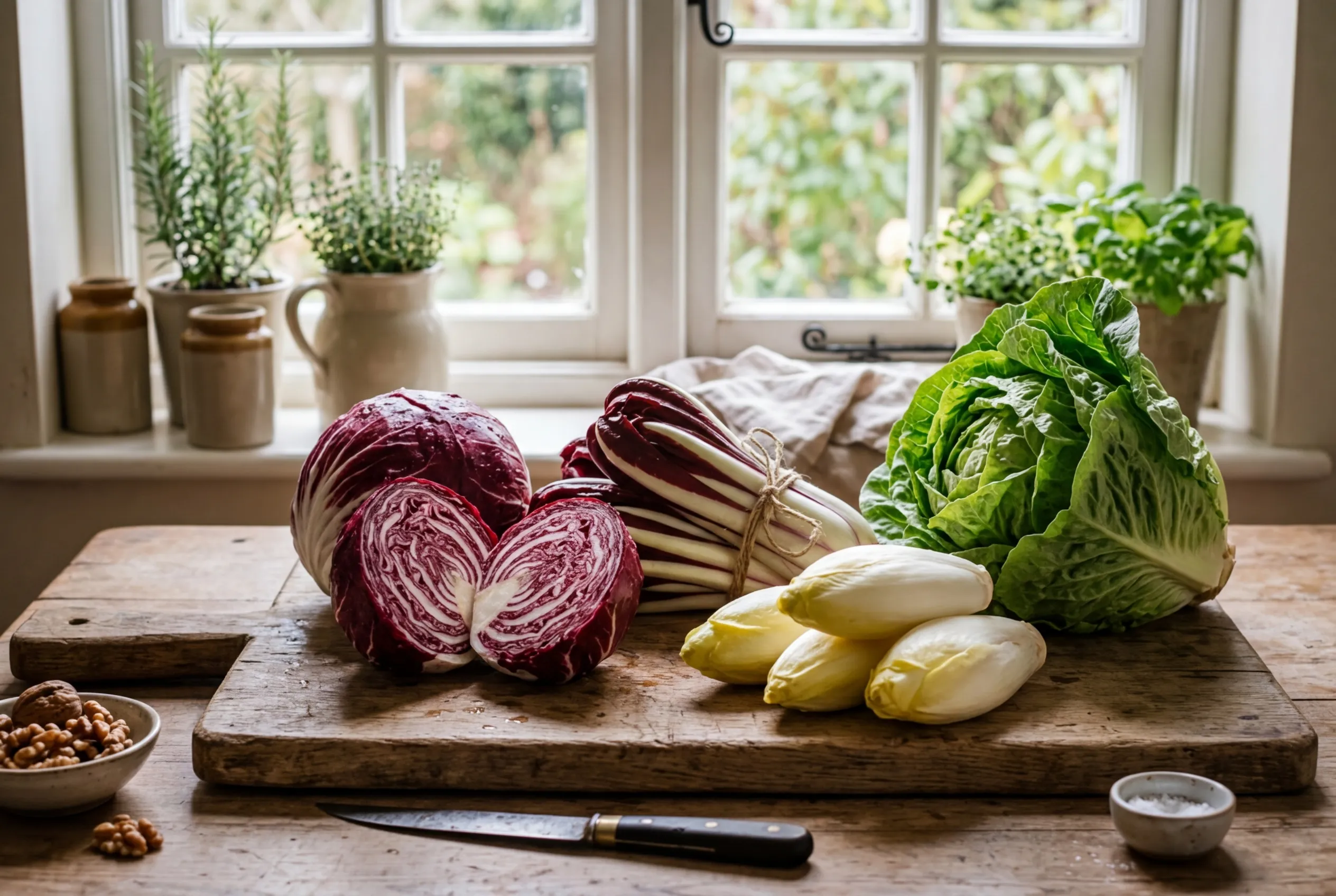
The chicory family offers remarkable variety. From left: red radicchio di Chioggia, creamy forced chicons, and green sugarloaf hearts.
Cooking and eating chicory and radicchio
Bitterness is the defining flavour of the chicory family, but the intensity varies enormously between types. Forced chicons and sugarloaf hearts are mild enough for raw salads. Chioggia and Treviso radicchio have a stronger bitterness that mellows dramatically with cooking.
Best ways to use each type
Raw: Chicons are perfect torn into winter salads with walnuts, blue cheese, and pears. Sugarloaf heart leaves substitute for cos lettuce. Puntarelle shoots are traditionally dressed with anchovy, garlic, oil, and lemon juice.
Grilled or roasted: Cut radicchio di Chioggia into quarters, brush with olive oil, and grill for 3-4 minutes per side. The heat caramelises the sugars and softens the bitterness. Treviso halves roasted at 200C for 15 minutes are outstanding wrapped in pancetta.
In risotto: Radicchio risotto (risotto al radicchio) is a classic Veneto dish. Stir shredded Treviso into the risotto in the final 5 minutes of cooking. The leaves wilt and release their colour, turning the rice a beautiful purple-pink.
Braised: Quarter sugarloaf or Chioggia heads and braise slowly in stock with a splash of balsamic vinegar. The bitterness rounds out into a rich, complex flavour.
Growing your own chicory and radicchio lets you try types that never appear in UK supermarkets. Puntarelle, Grumolo, and late Treviso tardivo are practically impossible to buy fresh in Britain but straightforward to grow. Combined with hardy crops like kale, they keep your kitchen supplied with fresh leaves right through to spring.
Common problems and pests
Chicory and radicchio are remarkably trouble-free compared to lettuce. Slugs are less interested in the bitter leaves. The tough plants shrug off most common vegetable garden pests.
Slugs and snails: Young seedlings are vulnerable. Protect transplants with copper tape, nematodes, or beer traps for the first 3-4 weeks. Mature plants are rarely attacked.
Bolting: Almost always caused by sowing too early (before mid-June) or by drought stress. Late sowing and consistent watering are the prevention.
Rot: Waterlogged soil causes crown rot. Improve drainage on clay soils and avoid overwatering, particularly in autumn when growth slows. Remove any rotting outer leaves promptly.
Aphids: Occasionally colonise the heart of radicchio heads in autumn. Blast off with a strong jet of water. Encourage natural predators like hoverflies and ladybirds.
For more guidance on growing your own vegetables, including companion planting and succession planting techniques, explore our growing guides.
Month-by-month chicory and radicchio calendar
| Month | Task |
|---|---|
| January | Force batches of Witloof roots. Harvest chicons. |
| February | Continue forcing. Harvest puntarelle shoots. Pick Grumolo rosettes. |
| March | Last forcing batches. Harvest Grumolo. Order seed for summer sowing. |
| April | Prepare beds. Incorporate compost into planting area. |
| May | Sow Witloof chicory for forcing roots. Sow puntarelle. |
| June | Main sowing window opens: all radicchio and chicory types from mid-June. |
| July | Complete all sowings by mid-July. Transplant module-raised seedlings. |
| August | Water consistently. Thin direct-sown plants. Plants look large and green. |
| September | Reduce watering. Sugarloaf heads begin to firm. First colour on radicchio. |
| October | Harvest sugarloaf. Radicchio colours after first frosts. Lift Witloof roots. |
| November | Start forcing Witloof. Harvest radicchio. Protect puntarelle with cloches. |
| December | Continue forcing. Harvest any remaining radicchio. Mulch Grumolo crowns. |
Chicory and radicchio fill the winter harvest gap that defeats most UK vegetable growers. Once you master the late sowing window and the forcing technique, these Italian crops become permanent residents of the plot. They ask very little, tolerate our worst weather, and deliver leaves of a quality and flavour you simply cannot buy. Garden Organic lists chicory among the easiest winter vegetables for organic growers. After four seasons of trialling, we could not agree more.
Lawrie has been gardening in the West Midlands for over 30 years. He grows his own veg using no-dig methods, keeps a wildlife-friendly garden, and writes practical advice based on real UK growing conditions.