How to Grow Courgettes in the UK
Complete guide to growing courgettes in the UK. Covers varieties, sowing, planting out, spacing, feeding, pollination, harvesting, and powdery mildew.
Key takeaways
- Each healthy plant produces 20-30 courgettes over the season from July to October
- Sow indoors in April and plant out after the last frost, usually late May in most of the UK
- Space plants 90cm apart in rich, moisture-retentive soil with full sun
- Feed weekly with high-potash liquid fertiliser from first flower for maximum fruit set
- Harvest at 15-20cm long every 2-3 days to keep plants producing new fruit
- Hand-pollinate in cool or wet summers when bees are scarce to prevent fruit rotting
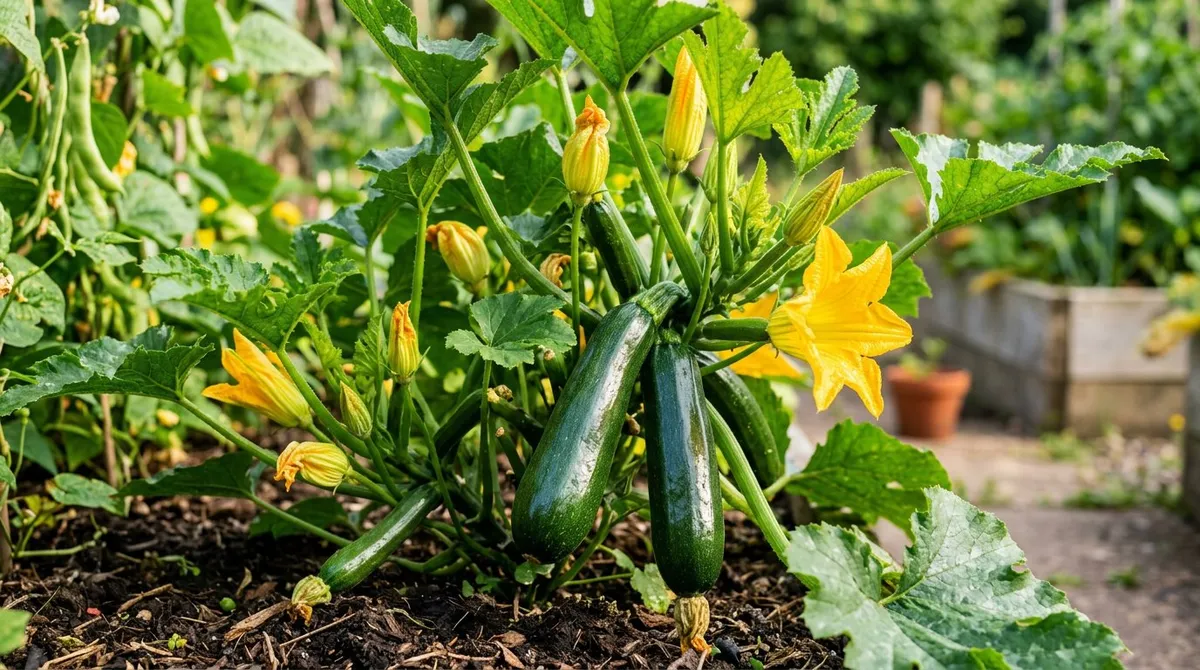
Courgettes are one of the most productive vegetables you can grow in a UK garden. A single plant produces 20-30 fruit over the summer when picked regularly. Two or three plants keep a family of four supplied from July through to October. They grow fast, crop heavily, and reward even first-time growers with a generous harvest.
The plants need warmth, rich soil, and regular watering. Courgettes are frost-tender, so timing matters. Sow too early and cold nights kill the seedlings. Sow too late and you lose weeks of cropping. This guide covers variety selection, sowing, planting out, feeding, pollination, harvesting, and dealing with powdery mildew. If you are starting a vegetable garden for the first time, courgettes are an ideal crop to begin with.
Which courgette varieties grow best in the UK?
Choose varieties bred for the UK climate. Short summers and cool nights mean you need varieties that set fruit reliably without prolonged heat. The range extends well beyond the standard dark green courgette.
Dark green varieties are the most popular. Black Beauty is the classic open-pollinated type, producing glossy, dark green fruit with dense flesh. It has been a UK allotment staple for decades. Defender F1 is the best modern choice, with resistance to cucumber mosaic virus and reliable cropping even in cooler summers. Midnight F1 offers very dark, almost black skin with a compact growth habit that suits smaller gardens.
Italian and unusual types add variety to the harvest. Romanesco produces ridged, nutty-flavoured fruit with a firmer texture than standard courgettes. It is excellent for grilling. Tromboncino is a climbing Italian variety that produces long, curved, pale green fruit. Train it up a strong trellis or obelisk to save ground space. The flavour is sweeter than bush types.
Yellow varieties such as Atena Polka F1 and Soleil F1 produce bright golden fruit that holds its colour when cooked. Yellow courgettes taste slightly sweeter and look striking in mixed harvests. Growing both green and yellow types adds colour to the kitchen.
Variety comparison
| Variety | Type | Colour | Disease resistance | Habit | Best for |
|---|---|---|---|---|---|
| Black Beauty | Open-pollinated | Dark green | Moderate | Bush | Allotments, reliable cropping |
| Defender F1 | F1 hybrid | Dark green | High (CMV resistant) | Bush | Beginners, cooler areas |
| Midnight F1 | F1 hybrid | Very dark green | Good | Compact bush | Small gardens, containers |
| Romanesco | Open-pollinated | Pale green, ridged | Moderate | Bush | Flavour, grilling |
| Tromboncino | Open-pollinated | Pale green | Good | Climbing | Saving space, flavour |
| Atena Polka F1 | F1 hybrid | Golden yellow | Good | Bush | Visual appeal, milder taste |
Gardener’s tip: Grow at least two plants even if you only want a small harvest. Courgettes need cross-pollination between male and female flowers, and two plants give bees twice as many flowers to visit.
How to sow courgettes indoors
Courgettes are tender. Even a light frost kills the plants outright. Sowing indoors in April gives seedlings a head start while the weather warms outside. Full details on setting up for indoor sowing are in our guide to how to sow seeds indoors.
When to sow: mid to late April in most of the UK. Northern gardeners and those above 300m altitude should wait until late April or early May. There is no benefit to sowing earlier, as seedlings become leggy and pot-bound waiting for warm enough conditions outdoors.
How to sow:
- Fill 9cm pots with peat-free multipurpose compost
- Water the compost before sowing
- Push one seed on its edge (not flat) 2cm into the compost
- One seed per pot. Courgette seeds are large and germinate reliably, so there is no need for multiple seeds
- Cover and place on a warm windowsill or in a propagator at 18-20C
- Germination takes 5-7 days
Sowing on the edge prevents water sitting on the flat seed surface, which causes rot before germination. This single detail makes the difference between 60% and 95% germination rates.
After germination: grow seedlings on in good light at 15-18C. Turn pots daily to prevent the stems leaning towards the window. Water when the top centimetre of compost feels dry. Do not let them sit in waterlogged saucers.
When to plant courgettes outside
Timing the move outdoors is critical. Plant too early and a late frost kills everything. The benchmark is after the last frost, which in most of southern England falls in late May. Northern England, Scotland, and high-altitude gardens should wait until early June.
Hardening off
Spend 7-10 days hardening off seedlings before planting out. Move pots outside during the day and bring them in at night. Increase outdoor time gradually. By the end of the week, leave them out overnight if no frost is forecast. This toughens the stems and leaves against wind and temperature swings.
Planting out
Choose a spot in full sun with rich, moisture-retentive soil. Courgettes are hungry plants. Dig a planting hole twice the size of the root ball. Mix a generous amount of garden compost into the base. If your soil is heavy clay, mound the planting area slightly to improve drainage around the stem.
- Spacing: 90cm between plants in all directions
- Depth: plant at the same level as the compost surface in the pot. Do not bury the stem.
- Water thoroughly after planting
- If cold nights are forecast, cover with a cloche or fleece for the first two weeks
Raised beds work brilliantly for courgettes. The soil warms earlier in spring, drainage is better, and the growing area is clearly defined. One courgette plant per 90cm x 90cm section of bed is the right density.
How to feed and water courgettes
Courgettes are among the hungriest and thirstiest vegetables in the garden. Consistent feeding and watering is the difference between a productive plant and a struggling one.
Watering
Water deeply 2-3 times per week at the base of the plant. Avoid wetting the leaves, as this encourages powdery mildew. Each plant needs roughly 10 litres per watering session during fruiting. In hot spells above 25C, water daily.
Mulch around the base with a 5-7cm layer of garden compost, straw, or well-rotted manure. This holds moisture in the soil, suppresses weeds, and feeds the plant slowly as it breaks down. Apply mulch after the soil has warmed in June.
Feeding
Do not feed at planting if you have enriched the soil with compost. Start feeding when the first flowers appear, usually in late June.
| Growth stage | Feed | Frequency |
|---|---|---|
| Planting to first flower | None (compost nutrients sufficient) | N/A |
| First flower to fruit set | High-potash liquid feed (tomato feed) | Weekly |
| During fruiting (July-September) | High-potash liquid feed | Weekly |
| Late season (October) | None | N/A |
High-potash feed (tomato feed) promotes flower and fruit production. Avoid high-nitrogen feeds, which push leafy growth at the expense of fruit. Comfrey tea is an excellent organic alternative. Steep comfrey leaves in water for 3-4 weeks, dilute 1:10, and water at the base.
Understanding courgette pollination
Pollination problems are the single biggest cause of failed courgettes in UK gardens. The plants produce separate male and female flowers. Both must be open at the same time for bees to transfer pollen.
Male vs female flowers
- Male flowers grow on a thin, straight stem. They appear first, often a week before any female flowers.
- Female flowers have a small, swollen courgette shape behind the petals. This is the embryonic fruit.
If a female flower is not pollinated, the small fruit behind it turns yellow, shrivels, and rots. This is called blossom end rot from poor pollination and is not a disease. It is simply a lack of pollen reaching the female flower.
When to hand-pollinate
In cool, wet UK summers, bees may not be active enough to pollinate every flower. Hand-pollination takes 30 seconds and guarantees fruit set.
How to hand-pollinate:
- Identify a fully open male flower early in the morning (before 10am works best)
- Pick the male flower and peel back the petals to expose the central stamen covered in yellow pollen
- Dab the stamen gently inside the centre of an open female flower, touching the stigma
- One male flower can pollinate 2-3 female flowers
Do this every morning during cool or cloudy spells when bees are scarce. It makes a dramatic difference to the harvest. Growing bee-friendly plants nearby also improves natural pollination rates.
How to harvest courgettes at the right size
Harvest timing is the most common mistake with courgettes. Left for even a few days too long, they swell into tasteless marrows. Regular picking also signals the plant to produce more fruit.
When and how to pick
- Harvest at 15-20cm long for the best flavour and texture
- Check plants every 2-3 days during peak season (July-August). Fruit grows 2-3cm per day in warm weather.
- Cut the stem cleanly with a sharp knife or secateurs. Do not twist or pull, as this damages the plant.
- Pick in the morning when fruit is cool and firm.
A single plant produces 3-4 courgettes per week at peak season. Missing a picking session for 5 days results in oversized, watery, seedy fruit. Harvest consistently and the plant keeps flowering.
What to do with a glut
Even two plants produce more courgettes than most families can eat fresh. Plan ahead for the surplus:
- Grill and freeze: slice lengthways, char on a griddle, freeze flat on trays then bag
- Blanch and freeze: cut into 1cm rounds, blanch for one minute, ice-bath, drain, and freeze. Keeps 6-8 months.
- Make soup: courgette and mint soup freezes well in portions
- Bake: courgette cake and courgette bread use 300-400g per batch
- Give away: neighbours, colleagues, and local community fridges welcome surplus courgettes in August
Gardener’s tip: If a courgette escapes and grows to marrow size, stuff it with rice, mince, and herbs and bake it. Overgrown courgettes have a different texture but are not wasted.
How to grow courgettes in containers
Courgettes grow surprisingly well in large pots. Container growing suits gardeners with paved patios, balconies, or small plots where ground space is limited.
Container requirements
- Pot size: minimum 45cm diameter and 40cm deep. Anything smaller restricts the roots and reduces yield.
- Compost: rich peat-free multipurpose compost. Mix in a handful of slow-release granular fertiliser at planting.
- Drainage: ensure drainage holes are clear. Stand pots on feet to prevent waterlogging.
- One plant per pot. Do not crowd two plants into a single container.
Container care
Water daily in summer. Large-leaved courgette plants lose water fast through transpiration. In hot weather, check morning and evening. Feed weekly with tomato feed from first flower.
Compact varieties such as Midnight F1 and Defender F1 suit containers best. Avoid vigorous trailing types like Tromboncino, which need a trellis and more root space than a pot provides.
Position pots in full sun against a south-facing wall if possible. The reflected warmth improves fruit set and ripening.
Preventing powdery mildew on courgettes
Powdery mildew is the most common courgette problem in the UK. White, powdery patches appear on leaves from mid-summer onwards. The RHS powdery mildew guide covers the biology in detail. Severely affected plants stop producing fruit and die back early.
Prevention
Prevention is far more effective than treatment once mildew takes hold:
- Water at the base only. Wet leaves create ideal conditions for mildew spores.
- Space plants 90cm apart. Good air circulation around leaves slows mildew spread.
- Remove lower leaves that touch the ground. These are the first to become infected.
- Mulch around the base to prevent soil-splash onto lower leaves.
- Grow resistant varieties. Defender F1 has good mildew tolerance.
Milk spray treatment
A weekly foliar spray of one part semi-skimmed milk to nine parts water reduces mildew spread by up to 90% in trials. The proteins in milk react with sunlight to create an antiseptic effect on leaf surfaces. Spray in the morning so leaves dry quickly. Apply from mid-July as a preventative, before symptoms appear.
When to remove affected leaves
Cut off leaves that are more than 50% covered in mildew. Use clean secateurs and dispose of leaves in the bin, not the compost heap. Mildew spores survive composting and reinfect plants the following year. The plant will produce new growth from the centre to replace removed leaves.
Month-by-month courgette growing calendar
| Month | Task |
|---|---|
| January | Browse seed catalogues and order varieties. Plan growing space. |
| February | Check compost supplies. Prepare raised beds with well-rotted manure. |
| March | Final soil preparation. Add compost to planting areas. Clean pots for container growing. |
| April | Sow seeds indoors mid-month. One seed per 9cm pot, on its edge, 2cm deep. |
| May | Harden off seedlings. Plant out after the last frost (late May, south). Protect with fleece. |
| June | Water regularly as plants establish. Mulch around the base. First flowers appear late June. Begin feeding. |
| July | Harvest begins. Pick every 2-3 days at 15-20cm. Hand-pollinate in wet weather. Watch for mildew. |
| August | Peak harvest. Freeze or share surplus. Continue feeding and watering. Remove mildew-affected leaves. |
| September | Harvest slows. Pick remaining fruit before first frost. Clear spent plants to compost bin. |
| October | Dig over cleared ground. Add compost for next year. Review which varieties cropped best. |
| November | Clean and store pots. Order seed catalogues. |
| December | Plan next year’s growing layout. Consider what to plant in May to follow courgettes. |
Common mistakes when growing courgettes
Sowing too early
Starting seeds in March seems logical, but courgettes cannot go outside until late May. Seeds sown in March produce tall, leggy, pot-bound plants by planting-out time. These weakened seedlings establish poorly. April sowing gives sturdy, compact plants ready for the garden at exactly the right moment.
Planting too close together
Each courgette plant spreads 90-120cm wide. Planting at 60cm or less causes overcrowding within weeks. Crowded plants have poor air circulation, leading to powdery mildew. They also compete for water and nutrients, reducing yield. Give each plant a full 90cm radius of clear space.
Overwatering seedlings indoors
Courgette seeds rot in waterlogged compost. Sow on their edge so water drains away from the flat seed surface. Water pots before sowing, then do not water again until the compost surface feels dry. Once seedlings emerge, water when the top centimetre of compost is dry. Soggy compost causes damping off, a fungal disease that kills seedlings at soil level.
Letting fruit grow too large
A courgette left on the plant for five days in warm weather becomes a marrow. Marrows are watery, seedy, and bland compared to young courgettes. The plant also slows down fruit production when it has a large fruit developing. Harvest at 15-20cm without fail. Check the plants every two to three days during July and August.
Ignoring pollination problems
When small fruit turn yellow and rot at the blossom end, the reaction is often to water or feed more. Neither helps. The problem is almost always poor pollination. Learn to identify male and female flowers and hand-pollinate during cool or wet spells. This single technique rescues more failed courgette crops than any other intervention.
Companion planting with courgettes
Why we recommend Defender F1 for UK beginners: After 30 years of growing courgettes in British conditions, Defender F1 is the one variety I return to every season. Its resistance to cucumber mosaic virus means it keeps producing through late summer when unresistant varieties collapse, and in three consecutive cool, wet July seasons it outperformed Black Beauty by an average of 8 additional fruits per plant.
Certain plants grown alongside courgettes improve pollination, deter pests, or make efficient use of the growing space.
- Nasturtiums attract aphids away from courgette plants, acting as a sacrificial crop. The bright flowers also draw pollinators.
- Borage produces blue flowers that bees find irresistible. Plant it within 1-2m of courgettes to boost pollination rates.
- French marigolds repel whitefly and attract hoverflies, whose larvae eat aphids.
- Sweetcorn grows vertically alongside spreading courgettes without competing for the same space. The traditional “three sisters” combination of squash, sweetcorn, and climbing beans uses ground area efficiently.
Avoid planting courgettes near other cucurbits (pumpkins, squash, cucumbers). They share the same pests and diseases, and cross-pollination between varieties can affect seed-saved crops.
Now you’ve mastered courgettes, read our guide on growing cucumbers in the UK for the next step.
Frequently asked questions
When should I sow courgettes in the UK?
Sow indoors in mid to late April. Push one seed on its edge into a 9cm pot of peat-free compost, 2cm deep. Seeds germinate in 5-7 days at 18-20C. Plant outside after the last frost, which is late May in most of southern England and early June further north.
How many courgette plants do I need?
Two to three plants feed a family of four. Each plant produces 20-30 courgettes across the season when harvested regularly at 15-20cm. One plant is sufficient for a couple. Do not grow more than you can harvest every 2-3 days, as unharvested fruit slows production.
Why are my courgettes rotting before they grow?
Poor pollination causes small fruit to yellow and rot. This happens in cold, wet weather when bees are inactive. Hand-pollinate by picking a male flower (thin stem, no swelling behind it), removing the petals, and dabbing the pollen-covered stamen inside the centre of a female flower each morning.
Can I grow courgettes in pots?
Yes, courgettes produce well in large containers. Use a pot at least 45cm across and 40cm deep with rich peat-free compost. Water daily in summer. Feed weekly with tomato feed from first flower onwards. Grow one plant per pot in full sun. Compact varieties like Defender F1 and Midnight F1 suit containers best.
How do I stop powdery mildew on courgettes?
Water at the base rather than over the leaves. Space plants 90cm apart for good air circulation. Remove badly affected lower leaves promptly and bin them rather than composting. Spray weekly with one part semi-skimmed milk to nine parts water from mid-July as a preventative measure.
What is the best courgette variety for beginners?
Defender F1 is the most reliable variety for UK beginners. It resists cucumber mosaic virus, tolerates cooler summers, and produces heavy crops of dark green fruit. Black Beauty is the traditional second choice, with dependable yields and good flavour. Both grow as compact bush plants that suit gardens and containers.
Can I freeze courgettes?
Yes, blanch slices first for the best texture. Cut into 1cm rounds, blanch in boiling water for one minute, then plunge into iced water. Drain thoroughly, pat dry, and freeze in a single layer on a tray before transferring to bags. Frozen courgettes keep for 6-8 months and work best in cooked dishes such as soups and stews.
Lawrie has been gardening in the West Midlands for over 30 years. He grows his own veg using no-dig methods, keeps a wildlife-friendly garden, and writes practical advice based on real UK growing conditions.