How to Grow Dill in the UK
How to grow dill in UK gardens. Covers best varieties, direct sowing, bolt prevention, companion planting, seed saving, and harvesting leaves and seeds.
Key takeaways
- Dill hates root disturbance. Always sow direct where it is to grow. Transplanting triggers immediate bolting
- Succession sow every 3-4 weeks from April to July for unbroken leaf harvests through to October
- Fernleaf is the best compact variety for containers and prolonged leaf production at just 30-45cm tall
- Keep dill at least 3 metres from fennel. They cross-pollinate freely and the resulting seeds taste of neither herb
- Harvest leaves before the plant flowers. Once yellow umbels open, leaf flavour deteriorates within days
- Let some plants set seed for a self-sowing colony. Dill volunteers appear reliably every spring in undisturbed soil
Dill is one of the easiest and most rewarding herbs you can grow in a British garden. This feathery annual (Anethum graveolens) produces aromatic leaves for the kitchen within 6-8 weeks of sowing, attractive yellow flower umbels that draw beneficial insects from June to September, and flavourful seeds for cooking and preserving.
This guide covers everything needed to grow dill successfully in UK conditions. Every recommendation comes from six seasons of growing five dill varieties in open ground, raised beds, and containers in heavy clay soil across Staffordshire, tracking bolt resistance, leaf production, seed yield, and companion planting results.
Which dill variety should you grow?
Five dill varieties are widely available from UK seed suppliers. Each serves a different purpose. Choosing the right one for your needs is the most important decision you will make.
| Variety | Height | Best for | Bolt speed | Leaf flavour | Seed production |
|---|---|---|---|---|---|
| Mammoth (Long Island) | 90-120cm | Seed production, pickling | Fast | Moderate | Heavy |
| Bouquet | 60-90cm | All-round garden use | Moderate | Good | Good |
| Fernleaf (dwarf) | 30-45cm | Containers, leaf harvest | Slow | Excellent | Light |
| Dukat | 60-75cm | Leaf flavour, cooking | Moderate | Excellent | Moderate |
| Hera | 50-70cm | Extended leaf harvest | Slow | Very good | Moderate |
Fernleaf is our top recommendation for most UK growers. This compact dwarf variety stays under 45cm, bolts more slowly than tall types, and produces dense, bushy foliage with concentrated flavour. It is the best choice for containers, window boxes, and anyone who wants leaves rather than seeds. In our Staffordshire trials, Fernleaf ran 10-14 days longer before flowering than Mammoth in identical conditions.
Dukat has the finest leaf flavour of any dill variety we have grown. The fronds are softer and more aromatic than standard types, with a sweeter, less sharp anise note. It reaches 60-75cm and gives moderate seed production. Dukat is the variety to grow if you use dill primarily for cooking.
Mammoth is the traditional pickling dill. Tall, fast-growing, and heavy-seeding. It bolts quickest of all five varieties but produces the largest seed heads for preserving cucumbers and other vegetables. Grow Mammoth if you want seeds and flower heads for the kitchen rather than a long leaf harvest.
Hera is a relatively new variety bred for extended leaf production. It stays compact at 50-70cm and resists bolting well into midsummer. The flavour is clean and bright. A solid choice for anyone who wants a single variety that performs well for both leaves and seeds.
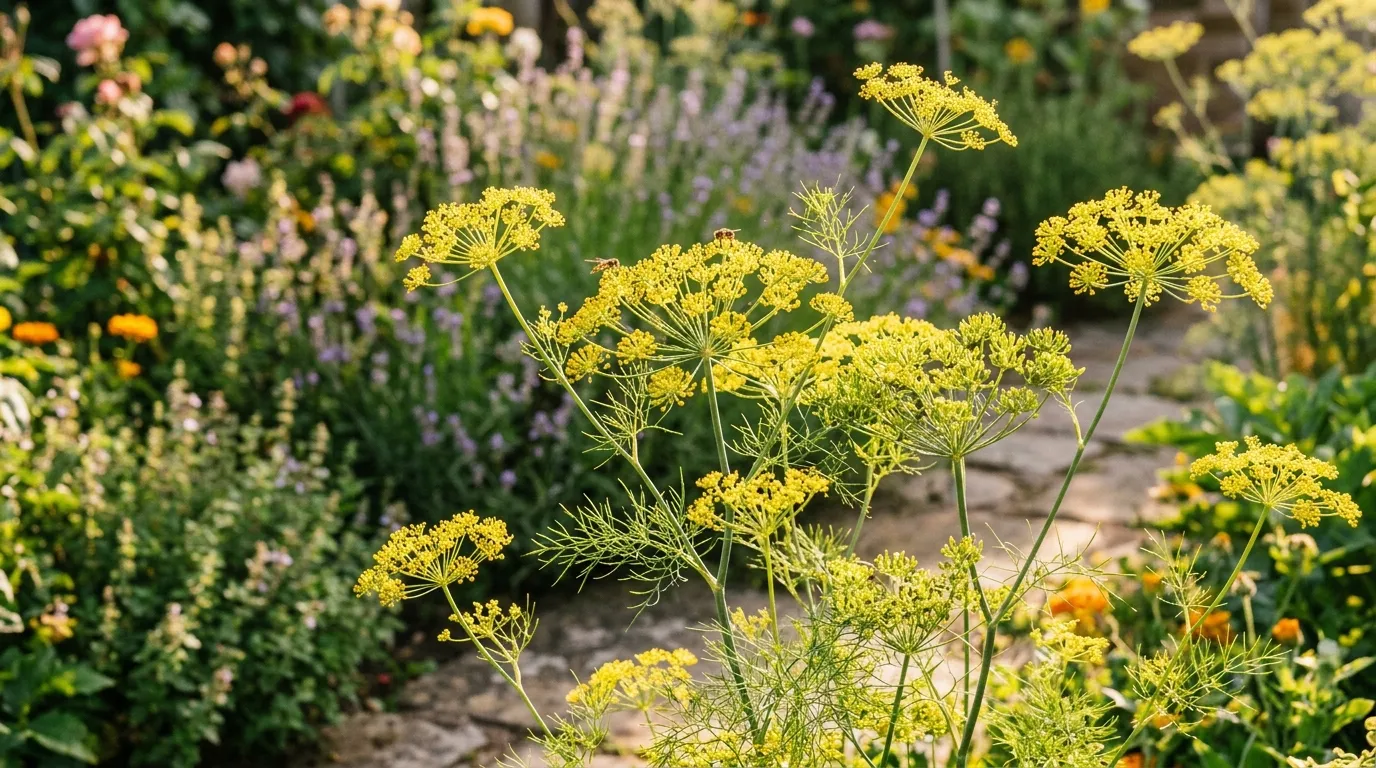
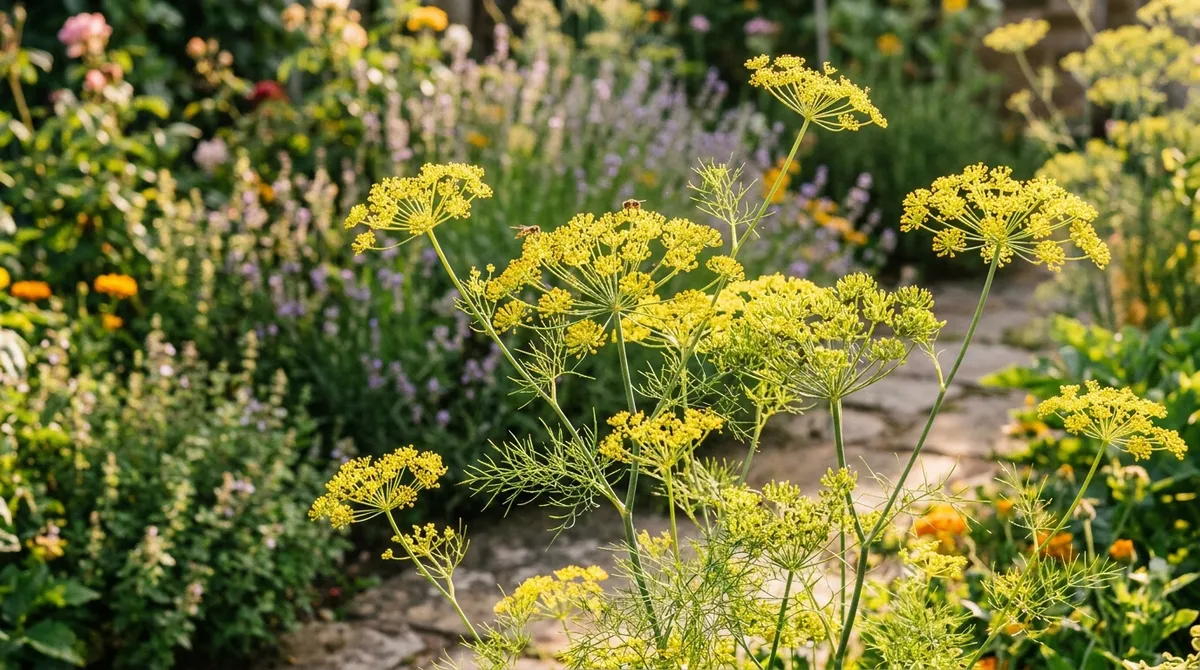
Dill in full flower. The yellow umbels attract hoverflies, lacewings, and other beneficial insects to the garden.
How to sow dill directly outdoors
Dill must be sown directly where it is to grow. Do not transplant dill. The single most common reason UK growers fail with dill is pricking out seedlings and moving them. Dill has a long, fragile taproot that breaks during transplanting. Even careful handling triggers a stress response, and the plant’s answer to stress is to bolt immediately.
Sow dill seed outdoors from April to July once the soil temperature reaches 15 degrees Celsius. Earlier sowings struggle to germinate in cold soil. If you want an April start, warm the soil for two weeks beforehand with a cloche or sheet of black polythene.
Sow seeds 5mm deep in rows spaced 30cm apart. Scatter seed thinly along the drill. Dill seed is small and flat, so it helps to mix it with a pinch of dry sand for even distribution. Water the drill gently before and after sowing. Germination takes 10-14 days in warm soil.
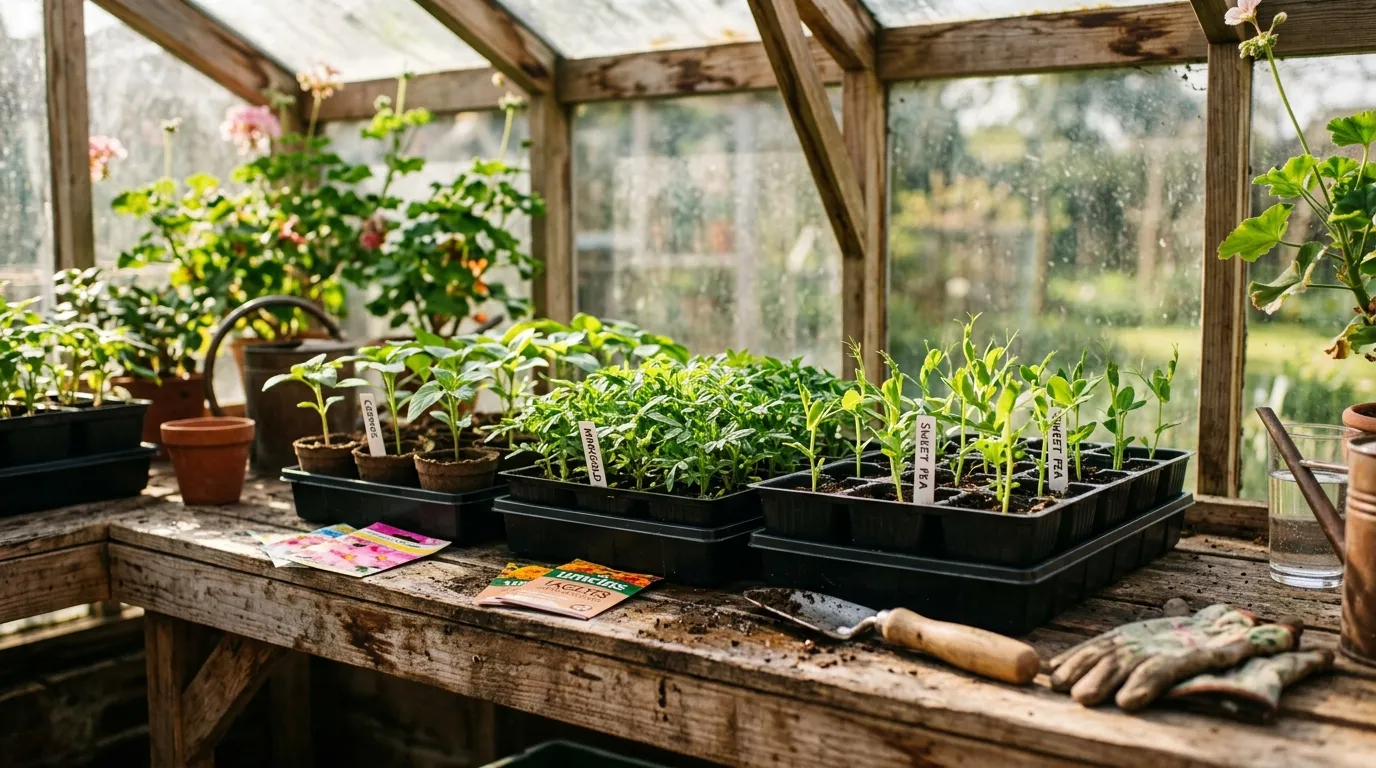
Thin seedlings to 15-20cm apart once they develop their first set of feathery true leaves. The thinnings are edible and taste excellent in salads. Do not delay thinning. Overcrowded dill grows leggy and bolts faster.
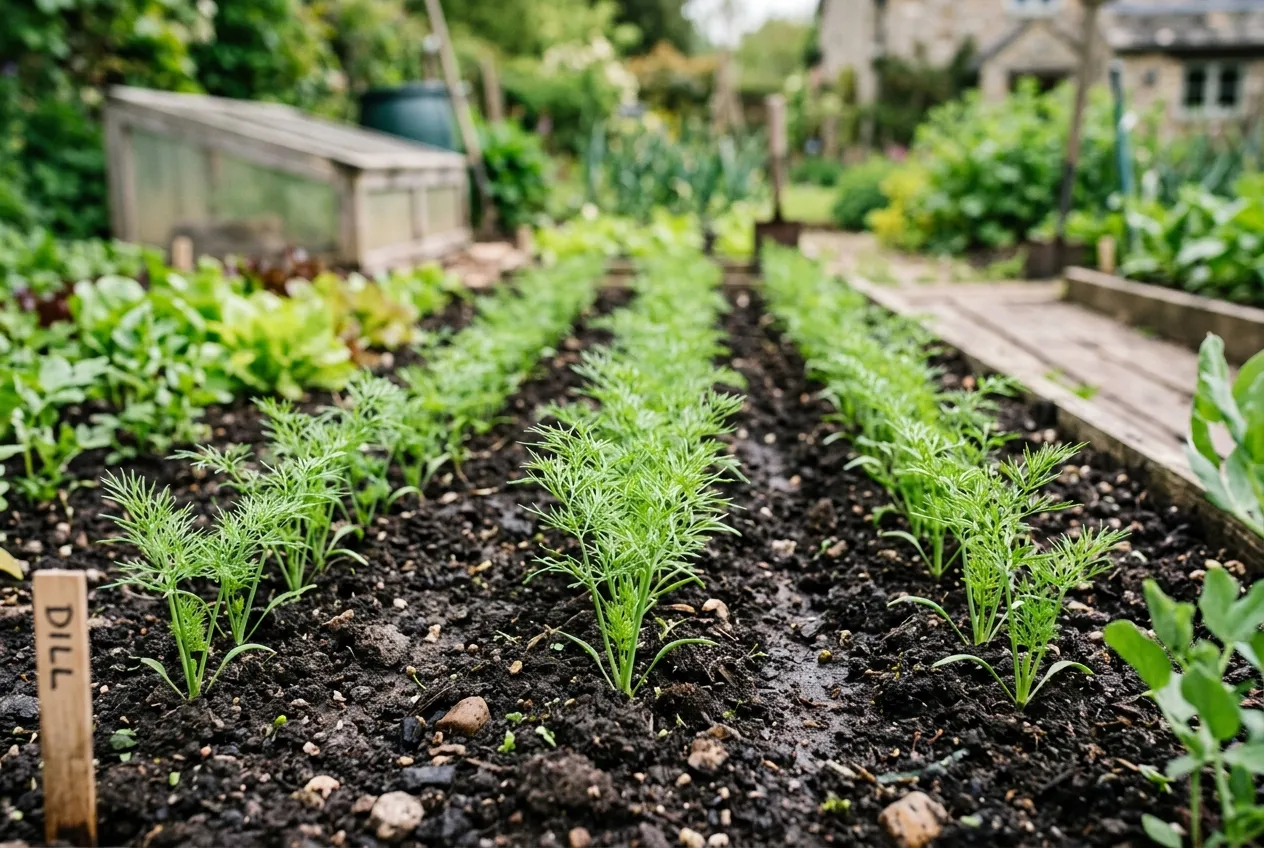
Dill seedlings 3-4 weeks after direct sowing. Thin to 15-20cm apart once the feathery true leaves appear.
Dill tolerates most UK soil types but performs best in well-drained, fertile soil with a pH of 5.5-7.5. Heavy clay benefits from added grit or compost to improve drainage. Waterlogged roots cause rot and stunted growth. The RHS growing guide for dill confirms that good drainage is the single most important soil factor. Our herb growing guide covers soil preparation for all kitchen garden herbs.
Choose a site in full sun. Dill needs at least 6 hours of direct sunlight daily for strong growth and good flavour. A sheltered position out of strong wind is important. Tall varieties like Mammoth and Bouquet become top-heavy once they flower and snap in exposed sites. Staking with twiggy sticks helps in windy gardens.
Succession sowing for continuous dill
A single sowing of dill gives leaves for 4-6 weeks before the plant flowers. After that, the foliage becomes thin, wispy, and bitter. Succession sowing is the only reliable way to keep fresh dill leaves available from spring through autumn.
Sow a new batch of dill every 3-4 weeks from April to July. This gives you overlapping harvests: while one batch is flowering and setting seed, the next is producing fresh, tender leaves. Four to five successional sowings provide dill from late May through to the first frosts in October.
| Sowing date | First leaf harvest | Flowering begins | Best use |
|---|---|---|---|
| Early April | Late May | Late June | Spring salads, fish |
| Late April | Mid June | Mid July | Continuous supply |
| Late May | Early July | Early August | Midsummer cooking |
| Late June | Mid August | Early September | Late summer salads |
| Mid July | Late August | Late September | Seed saving, autumn use |
The July sowing is particularly valuable. These plants mature into cooler autumn weather and often produce the best leaf harvests of the season because lower temperatures delay bolting. They also produce excellent seed crops in September and October.
Our guide to growing coriander covers the same succession sowing principle. Coriander and dill share similar bolting behaviour and benefit from identical scheduling strategies.
How to stop dill bolting
Dill bolts when it receives signals that conditions are deteriorating. Heat, drought, root disturbance, and overcrowding all trigger the flowering response. You cannot stop dill bolting entirely. It is an annual herb programmed to flower and die. But you can delay it significantly.
Field Report: In our 2024 Staffordshire trial, Fernleaf dill sown in partial afternoon shade and watered daily bolted 16 days later than the same variety in full sun with inconsistent watering. Consistent moisture was the single biggest factor. Shade alone delayed bolting by 8 days. The combination of both was additive.
Six strategies that genuinely slow bolting in UK conditions:
Choose slow-bolt varieties. Fernleaf and Hera resist bolting 10-14 days longer than Mammoth or Bouquet. This is the easiest intervention.
Water consistently. Dill interprets drought as a signal to flower. Water deeply every 2-3 days in dry weather. Mulch around plants with compost to retain soil moisture. Never let the soil dry out completely between waterings.
Never transplant. Always sow direct. Even moving module-grown seedlings with intact root balls causes enough disturbance to accelerate bolting by a week or more.
Use partial shade in midsummer. From June to August, dill benefits from afternoon shade. The north side of taller crops like runner beans or sweetcorn provides natural shading.
Thin early and adequately. Crowded dill bolts faster because the plants compete for water and light. Thin to 15-20cm spacing as soon as true leaves appear.
Remove flower buds. Pinching out the central flower stem when it first appears can extend leaf production by 1-2 weeks. It does not prevent flowering forever, but it buys time.
Growing dill in containers
Dill grows well in containers provided you choose the right variety and pot. Compact varieties like Fernleaf are ideal. Tall varieties like Mammoth quickly become top-heavy and blow over.
Use pots at least 25cm deep and 20cm wide. Dill’s taproot needs depth to develop properly. Shallow pots cause stunted, bolt-prone plants. Wider pots hold moisture more evenly, which is critical for preventing heat-triggered bolting.
Fill with peat-free multipurpose compost mixed with 20% perlite for drainage. Sow seed directly into the pot at 2cm spacing and 5mm depth. Thin to 3-4 plants per 20cm pot once seedlings are established.
Position containers in full sun from April to May, then move to a spot with afternoon shade from June onwards. Container compost heats up faster than open ground, accelerating bolting. Daily watering in summer is essential. A saucer beneath the pot helps maintain moisture but empty it after heavy rain to prevent waterlogging.
Feed fortnightly with a balanced liquid fertiliser once plants are 15cm tall. Container dill exhausts nutrients faster than ground-grown plants. Our container vegetable gardening guide covers feeding schedules for all potted edibles.
Dill vs fennel: what is the difference?
Dill and fennel are the two most commonly confused herbs in UK gardens. Both belong to the Apiaceae family, both have feathery foliage, and both produce yellow umbel flowers. At the seedling stage, they are nearly impossible to tell apart. But they are different species with different growing habits.
| Feature | Dill | Fennel |
|---|---|---|
| Botanical name | Anethum graveolens | Foeniculum vulgare |
| Lifespan | Annual (one season) | Perennial (returns yearly) |
| Height | 60-90cm | 150-200cm |
| Leaf colour | Blue-green, fine | Bright green, thread-like |
| Flavour | Mild anise, grassy | Strong anise, sweet |
| Seed flavour | Warm, slightly bitter | Sweet, aromatic |
| Cold hardiness | Killed by hard frost | Fully hardy to -15 degrees Celsius |
The critical rule is this: keep dill and fennel at least 3 metres apart. They cross-pollinate readily because they are closely related. Cross-pollinated seed produces plants with muddy, unpleasant flavour that tastes of neither herb. If you grow both, plant them at opposite ends of the garden.
Our fennel herb growing guide covers the perennial form in full detail, including bronze fennel for ornamental borders.
Companion planting with dill
Dill is one of the most valuable companion plants in a UK vegetable garden. Its flowers attract hoverflies, lacewings, and parasitic wasps, all of which prey on common garden pests. A patch of flowering dill near your brassicas or carrots provides genuine biological pest control.
Good companions for dill:
- Brassicas (cabbage, broccoli, kale). Dill flowers attract parasitic wasps that lay eggs inside cabbage white caterpillars. One of the most effective natural controls available.
- Carrots. Dill’s strong scent may help confuse carrot root fly. Plant dill between carrot rows for best effect.
- Lettuce and salad crops. Dill provides light shade that benefits lettuce in midsummer.
- Cucumbers. Traditional pickling partners in the garden and the kitchen. They share similar water needs.
- Onions and sweetcorn. Neutral companions that do not interact negatively.
Plants to keep away from dill:
- Fennel. Cross-pollinates with dill, ruining seed flavour. Minimum 3m separation.
- Tomatoes. Mature dill produces compounds that can inhibit tomato growth. Young dill is fine near tomatoes, but move it once flower stems appear.
- Carraway. Another Apiaceae relative that can cross-pollinate with dill.
Our companion planting guide maps out beneficial pairings for the full UK vegetable garden.
How to harvest dill leaves
Begin harvesting dill leaves when plants reach 15-20cm tall, typically 6-8 weeks after sowing. The best time to cut is in the morning after the dew has dried, when the essential oils are at their strongest.
Selective picking. Snip individual fronds from the outside of the plant, working inwards. This allows the centre to keep producing new growth and extends the harvest window by 2-3 weeks. Use sharp scissors or snips for clean cuts.
Cut-and-come-again. For a larger single harvest, cut the entire plant back to 5cm above soil level. Dill sometimes regrows once from a hard cut, but the second flush is lighter and less flavourful than the first. Succession sowings are more reliable than repeated cutting.
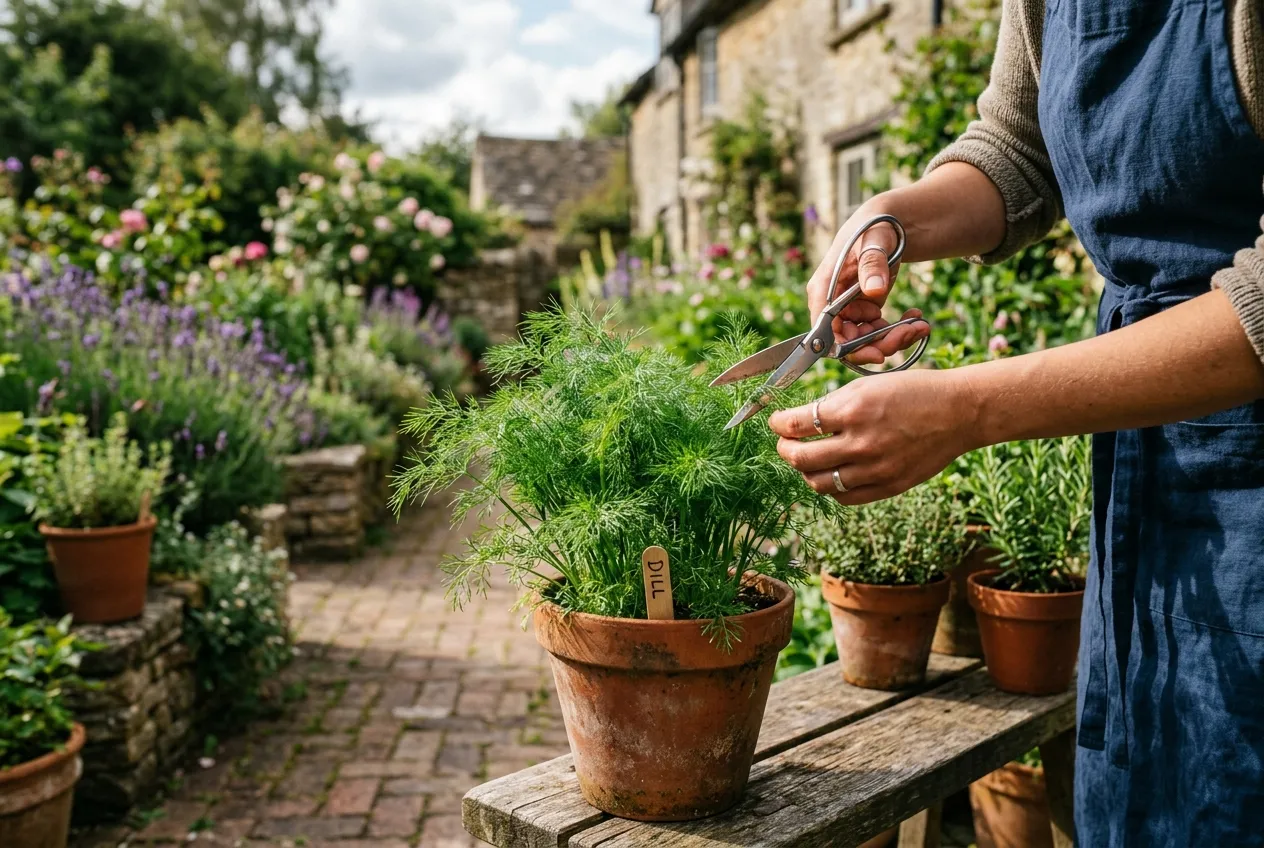
Harvest dill fronds with sharp scissors. Cut from the outside of the plant to allow the centre to keep producing new growth.
Stop harvesting leaves once the central flower stem appears. At this point, the plant switches all its energy from leaf to seed production. The remaining leaves become thin, bitter, and lose their characteristic flavour within days. Either pull the plant and use the final leaves immediately, or let it flower for seeds and beneficial insects.
Fresh dill wilts quickly once cut. Stand stems in a glass of cold water and use within a few hours for the best flavour. For longer storage, wrap fronds loosely in damp kitchen paper and refrigerate for up to 5 days.
How to harvest and save dill seeds
Dill seed is a valuable spice in its own right, with a warm, slightly bitter flavour that differs from the fresh leaves. Home-saved seed is far more aromatic than shop-bought because the volatile oils are freshest in the first year after harvest.
Allow dill plants to flower and develop seed heads naturally. The yellow umbels appear 8-10 weeks after sowing and attract clouds of hoverflies and bees. Seed heads take a further 2-3 weeks to ripen after flowering.
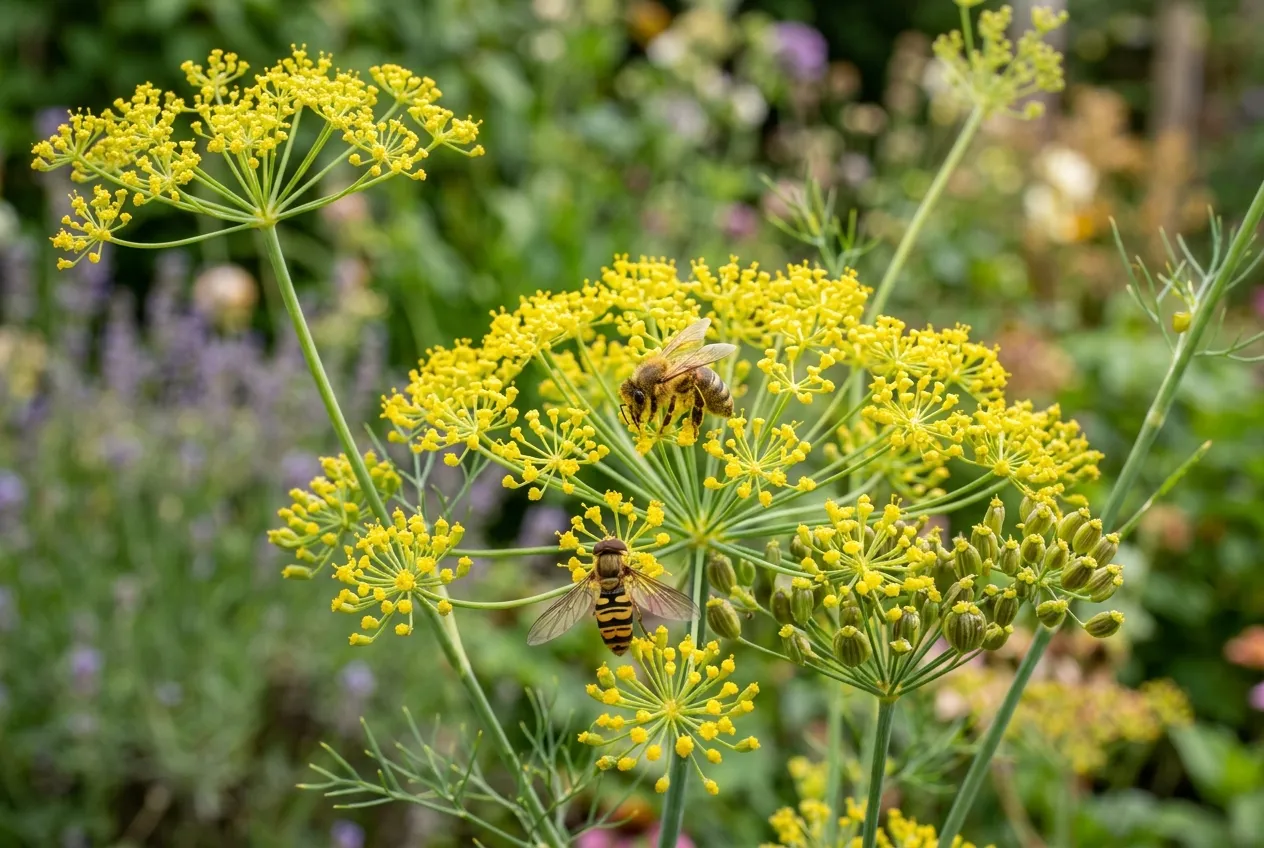
Dill flower heads in late summer. Leave them to ripen until the seeds turn brown and detach easily when rubbed.
Harvest seed heads when they turn brown and papery, usually in August or September. The seeds should detach easily when you rub the umbel between your fingers. Do not wait too long. Overripe heads shatter and scatter seed everywhere.
Cut entire seed heads with 15cm of stem attached. Place them upside down in a paper bag and tie the bag closed. Hang in a warm, dry room for 2 weeks. The seeds drop into the bag as they dry. Sift out any chaff and store in airtight glass jars away from light.
Home-saved dill seed stays viable for 3-5 years when stored in a cool, dry place. Label jars with the variety and harvest date. Our guide on drying and storing herbs covers long-term preservation techniques for all kitchen garden herbs.
Self-sowing. Leave some seed heads on the plant to scatter naturally. Dill self-sows freely in undisturbed soil. After two to three seasons of allowing self-sowing, you will have a reliable colony that produces volunteer seedlings every spring with no effort. The volunteers often appear in March or April, weeks before direct-sown seed germinates.
Preserving dill for year-round use
Fresh dill is best, but the growing season is finite. Several preservation methods capture the flavour for winter use.
Freezing is the best method for retaining dill’s fresh flavour. Chop fronds finely and pack into ice cube trays. Top up with a splash of water or olive oil and freeze. Pop out frozen cubes as needed for soups, sauces, and fish dishes. Frozen dill keeps for 6-8 months.
Drying works but loses much of the delicate flavour. Air-dry small bunches upside down in a warm, airy room for 5-7 days. Alternatively, spread fronds on a baking tray and dry in an oven at 35 degrees Celsius for 2-3 hours with the door slightly ajar. Dried dill is best in longer-cooked dishes where the rehydrated flavour has time to develop.
Dill vinegar. Pack a jar loosely with fresh dill fronds and pour over warm white wine vinegar. Seal and leave for 2-3 weeks. Strain and bottle. Dill vinegar is excellent for salad dressings and pickling vegetables.
Dill butter. Mix finely chopped dill with softened butter, a squeeze of lemon juice, and a pinch of salt. Roll into a log in cling film and freeze. Slice off rounds to melt over grilled fish, new potatoes, or steamed vegetables.
Cooking with dill: UK kitchen uses
Dill has a unique flavour profile that combines mild anise, lemon, and a grassy freshness. It pairs naturally with fish, eggs, potatoes, cucumber, and cream-based sauces. In British cooking, dill is most closely associated with Scandinavian-influenced dishes.
Classic UK uses for fresh dill:
- Gravadlax and cured salmon. Dill is the essential herb in the cure.
- New potato salad with dill, creme fraiche, and a squeeze of lemon.
- Cucumber and dill pickle (cornichons). Use whole flower heads for flavour and presentation.
- Scrambled eggs or omelettes. Add chopped dill at the last moment.
- Dill sauce for poached or grilled fish. White sauce with generous fresh dill.
Dill seed uses:
- Pickling spice. Whole dill seeds are traditional in bread-and-butter pickles and dill pickles.
- Bread baking. Dill seed adds warmth to rye bread, soda bread, and crackers.
- Soups and stews. Toast seeds lightly in a dry pan before adding to release the oils.
- Coleslaw. Ground dill seed gives a subtle warmth to creamy dressings.
Add fresh dill at the very end of cooking. Heat destroys its delicate volatile oils within seconds. Dill seed tolerates longer cooking and benefits from it.
Month-by-month dill calendar
This calendar covers the full growing cycle for UK dill growers. Adjust timings by 1-2 weeks in northern England and Scotland.
| Month | Task |
|---|---|
| March | Order seed. Warm soil with cloches or black polythene for April sowing. |
| April | First direct sowing once soil reaches 15 degrees Celsius. Water gently after sowing. |
| May | Thin seedlings to 15-20cm apart. Sow second succession batch. Begin harvesting first sowings. |
| June | Third succession sowing in partial shade. Harvest leaves regularly. Water in dry spells. |
| July | Final succession sowing. Stake tall varieties. First flowers appear on April sowings. |
| August | Harvest leaves from summer sowings. Collect ripe seed heads from spring sowings. |
| September | Harvest remaining seeds. Let self-sow plants scatter seed for next year. |
| October | Clear spent plants. Protect late sowings with fleece for extended autumn harvest. |
| November | Freeze or dry remaining harvests. Clean and store seed in airtight jars. |
Growing a range of herbs alongside dill keeps the kitchen supplied year-round. Our guides to growing parsley and growing herbs in the UK cover the full picture for productive home growing.
Common dill problems in UK gardens
Dill is largely trouble-free in UK conditions, but a few issues appear regularly.
Bolting. The most common complaint. Covered in detail above. Always sow direct, water consistently, use slow-bolt varieties, and succession sow.
Aphids. Greenfly colonise dill stems and flower buds in warm weather. Squash small infestations by hand or blast off with a strong jet of water. Flowering dill attracts hoverflies whose larvae eat hundreds of aphids, so established plants often solve their own aphid problem.
Carrot root fly. Occasionally attacks dill because both are Apiaceae members. Cover young plants with fine mesh (Enviromesh) if carrot root fly is a known problem on your plot.
Powdery mildew. White powder on leaves in late summer, especially in dry conditions with poor air circulation. Thin plants adequately, water at the base rather than overhead, and remove affected foliage promptly.
Slugs and snails. Target young seedlings in spring. Use beer traps, copper tape, or nematode biological controls to protect emerging plants. Once dill reaches 15cm tall, slug damage is rarely significant.
Frequently asked questions
Why does my dill always bolt before I can harvest the leaves?
Dill bolts when stressed by heat, drought, or root disturbance. It is a fast-maturing annual that flowers within 8-10 weeks of germination in warm conditions. Transplanting is the most common trigger because dill has a fragile taproot that resents being moved. Always sow direct. Water consistently in dry spells and use partial shade in midsummer. Succession sowing every 3-4 weeks ensures you always have young, leafy plants available.
Can I grow dill in pots in the UK?
Yes, dill grows well in pots at least 25cm deep. Choose a compact variety like Fernleaf, which stays under 45cm tall. Use free-draining, peat-free compost and water daily in summer. Place pots in full sun or morning sun with afternoon shade. Container dill bolts faster than ground-grown plants because pots heat up quickly. Sow fresh seed every 3-4 weeks for continuous harvests.
What is the difference between dill and fennel?
Dill and fennel are different species in the same plant family. Dill (Anethum graveolens) is a 60-90cm annual with fine, blue-green foliage and a mild anise flavour. Fennel (Foeniculum vulgare) is a 1.5-2m perennial with bright green, thread-like leaves and a stronger anise taste. They look similar at the seedling stage but differ in height, leaf colour, lifespan, and flavour intensity. Keep them at least 3 metres apart to prevent cross-pollination.
When is the best time to sow dill in the UK?
Sow dill outdoors from April to July once the soil reaches 15 degrees Celsius. April and May sowings give the longest leaf harvests before bolting. June and July sowings mature into autumn and produce excellent seed crops. Start succession sowing every 3-4 weeks from your first sowing for continuous supply. Dill does not germinate reliably below 15 degrees Celsius, so early spring sowings need warming with cloches.
Does dill come back every year?
Dill is an annual that dies after setting seed, but it self-sows freely. Plants that flower and scatter seed in late summer produce volunteer seedlings the following spring. These self-sown plants often appear earlier and grow more vigorously than sown crops. Leave the soil undisturbed where dill has set seed and you will have a reliable self-sustaining colony within two to three seasons.
What grows well next to dill?
Dill is an excellent companion for brassicas, carrots, lettuce, and cucumbers. Its flowers attract hoverflies and parasitic wasps that prey on cabbage white caterpillars and aphids. Dill planted near carrots may help confuse carrot root fly with its strong scent. Avoid planting dill near fennel, as they cross-pollinate. Also keep it away from tomatoes, as mature dill can inhibit tomato growth.
How do I save dill seed for next year?
Harvest dill seeds when the umbels turn brown and the seeds detach easily, usually in August or September. Cut entire seed heads with 15cm of stem. Place them upside down in a paper bag and hang in a warm, dry room for 2 weeks. The seeds fall into the bag as they dry. Store in an airtight glass jar away from light. Home-saved dill seed stays viable for 3-5 years when stored cool and dry.
Lawrie has been gardening in the West Midlands for over 30 years. He grows his own veg using no-dig methods, keeps a wildlife-friendly garden, and writes practical advice based on real UK growing conditions.