How to Grow Endive in the UK
Learn how to grow endive in the UK. Covers curly frisee and broad-leaved escarole types, blanching for milder flavour, sowing times, and winter harvests.
Key takeaways
- Endive is a different species from chicory and comes in two main types: curly frisee and broad-leaved escarole
- Sow from April to August outdoors for harvests from June through to December
- Blanching under a pot or plate for 10-14 days removes bitterness and produces pale, tender hearts
- Escarole varieties tolerate frost down to -5C, making them ideal for late autumn and early winter
- Endive bolts less readily than lettuce in summer heat, cropping reliably through July and August
- Grow in full sun or partial shade in fertile, well-drained soil with a pH of 6.0-7.0
Endive is one of the most underused salad crops in UK kitchen gardens. It produces crisp, slightly bitter leaves from June right through to December, filling the gap between summer lettuce and winter chicory. Unlike lettuce, endive tolerates summer heat without bolting quickly and handles autumn frosts that would finish most salad crops.
There are two main types: curly frisee with deeply cut, frilly leaves, and broad-leaved escarole with wider, smoother heads. Both belong to the species Cichorium endivia and both grow well across all UK regions. The RHS lists endive as a reliable crop for British gardens. The key technique is blanching, where you cover the heart to exclude light for 10-14 days, turning the bitter inner leaves pale, tender, and mild.
What types of endive can you grow in the UK?
Endive splits into two distinct groups, and knowing the difference helps you choose the right variety for your garden and your plate.
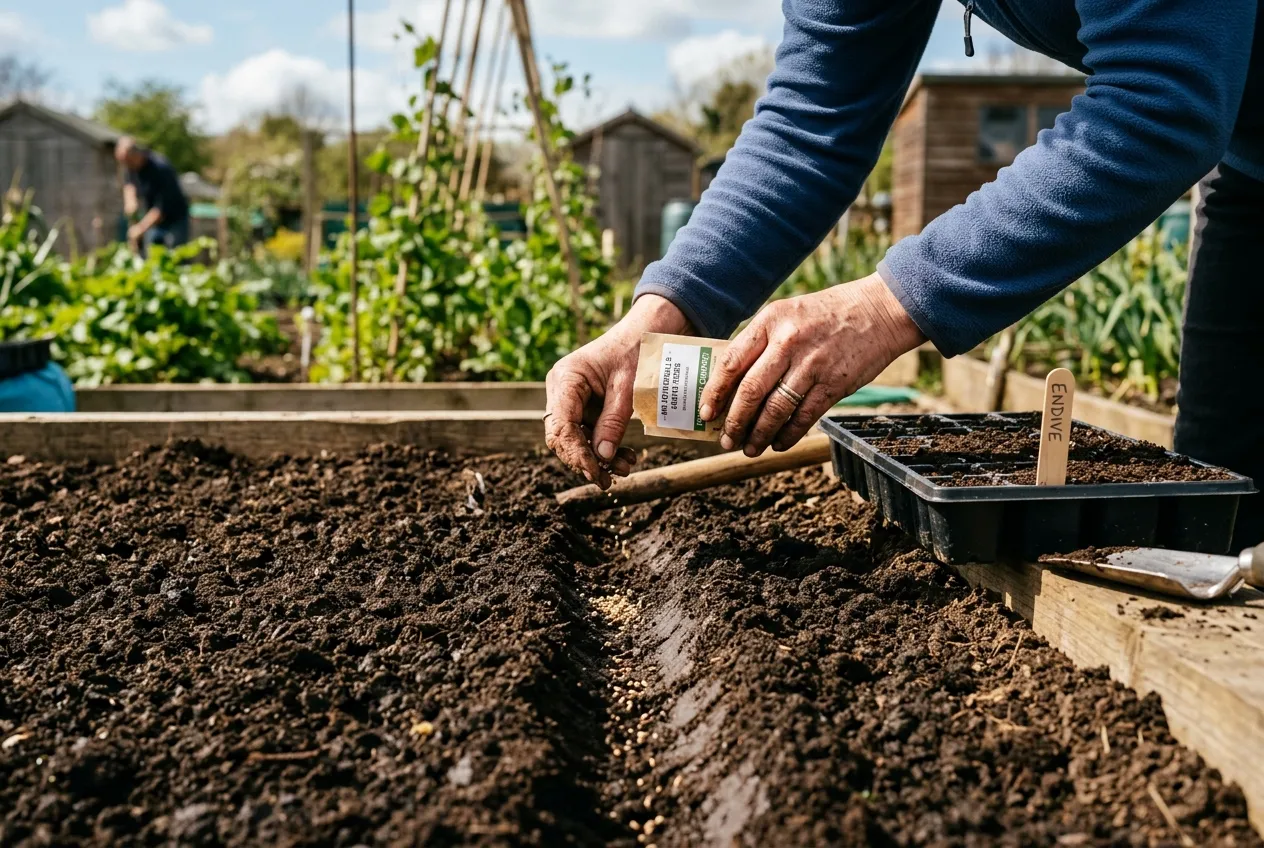
Sowing endive seeds into a prepared drill at a UK allotment. Start from April onwards for summer harvests.
Curly endive (frisee)
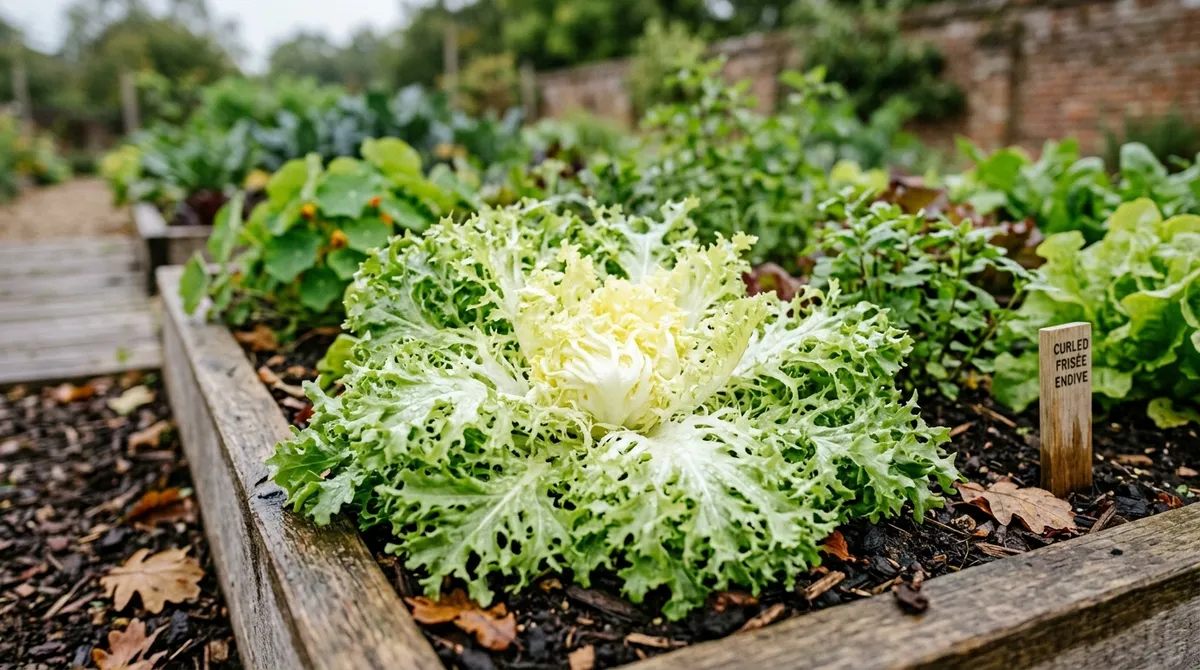
Curly endive has deeply cut, finely divided leaves that form a dense rosette. The outer leaves are dark green and quite bitter. The heart blanches to a pale yellow-white and has a milder, nutty flavour. Frisee matures in 12-14 weeks from sowing and is the type most commonly served in French bistro salads.
The best curly varieties for UK gardens include Tres Fine Maraichere (very finely cut leaves, fast-maturing), Pancalieri (Italian heirloom, good bolt resistance), and Fine de Louviers (large heads, excellent for blanching). Curly types are slightly less hardy than escarole, surviving to about -3C.
Broad-leaved endive (escarole)
Escarole produces wider, flatter leaves that form a loose, lettuce-like head. It is hardier than frisee, surviving temperatures down to -5C. The flavour is milder even before blanching, making it the better choice for anyone new to bitter salads.
The top escarole varieties for UK conditions are Batavian Full Heart (the UK standard, large dense heads up to 35cm across), Cornet de Bordeaux (self-blanching, upright habit), and Nuance (excellent cold tolerance for late autumn). Escarole takes 13-15 weeks to mature but produces larger heads than frisee.
Endive variety comparison
Choosing between varieties depends on when you want to harvest, how much bitterness you enjoy, and whether you need cold tolerance. This table compares the most reliable varieties for UK conditions.
| Variety | Type | Weeks to harvest | Best sowing months | Frost hardiness | Best for |
|---|---|---|---|---|---|
| Tres Fine Maraichere | Curly frisee | 12-13 | April-July | -3C | Quick crops, fine texture |
| Pancalieri | Curly frisee | 13-14 | May-July | -3C | Bolt resistance, Italian salads |
| Fine de Louviers | Curly frisee | 14 | April-June | -2C | Large blanched hearts |
| Batavian Full Heart | Escarole | 13-15 | April-August | -5C | Beginners, large heads |
| Cornet de Bordeaux | Escarole | 14-15 | May-August | -4C | Self-blanching, easy |
| Nuance | Escarole | 15 | June-August | -5C | Late autumn, winter hardiness |
Field Report: In our Staffordshire trial plot (heavy clay, west-facing), Batavian Full Heart consistently produced the largest heads across all three seasons. Pancalieri was the last to bolt during the July 2025 heatwave, still standing firm when temperatures hit 32C for four consecutive days. Nuance survived unprotected until late November 2024, cropping right through several -4C overnight frosts before finally succumbing to -7C in early December.
When and how to sow endive seeds
Endive seeds germinate best at 15-20C and emerge in 7-10 days. They need light to germinate, so cover with only a thin 5mm layer of compost or vermiculite. Unlike lettuce, endive germinates reliably in warmer soil, making it a useful crop for succession planting through the summer months.
Sowing indoors
Start the earliest sowings indoors from late March. Sow 2-3 seeds per module in peat-free seed compost. Keep at 15-20C on a bright windowsill or in a propagator. Thin to the strongest seedling once the first true leaves appear. Harden off seedlings for 7-10 days before transplanting outside from late April.
Module-raised plants establish faster and suffer less slug damage than direct-sown seedlings. This matters on heavy clay soils where slugs are a constant problem.
Sowing outdoors
From April to August, sow direct into prepared soil. Make a shallow drill 1cm deep and water it before sowing. Sow thinly and thin seedlings to 30cm apart once they have 4-5 true leaves. Space rows 35cm apart.
For your full schedule of what to plant each month, see our UK vegetable planting calendar.
Sowing schedule
| Sowing period | Harvest period | Notes |
|---|---|---|
| Late March (indoors) | June-July | Start under cover, transplant April |
| April-May (outdoors) | July-September | Main summer crop |
| June-July (outdoors) | September-November | Best for blanching, fewer pests |
| August (outdoors) | November-December | Late crop, needs fleece from October |
June and July sowings are often the most successful. The shorter days reduce the risk of bolting, and cooler autumn temperatures produce the best-flavoured leaves. This is exactly the same principle that makes late-sown chicory and radicchio so reliable.
How to blanch endive for milder flavour
Blanching is the technique that transforms endive from an aggressively bitter leaf into something most people enjoy eating. It works by excluding light from the heart of the plant for 10-14 days. Without light, the inner leaves stop producing chlorophyll and bitter compounds. The result is a creamy white, tender heart with a subtle, nutty flavour.
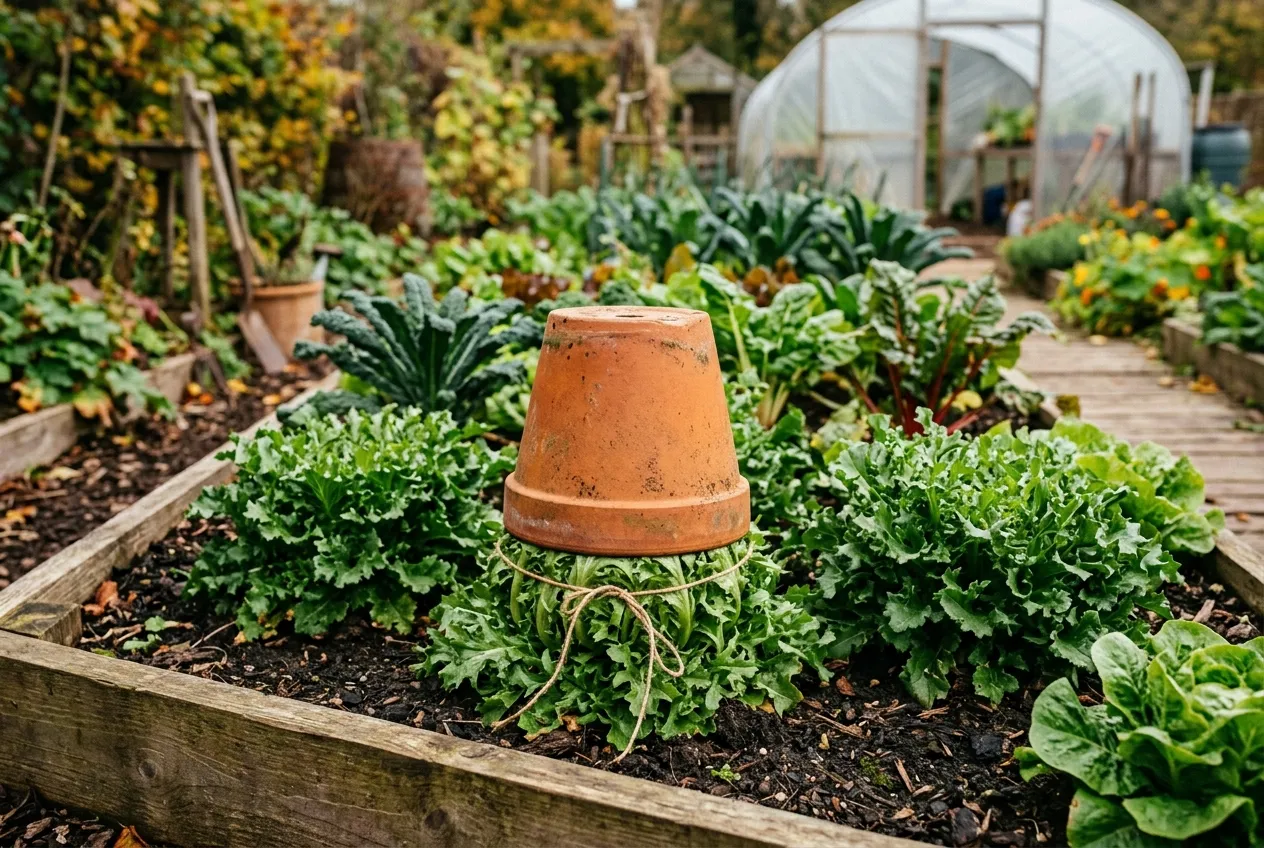
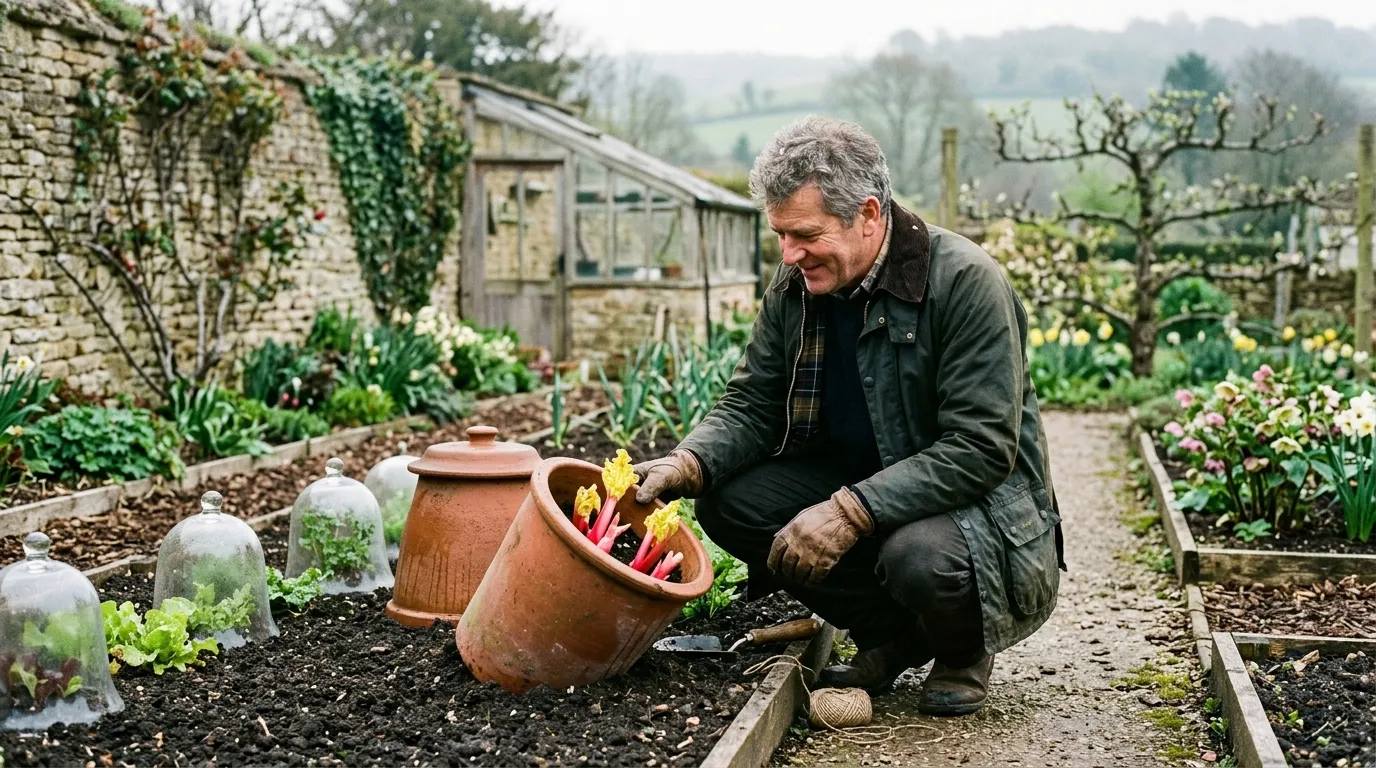
An upturned terracotta pot excludes light from the endive heart. Leave for 10-14 days for pale, mild leaves.
Step-by-step blanching
- Wait until the plant is fully grown, with a well-formed heart (12-15 weeks from sowing)
- Choose a dry day. Wet leaves trapped under a cover will rot
- Gather the outer leaves upward and tie loosely with garden twine
- Place an upturned dinner plate, terracotta pot, or bucket over the heart
- Weigh it down if needed to prevent wind displacement
- Leave for 10-14 days. Check after 10 days by lifting the cover
- The heart should be creamy white to pale yellow. Harvest immediately
Blanching tips from experience
Only blanch 2-3 plants at a time. Once blanched, endive deteriorates within 5-7 days, so you need to eat it quickly. Start blanching the next batch as you harvest the first. This gives you a rolling supply of tender hearts rather than a glut of plants all going over at once.
Terracotta pots work better than plastic buckets because they allow some moisture to escape. Plastic traps condensation, which encourages bottom rot. In a wet autumn, check under the cover every 3-4 days and remove any yellowing outer leaves.
Some varieties, particularly Cornet de Bordeaux, are partially self-blanching. Their upright growth habit means the inner leaves naturally receive less light. These still benefit from full blanching but produce acceptable leaves even without it.
How to care for endive plants
Endive is less demanding than lettuce but still needs consistent moisture and reasonable soil to perform well. Follow the advice below and you will avoid the two main problems: bolting and bitterness.
Soil and position
Endive grows best in fertile, well-drained soil with a pH of 6.0-7.0. Full sun suits spring and autumn crops. For summer plantings, a position with afternoon shade prevents the worst of the heat stress that can trigger bolting. If you are growing on heavy clay, consider using a raised bed to improve drainage.
Prepare the soil by incorporating garden compost or well-rotted manure several weeks before sowing. Endive appreciates nitrogen-rich soil but avoid freshly manured ground, which can cause lush, soft growth that is vulnerable to slugs.
Watering and feeding
Water every 2-3 days in dry weather. Endive needs consistent moisture, but less than lettuce. Drought stress increases bitterness and triggers bolting. Water at the base of plants in the morning. Overhead watering encourages powdery mildew, especially on densely packed frisee types.
Feed container-grown plants fortnightly with a balanced liquid fertiliser. In open ground with compost-enriched soil, endive rarely needs additional feeding.
Dealing with bolting
Endive bolts when stressed by heat, drought, or sudden temperature changes. It is more bolt-resistant than lettuce but less tolerant than spinach in this regard. To reduce bolting:
- Sow bolt-resistant varieties (Pancalieri, Batavian Full Heart) for summer crops
- Water consistently. Even one dry spell can trigger the bolting response
- Provide afternoon shade for June and July sowings
- Avoid transplanting root-bound seedlings. Pot them on or plant out before roots circle the module
Pests and diseases
Endive shares many pests with lettuce, but its bitter compounds offer some natural protection against aphids and caterpillars.
Slugs
Slugs are the primary threat, especially to young transplants. Apply nematode biological control from April onwards and repeat every 6 weeks. Copper tape around containers provides a physical barrier. Hand-pick slugs after dark on damp evenings. For a full rundown of methods, see our guide on how to get rid of slugs.
Aphids
Greenfly and blackfly occasionally colonise the undersides of leaves in warm, dry weather. Squash small colonies by hand. Encourage hoverflies and ladybirds by growing companion flowers nearby. Severe infestations can be sprayed with an organic insecticidal soap.
Powdery mildew
White, powdery patches appear on leaves in dry conditions with poor airflow. Space plants 30cm apart. Remove affected outer leaves promptly. Avoid overhead watering. Frisee types with their dense foliage are more susceptible than open-habited escarole.
Bottom rot
A fungal problem that occurs during blanching on waterlogged soil. Ensure good drainage. Only blanch in dry weather. Use terracotta rather than plastic covers to allow moisture to escape. Remove any decaying leaves before blanching.
Growing endive through autumn and winter
Endive really earns its place in the garden from September onwards, when lettuce has bolted or been killed by frost. Late-sown endive (June to August) matures in autumn and keeps cropping well into early winter.
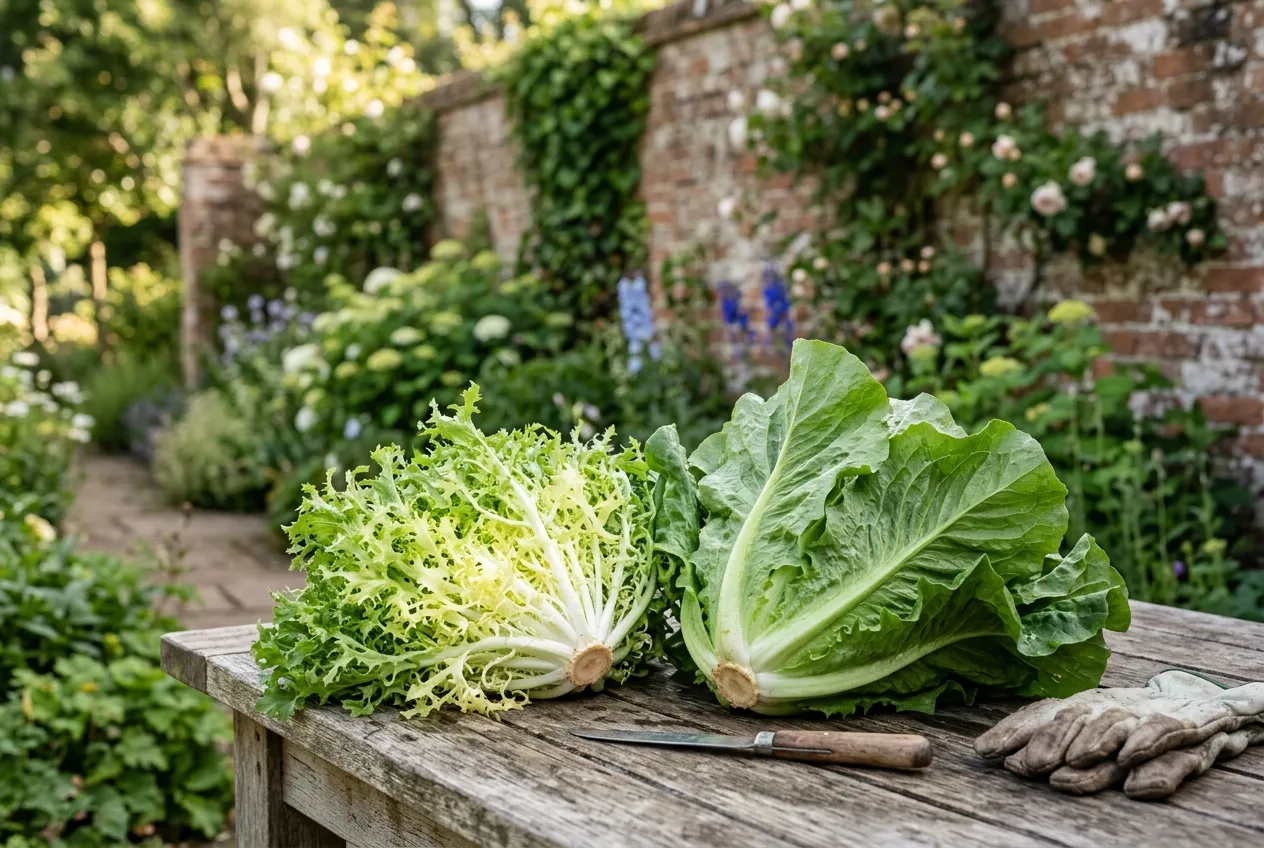
Curly frisee (left) and broad-leaved escarole (right) harvested from an autumn garden. The blanched hearts are the prized eating part.
Extending the season with fleece
Cover plants with horticultural fleece or cloches from mid-October. This raises the temperature by 2-3C around the plants and protects against the worst frost damage. Escarole under fleece will crop through November and into December in most UK regions. In mild winters with protection, some plants survive right through to January.
Cold frame growing
A cold frame is the ideal home for autumn and winter endive. It provides frost protection, keeps leaves dry, and makes blanching easier since you can simply close the lid to exclude light. Sow a few plants into a cold frame in July or August for the latest possible harvests.
Winter varieties
For late crops, choose the hardiest escarole varieties. Nuance and Batavian Full Heart are the most reliable for UK winters. Curly frisee types are best harvested before hard frost arrives in late October or November, as they suffer more damage below -3C.
For a dedicated guide to salads that crop through winter, including lamb’s lettuce, mizuna, and winter purslane alongside endive, see our winter salad harvesting guide.
Harvesting endive
When to harvest
- Unblanched outer leaves: pick individually from 10 weeks onwards for cooking or adding to mixed salads
- Blanched hearts: harvest the whole plant at ground level after 10-14 days of blanching
- Baby leaves: cut-and-come-again harvesting at 5-8cm tall from 6-8 weeks after sowing
How to harvest
Cut whole plants at the base with a sharp knife. Harvest blanched plants in the morning when the leaves are crisp. Use immediately or store unwashed in a plastic bag in the fridge for up to 5 days. Blanched endive deteriorates faster than unblanched, so eat it within 3-4 days of cutting.
For baby leaf harvests, cut 3cm above soil level. Plants regrow for 2-3 cuts before becoming too bitter for raw eating. The regrown leaves can still be cooked like pak choi or Asian greens in stir-fries and soups.
What to do with endive in the kitchen
Blanched endive hearts are excellent raw in winter salads, dressed with a sharp vinaigrette, walnut oil, and crumbled blue cheese. The classic French salade frisee aux lardons pairs blanched frisee with warm bacon and a poached egg. Escarole is traditional in Italian wedding soup and braises well with garlic and olive oil. The outer, more bitter leaves are best cooked rather than eaten raw.
Frequently asked questions
What is the difference between endive and chicory?
Endive and chicory are different species in the same botanical family. Endive (Cichorium endivia) includes curly frisee and broad-leaved escarole. Chicory (Cichorium intybus) includes radicchio, Witloof, and sugarloaf. Both have bitter flavours, but chicory is generally hardier, surviving to -10C compared with endive’s -5C. Endive produces larger heads and matures faster, in 12-14 weeks versus 16-20 weeks for most chicory. For a full guide to the chicory family, see our chicory and radicchio growing guide.
When should I sow endive seeds in the UK?
Sow endive from April to August in the UK. April and May sowings produce summer harvests. June to August sowings are best for autumn and early winter crops, as shorter days reduce the risk of bolting. Start seeds in modules at 15-20C or sow direct into prepared soil at 1cm depth. Germination takes 7-10 days.
How do you blanch endive to reduce bitterness?
Cover the endive heart with a plate, pot, or bucket to exclude all light. Tie the outer leaves loosely with string first. Leave for 10-14 days, then harvest immediately. The inner leaves turn creamy white and lose roughly 70% of their bitterness. Only blanch 2-3 plants at a time, as blanched endive goes over within a week.
Can endive survive frost in the UK?
Broad-leaved escarole tolerates frost down to -5C. Curly frisee is less hardy and survives to about -3C. Cover plants with horticultural fleece or cloches from mid-October to extend the season into December. In mild winters with fleece protection, escarole can crop into January.
Is endive easy to grow in the UK?
Endive is straightforward and more heat-tolerant than lettuce. It bolts less readily in summer warmth and handles light autumn frost. The main skill is blanching, which requires only a plate or pot and 10-14 days of patience. Beginners should start with escarole types like Batavian Full Heart, which are forgiving and productive.
Can I grow endive in pots?
Yes, endive grows well in containers at least 20cm deep and 25cm wide. Use peat-free multipurpose compost with added perlite for drainage. One plant per 25cm pot is ideal. Water daily in warm weather. Feed fortnightly with a balanced liquid fertiliser. Containers make blanching easier since you can move plants to a dark spot.
What pests and diseases affect endive?
Slugs are the main pest, targeting young plants from transplanting onwards. Aphids sometimes colonise leaf undersides in summer. Powdery mildew appears in dry conditions with poor airflow. Bottom rot develops during blanching if soil is waterlogged. Space plants 30cm apart and water at the base rather than overhead. Apply nematode slug control from April.
Lawrie has been gardening in the West Midlands for over 30 years. He grows his own veg using no-dig methods, keeps a wildlife-friendly garden, and writes practical advice based on real UK growing conditions.