How to Grow French Beans in the UK
A practical guide to growing French beans in UK gardens. Covers best varieties, sowing dates, supports, succession planting, and harvesting tips.
Key takeaways
- Sow indoors from mid-April at 18-20C or direct outdoors after the last frost in late May
- Climbing varieties yield up to 6kg per plant over a 12-week season on 1.8m cane supports
- Succession sow every 3 weeks from April to late June for beans from July to October
- Cobra is the top all-round climbing variety, cropping for 10-12 weeks with stringless pods
- Pick pods at 10-15cm every 2-3 days to trigger continuous flowering and prevent yield drop
- Black bean aphid is the main UK pest, controlled by pinching out growing tips and encouraging ladybirds
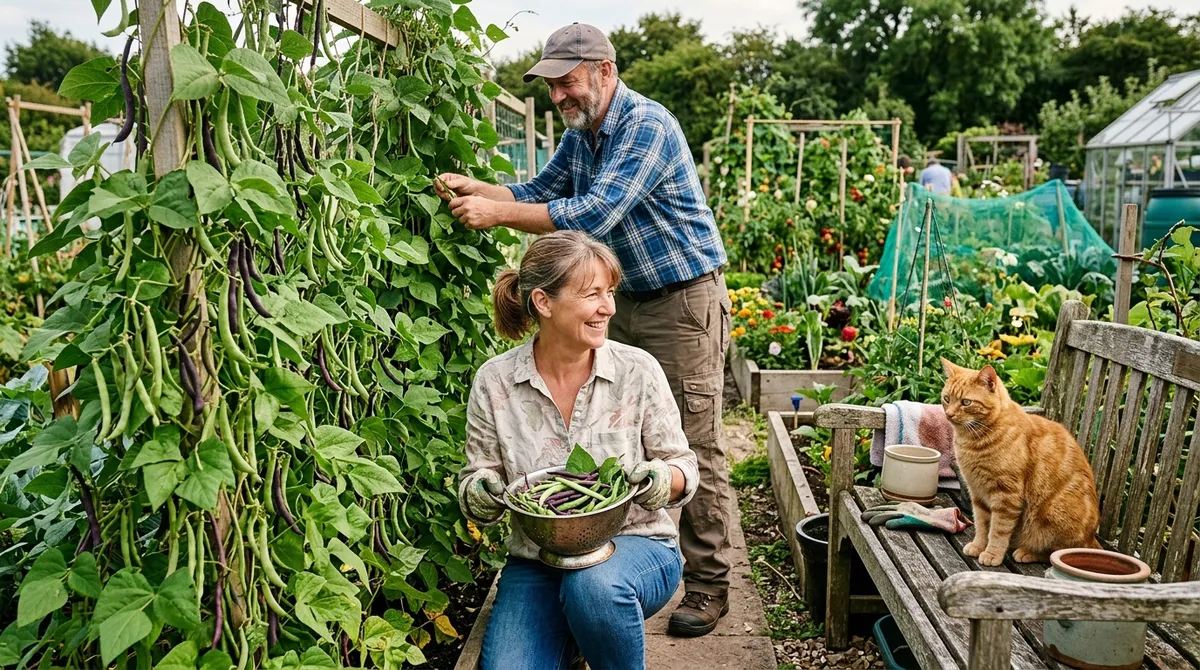
French beans are one of the most productive vegetables for UK gardens. A single climbing plant can yield up to 6kg of pods over a 12-week season, and even dwarf varieties in containers produce generous harvests from July through October. They are easier to grow than runner beans and more tender in texture when eaten fresh.
The key to success is timing. French beans are half-hardy and killed by frost. Sow too early outdoors and the seeds rot in cold soil. Sow too late and the cropping season is cut short. This guide covers everything from indoor sowing in April to freezing surplus in October. It draws on 6 seasons of trials with 12 varieties on a Staffordshire allotment in heavy clay soil. For a broader look at growing your own food, see our vegetable growing guide.
Dwarf vs climbing French beans
Dwarf French beans grow as compact bushes reaching 40-50cm tall. They need no support and crop for 4-6 weeks from first picking. They are ideal for containers, raised beds, and small gardens. Most produce a heavy flush of pods over a short period.
Climbing French beans grow to 1.5-2.0m tall and need bamboo cane wigwams, trellis, or netting for support. They crop for 10-12 weeks and produce up to 3 times the yield per square metre compared with dwarf types. A row of 8 climbing plants on a double row of canes produces enough beans for a family of four with surplus for freezing.
The trade-off is simple. Dwarf types are quicker and easier. Climbing types produce far more beans over a longer season. On an allotment where space is limited, climbing varieties give the best return per square metre. In containers or small raised beds, dwarf varieties are the practical choice. For guidance on growing vegetables in limited space, see our container vegetable guide.
When to sow French beans
Timing depends on whether you start indoors or sow direct.
Indoor sowing (mid-April to late May)
Start seeds indoors from mid-April. Sow one seed per 7cm pot or module cell, 5cm deep, into moist multipurpose compost. Maintain a temperature of 18-20C for germination, which takes 7-10 days. A heated propagator, warm windowsill, or greenhouse with bubble wrap insulation all work. For more on starting seeds early, read our indoor seed sowing guide.
Harden plants off for 7-10 days before planting out after all frost risk has passed. In the Midlands, this means planting out in late May. In southern England, mid-May is usually safe. Northern England and Scotland should wait until early June.
Outdoor sowing (late May to late June)
Direct sow outdoors once soil temperature reaches 12C at 10cm depth. In most of England, this is late May. Use a soil thermometer rather than guessing. Cold, wet soil causes seeds to rot before germinating.
Sow seeds 5cm deep and 15cm apart in rows 45cm apart for dwarf types. For climbing varieties, sow 2 seeds at the base of each cane, 15cm apart. Thin to the strongest seedling once both have germinated.
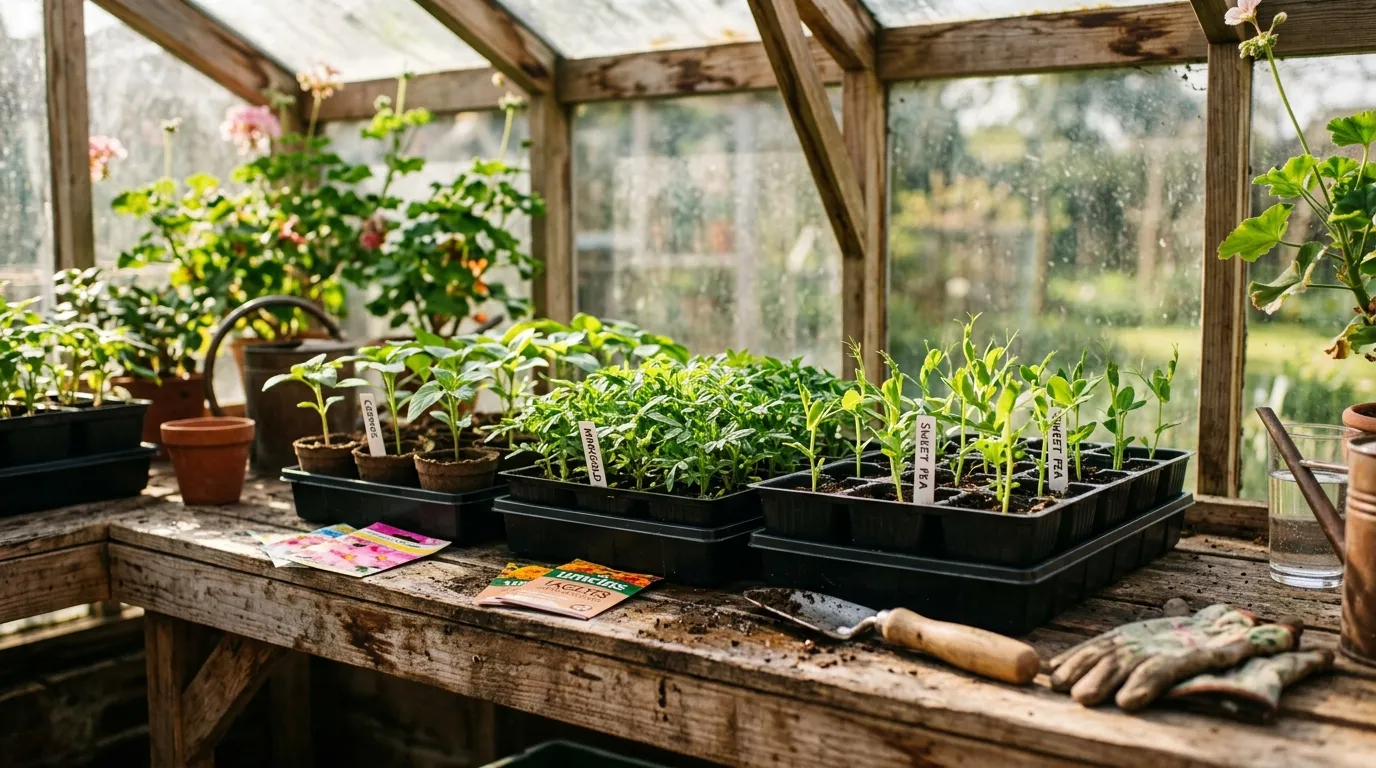
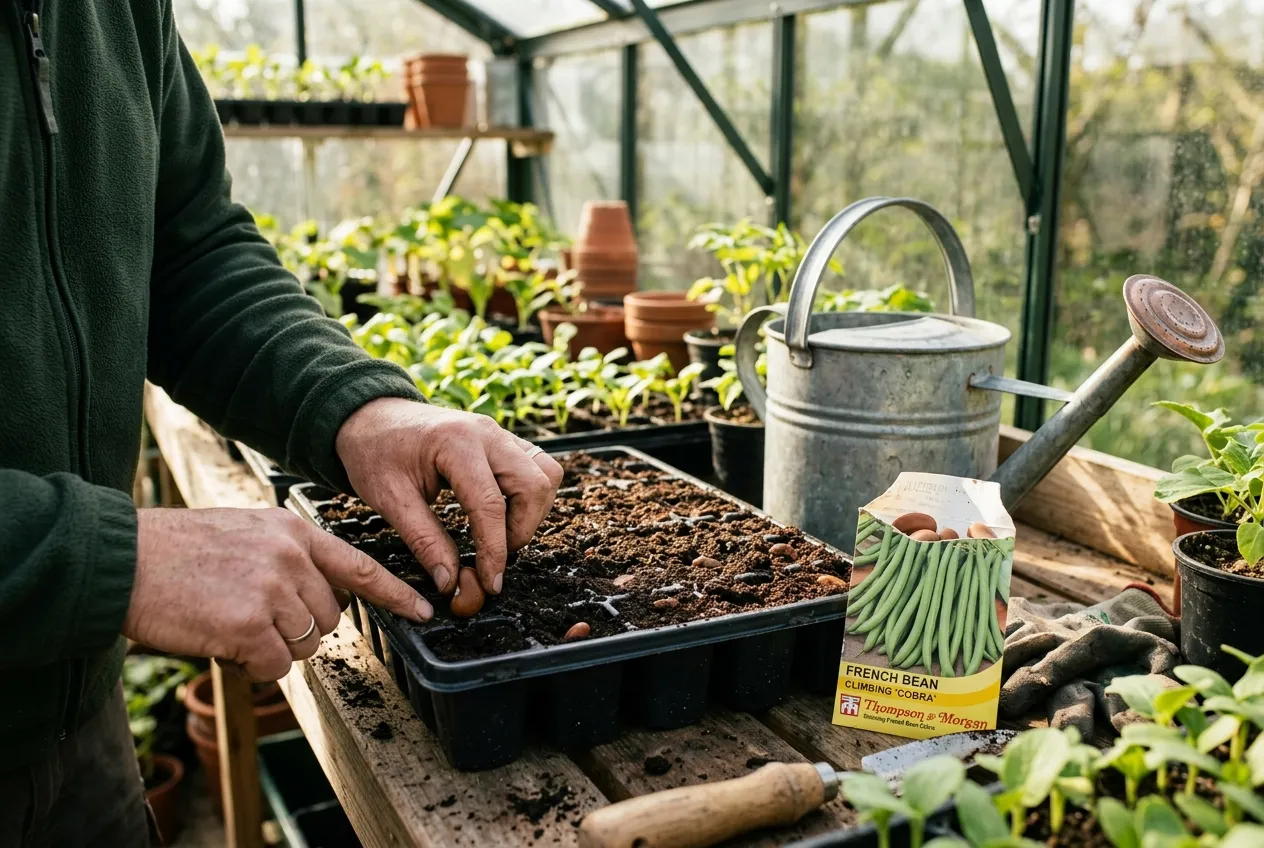 Sowing French bean seeds into modules indoors from mid-April gives a 3-week head start over direct outdoor sowing
Succession sowing for continuous harvest
The single best technique for extending your French bean harvest is succession sowing. Instead of sowing all your beans at once, make 3-4 sowings at 3-week intervals from mid-April to late June.
A typical succession plan for the Midlands:
| Sowing | Date | Method | First pick |
|---|---|---|---|
| First | Mid-April | Indoors at 18-20C | Early July |
| Second | Early May | Indoors at 18-20C | Mid-July |
| Third | Late May | Direct outdoors | Early August |
| Fourth | Mid-June | Direct outdoors | Late August |
This spreads the harvest from early July through to the first frosts in October. Without succession sowing, dwarf varieties produce a glut over 4 weeks and then stop. Climbing varieties crop longer naturally, but succession sowing still extends the total harvest by 6-8 weeks. Our succession planting guide covers the technique in detail for all vegetables.
Supporting climbing French beans
Climbing varieties need sturdy supports in place before planting. French beans twine anticlockwise around their supports, so smooth canes or poles work better than rough string. The three main support methods are:
Bamboo cane wigwam
Push 6-8 bamboo canes (2.4m long) into a circle of 60cm diameter and tie the tops together. Space canes 15cm apart around the base. This is the most popular method on allotments and gives each plant its own cane. A wigwam of 8 canes supports 8 plants and occupies only 0.3 square metres of ground.
Double row of canes
Create two parallel rows 45cm apart. Push canes in at 15cm intervals, angling each pair towards each other. Tie a horizontal cane along the ridge where they cross. This is the best method for growing large quantities. A 3m double row supports 20 plants.
Netting or trellis
Fix 2m-tall netting between two sturdy posts. This works well against a fence or wall. Space plants 15cm apart along the base. Netting suits small gardens where a wigwam would dominate the space.
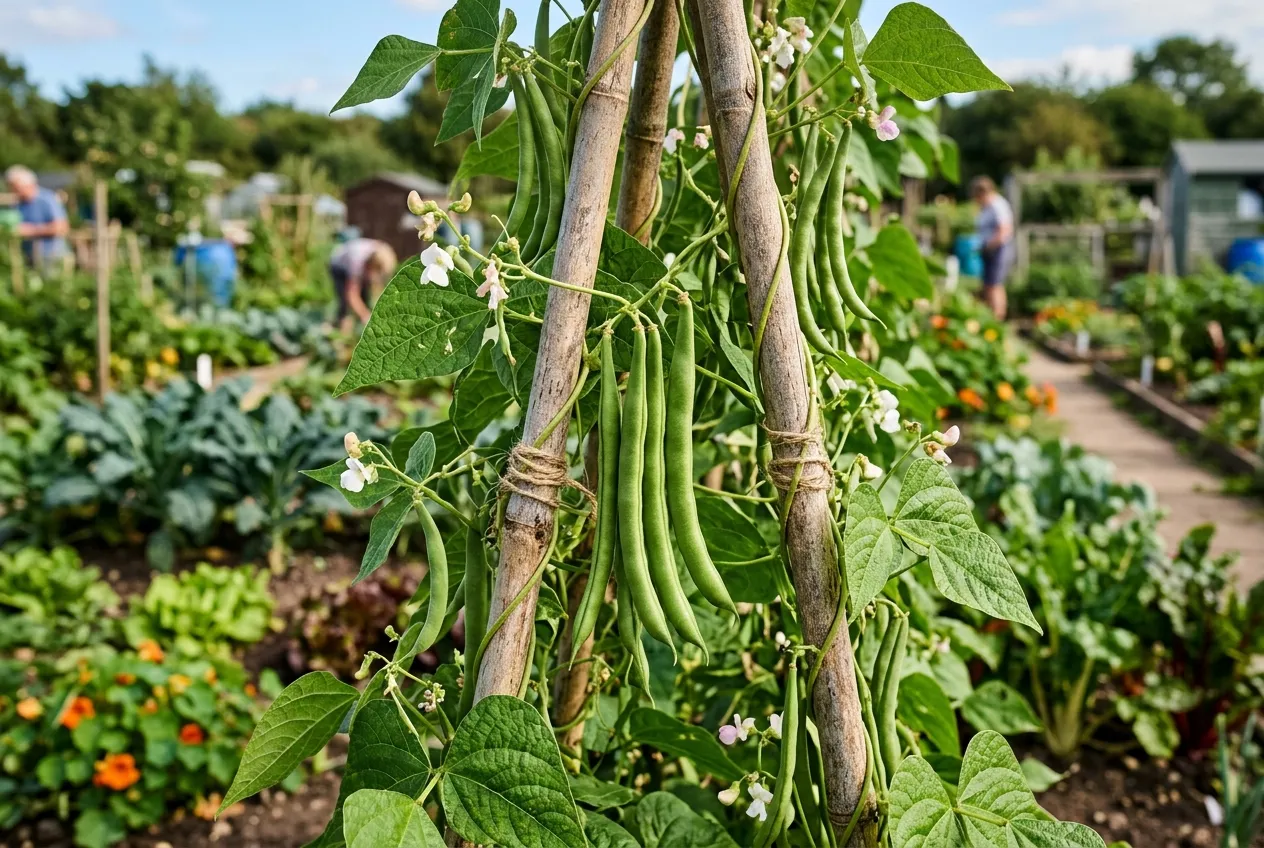 A bamboo cane wigwam supporting climbing French beans in mid-summer, with pods hanging in clusters ready for picking
Best French bean varieties for UK gardens
After growing 12 varieties over 6 seasons in Staffordshire, these are the ones we keep returning to. The variety comparison below includes yield data from our allotment trials.
Climbing varieties
Cobra is the best all-round climbing French bean for UK gardens. Dark green, stringless pods reach 17-20cm long. Plants crop for 10-12 weeks from first pick and tolerate cooler summers better than most varieties. Yield in our trials averaged 5.2kg per plant over a season.
Blauhilde produces stunning deep purple pods that turn green when cooked. Stringless, with good flavour. Slightly lower yield than Cobra at 4.1kg per plant, but the ornamental value is outstanding. Purple pods are also easier to spot among the foliage, making picking quicker.
Cobra Bicolour offers attractive purple-streaked green pods. Similar performance to standard Cobra but with shorter pods at 14-16cm. Good disease resistance.
Dwarf varieties
Safari is the top dwarf variety for flavour. Fine, pencil-slim pods of 12-14cm with excellent taste. Best picked young. Crops for 5-6 weeks. Ideal for containers and raised beds.
Purple Teepee holds its purple pods above the foliage, making them easy to spot and pick. Pods are 14-16cm long and stringless. The purple colour disappears on cooking, turning deep green. Reliable cropper even in poor summers.
Speedy lives up to its name, producing its first pods just 50 days from sowing. Short cropping window of 4 weeks, but ideal for late succession sowings in June. Green, stringless pods of 12cm.
Ferrari produces long, slim pods of 16-18cm. Stringless with a fine flavour. Higher yield than Safari at 1.8kg per plant vs 1.4kg. The best dwarf variety for freezing due to its uniform pod size.
Why we recommend Cobra as the top climbing variety: After growing climbing French beans over 6 seasons, Cobra has outperformed every other variety in total yield, cropping period, and disease resistance. In a side-by-side trial of 5 climbing varieties on identical soil, Cobra produced 5.2kg per plant versus 4.1kg for Blauhilde and 3.8kg for Blue Lake. Cobra also continued cropping 2 weeks longer into October before the first frost. Its stringless pods stay tender at 20cm, whereas many varieties become tough above 15cm.
Variety comparison table
| Variety | Type | Pod length | Pod colour | Yield per plant | Cropping period | Best for |
|---|---|---|---|---|---|---|
| Cobra | Climbing | 17-20cm | Dark green | 5.2kg | 10-12 weeks | All-round best |
| Blauhilde | Climbing | 15-18cm | Deep purple | 4.1kg | 8-10 weeks | Ornamental + eating |
| Cobra Bicolour | Climbing | 14-16cm | Purple-streaked | 4.8kg | 10-12 weeks | Disease resistance |
| Safari | Dwarf | 12-14cm | Green | 1.4kg | 5-6 weeks | Flavour, containers |
| Purple Teepee | Dwarf | 14-16cm | Purple | 1.6kg | 5-6 weeks | Easy picking |
| Speedy | Dwarf | 12cm | Green | 1.2kg | 4 weeks | Late sowings |
| Ferrari | Dwarf | 16-18cm | Green | 1.8kg | 5-6 weeks | Freezing |
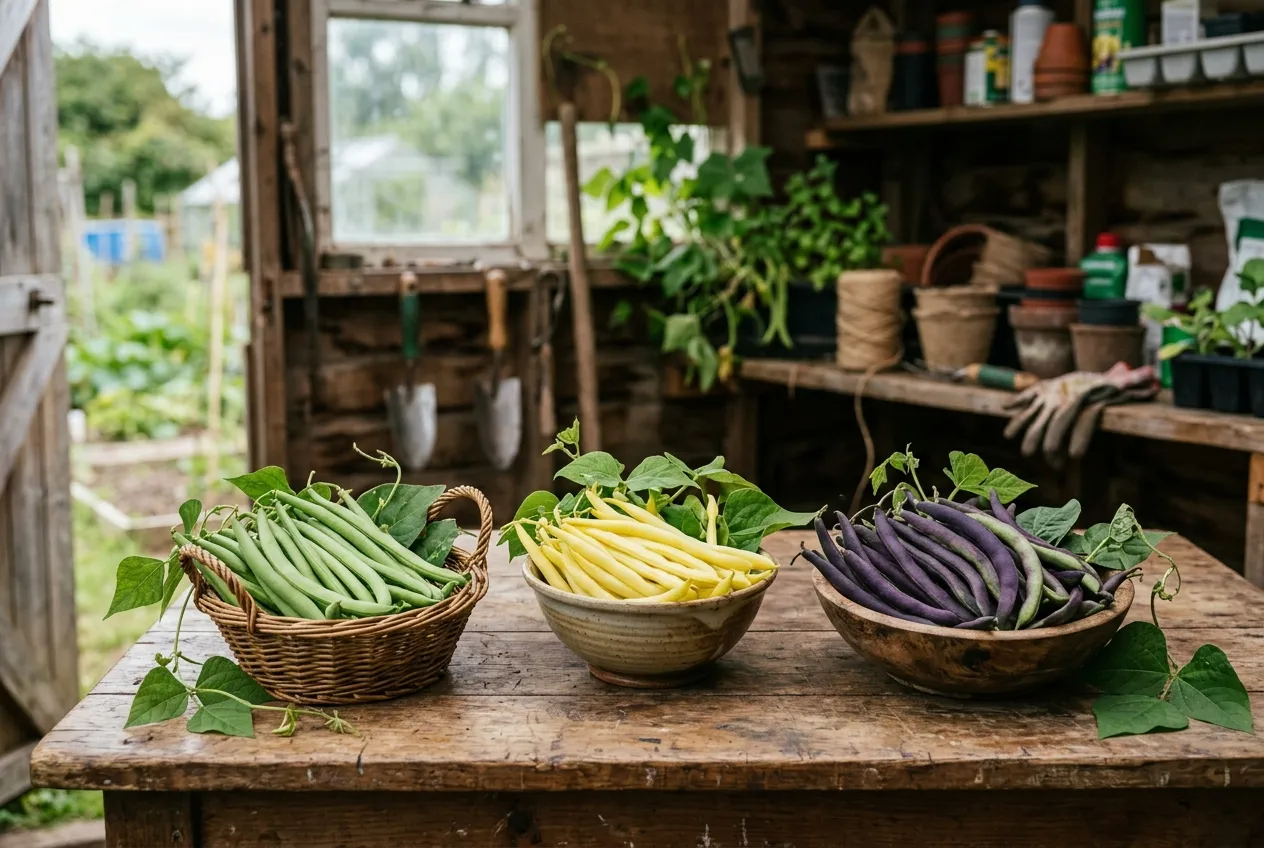 Three French bean types from our allotment trials: green Cobra (left), yellow wax beans (centre), and purple Blauhilde (right)
Growing French beans: soil, feeding, and watering
French beans grow best in fertile, moisture-retentive soil with a pH of 6.0-7.0. Unlike broad beans, which tolerate poor soil, French beans need decent fertility to crop well.
Soil preparation
Dig in well-rotted compost or manure the autumn before planting, at a rate of one barrow-load per 3 square metres. On heavy clay, add horticultural grit to improve drainage. French beans fix their own nitrogen through root nodules, so avoid high-nitrogen fertilisers which promote leaf growth at the expense of pods.
Watering
Water is critical once flowers appear. Inconsistent watering causes flower drop and misshapen pods. Water at the base of plants, not overhead. Give climbing varieties 10 litres per square metre twice weekly in dry weather. Mulch around plants with straw, grass clippings, or compost to retain soil moisture and suppress weeds. A 5cm mulch layer reduces watering frequency by roughly 30%.
Feeding
Apply a high-potash tomato feed every 2 weeks once the first flowers open. This encourages pod production rather than leafy growth. Stop feeding 3 weeks before the end of the season. Potash improves pod quality and helps plants resist disease.
Common problems and pests
Black bean aphid
The most common pest of French beans in the UK. Colonies of tiny black insects cluster on shoot tips and flower buds, weakening plants and distorting growth. Pinch out the top 10cm of climbing beans once they reach the top of their supports. This removes the soft growth that aphids prefer. Plant companion flowers like marigolds and nasturtiums alongside to attract ladybirds and hoverflies. A single ladybird larva eats up to 50 aphids per day.
Halo blight
A bacterial disease causing brown spots with yellow halos on leaves. Spreads in wet weather and through infected seed. There is no chemical cure. Remove and destroy affected plants immediately. Use certified disease-free seed and rotate beans to a different bed each year. Do not save seed from infected plants. The Royal Horticultural Society provides identification photos for this disease.
Slugs and snails
Young seedlings are vulnerable, especially in wet springs. Protect transplants with copper tape, wool pellets, or beer traps. Direct-sown seeds are most at risk in the first 2 weeks after germination. Organic ferric phosphate slug pellets break down harmlessly in soil and are safe around wildlife.
Grey mould (Botrytis)
Fluffy grey fungus on pods in wet, humid conditions. Improve air circulation by spacing plants correctly and avoiding overhead watering. Remove infected pods promptly. This is more common in late-season crops during September and October.
Field Report: In autumn 2024, heavy September rain triggered a bad Botrytis outbreak on our late-sown Cobra plants. We lost roughly 25% of the final picking. The following year, we increased plant spacing from 15cm to 20cm on the same row, which improved airflow. Botrytis losses dropped to under 5%. The extra 5cm between plants made more difference than any spray.
Harvesting French beans
Pick pods when they are 10-15cm long and snap cleanly when bent. At this stage, the seeds inside are barely visible through the pod wall. Pods left to grow beyond 18cm develop tough strings and the seeds enlarge, making the texture coarse. Over-mature pods also signal the plant to stop flowering.
Harvest every 2-3 days during peak production in July and August. Use two hands: hold the stem with one hand and pull the pod with the other. French bean stems are brittle and snap easily, which damages the plant and reduces future yield.
A healthy climbing plant produces 300-500g per picking at peak season. Expect 15-20 pickings over a 10-12 week period from climbing varieties. Dwarf plants produce 200-300g per picking over 6-8 pickings.
Freezing and storing French beans
Fresh French beans keep for 3-4 days in the fridge. For longer storage, freezing is the best option.
Blanch before freezing. Boil whole beans for 2 minutes, then plunge into ice water for 2 minutes. Drain thoroughly and spread in a single layer on a baking tray. Freeze until solid, then transfer to freezer bags. This prevents beans clumping together and preserves colour, texture, and vitamin C content. Frozen beans store for up to 12 months.
Beans can also be dried on the plant at the end of the season. Leave the final pods to mature until the seeds rattle inside. Shell the dried beans and store in airtight jars. These haricot beans keep for 2 years and are excellent in soups and cassoulets. Borlotti-type French beans are grown specifically for drying and produce attractive speckled pink beans.
Month-by-month French bean calendar
| Month | Task |
|---|---|
| January | Order seeds from catalogues. Cobra, Safari, and Purple Teepee are reliably available from UK suppliers. |
| February | Plan your bean supports. Buy 2.4m bamboo canes or netting for climbing varieties. |
| March | Prepare beds with well-rotted compost. No action on sowing yet in most UK regions. |
| April | First indoor sowing from mid-April at 18-20C. Set up cane wigwams or netting outdoors. |
| May | Second indoor sowing early May. Harden off April-sown plants. Direct sow outdoors from late May when soil reaches 12C. |
| June | Final direct sowing by mid-June. Plant out all indoor-raised seedlings. Water well after planting. |
| July | First harvests from April sowings. Pick every 2-3 days. Begin fortnightly potash feeding. Watch for aphids. |
| August | Peak harvest month. Continue picking every 2-3 days. Succession-sown crops come into production. |
| September | Harvest continues from later sowings. Watch for Botrytis in wet weather. Leave some pods to dry on late plants. |
| October | Final pickings before first frost. Pull up spent plants and compost. Shell any dried beans for storage. |
| November | No action. Beans are finished for the year. |
| December | No action. Review the season and plan next year’s varieties and sowing dates. |
Common mistakes when growing French beans
Sowing too early outdoors
French bean seeds rot in soil below 12C. Wait until late May in most of England, early June in the north. Use a soil thermometer rather than the calendar. Cold, wet compost kills more bean seeds than any pest.
Not picking often enough
Leaving mature pods on the plant signals it to stop producing flowers. This is the single biggest reason for disappointing yields. Pick every 2-3 days without fail during July and August.
Watering overhead
Wet foliage encourages Botrytis and halo blight. Always water at the base. A leaky hose or drip line is ideal. Overhead sprinklers are the worst option for beans.
Crowding plants
Spacing plants closer than 15cm reduces air circulation and increases disease. Each plant needs room for its foliage to dry after rain. Climbing plants need even more space: 20cm between plants on cane wigwams.
Ignoring nitrogen-fixing nodules
French beans produce their own nitrogen through bacteria in root nodules. Adding high-nitrogen fertiliser produces lush leaves but fewer pods. Use a high-potash feed instead once flowering begins.
Now you’ve mastered French beans, read our guide to growing courgettes for another high-yielding summer crop that pairs well on the allotment.
Frequently asked questions
When should I sow French beans in the UK?
Sow indoors from mid-April or outdoors from late May. Indoor sowing at 18-20C gives a 3-week head start over direct sowing. Seeds germinate in 7-10 days at this temperature. Outdoor sowing is safe once soil temperature reaches 12C and all frost risk has passed, typically late May in the Midlands and early May in southern England.
What is the difference between dwarf and climbing French beans?
Dwarf types grow to 45cm and need no support. Climbing types reach 1.8m and need cane wigwams or netting. Dwarf varieties crop for 4-6 weeks and suit containers and small spaces. Climbing varieties crop for 10-12 weeks and produce up to 3 times the yield per square metre. Most allotment growers choose climbers for maximum harvest from a small area.
How often should I pick French beans?
Pick every 2-3 days for maximum yield. Frequent harvesting prevents pods from maturing and signals the plant to keep flowering. In our trials, plants picked every 2 days produced 40% more beans than plants picked weekly. Use two hands when picking to avoid snapping the brittle stems.
Can I grow French beans in pots?
Yes, dwarf varieties thrive in containers of 30cm diameter or larger. Use multipurpose compost and water daily in warm weather. Feed fortnightly with a high-potash tomato fertiliser once flowers appear. Safari and Purple Teepee are the best dwarf varieties for pots, cropping well in a 10-litre container. Place in full sun with shelter from wind.
Why are my French bean flowers dropping without setting pods?
Cold nights below 12C cause flower drop. Drought stress and irregular watering also trigger it. Water consistently at the base of plants, especially once flowering begins. High temperatures above 30C can also reduce pollination, though this is rare in most UK summers. Mulch around plants to retain soil moisture.
How do I stop black bean aphid on French beans?
Pinch out the growing tips of climbing beans once they reach the top of their supports. Aphids cluster on soft new growth. Encourage ladybirds, hoverflies, and lacewings by planting marigolds and nasturtiums alongside your beans. Spray heavy infestations with a strong jet of water. Avoid chemical sprays near flowers as they kill pollinators.
Can I freeze French beans?
Yes, French beans freeze well for up to 12 months. Blanch whole beans in boiling water for 2 minutes, plunge into ice water, drain, and freeze flat on a tray before bagging. This preserves colour, texture, and nutrients. Frozen beans are best used in stews, stir-fries, and soups rather than as a standalone side dish.
Lawrie has been gardening in the West Midlands for over 30 years. He grows his own veg using no-dig methods, keeps a wildlife-friendly garden, and writes practical advice based on real UK growing conditions.