How to Grow Herbs in the UK
Complete guide to growing herbs in UK gardens. Covers the best herbs, growing from seed, container growing, harvesting, and preserving herbs year-round.
Key takeaways
- Rosemary, thyme, sage, and bay are evergreen — they grow outdoors year-round in the UK
- Basil needs warmth and does best on a sunny windowsill or in a greenhouse
- Always grow mint in a container — it spreads aggressively if planted in open ground
- Most herbs prefer poor, well-drained soil — rich soil produces lush leaves with less flavour
- Harvest herbs regularly to encourage bushy growth and prevent flowering
- A single container with five herbs provides fresh kitchen herbs from April to November
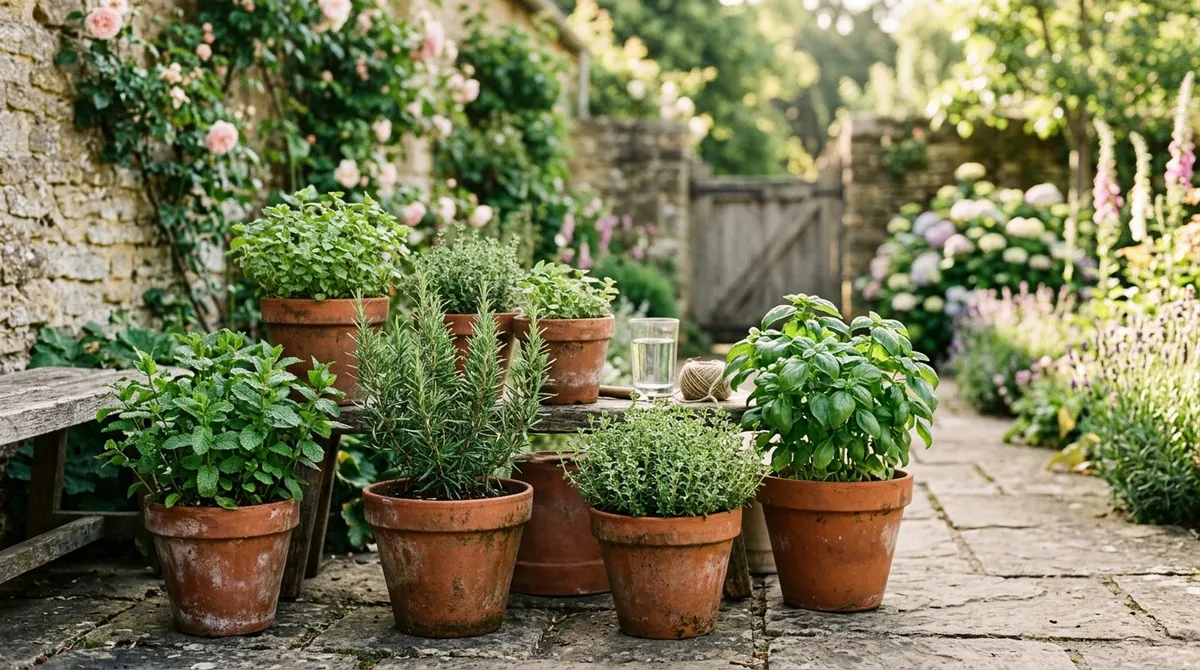
Herbs are the easiest and most rewarding plants for any UK garden. A few pots on a sunny patio or a small bed by the kitchen door gives you fresh herbs from spring to autumn. Most perennial herbs survive UK winters without protection, and the annual ones grow fast from seed.
This guide covers the best herbs for UK gardens, how to grow them, and how to keep a supply going year-round. For growing herbs alongside vegetables, see our companion planting guide.
The best herbs for UK gardens
Rosemary
An evergreen shrub that thrives in UK conditions. Plant in full sun in well-drained soil. Rosemary tolerates drought, poor soil, and coastal exposure. It grows to 1.5 metres and lives for 15-20 years. Prune after flowering in spring to keep it compact. The flowers attract bees from March onwards.
Harvest by cutting 10cm sprigs from the branch tips. Rosemary keeps its flavour well when dried — hang bunches in a warm, airy room for two weeks. Use with lamb, roast potatoes, bread, and Mediterranean dishes.
Thyme
Low-growing and evergreen. Plant in a sunny spot with sharp drainage — thyme hates wet roots. Common thyme (Thymus vulgaris) has the strongest cooking flavour. Lemon thyme adds citrus notes. Both attract pollinators heavily when flowering in June and July.
Replace thyme plants every 3-4 years as they become woody and less productive. Take cuttings in summer to propagate new plants for free.
Basil
The one herb that needs warmth. Basil is a tender annual that grows best on a sunny windowsill, in a greenhouse, or in a sheltered spot outdoors after mid-May. Sow seed indoors from April in small pots of moist compost. Germination takes 7-14 days at 20 degrees C.
Pinch out the growing tips regularly to encourage bushy growth. Remove flower buds as they appear — once basil flowers, the leaves lose flavour. Harvest individual leaves or cut whole stems back to the second pair of leaves. Basil is the classic partner for tomatoes in both the garden and the kitchen.
Mint
Vigorous, almost indestructible, and dangerously invasive. Always grow mint in a container. Planted in open ground, it sends runners in every direction and smothers neighbouring plants within a season.
Grow in a pot at least 30cm wide filled with multipurpose compost. Keep moist — mint is one of the few herbs that likes damp soil. Cut back hard in autumn. New shoots appear in March. Apple mint, spearmint, and peppermint are the most useful varieties for the kitchen.
Parsley
A biennial grown as an annual. Flat-leaf parsley has stronger flavour than curly varieties. Sow directly outdoors from March to August, or start in modules indoors. Germination is notoriously slow — 3-4 weeks is normal. Soaking seed in warm water overnight speeds it up.
Parsley tolerates light shade, making it useful in gardens without full sun. It grows well alongside salad leaves and carrots in a raised bed or container.
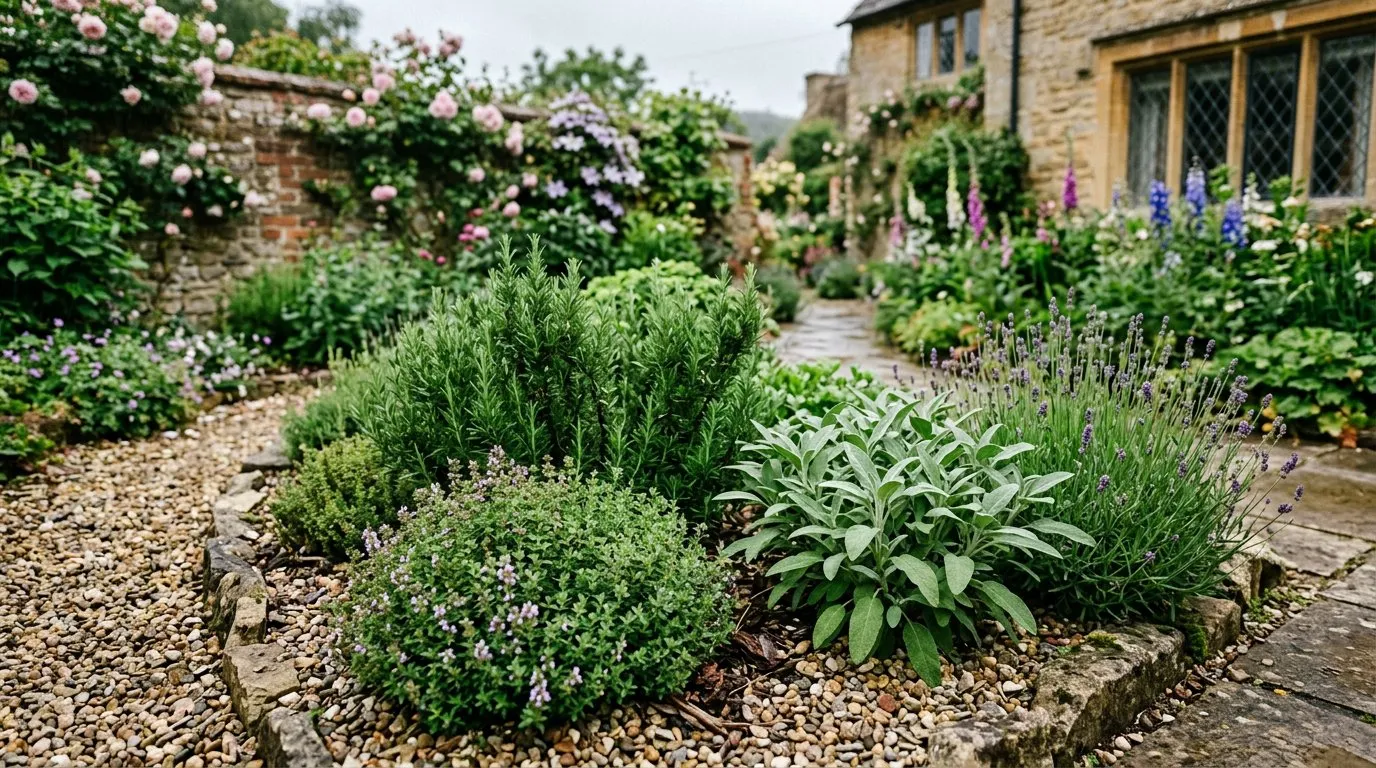
Mediterranean herbs grouped together in a sunny, well-drained border. These herbs thrive on neglect — too much water and rich soil reduces their flavour.
Chives
The easiest allium for any garden. Chives produce clumps of mild onion-flavoured leaves from March to November. The purple pom-pom flowers in May and June are edible and attract pollinators. Cut the whole clump to 5cm every few weeks to encourage fresh growth.
Divide established clumps every 3 years in spring or autumn. Chives deter aphids when planted around roses and fruit trees.
Coriander
Coriander bolts quickly in hot weather, running to seed within weeks. Sow every 2-3 weeks from March to September for a continuous supply. Choose slow-bolt varieties like Calypso or Confetti. Grow in partial shade in summer — full sun accelerates bolting.
Coriander seed (the dried fruit) is a useful spice in its own right. Let a few plants flower and set seed, then harvest and dry the seeds.
Sage
A woody perennial with soft, grey-green leaves. Common sage is the most versatile cooking variety. Purple sage and tricolour sage add ornamental interest. Plant in full sun in well-drained soil. Prune in spring by cutting stems back by one-third — never cut into bare wood.
Sage leaves have the strongest flavour just before the plant flowers in June. Use fresh or dried with pork, poultry, and stuffings.
Bay
An evergreen tree that grows slowly to 3-5 metres if unpruned. Bay responds well to clipping and makes an excellent container specimen trained as a lollipop standard. It tolerates most soil types and light shade.
Bay leaves develop their full flavour when dried. Pick leaves year-round and air-dry for a week before using in soups, stews, and sauces. Bay is hardy to around -10 degrees C, but protect container-grown plants from severe frost by wrapping the pot in bubble wrap.
Growing herbs in containers
Containers are the ideal way to grow herbs. They allow perfect drainage control, make harvesting easy, and keep invasive herbs contained.
Choosing containers
Use pots at least 25-30cm wide. Terracotta looks attractive and provides good drainage but dries out faster than plastic. Always ensure pots have drainage holes. Add a 2cm layer of crocks or gravel at the base.
Compost
Most herbs prefer lean, free-draining compost. Mix multipurpose compost 50:50 with perlite or horticultural grit for Mediterranean herbs. Use straight multipurpose compost for parsley, chives, coriander, and mint which prefer richer, moister conditions.
Grouping herbs
Group herbs by their water needs. Mediterranean herbs (rosemary, thyme, sage, oregano, lavender) share a pot well — they all want sun and sharp drainage. Moisture-loving herbs (parsley, chives, coriander, mint) suit a separate container with richer compost.
A single 60cm pot with rosemary, thyme, sage, oregano, and a compact lavender provides fresh herbs from April to November and costs under ten pounds to plant. See our container vegetable gardening guide for more on growing edibles in pots.
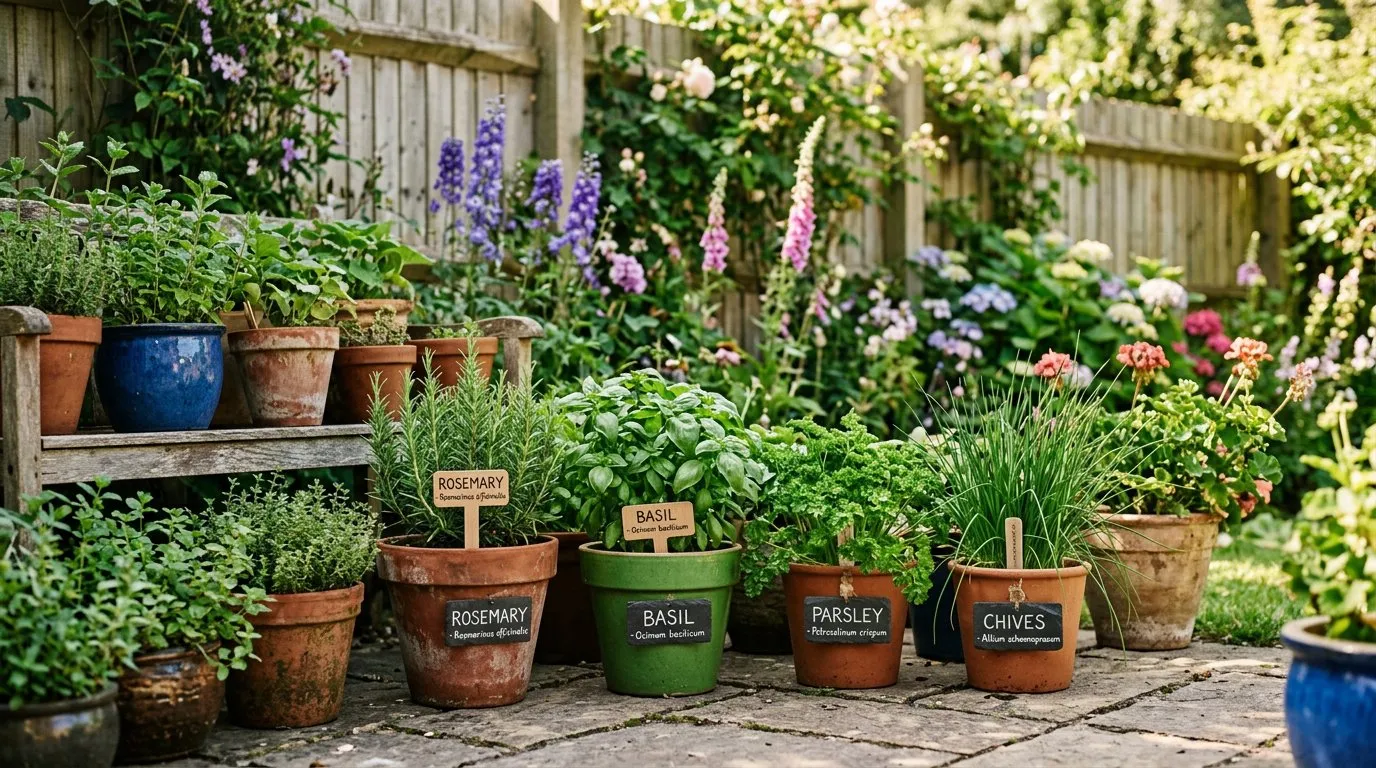
Herbs grouped in containers by water needs. Mediterranean herbs in gritty compost, leafy herbs in richer, moister mix.
Growing herbs from seed
Growing herbs from seed is the cheapest way to fill a herb garden. A single packet of basil seed produces 50-100 plants for under two pounds.
Indoor sowing
Sow basil, parsley, and coriander in small pots or modules filled with seed compost from March onwards. Cover with a thin layer of vermiculite. Place on a bright windowsill or in a heated propagator at 18-20 degrees C. Transplant seedlings into individual pots when they have two true leaves.
Direct sowing
Sow chives, dill, coriander, and parsley directly outdoors from April when the soil has warmed up. Prepare a fine seed bed by raking the surface smooth. Sow thinly in shallow drills, cover lightly, and water with a fine rose. Thin seedlings to 15-20cm apart.
Buying plants
Garden centre herb plants are an instant start. Harden off indoor-grown plants for a week before planting outdoors — set them outside during the day and bring in at night. Supermarket herb pots can be rescued by dividing the overcrowded seedlings into individual pots with fresh compost. See our guide to starting a vegetable garden for more on getting started with edible growing.
Harvesting herbs correctly
How you harvest determines how well the plant grows back.
Soft herbs (basil, parsley, coriander, mint): Cut whole stems back to a leaf pair rather than picking individual leaves. This encourages branching and produces a bushier, more productive plant.
Woody herbs (rosemary, thyme, sage): Snip 10cm from the tips of actively growing stems. Never cut into old bare wood — most woody herbs do not regenerate from leafless stems.
Chives: Cut the entire clump to 5cm above soil level. Fresh growth reappears within two weeks.
General rule: Harvest in the morning after the dew dries but before the heat of the day. Essential oil concentration is highest at this time, giving the strongest flavour.
Why we recommend Common thyme (Thymus vulgaris) for any UK herb garden: After 30 years of growing and recommending herbs, common thyme consistently outperforms every other herb for sheer reliability. It survives hard frost, drought, and total neglect yet still produces strongly flavoured leaves from March to December. A single established plant grown in a sunny, well-drained spot harvested for us through 11 consecutive UK winters without replanting.
Preserving herbs for winter
UK herb gardens produce abundantly from April to October, then most soft herbs die back. Preserving the summer surplus keeps you supplied through winter.
Freezing
The best method for soft herbs. Chop basil, parsley, mint, chives, and coriander finely. Pack into ice cube trays, top up with water or olive oil, and freeze. Drop frozen herb cubes straight into cooking. Frozen herbs keep their flavour for six months.
Drying
Best for woody herbs. Tie rosemary, thyme, sage, and oregano in small bunches and hang upside down in a warm, dry, well-ventilated room. They dry in 1-2 weeks. Strip leaves from stems and store in airtight jars away from light. Dried herbs keep for a year.
Growing indoors over winter
Move pots of parsley, chives, and mint to a bright windowsill in October. They continue producing leaves through winter if given enough light. Basil struggles indoors over winter without supplemental lighting — it is easier to sow fresh seed in spring.
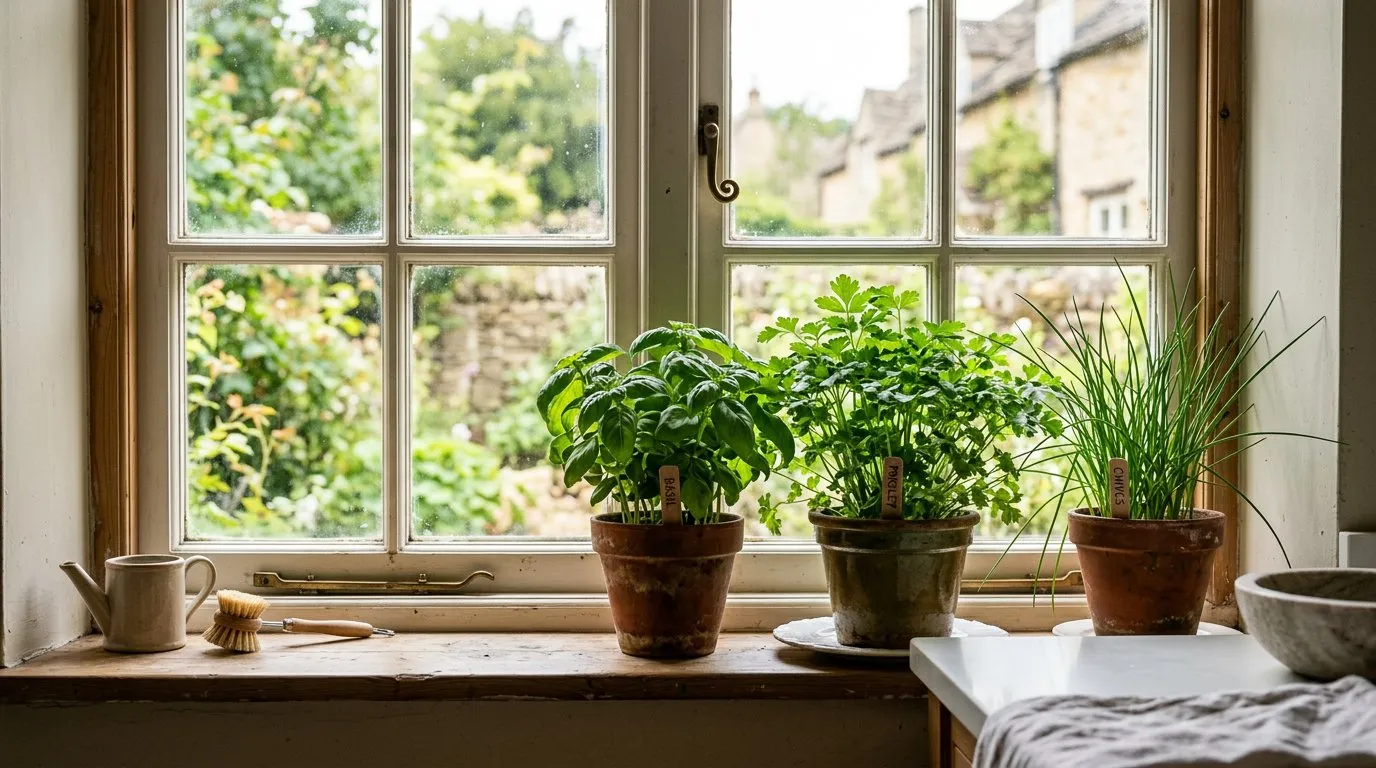
Growing herbs on a kitchen windowsill. Parsley, basil, and chives produce fresh leaves year-round with at least four hours of direct light.
Common problems
Leggy growth
Caused by insufficient light or infrequent harvesting. Move plants to a sunnier position. Cut back hard to encourage fresh bushy growth.
Yellowing leaves
Usually overwatering. Mediterranean herbs rot quickly in wet compost. Reduce watering and improve drainage by adding grit to the compost. Yellowing can also indicate the plant needs repotting into fresh compost.
Bolting
Coriander and basil bolt (run to flower and seed) in hot weather. Sow bolt-resistant varieties. Provide afternoon shade in midsummer. Remove flower stalks as they appear to extend the leaf harvest.
Rust on mint
Orange spots on mint leaves indicate rust fungus. Cut all affected stems to ground level and dispose of them (not on the compost heap). Fresh growth is usually clean. If rust persists, replace the plant and the compost.
Month-by-month herb calendar
| Month | Task |
|---|---|
| March | Sow parsley, chives, and coriander outdoors. Prune rosemary and sage |
| April | Sow basil indoors. Plant out hardy herbs. Divide established chive clumps |
| May | Plant out basil after last frost. Begin regular harvesting |
| June | Harvest and freeze surplus herbs. Let some chives and thyme flower for bees |
| July-August | Sow coriander every 2-3 weeks. Take softwood cuttings from rosemary and sage |
| September | Pot up herbs for winter windowsill. Harvest and dry woody herbs |
| October | Move tender herbs indoors. Cut back mint. Mulch around perennial herbs |
| November-February | Harvest evergreen herbs as needed. Plan next year’s herb garden |
For a complete seasonal gardening schedule, see our autumn, winter, and spring gardening jobs guides.
Now you’ve mastered growing herbs, read our guide on how to grow rosemary in the UK for everything you need to know about the most versatile and long-lived herb in any British garden.
Frequently asked questions
The RHS herb growing guide provides further advice on choosing and growing herbs in UK gardens.
Lawrie has been gardening in the West Midlands for over 30 years. He grows his own veg using no-dig methods, keeps a wildlife-friendly garden, and writes practical advice based on real UK growing conditions.