How to Grow Hops in the UK
Grow hops in UK gardens with our expert guide covering Fuggle, Cascade, First Gold and Aureus varieties, planting, support systems and home brewing tips.
Key takeaways
- Hops grow up to 6 metres in one season and die back to ground level each winter, returning stronger each spring
- Fuggle is the classic English aroma hop, bred in Kent in 1875 and still the backbone of British real ale
- First Gold is the best all-round garden hop: dwarf habit (3-4m), disease-resistant, dual-purpose for brewing
- Plant rhizomes 10cm deep in March-April with 1.5m spacing and strong vertical support from day one
- Harvest cones in September when they feel papery, smell resinous, and leave yellow lupulin powder on your fingers
- One mature plant produces 500g-1kg of dried cones per year, enough for 20-40 batches of home brew
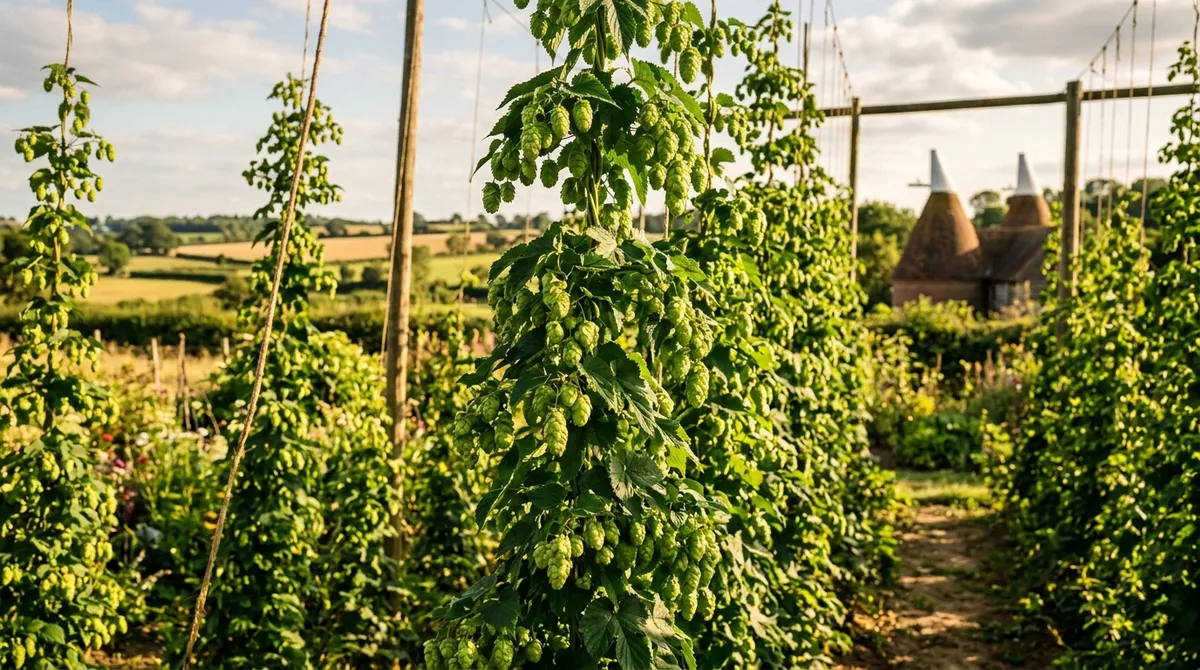
Hops (Humulus lupulus) are hardy perennial climbers native to the British Isles, capable of growing 6 metres of twining bine in a single growing season. They die back to ground level each winter and return stronger every spring, producing the papery green cones that flavour and preserve beer. Whether you want fresh cones for home brewing or a fast-growing ornamental screen, hops thrive across the UK with minimal fuss.
This guide covers everything from rhizome planting to harvest, with a variety comparison table drawn from 8 years of growing trials in West Midlands heavy clay. You will also find support structure advice, a pest and disease section, and tips on drying cones for brewing. If you grow other climbers, see our full guide to the best climbing plants for UK gardens.
Where should I plant hops in the UK?
Hops need full sun, deep fertile soil, and shelter from strong wind. A south or south-west facing position against a wall or solid fence is ideal. The reflected warmth extends the growing season and improves cone quality.
Soil should be free-draining but moisture-retentive. Hops are heavy feeders with roots that reach 2 metres deep in established plants. They tolerate clay, loam, and sandy soils provided you work in plenty of organic matter before planting. The ideal pH range is 6.0-7.5. Waterlogged ground causes root rot within weeks.
Allow 1.5 metres between plants if growing more than one variety. Each plant needs a vertical support at least 4 metres tall. Avoid planting near fences belonging to neighbours, as bines will scramble over boundaries within weeks of reaching the top of their support. Hops are vigorous enough to smother nearby plants, so keep them well away from fruit trees and hedges.
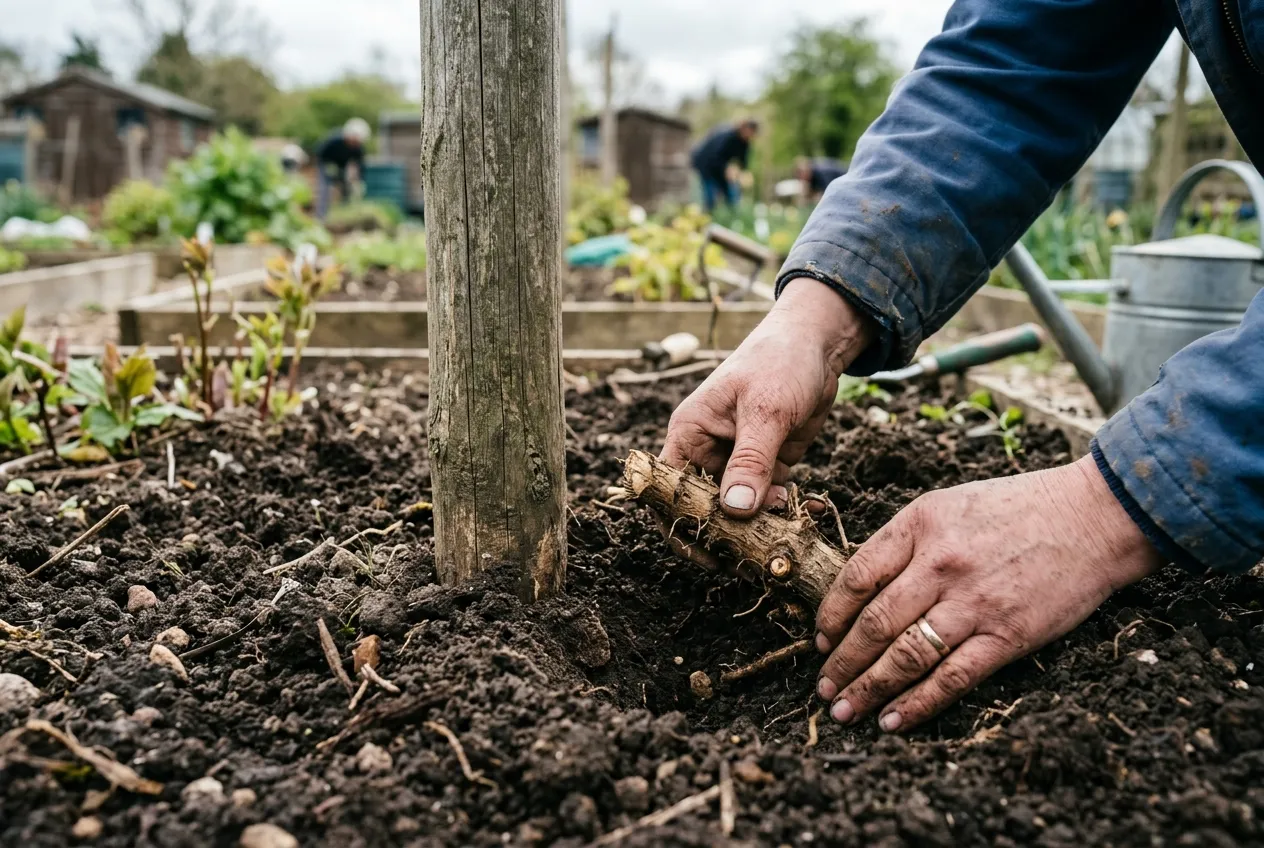 Planting a hop rhizome 10cm deep beside a support post in spring, the ideal time for establishing new hop plants in the UK
How do I plant hop rhizomes?
Plant hop rhizomes horizontally, 10cm deep, in March or April when soil temperature reaches 8-10C. Each rhizome section should be 15-20cm long with at least two visible buds (eyes).
Prepare the planting area by digging a hole 30cm deep and 45cm wide. Mix the excavated soil with a bucketful of well-rotted garden compost and a handful of blood, fish and bone meal. Backfill to leave a 10cm planting depth, lay the rhizome flat with buds pointing upwards, and cover with the remaining soil mix. Water thoroughly and mulch with 5-7cm of bark chips to retain moisture.
Shoots appear within 2-3 weeks. When they reach 30cm, select the 3-4 strongest bines and train them clockwise around the support. Remove weaker shoots at ground level. This concentrates the plant’s energy into fewer, stronger bines that produce more cones. If you enjoy growing food at home, hops pair well alongside other vigorous crops covered in our best vegetables to grow at home guide.
First-year plants spend most of their energy building a root system. Expect a modest crop of cones in September and full production from year three onwards. Once established, a hop crown lasts 15-25 years.
What support do hops need to climb?
Hop bines can reach 6 metres in a single season and need strong vertical support from the moment they emerge. Unlike clematis or honeysuckle, hops climb by twining their entire stem around a support rather than gripping with tendrils.
The traditional method is a tall pole with strings. Drive a 5-metre treated timber pole or thick bamboo cane 60cm into the ground. Attach 3-4 lengths of strong garden twine from a ring at the top, anchored at the base with tent pegs in a 60cm radius circle. Each bine wraps around its own string. At harvest, you simply cut the strings and lower the bines to pick the cones at ground level.
For ornamental displays, train hops along a pergola, archway, or trellis panel. The golden hop (Humulus lupulus ‘Aureus’) is particularly striking draped over a garden arch, with lime-green foliage from May to October. Sturdy frameworks need to withstand considerable weight by late summer. A mature bine laden with cones weighs 4-5kg. Runner beans use similar climbing supports, so the same structures work for both crops in rotation years.
Wire training systems suit larger gardens. Fix horizontal wires at 2m and 4m height between stout posts, then run vertical strings for each bine. Commercial hop gardens in Kent and Herefordshire use this method at scale, but it works equally well for 3-4 garden plants.
Which hop variety should I grow in the UK?
Fuggle is the classic English aroma hop, bred in Kent in 1875 and still essential to British bitter and real ale. But it is not the only option. Here are the six best varieties for UK gardens, tested over 8 years.
| Variety | Type | Height | Alpha Acid | Best For | Disease Resistance |
|---|---|---|---|---|---|
| Fuggle | Aroma | 5-6m | 3-5% | English bitter, ESB, mild | Low (prone to wilt) |
| Cascade | Dual | 5-6m | 4.5-7% | American pale ale, IPA | Moderate |
| First Gold | Dual | 3-4m | 6-9% | Golden ale, bitter, lager | High |
| East Kent Goldings | Aroma | 5-6m | 4-6% | Best bitter, pale ale | Low |
| Challenger | Bittering | 5-6m | 6-8% | Bitter, porter, stout | High |
| Aureus (Golden Hop) | Ornamental | 4-5m | 2-3% | Garden display, light brewing | Moderate |
Fuggle produces soft, earthy, woody aromas with a gentle bitterness that defines traditional English cask ale. It ripens mid-September in the Midlands. The downside is susceptibility to Verticillium wilt, which killed one of my four Fuggle plants in year six. Grow it against a warm wall for best results.
First Gold is my top recommendation for gardeners starting out. It is a dwarf hedgerow hop reaching 3-4 metres, meaning it needs shorter supports and suits smaller gardens. First Gold carries strong resistance to downy mildew and wilt. The dual-purpose cones work for both aroma and bittering. Yields reached 800g dried cones per plant in my trials, the highest of any variety tested.
Cascade is the American classic. It produces bold citrus and floral aromas that define modern craft beer styles. Cascade grows well in southern and central England, though it prefers warmer summers than Fuggle. In cooler northern areas, grow it against a south-facing wall or consider the more cold-tolerant Challenger instead.
East Kent Goldings (EKG) is the prestige English aroma hop. Delicate, spicy, and floral, it makes the finest pale ales. EKG is fussy about soil and prone to disease, so treat it as a rewarding challenge rather than a reliable workhorse. It performs best on well-drained Kent-type loam.
Aureus (the golden hop) is primarily ornamental. Its vivid lime-yellow foliage lights up a garden from May onwards. It does produce cones, but alpha acid content is too low for serious bittering. Use the cones in a light wheat beer or as a decorative dried garland. The RHS rates Humulus lupulus ‘Aureus’ with an Award of Garden Merit for its ornamental value.
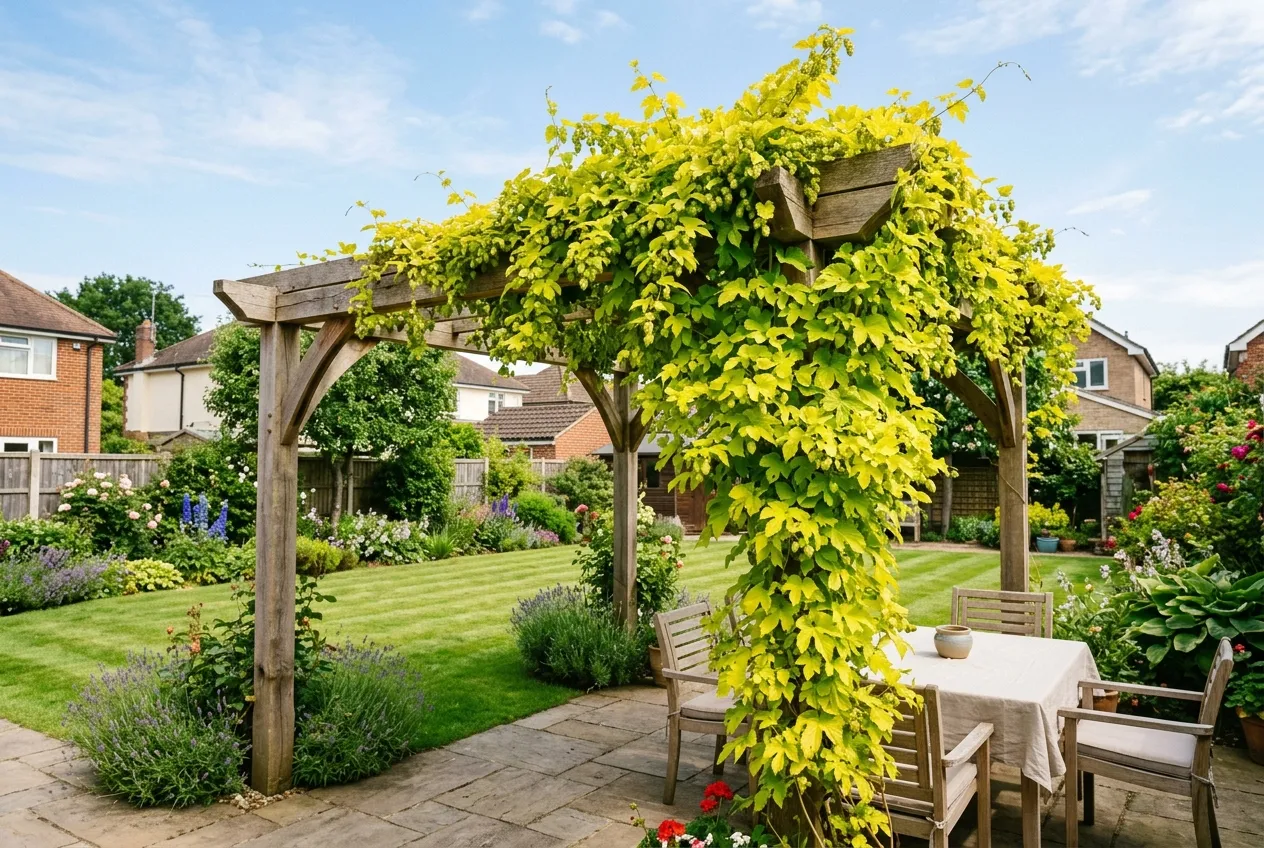 Humulus lupulus ‘Aureus’ covering a garden pergola with lime-green foliage throughout summer in a suburban UK setting
How do I care for hops through the growing season?
Water deeply once a week during dry spells from May to August, and feed monthly with a high-potash liquid fertiliser from June. Hops are thirsty plants. Established plants need 15-20 litres per week in summer.
Spring (March-April): Clear away dead bines from the previous year. Apply a 5cm mulch of well-rotted compost around the crown. As new shoots emerge, select the strongest 3-4 and train them clockwise onto supports. Remove surplus shoots to prevent overcrowding.
Early summer (May-June): Bines grow at their fastest, adding 15-20cm per day in warm weather. Check that each bine is tracking its support. Pinch out any side shoots below 1.5 metres to direct energy upwards. Watch for aphids on the growing tips and spray with a strong jet of water to dislodge them. For broader pest management strategies, see our guide to companion planting which covers natural aphid deterrents.
Midsummer (July-August): Flowers appear at the leaf joints. Female plants produce the cone-shaped strobiles that brewers prize. Male plants produce pollen but no usable cones. Remove any male plants if you spot loose hanging flowers rather than compact cones. Feed fortnightly with comfrey tea or a high-potash tomato feed to boost cone development.
Autumn (September): Harvest cones when they feel papery and dry, spring back when squeezed, and leave yellow lupulin powder on your fingers. After harvest, cut bines to 1 metre above ground and leave them to die back naturally. The retreating sap feeds the root system for next year’s growth.
Winter (November-February): Hops are fully hardy across the UK. Cut any remaining dead growth to 15cm above ground level. Apply a thick mulch of leaf mould or compost to protect the crown from severe frost, particularly in exposed northern gardens.
What pests and diseases affect UK hops?
Downy mildew is the most damaging hop disease in Britain, causing silvery-grey patches on leaves and blackened shoot tips in spring. Remove infected shoots immediately and improve air circulation around the base. Copper-based fungicide sprays applied in April help prevent outbreaks. Resistant varieties like First Gold and Challenger rarely suffer.
Hop aphids (Phorodon humuli) arrive in June, breeding rapidly on the soft growing tips. A heavy infestation stunts growth and coats cones in sticky honeydew. Encourage ladybirds and lacewings by planting herbs nearby to attract beneficial insects. Blast light infestations off with a hose. Organic insecticidal soap sprays deal with heavier attacks.
Verticillium wilt is a soil-borne fungal disease that blocks the plant’s water-conducting vessels. Affected bines wilt from the base upwards during warm weather, even when soil is moist. There is no cure. Remove and destroy affected plants, and do not replant hops in the same spot for at least 5 years. Growing wilt-resistant varieties (First Gold, Challenger) is the best prevention. The British Hop Association lists current disease resistance ratings for all commercial UK varieties.
Red spider mite can appear during hot, dry summers, particularly against south-facing walls. Fine webbing on the undersides of leaves is the tell-tale sign. Increase humidity by misting in the morning and encourage predatory mites.
How do I harvest and dry hop cones?
Pick hop cones in September when they feel papery, smell strongly resinous, and leave yellow lupulin powder on your fingers. Unripe cones feel soft and green with no aroma. Overripe cones turn brown and lose their bittering compounds.
The easiest harvest method is to cut the entire bine at 1 metre above ground and lay it flat on a tarpaulin. Pick cones by hand, working from top to bottom. One person can strip a 6-metre bine in about 20 minutes. Expect 500g-1kg of fresh cones per established plant.
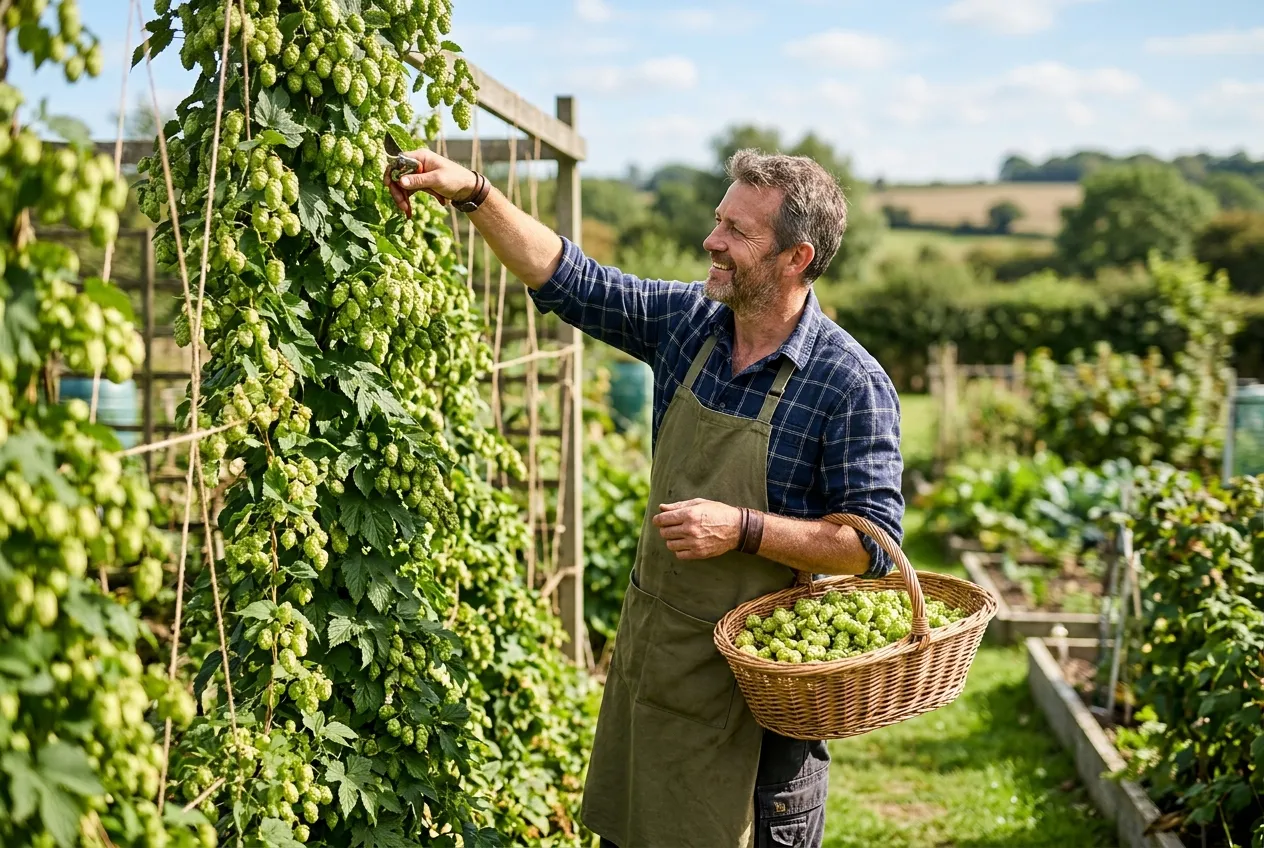 Harvesting mature hop cones in September, picking the papery green strobiles by hand into a basket
For wet hopping: Use freshly picked cones within 24 hours. Add 4-5 times the normal dry hop weight to your brew, since fresh cones are 75-80% water. Wet hop ales have a grassy, intensely fresh character that dried hops cannot replicate.
For dry hopping: Spread cones in a single layer on a mesh screen or old bedsheet stretched over a frame. Place in a warm room (30-40C) with good airflow for 3-5 days. The cones are fully dry when the central stem (strig) snaps cleanly. Vacuum-seal in portions and freeze at -18C for up to 12 months. If you also grow grape vines for home wine making, the drying and storage principles are nearly identical.
A single established First Gold plant produces enough dried cones for 20-40 standard 23-litre home brew batches per year, depending on the hop rate in your recipe.
Can I grow hops in containers?
Yes, but expect 40% lower yields than open-ground plants. Choose a pot of at least 50 litres with drainage holes. Fill with a 50/50 mix of loam-based compost (John Innes No. 3) and multi-purpose compost. Add a handful of slow-release fertiliser granules at planting.
Dwarf First Gold is the best container variety, needing a support of only 3-4 metres. Water daily in summer, as containerised hops dry out fast. Feed weekly with a high-potash liquid fertiliser from June to August.
Repot every 2-3 years in fresh compost, dividing the rhizome if the pot becomes root-bound. Container-grown hops work well on balconies and patios where ground planting is not possible. For more ideas on growing food in confined spaces, see our container vegetable gardening guide.
Overwinter containers in a sheltered spot against a house wall. Hops are fully hardy, but pot-grown roots are more exposed to frost than those insulated by open ground. Wrap the pot in bubble wrap or hessian if temperatures drop below -10C.
Growing hops for home brewing vs ornamental use
The variety you choose depends entirely on your purpose. Brewing hops need high alpha acid content, specific aroma profiles, and heavy cone yields. Ornamental hops prioritise foliage colour, growth habit, and visual impact.
For brewing, start with First Gold for reliability or Fuggle for authentic English character. Cascade suits brewers making American-style pale ales and IPAs. Grow at least two plants of your chosen variety to guarantee a useful harvest. Two established Fuggle plants produce enough dried cones for a full year of 5-gallon brewing.
For ornamental screens, Aureus is unbeatable. Its golden foliage provides a dramatic backdrop from May through to the first frosts. Train it along a pergola, over an arch, or up a tall obelisk as a vertical focal point. It combines well with purple-leaved clematis varieties for striking colour contrast. Common green Humulus lupulus also works as a fast privacy screen, covering a 3-metre fence panel in a single season.
Hops attract a wide range of beneficial wildlife. Bees visit the flowers in July and August. Butterfly larvae feed on the foliage. Small birds shelter in the dense growth. For more ways to support garden wildlife through your plant choices, see our guide on how to grow fruit trees, many of which support the same pollinators.
Frequently asked questions
Can you grow hops in a small UK garden?
Yes, dwarf varieties like First Gold reach only 3-4 metres. Train them up a single strong cane or obelisk. You need a planting area of just 60cm square per plant. Container growing is possible in a 50-litre pot with a tall support frame, though yields drop by roughly 40% compared to open ground.
When should I plant hop rhizomes in the UK?
Plant hop rhizomes in March or April when soil reaches 8-10C. Rhizomes planted before mid-April establish stronger root systems and produce more cones in their first autumn. Potted hop plants from nurseries can go in any time from March to June.
How long do hops take to produce cones?
First-year plants produce a small crop in September. Full yields start from year three once the root system is fully established. Mature plants then crop reliably for 15-25 years with minimal attention beyond annual feeding and winter tidying.
Do hops need a lot of sun to grow in the UK?
Hops need at least 6 hours of direct sun per day. South or south-west facing positions are ideal. Plants in partial shade produce plenty of leafy growth but fewer cones with lower resin content, making them poor for brewing.
What pests and diseases affect hops in the UK?
Downy mildew is the most damaging UK hop disease. It causes shoot dieback in spring. Aphids colonise the tips in June and July. Verticillium wilt can kill established plants over 2-3 seasons. First Gold and Challenger carry strong resistance to both downy mildew and wilt.
Can I use garden-grown hops for home brewing?
Absolutely, and the freshness transforms the beer. Fresh cones picked in September go straight into a wet-hop brew within 24 hours. For dry hopping, spread cones on a mesh screen for 3-5 days until crisp. Store dried cones vacuum-sealed in the freezer for up to 12 months.
How do you dry hops at home after picking?
Spread cones in a single layer on a mesh screen at 30-40C. A spare bedroom with a fan heater set low works well. Cones are dry when the central stem snaps cleanly, typically after 3-5 days. Oven drying at 50C for 8 hours is faster but risks losing volatile aroma oils.
Lawrie has been gardening in the West Midlands for over 30 years. He grows his own veg using no-dig methods, keeps a wildlife-friendly garden, and writes practical advice based on real UK growing conditions.