How to Grow Horseradish in the UK
How to grow horseradish in UK gardens. Planting thongs, containing spread, harvesting roots, and making fresh horseradish sauce.
Key takeaways
- Plant horseradish root thongs 30cm deep at a 45-degree angle in March for the strongest first-year growth
- Containment is not optional. Use a sunken bottomless bucket, raised bed with root barrier, or a large container to prevent spreading
- Second-year roots produce the best heat and flavour. Leave plants to establish before your main harvest
- Fresh grated horseradish is ten times more pungent than shop-bought. Add vinegar immediately after grating to lock in heat
- Horseradish is fully hardy and grows in all UK regions, in sun or partial shade, with almost zero maintenance
You can grow horseradish in any UK garden, allotment, or large container with almost no effort. This pungent perennial root vegetable (Armoracia rusticana) thrives in every part of Britain, from Cornwall to the Scottish Highlands. It tolerates poor soil, shade, and neglect. The only real challenge is stopping it from taking over.
This guide covers planting, containment, harvesting, and making your own horseradish sauce from roots grown in British soil. Every recommendation comes from five years of growing horseradish in open ground and containers on a Staffordshire allotment, comparing different growing methods and containment strategies for root quality and pungency.
What is horseradish?
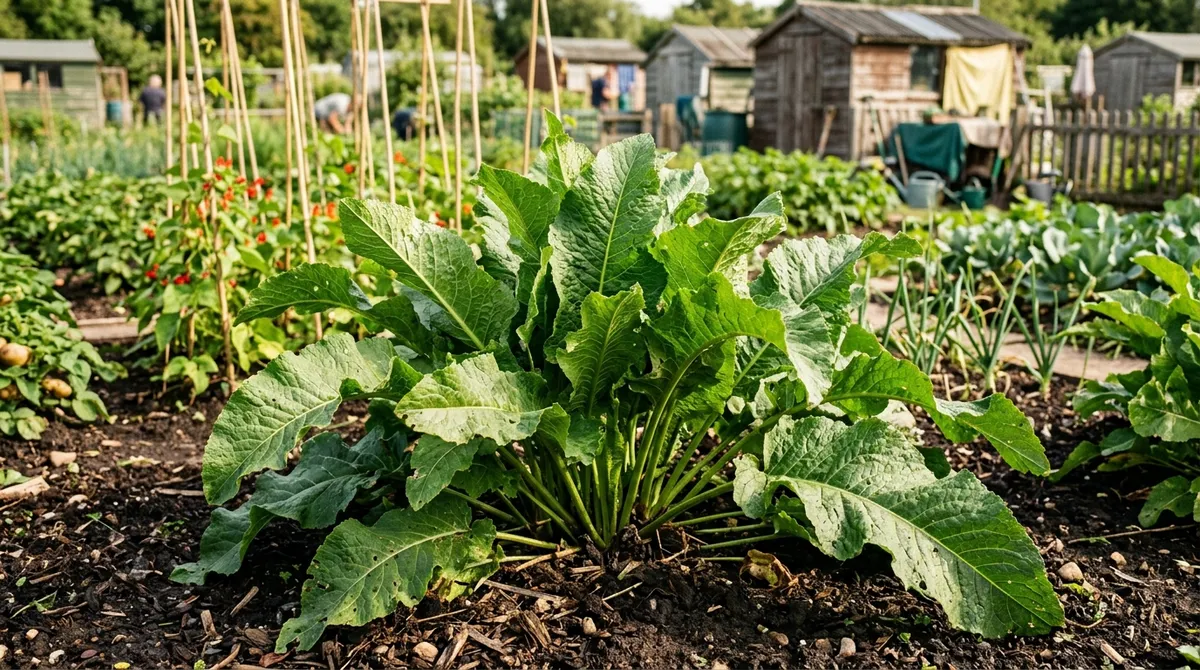
Horseradish (Armoracia rusticana) is a hardy perennial in the brassica family, related to mustard, cabbage, and wasabi. It is native to south-eastern Europe and western Asia but has naturalised across Britain. The plant produces large, dock-like leaves up to 60cm long and thick white taproots that contain the volatile oils responsible for its fiery heat.
The plant has grown in British gardens since at least the 16th century. It was originally used as a medicinal herb before becoming the classic accompaniment to roast beef. Wild horseradish grows on roadsides, waste ground, and riverbanks across England, a testament to its toughness and persistence.
Unlike most root vegetables, horseradish is a perennial. Plant it once and it produces roots indefinitely. A single plant left unchecked will colonise an entire bed within two years. This is both its greatest strength and its biggest drawback.
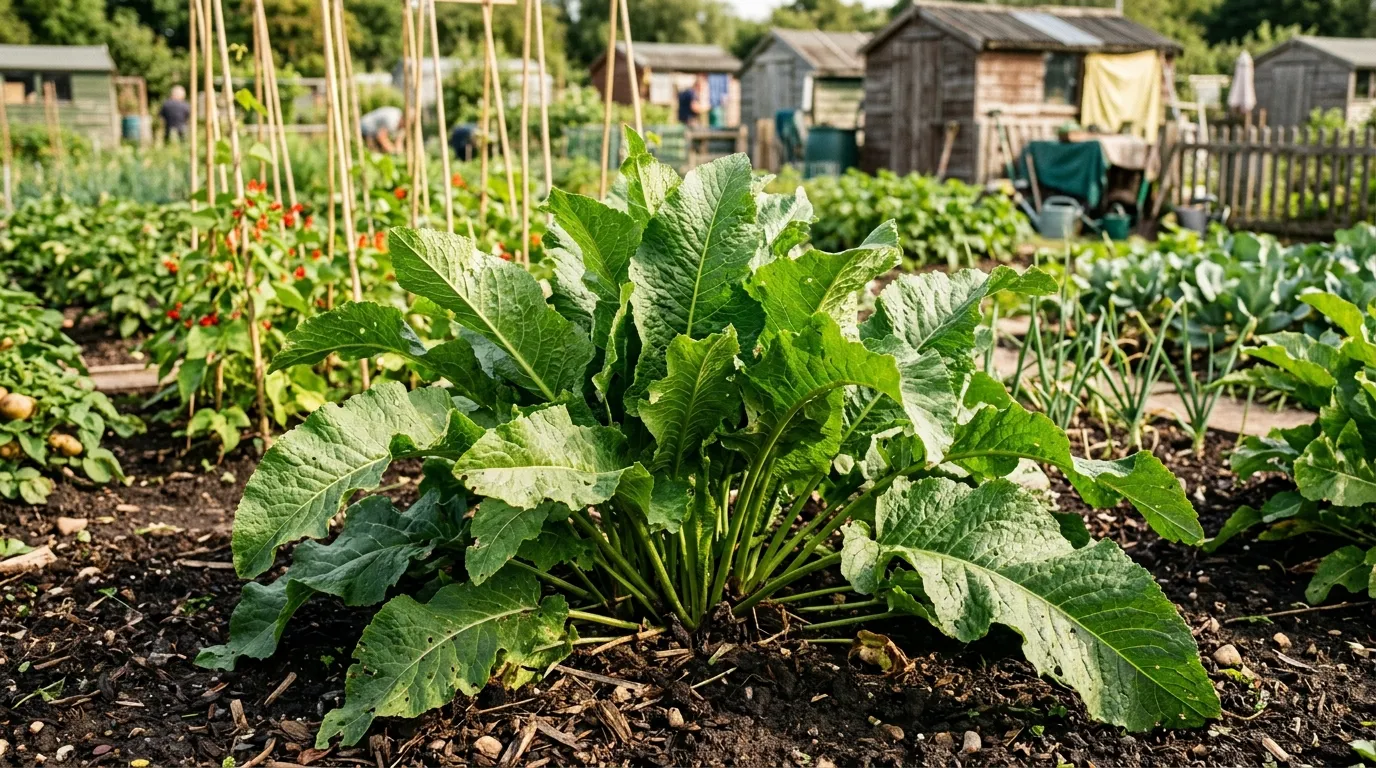
Horseradish produces large, vigorous leaves up to 60cm long. The edible root grows deep below the surface.
Why grow your own horseradish?
Shop-bought horseradish sauce bears little resemblance to the freshly grated root. Commercial jars contain mostly cream, vinegar, and preservatives with a modest amount of processed horseradish. The result is mild and one-dimensional.
Freshly grated horseradish root is a different experience entirely. The volatile compound allyl isothiocyanate, the same chemical that gives wasabi its kick, hits the sinuses with an intensity that makes your eyes water. It fades within minutes of grating, which is why freshness matters. A 15cm piece of home-grown root produces enough sauce for a Sunday roast in under five minutes.
Growing your own also eliminates the need to find it in shops. Supermarkets rarely stock fresh horseradish root. Specialist greengrocers and farmers’ markets occasionally carry it, but availability is patchy. A single plant in a container outside your kitchen door provides a year-round supply.
How to plant horseradish root thongs
Horseradish is grown from root cuttings called thongs, not from seed. Thongs are pencil-thick root sections about 15-20cm long with a flat top end and a tapered bottom. They are available from herb nurseries and allotment seed suppliers from late winter onwards.
When to plant
Plant thongs in March, as soon as the soil is workable. Horseradish is fully hardy and tolerates late frosts without damage. Early planting gives the longest growing season and the thickest roots by autumn.
Planting method
- Prepare the soil. Dig over the planting area and work in garden compost or well-rotted manure. Remove stones and large clods that could distort root growth.
- Make planting holes. Use a dibber or thick stick to make holes 30cm deep at a 45-degree angle, spaced 30cm apart.
- Insert thongs. Drop each thong into the hole with the flat (top) end uppermost and the tapered end pointing down. The angled planting encourages a single straight taproot rather than a mass of branching side roots.
- Backfill and water. Fill the holes with soil, firm gently, and water well.
The 45-degree angle is the key detail that many guides miss. Vertical planting produces forked, branching roots that are difficult to harvest and grate. Angled planting produces long, straight taproots that lift cleanly and peel easily.
Containing horseradish (the most important section)
This is not optional advice. Horseradish will spread aggressively through any garden bed if given the opportunity. Every fragment of root left in soil, even pieces as small as 2cm, will regrow into a new plant. Digging it up scatters root fragments and often makes the problem worse.
Containment methods compared
| Method | Containment | Root quality | Effort | Best for |
|---|---|---|---|---|
| Sunken bottomless bucket | Excellent | Very good, deep roots | Low once set up | Allotments, open ground |
| Large container (40L+) | Excellent | Good, slightly restricted | Low, needs watering | Patios, small gardens |
| Raised bed with root barrier | Very good | Excellent, deep and straight | Medium to build | Dedicated growing |
| Open ground (no containment) | None | Excellent but uncontrollable | Very high long-term | Never recommended |
Sunken bucket method (recommended)
This is the method I use on my allotment after learning the hard way. Take a large plastic bucket or dustbin, cut the bottom out completely, and sink it into the ground so the rim sits 5cm above soil level. Fill with compost and plant your thong inside. The plastic walls stop horizontal root spread. The open bottom allows the taproot to grow deep for good-quality roots.
Lift the entire bucket each autumn. Harvest the main root, save one thong for replanting, and start fresh. This annual reset prevents the root system from becoming an unmanageable tangle.
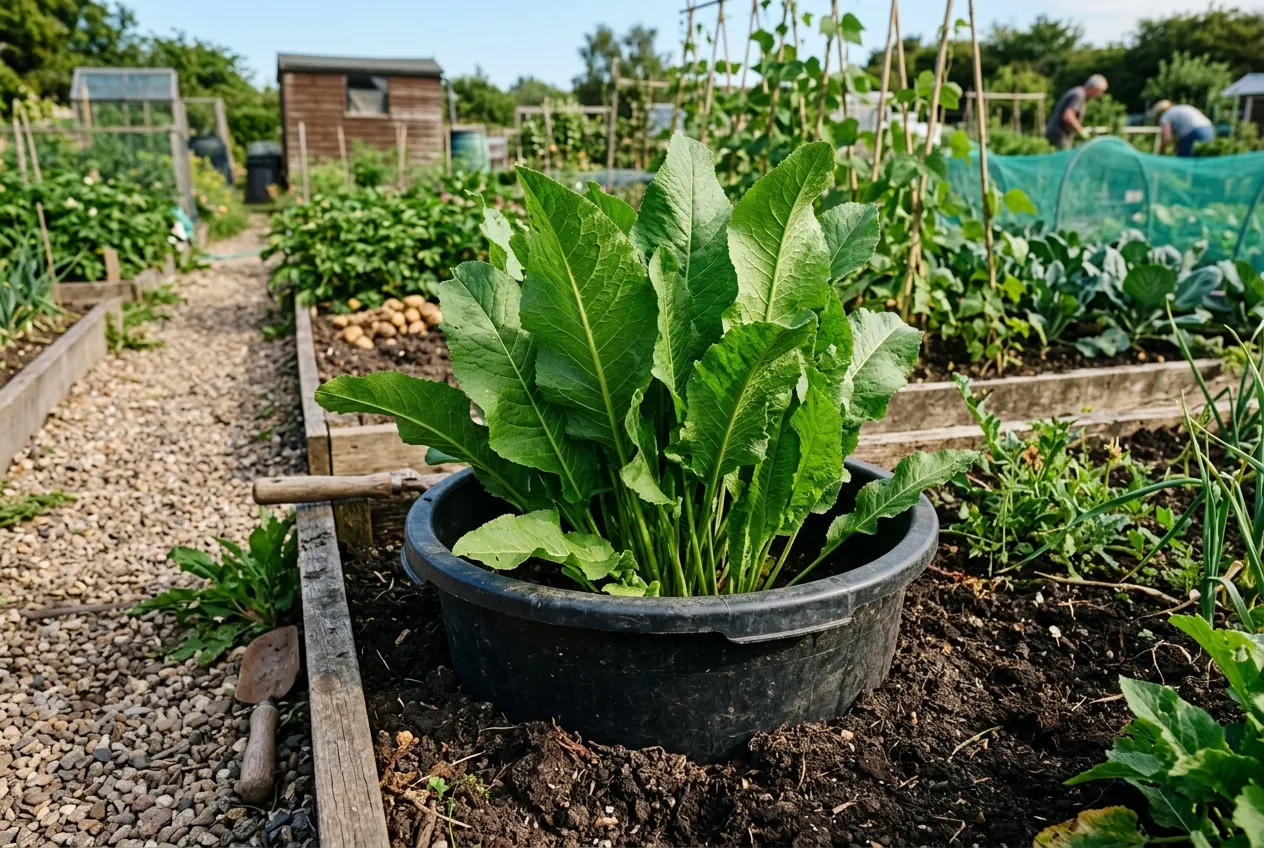
A sunken bottomless bucket contains horseradish spread while allowing the taproot to grow deep into the soil below.
Container growing
A 40-litre pot or old dustbin with drainage holes drilled in the base works well. Use multipurpose compost mixed with 20% garden soil for structure and weight. Plant one thong per container. Stand the container on a hard surface, not on bare soil, so roots cannot escape through drainage holes into the ground below. Our guide to container vegetable gardening covers pot selection and compost in detail.
Raised beds
Raised bed gardening suits horseradish if you line the inside walls and base with root barrier membrane (available from landscaping suppliers). Without the barrier, roots will push through gaps in timber sides within one season. A 60cm-deep raised bed with barrier membrane produces outstanding straight roots.
Lawrie’s experience: I planted two horseradish thongs directly into an allotment bed in my first year. By autumn of year two, horseradish was appearing in the path, the adjacent strawberry bed, and 2 metres from the original planting spot. It took three full growing seasons of repeated digging and sieving to clear the bed. Containment from day one is the single most important decision you will make with this plant.
Growing conditions
Horseradish is remarkably undemanding. It tolerates conditions that would stress most vegetables.
Light: Full sun produces the largest roots, but horseradish grows perfectly well in partial shade. Avoid deep shade, which produces large leaves but thin, weak roots.
Soil: Rich, moist, well-drained soil is ideal. Horseradish tolerates heavy clay, sandy soil, and chalky ground. It grows on my heavy Staffordshire clay without complaint. Adding compost before planting improves root shape on heavy soils.
Watering: Water during prolonged dry spells in summer. Established plants are drought-tolerant but produce thicker roots with consistent moisture. Container-grown plants need regular watering, especially in hot weather.
Feeding: A single application of general-purpose fertiliser in spring is sufficient. Horseradish is not a heavy feeder. Too much nitrogen produces excessive leaf growth at the expense of root development.
Maintenance: Remove flower stems as they appear in early summer. Flowering diverts energy from root growth. The small white flowers are not ornamental enough to justify the lost root size. Pull any leaves that show signs of disease to prevent spread.
Harvesting horseradish roots
When to harvest
Harvest from October onwards, once the leaves start to yellow and die back. Cold weather improves root pungency by triggering starch-to-sugar conversion in the root. Roots harvested in November or December are noticeably hotter than those lifted in late summer.
First-year roots are usable but mild. Second-year roots produce the strongest heat, the thickest taproots, and the most intense flavour. If you can wait, leave plants to establish for two full growing seasons before your main harvest.
How to harvest
- Cut back the remaining foliage to ground level.
- Fork around the plant carefully, starting 20cm from the crown.
- Lift the main taproot. It may extend 30-60cm deep in good soil.
- Snap off side roots. Save pencil-thick pieces as thongs for replanting.
- Wash roots and store in a cool place. Roots keep for 2-3 months in a fridge, wrapped in damp newspaper.
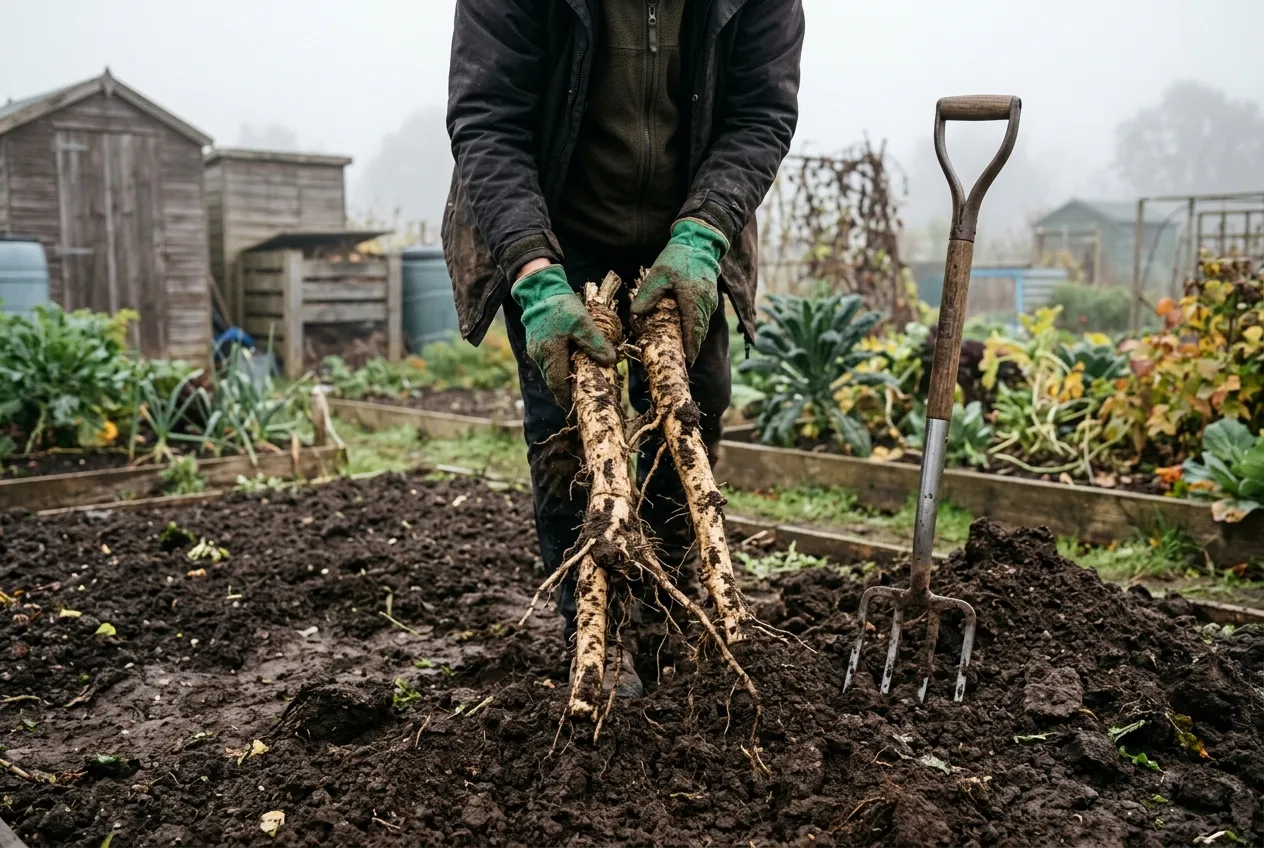
Horseradish roots lifted in late October. The long white taproot contains the volatile oils that produce the characteristic heat.
Storage
Fresh roots keep for 2-3 months in the fridge. Wrap in damp newspaper or kitchen paper and place inside a perforated plastic bag. For longer storage, peel and grate the root, then freeze in ice cube trays. Frozen grated horseradish retains most of its heat for up to 12 months. Alternatively, preserve it in vinegar as a condiment that keeps indefinitely in sterilised jars.
Making fresh horseradish sauce
This is the reason to grow horseradish. The process takes five minutes and the result is incomparable to anything in a jar.
Classic horseradish cream
Ingredients:
- 15cm piece of fresh horseradish root (about 100g)
- 150ml double cream, lightly whipped
- 1 tablespoon white wine vinegar
- Pinch of salt
- Half teaspoon caster sugar
Method:
- Peel the horseradish root with a vegetable peeler.
- Grate outdoors. This is not a suggestion. The volatile oils are far more potent than onion and will clear a kitchen in seconds. Use a fine grater or food processor fitted with the grating disc.
- Add vinegar within 3 minutes of grating. Vinegar stops the enzymatic reaction that produces heat. Adding it immediately gives a fiery sauce. Waiting 5-10 minutes before adding vinegar produces a milder result because the volatile compounds dissipate.
- Fold the grated root into the whipped cream. Add salt and sugar. Stir gently.
- Taste and adjust. More vinegar tames the heat. More root intensifies it.
Serve immediately with roast beef, smoked mackerel, beetroot, or steak. The sauce keeps for 3-4 days refrigerated but loses potency each day.
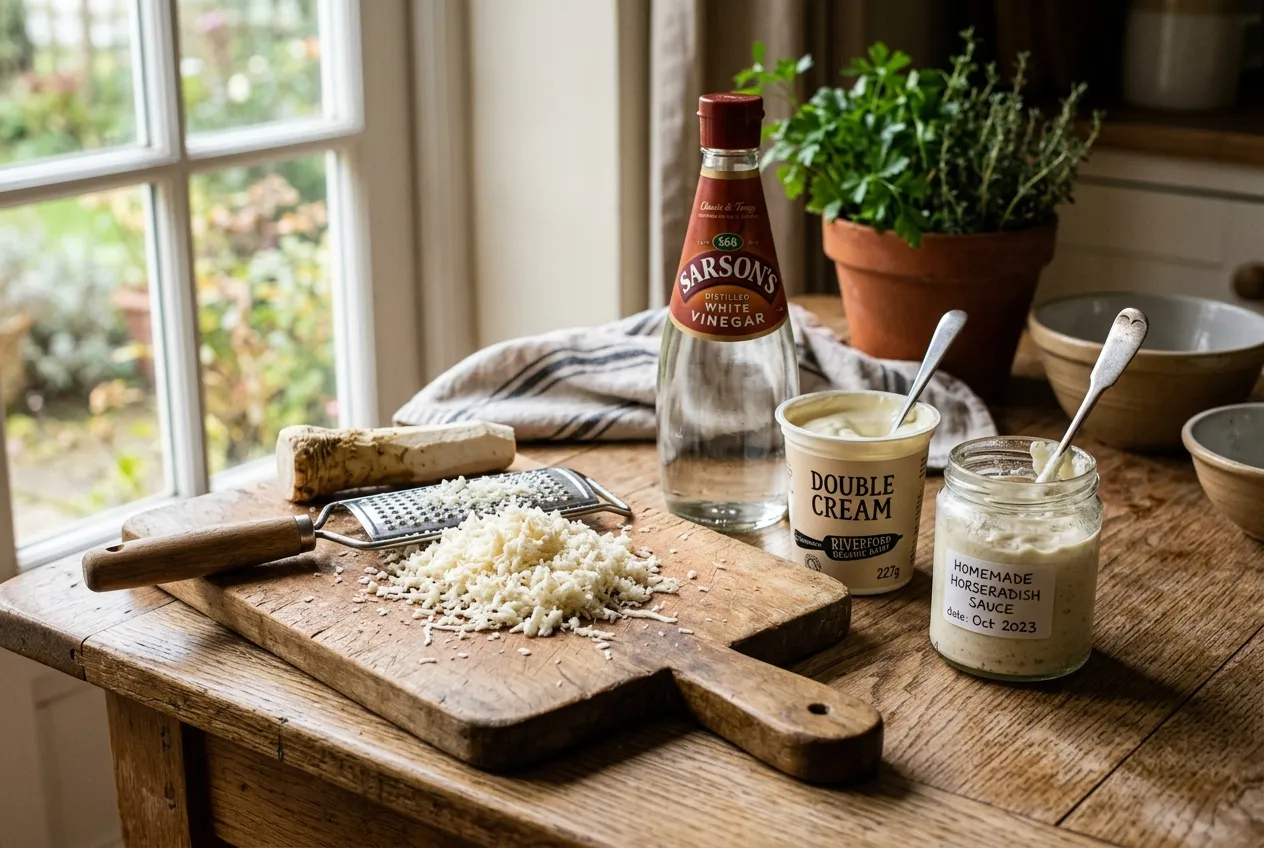
Making horseradish cream from freshly grated root. Always grate outdoors to avoid the intense volatile oils clearing your kitchen.
Other uses for horseradish
Horseradish is far more versatile than the classic cream sauce. Here are proven uses from five years of experimenting with the harvest.
Horseradish and beetroot relish. Mix equal parts grated horseradish and cooked beetroot with vinegar and sugar. This Eastern European staple keeps for months in sterilised jars and pairs brilliantly with cold meats.
Wasabi substitute. Mix finely grated horseradish with a few drops of green food colouring and a pinch of mustard powder. The result is genuinely close to fresh wasabi at a fraction of the cost. Real wasabi (Wasabia japonica) costs around 250 pounds per kilogram. Horseradish is free from the garden.
Cocktail sauce. Grated horseradish mixed with ketchup, Worcestershire sauce, and lemon juice makes a proper prawn cocktail or Bloody Mary base.
Garden liquid feed. Steep horseradish leaves in water for two weeks. Strain and dilute 1:10. The resulting liquid is rich in potassium and sulphur. Use it as a foliar feed for brassicas. This is a traditional allotment trick that puts the abundant leaves to practical use. For more ideas on using garden produce in the kitchen, see our guide to easy recipes from home-grown vegetables.
How to eradicate horseradish if it spreads
If horseradish escapes containment or you inherit a patch from a previous gardener, prepare for a multi-year battle. This is genuinely one of the hardest garden plants to eliminate.
Step 1 (Autumn): Fork the entire affected area to 45cm depth. Sieve the soil through a garden riddle to remove root fragments. Even small pieces will regrow. This is labour-intensive but essential.
Step 2 (Winter): Cover the area with heavy-duty black plastic sheeting, anchored at the edges. Leave it in place for a full growing season. This starves regrowth of light.
Step 3 (Following autumn): Remove the plastic. Fork the area again and remove any surviving roots. Roots that survived under the plastic will be pale, weakened, and easy to spot.
Step 4 (Repeat if necessary): Stubborn infestations need a second cycle of digging and covering. Glyphosate applied to fresh leaf growth in spring weakens the root system but rarely kills it outright.
The entire process takes 2-3 years for a thorough clearance. Prevention through containment is vastly easier than cure. For tips on keeping allotment beds productive and weed-free, see our guide to growing your own vegetables.
Common problems
Horseradish is one of the most trouble-free plants you can grow. Serious problems are rare.
Flea beetle occasionally attacks the leaves, producing small round holes. Damage is cosmetic and does not affect root quality. Heavy infestations can be managed with fleece or by watering the leaves regularly, which disrupts the beetle’s preference for dry conditions.
Leaf spot (Ramularia armoraciae) causes brown spots on leaves in wet summers. Remove affected leaves promptly and destroy them. The disease does not spread to the roots. Good air circulation between plants reduces the risk.
Clubroot can affect horseradish because it is a brassica. Avoid planting in ground recently used for other brassicas (cabbage, broccoli, cauliflower). If clubroot is present in your soil, container growing eliminates the risk entirely.
Aphids occasionally cluster on young leaves in spring. A strong jet of water from a hose removes them. Established horseradish outgrows aphid damage within days.
Root rot only occurs in waterlogged soil. Ensure containers have drainage holes and avoid planting in low-lying wet ground. Raised beds solve this problem on heavy clay soils.
Frequently asked questions
How do you plant horseradish root thongs?
Plant horseradish thongs 30cm deep at a 45-degree angle in March. Use a dibber or thick stick to make angled holes 30cm apart. Drop the thong in with the flat (top) end uppermost and the tapered end pointing down. Backfill with soil and water well. Thongs are pencil-thick root cuttings about 15-20cm long, available from herb nurseries and allotment seed suppliers. Each thong produces a harvestable root within 6-8 months.
Does horseradish spread and become invasive?
Yes, horseradish is extremely invasive in UK gardens. Any root fragment left in soil will regrow into a new plant. Digging it up often makes the problem worse because broken root pieces spread through the soil. Containment at planting is essential. Use a sunken bottomless bucket, a dedicated raised bed with root barrier membrane, or grow in large containers. Never plant horseradish in open ground without containment. The RHS horseradish growing guide confirms that containment is the single most important management strategy.
When should you harvest horseradish roots?
Harvest horseradish roots from October onwards after the leaves die back. First-year roots are usable but mild. Second-year roots produce the strongest heat and thickest taproots. Dig around the plant carefully with a fork, lift the main root, and snap off side roots for replanting. Roots harvested in cold weather are more pungent than summer-lifted roots because cold triggers starch-to-sugar conversion.
Can you grow horseradish in pots?
Horseradish grows well in large containers of at least 40 litres. Use a deep pot or dustbin with drainage holes drilled in the base. Fill with multipurpose compost mixed with 20% garden soil for weight and structure. Plant one thong per container. Water regularly in summer. Container growing is the safest method for small gardens because it eliminates any risk of the plant spreading into borders or paths.
How do you make fresh horseradish sauce?
Grate fresh horseradish root outdoors and add vinegar within 3 minutes of grating. Peel a 15cm section of root and grate finely. The volatile oils are intensely irritating to eyes and nose, far stronger than onions. Adding white wine vinegar immediately after grating preserves the heat. Delaying the vinegar for 5-10 minutes produces a milder sauce. Mix grated root with double cream, a pinch of salt, and a teaspoon of sugar for classic horseradish cream.
How do you get rid of horseradish once it spreads?
Eradicating established horseradish is very difficult and takes 2-3 years. Every root fragment must be removed because pieces as small as 2cm will regrow. Fork the area thoroughly in autumn, sieve the soil for root fragments, and cover with black plastic sheeting for a full growing season. Repeat the following autumn. Glyphosate applied to fresh regrowth in spring weakens but rarely kills the root system outright. Persistence is the only reliable approach.
Is horseradish good for anything besides sauce?
Horseradish has many culinary and garden uses beyond traditional sauce. Finely grated root mixed with beetroot makes a classic Eastern European condiment. Horseradish cream pairs with smoked fish, roast beef, and steak. Fresh root grated into wasabi paste is a convincing substitute at a fraction of the cost. In the garden, horseradish leaves make an effective liquid feed when steeped in water for two weeks. Garden Organic provides further guidance on organic horseradish cultivation and companion planting.
Lawrie has been gardening in the West Midlands for over 30 years. He grows his own veg using no-dig methods, keeps a wildlife-friendly garden, and writes practical advice based on real UK growing conditions.