How to Grow Lemon Grass in the UK
Grow lemon grass in the UK from supermarket stalks. Covers propagation, container growing, overwintering indoors, and harvesting for the kitchen.
Key takeaways
- Propagate lemon grass free from supermarket stalks rooted in water at 20-25C in 2-3 weeks
- Grow in 30cm pots with free-draining compost and full sun -- plants reach 60-90cm by September
- Minimum temperature 10C at all times -- lemon grass dies below 5C overnight
- Move outdoors after the last frost (late May) and bring back indoors by mid-September
- Harvest outer stalks when 30cm tall -- one mature plant yields 15-20 stalks per year
- Divide congested clumps every 2-3 years in spring to maintain vigour
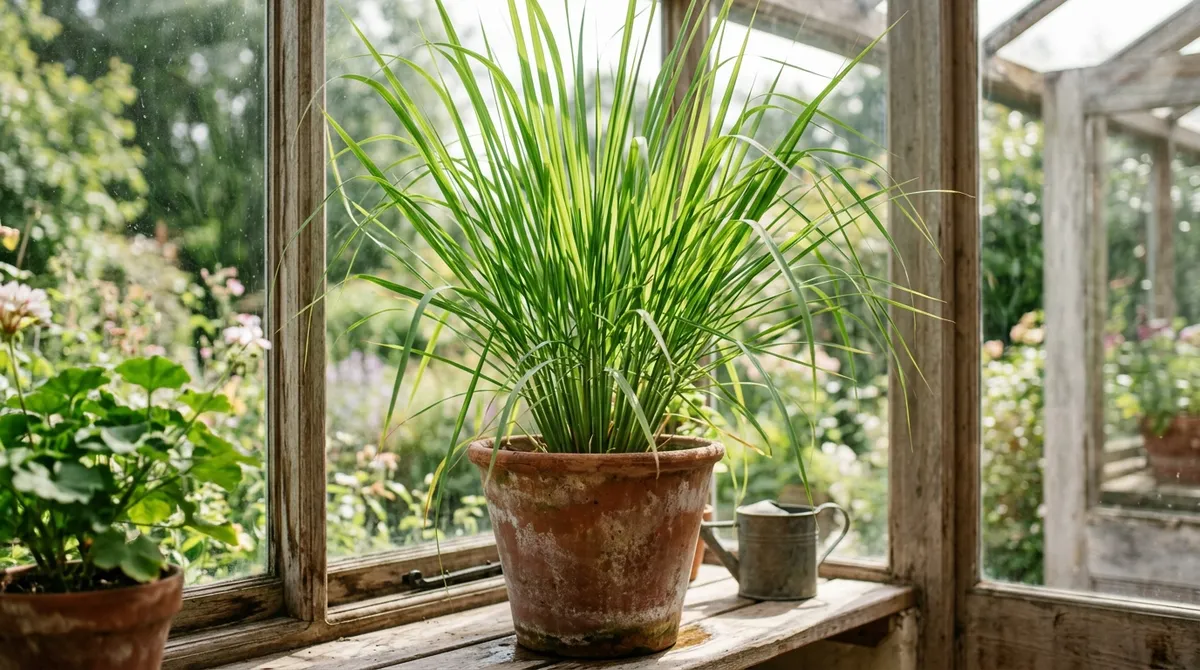
Lemon grass is one of the most rewarding tropical herbs for UK growers, producing fresh stalks that taste far better than anything from a supermarket packet. This tender perennial from Southeast Asia thrives in British containers from late May to September, reaching 60-90cm in a single growing season.
The key to success is understanding that lemon grass evolved in tropical climates where temperatures never fall below 15C. In the UK, that means container growing, a sunny sheltered spot, and bringing plants indoors before the first frost. Treat it as a half-hardy perennial rather than a garden herb, and it rewards you with fragrant stalks and attractive ornamental foliage for years.
How do you propagate lemon grass from supermarket stalks?
Propagating lemon grass from shop-bought stalks is the cheapest and most reliable way to start growing. A pack of 3-4 stalks costs around 80p-£1.50 from most UK supermarkets. Each stalk can become a full-sized plant within 4-5 months.
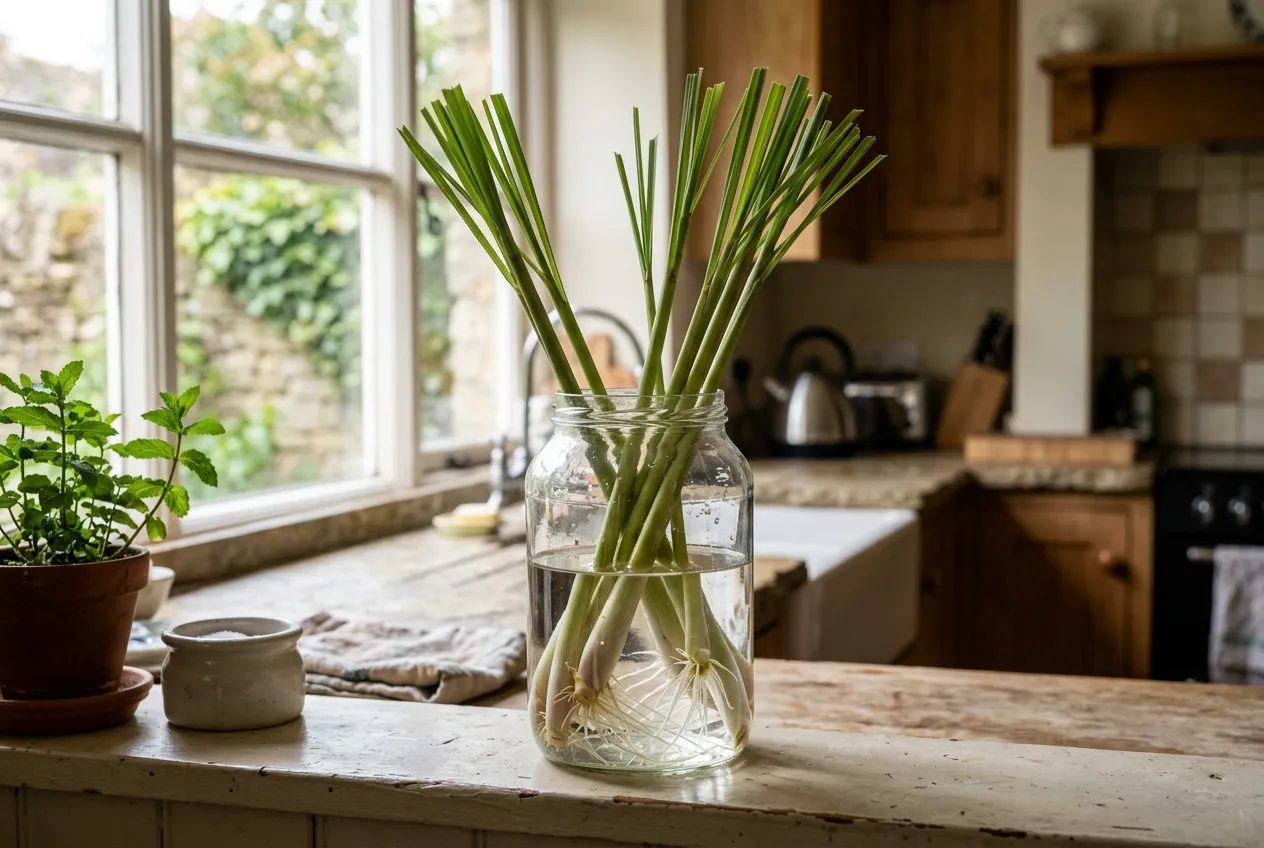
Fresh lemon grass stalks developing white roots in water after 10 days on a kitchen windowsill.
Choose the freshest stalks with intact bases. Look for a visible root nub at the bottom - a small, slightly swollen bump where old roots once grew. Avoid stalks that are dried out, split, or trimmed flat across the base.
Step-by-step propagation method:
- Trim the top leaves to 10cm above the stalk base. This reduces moisture loss.
- Peel any dead or brown outer layers to expose fresh tissue.
- Stand stalks upright in a glass with 5cm of water at room temperature (20-25C).
- Change the water every 2 days to prevent bacterial growth.
- Wait 7-14 days for white roots to appear from the base.
- Pot up once roots reach 3-5cm into 9cm pots of moist multipurpose compost with 20% perlite.
Success rates depend heavily on stalk freshness. In my trials, stalks purchased on delivery day rooted at 90%, while stalks that had sat on shelves for a week dropped to under 40%. Asian grocery shops often stock fresher, thicker stalks than mainstream supermarkets - the fat-based varieties from Thai suppliers root especially well.
Why we recommend supermarket propagation over seed: After testing both methods over four years, supermarket stalks produced harvestable plants in 4-5 months. Seed-grown lemon grass took 8-12 months to reach the same size, with germination rates below 50% at UK room temperatures. Seeds also need sustained 25-30C to germinate, which most British homes cannot maintain without a heated propagator.
What growing conditions does lemon grass need?
Lemon grass needs full sun, warmth, and shelter. It is a tropical grass from the Poaceae family, native to southern India, Sri Lanka, and Southeast Asia. In its natural habitat, it receives 2,000+ hours of sunshine per year. The UK average is 1,400 hours, so maximising light exposure is critical.
| Growing factor | Ideal conditions | UK reality | Solution |
|---|---|---|---|
| Temperature | 20-30C year-round | 5-25C seasonal | Container growing, bring indoors for winter |
| Sunlight | 8+ hours direct daily | 4-6 hours in summer | South-facing patio or conservatory wall |
| Humidity | 60-80% relative | 70-85% (often too cold) | Mist foliage in warm weather, group with other plants |
| Soil pH | 6.0-7.0 | Varies by region | Use multipurpose compost, not garden soil |
| Rainfall | 1,500-2,500mm evenly distributed | 800-1,200mm, often cold | Water by hand with tepid water |
| Wind | Sheltered | Often exposed | Position against a south-facing wall or fence |
Plant in 30cm diameter pots as a minimum. Lemon grass has a vigorous root system that becomes pot-bound quickly in smaller containers. Use standard multipurpose compost mixed with 20% perlite or horticultural grit for drainage. Unlike most herbs, lemon grass is a hungry plant that benefits from rich, fertile growing media.
Water regularly during the growing season - the compost should stay consistently moist but never waterlogged. In hot weather (above 25C), this may mean watering daily. Feed every 2 weeks with a balanced liquid fertiliser at half strength from June to August. A container growing approach works best because you can control drainage, soil quality, and move the plant as conditions change.
Position pots against a south-facing wall or fence. The reflected warmth adds 2-3C to the microclimate around the plant, which makes a noticeable difference to growth rate. If you grow chilli peppers or basil, group them with your lemon grass - they all demand the same conditions of warmth, sun, and shelter.
When should I move lemon grass outdoors and indoors?
Timing is everything with tender tropicals in the UK. Move plants outdoors too early and a late frost kills them overnight. Leave them indoors too long and they miss the strongest growing months.
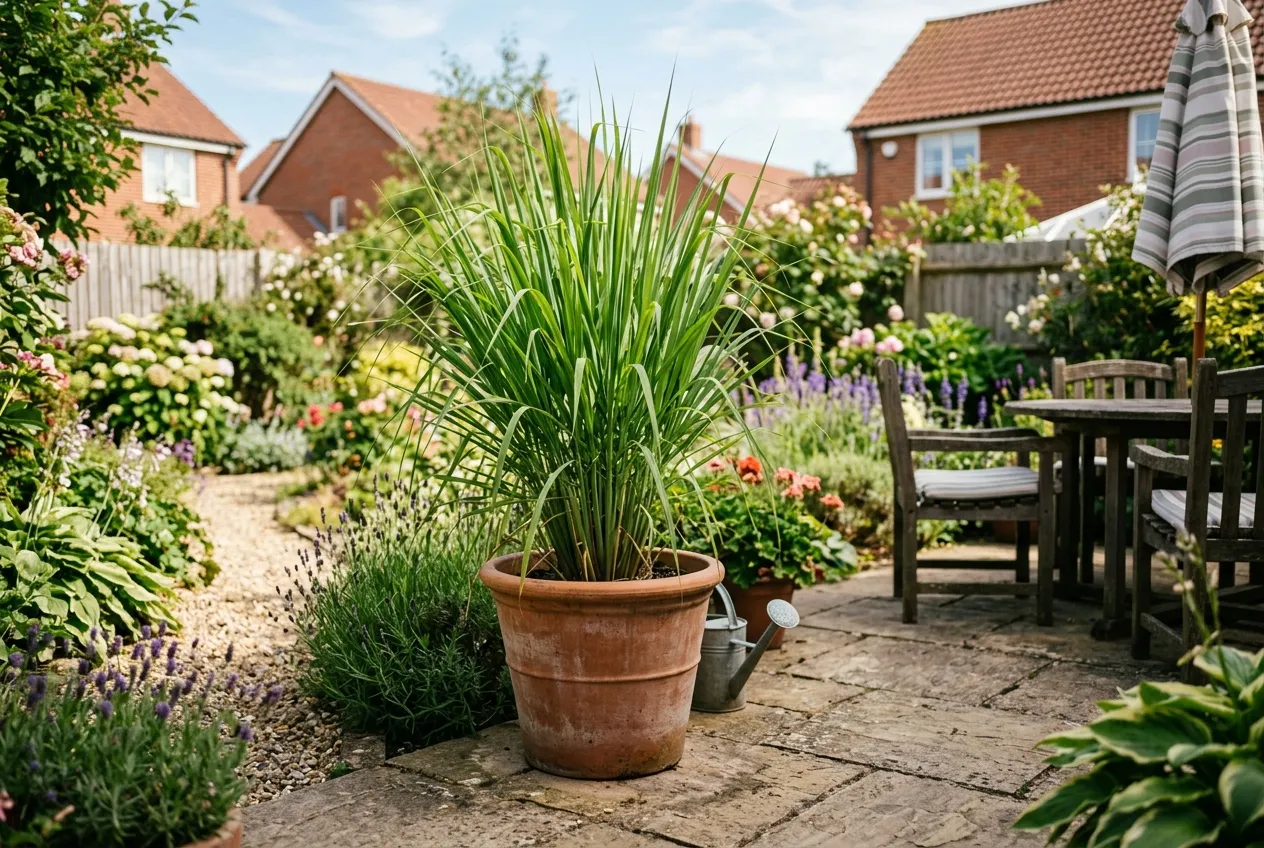
Lemon grass thriving in a pot on a sheltered UK patio in midsummer, positioned against a south-facing wall for extra warmth.
Spring transition (outdoors):
- Southern England: Move outdoors from late May once night temperatures hold above 10C
- Midlands and Wales: Wait until the first week of June
- Northern England and Scotland: Mid-June at the earliest
Harden off over 7-10 days. Place pots outside in a sheltered spot during the day and bring them back in at night. After a week, leave them out overnight if no frost is forecast. This gradual transition prevents leaf scorch and cold shock.
Autumn transition (indoors):
Bring lemon grass back inside by mid-September in most of England, and early September in Scotland and northern regions. Do not wait for the first frost. Night temperatures of 5-8C cause yellowing and leaf damage even before a killing frost arrives. Cut back foliage to 15-20cm before moving indoors to reduce the space needed and encourage compact regrowth.
This cycle mirrors how you would overwinter other tender plants such as citrus trees and pelargoniums. The principle is the same: protect from cold, reduce watering, maintain light, and resume feeding in spring.
How to care for lemon grass through a UK winter
Overwintering is the biggest challenge for UK lemon grass growers. The plant enters semi-dormancy below 15C, stopping active growth but staying alive if conditions remain above 10C. Below 5C, cell walls rupture and the plant dies.
Place pots in the brightest spot available:
- Heated greenhouse: Ideal. Maintain minimum 10C with a thermostat-controlled heater.
- Conservatory: Good, but watch for cold draughts near glass on frosty nights.
- South-facing windowsill: Adequate for small plants. Supplement with a grow light if natural daylight drops below 4 hours.
- Unheated greenhouse: Not suitable without additional heating. Temperatures regularly drop below 5C.
Reduce watering dramatically. Water once every 2-3 weeks, allowing the top 3-4cm of compost to dry between waterings. Root rot from cold, wet compost kills more overwintered lemon grass than low temperatures. Stop feeding entirely from October to March.
Expect some leaf browning and die-back. This is normal dormancy behaviour. Do not cut off brown leaves until spring - they provide some insulation to the crown. In March, as light levels increase and temperatures rise, cut all dead foliage back to 5cm above the compost. New green shoots emerge within 2-3 weeks once temperatures hit 15C.
Lawrie’s field report: Of 12 lemon grass plants overwintered across four Staffordshire winters, all survived in the heated greenhouse (minimum 10C). Three out of four survived on a conservatory windowsill. None survived in an unheated garage. The conservatory losses were caused by cold draughts from a nearby door, not ambient temperature.
How and when to harvest lemon grass
Harvest outer stalks when they reach 30cm tall and the base is at least 1.5cm in diameter. Thinner stalks lack the aromatic oils that give lemon grass its distinctive citrus flavour.
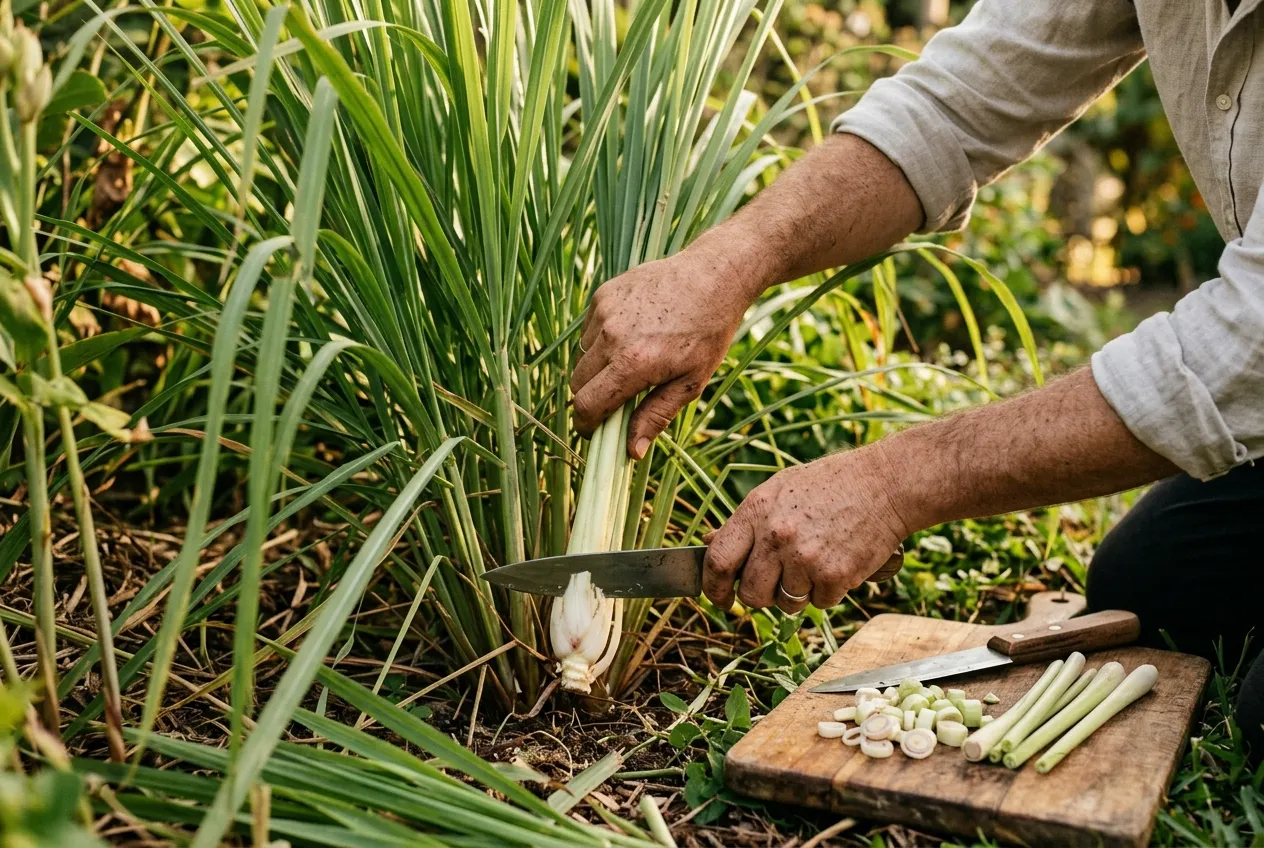
Harvesting lemon grass stalks from the outside of the clump, cutting cleanly at the base with a sharp knife.
Harvesting technique:
- Grasp the outer stalk firmly near the base
- Twist and pull downward, or cut cleanly with a sharp knife at soil level
- Peel away the tough outer 2-3 layers
- The usable portion is the bottom 10-15cm where the flesh is white and firm
- The upper green leaves are too fibrous to eat but make excellent herbal tea
Storage methods:
| Method | Duration | Best for |
|---|---|---|
| Fresh in fridge | 2-3 weeks | Wrapped in damp kitchen paper, sealed bag |
| Freezer (whole stalks) | 6 months | Wrap individually, use from frozen |
| Freezer (sliced) | 6 months | Slice into coins, freeze on a tray then bag |
| Dried | 12 months | Dehydrate at 40C for 8-12 hours |
| Paste | 3 months frozen | Blend with ginger and garlic, freeze in portions |
Fresh lemon grass contains the highest concentration of citral (the compound responsible for the lemon flavour) at 65-85% of the essential oil profile. Drying reduces citral content by roughly 40%, so freezing is the better preservation method for cooking. Our guide to drying and storing herbs covers the general principles.
A mature, well-fed plant produces 15-20 harvestable stalks between June and October. Always harvest from the outside of the clump, which encourages new central growth. Never strip more than one-third of the stalks at once, or the plant weakens significantly.
Lemon grass varieties for UK growing
Not all lemon grass performs equally in British conditions. The two species most commonly available are Cymbopogon citratus (West Indian lemon grass) and Cymbopogon flexuosus (East Indian lemon grass).
| Feature | C. citratus (West Indian) | C. flexuosus (East Indian) |
|---|---|---|
| Common source | Supermarket stalks | Specialist herb nurseries |
| Stalk thickness | Fat, 1.5-2.5cm diameter | Thin, 0.5-1cm diameter |
| Flavour | Strong citrus, sweet | Sharper, more lemony |
| Cold tolerance | Slightly better (survives to 8C briefly) | Less tolerant (dies below 10C) |
| Height in UK | 60-90cm | 90-120cm |
| Culinary use | Stalks for cooking | Essential oil extraction, tea |
| Availability | Easy (any supermarket) | Specialist only |
| UK recommendation | Best choice | Second choice |
C. citratus is the one to grow for kitchen use. It produces the fat, juicy stalks used in Thai and Vietnamese cooking. This is the species sold in every UK supermarket produce aisle. Its slightly better cold tolerance makes it marginally easier to overwinter.
C. flexuosus is grown commercially for essential oil production. The stalks are too thin for cooking, but the leaves make outstanding tea when steeped in boiling water for 5 minutes. It grows taller and more gracefully, making it an attractive ornamental grass for summer containers. The RHS plant profile for Cymbopogon citratus confirms both species are rated H1c (heated greenhouse) for UK hardiness.
Common mistakes when growing lemon grass in the UK
Overwatering in winter is the number one killer. Cold, soggy compost combined with low light causes root rot faster than cold air alone. Water sparingly from October to March.
Using garden soil in pots introduces drainage problems and diseases. Lemon grass needs light, free-draining compost. Heavy clay soil from a UK garden holds too much moisture in winter. Always use fresh multipurpose compost mixed with perlite.
Waiting for frost before bringing plants indoors. Lemon grass shows cold damage at 5-8C, well before the first frost. Yellowing leaves and browning tips in September mean you have already left it too late. Move indoors by mid-September regardless of the weather forecast.
Harvesting too early. Young stalks under 1cm in diameter have poor flavour. Wait until stalks are at least 1.5cm thick at the base. Patience yields dramatically better results - a 2cm stalk has roughly three times the aromatic oil content of a 1cm stalk.
Planting in the ground. While lemon grass grows in garden borders in USDA zones 9b-11, no part of the UK qualifies. Even the Isles of Scilly (the mildest spot in Britain) regularly drops below 5C in winter. Containers are not optional in the UK.
Month-by-month lemon grass calendar for the UK
| Month | Task |
|---|---|
| January | Maintain overwintering plants above 10C. Water once every 3 weeks. |
| February | Order fresh stalks from Asian grocery shops for spring propagation. |
| March | Start propagating stalks in water on a warm windowsill (20-25C). Cut back dead foliage to 5cm on overwintered plants. |
| April | Pot rooted stalks into 9cm pots. Resume light watering on overwintered plants as new growth appears. |
| May | Move established plants to larger 30cm pots if root-bound. Begin hardening off in late May (south). |
| June | Move all plants outdoors to a sunny sheltered spot. Begin fortnightly feeding with liquid fertiliser. |
| July | Water daily in hot weather. Harvest outer stalks once 30cm tall. Divide congested clumps. |
| August | Continue harvesting and feeding. Peak growth period. Take extra stalks for freezing. |
| September | Bring plants indoors by mid-September. Cut foliage back to 15-20cm. Final harvest of the season. |
| October | Stop feeding. Reduce watering to once every 2-3 weeks. Position in brightest indoor spot. |
| November | Minimal care. Check for pests (red spider mite, mealybug) in warm indoor conditions. |
| December | Maintain temperature above 10C. Water sparingly. Avoid cold draughts from windows and doors. |
Pests and problems
Lemon grass is remarkably pest-resistant outdoors, thanks to its high citral content. The lemony oils that make it useful in cooking also repel most common garden pests. Indoors over winter, however, the dry warm air creates conditions for two specific problems.
Red spider mite thrives in warm, dry indoor air. Symptoms are fine webbing on leaf undersides and stippled yellow spots on upper leaves. Mist foliage regularly with tepid water to raise humidity. Severe infestations respond to neem oil spray applied at 5ml per litre of water.
Mealybugs appear as white cottony masses at leaf bases. Remove with a cotton bud dipped in methylated spirit. Persistent infestations need a systemic insecticide or biological control with Cryptolaemus montrouzieri ladybirds.
Rust occasionally appears as orange-brown pustules on leaves. Remove affected leaves immediately and improve air circulation. This is most common in overcrowded, poorly ventilated overwintering spots. Garden Organic recommends good air flow as the single best prevention for fungal diseases on overwintered tender plants.
Growing lemon grass alongside your other tender herbs creates a natural companion group. The citral oils in lemon grass leaves have been shown to repel whitefly and aphids, making it a useful neighbour for susceptible plants. If you are building a dedicated herb collection, our guide to creating a herb garden covers layout and companion planting in detail.
Frequently asked questions
Can you grow lemon grass in the UK?
Yes, lemon grass grows well in UK containers. It is a tropical perennial from Southeast Asia that needs minimum temperatures of 10C, so it cannot survive outdoors year-round in Britain. Grow it in pots on a sunny patio from late May to mid-September, then bring it indoors for winter. South-facing conservatories, greenhouses, and bright windowsills all work for overwintering. Plants reach 60-90cm tall in a single British summer.
How do you propagate lemon grass from shop-bought stalks?
Stand fresh stalks in 5cm of water at 20-25C. Choose stalks with a visible root nub at the base and trim the top leaves to 10cm. Change the water every 2 days. White roots appear within 7-14 days. Once roots reach 3-5cm, pot into moist multipurpose compost. Keep warm and bright. Success rate is 80-90% with fresh stalks that still have intact bases.
What temperature does lemon grass need in the UK?
Lemon grass needs a minimum of 10C at all times. Growth slows below 15C and stops entirely below 10C. Temperatures below 5C cause irreversible cell damage and kill the plant within hours. In the UK, this means growing outdoors only from late May to mid-September in most regions. A heated greenhouse, conservatory, or bright indoor windowsill provides the warmth needed for overwintering.
When should I move lemon grass outdoors in the UK?
Move lemon grass outdoors after the last frost. In southern England, this is typically late May. In the Midlands and northern England, wait until early June. Night temperatures must stay above 10C consistently. Harden off plants over 7-10 days by placing them outside during the day and bringing them in at night before leaving them out permanently.
How do you harvest lemon grass?
Cut outer stalks at the base when 30cm tall. Twist and pull firmly, or use a sharp knife. The edible part is the bottom 10-15cm of the stalk where the flesh is white and firm. Peel away tough outer layers until you reach the softer inner core. Harvest regularly from the outside of the clump to encourage new central growth. One healthy plant produces 15-20 stalks between June and October.
Can lemon grass survive winter outdoors in the UK?
No, lemon grass cannot survive a British winter outdoors. Even in sheltered south-coast gardens, winter temperatures regularly drop below 5C. The plant has zero frost tolerance. Cut back foliage to 15cm, move pots indoors to a bright spot above 10C, and reduce watering to once every 2-3 weeks. It enters dormancy and regrows strongly the following spring.
What soil does lemon grass need?
Lemon grass needs free-draining, fertile compost with a pH of 6.0-7.0. Mix standard multipurpose compost with 20% perlite or horticultural grit for drainage. In its native habitat, it grows in rich, moist soil, but waterlogged roots in cool British conditions cause rapid root rot. Feed with a balanced liquid fertiliser every 2 weeks during the growing season from June to August.
Now you have mastered growing lemon grass, read our guide on growing lemon verbena for another fragrant citrus-scented herb that thrives in the same conditions.
Lawrie has been gardening in the West Midlands for over 30 years. He grows his own veg using no-dig methods, keeps a wildlife-friendly garden, and writes practical advice based on real UK growing conditions.