How to Grow Lemon Verbena in the UK
Lemon verbena thrives in UK gardens with winter protection. Covers planting, container growing, propagation from cuttings, harvesting, and herbal tea.
Key takeaways
- Half-hardy to -5C. Needs winter protection or a pot you can move indoors
- Produces the strongest lemon scent of any herb, 30 times more than lemon balm
- Grows best against a south-facing wall in free-draining soil
- Container growing is the safest approach in most UK regions
- Take softwood cuttings in June for the highest success rate (80%+)
- Fresh leaves make the finest herbal tea. Steep 5-6 leaves in boiling water for 5 minutes
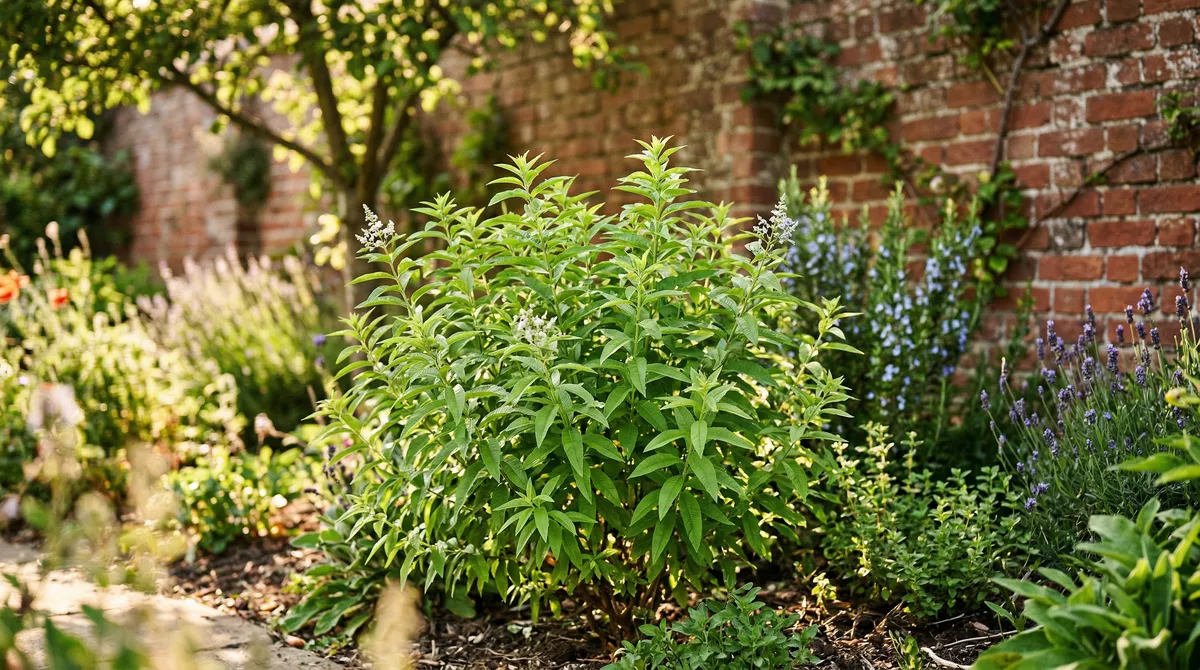
Lemon verbena is the most intensely lemon-scented herb you can grow in a UK garden. One brush of the leaves releases a fragrance that no other plant matches. It outperforms lemon balm, lemon thyme, and lemongrass for pure citrus intensity by a wide margin.
This tender South American shrub needs more care than hardy herbs like rosemary or thyme. It drops its leaves in winter. The bare stems look dead for months. Many gardeners give up too soon. But with the right position and winter protection, lemon verbena thrives in British conditions and rewards you with armfuls of fragrant leaves from May to October.
What is lemon verbena?
Lemon verbena (Aloysia citrodora, syn. Aloysia triphylla, Lippia citriodora) is a deciduous shrub native to Argentina, Chile, and Peru. It belongs to the Verbenaceae family. In its native habitat, it grows to 3m tall. In UK gardens, expect 1-1.5m in a sheltered spot.
The leaves are the prize. They are long, narrow, and pointed, growing in whorls of three around the stem. The essential oil concentration is extraordinary. Laboratory analysis shows lemon verbena leaf oil contains 30-35% citral, the compound responsible for lemon scent. Lemon balm contains just 1-2% citral by comparison.
Small white or pale lilac flowers appear in late summer on slender spikes. They attract bees and hoverflies but are not the main reason to grow this plant. The leaves are everything.
The RHS lists lemon verbena as an RHS hardiness rating of H3, meaning it is half-hardy and tolerates temperatures down to -5C. In practice, established plants in well-drained soil against a warm wall sometimes survive colder snaps, but -5C is the safe working limit for UK growers.
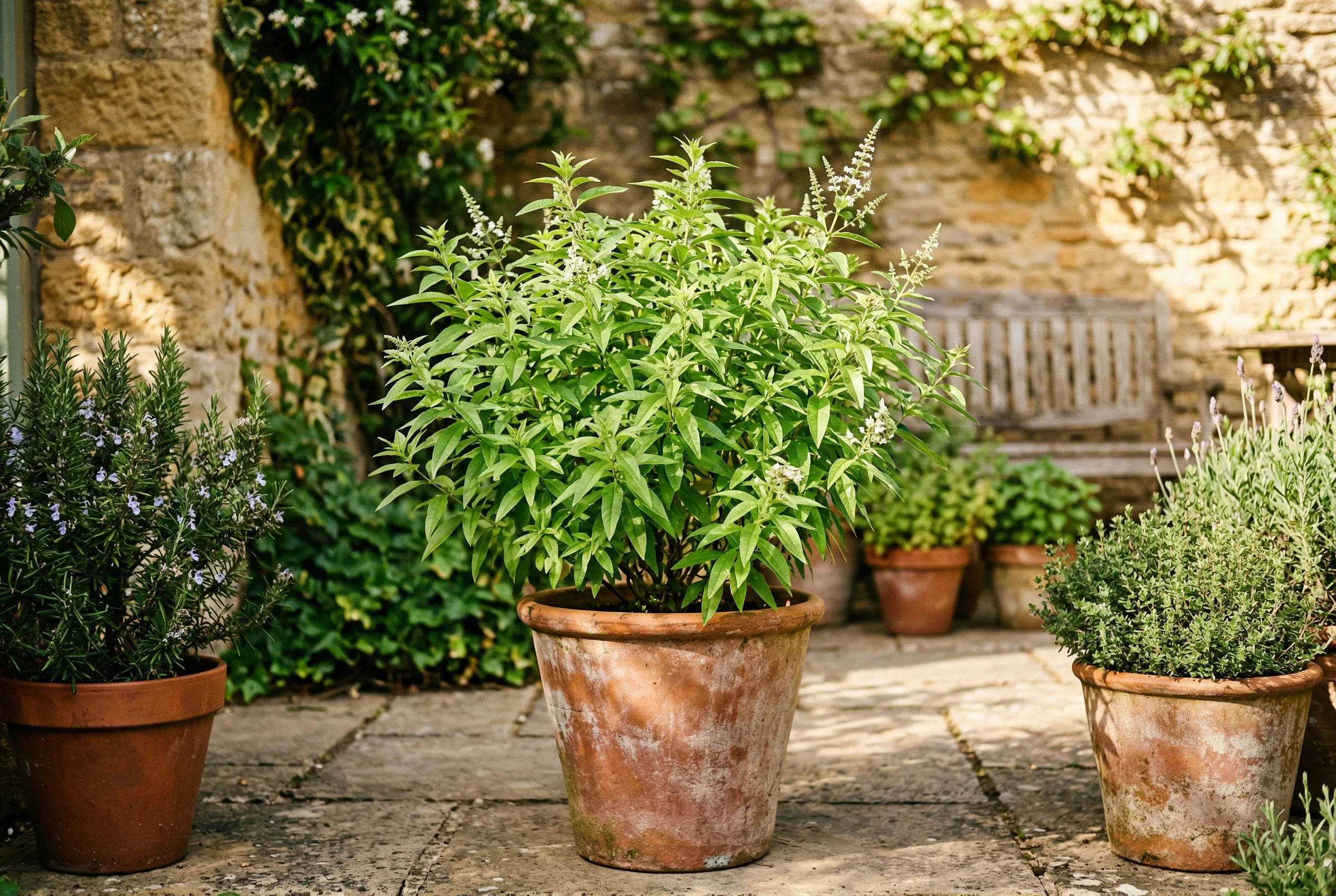 Container growing is the safest approach for lemon verbena in most UK regions. A 40cm terracotta pot lets you move it to shelter in winter.
Where should I plant lemon verbena in the UK?
The single most important decision is site selection. Get this right and the plant looks after itself from May to October. Get it wrong and you lose it in the first winter.
Sunlight and warmth
Lemon verbena demands full sun. A minimum of six hours of direct sunlight daily. South-facing walls are ideal because the brick absorbs heat during the day and radiates it back at night, creating a microclimate 2-3C warmer than the open garden. West-facing walls are the next best option.
Never plant in a north-facing or shaded position. Without adequate warmth and light, the essential oil production drops, the leaves lose their scent, and the plant becomes leggy and weak.
Soil requirements
Free-draining soil is essential. Lemon verbena evolved in the dry foothills of the Andes. Waterlogged roots in British winter clay is a guaranteed death sentence.
If your soil is heavy, improve drainage by mixing in 30% horticultural grit by volume when planting. Alternatively, create a raised planting area at the base of a south-facing wall using a 50:50 mix of topsoil and grit. The ideal pH range is 6.0-7.5. Moderately fertile soil produces the best plants. Unlike rosemary, which prefers poor soil, lemon verbena benefits from moderate feeding during the growing season.
Wind protection
Shelter from cold north and east winds makes a significant difference to survival. A position in the angle between two walls, in a courtyard, or behind a solid fence provides the wind protection this plant needs. Cold wind combined with frost causes more damage than still cold air at the same temperature.
If you are building a Mediterranean-style garden, lemon verbena is one of the standout plants for a sheltered, sunny corner alongside lavender, rosemary, and sage.
How to grow lemon verbena in containers
Container growing is the recommended approach for most UK gardeners. It solves the two biggest problems: poor drainage and winter cold. You control the soil mix completely, and you can move the plant indoors when frost threatens.
Choosing the right pot
Use a terracotta pot at least 40cm in diameter. Terracotta breathes, allowing moisture to evaporate through the walls. This keeps the root zone drier than plastic or glazed ceramic pots. Ensure the pot has drainage holes in the base. Stand it on pot feet to prevent water pooling underneath.
A large pot is better than a small one. Lemon verbena produces an extensive root system. A cramped pot leads to poor top growth and makes the plant more vulnerable to drought stress in summer and cold damage in winter. For large, established plants, use a 50cm pot or a half-barrel.
Compost mix
Fill with a 50:50 mix of John Innes No.2 and horticultural grit. This provides adequate nutrients with the fast drainage lemon verbena requires. Pure multipurpose compost holds too much moisture and compacts over the growing season, reducing air to the roots.
Top-dress with a 2cm layer of gravel or grit to keep the crown dry and reflect warmth back onto the lower stems. This small detail improves winter survival noticeably.
Watering and feeding
Water regularly from May to September. Let the top 3cm of compost dry between waterings. In hot summer weather, a potted lemon verbena in full sun may need water every other day. Feed fortnightly from June to August with a balanced liquid feed diluted to half strength. Stop feeding by September so new growth hardens off before winter.
From November to March, reduce watering to almost nothing. The leafless dormant plant uses virtually no water. A single light watering every 3-4 weeks is sufficient to keep the roots from drying out completely.
Repotting
Repot every two years in April, moving up one pot size. Refresh the compost mix entirely. Tease out circling roots gently before re-potting. This is also a good time to assess root health. Healthy roots are white or pale cream. Brown, mushy roots indicate overwatering or poor drainage.
If you enjoy growing edibles in containers, our guide to growing fruit in pots covers more drainage and feeding advice for container-grown plants.
How to protect lemon verbena in winter
Winter protection determines whether your plant survives or dies. This is the critical skill for growing lemon verbena in the UK.
The winter timeline
October: Reduce watering as growth slows. Allow the plant to harden off naturally. Do not feed.
November: Once the leaves drop (usually after the first frosts below 5C), cut stems back to 15-20cm above soil level. Move container plants into an unheated greenhouse, conservatory, cold porch, or garage with a window. The temperature must stay above -5C but need not be warm.
December to February: Keep the compost barely moist. Check monthly. The plant looks completely dead. The stems are brown and dry. This is normal.
March: Watch for new green buds swelling at the base. Scratch the bark gently with a thumbnail to check for green tissue underneath. If green, the plant is alive.
April to May: Move containers back outdoors once night temperatures stay consistently above 5C. In most of southern England, this is late April. In the Midlands and North, wait until mid-May. Harden off gradually over a week rather than moving straight into full sun.
Protecting plants in the ground
For lemon verbena planted directly in the garden, apply a 10-15cm mulch of bark chips or straw over the crown after cutting back in November. Cover with horticultural fleece pegged down at the edges. Remove the fleece in March when growth resumes.
In the mildest UK areas (Cornwall, Devon coast, London, Channel Islands), established plants against south-facing walls often survive without any protection in average winters. However, a severe winter like 2010-2011 (-15C in parts of southern England) will kill unprotected plants regardless of location.
Why we recommend container growing over planting out in most UK regions: After six years of trialling lemon verbena in both open ground and containers in the West Midlands, the container plants have a 100% survival rate. The in-ground plants have a 40% survival rate, even against a south-facing wall with heavy mulching. The ability to move the pot into a frost-free space in November is the single biggest factor in keeping this plant alive through British winters.
How to propagate lemon verbena from cuttings
Buying lemon verbena plants costs between five and eight pounds at most UK garden centres and online herb nurseries. But propagation from cuttings is straightforward and lets you create as many plants as you need for free.
Softwood cuttings (June)
This is the most reliable method. Success rates are 80% or higher with fresh material.
- Select healthy, non-flowering shoot tips with bright green leaves
- Cut 10cm lengths just below a leaf node using clean, sharp secateurs
- Strip the lower 5cm of leaves cleanly from the stem
- Dip the cut end in hormone rooting powder (Clonex or Doff will do)
- Insert into 9cm pots filled with 50:50 perlite and peat-free compost
- Water once, then cover with a clear plastic bag or place in a propagator
- Keep at 18-20C in bright indirect light
- Mist the leaves daily and ventilate for 30 minutes to prevent mould
- Roots develop in 3-4 weeks. Tug gently to check for resistance
Semi-ripe cuttings (August)
Take 10-15cm lengths of this season’s growth where the base has begun to firm up but the tip is still soft. The method is identical to softwood cuttings, but rooting takes 4-6 weeks. Success rates are typically 60-70%.
Once rooted, pot on into individual 9cm pots with a 50:50 mix of John Innes No.2 and grit. Grow on in a frost-free greenhouse or bright windowsill over winter. Plant out or pot up the following May. Young plants are more cold-sensitive than established specimens, so give them an extra year of container protection before risking open ground.
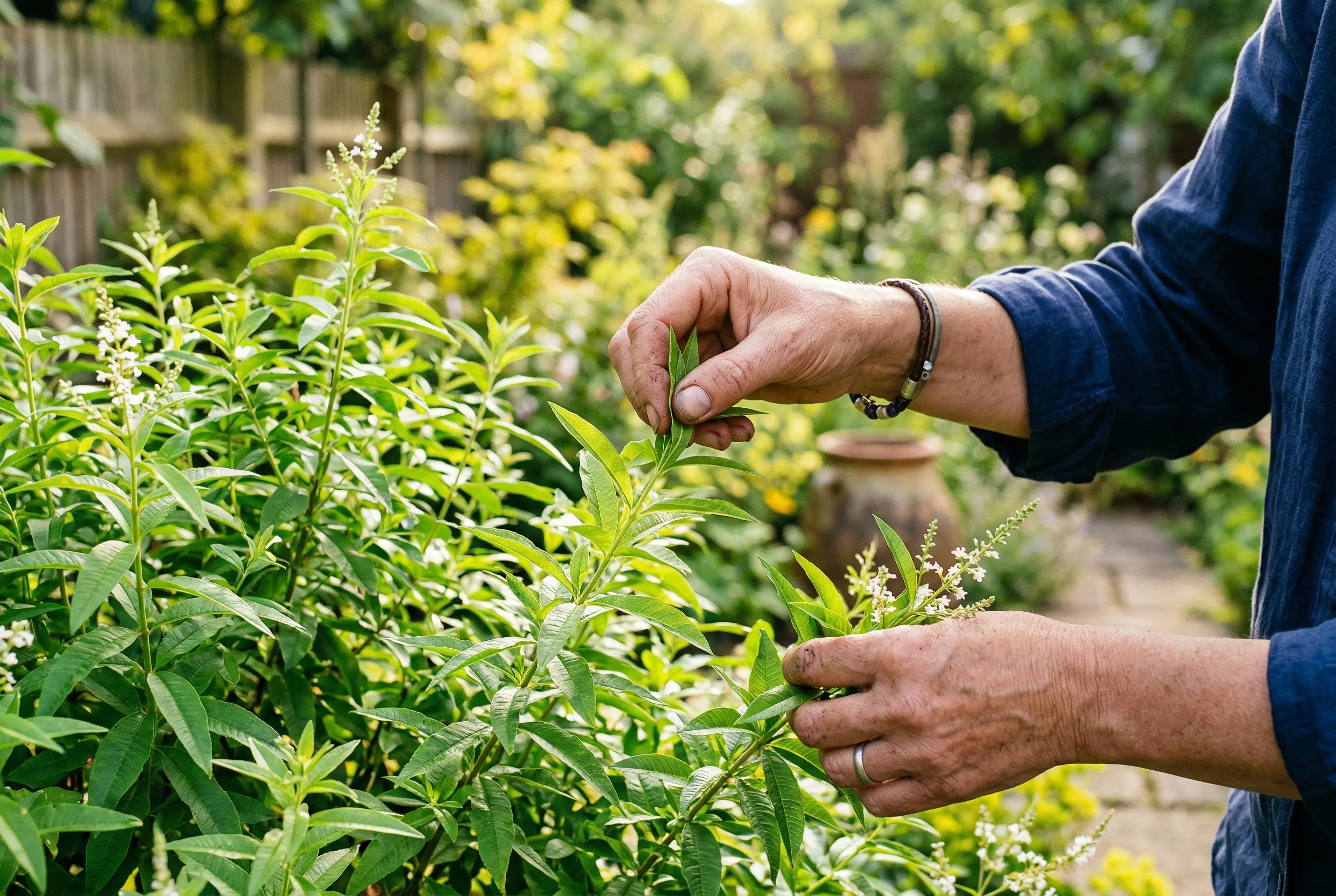 Harvest lemon verbena leaves regularly from May to October. Pinching shoot tips encourages bushy growth and provides a constant supply of fresh leaves.
How to harvest and use lemon verbena
The leaves are at their most fragrant and oil-rich from June to August, when the plant is in active growth. But you can harvest usable leaves from May right through to the first frosts in October.
Harvesting technique
Pick individual leaves or pinch out whole shoot tips, cutting back to a leaf pair. Regular harvesting encourages bushy, compact growth and prevents the plant from becoming leggy and sparse. A single established plant produces enough leaves for daily herbal tea throughout summer.
Never strip more than one third of the foliage at any one time. The plant needs leaves to photosynthesise and build energy reserves for winter dormancy.
Making lemon verbena herbal tea
This is the finest herbal tea you can make from a British garden. The flavour is clean, bright, and intensely lemony without the bitterness of lemon peel or the grassiness of lemongrass. In France, it is called verveine and served in every cafe.
Fresh leaf tea: Place 5-6 fresh leaves in a cup. Pour over boiling water. Steep for 5-7 minutes. The infusion turns a pale golden-green. Drink without milk. Add honey if you prefer sweetness.
Dried leaf tea: Use 1 teaspoon of dried leaves per cup. Steep for 7-10 minutes. The flavour is milder than fresh but still excellent.
Lemon verbena tea is naturally caffeine-free. Traditional uses include aiding digestion, reducing anxiety, and promoting sleep. Research published in the Journal of Ethnopharmacology found that lemon verbena extract has measurable antioxidant and anti-inflammatory properties.
For more herbal tea ideas from your garden, see our guide to making herbal teas from garden plants.
Cooking with lemon verbena
The leaves add a bright citrus note to both sweet and savoury dishes. Unlike lemon zest, the flavour does not turn bitter with heat.
Sweet uses: Infuse leaves in cream or milk for ice cream, panna cotta, and custard. Add to sugar syrup for cocktails and fruit salads. Bake into sponge cakes and shortbread. Layer fresh leaves with caster sugar in a jar for lemon verbena sugar (ready in 2 weeks).
Savoury uses: Tuck leaves inside chicken or fish before roasting. Add finely chopped leaves to vinaigrettes and herb butter. Infuse in olive oil for 48 hours for a lemon-scented finishing oil.
Drying and preserving
Air drying: Cut stems in the morning after the dew has dried but before the midday heat. Bundle 5-6 stems together with string. Hang upside down in a warm, dry, well-ventilated room out of direct sunlight. Drying takes 5-7 days. Strip the dried leaves from the stems and store in an airtight glass jar. Properly dried lemon verbena retains its scent for 12-18 months.
Freezing: Freeze individual leaves flat on a baking tray, then transfer to a freezer bag. They keep for 6 months. Use straight from frozen in teas and cooking.
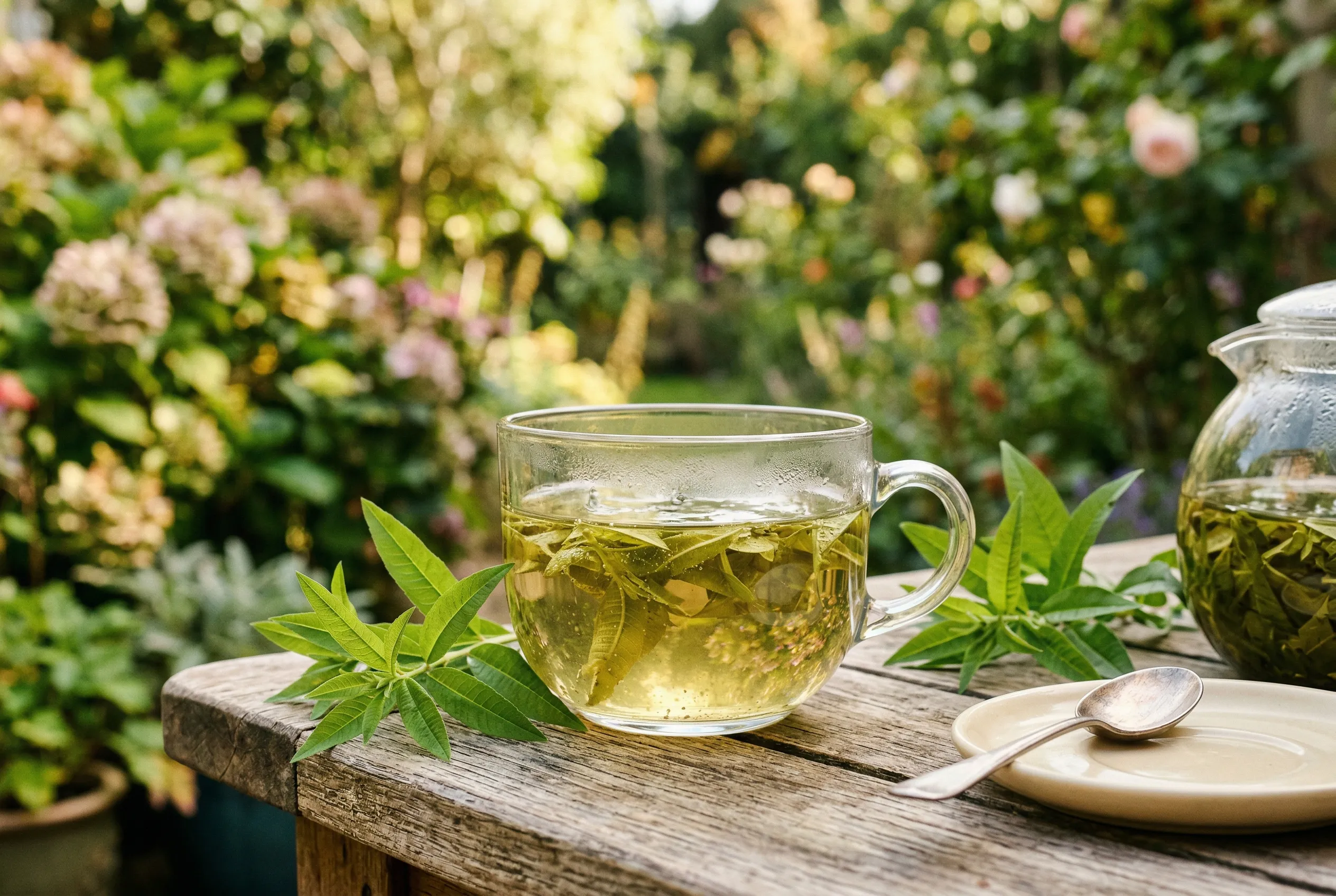 Fresh lemon verbena tea is the finest herbal infusion you can make from a UK garden. Steep 5-6 leaves in boiling water for 5-7 minutes.
How does lemon verbena compare to other lemon-scented herbs?
Several herbs offer lemon fragrance, but they differ significantly in intensity, hardiness, and use. This comparison helps you choose the right one for your garden.
| Feature | Lemon verbena | Lemon balm | Lemon thyme | Lemongrass |
|---|---|---|---|---|
| Botanical name | Aloysia citrodora | Melissa officinalis | Thymus citriodorus | Cymbopogon citratus |
| Family | Verbenaceae | Lamiaceae (mint) | Lamiaceae (mint) | Poaceae (grass) |
| Hardiness (UK) | Half-hardy (-5C) | Fully hardy (-20C) | Hardy (-15C) | Tender (5C minimum) |
| Height | 1-1.5m | 30-60cm | 15-30cm | 60-120cm |
| Lemon intensity | Very strong (30-35% citral) | Mild (1-2% citral) | Moderate (5-8% citral) | Strong (65-80% citral) |
| Best for | Tea, desserts, fragrance | Tea, salads, potpourri | Cooking, ground cover | Asian cooking, soups |
| Growth habit | Deciduous shrub | Spreading perennial | Low evergreen mat | Clumping tropical grass |
| Winter behaviour | Drops all leaves, dormant | Dies back, regrows spring | Evergreen | Dies below 5C outdoors |
| UK ease of growing | Moderate (needs protection) | Very easy (invasive) | Easy | Difficult (needs heat) |
Lemon verbena wins on fragrance quality and culinary versatility. Lemongrass has a higher citral concentration but is almost impossible to grow outdoors in the UK. Lemon balm is the easiest but spreads aggressively and the scent is far weaker. Lemon thyme is the best ground cover but the leaves are tiny and less useful in the kitchen.
If you want reliable lemon herbs for a UK kitchen garden, grow lemon verbena in a pot and lemon thyme in the ground. Together they cover tea, cooking, and fragrance year-round.
Common mistakes when growing lemon verbena
Overwatering in winter
This is the number one killer. Dormant plants in cold, wet compost develop root rot within weeks. The combination of low temperatures and saturated soil is lethal. Reduce watering to almost zero from November to March. In containers, tip the pot slightly after rain to drain excess water.
Giving up on dead-looking stems
Every year, gardeners throw away perfectly alive lemon verbena plants because the leafless brown stems look dead. Lemon verbena is deciduous. It drops every leaf in autumn. Scratch the bark in March. If there is green tissue underneath, the plant is alive. New growth breaks from the base in April.
Planting in heavy clay without drainage
Heavy clay soil retains too much winter moisture. If you must plant in the ground rather than a container, excavate a 50cm cube and backfill with a 50:50 mix of topsoil and grit. Add a 5cm layer of gravel at the base of the planting hole. Even then, container growing is safer in clay-soil regions.
Not hardening off after winter
Moving a plant straight from an indoor overwintering spot into full sun causes leaf scorch. The soft new growth cannot handle intense UV after months in low light. Harden off gradually over 7-10 days, starting in dappled shade and increasing sun exposure daily.
Pruning at the wrong time
Never prune lemon verbena in autumn or winter. Wait until new growth appears in April or May, then cut back to the strongest new shoots. Autumn pruning removes the dormant buds the plant needs to regrow in spring.
Month-by-month lemon verbena calendar
| Month | Task |
|---|---|
| January | Leave dormant. Check overwintering plants are frost-free. Water once if compost bone-dry |
| February | Check stems for signs of life. Order plants from nurseries for spring delivery |
| March | Scratch bark to check for green tissue. Watch for swelling buds at the base |
| April | Prune dead wood. Cut back to the strongest new shoots. Start regular watering |
| May | Move containers outdoors after hardening off. Plant out new purchases. Begin harvesting |
| June | Take softwood cuttings. Feed fortnightly with half-strength liquid feed. Harvest regularly |
| July | Continue feeding and watering. Peak harvesting period. Pinch out flower spikes to extend leaf growth |
| August | Take semi-ripe cuttings. Continue harvesting. Dry surplus leaves for winter use |
| September | Stop feeding. Reduce watering. Harvest remaining leaves before first frosts |
| October | Leaves begin to yellow and drop. Allow natural leaf fall. Prepare winter protection |
| November | Cut back stems to 15-20cm. Move containers indoors. Mulch in-ground plants heavily |
| December | Leave dormant. Minimal watering. Protect from frost below -5C |
How to protect lemon verbena from frost
Frost protection is essential for UK gardeners growing tender plants. Lemon verbena sits right at the edge of what survives a British winter, so getting the protection right makes the difference between losing the plant and keeping it for years.
Container plants: Move into an unheated greenhouse, conservatory, or frost-free garage with a window by early November. The space must stay above -5C. An unheated lean-to greenhouse against a house wall is ideal because it gains warmth from the building.
In-ground plants: Cut back to 15-20cm. Apply 10-15cm of bark chip mulch over the crown. Cover with a double layer of horticultural fleece pegged firmly at the edges. Wrap exposed stem bases with fleece or bubble wrap. Remove all protection in late March when night temperatures stay above 0C.
Emergency protection: If an unexpected hard frost is forecast and the plant is still outdoors, drape fleece over the entire plant and secure at the base. Even a single night below -8C can kill an unprotected lemon verbena.
Frequently asked questions
Is lemon verbena hardy in the UK?
Lemon verbena is half-hardy, surviving to about -5C. In sheltered south-facing positions in southern England, established plants often overwinter outdoors with a thick bark mulch over the crown. In the Midlands, northern England, Scotland, and Wales, grow it in a container you can move into an unheated greenhouse or porch from November to April. The roots are more cold-sensitive than the stems.
Can I grow lemon verbena in a pot?
Container growing is the best approach for UK gardeners. Use a 40cm terracotta pot with drainage holes. Fill with 50:50 John Innes No.2 and horticultural grit. The pot lets you move the plant to a frost-free spot in winter and back outdoors in May. Repot every two years in spring, moving up one pot size.
When should I take lemon verbena cuttings?
Take softwood cuttings in June for the highest success rate. Cut 10cm lengths of new growth just below a leaf node. Strip the lower leaves and insert into a 50:50 mix of perlite and peat-free compost. Keep warm at 18-20C. Rooting takes 3-4 weeks. Semi-ripe cuttings in August also work but root more slowly.
How do I make lemon verbena tea?
Use 5-6 fresh leaves per cup of boiling water. Steep for 5-7 minutes. The flavour is clean, bright, and intensely lemony without bitterness. Dried leaves work too but the flavour is milder. Lemon verbena tea is caffeine-free and traditionally used as a digestive aid in France and Spain.
Why has my lemon verbena lost all its leaves?
Leaf drop is normal in autumn and winter. Lemon verbena is deciduous and drops every leaf once night temperatures fall below 5C. The bare stems look dead but are usually alive. Scratch the bark gently with a thumbnail in March. Green tissue underneath means the plant is alive. New leaves appear from April once temperatures rise.
What is the difference between lemon verbena and lemon balm?
They are completely different plants from different families. Lemon verbena (Aloysia citrodora) is a South American shrub in the Verbenaceae family. Lemon balm (Melissa officinalis) is a hardy European perennial in the mint family. Lemon verbena has a far more intense, cleaner lemon scent. Lemon balm is hardier but spreads aggressively.
Can lemon verbena survive winter outdoors in the UK?
In sheltered spots in RHS hardiness zones H4 and above (southern England, London, coastal areas), established plants often survive mild winters outdoors. Apply a 10-15cm mulch of bark chips over the crown in November. In colder regions, container growing with winter protection indoors is far safer. Young plants under two years old are more vulnerable than established specimens.
Now you have the knowledge to grow lemon verbena successfully, explore our guide to growing herbs in the UK for the full range of kitchen herbs that thrive in British gardens.
Lawrie has been gardening in the West Midlands for over 30 years. He grows his own veg using no-dig methods, keeps a wildlife-friendly garden, and writes practical advice based on real UK growing conditions.