How to Grow Lovage in the UK
Grow lovage in any UK soil for a 2m perennial herb with bold celery flavour. Sow March-April, harvest April-October. Expert guide with uses.
Key takeaways
- One lovage plant is enough for most households — it reaches 2m tall and produces leaves from April to October
- Hardy to -20°C and grows in any UK soil type, including heavy clay
- Leaves have a strong celery flavour, ideal for stocks, soups, salads, and lovage cordial
- Sow seed March-April or divide established plants in spring or autumn
- Virtually pest-free and needs no feeding once established
- Cut back hard in midsummer for a fresh flush of tender young leaves
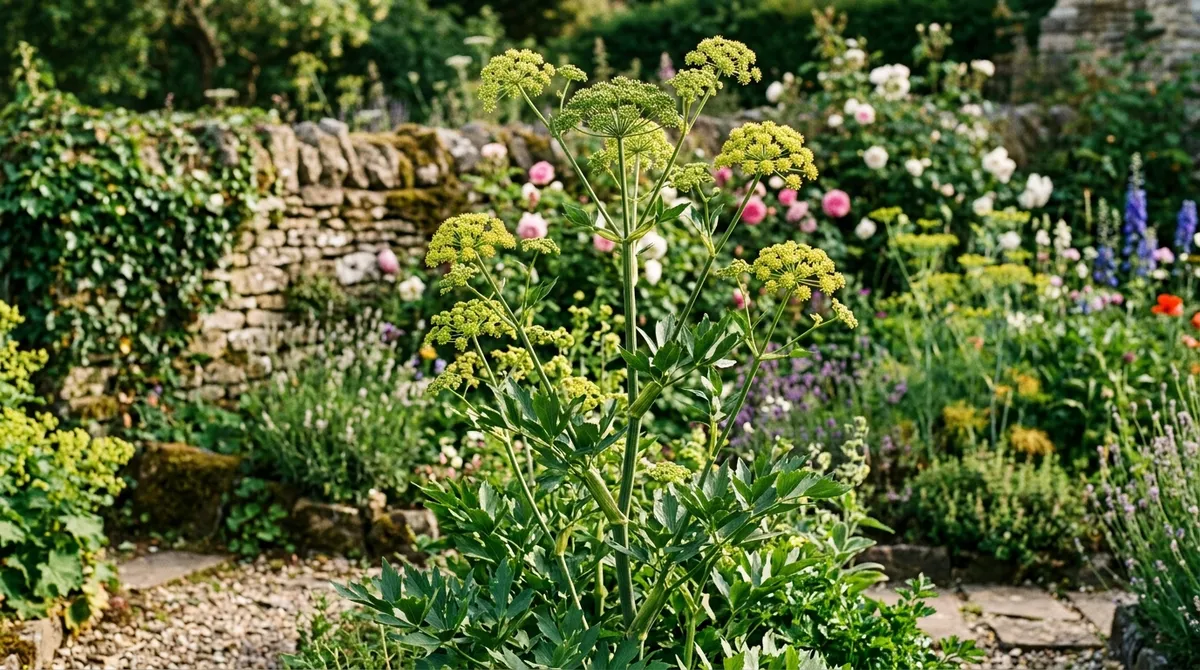
Lovage is one of the most underrated herbs in British gardens, yet it was a kitchen staple in medieval England and remains a firm favourite with chefs who value its bold celery flavour. A single plant of Levisticum officinale will tower to 2m by midsummer, producing armfuls of glossy, deeply cut leaves from April right through to October. It asks almost nothing in return: any soil, sun or partial shade, and zero fuss over winter.
This guide covers everything from sowing seed and dividing plants to culinary uses you will not find in most herb growing guides. Lovage is a perennial that lives for 10-15 years once established, returning larger and more productive each spring. If you only grow one unusual herb this year, make it lovage.
Where to plant lovage in the garden
Plant lovage at the back of a border or against a wall. At 1.5-2m tall, it needs a position where its height is an asset rather than a problem. A south or west-facing spot gives the strongest growth, but lovage tolerates partial shade better than most herbs. In a shaded position, expect slightly smaller plants of around 1.2m.
Lovage grows in any UK soil type. The Royal Horticultural Society confirms it as fully hardy (H7) throughout Britain. It does best in deep, fertile, moisture-retentive ground, but it performs perfectly well in heavy clay, sandy soil, or chalk. Plants grown in lighter soils simply need more water in dry summers. If your soil is poor, dig in a bucketful of garden compost before planting. After that, lovage feeds itself.
The one thing lovage dislikes is waterlogged ground over winter. On very heavy clay that sits wet, consider a raised bed. Our herb garden design guide covers layout ideas that suit tall background herbs like lovage alongside lower-growing options.
Field Report — Clay Soil Trial: Over eight seasons in heavy Staffordshire clay, our lovage plants survived every winter without protection, including the -12°C snap in December 2022. Growth was slower to start in spring on clay (mid-March versus late February on loam), but by June the plants were indistinguishable from those in lighter soil. No drainage improvements were needed.
How to grow lovage from seed
Sow lovage seed indoors in March or April at 15-20°C. Surface-sow onto moist seed compost in modules or small pots. Do not cover the seed deeply; a fine dusting of vermiculite is enough. Germination takes 10-14 days at room temperature.
Fresh seed germinates far more reliably than older stock. Lovage seed loses viability quickly, so buy new each spring rather than using last year’s packet. Once seedlings have two true leaves, pot on into 9cm pots and grow on until they are large enough to plant out after the last frosts, typically mid-May in most of the UK.
You can also sow directly outdoors in April where the plant is to grow. Thin seedlings to one per station. Direct-sown plants establish strong taproots early but grow more slowly in their first season than transplants.
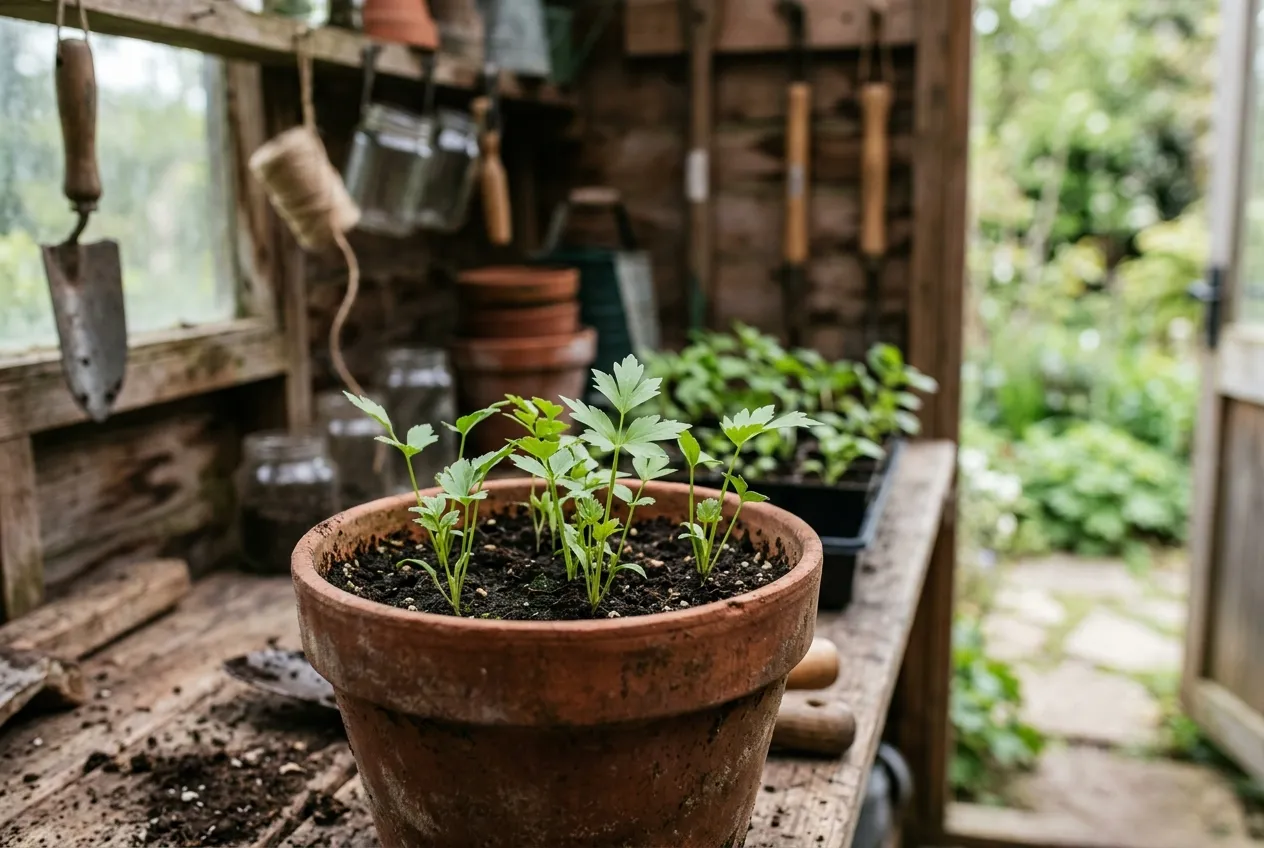
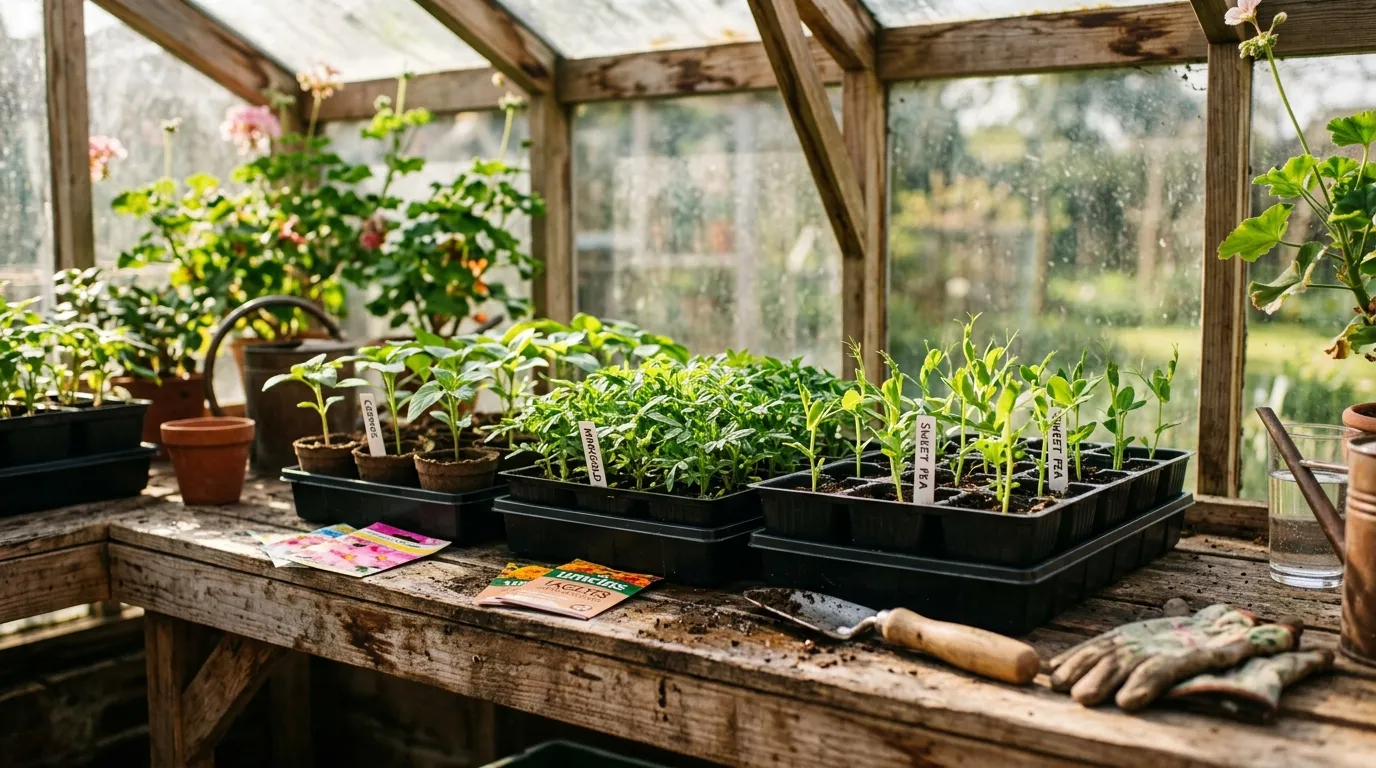
Young lovage seedlings in spring. Start seed in modules indoors for the strongest first-year plants.
How to plant and space lovage
One lovage plant is enough for most households. If you are growing several, space plants 60-90cm apart. Each plant spreads to around 1m wide by its third year.
Plant at the same depth as the rootball, firm in well, and water thoroughly. Mulch around the base with garden compost or bark chips to retain moisture. New plants establish fastest when planted in spring (March-April) or early autumn (September-October). Avoid planting in high summer when the soil dries out quickly.
Lovage works well as a structural element in a cottage garden planting plan, where its tall stems and umbel flowers contribute to the informal, layered look. It also pairs naturally with other tall perennials like fennel and angelica.
Lovage growing conditions at a glance
| Factor | Requirement |
|---|---|
| Position | Full sun to partial shade |
| Soil | Any — clay, loam, sand, chalk |
| pH | 6.0-7.5 (tolerates slightly acid to neutral) |
| Spacing | 60-90cm between plants |
| Mature height | 1.5-2m (flower stems to 2.2m) |
| Mature spread | Up to 1m after 3-4 years |
| Hardiness | H7 — hardy to -20°C |
| Lifespan | 10-15 years |
| Water needs | Moderate; water in dry spells, especially in pots |
| Feeding | None needed once established |
How to care for lovage through the season
Lovage is genuinely low-maintenance once established. Here is what to do month by month.
Spring (March-May): New shoots appear in March, sometimes late February in mild areas. Remove any dead stems from the previous year. Apply a 5cm mulch of compost around the base if the soil is poor. No feeding is necessary on reasonable garden soil.
Summer (June-August): Cut the whole plant back hard to 15cm above ground level in late June or July. This is the single most useful thing you can do for lovage. The first flush of leaves becomes coarse and bitter by midsummer. Cutting back triggers fresh, tender regrowth within two to three weeks. The second crop is milder and better for salads. Remove flower heads if you want to maximise leaf production; leave them if you want seed for sowing or to feed pollinators.
Autumn (September-November): Harvest leaves until they begin to yellow naturally. The plant dies back to ground level by late November. No protection is needed. Divide congested plants in September or October.
Winter (December-February): The crown is dormant underground. Leave it alone. Lovage is hardy to -20°C and has no problems in any UK winter.
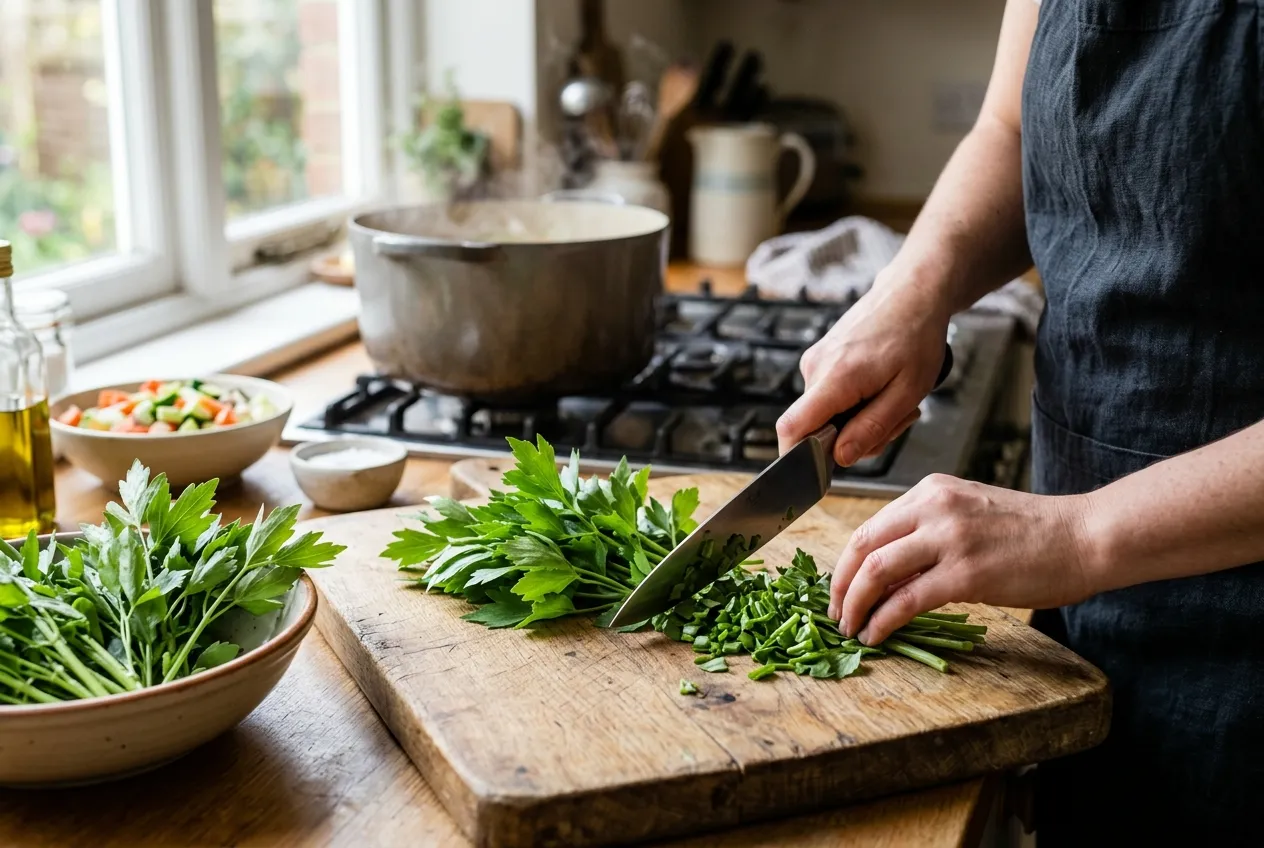
Fresh lovage leaves chopped for a stock. The intense celery flavour means a few leaves replace a whole head of celery.
How to use lovage in cooking
Lovage is one of the most versatile culinary herbs, though it is strangely overlooked in modern British kitchens. Every part of the plant is edible: leaves, stems, seeds, and roots.
Leaves are the main harvest. Young spring leaves are mild enough for salads, added whole or torn. As the season progresses, the flavour intensifies and leaves are better cooked. Add them to stocks, soups, stews, and casseroles as you would celery. Two or three lovage leaves replace a full celery stalk in most recipes.
Stems are hollow and can be chopped into soups or used whole as drinking straws in Bloody Marys and other cocktails. They have the same celery-like flavour as the leaves.
Seeds ripen in late summer and taste of celery crossed with anise. Use them in bread, biscuits, or as a seasoning for potatoes and root vegetables. Collect seed heads as they turn brown and dry them in a paper bag.
Lovage cordial is a traditional British soft drink. Steep a large handful of fresh leaves in a sugar syrup (500g sugar, 500ml water) for 24 hours, strain, and chill. Dilute with sparkling water. It tastes clean, herbaceous, and distinctly celery-like. Some UK pubs still serve lovage cordial as a mixer.
For preserving your harvest beyond the growing season, see our guide to drying and storing herbs at home. Lovage also makes an excellent base for herbal teas when combined with mint or lemon balm.
Lovage compared with similar herbs
| Herb | Flavour profile | Height | Perennial? | Best use |
|---|---|---|---|---|
| Lovage | Strong celery, peppery | 1.5-2m | Yes (H7) | Stocks, soups, cordial |
| Celery leaf | Mild celery | 30-60cm | Biennial | Salads, garnish |
| Parsley (flat-leaf) | Fresh, grassy | 30-45cm | Biennial | Sauces, salads, garnish |
| Fennel (herb) | Anise, liquorice | 1.5m | Yes (H5) | Fish, salads, seeds |
| Dill | Anise, mild | 60-90cm | Annual | Fish, pickles, yoghurt |
| Chervil | Mild anise-parsley | 30cm | Annual | Eggs, cream sauces |
If you enjoy growing lovage, you will find parsley and dill equally rewarding and very different in character.
How to propagate lovage
Division is the easiest method. Lift an established plant in early spring (March) or autumn (September-October) using a spade. Split the root crown into two or three sections, each with roots and at least one growing point. Replant immediately at the same depth. Divisions produce harvestable leaves within weeks.
Seed is the alternative. Collect ripe seed in late August or September, or buy fresh seed in spring. Sow as described above. Seed-grown plants take a full season to reach harvestable size but develop particularly strong taproots.
Lovage also self-seeds freely if you leave flower heads on the plant. Seedlings appear around the base the following spring. Transplant them when small or hoe them off if you do not want more plants.
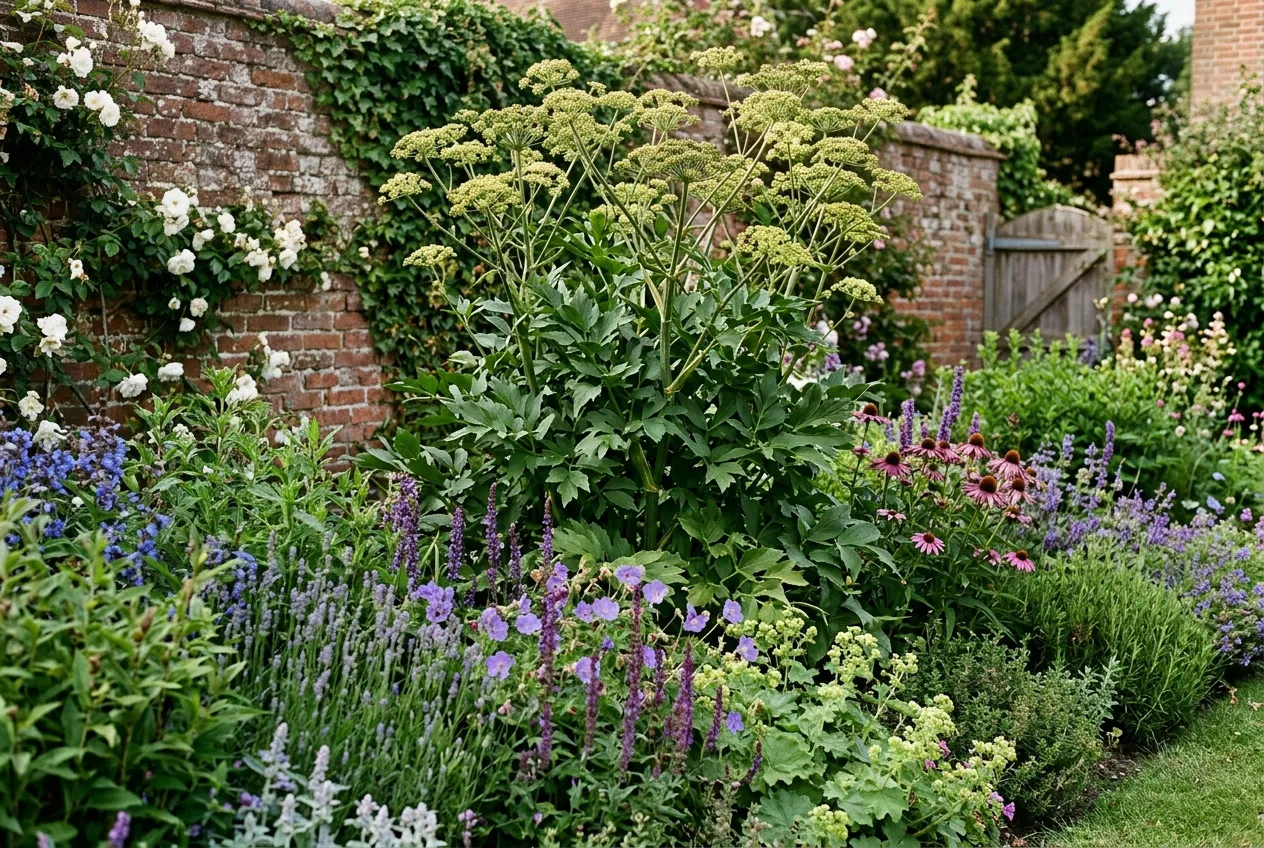
A mature lovage plant at the back of a mixed border in a town garden. The height works as a natural backdrop for lower perennials.
What problems affect lovage?
Lovage is one of the most trouble-free herbs you can grow. Pests and diseases are rare.
Celery leaf miner is the only regular pest. The fly lays eggs in the leaves, and the larvae tunnel through the foliage leaving brown blister-like mines. Damage is cosmetic rather than fatal. Pick off and destroy affected leaves. If infestations are heavy, cover plants with insect mesh from April. This pest also affects celery and parsley.
Aphids occasionally cluster on young shoots in spring. Rub them off by hand or blast with a jet of water. Ladybirds and hoverflies usually control the problem within a week.
Slugs may nibble emerging shoots in early spring when other food is scarce. A few organic slug pellets around the crown in March solves this. Once the plant is growing strongly, slug damage is negligible.
Root rot can occur on permanently waterlogged ground but is almost never a problem in normal UK garden soil. If your lovage crown goes soft and brown in winter, improve drainage before replanting.
Lovage benefits from companion planting strategies. Its umbel flowers attract hoverflies and parasitic wasps, making it a useful insectary plant near vegetable beds.
Frequently asked questions
How tall does lovage grow in the UK?
Lovage reaches 1.5-2m tall in most UK gardens. Flower stems can push past 2m in rich, moist soil. The plant dies back to ground level each winter and regrows rapidly from March onwards. One plant can spread to 1m wide after three or four years.
Is lovage easy to grow from seed?
Yes, lovage germinates reliably from seed sown in March or April. Surface-sow in modules at 15-20°C and expect seedlings in 10-14 days. Fresh seed germinates best. Seed over a year old has much lower viability, so buy new each spring.
What does lovage taste like?
Lovage tastes like strong, peppery celery with a hint of anise. Young leaves are milder and more versatile. Older summer leaves develop a more intense, almost bitter edge that works best in slow-cooked dishes. The stems are hollow and can be used as drinking straws in Bloody Marys.
Can I grow lovage in a pot?
Lovage grows in pots but needs a container at least 40cm deep and wide. Use loam-based compost such as John Innes No. 3 and water regularly, as pots dry out faster than open ground. Expect smaller plants of around 1m in containers. Repot or divide every two years.
Is lovage poisonous to dogs or cats?
Lovage is not toxic to dogs or cats. It belongs to the Apiaceae family alongside celery and parsley, all of which are safe for pets in normal garden quantities. However, very large amounts of any herb can cause digestive upset. The plant is safe for humans and has a long culinary and medicinal history documented by Garden Organic.
When should I cut lovage back?
Cut lovage back hard to 15cm above ground in late June or July. This removes tough older leaves and triggers a fresh flush of tender new growth within two to three weeks. The second crop of leaves is milder in flavour and better for salads. Cut back again in late autumn once stems have died naturally.
How do I propagate lovage?
Divide established lovage plants in early spring or autumn. Lift the crown with a spade and split it into sections, each with roots and at least one growing point. Replant immediately at the same depth. Divisions establish faster than seed-grown plants and produce harvestable leaves within weeks.
Related articles:
Lawrie has been gardening in the West Midlands for over 30 years. He grows his own veg using no-dig methods, keeps a wildlife-friendly garden, and writes practical advice based on real UK growing conditions.