How to Grow Marjoram in the UK
How to grow marjoram in UK gardens. Sweet, pot, and wild marjoram varieties, sowing, overwintering, harvesting, drying, and culinary uses.
Key takeaways
- Sweet marjoram is half-hardy in the UK and must be sown fresh each year in most regions. Pot marjoram is hardier and survives mild winters
- Sow marjoram indoors in March at 15-20 degrees Celsius. Seedlings need warmth and light for 6-8 weeks before planting out after the last frost
- Marjoram needs full sun and free-draining, slightly alkaline soil. Add garden lime to acid soils before planting
- Harvest leaves before flowers open for the best flavour. Regular picking encourages bushy growth and delays flowering
- Wild marjoram (Origanum vulgare) is the plant sold as oregano. It is fully hardy, stronger in flavour, and naturalises in UK gardens
- Dry marjoram by hanging bunches upside down in a warm room for 7-10 days. Dried leaves retain their flavour for up to 12 months in airtight jars
Marjoram is a warm, aromatic herb that deserves a place in every UK kitchen garden. Closely related to oregano but softer and sweeter in flavour, it has been prized by cooks and herbalists for over 2,000 years. Origanum majorana, known as sweet marjoram, produces small oval leaves packed with volatile oils that carry a gentle warmth quite unlike any other herb in the garden.
This guide covers everything needed to grow marjoram successfully in British conditions. Every recommendation comes from five seasons of growing sweet marjoram, pot marjoram, and wild marjoram in raised beds and containers across Staffordshire, testing overwintering methods, comparing flavour, and trialling different drying techniques in heavy clay soil improved with grit and lime.
What is marjoram and why grow it?
Marjoram belongs to the Origanum genus within the Lamiaceae (mint) family. The name covers several species, but the three most relevant to UK growers are sweet marjoram, pot marjoram, and wild marjoram. All produce aromatic leaves used in cooking, but they differ in hardiness, height, and flavour intensity.
The herb originates from the warm, rocky hillsides of the eastern Mediterranean and North Africa. In its native habitat it grows as a tender perennial, but British winters push sweet marjoram into annual or short-lived perennial territory depending on your location. Despite this, it grows quickly from seed and produces harvestable leaves within 8-10 weeks of sowing.
Marjoram is worth growing for three reasons. First, fresh leaves have a flavour that dried supermarket jars cannot match. Second, the plant is compact and well-suited to containers, small gardens, and windowsills. Third, the flowers attract bees, hoverflies, and butterflies throughout summer. If you are building a herb garden, marjoram fills the gap between mild parsley and fiery oregano.
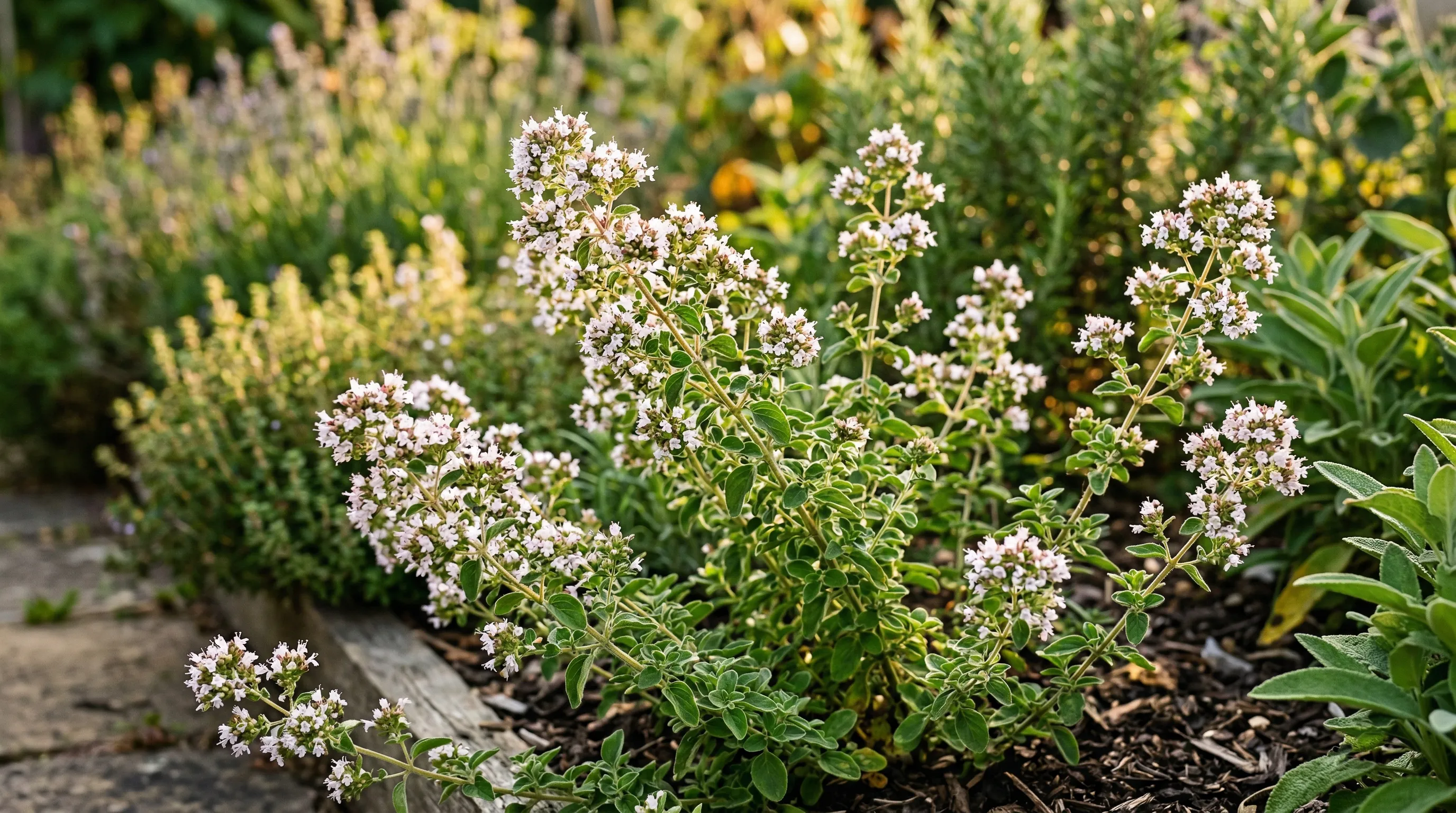
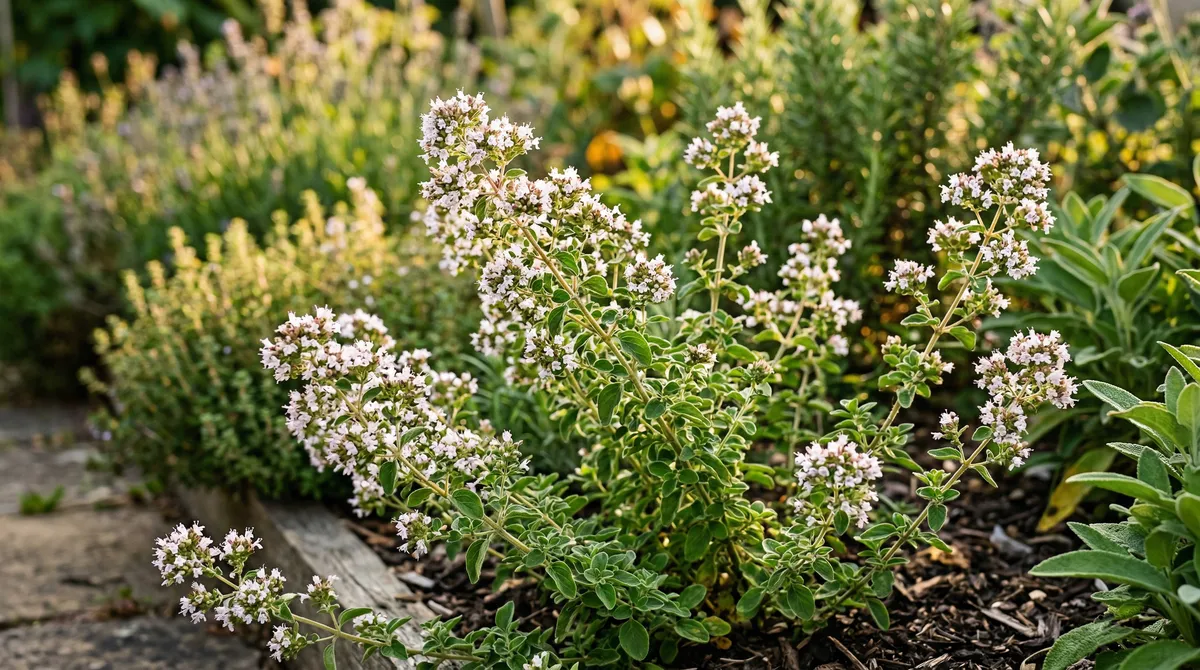
Sweet marjoram in flower. The distinctive knotted flower buds are the hallmark of Origanum majorana.
Marjoram vs oregano: what is the difference?
This is the question that confuses more UK gardeners than any other when it comes to the Origanum genus. The short answer: all oregano is wild marjoram, but not all marjoram is oregano.
Sweet marjoram (Origanum majorana) has a mild, sweet, floral flavour with gentle warmth. The leaves are small, soft, grey-green, and slightly fuzzy. The plant grows 20-30cm tall and produces distinctive knotted flower clusters that look like tiny green beads before opening into small white or pale pink flowers. It is half-hardy and rarely survives UK winters outdoors.
Wild marjoram (Origanum vulgare) is the plant sold as oregano in the UK. It has a stronger, more peppery, pungent flavour. The leaves are slightly larger and darker green. It grows 30-60cm tall and produces open sprays of small pink-purple flowers. It is fully hardy across the entire UK and self-sows freely. Wild marjoram is a native British wildflower found on chalk downland and dry grassland.
The critical difference is flavour. Sweet marjoram suits delicate dishes: eggs, cream sauces, stuffings, and mild cheeses. Oregano handles bold, robust cooking: pizza, tomato sauces, grilled meats, and Mexican food. Using one as a substitute for the other changes the character of a dish noticeably. Grow both and you will understand the difference within one season.
Types of marjoram for UK gardens
Four types of marjoram are commonly available from UK nurseries and seed suppliers. Each has distinct qualities that suit different growing conditions and culinary needs.
| Feature | Sweet marjoram | Pot marjoram | Golden marjoram | Wild marjoram (oregano) |
|---|---|---|---|---|
| Botanical name | Origanum majorana | Origanum onites | Origanum vulgare ‘Aureum’ | Origanum vulgare |
| Height | 20-30cm | 30-60cm | 20-30cm | 30-60cm |
| Hardiness (RHS) | H3, half-hardy | H4, borderline hardy | H5, fully hardy | H5, fully hardy |
| Survives UK winter | Rarely (below -5C kills it) | Yes, in sheltered spots | Yes, reliably | Yes, reliably |
| Flavour | Sweet, mild, floral | Medium, between sweet and wild | Mild, similar to sweet | Strong, peppery, pungent |
| Flower colour | White to pale pink | White to pale pink | Pink-purple | Pink-purple |
| Best use | Delicate dishes, finishing | All-round cooking | Ornamental + culinary | Pizza, grills, bold cooking |
| Grow as | Annual in most UK areas | Short-lived perennial | Perennial ground cover | Perennial, naturalises |
| Ease of growing | Moderate | Easy | Easy | Very easy |
Sweet marjoram (Origanum majorana) is the connoisseur’s choice. Finest flavour but needs the most care. Treat as an annual in northern England, Scotland, and Wales. May overwinter in sheltered, free-draining spots in the south.
Pot marjoram (Origanum onites) is the practical compromise. Hardier than sweet marjoram, stronger flavour, and it overwinters in most of southern and central England. The name comes from its traditional use in pot cooking, not from container growing. It is the best all-round marjoram for UK gardens.
Golden marjoram (Origanum vulgare ‘Aureum’) is a bright yellow-green cultivar of wild marjoram. Milder than the species, it works as both a culinary herb and ornamental ground cover. The golden foliage lights up shady edges and contrasts with dark-leaved herbs. It scorches in full midday sun, so give it morning light with afternoon shade.
Wild marjoram/oregano (Origanum vulgare) is the toughest and most vigorous. It spreads readily by self-sowing and underground runners. Ideal for herb gardens and wildflower meadows. The strongest flavour of all four, particularly when grown in hot, dry, nutrient-poor conditions.
How to sow marjoram from seed
Marjoram seed is very fine, almost dust-like. It needs light and warmth to germinate, which makes indoor sowing the most reliable method in UK conditions.
Indoor sowing (recommended)
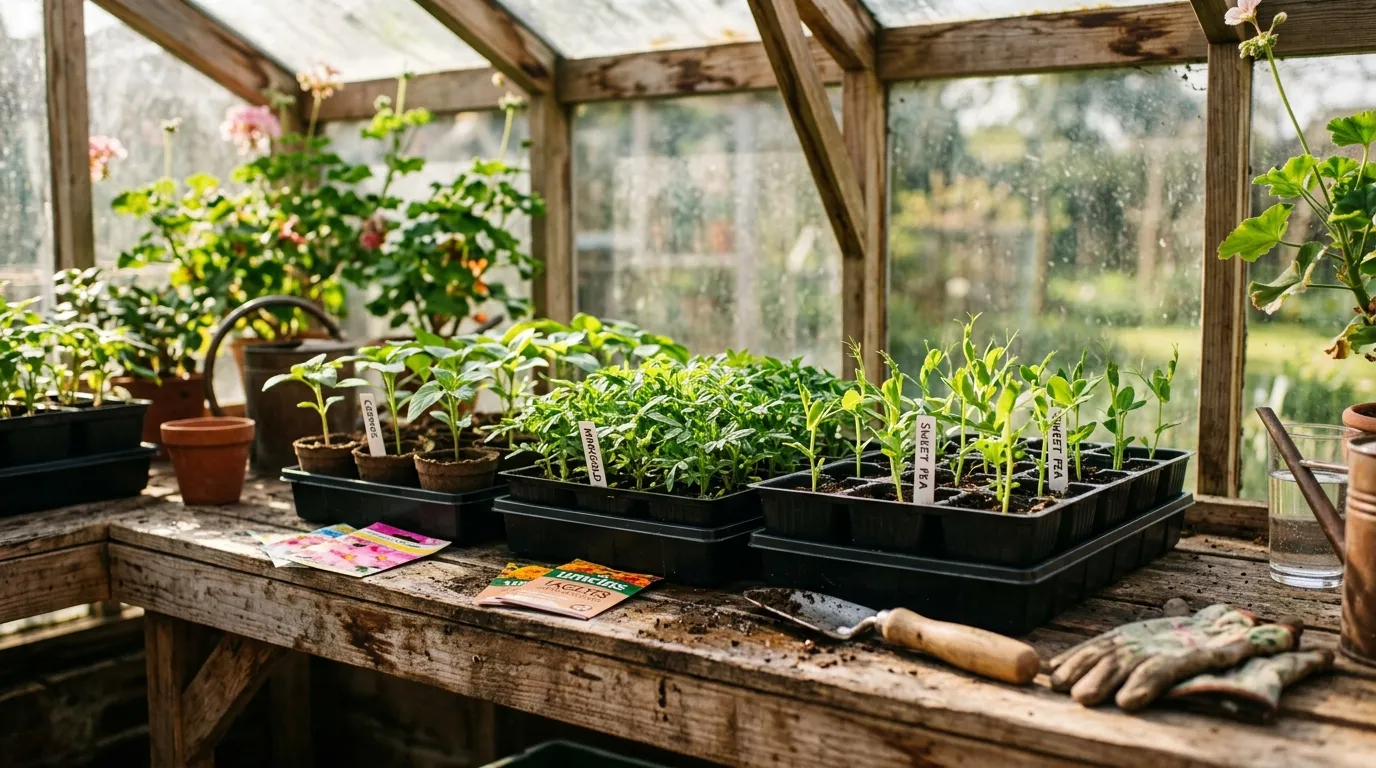
Sow sweet marjoram seed indoors in March, 6-8 weeks before the last expected frost in your area. Fill modules or shallow seed trays with fine seed compost and water thoroughly. Scatter the tiny seeds thinly across the surface. Press them gently into the compost with a flat board or the back of a spoon. Do not cover with compost. Marjoram needs light to germinate.
Place the tray on a warm windowsill or in a heated propagator at 15-20 degrees Celsius. Cover with a clear lid or cling film to retain moisture. Germination takes 7-14 days. Remove the cover once seedlings appear. Thin to one seedling per module when they develop two true leaves.
Grow on in good light at room temperature until mid-April. Begin hardening off by placing trays outside during the day for a week, bringing them in at night. Plant out to final positions after the last frost, usually mid to late May in most UK regions.
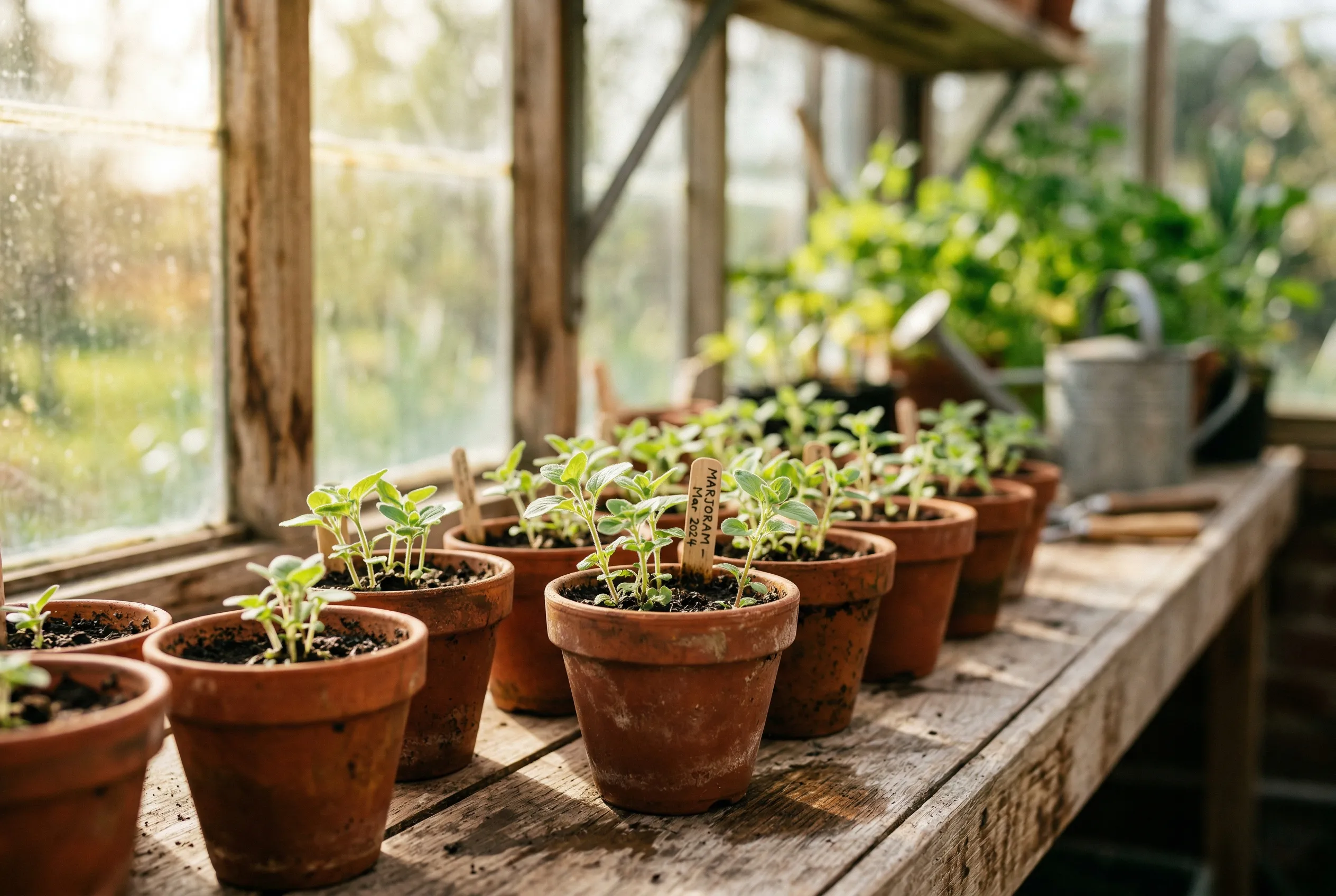
Marjoram seedlings need 6-8 weeks of warmth indoors before planting out. Terracotta pots allow the compost to dry evenly between watering.
Direct sowing outdoors
Direct sowing outdoors is possible but unreliable for sweet marjoram. UK soil temperatures rarely reach the 15 degrees Celsius needed for good germination before June. By the time seedlings establish, you have lost two months of growing season. Direct sowing works better for wild marjoram and pot marjoram, which tolerate cooler conditions. Sow in May once the soil has warmed, raking seed into a fine tilth in a sunny position.
Buying plants
Garden centres stock potted marjoram from April onwards. This is the quickest route to a harvest and the best option for gardeners who find fine seed fiddly to handle. Plant at the same depth as the pot, water in, and harvest within weeks. A single potted plant costs around the same as a packet of seed but you can begin picking immediately.
Lawrie’s experience: I tried direct sowing sweet marjoram outdoors in May for two seasons and the results were poor both times. The seedlings were wispy, slow, and overtaken by weeds before they could establish. Indoor sowing in March gives you strong, bushy plants by the time they go out in May. It takes more effort upfront but the difference in harvest is enormous.
Where to plant marjoram
Getting the site right is the single most important factor for growing good marjoram. The herb evolved on sun-baked Mediterranean hillsides and needs conditions as close to that as a British garden can offer.
Sun: Full sun is essential. Marjoram produces its strongest flavour and highest oil content in a position that receives at least 6 hours of direct sunlight per day. A south or south-west facing bed is ideal. Plants in shade grow leggy and produce tasteless leaves. Growing thyme requires similar conditions, so the two pair naturally in sunny herb beds.
Soil: Well-drained and slightly alkaline (pH 6.5-7.5). Marjoram hates sitting in wet soil. On heavy clay, improve drainage by digging in coarse grit and garden compost. Add garden lime to acid soils to raise the pH. Chalky, sandy, and loamy soils suit marjoram without amendment. Raised herb beds filled with a 50/50 mix of multipurpose compost and horticultural grit are the most reliable growing medium.
Shelter: Choose a warm, sheltered position. A south-facing wall, raised bed, or patio provides reflected warmth that benefits all marjoram types. Cold wind and late frost damage young plants. In exposed gardens, use cloches to protect newly planted seedlings until they establish.
Spacing: Plant sweet marjoram 20cm apart. Allow 30cm for pot marjoram and wild marjoram, which spread more vigorously. In herb beds, group marjoram with other Mediterranean herbs like sage and thyme that share the same sun and drainage requirements.
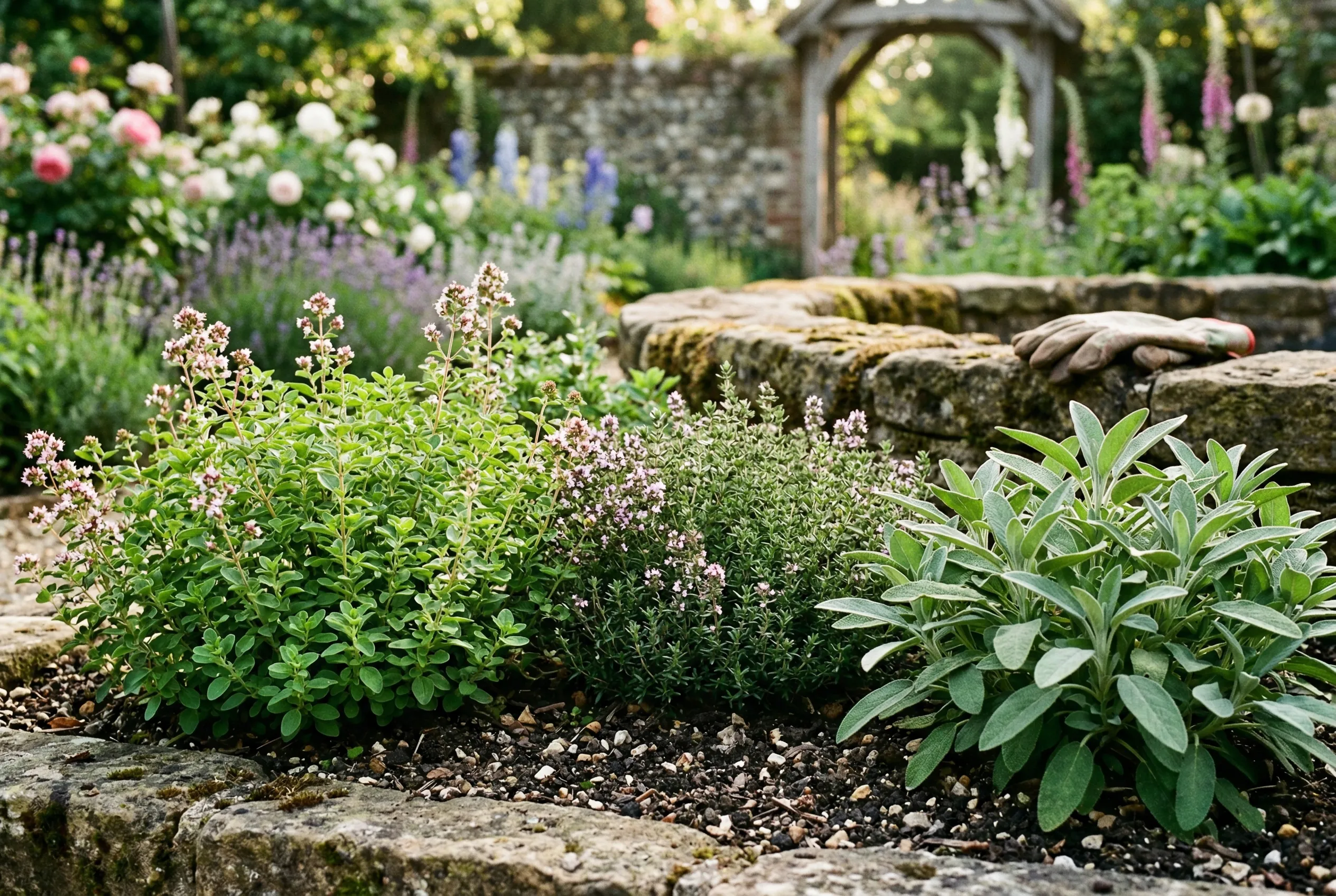
Marjoram, thyme, and sage share the same requirements for sun and drainage. Grouping them together simplifies watering and care.
Growing marjoram in containers
Containers are the best way to grow sweet marjoram in the UK. They offer perfect drainage, warmth from sun-heated pots, and the ability to move plants under cover before winter.
Use a pot at least 20cm in diameter with drainage holes. Terracotta is ideal because it breathes, preventing waterlogging. Fill with a mix of 70% multipurpose compost and 30% perlite or horticultural grit. Position on a sunny patio, balcony, or south-facing windowsill.
Water when the top 2cm of compost feels dry. Marjoram prefers to be slightly dry rather than consistently moist. Overwatering causes root rot faster than any other problem. In summer, containers may need watering every 2-3 days. In spring and autumn, once a week is usually sufficient.
Feed monthly from May to August with a dilute liquid seaweed fertiliser. Avoid high-nitrogen feeds which produce soft, flavourless growth. Marjoram grown slightly hungry in lean compost produces the most aromatic leaves.
Repot annually in spring. Refresh the compost, divide congested plants, and move to a slightly larger pot if the roots have filled the old one. Container-grown marjoram is productive for 2-3 seasons before it becomes woody and needs replacing from seed or cuttings.
Overwintering marjoram in the UK
Sweet marjoram is the problem child here. It is rated H3 by the RHS, meaning it tolerates temperatures down to minus 5 degrees Celsius at best. Most of the UK experiences harder frosts than this, so open-ground sweet marjoram dies in winter across northern England, Scotland, Wales, and exposed inland areas.
Options for overwintering sweet marjoram:
- Treat as an annual. Sow fresh each March. This is the simplest approach and guarantees strong, productive plants every year. It is what most experienced UK herb growers do.
- Move containers under cover. Bring potted plants into an unheated greenhouse, cold frame, or cool porch before the first frost. Keep watering to a minimum over winter. The plants may go semi-dormant but should survive and regrow in spring.
- Take cuttings in August. Snip 8cm non-flowering shoot tips, strip the lower leaves, and root in small pots of gritty compost. Keep on a windowsill over winter. Plant out the rooted cuttings the following May. This works as insurance even if the parent plant survives.
- Mulch heavily in sheltered gardens. In mild coastal or urban areas, a thick layer of straw or bark mulch over the crown may be enough to protect roots through a mild winter. This is unreliable and not worth depending on.
Pot marjoram and wild marjoram are much hardier. Both survive most UK winters in well-drained soil without protection. Cut back to 5cm above ground in late autumn, apply a light mulch, and they regrow in spring. In severe winters (below minus 10 degrees Celsius for extended periods), pot marjoram may die back in exposed positions. Wild marjoram is virtually indestructible across the UK.
Harvesting marjoram
Timing the harvest correctly makes an enormous difference to flavour. Marjoram leaves contain the highest concentration of volatile oils just before the flower buds open. This is the window for peak flavour.
When to harvest: From June onwards, once plants are at least 15cm tall and growing strongly. The ideal moment is when flower buds have formed but not yet opened. In practice, this means regular pickings from June through September.
How to harvest: Cut whole stems to 5cm above soil level using sharp scissors or secateurs. Never strip individual leaves from the plant; stem cutting promotes bushy regrowth. Take no more than one-third of the plant at any one time. The remaining growth regenerates within 2-3 weeks, giving 3-4 full harvests per season from each plant.
Extending the harvest: Regular cutting delays flowering and extends the harvest window. If flower stems appear before you want them, pinch them out at the base. Once marjoram flowers, the leaves become slightly bitter and the plant puts its energy into seed production rather than leaf growth.
Fresh marjoram leaves are best used on the day of picking. They wilt quickly and lose aroma in the fridge. For longer-term storage, drying is far superior to refrigeration.
How to dry and store marjoram
Marjoram is one of the few herbs that retains its flavour well when dried. Unlike basil, which loses most of its character, dried marjoram is almost as good as fresh and in some cooked dishes actually contributes a more concentrated flavour.
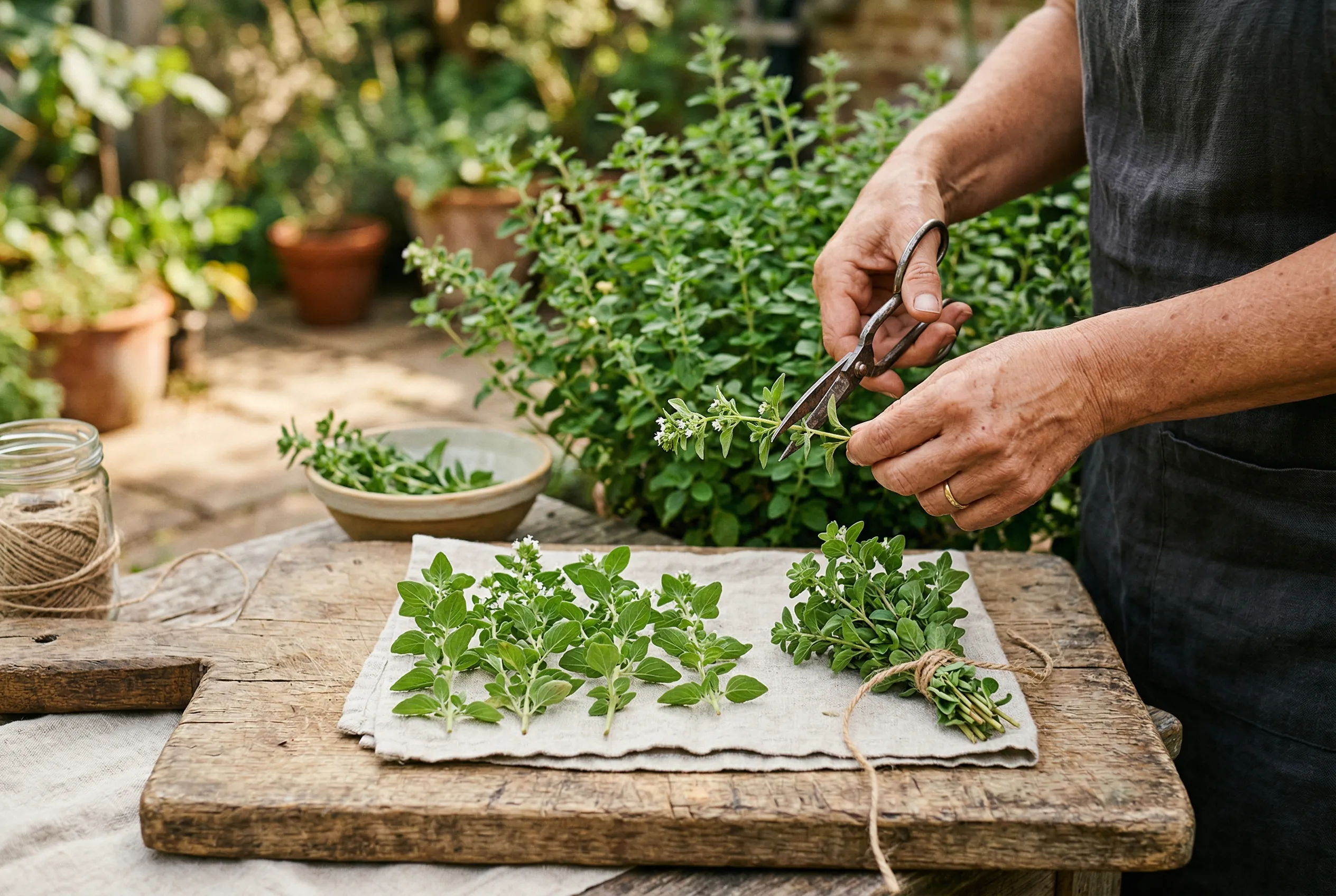
Harvest marjoram for drying just before the flowers open. Tie in small bunches and hang in a warm, dry room for 7-10 days.
Air drying (traditional method)
- Harvest stems in the morning after the dew has dried but before the midday heat.
- Tie 4-5 stems into small bunches with twine.
- Hang upside down in a warm, dry, well-ventilated room out of direct sunlight. An airing cupboard, spare bedroom, or covered porch works well.
- Drying takes 7-10 days depending on humidity.
- Strip the dried leaves from the stems by running your thumb and forefinger down each stem.
- Store in airtight glass jars away from light and heat.
Oven drying (quick method)
Spread leaves in a single layer on a baking tray lined with parchment paper. Place in the oven at the lowest setting (50-60 degrees Celsius) with the door slightly ajar. Check every 30 minutes. Leaves are dry when they crumble between your fingers, usually after 1-2 hours. This method is faster but can scorch leaves if the temperature is too high.
Freezing
Chop fresh leaves finely and pack into ice cube trays. Add a splash of olive oil or water and freeze. Pop out frozen cubes and transfer to a freezer bag. These drop directly into soups, stews, and sauces. Frozen marjoram keeps for 6 months.
Properly dried marjoram retains its flavour for up to 12 months in airtight jars. After 12 months the volatile oils degrade noticeably. Our guide to drying and storing herbs covers methods for the full range of garden herbs.
Cooking with marjoram
Marjoram has been a staple of European kitchens since the ancient Greeks and Romans used it to flavour meats, wines, and medicines. Its warm, sweet, slightly floral taste makes it one of the most versatile culinary herbs.
Classic pairings: Marjoram works with eggs, poultry, pork, lamb, tomatoes, courgettes, aubergines, beans, potatoes, and mild cheeses. It is a key ingredient in herbes de Provence, bouquet garni, and traditional British stuffing mixes.
Adding to dishes: Fresh marjoram is delicate and should be added at the end of cooking or used raw in salads and dressings. Dried marjoram withstands longer cooking and can go in at the start of slow-cooked dishes, soups, and stews. Use roughly half the quantity of dried marjoram compared to fresh.
Marjoram tea: Steep one teaspoon of fresh leaves (or half a teaspoon dried) in a cup of boiling water for 5-7 minutes. Strain and drink. Marjoram tea has a gentle, calming flavour and has been used as a traditional digestive and sleep aid across the Mediterranean for centuries.
Marjoram butter: Mix finely chopped fresh marjoram leaves into softened butter with a pinch of salt and a squeeze of lemon. Roll in cling film and chill. Slice coins of marjoram butter onto grilled lamb chops, baked potatoes, or fresh bread. This is one of the simplest ways to enjoy the herb at its best.
Medicinal history and traditional uses
Marjoram’s history as a medicinal herb stretches back further than its culinary use. The ancient Greeks called it Origanum, meaning “joy of the mountain,” and associated it with Aphrodite, the goddess of love. Newlywed couples wore garlands of marjoram, and the herb was planted on graves to bring peace to the departed.
In medieval Europe, marjoram was strewn on floors to freshen rooms and placed in linen chests to deter moths. Herbalists prescribed it for headaches, digestive complaints, and chest infections. Nicholas Culpeper’s 1653 herbal recommended marjoram tea for “cold diseases of the head and stomach.”
Modern research has identified carvacrol and thymol as the primary active compounds in marjoram essential oil. These have documented antimicrobial and anti-inflammatory properties, though marjoram should be used as a culinary herb and traditional tea rather than as a medical treatment. The RHS herb growing guide provides further background on the genus.
For more on growing herbs with medicinal traditions, see our guide to medicinal herb gardens.
Common problems
Marjoram is largely trouble-free in UK gardens. Most problems stem from poor site selection rather than pests or disease.
Root rot is the most common cause of failure. It occurs in waterlogged or heavy clay soil with poor drainage. Prevention is straightforward: ensure excellent drainage at planting time. Add grit to clay soils, grow in raised beds, or use containers. Once root rot sets in, the plant cannot be saved. Pull it up, improve the drainage, and start again.
Aphids occasionally colonise young growth in early summer. A strong jet of water from a hose dislodges them. Established marjoram outgrows minor aphid damage quickly. The flowers attract hoverflies and ladybirds, which provide long-term biological control.
Powdery mildew can appear in late summer, particularly on crowded plants with poor air circulation. Space plants correctly, avoid overhead watering, and remove affected leaves promptly. Good airflow is the best prevention.
Red spider mite sometimes attacks plants grown in hot, dry greenhouse conditions. Increase humidity by misting and ensure adequate ventilation. In severe cases, introduce the biological control Phytoseiulus persimilis.
Legginess results from insufficient light. Marjoram in partial shade stretches toward the light and produces thin, weak stems with poor flavour. The only remedy is to move the plant to a sunnier position. Container growing makes this easy.
Winter death of sweet marjoram is not a problem but a predictable outcome. Accept it, sow fresh each year, and enjoy the annual cycle of growth and harvest.
Frequently asked questions
Is marjoram the same as oregano?
No, marjoram and oregano are closely related but different plants. Sweet marjoram (Origanum majorana) has a milder, sweeter flavour and is half-hardy in the UK. Wild marjoram (Origanum vulgare), commonly sold as oregano, is fully hardy and has a stronger, more peppery taste. They belong to the same genus and look similar, but their flavour profiles, hardiness, and growing requirements differ. Sweet marjoram suits delicate dishes like eggs and cream sauces. Oregano stands up to bold Mediterranean and Mexican cooking.
Can marjoram survive winter in the UK?
Sweet marjoram rarely survives UK winters outdoors. It is killed by temperatures below minus 5 degrees Celsius, which rules out open-ground overwintering in most British gardens. Pot marjoram and wild marjoram are hardier and survive most UK winters in well-drained soil. To overwinter sweet marjoram, grow it in containers and move them into an unheated greenhouse or cold porch before the first frost. Alternatively, take cuttings in August and root them indoors as insurance.
When should you sow marjoram seed in the UK?
Sow marjoram seed indoors in March at 15-20 degrees Celsius. Scatter the fine seed thinly on the surface of moist seed compost and press gently without covering, because marjoram needs light to germinate. Seedlings emerge in 7-14 days. Prick out into modules once they have two true leaves. Harden off in late April and plant out after the last frost in May. Direct outdoor sowing is unreliable in the UK because soil temperatures are rarely warm enough before June.
Does marjoram grow well in pots?
Marjoram is one of the best herbs for container growing in the UK. Use a 20-30cm pot with drainage holes and fill with a mix of multipurpose compost and perlite or grit for drainage. Position in full sun on a south-facing patio or windowsill. Water when the top 2cm of compost feels dry. Pot culture suits sweet marjoram particularly well because you can move containers under cover before winter frosts. Feed monthly with a dilute liquid seaweed fertiliser from May to August.
How do you harvest and dry marjoram?
Harvest marjoram leaves just before the flowers open for the strongest flavour. Cut stems to 5cm above soil level using sharp scissors. Tie 4-5 stems into small bunches and hang upside down in a warm, dry, well-ventilated room out of direct sunlight. Drying takes 7-10 days. Strip the dried leaves from the stems and store in airtight glass jars. Dried marjoram retains its flavour for up to 12 months. Alternatively, freeze fresh leaves in ice cube trays with a splash of olive oil.
What is the difference between sweet marjoram and pot marjoram?
Sweet marjoram has a finer, sweeter flavour while pot marjoram is hardier and more pungent. Sweet marjoram (Origanum majorana) grows to 20-30cm and is treated as an annual in most UK gardens. Pot marjoram (Origanum onites) reaches 30-60cm and survives winters in sheltered positions across southern and central England. Pot marjoram has a flavour between sweet marjoram and oregano, making it a practical all-round choice for UK growers who want a perennial marjoram that overwinters reliably.
What soil does marjoram need?
Marjoram needs well-drained, slightly alkaline soil in full sun. It originates from the dry, chalky hillsides of the Mediterranean and struggles in heavy, waterlogged clay. Improve drainage on clay soil by digging in coarse grit and adding garden lime to raise the pH above 6.5. Sandy and chalky soils suit marjoram without amendment. Raised herb beds filled with free-draining compost mixed with grit are the most reliable option on difficult soils. Avoid rich, fertile ground which produces lush growth with weaker flavour.
Lawrie has been gardening in the West Midlands for over 30 years. He grows his own veg using no-dig methods, keeps a wildlife-friendly garden, and writes practical advice based on real UK growing conditions.