How to Grow Marrow in the UK
How to grow marrow in the UK from seed to harvest. Covers sowing, spacing, feeding, giant marrow growing for shows, and storing marrows over winter.
Key takeaways
- Marrows are the same species as courgettes (Cucurbita pepo) grown to full maturity at 30-50cm
- Sow seeds indoors in April and plant out after the last frost in late May
- Space plants 1.2m apart in rich, moisture-retentive soil with full sun
- Feed weekly with high-potash liquid fertiliser once flowers appear in late June
- Harvest from August when the skin is hard enough to resist a thumbnail press
- Store whole marrows in a cool, frost-free place for 3-4 months through winter
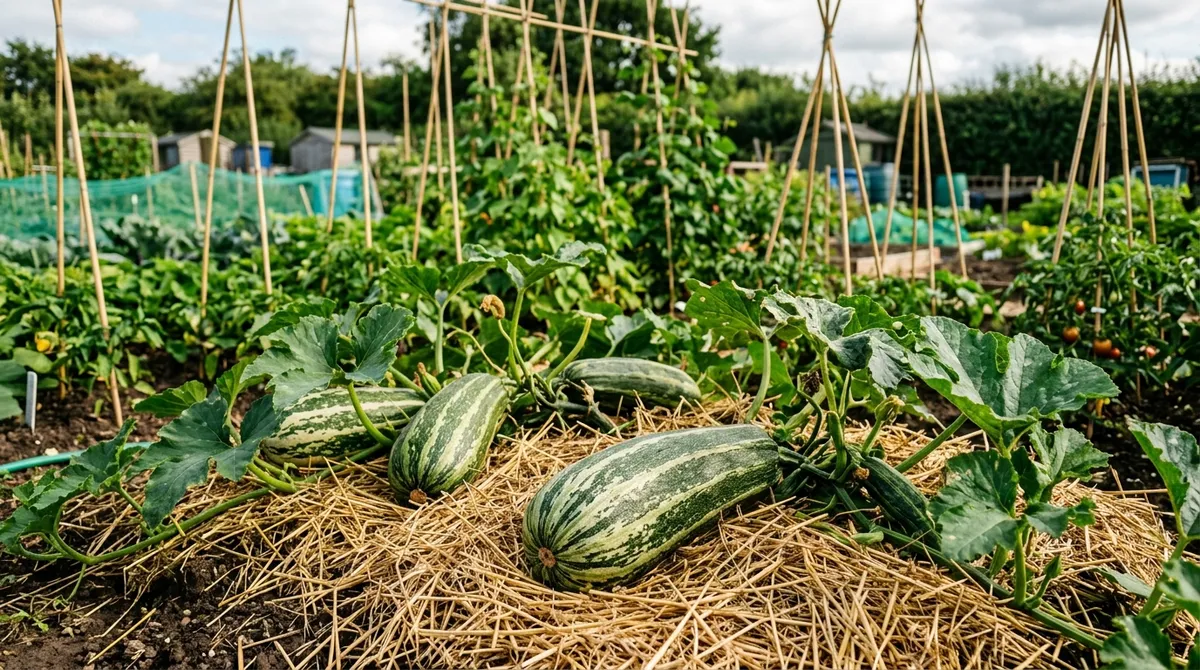
Marrows are one of the most rewarding vegetables to grow in a UK allotment or garden. A single plant produces 4-8 large fruit weighing 3-5kg each between August and October. They are the same species as courgettes, simply left on the plant to reach full size. The thick skin and dense flesh make marrows ideal for stuffing, baking, and long-term storage through winter.
Growing marrows is straightforward. They need warmth to germinate, rich soil, regular water, and plenty of space. The trailing vines spread 1.2-1.5m, so plan your plot accordingly. This guide covers varieties, sowing, planting, feeding, giant marrow growing for competitions, harvesting, and storing marrows to last well into winter.
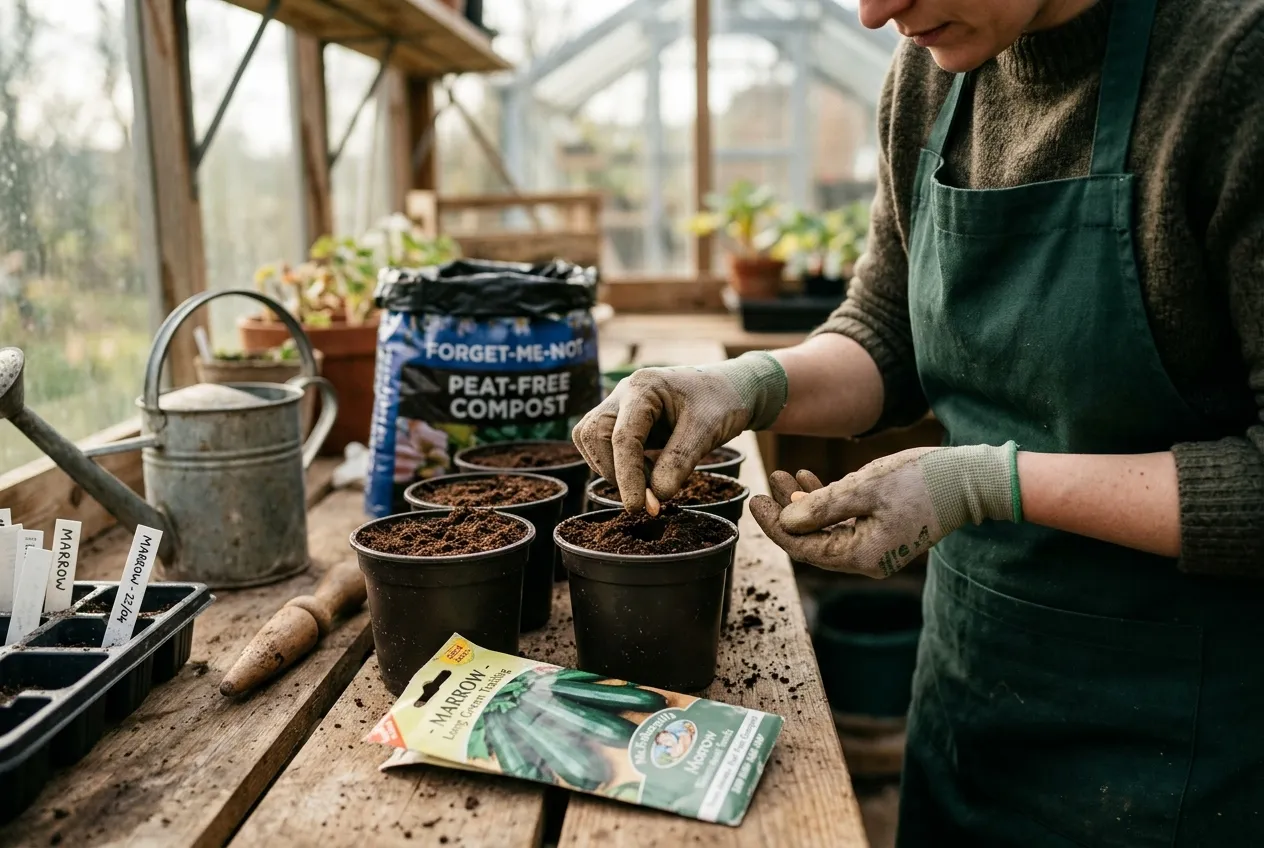
Sow marrow seeds on their edge in 9cm pots of peat-free compost during mid to late April.
Which marrow varieties grow best in the UK?
Choose a variety suited to your goal. Some produce the best eating marrows. Others are bred specifically for giant show competitions. The RHS marrow growing guide recommends several tried-and-tested varieties for British conditions.
Long Green Bush is the traditional British favourite. It produces dark green, striped fruit on compact bush plants. The flesh is firm and mild, perfect for stuffing. Bush varieties need less space at 90cm rather than 1.2m.
Long Green Trailing is the classic allotment variety. The vines spread widely but produce larger fruit than bush types. Expect marrows of 35-50cm and 4-6kg. This is the variety most commonly seen at village shows.
Tiger Cross F1 is a modern hybrid with excellent disease resistance. It produces uniform, dark green striped fruit and copes well with cooler UK summers. A reliable choice for beginners.
Badger Cross F1 has pale green and cream striping. It crops heavily, stores well, and has good resistance to powdery mildew. The flesh is slightly sweeter than older varieties.
For show growing, Atlantic Giant and Big Max are purpose-bred for sheer size. These are pumpkin-squash crosses that produce enormous fruit exceeding 50kg with dedicated feeding and single-fruit management.
Variety comparison table
| Variety | Type | Avg weight | Habit | Disease resistance | Best for |
|---|---|---|---|---|---|
| Long Green Bush | Open-pollinated | 3-4kg | Bush (90cm) | Moderate | Small gardens, containers |
| Long Green Trailing | Open-pollinated | 4-6kg | Trailing (1.5m) | Moderate | Allotments, large plots |
| Tiger Cross F1 | F1 hybrid | 3-5kg | Bush | High | Beginners, cooler areas |
| Badger Cross F1 | F1 hybrid | 3-5kg | Semi-trailing | Good (mildew tolerant) | Storage, flavour |
| Atlantic Giant | Open-pollinated | 20-100kg+ | Trailing (3m+) | Low | Show competitions |
Field Report: Over three seasons on heavy Staffordshire clay, Tiger Cross F1 outperformed Long Green Trailing for total yield by roughly 30%. The trailing variety produced larger individual marrows, but Tiger Cross set more fruit per plant and showed no signs of powdery mildew in the wet August of 2024.
How to sow marrow seeds indoors
Marrows are frost-tender. A single cold night below 2C kills the plants outright. Starting seeds indoors gives them a 4-6 week head start while the ground warms. For the full indoor sowing method, see our guide to sowing seeds indoors.
When to sow: mid to late April across most of the UK. Scottish and upland growers should wait until late April or early May. Sowing earlier creates leggy, pot-bound seedlings with nowhere to go.
How to sow:
- Fill 9cm pots with peat-free multipurpose compost
- Water the compost thoroughly before sowing
- Push one seed on its edge 2cm into the compost (not flat, which traps moisture and causes rot)
- One seed per pot. Marrow seeds are large and germinate reliably at 90%+ rates
- Place on a warm windowsill or in a propagator at 18-20C
- Germination takes 5-7 days
After germination, grow seedlings on in good light at 15-18C. Turn pots daily to stop stems leaning towards the window. Water when the top centimetre of compost feels dry. Do not overwater, as soggy compost causes damping off.
When and how to plant marrows outside
Timing the move outdoors is the difference between success and failure. Plant too early and frost kills everything. The target is after the last frost, which falls in late May across most of southern and central England. Northern England, Scotland, and gardens above 300m altitude should wait until early June.
Hardening off
Spend 7-10 days hardening off seedlings before planting out. Move pots outside during the day, bring them in at night. By the end of the week, leave them out overnight if no frost is forecast. Our hardening off guide covers the full process. This step toughens stems and leaves against wind and temperature swings.
Planting out
Choose a spot in full sun with rich, moisture-retentive soil. Marrows are among the hungriest vegetables in the garden. Dig a planting hole twice the size of the root ball and mix a generous spadeful of garden compost into the base.
- Spacing: 1.2m between plants for trailing varieties, 90cm for bush types
- Depth: plant at the same level as the compost in the pot. Do not bury the stem
- Water deeply after planting
- Cover with a cloche or fleece for the first two weeks if cold nights are forecast
Raised beds suit marrows particularly well. The soil warms faster in spring, drainage is better on heavy clay, and the bed edges help contain the spreading vines. Allocate a full 1.2m x 1.2m section per plant.
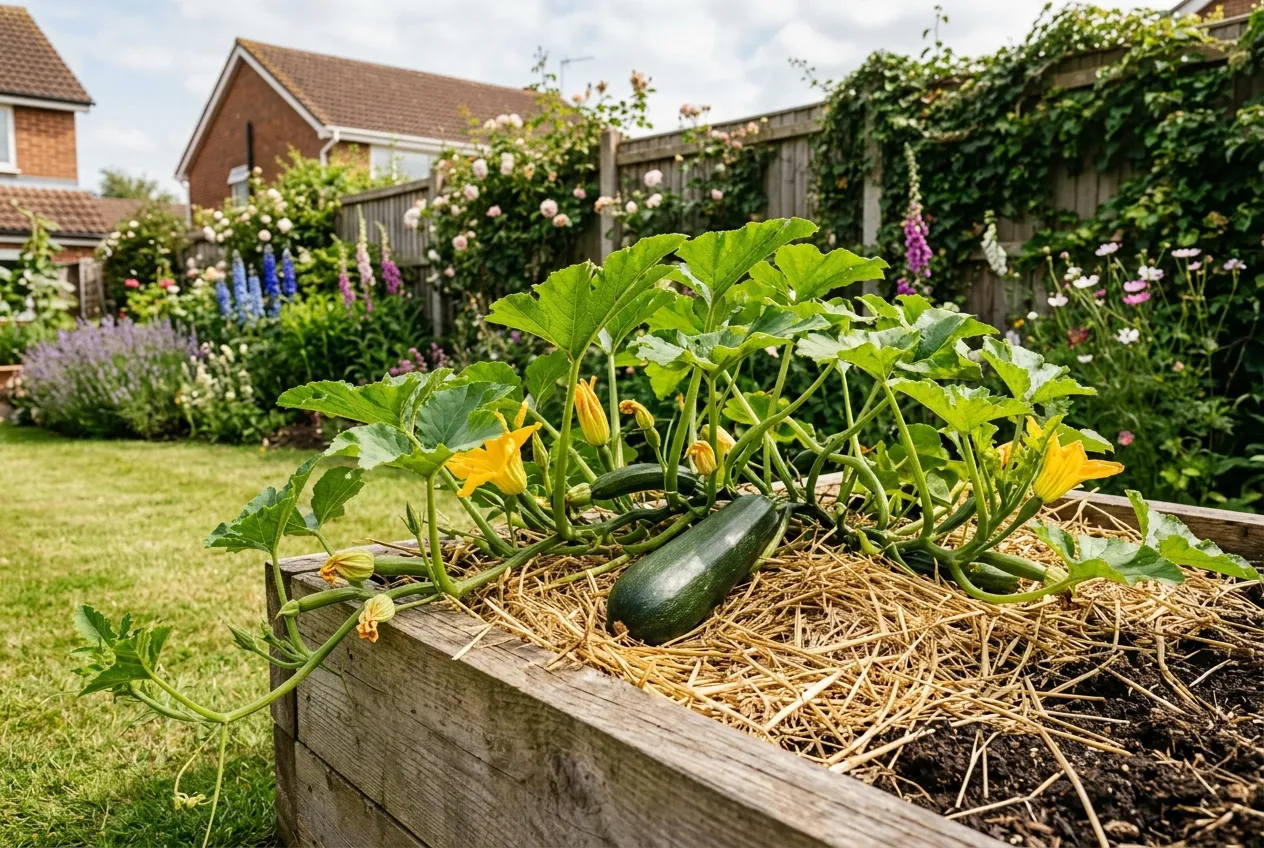
Marrow vines spread 1.2-1.5m across. Give each plant a full section of raised bed and mulch with straw to retain moisture.
How to feed and water marrow plants
Consistent feeding and watering produces the biggest, healthiest marrows. Neglect either and the plants slow down, produce fewer fruit, and become vulnerable to disease.
Watering
Water deeply twice per week at the base of the plant. Avoid wetting the leaves, as this encourages powdery mildew. Each plant needs roughly 10-15 litres per watering session during fruiting. In hot spells above 25C, water three times weekly.
Mulch around the base with a 7-10cm layer of straw, garden compost, or well-rotted manure. This holds moisture, suppresses weeds, and feeds the plant as it breaks down. Apply mulch after the soil has warmed in early June. The Garden Organic growing guide recommends adding extra mulch in dry spells to keep the roots consistently moist.
Feeding
Start feeding when the first flowers appear, typically late June.
| Growth stage | Feed | Frequency |
|---|---|---|
| Planting to first flower | None (compost nutrients sufficient) | N/A |
| First flower to fruit set | High-potash liquid feed (tomato feed) | Weekly |
| During fruiting (July-September) | High-potash liquid feed | Weekly |
| Giant marrow growing | High-potash + seaweed extract | Twice weekly |
High-potash feed such as tomato feed promotes flower and fruit production. Avoid high-nitrogen feeds, which push leafy growth at the expense of fruit. Comfrey feed is an excellent organic alternative. Dilute 1:10 and water at the base weekly.
Understanding marrow pollination
Marrows produce separate male and female flowers. Both must be open at the same time for pollination to occur. Poor pollination is the single biggest cause of failed marrows in UK gardens, especially during cool, wet summers when bees stay in the hive.
Identifying male and female flowers
- Male flowers grow on a thin, straight stem. They appear first, often a week before female flowers
- Female flowers have a small, swollen marrow shape behind the petals. This is the embryonic fruit
If a female flower is not pollinated, the small fruit behind it yellows, softens, and rots. This is not a disease. It is simply a lack of pollen.
Hand-pollination technique
Hand-pollinate every morning during cool or cloudy spells. It takes 30 seconds and guarantees fruit set.
- Identify a fully open male flower early in the morning (before 10am)
- Pick the male flower and peel back the petals to expose the pollen-covered stamen
- Dab the stamen gently inside the centre of an open female flower, touching the stigma
- One male flower can pollinate 2-3 female flowers
Growing companion plants such as borage, nasturtiums, and French marigolds within 2m of your marrow patch attracts more pollinators and improves natural fruit set.
How to grow giant marrows for shows
Village show competitions remain hugely popular across the UK. Growing a prize-winning giant marrow requires a dedicated approach that differs significantly from normal kitchen garden growing.
Choosing the right variety
Standard marrow varieties peak at 5-6kg. For show-sized marrows of 20kg and above, grow Atlantic Giant, Big Max, or specialist strains from giant vegetable seed suppliers. These are genetically capable of reaching 50-100kg+ with the right care.
The giant marrow method
- Start early: sow seeds in heated propagator in late March (two weeks earlier than kitchen marrows)
- Restrict to one fruit per plant. Remove all other developing marrows as soon as they appear. All the plant’s energy goes into a single fruit
- Rich planting pit: dig a hole 60cm deep and 60cm wide. Fill with equal parts garden compost, well-rotted manure, and topsoil
- Feed twice weekly with high-potash fertiliser plus seaweed extract from first flower
- Water daily during fruiting. Giant marrows need 20+ litres per day in hot weather
- Shield from sun. Place a wooden board above the fruit to prevent sunscald, which splits the skin
- Lift off soil. Place a board or pallet beneath the fruit so the underside does not rot
Lawrie’s Top Tip: At the Three Counties Show in 2023, the winning marrow weighed 67kg. The grower fed it a mix of comfrey tea and seaweed extract twice daily during the final three weeks. The lesson: feed little and often rather than one big weekly drench.
Show preparation
Harvest your show marrow the morning of the competition. Cut the stem cleanly at 5cm from the fruit. Clean the surface gently with a soft cloth. Transport on a cushion of straw to prevent bruising. Judges assess size, shape, colour, condition, and uniformity of the skin.
When and how to harvest marrows
Timing the harvest depends on whether you want marrows for immediate eating or long-term storage.
For cooking
Harvest at 30-40cm long when the skin is still slightly soft. These younger marrows have fewer seeds, moister flesh, and more flavour. They will not store long, so eat within a week or two.
For storage
Leave marrows on the plant until August or early September. The skin should be hard enough to resist a thumbnail press. The stem should feel woody and dry. These mature marrows store for 3-4 months.
How to harvest:
- Cut the stem cleanly with a sharp knife, leaving 5-10cm of stem attached
- Handle carefully. Bruised marrows rot quickly in storage
- Cure in the sun for 5-7 days if weather allows. This toughens the skin further
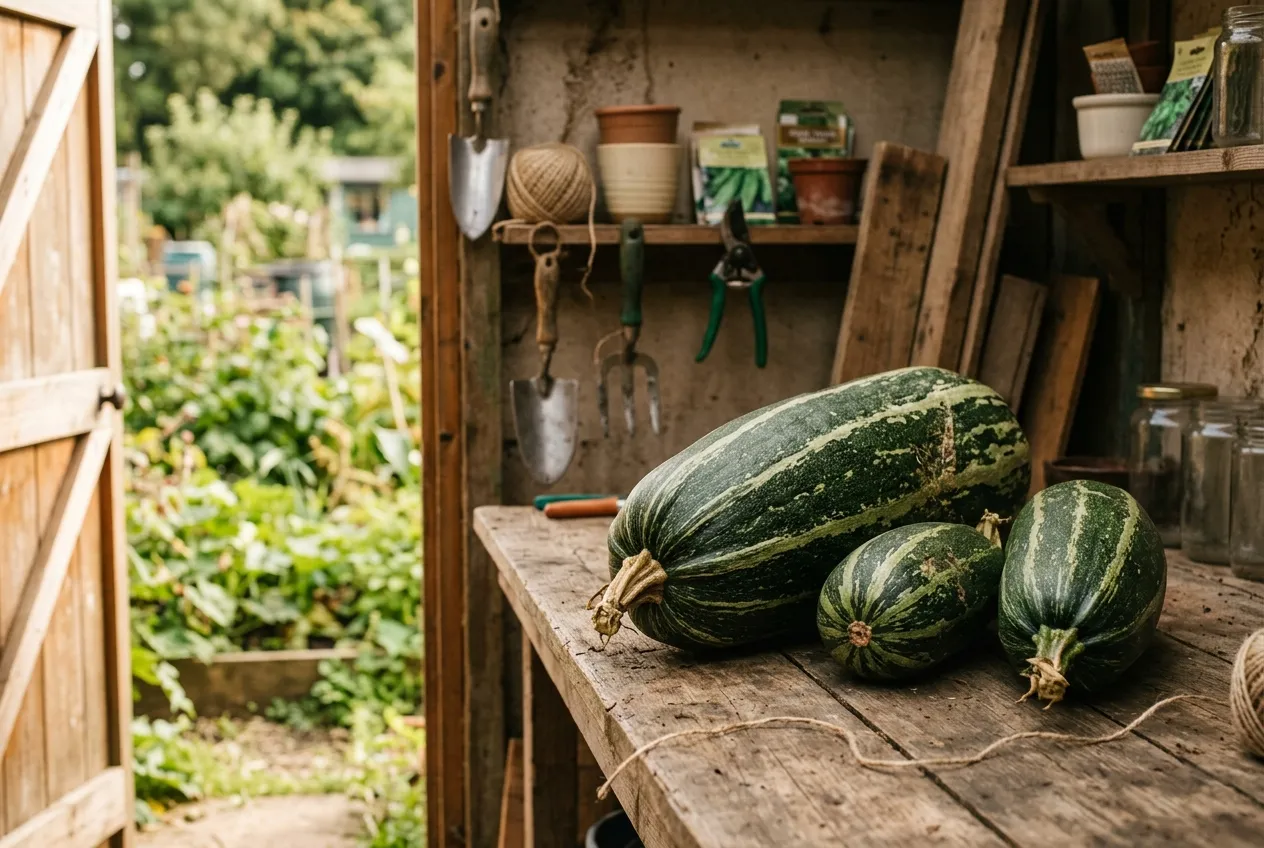
Cure harvested marrows in the sun for a week before storing. The tough skin acts as a natural barrier against decay.
Storing marrows through winter
A properly cured marrow stores for 3-4 months in the right conditions.
- Store at 10-15C in a cool, dry, frost-free place. A spare bedroom, garage shelf, or unheated porch works well
- Place on a slatted shelf or straw-lined tray, not directly on concrete
- Space marrows so they do not touch each other
- Check monthly. Use any showing soft spots first
- Do not refrigerate. Cold temperatures below 10C cause chilling damage
This storage ability makes marrows genuinely useful. A September harvest provides stuffed marrow through October, November, December, and into January. Few other UK-grown vegetables offer that kind of shelf life without freezing or preserving. For more ways to keep your harvest, see our guide to preserving fruit and vegetables.
What to cook with marrow
Marrow has an undeserved reputation as bland and watery. Properly prepared, it absorbs flavour beautifully and holds its shape in cooked dishes better than young courgettes.
Stuffed marrow
The classic British recipe. Halve the marrow lengthways, scoop out seeds with a spoon, and fill the cavity with:
- Lamb mince: seasoned with onion, garlic, tomato, and herbs
- Rice and cheese: vegetarian option with Cheddar, breadcrumbs, and sage
- Spiced lentils: with cumin, coriander, and chilli
Bake at 180C for 40-50 minutes until the filling is golden and the marrow flesh is tender. A single large marrow feeds 4-6 people.
Other uses
- Marrow soup: roast chunks with garlic, blend, finish with cream. Freezes well
- Marrow chutney: a traditional allotment recipe that uses up a glut. Vinegar, sugar, and spices preserve it for 12 months in sterilised jars. Our chutney recipe guide covers the method
- Marrow curry: cubed marrow in a coconut or tomato-based sauce. The flesh holds its shape through 30 minutes of simmering
- Roasted: toss thick slices in olive oil and roast at 200C for 25 minutes. Season with salt, pepper, and smoked paprika
For tips on freezing surplus vegetables, see our freezing garden produce guide.
Common problems when growing marrows
Powdery mildew
White, powdery patches on leaves from mid-summer onwards. The most common marrow disease in UK gardens. Water at the base, never over the leaves. Space plants well for air circulation. A weekly spray of one part milk to nine parts water applied from mid-July reduces spread by up to 90%.
Slugs and snails
Young seedlings and developing fruit are vulnerable. Place each new transplant inside a ring of copper tape or organic slug pellets. Lift fruit off the soil on tiles or straw. Our slug control guide covers all the effective methods.
Fruit rot
Caused by the underside sitting on wet soil. Always place a tile, slate, or thick layer of straw beneath each developing marrow. Good air circulation and avoiding overhead watering also help.
Poor fruit set
Almost always a pollination problem, not a feeding or watering issue. Hand-pollinate every morning during cool or wet weather. Two plants provide more male and female flowers, improving natural pollination rates.
Vine borers and aphids
Squash vine borer is rare in the UK but increasing. Check stems near the base for sawdust-like frass. Aphid colonies on shoot tips can be blasted off with a jet of water. Encourage natural predators by planting bee-friendly flowers nearby.
Month-by-month marrow growing calendar
| Month | Task |
|---|---|
| January-February | Order seeds. Plan growing space. Prepare raised beds with well-rotted manure. |
| March | Final soil preparation. Add compost to planting areas. |
| April | Sow seeds indoors mid-month. One seed per 9cm pot, on its edge, 2cm deep. |
| May | Harden off seedlings for 7-10 days. Plant out after last frost (late May south, early June north). |
| June | Water regularly as plants establish. Mulch around the base. First flowers appear late June. Begin weekly feeding. |
| July | Fruit develops. Hand-pollinate in cool weather. Place tiles under developing marrows. Watch for mildew. |
| August | First harvest of cooking marrows at 30-40cm. Leave storage marrows to mature on the plant. |
| September | Harvest storage marrows when skin resists thumbnail. Cure in sun for 5-7 days. |
| October | Store cured marrows. Clear spent plants. Add compost to cleared beds. |
| November-December | Use stored marrows. Plan next year’s crop rotation. |
Frequently asked questions
When should I sow marrow seeds in the UK?
Sow indoors in mid to late April. Push one seed on its edge into a 9cm pot of peat-free compost, 2cm deep. Seeds germinate in 5-7 days at 18-20C. Plant outside after the last frost, which is late May in most of southern England and early June further north.
What is the difference between a marrow and a courgette?
A marrow is simply a courgette grown to full size. Both are the same species, Cucurbita pepo. Courgettes are picked young at 15-20cm for tender, mild flesh. Left to mature for 3-4 more weeks, they develop a tough skin, grow to 30-50cm, and become marrows with denser, seedier flesh.
How big do marrow plants grow?
Trailing varieties spread 1.2-1.5m across with long vines. They need at least 1.2m spacing in each direction. Bush varieties stay more compact at around 90cm spread. A single healthy plant produces 4-8 full-sized marrows per season.
How do I grow a giant marrow for a show?
Grow a specialist giant variety such as Atlantic Giant. Allow only one fruit per plant by removing all others as they form. Feed twice weekly with high-potash fertiliser and water daily. Shield the fruit from direct sun and lift it off the soil on a board. Show marrows can exceed 50kg with the right care.
Can I store marrows over winter?
Yes, fully mature marrows with hard skins store for 3-4 months. Harvest when the skin resists a thumbnail press. Cure in the sun for a week. Store at 10-15C in a cool, dry, frost-free place. Check monthly and use any showing soft spots first.
Why are my marrows rotting on the plant?
Fruit rot is usually caused by the marrow sitting on wet soil. Place a tile, slate, or straw beneath each fruit. Poor pollination also causes young fruit to yellow and rot before developing. Hand-pollinate female flowers in cool or wet weather when bees are not active.
What can I cook with marrow?
Stuffed marrow is the most popular recipe. Halve lengthways, scoop out seeds, fill with seasoned mince or rice and cheese, and bake at 180C for 45 minutes. Marrow also works well in curries, soups, and chutneys. The firm flesh holds its shape in slow-cooked dishes better than young courgettes.
Lawrie has been gardening in the West Midlands for over 30 years. He grows his own veg using no-dig methods, keeps a wildlife-friendly garden, and writes practical advice based on real UK growing conditions.