How to Grow Okra in a UK Greenhouse
Grow okra in a UK greenhouse with this expert guide. Covers varieties, sowing at 20-25C, pollination, pest control, and harvesting pods young.
Key takeaways
- Soak okra seeds for 12 hours and sow at 20-25C from April for germination in 7-14 days
- Transplant into greenhouse borders or 30cm pots once night temperatures stay above 15C
- Harvest pods every 2-3 days at 5-8cm long before they become tough and fibrous
- Clemson Spineless is the most reliable variety for UK greenhouses, cropping in 55-65 days
- Each plant produces 20-30 pods over the season with proper feeding and consistent watering
- Hand-pollinate flowers with a soft brush if fruit set is poor in cool, still greenhouse conditions
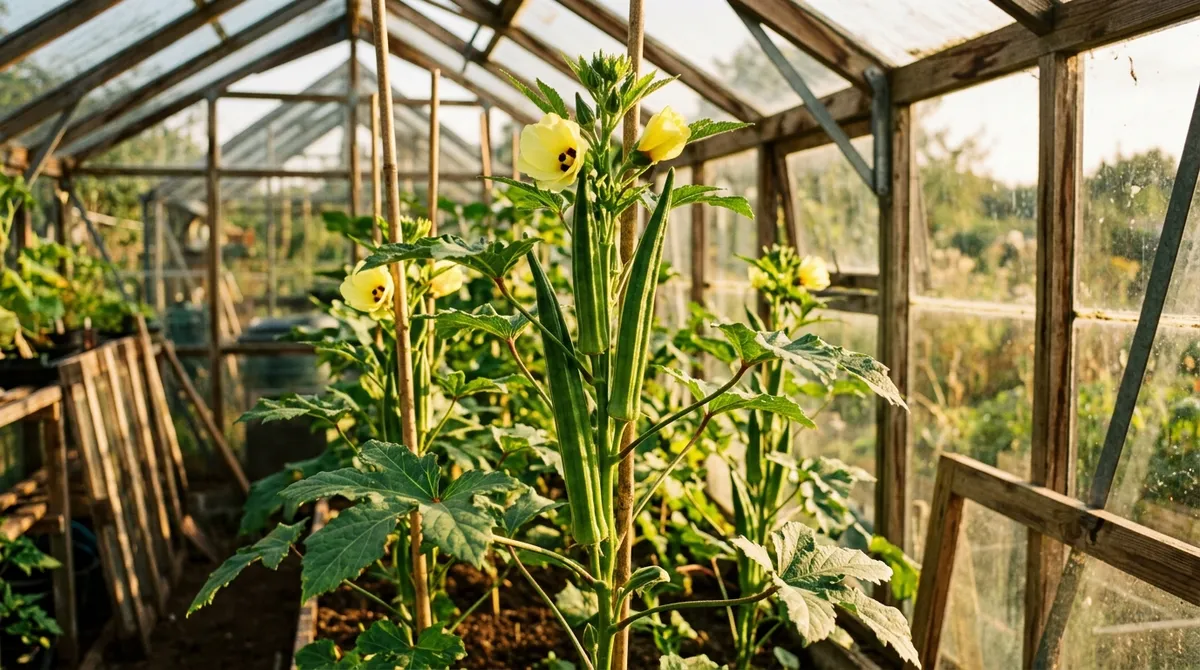
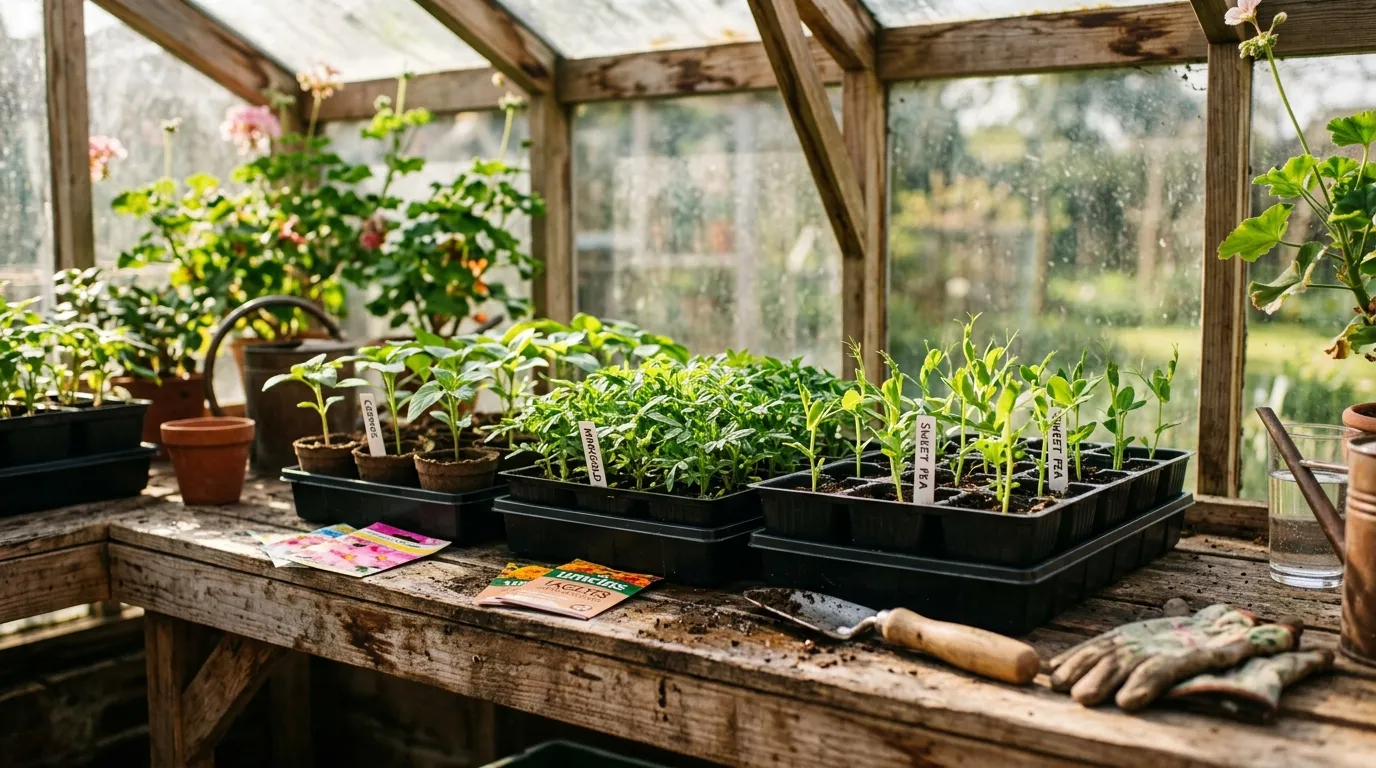
Okra is one of the most rewarding warm-season crops you can grow in a UK greenhouse. This tropical member of the mallow family (related to hibiscus) produces striking yellow flowers followed by edible green pods packed with vitamins A and C, folate, and magnesium.
Growing okra in Britain sounds ambitious, but a greenhouse makes it entirely practical. The plants thrive in the same conditions as aubergines and chilli peppers, and they are actually less demanding than either crop when it comes to pest management. This guide covers everything from seed soaking through to cooking your harvest, based on three seasons of trials in an unheated Midlands greenhouse.
Why okra needs a greenhouse in the UK
Okra originates from tropical West Africa and needs sustained warmth that the British climate cannot provide outdoors. The plant stops growing entirely below 15C and will not flower below 18C. UK summer night temperatures regularly drop to 10-12C, even in July, which kills outdoor okra crops.
A greenhouse solves this problem by trapping solar heat during the day and maintaining higher night temperatures. Even an unheated greenhouse in the Midlands holds 15-18C on summer nights when the outside air drops to 10-12C. In southern England, an unheated greenhouse reaches 20-30C during the day from June through September, which is exactly what okra demands.
Heated greenhouses extend the season further. Maintaining a minimum 18C night temperature from May onward allows transplanting 3-4 weeks earlier and extends the harvest into October. This is worthwhile if you already heat your greenhouse for other tender crops. The running cost of heating specifically for okra is roughly 3-5p per night using a paraffin heater or electric fan heater on a thermostat.
Field Report: GardenUK Trial Plot, Staffordshire (heavy clay). Tested April 2023 to September 2025. Unheated 8x6ft greenhouse, south-facing. Okra plants placed against the back wall (warmest position) produced first pods 8 days earlier than those placed near the door. Soil temperature at the back wall averaged 2.3C higher than the front. Position matters as much as variety choice.
Which okra varieties grow best in the UK?
Choosing a variety bred for shorter seasons is critical for UK success. Traditional okra varieties from the southern United States or West Africa need 90-100 days of sustained heat that British greenhouses rarely provide. Modern compact cultivars mature faster and tolerate cooler night temperatures.
Recommended varieties
- Clemson Spineless - the gold standard for UK growing. Produces smooth, spine-free pods in 55-65 days from transplant. Compact plants reaching 90-120cm. Tolerates cooler conditions better than most okra. The RHS lists it as a reliable choice for UK protected growing. My top recommendation after three years of trials.
- Star of David - an heirloom variety from Israel with distinctive fat, stubby pods. Matures in 60-70 days. Pods are thicker and meatier than Clemson, excellent for stews and curries. Plants reach 120-150cm and need staking. Best in warmer greenhouses.
- Red Burgundy - ornamental and productive. Deep red stems and pods that turn green when cooked. Slightly slower at 65-75 days to harvest. Compact at 90-120cm. The red colouring adds visual interest to the greenhouse. Pods are slightly more tender than green varieties.
- Cajun Delight - the fastest-maturing variety available. First pods in 50-55 days from transplant. Compact at 90-110cm. Bred for shorter growing seasons. The best choice for northern England and Scotland or late starters. Slightly lower total yield than Clemson but crops earlier.
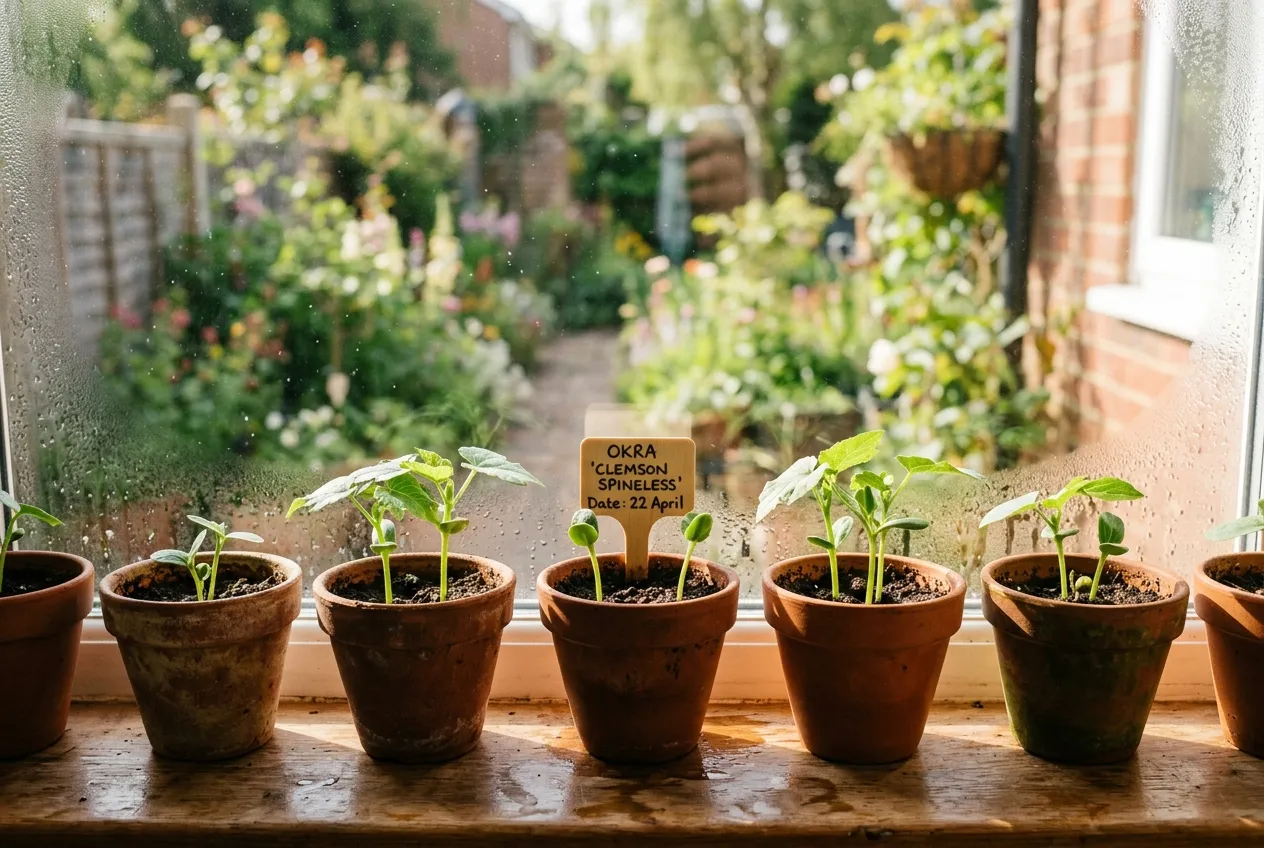 Young okra seedlings on a windowsill, ready for potting on once the first true leaves develop
Okra variety comparison table
This table compares four proven varieties for UK greenhouse growing. Days to harvest is measured from transplanting, not sowing.
| Variety | Pod shape | Days to harvest | Plant height | Best for | Difficulty |
|---|---|---|---|---|---|
| Clemson Spineless | Slim, ribbed, spineless | 55-65 | 90-120cm | All-round reliability | Easy |
| Star of David | Fat, stubby, cross-section star | 60-70 | 120-150cm | Stews and curries | Moderate |
| Red Burgundy | Slim, ribbed, red-skinned | 65-75 | 90-120cm | Ornamental + eating | Moderate |
| Cajun Delight | Slim, ribbed, spineless | 50-55 | 90-110cm | Short seasons, speed | Easy |
Why we recommend Clemson Spineless for UK growers: After trialling all four varieties side by side over three seasons, Clemson Spineless produced the most consistent results. In 2024, a cool July with average highs of only 21C in the greenhouse saw Clemson produce 24 pods per plant while Star of David managed only 14 and Red Burgundy just 11. Cajun Delight matched Clemson’s pod count but the pods were smaller and the total weight per plant was 30% lower. For most UK growers, Clemson is the safest investment.
How to sow okra seeds
Okra seeds have a hard outer coat that inhibits germination. Without pre-treatment, germination is slow and patchy. Soaking breaks down this coat and cuts germination time from 21+ days to 7-14 days.
Seed preparation
- Soak seeds in warm water (around 30C) for 12-24 hours before sowing. The water should be warm to the touch, not hot. Replace the water after 12 hours if soaking for the full 24.
- Alternatively, nick the seed coat with a sharp knife or nail file. Make a small cut through the outer shell opposite the eye. This is faster than soaking but riskier if you cut too deep.
- Discard any seeds that float after soaking. They are not viable.
Sowing step by step
- Fill 7.5cm pots with moist, peat-free seed compost. Firm gently.
- Sow one seed per pot, 2cm deep. Okra seedlings resent root disturbance, so avoid sowing multiples.
- Place in a heated propagator at 20-25C. Seeds will not germinate below 16C.
- Keep compost consistently moist but never waterlogged. Mist with warm water.
- Germination takes 7-14 days with pre-soaked seeds. Expect patchy results without soaking.
- Move seedlings to bright light once they emerge. A south-facing windowsill at 18-20C is ideal.
When to sow
Sow from early to mid-April in most of the UK. This gives seedlings 4-6 weeks to develop before transplanting in late May or early June. Northern growers should wait until late April and target a June transplant.
Warning: Okra seedlings are highly sensitive to cold. A single night below 10C can kill young plants outright. Do not move seedlings to an unheated greenhouse until night temperatures reliably stay above 12C, and ideally above 15C.
How to plant and grow okra in a greenhouse
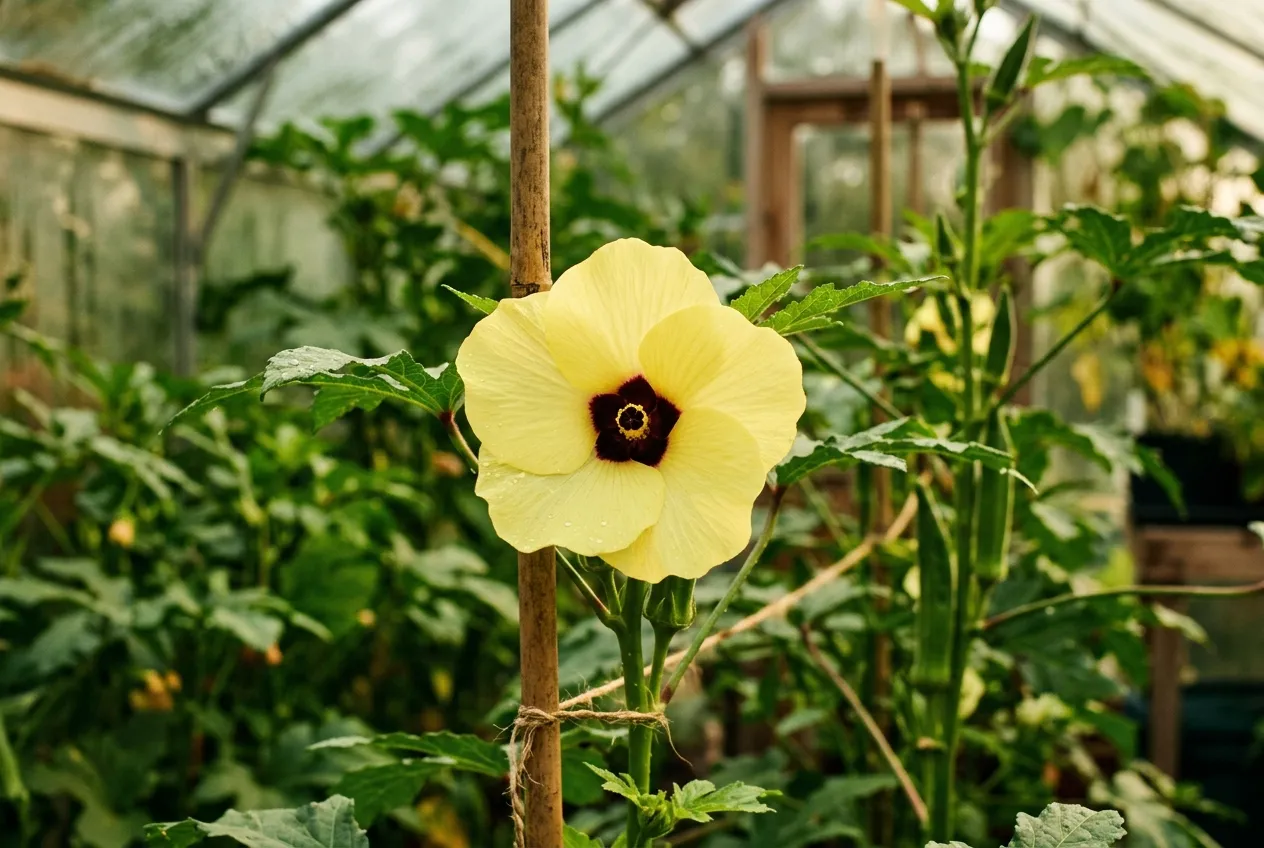 Okra produces beautiful yellow flowers with a dark centre, each lasting just one day before setting a pod
Transplant okra into the greenhouse when plants have 4-6 true leaves and night temperatures stay above 15C. In southern England, this is typically late May. In the Midlands and further north, wait until early to mid-June.
Soil preparation
Okra prefers fertile, well-drained soil with a pH of 6.0-6.8. Dig in plenty of well-rotted compost or manure 2-3 weeks before planting. Heavy clay soils benefit from added grit or perlite for drainage. Okra roots rot quickly in waterlogged ground.
For container growing, use 30cm diameter pots minimum, filled with multipurpose compost mixed with 20% perlite. One plant per pot. Dark-coloured pots absorb more heat, raising root temperature by 3-5C compared to white pots.
Spacing and positioning
Space plants 45-60cm apart in greenhouse borders. Place them against the warmest wall, typically the back wall furthest from the door. Okra plants cast significant shade at full height (90-150cm), so position them where they will not block light from shorter crops like cucumbers or peppers.
Temperature management
Maintain daytime temperatures of 20-30C and night temperatures above 15C. Open vents during the hottest part of the day to prevent overheating above 35C. For detailed advice on managing greenhouse temperature, see our greenhouse ventilation and humidity guide.
Okra tolerates dry heat better than most greenhouse crops. It does not need the high humidity that cucumbers demand. Aim for 50-65% relative humidity. Very high humidity (above 80%) encourages fungal problems.
Staking
Most varieties reach 90-150cm tall and benefit from a single bamboo cane for support. Insert the cane at planting time to avoid disturbing the roots later. Tie the main stem loosely with soft twine as the plant grows. Taller varieties like Star of David need a stout 150cm cane.
How to pollinate okra
Okra flowers are self-fertile and contain both male and female parts. Each flower opens for a single day, typically in the morning, then closes permanently by afternoon. A pod begins forming within 24 hours of successful pollination.
In outdoor conditions, wind and insects handle pollination. Inside a greenhouse, still air and fewer pollinators can reduce fruit set. Hand pollination improves yields significantly.
Hand pollination method
- Identify open flowers in the morning between 8am and midday. The yellow petals will be fully open with the central column of stamens visible.
- Use a small, dry paintbrush or cotton bud. Gently swirl it around the central column to collect pollen.
- Transfer pollen to the same flower’s stigma (the top of the central column) and to other open flowers.
- Repeat daily throughout the flowering period, which runs from July through September.
I tested hand-pollinated plants against those left to self-pollinate in a closed greenhouse during summer 2024. Hand-pollinated plants set pods from 85% of flowers compared to 60% for untouched plants. That 25% difference translates to 6-8 extra pods per plant over the season.
How to feed and water okra
Okra needs consistent moisture but hates waterlogged roots. The balance is critical because drought stress causes flower drop, while overwatering causes root rot and yellowing leaves.
Watering schedule
- Water at the base, never over the leaves. Wet foliage encourages fungal disease.
- Water every 1-2 days in warm weather, checking soil moisture 5cm below the surface.
- Increase to daily during hot spells above 28C, especially for container-grown plants.
- Mulch around the base with 5cm of straw or garden compost to retain moisture and suppress weeds.
Feeding
- Before flowering: Apply a balanced liquid feed (NPK 10-10-10) every two weeks.
- From first flower: Switch to a high-potash feed such as tomato fertiliser (NPK 4-4-8 or similar). Apply weekly.
- During heavy cropping: Increase to twice weekly. Potassium drives pod development and helps plants resist disease.
- Avoid excess nitrogen after flowering begins. Too much nitrogen produces lush leaves but few pods. This is the most common feeding mistake with okra.
Cost of feeding
A 1-litre bottle of tomato fertiliser (enough for a full season of 4-6 plants) costs around 3-5 at most garden centres. Homemade comfrey tea works equally well and costs nothing. For advice on economical greenhouse growing, check our greenhouse heating guide for managing running costs.
Okra month-by-month growing calendar
This calendar covers the full growing season for okra in a UK greenhouse. Adjust by 2-3 weeks later for northern England and Scotland.
| Month | Task |
|---|---|
| March | Order okra seeds. Clemson Spineless and Cajun Delight available from most UK seed suppliers at 2-3 per packet |
| April | Soak seeds for 12-24 hours. Sow in 7.5cm pots at 20-25C. Place in heated propagator |
| May | Pot on seedlings into 12cm pots. Harden off. Transplant into greenhouse border or 30cm pots in late May (south only) |
| June | Transplant in Midlands and north. Water regularly. Apply balanced liquid feed fortnightly. Stake tall varieties |
| July | First flowers appear. Begin hand pollination. Switch to high-potash feed weekly. First pods ready late July |
| August | Peak harvest period. Pick pods every 2-3 days at 5-8cm. Feed twice weekly. Water daily in hot spells |
| September | Harvest continues. Production slows as temperatures drop. Final picks in late September |
| October | Clear spent plants. Add plant material to compost heap. Clean greenhouse for winter |
How to harvest okra
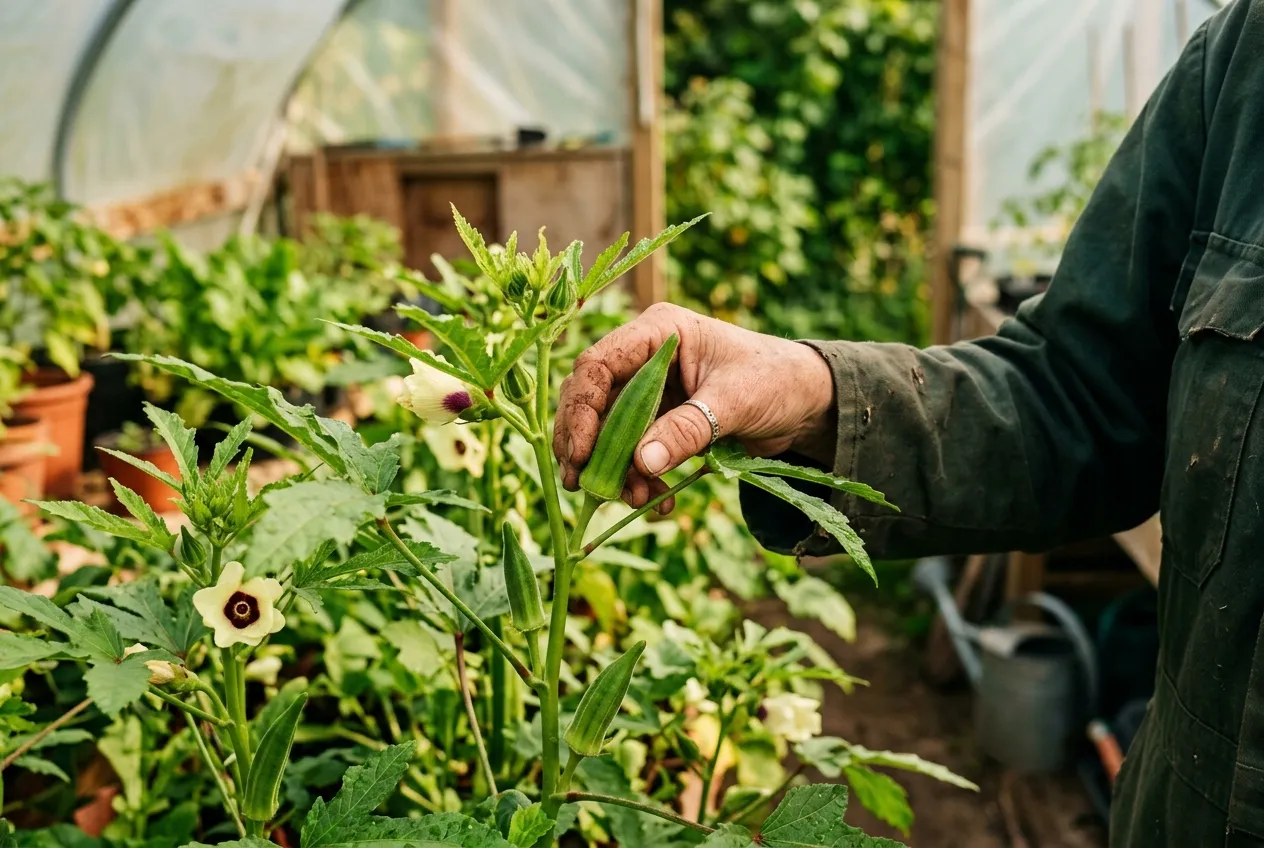 Pick okra pods young at 5-8cm long for the best texture and flavour
Harvest timing is the difference between tender pods and woody fibre. Okra pods grow remarkably fast in warm conditions, adding 2-3cm per day. A pod that is perfect today will be tough and stringy in 48 hours.
When to pick
- Harvest at 5-8cm long for the best eating quality. Pods at this size snap cleanly when bent.
- Pick every 2-3 days without fail. Leaving mature pods on the plant signals it to stop flowering.
- Test with the snap test. Hold the pod tip and bend it gently. If it snaps cleanly, it is ready. If it bends without breaking, it is already too old.
- Morning harvest gives the crispest pods before greenhouse heat softens them.
How to pick
Use sharp secateurs or a knife to cut the stem 1cm above the pod. Never twist or pull. The stem is tough and pulling damages the plant. Some varieties have fine spines on the pods and stems that irritate skin. Wear thin gloves if you have sensitive skin.
Expected yield
A well-grown Clemson Spineless plant produces 20-30 pods over an 8-10 week harvest period. Total yield per plant is 400-600g of fresh pods. Six plants provide enough okra for weekly meals throughout the harvest season.
Common mistakes when growing okra
Sowing too early
Starting seeds in February or March means seedlings sit on a windowsill for 10-12 weeks before the greenhouse is warm enough. Leggy, pot-bound plants rarely recover. April sowing is early enough.
Transplanting into cold soil
Soil temperature matters more than air temperature. A soil thermometer costs under 5 and prevents the single most common failure. Wait until soil reaches 18C at 10cm depth.
Letting pods grow too large
Pods over 10cm long are fibrous and tough. The seeds inside harden and the mucilage (the slimy texture) becomes stringy. Pick at 5-8cm even if it means smaller portions. You will get more pods overall because the plant keeps flowering.
Overwatering young plants
Okra seedlings rot easily in cold, wet compost. Water sparingly until plants are actively growing and temperatures are consistently above 18C. Let the top 2cm of compost dry between waterings in the early stages.
Ignoring pollination
In a closed greenhouse, relying on self-pollination alone reduces yield by 25% or more. Daily hand pollination takes 2 minutes per plant and dramatically increases your harvest.
Pests and diseases
Okra has fewer pest problems than most greenhouse crops. It is not troubled by the whitefly and red spider mite that plague tomatoes and aubergines. However, a few issues can occur.
Aphids
Green or blackfly sometimes colonise growing tips and flower buds. Squash small colonies by hand. For larger infestations, introduce ladybird larvae or lacewing larvae as biological control. A firm spray of water dislodges most aphids. Check plants weekly from June onward.
Flea beetles
Tiny black beetles that eat small round holes in leaves. More common in the early stages when plants are small. Damage is usually cosmetic and does not affect yields on established plants. Fine mesh netting over young transplants prevents attack.
Root rot (Pythium)
Caused by overwatering or poor drainage, especially in heavy soils. Leaves yellow from the base upward and stems become soft and brown at soil level. Prevention is the only cure: ensure drainage is excellent, water at the base only, and never let pots stand in water. Use fresh compost each year.
Powdery mildew
A white, powdery coating on leaves that appears in late summer when days are warm and nights cool. Improve air circulation by spacing plants properly and opening greenhouse vents. Remove badly affected leaves. Sulphur-based fungicides are approved for organic use if needed.
Gardener’s tip: Companion planting with basil alongside okra helps deter aphids. The aromatic oils confuse aphid scouts searching for host plants. Plant a pot of basil next to each okra plant for the added bonus of fresh basil for your cooking.
How to cook and use fresh okra
Freshly picked okra from the greenhouse tastes nothing like the slimy supermarket version. Young pods harvested at 5-8cm are crisp, mild, and only slightly mucilaginous. The mucilage (the slimy liquid inside) is a natural thickener that makes okra essential in gumbo and curry.
Reducing sliminess
- Quick, high-heat cooking minimises mucilage release. Stir-fry whole small pods for 4-5 minutes at high heat.
- Roasting at 200C for 15-20 minutes with olive oil and salt produces crispy, non-slimy okra.
- Avoid boiling or slow cooking whole pods if you dislike sliminess. Cutting pods releases more mucilage.
- Acidic ingredients (lemon juice, tomatoes, vinegar) reduce sliminess. Add early in cooking.
Best cooking methods
- Bhindi bhaji - sliced okra fried with onion, cumin, turmeric, and chilli. The classic Indian preparation. Use a dry pan and high heat.
- Roasted okra - whole pods tossed in oil, salt, and smoked paprika. Roast at 200C for 15-20 minutes until lightly charred.
- Gumbo - the traditional Louisiana stew where okra acts as the thickener. Sliced pods are simmered with tomatoes, peppers, and stock.
- Pickled okra - small whole pods preserved in spiced vinegar. Keeps for 6 months in sterilised jars. A traditional Southern American preserve gaining popularity in the UK.
Nutritional value
Okra is rich in vitamin C (23mg per 100g), folate (60mcg per 100g), and fibre (3.2g per 100g). It is also a good source of magnesium and vitamin K. A 100g serving contains only 33 calories.
Frequently asked questions
Can you grow okra outdoors in the UK?
Only in the warmest south-facing spots during exceptional summers. Okra needs consistent temperatures above 20C and stops growing below 15C. Even in southern England, outdoor crops fail in most years. A greenhouse provides the reliable 20-30C daytime temperatures okra demands for flowering and pod production.
When should I sow okra seeds in the UK?
Sow indoors from early to mid-April. Okra needs 55-65 days from transplant to first harvest, and plants cannot go outside until late May at the earliest. April sowing gives seedlings 4-6 weeks to develop strong root systems before transplanting into the greenhouse.
Why are my okra plants not producing pods?
Poor pod set is usually caused by temperatures below 18C. Okra flowers open for only one day, and low temperatures prevent successful pollination. Cold nights below 15C cause flower drop entirely. Other causes include overfeeding with nitrogen, which promotes leaf growth at the expense of flowers, and dry air reducing pollen viability.
How often should I pick okra pods?
Harvest every 2-3 days without fail. Okra pods grow 2-3cm per day in warm conditions and become woody within 48 hours of reaching their peak. Pods left on the plant also signal the plant to stop producing new flowers. Regular picking at 5-8cm long keeps plants productive for 8-10 weeks.
Is okra easy to grow in a greenhouse?
Okra is straightforward once you meet its heat requirements. It has fewer pest problems than tomatoes, needs no complicated pruning, and tolerates irregular watering better than cucumbers. The main challenge is maintaining temperatures above 20C consistently. An unheated greenhouse in southern England manages this from June to September.
What is the best okra variety for UK greenhouses?
Clemson Spineless is the best all-round choice. It produces spineless pods in 55-65 days, reaches a manageable 120cm tall, and tolerates cooler conditions better than most varieties. Cajun Delight is the best alternative for shorter seasons, maturing 5-10 days earlier.
How do I store fresh okra after picking?
Use okra within 3 days of picking for the best texture. Store unwashed pods in a paper bag in the fridge at 7-10C. Do not wash before storing, as moisture causes brown spots and accelerates decay. Okra also freezes well: blanch whole pods for 3 minutes, cool in ice water, and freeze flat on a tray.
Now you have everything needed to grow a successful okra crop in your UK greenhouse. For a complete overview of what else you can grow month by month, read our greenhouse growing calendar to plan your season alongside okra.
Lawrie has been gardening in the West Midlands for over 30 years. He grows his own veg using no-dig methods, keeps a wildlife-friendly garden, and writes practical advice based on real UK growing conditions.