How to Grow Onions in the UK
Practical guide to growing onions in UK gardens. Covers sets vs seed, varieties, planting times, spacing, feeding, harvesting, curing, and storage.
Key takeaways
- Plant onion sets in March or April, pushing them in until just the tip shows above soil level
- Space sets 10cm apart in rows 25cm apart for full-sized bulbs
- Sets are the easiest method; seed offers greater variety choice and is cheaper per bulb
- Stuttgarter Giant, Centurion, Red Baron, and Setton are reliable UK varieties
- Harvest when the tops yellow and fall over, typically July to September
- Cure bulbs for 7-14 days in a dry spot, then store in nets for up to 6 months
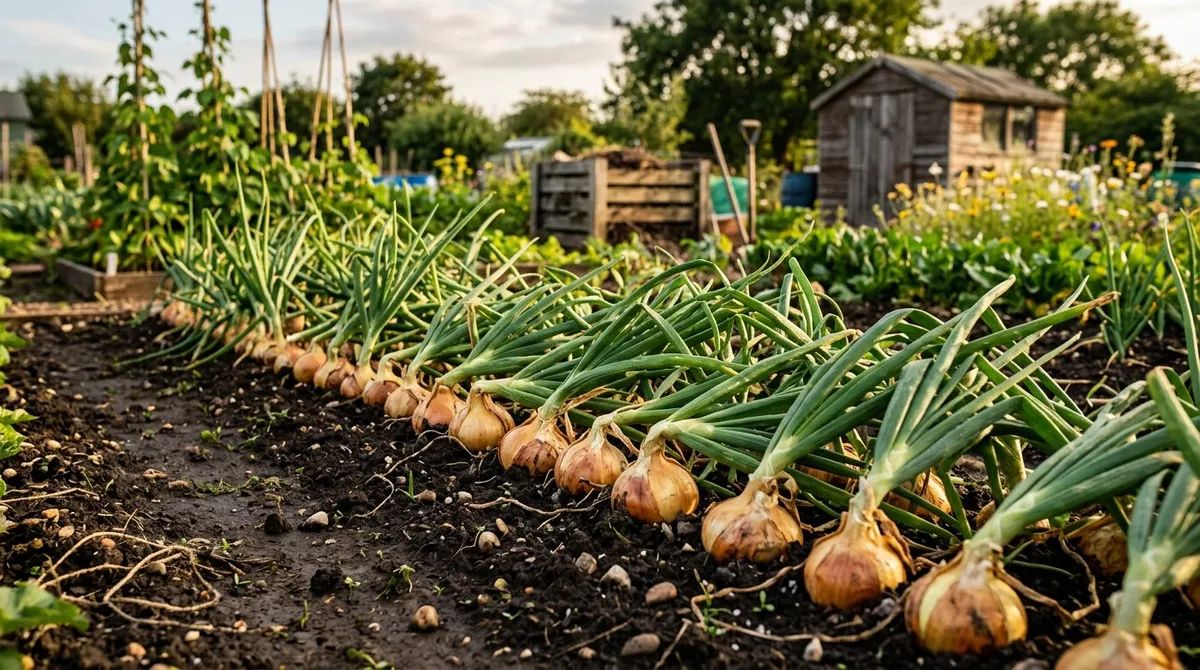
Onions are one of the most useful crops a UK gardener can grow. They store for months, feature in almost every meal, and need very little attention once planted. A 3m row of onion sets, planted in March, yields 2-3kg of bulbs by late summer. That is enough to keep a household supplied well into winter.
Onions thrive in most British gardens from sets (small immature bulbs) or seed. They tolerate a range of soil types, cope with our unpredictable spring weather, and take up minimal space. This guide covers every stage from planting to storage, written for UK conditions. If you are new to growing food, our guide to starting a vegetable garden covers the broader essentials.
Sets vs seed: which should you choose?
This is the first decision every onion grower faces. Both methods work, but they suit different situations.
Onion sets are small, part-grown bulbs. You push them into the soil in spring, and they grow into full-sized onions by late summer. Sets are the easier option. They establish faster, compete better with weeds, and are less vulnerable to disease in the early weeks. Most garden centres stock them from February onwards.
Onion seed gives you access to dozens of varieties that are never available as sets. Seed is also far cheaper: a single packet costing around two pounds grows 200-300 onions. The trade-off is time. Seed-grown onions need sowing indoors in January or February and transplanting outside in April. They take 4-6 weeks longer to mature than sets.
| Factor | Sets | Seed |
|---|---|---|
| Ease | Very easy | Moderate |
| Time to harvest | 14-18 weeks | 20-24 weeks |
| Variety choice | Limited (10-15 common varieties) | Wide (50+ varieties available) |
| Cost per bulb | 3-5p | Under 1p |
| Bolt risk | Higher (especially untreated sets) | Lower |
| Sowing time | March to April (outdoors) | January to February (indoors) |
Gardener’s tip: If you are growing onions for the first time, start with sets. Buy heat-treated sets if available. Heat treatment reduces the chance of bolting, which is the most common complaint from new onion growers.
Best onion varieties for UK gardens
Choosing the right variety determines your success. These are proven performers in British conditions.
White and brown onions
- Stuttgarter Giant - a reliable maincrop with flat, golden-skinned bulbs. Mild flavour, stores well for 4-5 months. Widely available as sets.
- Centurion - high-yielding, bolt-resistant F1 hybrid. Round bulbs with firm flesh. One of the best all-round choices for UK growers.
- Setton - bred for long storage (up to 6 months). Golden skin, strong flavour. Excellent bolt resistance.
- Sturon - globe-shaped with a mild, sweet taste. Good keeper. Available as both sets and seed.
Red onions
- Red Baron - deep red skin and pink-tinged flesh. Sweeter than most brown varieties. Best eaten fresh in salads or stored for up to 3 months.
- Red Karmen - flat, dark-skinned bulbs. Stronger colour and flavour than Red Baron. Keeps for 3-4 months.
Shallots
- Golden Gourmet - large, elongated bulbs with a mild flavour. Plant one set and harvest 6-8 shallots in return. Excellent for cooking.
- Red Sun - copper-red skin. Slightly stronger flavour than Golden Gourmet. Stores well.
Gardener’s tip: For the longest possible harvest, plant an early variety (Centurion) alongside a storage variety (Setton). Use the Centurion fresh through summer and keep the Setton for autumn and winter.
Why we recommend Setton for long-term storage: After 30 years of growing onions on UK allotments, Setton consistently outlasts every other commonly available variety in storage trials. Properly cured Setton bulbs kept in nets at 1–5°C remain firm and flavourful for a full six months — from September through to February — without the softening and neck rot that cuts short Red Baron and Stuttgarter Giant by month three or four.
How to plant onion sets
Planting onion sets is straightforward. Get the timing and spacing right, and the onions largely take care of themselves.
When to plant
Spring sets go in from mid-March to mid-April. Wait until the soil has dried out enough to work without clogging your boots. Soil temperature should reach at least 5C. In most of southern England, mid-March is fine. In the Midlands, late March is safer. Northern England and Scotland should wait until early April. For detailed regional timing across all crops, see our UK vegetable planting calendar.
Autumn sets go in during October or November. These overwintering varieties (such as Radar, Shakespeare, and Senshyu Yellow) establish roots before winter, then grow rapidly in spring. They are ready to harvest in June or early July, 6-8 weeks before spring-planted onions.
Preparing the ground
Onions prefer a sunny, open site with well-drained soil. They grow best in firm, fertile ground. Dig in well-rotted compost or manure several weeks before planting, then let the soil settle. If you have been making compost, autumn is the ideal time to add it to the onion bed. Tread the soil gently before planting to remove air pockets. Loose, fluffy soil causes sets to heave out of the ground.
Avoid fresh manure near onions. It causes soft, lush growth that is prone to disease and stores poorly.
Spacing and depth
Push each set into the soil so that just the tip shows above the surface. This means roughly two-thirds of the bulb sits below ground. Firm the soil around each one.
- Between sets: 10cm for full-sized onions, 5cm for pickling onions
- Between rows: 25-30cm
- For shallots: 15cm between sets, 30cm between rows
A 3m row holds roughly 30 onion sets. Three rows produce 80-90 bulbs, which is more than enough for most households.
Dealing with birds
Birds, particularly blackbirds, pull freshly planted sets out of the ground. They mistake the tips for grubs. Cover newly planted rows with fleece or netting for the first two to three weeks. Alternatively, trim the dry wispy tip off each set before planting, leaving just the firm neck showing. This removes the part that attracts birds.
Growing onions from seed
Seed-grown onions need an earlier start but reward you with a wider choice of varieties and a lower cost per plant.
Sowing indoors
Start seeds in January or February indoors. Fill module trays or small pots with seed compost and sow 4-6 seeds per module. Cover with a thin layer of vermiculite or compost and water gently. Place on a windowsill or in a heated propagator at 10-16C. Germination takes 10-14 days.
Grow the seedlings on in good light. They look like thin grass blades at first. Do not separate them. Plant the entire clump outside in April, spacing clumps 25cm apart. The onions push each other apart as they grow and form a neat cluster of bulbs. This method, called multi-sowing, saves time and produces perfectly good results.
Direct sowing outdoors
In mild areas, sow seed directly into prepared beds from late March to mid-April. Sow thinly in drills 1cm deep and 25cm apart. Thin the seedlings to 5-10cm apart once they are large enough to handle. Direct-sown onions take longer to mature but avoid the transplanting step.
Feeding, watering, and weeding
Onions are not hungry plants. If you prepared the soil well with compost before planting, additional feeding is rarely needed. On poorer soils, a single application of a general-purpose fertiliser in May gives a useful boost. Stop feeding by late June. Late feeding encourages soft growth that stores badly.
Watering matters most during dry spells in May and June, when the bulbs are swelling. Water deeply once a week rather than little and often. Overwatering causes rot, particularly in heavy clay soils. Stop watering altogether once the foliage starts to yellow and fall over. Wet bulbs at this stage will not cure or store properly.
Weeding is critical. Onions have thin, upright leaves that cast almost no shade. Weeds compete fiercely for light and nutrients. Hoe between the rows regularly, keeping the blade shallow to avoid damaging the bulbs. Hand-weed within the rows. A raised bed makes weeding easier, as the defined edges keep grass from creeping in.
Gardener’s tip: Mulch between onion rows with a thin layer of well-rotted compost in May. This suppresses weeds and retains soil moisture. Avoid thick mulch, which holds dampness against the bulbs.
Pests and diseases
Onion fly
Onion fly is the most common pest. The adult fly lays eggs at the base of onion plants from May to July. The larvae burrow into the bulbs, causing them to rot. Affected plants yellow and wilt. Pull and destroy any infected bulbs immediately. Do not compost them.
Prevention is more effective than cure. Cover rows with fine mesh or fleece from May onwards to stop the fly reaching the plants. Crop rotation helps: never grow onions in the same spot for more than two consecutive years. Sets are less affected than seed-grown onions because they establish faster and become tougher before the main egg-laying period.
White rot
White rot is the most serious disease. It is a soil-borne fungus that causes white fluffy mould at the base of the bulb and yellowing, wilting foliage. There is no chemical cure for home gardeners. Once white rot is in the soil, it persists for 15-20 years.
The only effective strategy is prevention. Practice strict crop rotation. Never move soil from infected areas to clean beds. Remove and burn all infected plants and their surrounding soil. If your plot has a history of white rot, grow onions in raised beds filled with fresh compost.
Downy mildew
Grey-purple furry patches on the leaves, often worst in wet summers. Improve airflow by spacing plants adequately and avoiding overhead watering. Remove badly affected leaves. The RHS guide to onion problems covers identification in more detail.
Neck rot
A storage disease caused by Botrytis allii. The neck of the bulb softens and turns brown after harvesting. It enters through wounds or poorly cured necks. The best prevention is thorough curing and drying before storage. Handle bulbs gently during harvest to avoid damage.
Month-by-month onion calendar
| Month | Task |
|---|---|
| January | Order sets and seed. Sow seed indoors in modules for transplanting in April |
| February | Continue indoor sowing. Check stored sets are firm and not sprouting |
| March | Plant spring sets from mid-month (south). Prepare beds with compost. See the UK vegetable planting calendar for all crops |
| April | Plant sets in northern regions. Transplant seedlings outdoors. Begin weeding |
| May | Hoe between rows regularly. Water in dry spells. Apply a light feed on poor soils |
| June | Continue weeding and watering. Cover rows with mesh to deter onion fly |
| July | Harvest overwintering onions. Spring-planted onions begin to swell |
| August | Harvest spring-planted onions as tops fall over. Begin curing |
| September | Complete harvest. Cure and store bulbs. Clear beds for autumn crops |
| October | Plant autumn/overwintering sets (Radar, Senshyu Yellow, Shakespeare) |
| November | Finish autumn planting before the ground freezes |
Harvesting onions
Knowing when to harvest is as important as knowing when to plant. Harvest too early and the bulbs will not store. Leave them too late and they risk rotting in wet autumn soil.
Onions are ready when the foliage yellows, softens, and falls over naturally. This typically happens between late July and September for spring-planted varieties. Do not bend the tops over yourself. This old practice damages the neck and introduces disease.
How to lift onions
Use a fork to loosen the soil beneath the bulbs. Lift them gently. Avoid pulling them by the stems, which can tear the neck and cause rot in storage. Choose a dry day for harvesting.
Lay the bulbs on the soil surface in the sun, or on a wire rack, for 7-14 days. This curing process dries the outer skins and seals the neck. If rain threatens, move them to a well-ventilated shed, greenhouse, or cold frame. Good airflow is essential.
How to tell curing is complete
The outer skin should be dry and papery, rustling when touched. The neck should be thin, tight, and completely dry with no soft spots. If you can feel any moisture at the neck, keep drying. A poorly cured neck is the main cause of storage rot.
Storing onions
Properly cured onions store for months in the right conditions.
Trim the dried foliage to 3-5cm above the bulb, or plait the leaves together to hang in strings. Store in nets, open crates, or old tights hung in a cool, dry, frost-free place. Good air circulation prevents mould. A garage, shed, or unheated utility room at 1-5C is ideal. Avoid kitchens, where warmth and humidity shorten storage life.
Storage times by variety:
- Centurion: 3-4 months
- Stuttgarter Giant: 4-5 months
- Setton: 5-6 months
- Sturon: 5-6 months
- Red Baron: 2-3 months
Check stored bulbs every two to three weeks. Remove any that feel soft, show mould, or have started sprouting. One rotting bulb quickly spreads to its neighbours.
Growing spring onions
Spring onions (also called salad onions or scallions) are a different crop from bulb onions. They are grown for their mild, slender stems and eaten fresh. They are quick, easy, and fit into the smallest spaces.
Sow seed directly outside from March to August in drills 1cm deep and 10cm apart. Thin to 2cm apart or leave them in clumps for a denser harvest. Spring onions are ready in 8-12 weeks. For a continuous supply, make a new sowing every three to four weeks through summer.
Good varieties include White Lisbon (the classic, mild and reliable), North Holland Blood Red (red-skinned, attractive in salads), and Ishikura (long, straight stems, no bulb formation, Japanese bunching type).
Spring onions grow well in pots and window boxes, making them ideal for gardens with limited space. They also work as a follow-on crop after early potatoes or broad beans.
Common mistakes when growing onions
Planting too deep
Burying sets completely underground delays growth and can cause the bulb to rot. Only the tip should be visible. If sets work themselves out of the soil, gently push them back in.
Forgetting to weed
Onion leaves are too narrow to suppress weeds. Left unweeded, a bed is quickly overwhelmed. By the time you notice, the bulbs have been starved of light and nutrients. Weeding little and often is easier than one big rescue mission.
Overwatering late in the season
Watering after the foliage starts to yellow causes the bulbs to absorb moisture. This makes the necks soft and prone to rot. Stop watering entirely once the tops begin to fall.
Skipping the curing stage
Bringing bulbs straight from the garden into a dark cupboard traps moisture. Without 7-14 days of drying in a warm, airy spot, the necks stay damp and rot sets in within weeks. Curing is not optional.
Growing in the same spot every year
Onion white rot and other soil-borne diseases build up rapidly. Grow onions in a different bed each year, returning to the same spot only after a gap of at least three years. A four-year rotation is the standard approach in UK allotments and kitchen gardens.
Now you’ve mastered growing onions, read our guide on how to grow parsnips in the UK for another reliable winter storage crop to fill your plot through the lean months.
Frequently asked questions
When should I plant onion sets in the UK?
Plant spring onion sets from mid-March to mid-April. Soil temperature should be at least 5C. In northern England and Scotland, delay by two weeks. Autumn-planting sets go in during October or November for an earlier harvest the following June.
How deep do you plant onion sets?
Push sets into the soil so just the tip shows. This means roughly two-thirds of the bulb sits below the surface. Planting too deep slows growth. Planting too shallow lets birds pull them out. Firm the soil gently around each set after planting.
Should I grow onions from sets or seed?
Sets are easier and faster, maturing 4-6 weeks sooner. Seeds offer a wider choice of varieties and cost less per bulb. Beginners should start with sets. Experienced growers who want unusual varieties or very large yields benefit from seed.
Why are my onions bolting?
Bolting means the plant flowers instead of forming a bulb. Cold snaps after planting are the main cause, especially with spring-planted sets. Choose bolt-resistant varieties like Centurion or Setton. Heat-treated sets are also less likely to bolt.
How do I know when onions are ready to harvest?
Onions are ready when the foliage yellows and falls over. This usually happens between July and September. Do not bend the tops over yourself, as this can introduce disease. Lift carefully with a fork on a dry day.
How long do home-grown onions last in storage?
Well-cured onions stored in nets last 3-6 months. Varieties bred for storage, like Sturon and Setton, keep the longest. Red onions store for a shorter period, typically 2-3 months. Check stored bulbs monthly and remove any that soften.
Can I grow onions in containers?
Yes, onions grow well in containers at least 20cm deep. Use multipurpose compost and plant sets 8-10cm apart. Water regularly, as containers dry out faster than open ground. Spring onions are particularly well suited to pots and window boxes.
Lawrie has been gardening in the West Midlands for over 30 years. He grows his own veg using no-dig methods, keeps a wildlife-friendly garden, and writes practical advice based on real UK growing conditions.