How to Grow Oregano in the UK
Grow oregano in UK gardens with this expert guide covering 5 varieties, planting, container growing, overwintering, propagation and drying for the kitchen.
Key takeaways
- Hardy to -15C - oregano survives all UK winters without protection
- Needs full sun and poor, well-drained soil - rich ground produces bland leaves
- Greek oregano has 3x the flavour intensity of common oregano for cooking
- Divide established clumps every 3-4 years in spring to maintain vigour
- Dry oregano in bunches at 20-25C for 7-14 days - flavour intensifies when dried
- One of the top 10 UK pollinator plants - attracts over 50 insect species when flowering
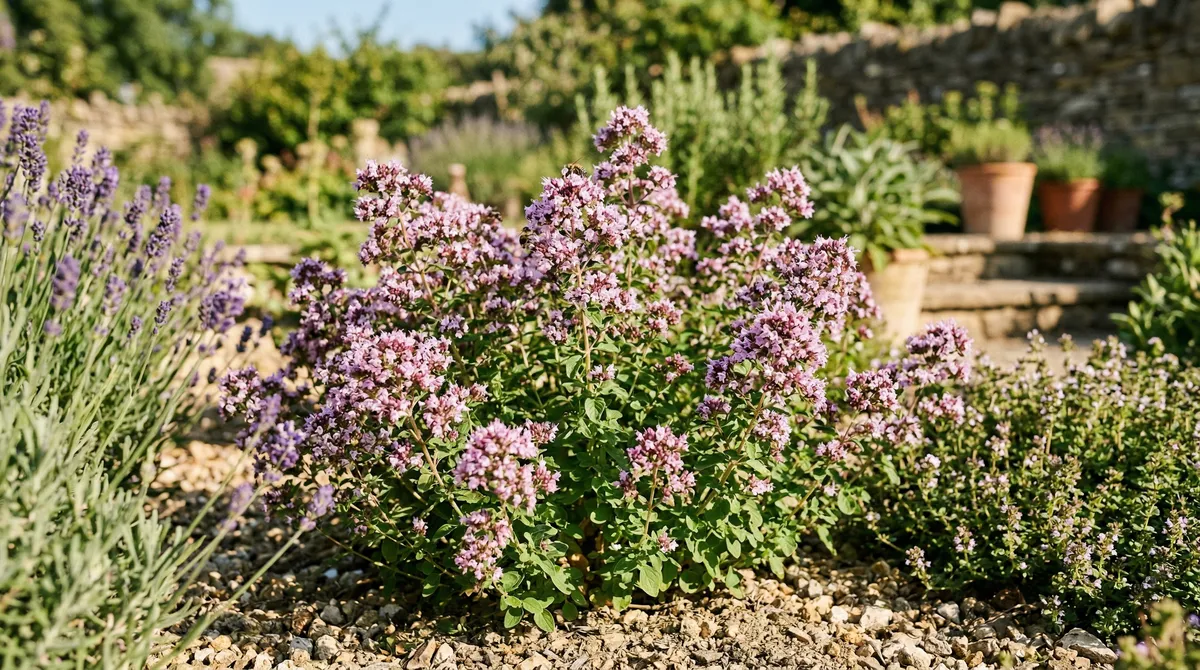
Oregano is one of the most rewarding herbs you can grow in a UK garden. This tough Mediterranean perennial shrugs off British winters, thrives in poor soil, and actually tastes better when you neglect it. The less you fuss, the stronger the flavour.
Native to the hillsides of southern Europe, Origanum vulgare has been naturalised in Britain since at least the Middle Ages. Wild oregano grows on chalk downland and limestone grassland across southern England. It belongs to the Lamiaceae family alongside thyme, rosemary, and mint. For a broader look at growing kitchen herbs, see our guide to growing herbs in the UK.
Which oregano varieties grow best in the UK?
Choosing the right variety matters more with oregano than almost any other herb. The flavour difference between varieties is dramatic. Common oregano has a mild, earthy taste. Greek oregano packs a pungent punch that holds up in cooking. Pick based on whether you want a culinary powerhouse, a wildlife magnet, or an ornamental ground cover.
Culinary varieties
Greek oregano (Origanum vulgare subsp. hirtum) is the gold standard for cooking. It contains 2-4% carvacrol, giving it that intense, peppery warmth essential to Mediterranean dishes. Plants reach 30-45cm tall with white flowers. It is slightly less hardy than common oregano but still survives to -10C without issue in most UK gardens.
Hot and Spicy oregano (Origanum vulgare ‘Hot and Spicy’) is a selected cultivar with even higher carvacrol levels. It grows 30-40cm tall and delivers serious heat. Excellent for pizza, pasta sauces, and anywhere you want bold oregano flavour. Hardy to -12C.
Wildlife and ornamental varieties
Common oregano (Origanum vulgare) is the toughest variety and the one you find growing wild on UK chalk downs. It reaches 45-60cm tall with pink-purple flowers from July to September. The flavour is mild for cooking but the pollinator value is outstanding. The RHS lists oregano as a top plant for pollinators, attracting over 50 insect species.
Golden oregano (Origanum vulgare ‘Aureum’) has bright yellow-green foliage that lights up the front of a border. It reaches 20-25cm tall and works as decorative ground cover. The flavour is mild. Scorch damage occurs in full midday sun, so give it light afternoon shade.
Syrian oregano (Origanum syriacum) is the variety used in za’atar spice blends. It grows 40-50cm tall with grey-green leaves and white flowers. It is the least hardy variety here, surviving to only -5C, so grow it in a container that you can move under cover in winter.
| Variety | Height | Hardiness | Flavour strength | Best use | Flower colour |
|---|---|---|---|---|---|
| Greek oregano | 30-45cm | -10C | Very strong | Cooking, drying | White |
| Common oregano | 45-60cm | -15C | Mild | Wildlife, ground cover | Pink-purple |
| Golden oregano | 20-25cm | -12C | Mild | Ornamental, edging | Pink |
| Hot and Spicy | 30-40cm | -12C | Intense | Cooking, pizza | Pink-purple |
| Syrian oregano | 40-50cm | -5C | Strong, distinctive | Za’atar, containers | White |
What is the difference between oregano and marjoram?
This question causes more confusion than any other in the herb garden. Oregano and marjoram are different species within the same genus. They look similar, smell similar, and share a family tree. But the flavour profiles, hardiness, and growing requirements differ enough that it matters which one you plant.
Oregano (Origanum vulgare) is fully hardy in the UK, surviving to -15C. It has a bold, peppery, slightly bitter taste driven by high levels of carvacrol (the compound that creates that distinctive “pizza” aroma). The leaves are darker green and slightly rougher in texture.
Sweet marjoram (Origanum majorana) is half-hardy, tolerating only -2C before it dies. British gardeners treat it as an annual or bring it indoors for winter. The flavour is sweeter, more floral, and more delicate. It works best added at the end of cooking. Use it in egg dishes, light sauces, and salads where oregano would overpower.
Pot marjoram (Origanum onites) sits between the two. It is hardier than sweet marjoram (surviving to -7C) with a flavour closer to oregano but slightly less aggressive. It makes a good compromise plant for UK growers who want marjoram flavour without the annual replanting.
Gardener’s tip: If you buy “oregano” from a UK garden centre, check the label. Many plants sold as oregano are actually common oregano with mild flavour. For real cooking oregano, look specifically for Origanum vulgare subsp. hirtum (Greek oregano) or buy from a specialist herb nursery.
Where should I plant oregano?
Oregano wants the same conditions as thyme and rosemary: full sun, sharp drainage, and soil that other plants would complain about. The more you mimic a Mediterranean hillside, the better the flavour.
Light requirements
Full sun is non-negotiable for strong flavour. Oregano needs a minimum of 6 hours of direct sunlight daily. South-facing or west-facing positions give the best results. Plants grown in partial shade produce lush green foliage but the essential oil content drops by 40-60%, resulting in bland, tasteless leaves. Golden oregano is the one exception: it benefits from light afternoon shade to prevent leaf scorch.
Soil conditions
Oregano performs best in poor, well-drained soil with a pH of 6.0-8.0. It thrives on chalk, limestone, and sandy soils. Heavy clay needs significant amendment before planting: dig in 50% horticultural grit or sharp sand by volume to the top 20cm. Raised beds filled with a gritty mix are the most reliable solution on clay ground.
Never feed oregano with nitrogen-rich fertiliser. Rich soil and heavy feeding produce soft, leafy growth with almost no flavour. The essential oils that create oregano’s taste are a stress response. Plants under slight drought and nutrient stress concentrate their oils.
Spacing and planting
Plant oregano 30-45cm apart depending on variety. Common oregano needs 45cm as it spreads vigorously by underground runners. Greek oregano stays more compact at 30cm spacing. Plant at the same depth as the root ball, firming gently. Water once to settle the roots, then leave it alone.
The best planting time is April to May after the last frost, or September while the soil is still warm. Spring planting gives the root system a full growing season to establish before winter.
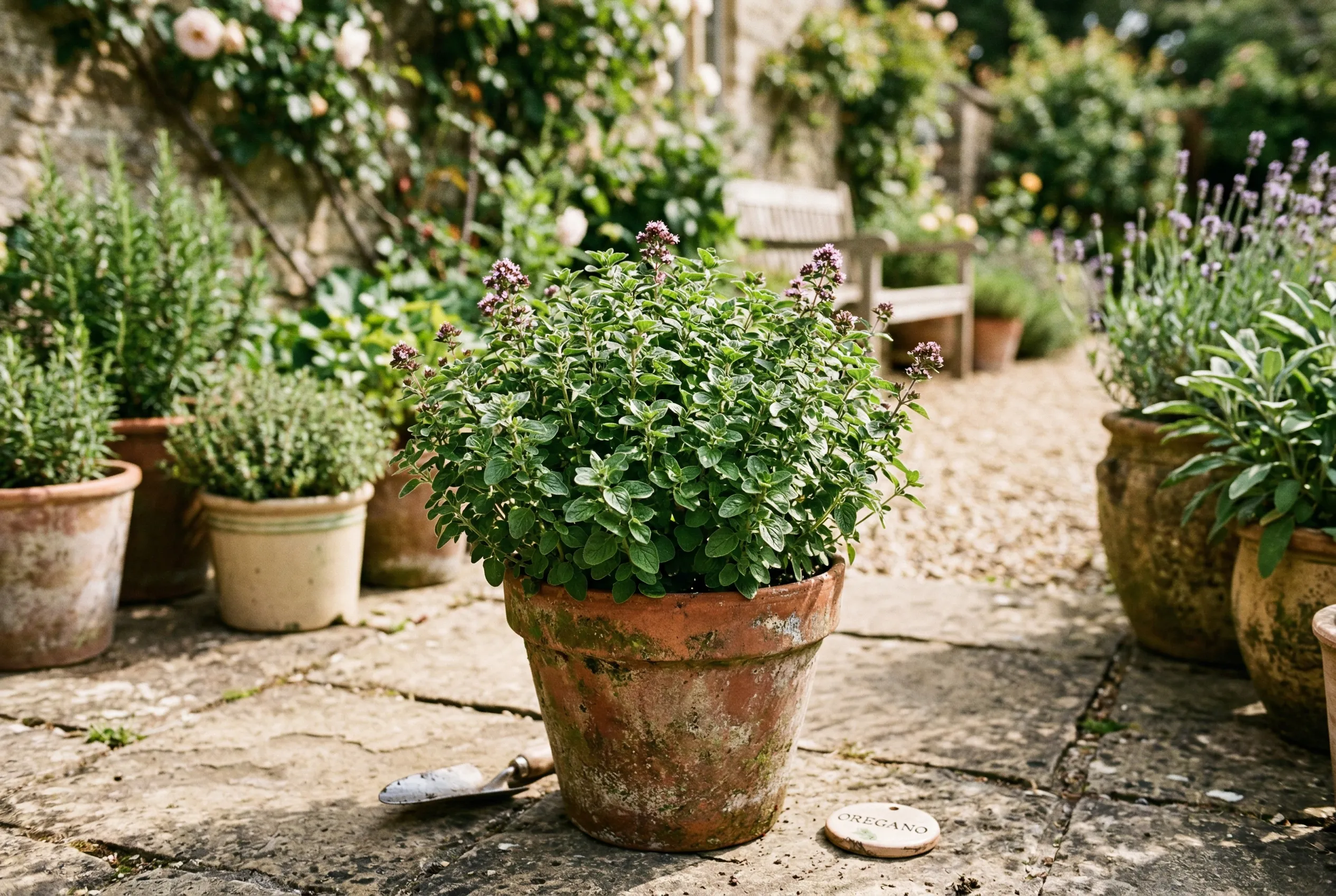 Greek oregano in a terracotta pot produces stronger flavour than ground-grown plants due to the restricted root run
How do I grow oregano in containers?
Container growing suits oregano perfectly. The restricted root run stresses the plant just enough to concentrate essential oils, often producing more aromatic leaves than open-ground plants. This is the method I recommend for anyone growing oregano primarily for cooking.
Choosing a pot
Use a terracotta pot at least 20cm wide and 20cm deep with drainage holes in the base. Terracotta is better than plastic because it breathes, allowing the compost to dry between waterings. Stand the pot on feet or pot stands to prevent water pooling underneath. Oregano roots sitting in water will rot within weeks.
Compost mix
Fill with 50:50 multipurpose compost and horticultural grit. This creates the fast-draining, low-nutrient environment that oregano prefers. Do not add slow-release fertiliser. A single light feed with liquid seaweed in May is all container oregano needs for the entire growing season.
Watering
Water only when the top 3cm of compost feels completely dry to the touch. In summer this might be every 3-4 days. In winter, established container plants rarely need watering at all. Overwatering is the number one killer of container-grown oregano. The roots need to dry out between waterings.
Overwintering containers
Move pots against a south-facing wall in November. Terracotta pots can crack in hard frost, so wrap them with bubble wrap or hessian if temperatures drop below -10C for more than a few days. The plant itself will survive. Reduce watering to almost nothing from November to February.
How do I propagate oregano?
Oregano is one of the easiest herbs to propagate. You can create dozens of new plants from a single established clump without spending a penny. Three methods work reliably in UK conditions.
Division (the best method)
Divide established clumps in March or April as new growth appears. Lift the entire plant with a fork. Pull or cut the root ball into sections, each with 3-4 shoots and a healthy portion of roots. Replant immediately at the same depth. Water once and leave alone. Success rate: 95% or higher.
Division also rejuvenates tired plants. Oregano clumps become woody and less productive after 3-4 years. Dividing and replanting the youngest outer sections every third spring keeps the planting vigorous and flavourful.
Stem cuttings
Take softwood cuttings in May to June from non-flowering shoot tips. Cut 8-10cm lengths just below a leaf node. Strip the lower leaves, leaving 3-4 pairs at the top. Insert into a 50:50 mix of perlite and multipurpose compost. Keep moist but not wet. Cuttings root in 2-3 weeks at 18-20C. Pot on individually once a good root system has formed.
Seed
Sow oregano seed indoors in March at 15-20C. Seeds need light to germinate, so press them onto the surface of moist seed compost without covering. Germination takes 7-14 days. Thin seedlings to 5cm apart and pot on when they have 4 true leaves. Harden off in May and plant out after the last frost.
Seed-grown oregano is variable. Plants from the same packet differ in flavour, vigour, and growth habit. For a guaranteed match of a variety you already like, use division or cuttings instead.
Month-by-month oregano care calendar
| Month | Task |
|---|---|
| January | Leave dormant plants alone. Check containers are not waterlogged |
| February | Order plants or seeds from specialist herb nurseries |
| March | Sow seed indoors at 15-20C. Divide established clumps |
| April | Plant out new plants after the last frost. Begin light watering |
| May | Take softwood cuttings. Pinch growing tips to encourage bushiness |
| June | Plants in active growth. Water containers every 3-4 days in dry spells |
| July | Harvest main crop as flowers open. Cut stems 5cm above ground |
| August | Take second lighter harvest. Dry bunches in a warm, airy room |
| September | Plant new divisions. Reduce watering as growth slows |
| October | Clear dead flower stems. Move containers to sheltered positions |
| November | Plants die back to ground level. No watering needed |
| December | Protect container pots from hard frost with bubble wrap if needed |
Why is oregano better dried than fresh?
This is the one herb where drying actually improves the flavour rather than reducing it. Dried oregano contains 3-10 times the flavour concentration of fresh leaves. The drying process removes water while preserving the volatile oils, creating a more intense, concentrated taste that works better in cooked dishes.
The key compounds are carvacrol and thymol. Fresh oregano leaves contain 1-2% essential oils by weight. After proper drying, that concentration rises to 3-4% because the water (which made up 80% of the fresh leaf) has evaporated. This is why dried oregano dominates in Italian, Greek, and Turkish cooking while fresh oregano often tastes disappointingly mild.
How to dry oregano
Harvest whole stems just as the flowers begin to open in July. This is when oil concentration peaks. Cut stems 5cm above ground level in the morning after the dew has dried.
Tie stems in small bunches of 4-6 using string or rubber bands. Hang upside down in a warm, dry, well-ventilated room at 20-25C. Avoid direct sunlight, which degrades the essential oils. Drying takes 7-14 days depending on humidity and air circulation.
The leaves are ready when they crumble easily between your fingers. Strip the dried leaves from the stems and store in airtight glass jars in a dark cupboard. Dried oregano retains its full flavour for up to 12 months. After that, replace it with a fresh batch.
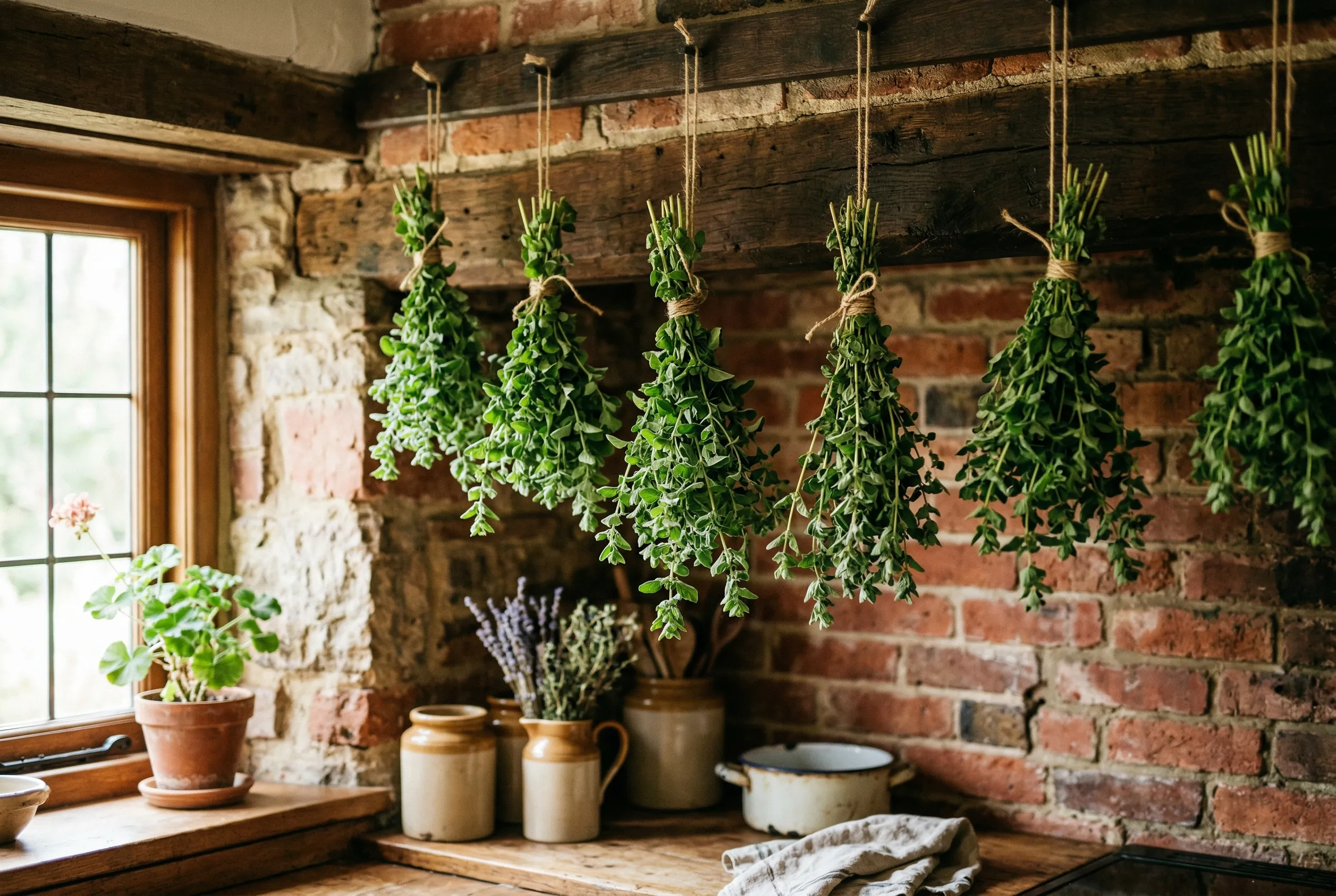 Small bunches of 4-6 stems dry in 7-14 days at 20-25C. The flavour intensifies as moisture evaporates
For more methods including oven drying and freezing, see our complete guide to drying and storing herbs.
How valuable is oregano for pollinators?
Oregano is one of the most important pollinator plants in any UK garden. Research by the University of Sussex found that oregano flowers rank among the top 10 plants for nectar production in British gardens, attracting over 50 species of bees, butterflies, and hoverflies.
The flowers appear from July to September, filling a critical gap in the nectar calendar when many spring-flowering plants have finished. A single oregano plant in full bloom can be covered with dozens of pollinators at any one time. Common visitors include honeybees, buff-tailed bumblebees, red admiral butterflies, and marmalade hoverflies.
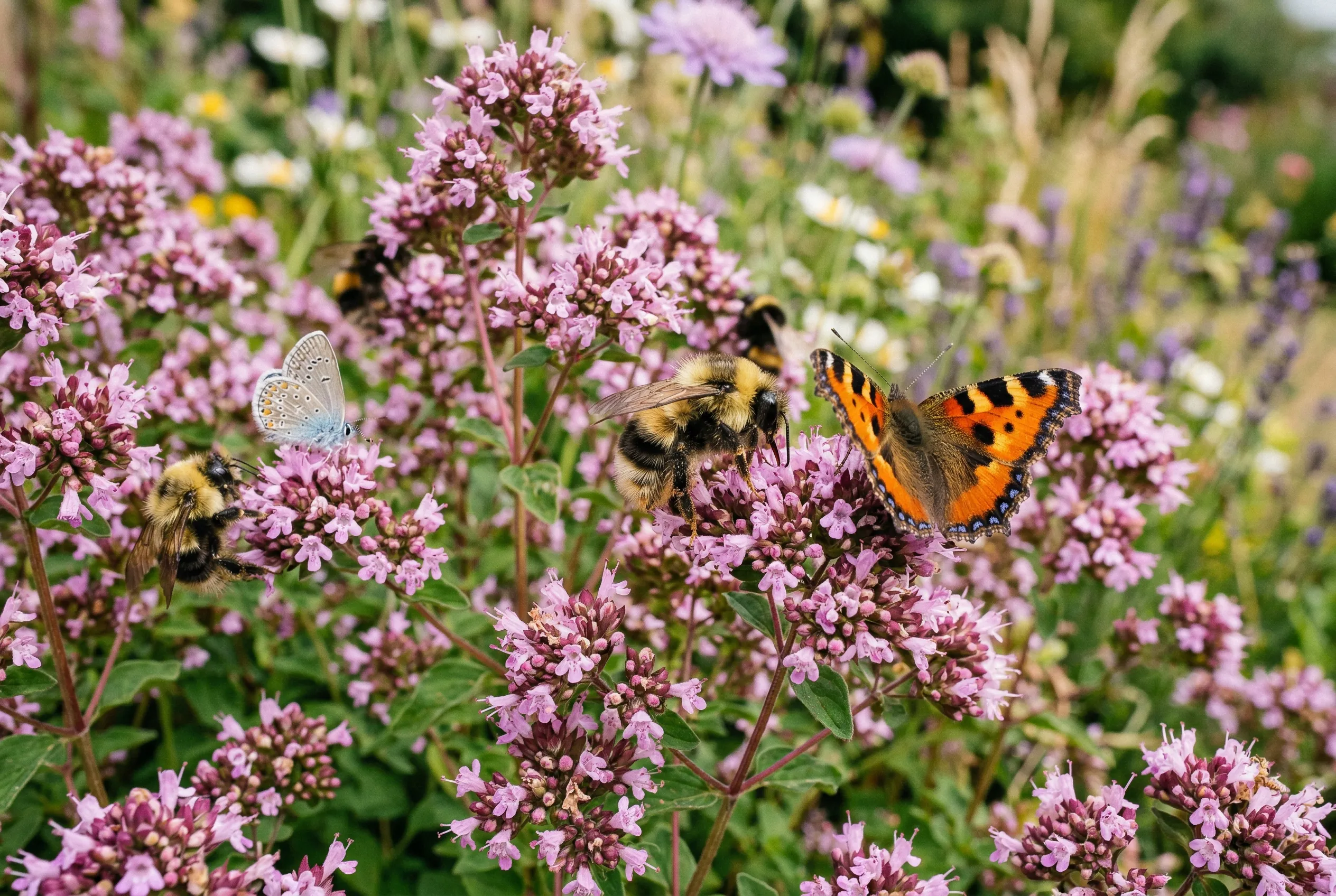 Oregano in full flower attracts over 50 pollinator species, making it one of the UK’s top 10 nectar plants
Common oregano (Origanum vulgare) produces the most flowers and the best pollinator value. Greek oregano flowers less profusely but still attracts plenty of insects. If you grow oregano for both cooking and wildlife, plant Greek oregano near the kitchen for harvesting and a large patch of common oregano in a sunny border for the bees.
Why we recommend planting a dedicated wildlife patch: After growing oregano in three different positions over 4 years, the 1m x 1m patch of common oregano against a south-facing fence attracted more pollinators than any other single plant in the garden. In August 2025, I counted 23 bumblebees, 8 honeybees, and 11 butterflies on the patch in a single 10-minute observation.
Common mistakes when growing oregano
Planting in rich, fertile soil
This is the most common error. Gardeners instinctively give herbs their best compost and regular feeds. Oregano responds by producing lush, soft, tasteless growth. The essential oils that create flavour are a stress response. Lean soil and slight drought produce the best-flavoured leaves.
Overwatering
Oregano is drought-tolerant once established. Its Mediterranean roots mean it thrives on 2-3 weeks without rain. Frequent watering, especially on heavy soil, causes root rot. The first sign is yellowing lower leaves. By the time the whole plant wilts, the roots are already dead.
Not harvesting hard enough
Many growers take a few tentative snips. Oregano responds best to bold harvesting. Cut entire stems 5cm above ground level. The plant regrows within 2-3 weeks. Light picking encourages straggly, woody growth with fewer aromatic leaves.
Ignoring the woody centre
After 3-4 years, the centre of an oregano clump becomes woody and unproductive. New growth only appears at the edges. Divide the plant in spring, discarding the woody centre and replanting the vigorous outer sections. This is the same cycle you see with thyme.
Growing the wrong variety for cooking
Buying generic “oregano” from a garden centre and expecting pizza-worthy flavour leads to disappointment. Common oregano is mild. Greek oregano (Origanum vulgare subsp. hirtum) is the variety you need for strong culinary flavour. Check the Latin name on the label before buying.
How to use oregano in cooking
Oregano is essential to Mediterranean, Mexican, and Middle Eastern cuisines. It pairs naturally with tomatoes, olive oil, garlic, lemon, lamb, and grilled vegetables.
Dried oregano goes into dishes at the start of cooking. Add it to pasta sauces, pizza dough, marinades, and stews 20-30 minutes before serving. The heat releases the essential oils gradually.
Fresh oregano works best added in the final 5 minutes of cooking or used raw in salads and dressings. Strip the leaves from the stems and chop roughly. Fresh leaves work well scattered over grilled halloumi, mixed into Greek salads, or blended into herb butter.
For herb garden design ideas that combine oregano with other Mediterranean plants, see our guide to creating a herb garden. Oregano pairs beautifully with basil in any kitchen garden layout.
Frequently asked questions
Is oregano a perennial in the UK?
Yes, oregano is a fully hardy perennial in all UK regions. Common oregano (Origanum vulgare) survives temperatures down to -15C and returns reliably every spring. It dies back to ground level in winter but regrows from the rootstock from March onwards. Plants typically live 5-6 years before needing division or replacement.
What is the difference between oregano and marjoram?
Oregano and marjoram are closely related but distinct species. Oregano (Origanum vulgare) is fully hardy, has a pungent peppery flavour, and contains higher levels of carvacrol and thymol. Sweet marjoram (Origanum majorana) is half-hardy, milder in taste, and treated as an annual in the UK. Pot marjoram (Origanum onites) sits between the two in flavour and hardiness.
Can I grow oregano in pots?
Oregano grows very well in containers with proper drainage. Use a terracotta pot at least 20cm wide with drainage holes. Fill with 50:50 multipurpose compost and horticultural grit. Water only when the top 3cm of compost feels dry. Container oregano often produces stronger-flavoured leaves than ground-grown plants because the restricted root run stresses the plant slightly.
When should I harvest oregano?
Harvest oregano just as the flowers begin to open in July. This is when essential oil concentration peaks at 3-4% of dry weight. Cut whole stems 5cm above ground level rather than picking individual leaves. The plant regrows quickly and you can take a second lighter harvest in September before the growth slows.
Does oregano spread and become invasive?
Common oregano spreads by underground runners and self-seeding. It is not classified as invasive but can colonise an area 60-90cm wide within two years. Grow it in a container or a defined bed with edging to contain the spread. Divide clumps every 3-4 years and remove unwanted seedlings in spring before they establish.
How do I dry oregano at home?
Air-dry oregano in small bunches of 4-6 stems tied with string. Hang upside down in a warm, dry, well-ventilated room at 20-25C for 7-14 days. The leaves should crumble easily when fully dry. Strip the leaves from the stems and store in airtight glass jars away from direct light. Dried oregano keeps its full flavour for 12 months.
Why does my oregano have no flavour?
Weak flavour usually comes from too-rich soil or too much shade. Oregano produces its strongest essential oils under stress: full sun, lean soil, and moderate drought. Cut back on watering and never feed with nitrogen-rich fertiliser. Switch to Greek oregano for cooking as it has 3x the carvacrol content of common oregano.
Now you know how to grow oregano successfully in your UK garden, read our guide to drying and storing herbs to make the most of every harvest.
Lawrie has been gardening in the West Midlands for over 30 years. He grows his own veg using no-dig methods, keeps a wildlife-friendly garden, and writes practical advice based on real UK growing conditions.