How to Grow Pak Choi & Asian Greens UK
UK guide to growing pak choi, mizuna, tatsoi, and Asian greens. Covers sowing, bolt prevention, containers, greenhouse growing, and year-round harvests.
Key takeaways
- Pak choi and mizuna produce baby leaves in just 21 days from sowing
- Sow every 2-3 weeks from March to September for non-stop harvests
- All six varieties grow well in containers as shallow as 15cm
- Bolt prevention requires short days, cool soil, and consistent moisture
- Flea beetle is the main pest: use fine mesh netting from day one
- Greenhouse or polytunnel sowings extend the season from February to November
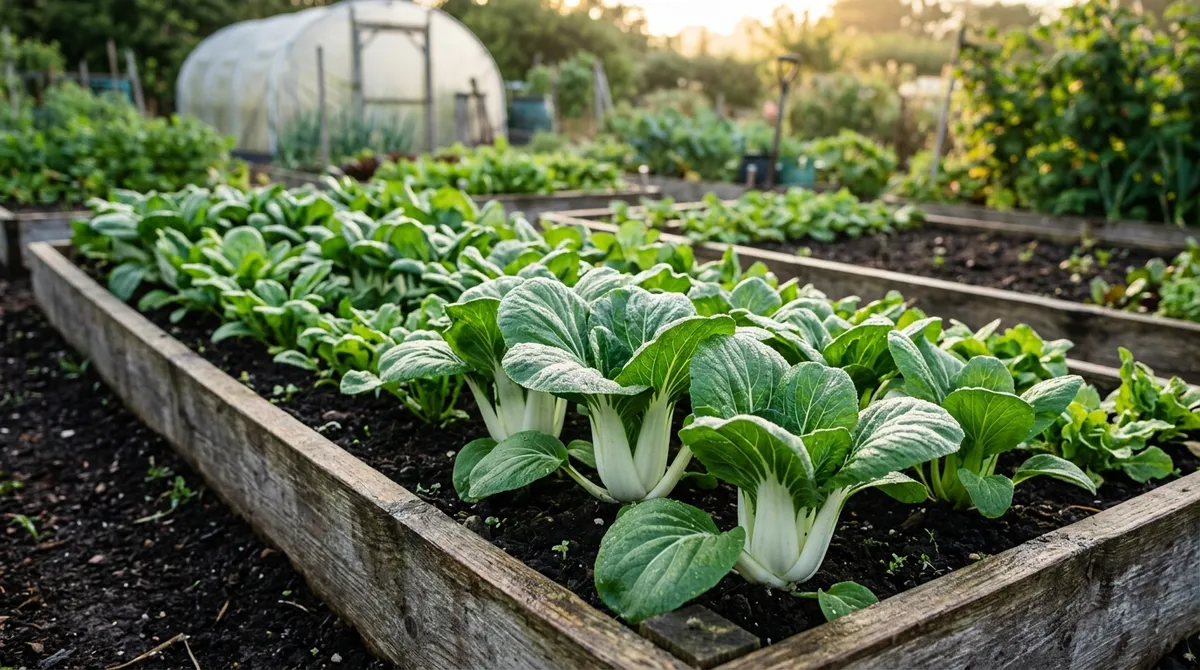
Pak choi is one of the fastest vegetables you can grow in a British garden. From seed to baby leaf takes just 21 days. Full-sized heads are ready in 45 days. That speed makes Asian greens ideal for filling gaps between slower crops, for growing on patios and balconies, and for anyone who wants fresh stir-fry ingredients without the supermarket markup.
The family of Asian greens suited to UK conditions goes far beyond pak choi alone. Mizuna, tatsoi, komatsuna, mibuna, and choy sum all thrive in our cool, damp climate. Several tolerate frost. Most grow happily in partial shade. A few succeed on a windowsill. This guide covers all six varieties, from sowing your first seeds to harvesting leaves for the kitchen.
Which Asian greens can you grow in the UK?
Six varieties of Asian greens perform reliably in British gardens. Each has different strengths, and growing a mix gives you a range of flavours, textures, and harvest windows throughout the season.
Pak choi (Brassica rapa var. chinensis)
Pak choi is the best-known Asian green in UK gardens. It forms an upright rosette of dark green leaves on thick, crisp white or pale green stems. The flavour is mild, slightly mustardy, and sweeter than cabbage. Baby pak choi varieties like Mei Qing Choi mature in 35-40 days. Full-sized types like Joi Choi take 45-55 days. Pak choi is the most bolt-prone of the Asian greens and needs careful timing.
Mizuna (Brassica rapa var. nipposinica)
Mizuna produces a dense rosette of deeply serrated, feathery leaves with a mild peppery bite. It is the most forgiving Asian green for UK beginners. Mizuna germinates in 3-5 days, tolerates both cold and heat, and regrows after cutting for 4-5 separate harvests. It works raw in salads or wilted into stir-fries. Purple mizuna adds striking colour to the veg patch.
Tatsoi (Brassica rapa var. rosularis)
Tatsoi forms a flat, ground-hugging rosette of dark, spoon-shaped leaves. It looks ornamental enough for a flower border. The flavour is mild and creamy, closer to spinach than mustard. Tatsoi is hardy down to minus 5C, making it one of the best winter salad crops in the UK. It matures in 40-50 days for full rosettes but gives baby leaves in 21 days.
Komatsuna (Brassica rapa var. perviridis)
Komatsuna (Japanese mustard spinach) is the toughest Asian green. It survives frost down to minus 10C, tolerates poor soil, and resists bolting better than pak choi. The large, rounded leaves taste like a mild cross between spinach and mustard. Komatsuna is the variety to choose if you want a single Asian green that crops from March to December with minimal fuss.
Mibuna (Brassica rapa var. nipposinica)
Mibuna is mizuna’s close relative but with long, narrow, strap-shaped leaves instead of serrated ones. The flavour is milder and more peppery. It is excellent in salads and as a garnish. Mibuna is slightly slower to bolt than mizuna and produces heavy yields of slender leaves for cut-and-come-again harvesting over 8-10 weeks.
Choy sum (Brassica rapa var. parachinensis)
Choy sum (also called Chinese flowering cabbage) is grown for its tender flowering stems rather than its leaves. The stems, leaves, and small yellow flowers are all edible. It has a sweet, broccoli-like flavour. Choy sum needs warmer conditions than the others and grows best from May to September in the UK. It matures in 35-50 days.
Asian greens variety comparison table
| Variety | Days to baby leaf | Days to maturity | Cold hardiness | Bolt resistance | Best season |
|---|---|---|---|---|---|
| Pak choi | 21 | 45-55 | Minus 3C | Low | Aug-Oct |
| Mizuna | 21 | 35-40 | Minus 5C | High | Mar-Nov |
| Tatsoi | 21 | 40-50 | Minus 5C | Medium | Mar-Nov |
| Komatsuna | 25 | 40-50 | Minus 10C | High | Mar-Dec |
| Mibuna | 25 | 40-45 | Minus 5C | High | Mar-Nov |
| Choy sum | 28 | 35-50 | 0C | Low | May-Sep |
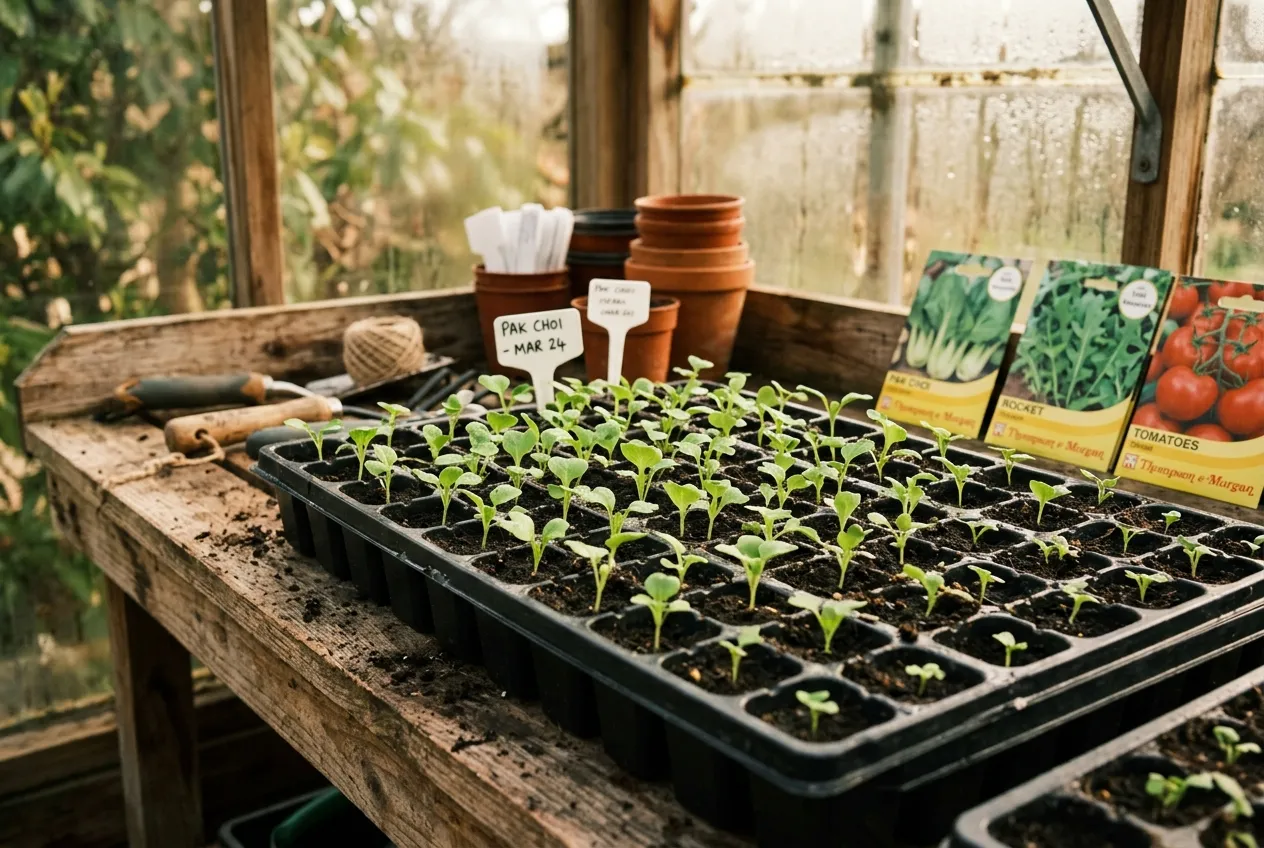 Pak choi seedlings in module trays — transplant with the root ball intact to prevent bolting
How do you sow pak choi and Asian greens?
All Asian greens germinate fast in cool soil. The technique is almost identical for all six varieties, with minor differences in spacing.
Sowing in modules (recommended)
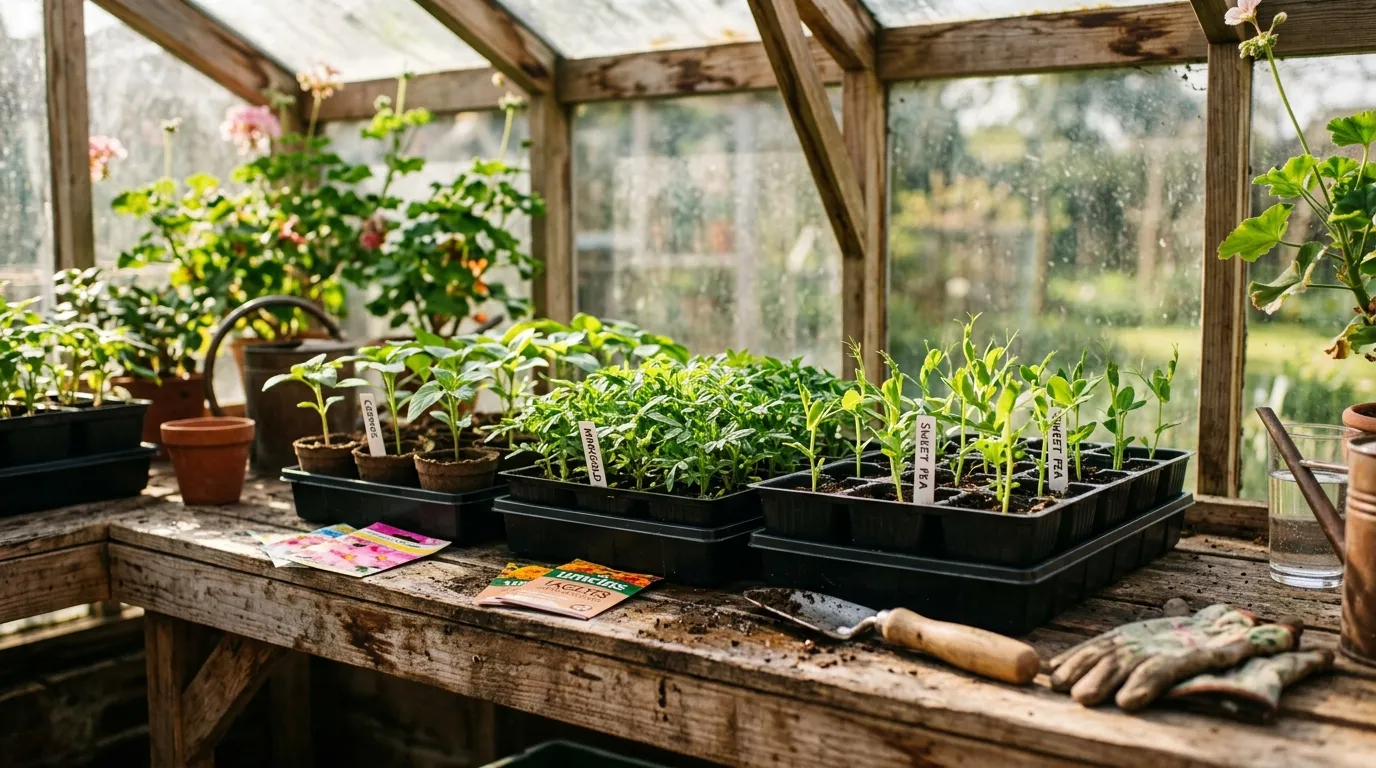
Sow 2-3 seeds per cell in module trays filled with seed compost. Cover with 1cm of compost and water gently. Place on a windowsill or in a propagator at 15-20C. Seeds germinate in 3-7 days. Thin to one seedling per cell when the first true leaves appear. Sowing in modules indoors avoids root disturbance at transplanting, which is critical for bolt-prone pak choi.
Harden off for 5-7 days before planting out. Transplant when seedlings have 3-4 true leaves, typically 2-3 weeks after sowing. Handle the root ball carefully. Water in immediately.
Direct sowing outdoors
Sow seeds thinly in drills 1cm deep. Space rows 30cm apart for full-sized plants or 15cm apart for baby leaf. Thin seedlings to 15-20cm apart for heading varieties or 5-10cm for baby leaf crops. Direct sowing works well for mizuna, tatsoi, mibuna, and komatsuna. Avoid direct sowing pak choi and choy sum, as thinning disturbs roots and triggers bolting.
Spacing guide
| Type | Baby leaf spacing | Full head spacing | Row spacing |
|---|---|---|---|
| Pak choi | 5cm | 20-25cm | 30cm |
| Mizuna | 5cm | 15-20cm | 25cm |
| Tatsoi | 5cm | 15-20cm | 25cm |
| Komatsuna | 5cm | 20-25cm | 30cm |
| Mibuna | 3cm | 15cm | 25cm |
| Choy sum | 5cm | 20-25cm | 30cm |
When is the best time to sow Asian greens in the UK?
Timing is everything with Asian greens, particularly pak choi. The UK growing calendar splits into three distinct windows.
Spring (March-May): Sow indoors in March. Transplant outside from mid-April under fleece. Choose bolt-resistant varieties like Joi Choi for spring sowings. Spring pak choi bolts easily if hit by a late cold snap followed by warm weather.
Summer (June-July): The riskiest period. Long days and warm soil trigger bolting in pak choi and choy sum. Stick to mizuna, mibuna, tatsoi, and komatsuna during midsummer. If you do sow pak choi, use bolt-resistant mini varieties and provide afternoon shade.
Late summer and autumn (August-October): The golden window. Shortening days and cooling temperatures produce the best pak choi heads of the year. Sow every 2 weeks from late July to mid-September. This is when Asian greens perform at their absolute best in the UK climate.
Succession sowing every 2-3 weeks through these windows ensures you never run out. A 1-metre row sown fortnightly produces enough leaves for two stir-fries per week.
How do you prevent pak choi from bolting?
Bolting is the single biggest challenge when growing pak choi in the UK. Understanding the triggers lets you avoid them.
Temperature swings are the primary cause. Pak choi bolts when exposed to temperatures below 10C for several days followed by a warm spell. This mimics winter-to-spring transition, which signals the plant to flower. Protect early sowings with fleece and avoid planting out too early.
Long days above 14 hours of daylight push pak choi toward flowering. From mid-May to late July, day length in most of the UK exceeds 16 hours. Sow bolt-resistant varieties during this period, or skip pak choi entirely and grow mizuna and tatsoi instead.
Root disturbance at transplanting stresses plants into bolting. Always sow pak choi in modules and transplant with the entire root ball intact. Never bare-root transplant. Never thin direct-sown pak choi late.
Drought stress triggers rapid bolting. Keep soil consistently moist but not waterlogged. Mulch with 5cm of garden compost to retain moisture. Water in the morning rather than evening to reduce slug activity.
Variety choice matters. Joi Choi, Canton White, and Mei Qing Choi are all bred for bolt resistance. Avoid ornamental or open-pollinated varieties in spring and summer.
Can you grow Asian greens in containers?
Asian greens are some of the best vegetables for container growing. Their shallow root systems, compact habit, and fast growth make them ideal for patios, balconies, doorsteps, and even windowsills.
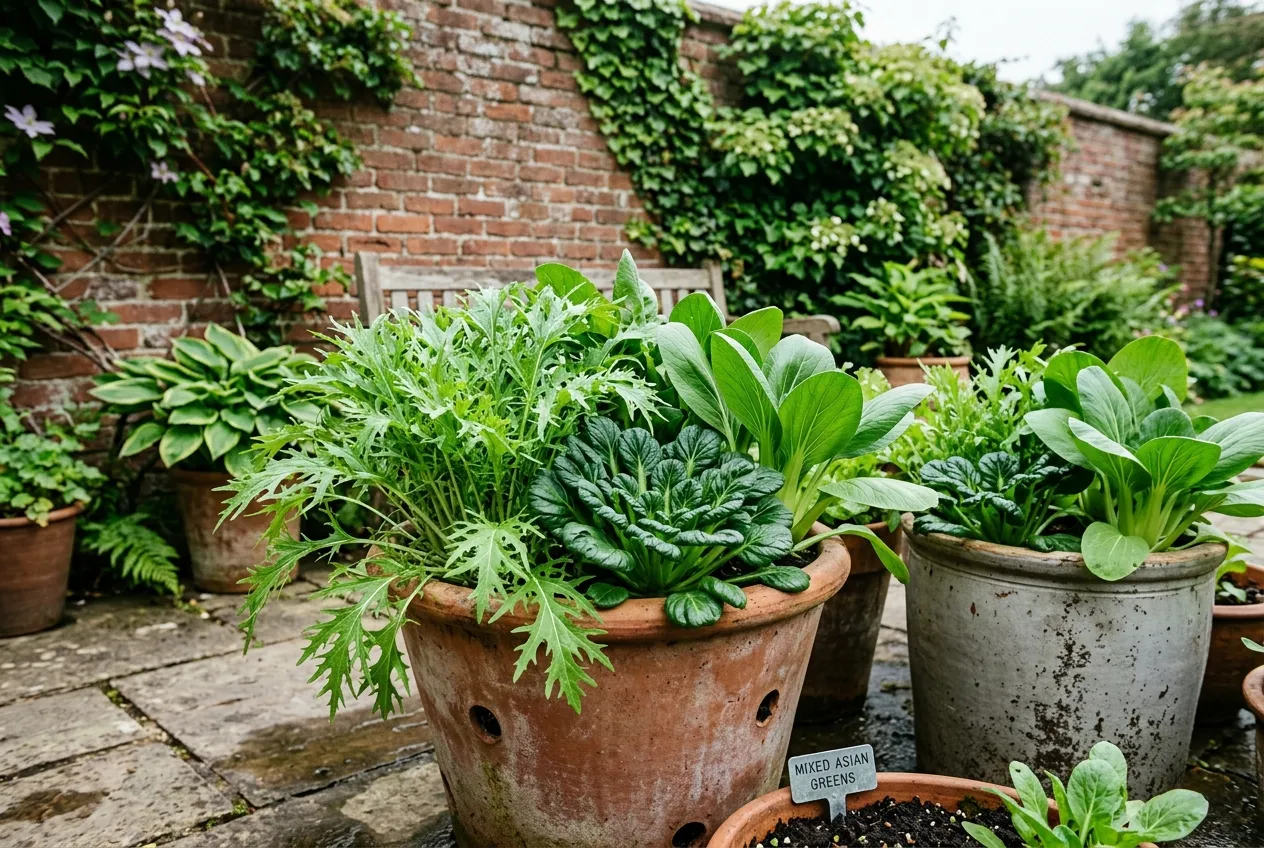 Mizuna, tatsoi, and pak choi thrive in containers — use peat-free compost and keep it consistently moist
Container size: Baby leaf crops grow in any container at least 10cm deep. Full-sized pak choi heads need 15-20cm depth. A standard 30cm pot holds 3-4 full-sized plants or a dense patch of baby leaf mix. Window boxes, grow bags, and recycled containers all work well.
Compost: Use peat-free multipurpose compost. Asian greens are not fussy about soil but need consistent moisture. Mix in water-retaining gel for containers that dry out fast. Avoid heavy garden soil in pots, as it compacts and drains poorly.
Feeding: Apply dilute liquid seaweed fertiliser every 2 weeks once plants have 4-5 true leaves. Avoid high-nitrogen feeds, which produce soft, floppy growth that attracts aphids. A balanced organic feed keeps leaves firm and flavourful.
Position: Full sun in spring and autumn. Partial shade (4-5 hours of direct sun) in summer to reduce bolting risk and leaf scorch. Containers on wheels make it easy to follow the shade as seasons change.
Watering: Check daily. Container-grown Asian greens dry out faster than those in open ground. Water when the top 2cm of compost feels dry. Never let pots sit in saucers of standing water, as this rots roots within days.
How do you grow pak choi in a greenhouse?
A greenhouse or polytunnel extends the Asian greens season by 6-8 weeks at each end, giving you harvests from February to November. The extra warmth and shelter also produce faster growth and fewer pest problems.
Early spring (February-March): Sow pak choi and mizuna in heated propagators inside the greenhouse. Transplant into greenhouse beds or large containers in March. Ventilate well on sunny days to prevent overheating. Check your greenhouse growing calendar for exact timing in your region.
Summer (June-August): Avoid growing pak choi in a greenhouse during midsummer unless you can keep temperatures below 25C. Greenhouses overheat rapidly in July and August. Grow mizuna and komatsuna instead, which cope better with warmth. Open all vents and doors. Use shade netting if temperatures exceed 30C.
Autumn and winter (September-November): This is when greenhouse growing really pays off. Sow pak choi in September for heads ready in October and November. Tatsoi and komatsuna grow through November and December in an unheated greenhouse. Close vents at night from October onwards. Fleece over plants gives extra frost protection on the coldest nights.
What pests and diseases affect Asian greens?
All Asian greens are brassicas. They attract the same pests as cabbages, broccoli, and Brussels sprouts. The good news is that their fast growth means you can often harvest before pest damage becomes serious.
Flea beetle
Flea beetle is the number one pest. Tiny black beetles chew dozens of small round holes in leaves, particularly in dry weather from April to June. Severe attacks kill young seedlings. The only reliable prevention is fine mesh netting (Enviromesh or equivalent with holes no larger than 0.8mm) placed over plants from the day of sowing or transplanting. Keep netting in place until harvest. Keep soil moist, as flea beetles prefer dry conditions.
Slugs and snails
Slugs target young transplants, especially in wet springs. Use nematode biological control (Nemaslug) applied to soil in March. Copper tape around containers deters slugs. Evening torch patrols with hand removal are effective. Beer traps catch large numbers. This problem and its solutions mirror those faced when growing lettuce.
Cabbage white butterfly
Cabbage white caterpillars eat leaves down to the midrib. Fine mesh netting prevents egg-laying. Inspect plants weekly and remove eggs (yellow clusters on leaf undersides) and caterpillars by hand. Netting is the most effective prevention.
Clubroot
Clubroot is a soil-borne disease that causes swollen, distorted roots and stunted growth. It persists in soil for 20 years. Raise the pH above 7.2 with garden lime. Grow in containers with fresh compost if your soil is infected. Rotate brassicas on a 4-year cycle.
Downy mildew
Yellow patches on leaf tops with greyish fuzz underneath indicate downy mildew. Improve air circulation by spacing plants correctly. Water at the base, not over the leaves. Remove affected leaves promptly. Downy mildew is worst in cool, humid autumn conditions.
How do you harvest pak choi and Asian greens?
The harvesting method depends on whether you want baby leaves, individual leaves from mature plants, or whole heads.
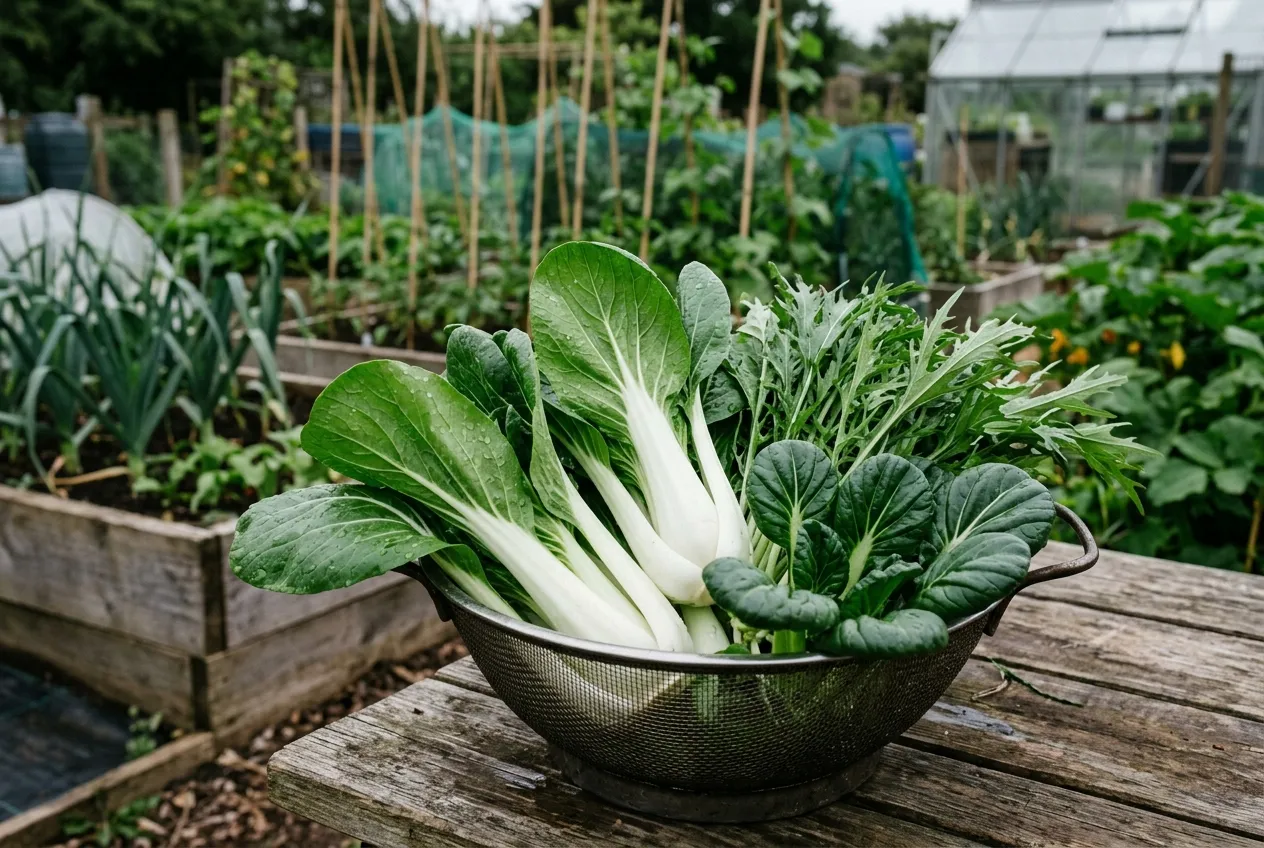 Harvest pak choi by cutting the whole head at the base — pick outer leaves from mizuna and tatsoi for repeat harvests
Baby leaf (21-28 days): Cut entire plants at 5-8cm tall with scissors, leaving a 2cm stump. Most varieties regrow for 2-3 additional cuts. This method works for all six types and is the fastest route from seed to plate.
Cut-and-come-again: Pick individual outer leaves from mizuna, mibuna, tatsoi, and komatsuna, leaving the central growing point intact. This gives 4-5 harvests over 8-10 weeks from a single sowing. Always leave at least 4 inner leaves so the plant can recover.
Whole heads: Cut pak choi and choy sum at the base when heads are firm and upright, typically 45-55 days after sowing. Use a sharp knife. Harvest in the morning when leaves are crisp and full of moisture. Whole heads store for 5-7 days in the fridge wrapped in a damp cloth.
Flowering stems: Harvest choy sum when flower buds appear but before they open. Cut stems 15-20cm long. The stems, leaves, and unopened buds are all edible. Once yellow flowers open, the stems turn woody and bitter.
How do you cook and use Asian greens?
Asian greens are versatile in the kitchen. Each variety suits different cooking methods.
Stir-frying is the classic method. Cut pak choi lengthways into quarters. Separate thick stems from leaves, as stems need 2-3 minutes more cooking time. Add stems first to a hot wok with sesame oil, then throw in leaves for the final 30 seconds. Season with soy sauce, garlic, and ginger.
Steaming preserves the delicate flavour of pak choi and tatsoi. Steam whole baby pak choi for 3-4 minutes. Dress with oyster sauce and toasted sesame seeds.
Raw in salads: Mizuna, mibuna, and baby tatsoi make excellent salad leaves. Mix with lettuce and spinach for a peppery kick. Baby pak choi leaves work raw in slaws.
Soups and broths: Shred pak choi or komatsuna into ramen, miso soup, or any broth-based dish. Add in the final 2 minutes of cooking so the leaves wilt but keep their colour and texture.
Pickling and fermenting: Pak choi is the base for several Korean and Chinese pickled vegetable dishes. Quick-pickle sliced stems in rice vinegar, sugar, and salt for a 30-minute side dish.
Month-by-month growing calendar for Asian greens
| Month | Activity |
|---|---|
| January | Order seeds. Clean containers and modules. |
| February | Sow pak choi and mizuna indoors in heated propagator. |
| March | Sow all varieties indoors. Plant out under fleece from mid-March. |
| April | Direct sow outdoors from mid-April. Transplant module-grown seedlings. |
| May | Succession sow every 2-3 weeks. Net against flea beetle. |
| June | Avoid pak choi. Sow mizuna, tatsoi, mibuna, komatsuna. Provide shade. |
| July | Continue bolt-resistant varieties. Water daily in dry spells. |
| August | Golden window begins. Sow pak choi fortnightly for autumn heads. |
| September | Last outdoor sowings. Sow in greenhouse for late autumn harvest. |
| October | Harvest autumn pak choi heads. Protect with fleece from mid-month. |
| November | Harvest greenhouse crops. Close vents at night. |
| December | Pick remaining tatsoi and komatsuna from greenhouse. Plan next year. |
How to grow Asian greens from seed: quick-start checklist
This condensed checklist gets you from packet to plate in the shortest time.
- Choose your variety. Mizuna for beginners. Pak choi for stir-fries. Tatsoi for winter hardiness.
- Sow in modules. 2-3 seeds per cell, 1cm deep, 15-20C. Thin to one per cell.
- Harden off for 5-7 days. Move modules outdoors during the day, inside at night.
- Transplant with the root ball intact. Space 15-20cm apart for heads. 5cm for baby leaf.
- Net immediately. Cover with Enviromesh before flea beetles find your plants.
- Water consistently. Check daily. Mulch with 5cm of compost. Never let soil dry out.
- Succession sow fortnightly. One short row every 2-3 weeks keeps the supply constant.
- Harvest at 21 days for baby leaves. 45 days for full heads. Pick outer leaves for repeat harvests.
Recommended UK seed sources for Asian greens
Several UK seed suppliers stock a wide range of Asian greens. The RHS lists pak choi and related brassicas in their vegetable growing guides. Garden Organic provides excellent organic growing advice for all oriental vegetables, including companion planting and pest management without chemicals.
For the widest selection of Asian green seeds, look at specialist suppliers who import varieties directly from Japanese and Chinese breeding programmes. Many standard garden centres now stock pak choi and mizuna as part of their vegetable seed ranges.
Further reading
- How to grow lettuce and salad leaves in the UK — mizuna and tatsoi make excellent additions to a salad leaf mix
- Succession planting guide — the fortnightly sowing technique that keeps Asian greens coming all season
- Container vegetable gardening in the UK — growing pak choi and Asian greens on patios and balconies
- How to grow spinach in the UK — komatsuna is often called Japanese mustard spinach and makes a good companion crop
- How to grow radishes in the UK — another fast-growing crop that pairs well with Asian greens in succession sowing schedules
Lawrie has been gardening in the West Midlands for over 30 years. He grows his own veg using no-dig methods, keeps a wildlife-friendly garden, and writes practical advice based on real UK growing conditions.