How to Grow Raspberries in the UK
Grow raspberries in UK gardens with this guide to summer and autumn varieties, planting, pruning, support systems, and pest control for reliable crops.
Key takeaways
- Summer-fruiting and autumn-fruiting types need completely different pruning methods
- Each plant produces 1-2kg of fruit per season once established
- One planting gives 10-15 years of productive cropping
- Space canes 40-50cm apart in rows 1.8m apart with post-and-wire support
- Plant bare-root canes from November to March while dormant
- Net against birds from first colour change to protect the crop
Raspberries are one of the most productive soft fruits for UK gardens. A single plant yields 1-2kg of fruit per season once established, and a well-maintained row crops reliably for 10-15 years. Fresh-picked raspberries have a flavour and fragrance that supermarket punnets cannot match. They freeze well, make outstanding jam, and the surplus never goes to waste.
The UK climate is ideal for raspberries. They thrive in our cool, moist conditions and tolerate partial shade better than most fruit. Every region from Cornwall to the Scottish Highlands can grow them successfully. This guide covers the critical difference between summer-fruiting and autumn-fruiting types, variety selection, planting, support systems, pruning, feeding, and pest control. Browse our growing guides for more fruit and vegetable advice.
Summer-fruiting vs autumn-fruiting raspberries
This is the single most important thing to understand before you plant. Get this wrong and you will prune at the wrong time, removing fruit-bearing wood and getting no harvest. The two types grow differently, fruit at different times, and need entirely different pruning.
Summer-fruiting types (floricanes)
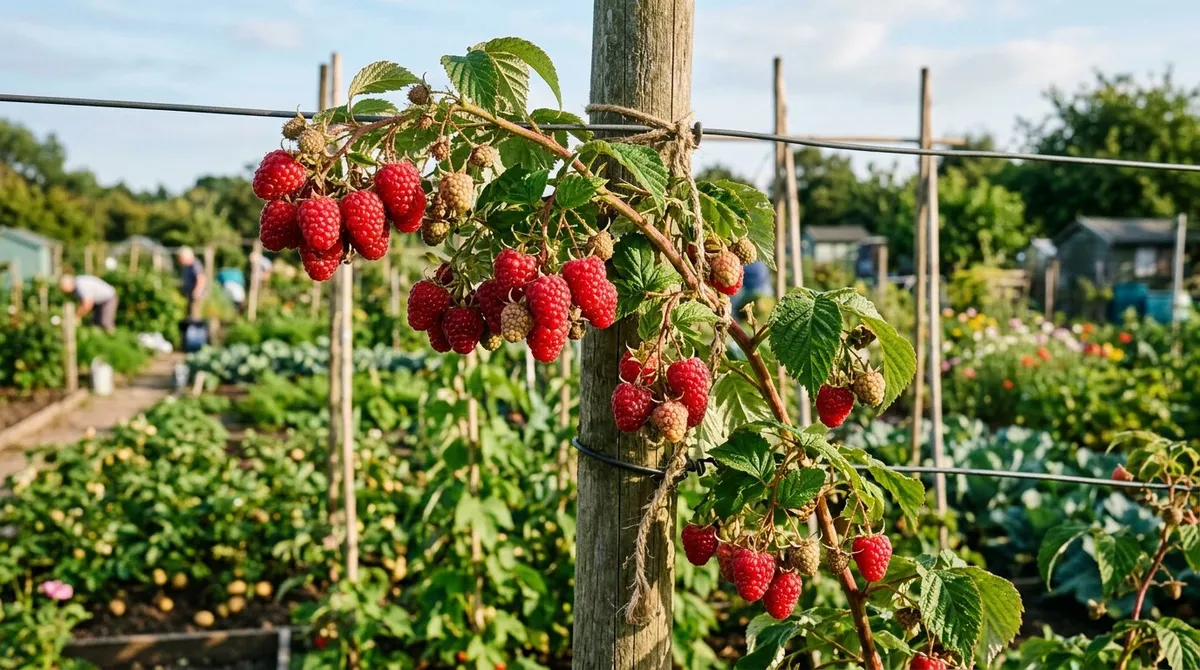
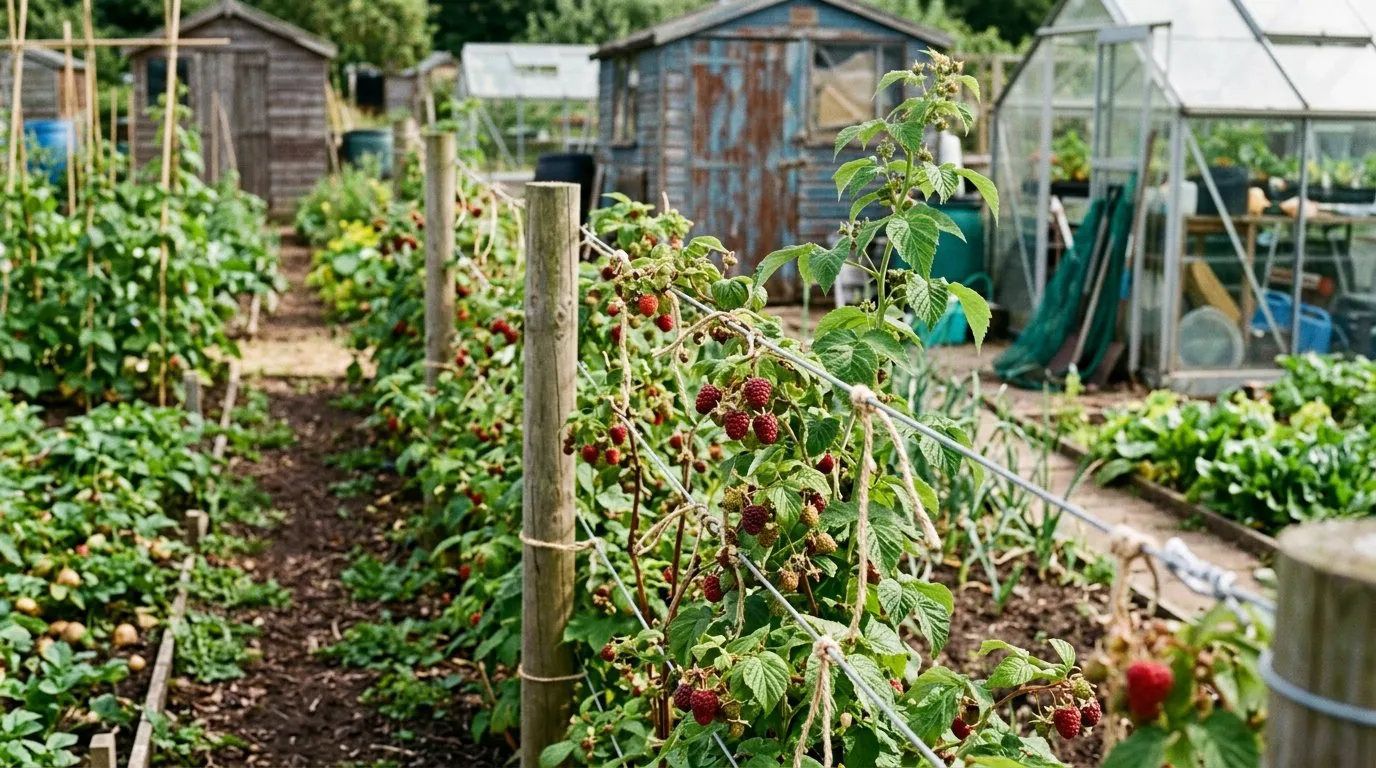 Summer-fruiting raspberry canes on a post-and-wire framework.
Summer-fruiting raspberries produce fruit on canes that grew the previous year. These are called floricanes. In year one, a cane grows tall and green. In year two, that same cane flowers, fruits in June and July, then dies. New canes grow alongside it each summer to fruit the following year.
After harvest, you cut the spent brown canes to the ground. You tie in the new green canes for next year. This two-year cycle repeats throughout the plant’s life. Summer varieties need a post-and-wire support framework because the canes grow 1.5-2m tall.
Autumn-fruiting types (primocanes)
Autumn-fruiting raspberries fruit on canes that grew in the same year. These are called primocanes. Canes emerge in spring, grow through summer, and produce fruit from August to October. Every cane fruits in its first year.
Pruning could not be simpler. In February, cut every single cane to ground level. Fresh canes sprout in spring and the cycle begins again. No sorting old from new. No selective removal. Just cut everything down. Autumn varieties are shorter (1-1.2m) and often self-supporting.
Choosing the best raspberry varieties
Pick varieties based on your harvest goals. Summer types give heavier yields in a shorter window. Autumn types extend the season and offer simpler maintenance. Growing both provides fresh raspberries from June through October.
Best summer-fruiting varieties
- Glen Ample - the most popular summer variety in UK gardens. Spine-free canes for easy picking. Heavy crops of large, firm fruit. Good disease resistance. The reliable all-rounder.
- Glen Moy - early season, fruiting from mid-June. Spine-free. Good flavour. Slightly smaller fruit than Glen Ample. Excellent for northern gardens.
- Tulameen - outstanding flavour, often considered the best-tasting summer raspberry. Large, conical fruit. Slightly less hardy than Glen Ample. Best in sheltered southern and midland gardens.
- Malling Jewel - compact growth, reliable in exposed sites. Medium-sized fruit. Good disease resistance. Suits smaller gardens.
Best autumn-fruiting varieties
- Autumn Bliss - the original and still outstanding. Large, dark red fruit from August to October. Excellent flavour. Very hardy and reliable across all UK regions.
- Polka - heavy yields of large, glossy fruit. Sweet flavour. Crops from late July in warm seasons, extending the harvest window. Good disease resistance.
- Joan J - spine-free canes. Large fruit with excellent flavour. High yields. The best choice if you want easy picking without thorns.
- All Gold - golden-yellow fruit with a milder, sweeter flavour. Decorative in the garden. Less attractive to birds than red varieties.
Variety comparison table
| Variety | Type | Harvest period | Yield per plant | Flavour | Spines | Best for |
|---|---|---|---|---|---|---|
| Glen Ample | Summer | Late June-July | 1.5-2kg | Good | No | Reliable main crop |
| Glen Moy | Summer | Mid-June-July | 1-1.5kg | Good | No | Early fruit, northern gardens |
| Tulameen | Summer | July | 1.5-2kg | Excellent | Yes | Best summer flavour |
| Malling Jewel | Summer | July | 1-1.5kg | Good | Yes | Exposed sites, small gardens |
| Autumn Bliss | Autumn | Aug-Oct | 1-1.5kg | Very good | Yes | Reliable autumn crop |
| Polka | Autumn | Late Jul-Oct | 1.5-2kg | Very good | Yes | Heavy yields, long season |
| Joan J | Autumn | Aug-Oct | 1.5kg | Excellent | No | Easy picking, great flavour |
| All Gold | Autumn | Aug-Oct | 1kg | Sweet, mild | Yes | Novelty, bird resistance |
Gardener’s tip: Plant one summer and one autumn variety together. Glen Ample and Autumn Bliss is a proven pairing that delivers fresh raspberries from late June through October in most UK gardens.
How to plant raspberry canes
When to plant
Plant bare-root raspberry canes from November to March while they are dormant. November and December planting is ideal because roots establish through winter, ready for strong spring growth. Avoid planting when the ground is frozen or waterlogged.
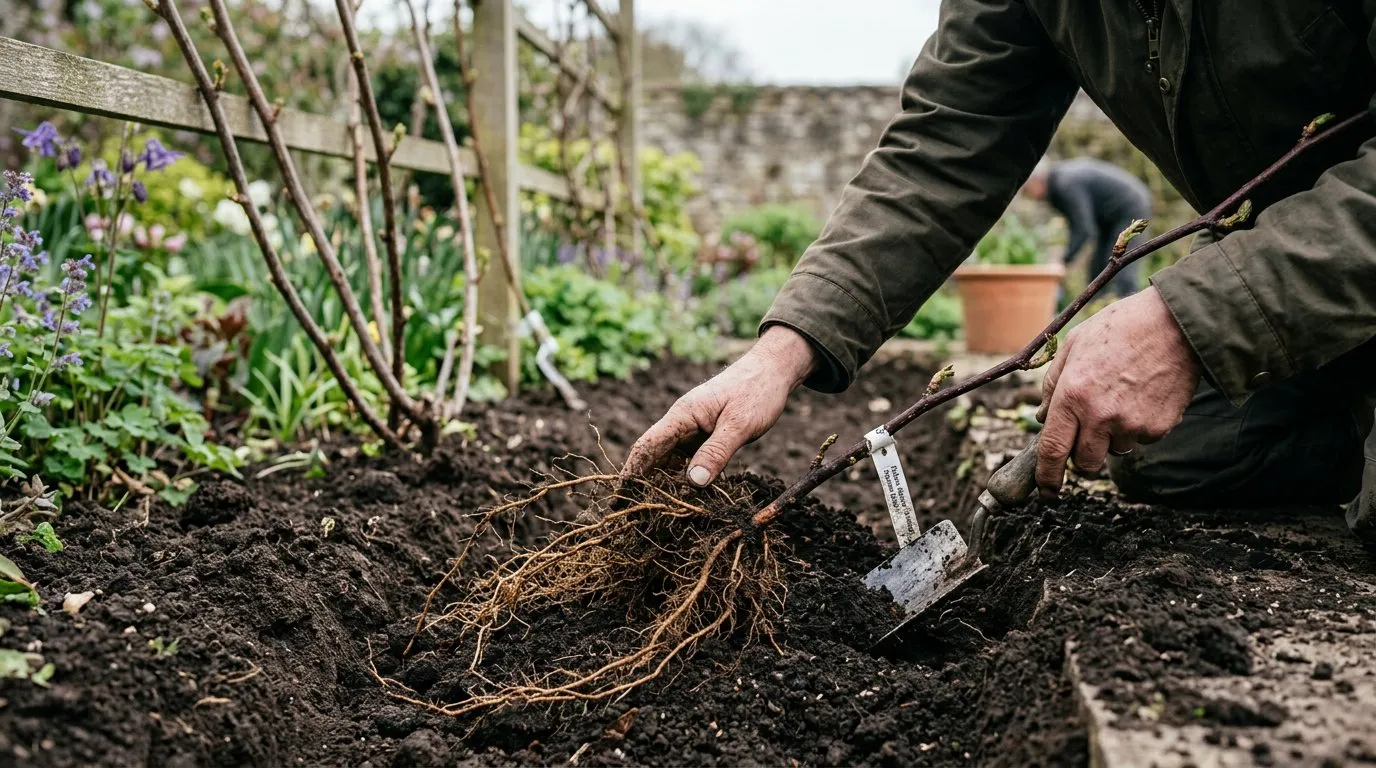 Planting bare-root raspberry canes in a prepared trench with roots spread out.
Container-grown plants go in at any time of year. However, autumn and winter planting still gives the best results because the roots settle before the demands of spring growth.
Choosing a site
Raspberries prefer a sunny or partially shaded spot with shelter from strong winds. Full sun gives the sweetest fruit, but they tolerate light shade better than strawberries or blueberries. Avoid heavy shade and waterlogged ground.
The soil should be moisture-retentive but well-drained, with a slightly acidic to neutral pH (6.0-6.7). Raspberries dislike thin, chalky, or very dry soil. Dig in plenty of garden compost or well-rotted manure before planting. Our peat-free compost guide covers sustainable soil improvement options.
Planting method
- Dig a trench 30cm wide and 20cm deep along the row
- Mix in a 10cm layer of garden compost or well-rotted manure
- Space canes 40-50cm apart within the row
- Leave 1.8m between rows for access, airflow, and sunlight
- Spread the roots out in the trench and cover with soil
- Plant to the same depth as the nursery soil mark on the cane
- Cut all canes back to 25cm above ground after planting
- Water thoroughly and apply a 7cm layer of mulch
Cutting the canes back after planting feels drastic. But it directs all energy into root establishment rather than top growth. You sacrifice one season’s fruit for stronger, more productive plants in every following year.
Building a post-and-wire support system
Summer-fruiting raspberries grow 1.5-2m tall and need a support framework. Without one, canes flop over, snap in wind, and fruit rots on the ground. The standard method is a post-and-wire system. It takes an hour to build and lasts 10-15 years.
How to build the framework
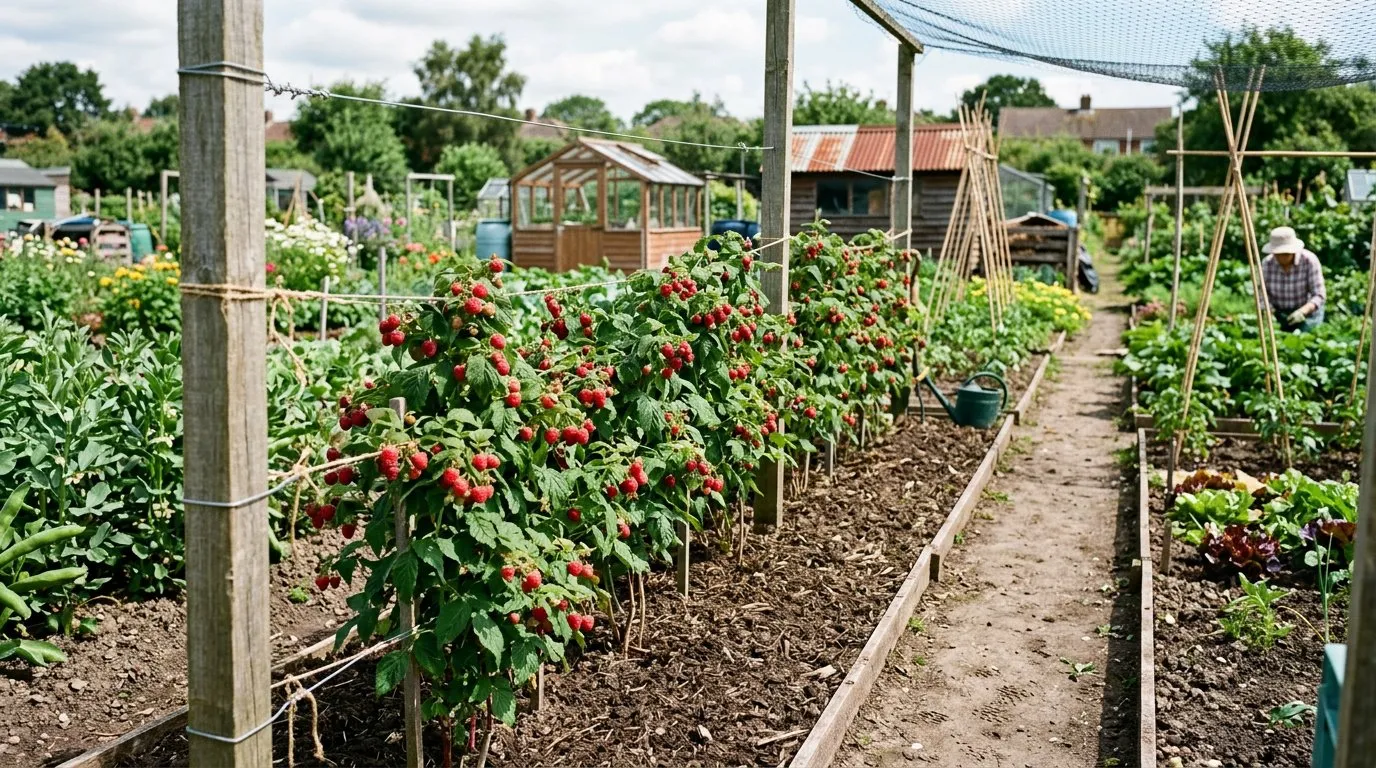 A well-maintained raspberry row on post-and-wire support in an allotment.
- Drive 2m treated timber posts (75mm x 75mm) into the ground at each end of the row. Sink them 50cm deep for stability.
- For rows longer than 4m, add intermediate posts every 3-4m.
- Stretch galvanised wire at three heights: 60cm, 1m, and 1.5m above ground level.
- Tension the wires using straining bolts at one end.
- Tie canes to the wires with soft twine or plant ties in spring.
Autumn-fruiting varieties are shorter (1-1.2m) and self-supporting in sheltered gardens. In exposed or windy sites, a single wire at 1m height keeps them upright. Raised beds work well for autumn types because the bed edges provide some natural support.
How to prune raspberries
Pruning is where most people go wrong. The rules are simple but strict. Prune the wrong canes and you lose an entire season’s fruit.
Pruning summer-fruiting raspberries
Prune immediately after the last fruit is picked, typically in August.
- Identify spent canes. These are brown, woody, and have the remnants of fruiting side shoots. They will not fruit again.
- Cut all spent canes to ground level. Use secateurs or loppers. Cut cleanly, 5cm above the soil.
- Select 6-8 strong new canes per plant. These are green, vigorous, and grew during the current season.
- Remove weak or damaged new canes. Thin to the strongest 6-8 per plant.
- Tie new canes to the support wires. Space evenly across the wires. Tie at each wire height.
- In February, tip-prune any canes that have grown above the top wire. Cut back to 15cm above the wire.
Pruning autumn-fruiting raspberries
Prune in February, before new growth begins.
- Cut every cane to ground level. No exceptions. Every single cane comes down.
- Cut 5cm above soil level to avoid damaging the crown.
- Clear all cut material away and compost it (unless diseased).
- New canes emerge from April onwards and fruit from August.
That is the full extent of autumn raspberry pruning. No sorting, no selective thinning, no tying in. It is the simplest pruning regime in the fruit garden.
Common confusion: If you inherit a raspberry row and do not know whether it is summer or autumn-fruiting, watch when it fruits. June-July means summer type. August onwards means autumn type. Prune accordingly the following year.
Feeding, watering, and mulching
Feeding schedule
Raspberries are not heavy feeders, but they benefit from an annual routine.
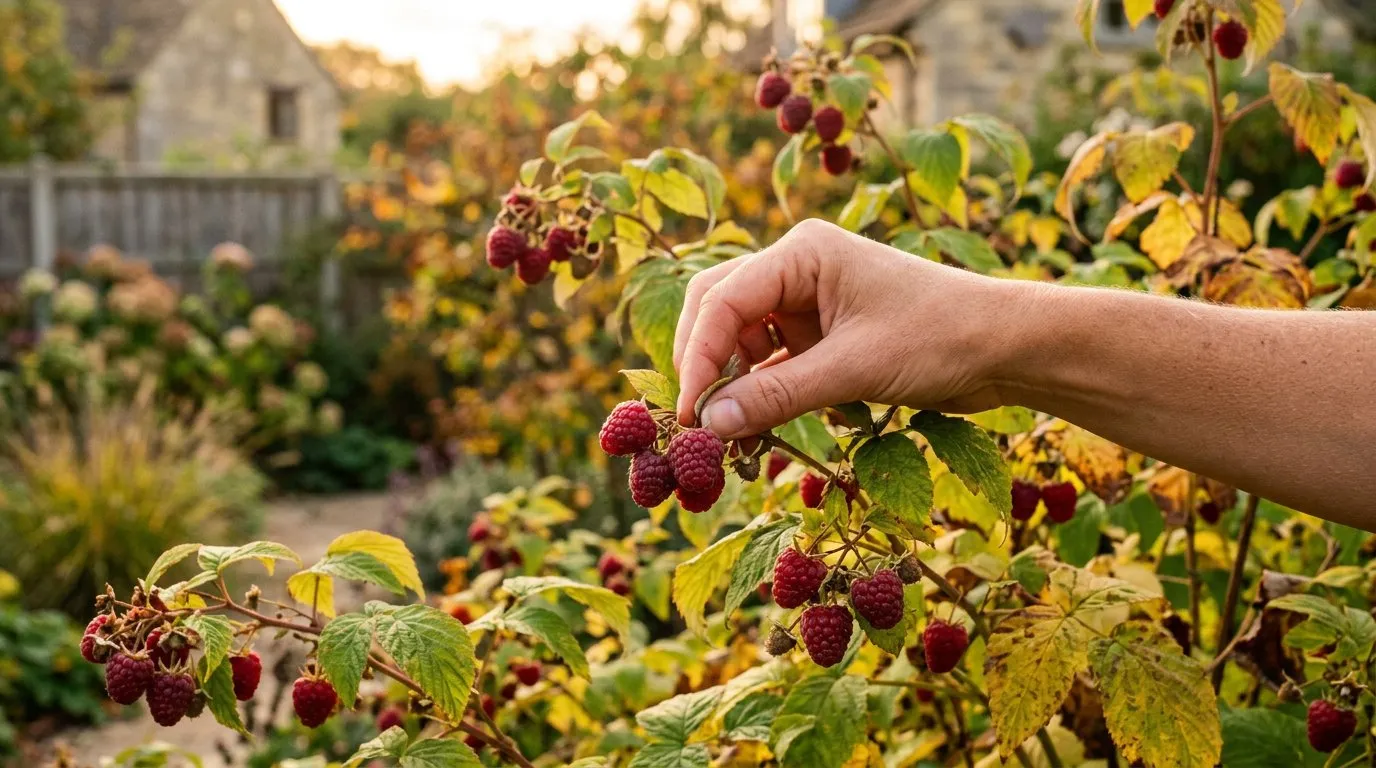 Picking autumn raspberries. These primocane types fruit on current-year growth.
- March: Apply a general-purpose fertiliser (such as Growmore) at 70g per square metre along the row. Rake lightly into the surface.
- April onwards: Mulch with a 7cm layer of garden compost, well-rotted manure, or bark chips. Keep mulch 5cm away from the base of canes to prevent rot.
- June (container plants): Begin fortnightly feeds with tomato feed (high potash) from flowering until fruit ripens.
Avoid high-nitrogen feeds, which promote leafy growth at the expense of fruit. The same principle applies when growing strawberries and other soft fruit.
Watering
Raspberries need consistent moisture during fruiting. Dry soil causes small, crumbly fruit that falls apart when picked.
- In the ground: Water weekly during dry spells from June to September. Apply 20 litres per metre of row.
- In containers: Water daily in summer. Twice daily in hot weather above 25C.
- Mulch is critical. A 7cm compost mulch reduces water loss by 40-50% and feeds the soil as it breaks down.
Mulching
Annual mulching is the single best thing you can do for raspberry plants. Apply in April after feeding. Good mulch materials include:
- Garden compost (the best all-round option)
- Well-rotted farmyard manure
- Peat-free compost
- Bark chips (for weed suppression, though they add fewer nutrients)
Mulch suppresses weeds, retains moisture, feeds the soil, and protects shallow roots from temperature extremes. Raspberries have shallow root systems that dry out quickly without a protective layer.
Protecting raspberries from pests and diseases
Bird protection
Birds are the biggest threat to ripe raspberries. Blackbirds, thrushes, and pigeons target fruit from the moment it begins to colour. Without netting, expect to lose 30-50% of your crop.
Drape 15mm mesh bird netting over the row from first colour change (usually mid-June for summer types, early August for autumn types). Support the netting on the post-and-wire framework or on bamboo cane extensions so it sits clear of the fruit. Check daily for trapped wildlife.
Raspberry beetle
Raspberry beetle is the most common raspberry pest in UK gardens. Adult beetles lay eggs in the flowers. The larvae feed inside developing fruit, leaving small greyish-white grubs in picked berries. The RHS raspberry beetle guide has detailed identification photos.
Control measures:
- Pick fruit regularly to remove infested berries
- In autumn, lightly fork the soil beneath canes to expose overwintering pupae to birds and frost
- Spray at dusk (not during the day when bees are active) with an approved insecticide if infestations are severe
Cane blight
A fungal disease that causes canes to wilt and die, often with dark brown patches at the base. Enters through wounds and pruning cuts.
Prevention:
- Prune with clean, sharp tools
- Remove and burn infected canes immediately
- Avoid damaging cane bases when hoeing or weeding
- Ensure good air circulation by not overcrowding canes
Grey mould (botrytis)
Grey, fluffy mould on ripening fruit, worst in wet summers. The same fungus that affects strawberries, gooseberries, and blackberries.
Prevention:
- Good air circulation between canes (thin to 6-8 per plant)
- Avoid overhead watering during fruiting
- Pick fruit promptly when ripe
- Remove and dispose of any mouldy fruit immediately
Raspberry cane spot
Purple spots on canes that enlarge and turn silver with a purple border. Weakens canes and reduces yield.
Prevention:
- Cut out and burn badly affected canes
- Thin canes to improve airflow
- Avoid wetting foliage when watering
Why we recommend Glen Ample for summer and Autumn Bliss for autumn: After 30 years of trialling raspberry varieties across multiple UK plots, this pairing delivers the most reliable combined harvest of any combination I have grown. In an allotment row monitored for eight seasons, Glen Ample averaged 1.8kg per cane at its peak (years 4–7) with zero spine injuries at picking time thanks to its thornless habit. Autumn Bliss followed directly after, extending fresh picking by a further 10 weeks. Together, two rows of 10 canes each produced over 30kg in a good season.
Growing raspberries in containers
Raspberries grow in large containers, though they perform best in open ground. Autumn-fruiting varieties suit containers better because the annual hard prune keeps them manageable.
Container requirements:
- Pot at least 45cm diameter and 40cm deep
- Use loam-based compost (John Innes No. 3) mixed with 20% perlite for drainage
- One plant per container
- Feed fortnightly with tomato feed from flowering
- Water daily in summer
- Repot every 3 years with fresh compost
Place containers in a sunny, sheltered spot. In winter, group pots together against a south-facing wall for frost protection. Raspberry roots are hardy to -15C in the ground but more vulnerable in exposed containers.
Month-by-month raspberry calendar
| Month | Task |
|---|---|
| January | Order bare-root canes from nurseries. Plan row positions and support posts. |
| February | Prune all autumn-fruiting canes to ground level. Tip-prune summer canes above the top wire. |
| March | Apply general fertiliser along rows. Plant any remaining bare-root canes before bud break. |
| April | Mulch with 7cm of compost. Watch for new cane growth from the base. Tie in summer canes as they grow. |
| May | Remove any canes growing outside the row. Water in dry spells. Check for aphids on new growth. |
| June | Net summer varieties against birds. Begin picking early summer varieties. Water weekly in dry weather. |
| July | Main summer harvest. Pick every 2-3 days. Continue watering. Remove suckers growing between rows. |
| August | Summer harvest ends. Prune spent summer canes immediately. Autumn harvest begins. Net autumn varieties. |
| September | Continue picking autumn varieties until first frost. Tie in new summer canes to wires. |
| October | Autumn harvest finishes. Clear fallen leaves and debris from around canes. |
| November | Plant new bare-root canes. Check support posts and wires are secure for winter. |
| December | Rest. The canes are dormant. Plan variety additions or replacements for next year. |
Common mistakes when growing raspberries
Pruning the wrong canes
This is the number one mistake. Cutting down all summer-fruiting canes in February (the autumn method) removes the wood that would have fruited in June. Cutting autumn-fruiting canes selectively instead of to ground level leaves a tangled mess that fruits poorly. Know your variety type. Prune accordingly.
Planting too close together
Canes planted less than 40cm apart compete for light, water, and nutrients. The row becomes a dense thicket with poor airflow. Disease thrives and fruit is small. Stick to 40-50cm spacing. It looks sparse at first but fills out by year two.
Neglecting the support system
Summer-fruiting canes without support flop onto the ground. Fruit rots on contact with wet soil. Wind snaps unsupported canes at the base. Build your post-and-wire framework before or at planting time, not after the canes have grown.
Not netting against birds
Raspberries ripen over several weeks, giving birds extended access to the crop. A single row of unprotected raspberries can lose half its fruit to birds in a week. Net from first colour change. Use 15mm mesh supported clear of the fruit.
Letting suckers spread unchecked
Raspberry plants send up suckers from spreading roots, often a metre or more from the main row. Left unchecked, raspberries colonise paths, lawns, and neighbouring beds. Pull or cut suckers as they appear throughout summer. Mow any that emerge in grass areas.
Harvesting and storing raspberries
Pick raspberries when they are fully coloured and detach easily from the plug (the white core that stays on the plant). If you have to tug, the fruit is not ready. Ripe raspberries slide off the plug with a gentle pull.
Harvest every 2-3 days during the picking season. Raspberries deteriorate fast once ripe. Left on the plant, they soften, attract wasps, and develop grey mould within days.
Storage: Fresh raspberries keep 2-3 days in the fridge. Do not wash until just before eating. For longer storage, spread berries in a single layer on a tray and freeze. Once frozen solid, transfer to bags or containers. Frozen raspberries keep for 12 months.
Yield expectations: Expect 1-1.5kg per plant in the first full fruiting year. Established plants (years 3-10) produce 1.5-2kg per plant per season. A row of 10 canes gives 15-20kg of fruit annually. That is enough for eating fresh, making jam, freezing, and sharing. See our monthly harvest guide for picking times across all fruit and vegetables.
Now you’ve mastered raspberries, read our guide on growing redcurrants and blackcurrants for another highly productive soft fruit that pairs perfectly with raspberries in summer puddings and jams.
Frequently asked questions
When is the best time to plant raspberries in the UK?
Plant bare-root canes from November to March. The dormant period allows roots to establish before spring growth. November planting gives the longest establishment window. Container-grown plants go in at any time, though autumn and winter remain ideal. Avoid planting into frozen or waterlogged soil.
How far apart should I plant raspberry canes?
Space canes 40-50cm apart within the row. Leave 1.8m between rows for access, air circulation, and sunlight. Closer spacing leads to overcrowding, poor airflow, and increased disease risk. A 3m row holds 6-8 canes, producing 6-16kg of fruit per season once established.
What is the difference between summer and autumn raspberries?
Summer types fruit on last year’s canes in June and July. Autumn types fruit on the current year’s growth from August to October. The pruning is completely different. Summer types need selective removal of spent canes after harvest. Autumn types are cut entirely to ground level in February. Mixing the methods up is the most common mistake.
How do I prune summer-fruiting raspberries?
Cut fruited canes to ground level after harvest in August. These are the brown, woody canes that carried fruit. Tie in 6-8 strong new green canes per plant to the support wires. Remove any weak, thin, or damaged canes. This directs energy into next year’s fruiting wood. Tip-prune above the top wire in February.
How do I prune autumn-fruiting raspberries?
Cut every cane to ground level in February. Use secateurs or loppers and cut 5cm above soil. New canes grow from spring onwards and fruit in late summer and autumn. Do not selectively prune. Do not leave any old canes. This is the simplest pruning of any fruit crop in the garden.
Do raspberries need a support system?
Summer-fruiting raspberries need a post-and-wire framework. Drive 2m posts at each end of the row and stretch galvanised wire at 60cm, 1m, and 1.5m heights. Autumn varieties are shorter and self-supporting in sheltered spots, though a single wire at 1m helps in windy gardens. Build the support before planting.
Can I grow raspberries in containers?
Yes, autumn-fruiting varieties work best in pots. Use a container at least 45cm diameter and 40cm deep. One plant per pot. Feed fortnightly with tomato feed from flowering. Water daily in summer. The annual hard prune keeps container plants manageable. Repot with fresh compost every 3 years.
Why are my raspberry plants not fruiting?
Wrong pruning is the most common cause. If you cut autumn-fruiting canes in summer, you remove the fruiting wood before it produces. If you leave old summer-fruiting canes, they will not fruit again. Identify your variety type and match the pruning method exactly. New canes also need one full growing season before their first crop.
Lawrie has been gardening in the West Midlands for over 30 years. He grows his own veg using no-dig methods, keeps a wildlife-friendly garden, and writes practical advice based on real UK growing conditions.