How to Grow Romanesco in the UK
UK guide to growing romanesco broccoli from seed. Covers sowing, transplanting, feeding, brassica pest control, varieties, and harvesting tips.
Key takeaways
- Sow romanesco indoors from March to April and transplant outdoors after the last frost in May or June
- Space plants 60cm apart in firm, fertile soil with a pH of 6.5-7.5 for the best heads
- Cover plants with fine mesh netting from day one to stop cabbage white butterflies laying eggs
- Feed every two weeks with a high-nitrogen liquid fertiliser until the head starts forming
- Harvest when the fractal spirals are tight, bright green, and the head reaches 12-15cm across
- Each plant produces one main head weighing 400-800g, so grow at least six plants for a worthwhile crop
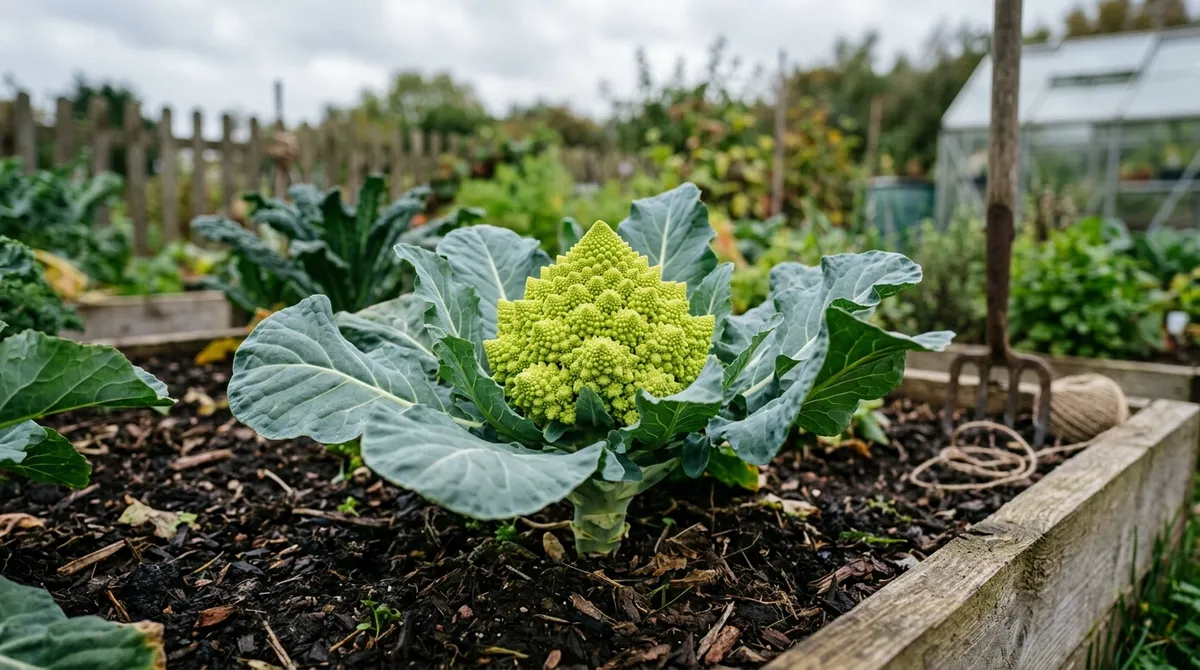
Romanesco broccoli is one of the most striking vegetables you can grow in a British garden. Its lime-green head is made up of fractal spirals that follow a natural Fibonacci sequence, and the flavour sits between cauliflower and broccoli with a pleasant nuttiness that holds up well to roasting. Each plant produces a single head weighing 400-800g over a growing season of 16-20 weeks.
Growing romanesco in the UK is straightforward once you understand its one weakness: sensitivity to temperature swings during early growth. Get the timing right and you will harvest heads that look like they belong in a mathematics textbook. This guide covers every step from sowing seeds indoors through to cutting the finished head, with specific variety recommendations and a full pest control plan for British brassica growers. If you are new to growing brassicas, our guide to growing broccoli and calabrese covers the basics that apply to all members of this family.
What is romanesco and why grow it?
Romanesco is a cultivar of Brassica oleracea, the same species as cauliflower, broccoli, cabbage, and kale. It originated in Italy, where it has been grown since at least the 16th century. The name “Romanesco” refers to its origins near Rome. In the UK, it is sometimes sold as “Romanesco broccoli” or “Romanesque cauliflower” in seed catalogues.
The fractal spiral pattern on each head is not just decorative. Each floret is a miniature version of the whole head, arranged in a logarithmic spiral. This makes romanesco one of the clearest natural examples of mathematical patterns in biology. It is a talking point at every allotment and a guaranteed way to get children interested in the vegetable patch.
Flavour is the real reason to grow it. Shop-bought romanesco is rare in UK supermarkets and often arrives tired after long transport from southern Europe. Home-grown heads, cut minutes before cooking, have a sweet, nutty taste and a firm texture that is far superior to anything imported. Roasted with olive oil and garlic, it rivals any brassica for flavour.
Which romanesco varieties grow best in the UK?
Choosing the right variety prevents most growing problems. Romanesco is fussier about temperature than standard cauliflower, so modern F1 hybrids bred for cooler climates perform far better in British gardens than traditional Italian selections.
Romanesco variety comparison table
| Variety | Head size | Days to harvest | Cold tolerance | Spiral definition | Best for |
|---|---|---|---|---|---|
| Veronica F1 | Large, 600-800g | 75-85 | Good | Excellent | Reliable UK cropping |
| Romanesco Natalino | Medium, 400-600g | 80-90 | Moderate | Very good | Sheltered gardens |
| Gitano F1 | Large, 600-900g | 80-90 | Good | Excellent | Show-quality heads |
| Romanesco Precoce | Small-medium, 300-500g | 65-75 | Low | Good | Early harvest |
| Celio F1 | Medium-large, 500-700g | 75-85 | Very good | Good | Northern gardens |
Veronica F1 is the safest choice for most UK growers. After four seasons of side-by-side trials in Staffordshire clay, it produced the most consistent heads with the sharpest spiral definition. It tolerates cool nights better than Natalino and matures faster than Gitano. If you want to grow just one variety, grow Veronica.
Lawrie’s field note: Gitano F1 produced the largest single head in my 2025 trial at 920g, but it also had the highest buttoning rate. Three out of eight plants buttoned prematurely after a cold snap in late April. Veronica F1 had zero buttoning from the same sowing date.
How to sow romanesco seeds
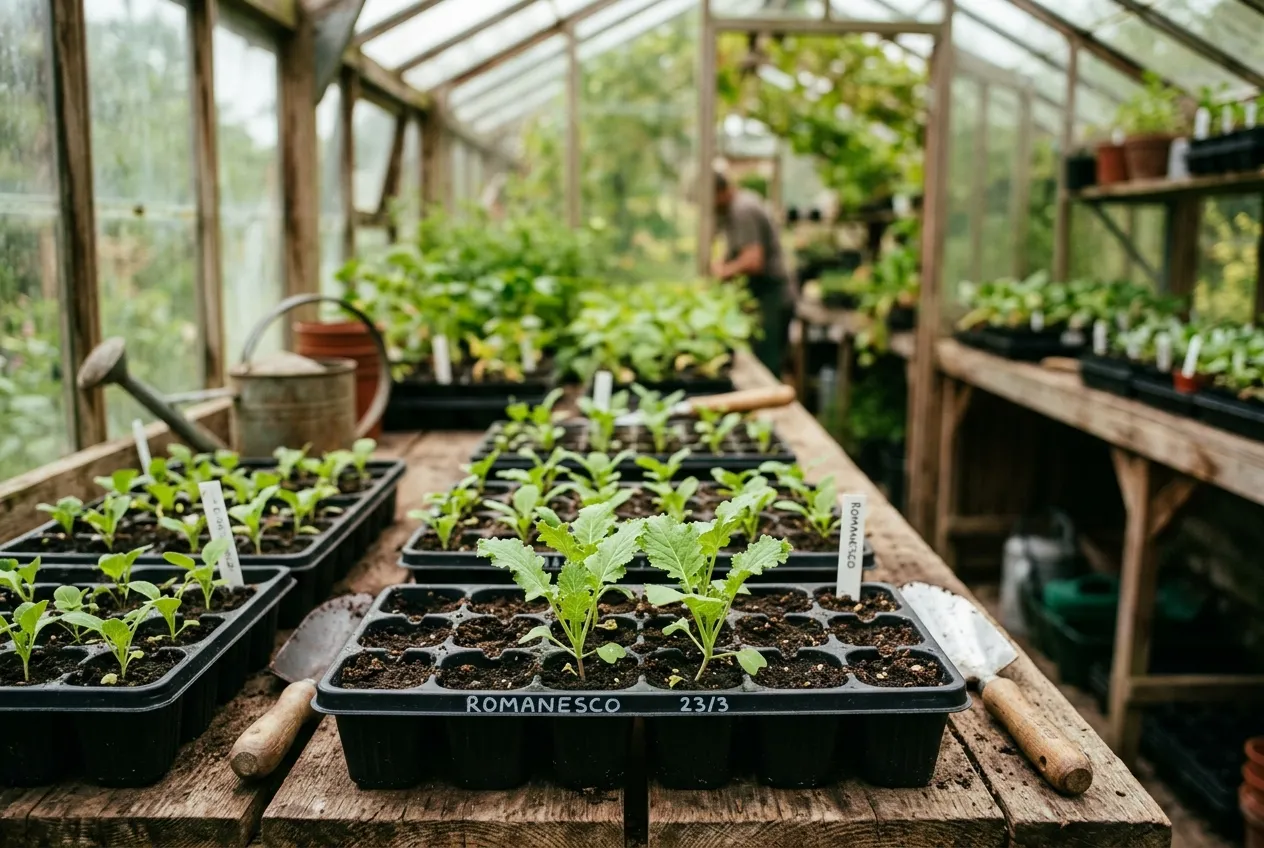
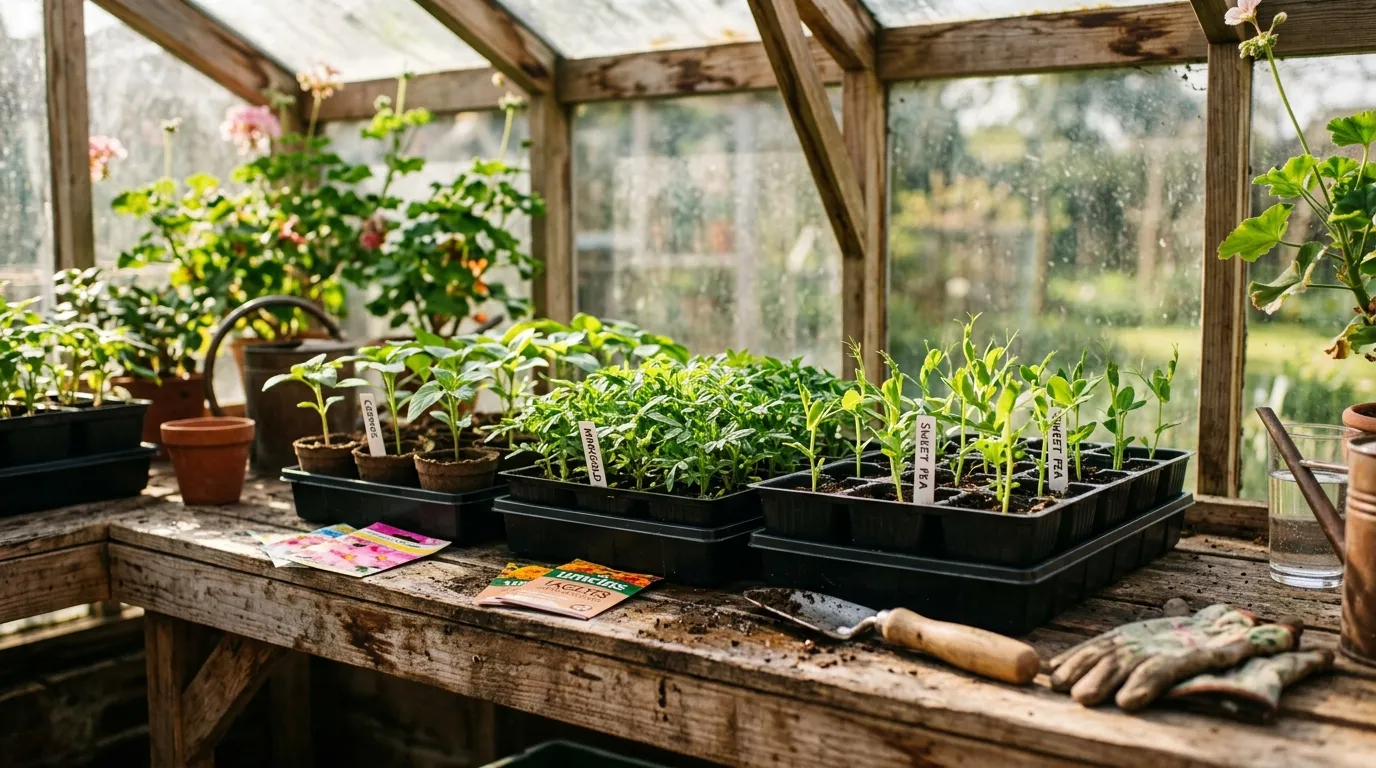
Romanesco seedlings in modular trays, ready for potting on after developing their first true leaves.
Sow romanesco indoors from mid-March to mid-April for the most reliable results. Starting under cover protects seedlings from the temperature fluctuations that cause premature buttoning. If you have not sown brassicas indoors before, our guide to how to harden off seedlings covers the transition to outdoor conditions.
Sowing step by step
- Fill modular trays with moist, peat-free seed compost. Use cells at least 4cm wide. Firm the compost gently.
- Sow one seed per cell at a depth of 1-2cm. Romanesco seeds are large enough to handle individually.
- Place trays in a bright spot at 15-20C. A windowsill, greenhouse bench, or unheated propagator works well. Seeds germinate in 7-12 days.
- Keep the compost moist but never waterlogged. Overwatering causes damping off in brassica seedlings.
- Pot on into 9cm pots when seedlings have 3-4 true leaves and roots fill the module cell. Use multipurpose compost with added perlite for drainage.
Avoiding premature buttoning
Buttoning is the single biggest problem with romanesco in the UK. The plant forms a tiny, button-sized head instead of growing on to full size. It happens when seedlings experience cold stress below 10C for several consecutive days during the early growth phase.
Prevent it by keeping seedlings above 10C at all times before transplanting. Do not rush plants outdoors. Harden off gradually over 7-10 days, starting with daytime exposure only. If a late frost is forecast, bring trays back inside overnight.
How to transplant and grow romanesco
Transplant romanesco into its final position from late May to mid-June, once the risk of frost has passed and seedlings have 5-6 true leaves. In northern England and Scotland, wait until early June. The soil temperature should be at least 12C.
Site and soil preparation
Romanesco needs firm, fertile, moisture-retentive soil with a pH of 6.5-7.5. Like all brassicas, it struggles in loose, sandy soil because the roots cannot anchor the heavy plant. If your soil is light, firm it well by treading before planting.
Dig in plenty of well-rotted manure or garden compost in the autumn before planting. Romanesco is a hungry crop that needs high nitrogen levels during leaf growth and a steady supply of moisture throughout the season. Lime acidic soils to raise the pH above 6.5, which also helps prevent club root.
Planting and spacing
- Space plants 60cm apart in rows 60cm apart. This gives each plant enough room for its large leaf canopy and allows air circulation to reduce fungal problems.
- Plant firmly. Push each transplant into the soil so the lowest true leaves sit just above the surface. Firm the soil around the stem with your knuckles. A wobbly brassica produces a poor head.
- Water in thoroughly after planting. Apply 2-3 litres per plant to settle the roots.
- Mulch with well-rotted compost to a depth of 5cm to retain moisture and suppress weeds.
Feeding schedule
- Weeks 1-4 after transplanting: Water in a high-nitrogen liquid feed (such as a seaweed-based fertiliser) every two weeks. This drives the leafy growth that supports a large head.
- From week 5 until head formation: Continue fortnightly feeds. Switch to a balanced feed once you see the first tiny head forming in the centre of the plant.
- During head development: Keep soil consistently moist. Irregular watering during this stage causes uneven spiral development and brown edges on the head.
If you grow on an allotment and need to plan your brassica rotation, our crop rotation planner explains how to work brassicas into a four-year cycle.
How to protect romanesco from pests
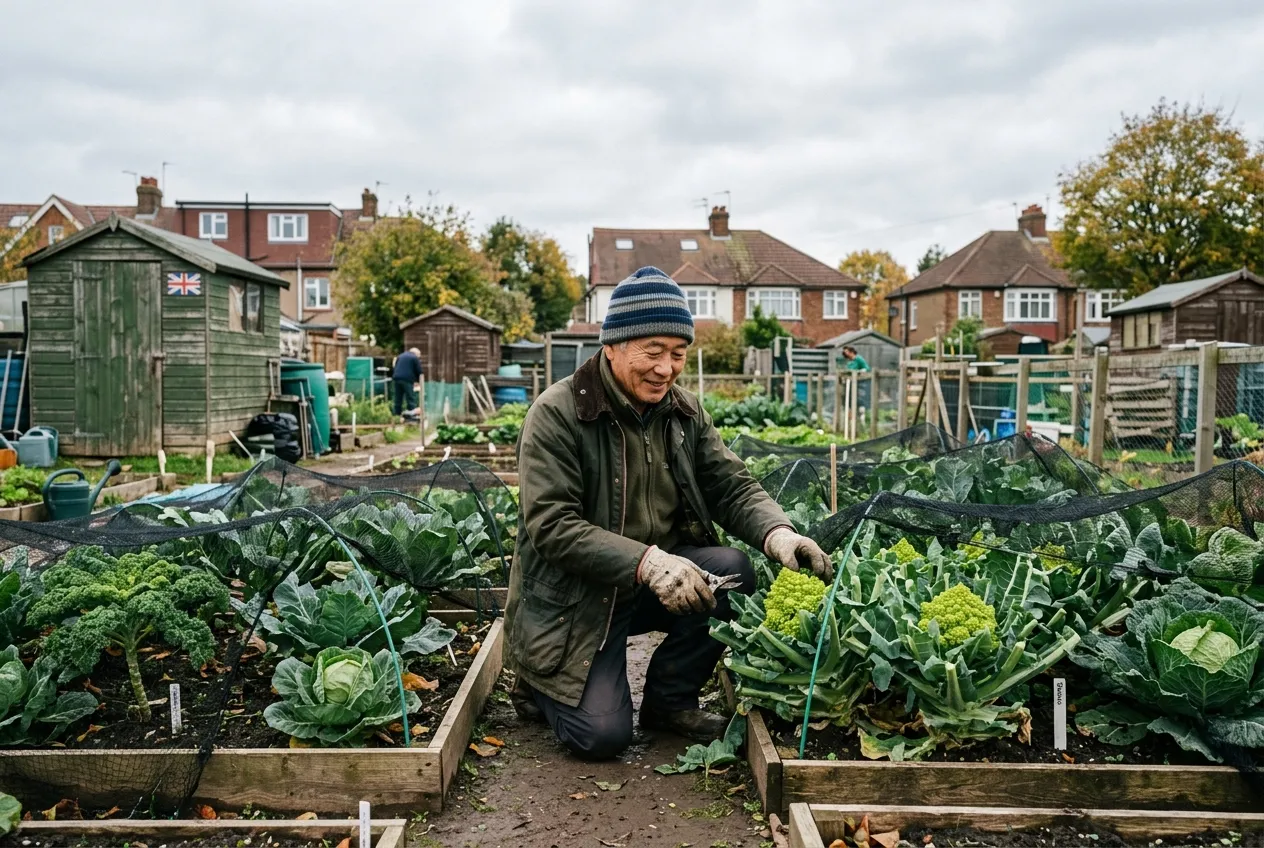
Netting brassicas at the allotment prevents cabbage white butterflies from laying eggs on the leaves.
Brassica pests are the main challenge with romanesco. The large, soft leaves are a magnet for caterpillars, pigeons, and slugs. A single unprotected plant can be stripped bare in a week during peak butterfly season. Our guide to cabbage white butterfly control covers identification and treatment in detail.
Cabbage white butterfly caterpillars
The large white (Pieris brassicae) and small white (Pieris rapae) butterflies lay eggs on brassica leaves from April to September. The caterpillars hatch within days and feed voraciously. Large white caterpillars are yellow-green with black spots and feed in groups. Small white caterpillars are pale green and feed alone, often burrowing into the head itself.
Best defence: Cover plants with Enviromesh or fine insect-proof netting (7mm holes or smaller) from the day you transplant. Drape the mesh over hoops so it does not rest on the leaves. Check weekly for any caterpillars that hatched from eggs laid before covering.
Pigeons
Wood pigeons cause devastating damage to brassicas, especially in winter and early spring when other food is scarce. They strip leaves down to bare stalks. Netting is the only reliable solution. The same mesh that stops butterflies also keeps pigeons off. For more pigeon-specific deterrents, see our guide to getting rid of pigeons in the garden.
Slugs and snails
Young transplants are most vulnerable. Slugs can destroy a newly planted romanesco overnight. Apply biological nematode control (Nemaslug) around transplants at planting time. Copper tape around raised bed edges provides an additional barrier. Avoid slug pellets containing metaldehyde near edible crops.
Cabbage root fly
Adult flies lay eggs at the base of brassica stems. The larvae burrow into the roots, causing wilting and death. Brassica collars (15cm discs of card or carpet underlay) placed around the stem at planting time prevent egg-laying. This is a simple, free prevention that works well alongside netting.
Club root
This soil-borne disease causes swollen, distorted roots and stunted growth. It persists in soil for 20 years. Prevent it by liming acidic soil to pH 7.0+, practising strict crop rotation, and never bringing in transplants from unknown sources. Infected plants must be burned, never composted.
How to harvest romanesco
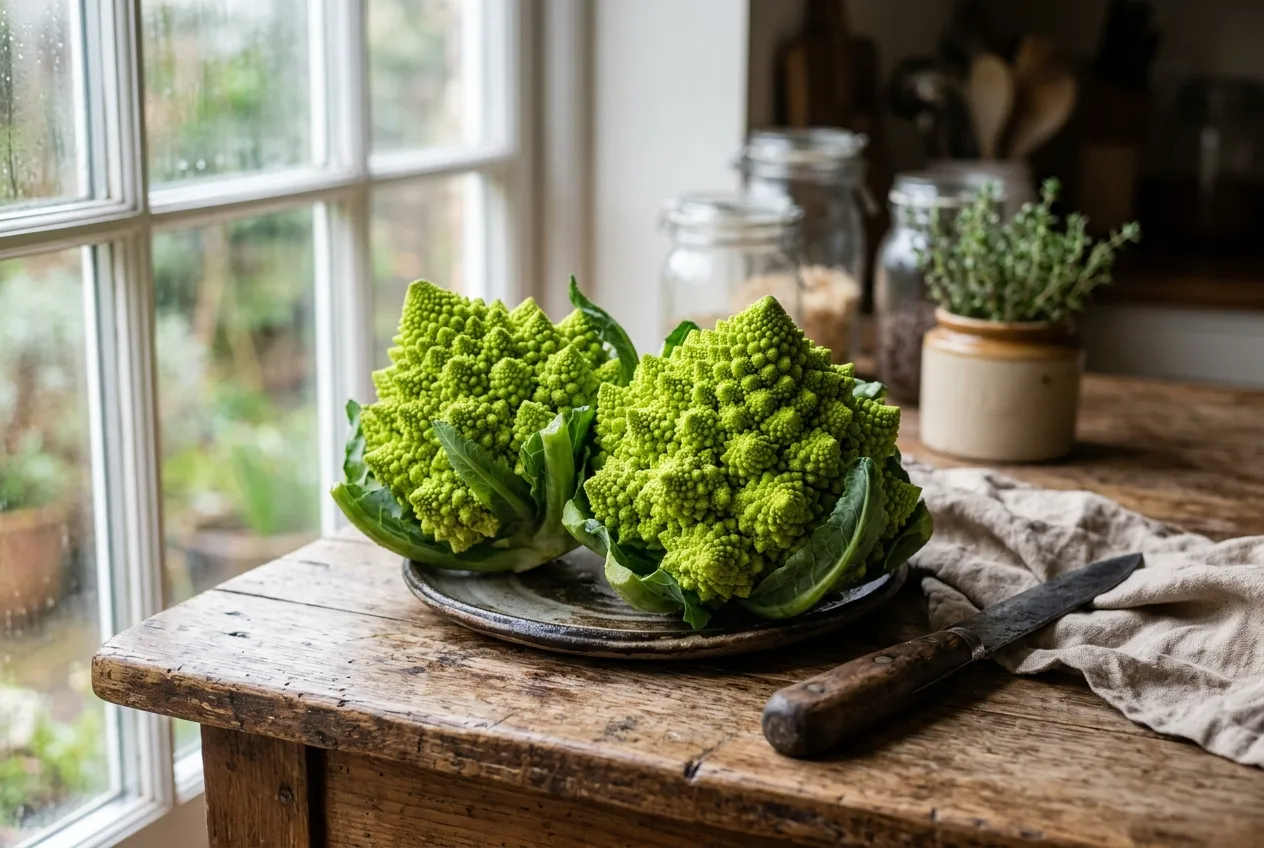
Two freshly cut romanesco heads showing the vivid green fractal spirals that make this vegetable so distinctive.
Romanesco heads are ready to harvest 16-20 weeks after sowing, typically from late August through October depending on your sowing date and location. Getting the harvest timing right is important because the quality drops fast once the spirals begin to loosen.
Signs of readiness
- Tight, bright green spirals that are firm to the touch. This is the perfect stage.
- Head diameter of 12-15cm on most varieties. Veronica F1 can reach 18cm in good conditions.
- No gaps between the florets. Once you can see daylight between individual spirals, the head is starting to pass its peak.
- The wrapper leaves are still holding the head. Leaves pulling away from the head indicate it is getting old.
How to cut
Use a sharp knife to cut the stem 10-15cm below the head, keeping several wrapper leaves attached. These leaves protect the head during storage. Cut in the morning when the head is cool and turgid. Unlike sprouting broccoli, romanesco does not produce side shoots after the main head is removed. Once you have cut the head, the plant is finished.
Storage
Romanesco stores better than standard cauliflower. Keep it in the fridge with the wrapper leaves on for up to 10 days. For longer storage, break into florets and blanch for 3 minutes before freezing. Frozen romanesco works well in soups, gratins, and stir-fries. If you enjoy preserving your harvest, our guide to freezing garden produce covers blanching times for all common vegetables.
Romanesco month-by-month growing calendar
This calendar covers the full UK growing season. Adjust by 2-3 weeks later for northern England and Scotland.
| Month | Task |
|---|---|
| March | Sow seeds indoors in modular trays at 15-20C. Keep above 10C at all times |
| April | Pot on seedlings into 9cm pots. Continue growing at 15-20C. Begin hardening off late in the month |
| May | Transplant outdoors from late May. Space 60cm apart. Firm soil well. Cover with netting immediately |
| June | Water regularly. Apply high-nitrogen liquid feed every 2 weeks. Check for caterpillars under netting |
| July | Continue feeding. Keep soil moist. Tiny heads begin forming in the centre of the plant |
| August | Heads developing. Switch to balanced feed. Maintain consistent watering. Early varieties ready late August |
| September | Main harvest period. Cut when spirals are tight and bright green. Store in fridge with wrapper leaves |
| October | Late varieties still harvesting. Clear spent plants. Add to compost heap. Plan next year’s rotation |
Five common mistakes when growing romanesco
1. Sowing too early
Starting seeds in February sounds sensible, but romanesco seedlings exposed to temperatures below 10C during early growth will button. Mid-March is early enough for most UK gardens. Patience at the sowing stage prevents disappointment at harvest.
2. Planting in loose soil
Romanesco plants are top-heavy. Loose, fluffy soil lets the wind rock them, which damages the roots and leads to poor head development. Firm the soil before planting by treading it. After planting, push the soil around each stem firmly with your knuckles.
3. Forgetting to net
A single day without netting during butterfly season can result in hundreds of eggs on your plants. The caterpillars hatch within a week and feed fast. Net on planting day, not when you first see butterflies. By then, eggs are already laid.
4. Irregular watering
Romanesco is more sensitive to drought stress than standard cauliflower. Periods of dry soil followed by heavy watering cause brown edges on the spirals and uneven head development. Water consistently, aiming for 2.5cm per week from rainfall or irrigation.
5. Harvesting too late
The fractal spirals loosen and separate as the head matures past its peak. Once gaps appear between individual florets, the texture becomes grainy and the flavour turns bitter. Cut the head while the spirals are still tight and firm, even if it seems slightly smaller than expected. A 400g head in perfect condition tastes far better than a 700g head that has started to open.
For more vegetables to grow alongside your romanesco, see our guide to the best vegetables to grow at home or explore companion planting ideas to make the most of your plot.
Frequently asked questions
When should I sow romanesco seeds in the UK?
Sow indoors from mid-March to mid-April. Romanesco needs 16-20 weeks from sowing to harvest and is sensitive to temperature swings during early growth. Starting indoors at 15-20C gives seedlings a stable environment before transplanting into warmer spring soil.
Can I sow romanesco directly outdoors?
Direct sowing works but is less reliable in the UK. Cold snaps in April and May can trigger premature buttoning, where the plant forms a tiny, useless head instead of growing on. Indoor sowing followed by hardening off gives far better results.
Why did my romanesco form a tiny head instead of a full one?
Premature buttoning is caused by cold stress during early growth. Temperatures below 10C for several days trigger the plant to form a head before it has enough leaves to support a full-sized one. Avoid transplanting too early and protect young plants with fleece if cold nights are forecast.
Is romanesco the same as cauliflower?
Romanesco is a distinct variety of Brassica oleracea, closely related to both cauliflower and broccoli. It has a milder, nuttier flavour than cauliflower and a firmer texture. The fractal spiral pattern on the head is unique to romanesco and is a natural example of a Fibonacci sequence.
How many romanesco heads does each plant produce?
Each plant produces one main head. Unlike sprouting broccoli, romanesco does not produce side shoots after the main head is cut. Grow at least six plants for a worthwhile harvest and stagger sowing by two weeks for a longer picking window.
What pests attack romanesco in the UK?
Cabbage white butterfly caterpillars are the biggest threat. They strip leaves down to the ribs within days. Pigeons, slugs, and cabbage root fly also cause damage. Fine mesh netting with 7mm holes or smaller is the most effective single defence against all flying brassica pests.
Can I grow romanesco in containers?
Yes, but use pots at least 40cm in diameter filled with rich compost. Romanesco has a deep taproot and large leaf canopy, so it needs a bigger container than most vegetables. Water daily in warm weather and feed every two weeks with liquid fertiliser. Expect slightly smaller heads than from open-ground plants.
Related growing guides
Lawrie has been gardening in the West Midlands for over 30 years. He grows his own veg using no-dig methods, keeps a wildlife-friendly garden, and writes practical advice based on real UK growing conditions.