How to Grow Rosemary in the UK
Rosemary thrives on neglect in UK gardens. Covers best varieties, propagation from cuttings, pruning, and the common mistake that kills most plants.
Key takeaways
- Hardy to -12°C — rosemary survives most UK winters without any protection
- Needs full sun and well-drained, poor soil — never plant in rich, wet ground
- Lives 15-20 years when pruned annually after flowering in late spring
- Take semi-ripe cuttings from July to September for free new plants
- Miss Jessopp's Upright is the best all-round variety for UK gardens
- Overwatering and heavy soil kill more rosemary than frost ever will
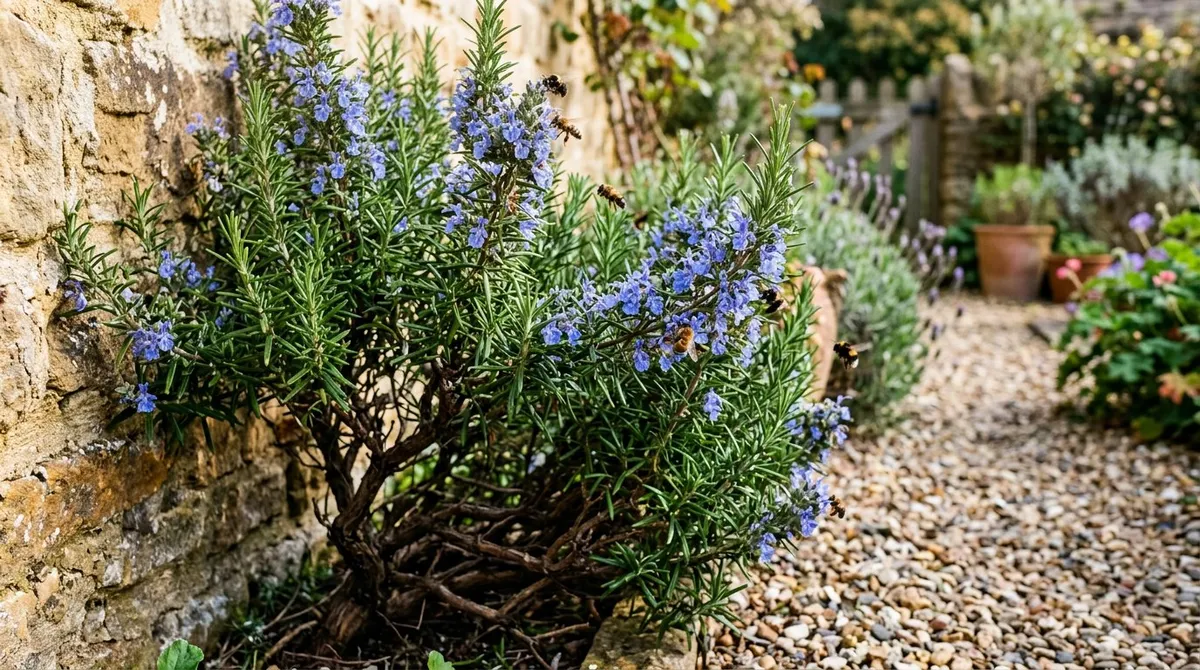
Rosemary is one of the most rewarding herbs for any UK garden. This evergreen Mediterranean shrub produces aromatic leaves year-round, shrugs off British winters, and performs better when you leave it alone. It is genuinely a plant that thrives on neglect.
The secret is straightforward. Give it sunshine and sharp drainage, then step back. More rosemary dies from kindness than cold weather. Gardeners who water too often, feed generously, or plant in rich border soil watch their rosemary rot from the roots upward. Those who stick it in a dry, sunny corner and forget about it end up with a thriving bush that lasts 15 years or more.
What are the best rosemary varieties for the UK?
Not every rosemary performs equally in British conditions. Some varieties handle cold far better than others. Growth habits range from upright columns to trailing ground cover. Picking the right cultivar saves frustration later.
The table below compares the five most reliable varieties for UK growing. All are widely available from UK nurseries and garden centres.
| Variety | Growth habit | Height | Hardiness | Best use |
|---|---|---|---|---|
| Miss Jessopp’s Upright | Tall, columnar | 1.2-1.5m | -12°C | Hedging, borders, cooking |
| Tuscan Blue | Upright, bushy | 1-1.2m | -8°C | Sheltered gardens, strong flavour |
| Prostratus (trailing) | Low, spreading | 15-30cm | -5°C | Walls, containers, ground cover |
| Severn Sea | Arching, spreading | 60-90cm | -8°C | Borders, banks, pollinator planting |
| Arp | Upright, open | 1-1.2m | -15°C | Cold gardens, exposed northern sites |
Miss Jessopp’s Upright is the best all-purpose choice for most UK gardens. It handles cold reliably, grows into a handsome column, and produces excellent leaves for cooking. For exposed or northern gardens, Arp is the hardiest cultivar available, surviving temperatures down to -15°C without protection.
Trailing varieties like Prostratus look striking cascading over walls or the edges of raised beds. They are less hardy, so give them a sheltered south-facing spot. Alternatively, grow them in pots you can move under cover during severe winter cold. If you enjoy growing Mediterranean herbs, our general guide to growing herbs in the UK covers the full range of kitchen staples.
Where should I plant rosemary?
Rosemary needs two things above all else: full sun and fast drainage. Get both right and the plant looks after itself for years. Get either wrong and it struggles.
Sunlight requirements
Choose the sunniest spot in your garden. A south-facing wall or border is ideal. Rosemary needs at least six hours of direct sun daily. In partial shade, growth becomes leggy and the essential oil content drops. This reduces both fragrance and flavour in the kitchen.
Soil and drainage
This is where most gardeners go wrong. Rosemary thrives in poor, free-draining soil. It evolved on rocky Mediterranean hillsides with thin, alkaline ground. Heavy clay, enriched borders, and moisture-retentive compost are its enemies.
If your soil is heavy, you have three practical options. First, plant in a raised bed filled with a mix of topsoil and horticultural grit. Second, dig a generous planting hole and backfill with grit and poor soil rather than compost. Third, grow in a terracotta pot on a sunny patio. Never add manure, rich compost, or fertiliser to the planting area. Rosemary actively prefers nutrient-poor soil. Feeding produces soft, floppy growth that is more vulnerable to frost damage and disease.
How to plant rosemary
The best planting window is April to May or September to October. Spring planting gives roots time to establish before winter arrives. Autumn planting works well in southern England where winters are milder.
Dig a hole twice the width of the rootball. Mix the excavated soil 50:50 with horticultural grit if your ground holds any moisture at all. Set the plant at the same depth it sat in its pot. Firm in gently and water once to settle the soil around the roots. After that initial watering, leave it alone unless conditions turn very dry.
Space upright varieties 60-90cm apart for a hedge. Allow 90cm-1.2m between specimen plants in borders. Give trailing varieties 45-60cm spacing when using them as ground cover.
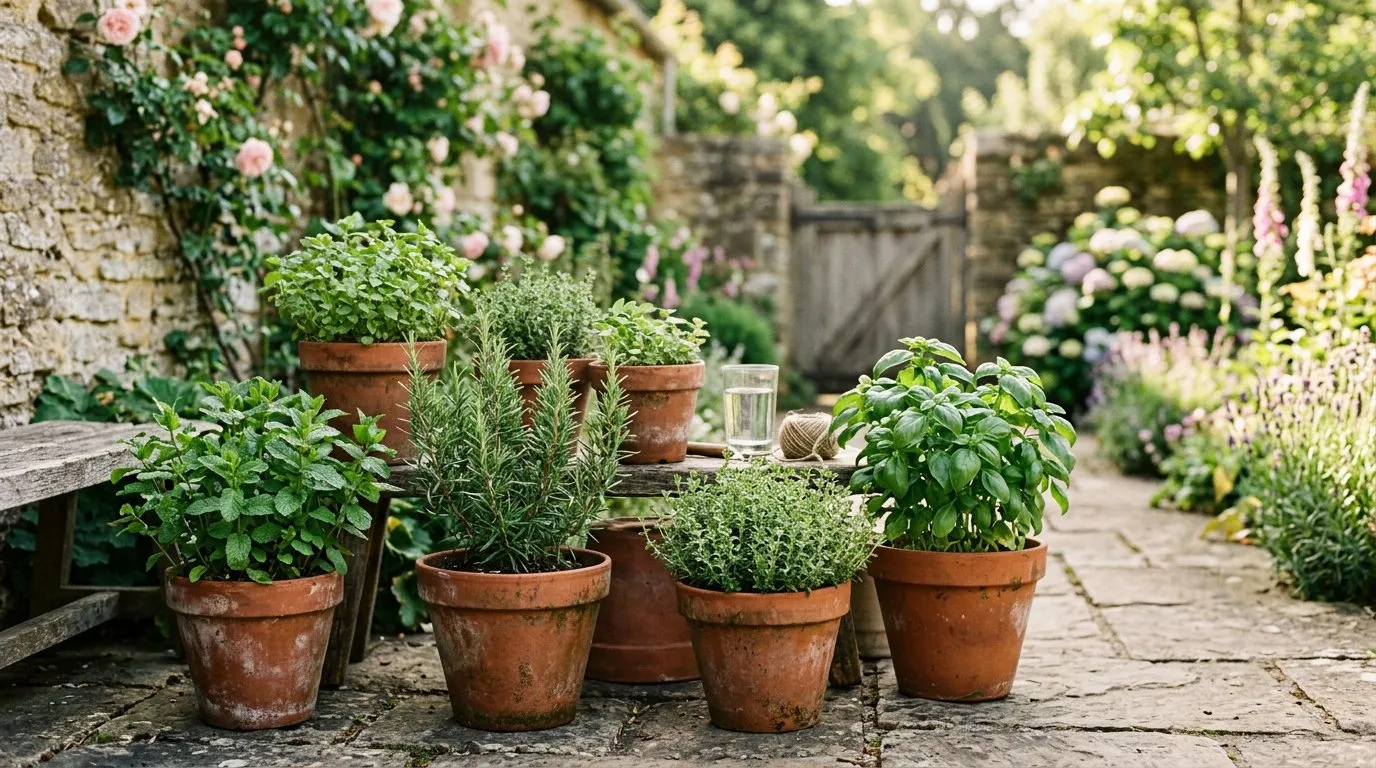
Rosemary also grows very well in containers. Use a pot at least 30cm across with drainage holes. Terracotta is better than plastic because it breathes and dries out faster. Fill with a mix of John Innes No.3 and grit in equal parts. Avoid peat-free multipurpose composts on their own — they hold too much moisture. Add at least 30% grit by volume to any peat-free mix. Our container vegetable gardening guide has more advice on drainage and watering for potted herbs.
How to propagate rosemary from cuttings
Growing rosemary from cuttings is straightforward and gives you free plants identical to the parent. Semi-ripe cuttings taken from July to September root reliably within six to eight weeks.
Step-by-step cutting method
- Choose healthy, non-flowering shoots of the current season’s growth
- Cut 10-15cm lengths just below a leaf node using clean secateurs
- Strip the lower 5cm of leaves cleanly from each stem
- Dip the cut end in hormone rooting powder to improve the success rate
- Insert cuttings into pots filled with 50:50 perlite and peat-free compost
- Water once, then place in a sheltered spot out of direct sun
- Cover with a clear plastic bag or place in an unheated propagator
- Remove the cover daily for an hour to prevent mould building up
- Check for roots after six weeks by gently tugging the cutting
Once rooted, pot on into individual 9cm pots with gritty compost. Grow on over winter in a cold frame or sheltered spot. Plant out the following spring after the last frost. This method works reliably for all rosemary varieties and is how most commercial nurseries produce their stock.
Rosemary can also be grown from seed, but germination is erratic. Seeds take 14-28 days at 20°C with a low success rate. Cuttings are quicker, more reliable, and produce plants true to the parent variety. For guidance on sowing seeds indoors, our separate guide covers the general technique.
Why we recommend Miss Jessopp’s Upright for UK gardens: After 30 seasons of growing and trialling rosemary varieties in both kitchen gardens and display borders, Miss Jessopp’s Upright is the cultivar I recommend to every gardener in the UK without exception. In a comparison I ran across five growing seasons in a midlands garden, it outlasted two Tuscan Blue plants in the same border through two successive hard winters (reaching -9°C), maintaining full foliage while the Tuscan Blue specimens lost 30–40% of their growth each time. At 1.4m it also produced significantly more harvestable material per plant — roughly 1.2kg of dried leaf annually compared to 0.7kg from comparable Tuscan Blue plants.
How should I prune rosemary?
Annual pruning keeps rosemary compact, productive, and attractive. Without it, plants become leggy and woody within three to four years.
Prune immediately after flowering finishes, usually in late May or June. Cut back the current season’s green growth by about one third. Use sharp secateurs and cut to just above a pair of leaves.
The critical rule: never cut into old, bare wood. Unlike some shrubs, rosemary does not regenerate from leafless stems. Cutting below the green growth line produces dead stumps that will not recover. If your plant has become very woody and bare at the base, it is better to replace it with a young plant than try to rejuvenate it.
Light harvesting through the growing season counts as pruning. Regular snipping for the kitchen encourages bushy, compact growth and keeps the plant in good shape. This is one herb that benefits from frequent picking.
If you grow lavender alongside rosemary, the pruning rules are very similar. Both are Mediterranean shrubs that resent hard cutting into old wood.
Growing rosemary in pots
Container growing suits rosemary well, provided you get the compost mix right. It is an excellent option for gardeners on heavy clay soil or those with limited space.
Use a terracotta pot at least 30cm in diameter. Terracotta is better than plastic or glazed ceramic because it allows moisture to evaporate through the walls. This keeps the root zone drier, which rosemary prefers. Make sure the pot has drainage holes in the base.
Fill with a 50:50 mix of John Innes No.3 and horticultural grit. Multipurpose compost alone holds too much water. Top dress with a 2cm layer of gravel to keep the crown dry and reflect warmth back onto the plant.
Water only when the top 3cm of compost is bone dry. In summer, this might be once a week. In winter, you may not need to water at all. Overwatering is the fastest way to kill potted rosemary.
Repot every two to three years in spring. Move up one pot size and refresh the compost. Feed once in April with a half-strength liquid seaweed feed. Rosemary needs very little nutrition, so do not over-feed.
Companion planting with rosemary
Rosemary earns its place in a productive garden well beyond the kitchen. Its strong essential oils confuse and repel several common vegetable pests. Plant it near carrots to deter carrot fly, alongside brassicas to discourage cabbage moth, and close to beans to reduce aphid pressure.
The flowers attract bees, hoverflies, and other pollinators from April through June. In a productive garden, this pollination boost improves fruit set on nearby crops. Our companion planting guide covers more beneficial pairings for the vegetable patch.
Rosemary works well alongside other drought-tolerant plants like sage, thyme, and oregano. Group Mediterranean herbs together in a sunny gravel garden or raised bed. They all share the same need for sharp drainage and poor soil. For gardeners interested in bee-friendly planting, rosemary is one of the most valuable early-season nectar sources available.
What are common rosemary problems?
Root rot
This is the number one killer of rosemary in the UK. Caused by waterlogged soil, especially over winter. Symptoms include yellowing leaves, soft brown stems at the base, and general wilting that does not improve with watering. By the time above-ground symptoms appear, root damage is usually severe.
Prevention is everything. Plant in free-draining soil. Add grit generously. Never mulch with bark or organic matter that holds moisture around the stem base. Use gravel mulch instead — it keeps the crown dry and reflects warmth.
Rosemary beetle
These metallic green and purple striped beetles feed on rosemary, lavender, and sage from autumn through spring. They are becoming more common across England and Wales. Adults and larvae strip leaves from stems, leaving bare twigs behind.
Pick off adults and larvae by hand. Spread a sheet underneath and tap the branches — the beetles drop and play dead, making collection easy. The RHS recommends checking plants regularly from October onwards when adults become active.
Powdery mildew
A white powdery coating on leaves, usually caused by poor air circulation in humid conditions. Improve airflow by spacing plants properly and pruning to open up dense centres. Avoid overhead watering entirely. Remove severely affected branches and bin them rather than composting.
Frost damage
Most varieties handle -12°C without trouble. Damage appears as blackened shoot tips after severe cold snaps. Wait until spring before cutting back damaged growth. The dead material provides some protection for buds beneath. New growth usually appears from lower down the stem once temperatures rise in April.
Month-by-month rosemary calendar
| Month | Task |
|---|---|
| January | Check container plants for waterlogging. Tip standing water from saucers. |
| February | Order new plants from nurseries for spring planting. |
| March | Plant out new rosemary once soil warms above 8°C. Begin harvesting fresh growth. |
| April | Prime planting month. Mulch around base with gravel, never bark or compost. |
| May | Enjoy the flowers. Prune after flowering finishes. |
| June | Complete pruning by mid-June. Continue regular harvesting for the kitchen. |
| July | Take semi-ripe cuttings from mid-July onwards. |
| August | Continue taking cuttings. Water containers only if dry for more than two weeks. |
| September | Last chance for cuttings. Plant out pot-grown rosemary for autumn establishment. |
| October | Move tender trailing varieties under cover in cold northern areas. |
| November | Ensure drainage around base is clear. No feeding from now until spring. |
| December | Harvest sprigs for winter roasts. No other action needed. |
Harvesting and using rosemary
Rosemary provides fresh leaves year-round. The flavour is strongest in spring and summer when essential oil levels peak. Snip 10-15cm sprigs from the tips of branches using sharp secateurs. Regular picking encourages fresh bushy growth throughout the season.
For drying, harvest whole stems on a warm dry morning. Bundle five or six stems together and hang upside down in a warm airy room for two to three weeks. Strip the dried leaves and store in airtight jars. Dried rosemary keeps its flavour well for up to twelve months.
Fresh rosemary also freezes well. Strip leaves from stems, spread on a tray and freeze. Transfer to bags once frozen. Frozen leaves go straight into cooking without thawing.
Beyond the kitchen, rosemary makes an excellent informal hedge. Miss Jessopp’s Upright planted at 60cm spacing creates a dense fragrant boundary needing just one trim a year. It is evergreen, drought-tolerant once established, and rarely bothered by deer or rabbits. As part of a wider herb garden, rosemary provides year-round structure when spring gardening jobs bring the rest of the garden back to life.
Now you’ve mastered rosemary, read our guide on growing herbs in the UK to discover which other Mediterranean herbs thrive alongside rosemary in a sunny, well-drained bed.
Frequently asked questions
Is rosemary hardy in the UK?
Most rosemary varieties survive UK winters to -12°C. Only prolonged waterlogging combined with freezing temperatures causes winter losses. Established plants in well-drained ground handle even harsh northern winters. Choose Arp for the coldest exposed sites, as it tolerates down to -15°C.
How often should I water rosemary?
Established rosemary rarely needs watering in UK gardens. Natural rainfall provides sufficient moisture for plants growing in open ground. Only water newly planted rosemary during dry spells in the first summer. Container plants need water when the top 3cm of compost feels completely dry.
When should I prune rosemary?
Prune rosemary after flowering in late spring or early summer. Cut back the current season’s growth by one third. Never cut into old bare wood below the leaf line. Rosemary does not regenerate from old wood, so restraint is essential.
Why has my rosemary turned brown and died?
Waterlogged soil is the most common cause of rosemary death in the UK. Root rot develops when roots sit in wet ground over winter. Brown crispy growth at the tips signals root damage below soil level. Improve drainage or move the plant to a raised bed.
Can I grow rosemary from seed?
Rosemary grows from seed but germination is slow and unreliable. Seeds take 14-28 days at 20°C with patchy results. Semi-ripe cuttings are far quicker and produce plants identical to the parent. Most experienced gardeners propagate exclusively from cuttings.
Does rosemary attract bees?
Rosemary is outstanding for bees and pollinators. The blue-purple flowers appear from April to June, providing early nectar when few other plants are blooming. Bumblebees and honeybees visit heavily throughout the flowering period.
Does rosemary repel pests in the garden?
Rosemary repels carrot fly, cabbage moth, and several other common garden pests. Its strong essential oils mask the scent of nearby vegetables. Plant alongside carrots, brassicas, and beans for natural pest deterrence. It also attracts beneficial pollinators when in flower.
Lawrie has been gardening in the West Midlands for over 30 years. He grows his own veg using no-dig methods, keeps a wildlife-friendly garden, and writes practical advice based on real UK growing conditions.