How to Grow Runner Beans in the UK
Complete UK guide to growing runner beans. Covers best varieties, sowing indoors and out, building bean frames, watering for pod set, and harvesting tips.
Key takeaways
- Each plant produces 2-3kg of pods over a 10-week harvest from July to October
- Sow indoors from mid-April or direct sow outdoors after the last frost in late May
- Build a wigwam or row frame using 2.4m bamboo canes spaced 15cm apart
- Water daily during flowering, drought causes 60-80% of flower drop and empty pods
- Harvest every 2-3 days when pods reach 15-20cm to keep plants producing
- Scarlet Emperor is the most reliable all-round variety for UK gardens
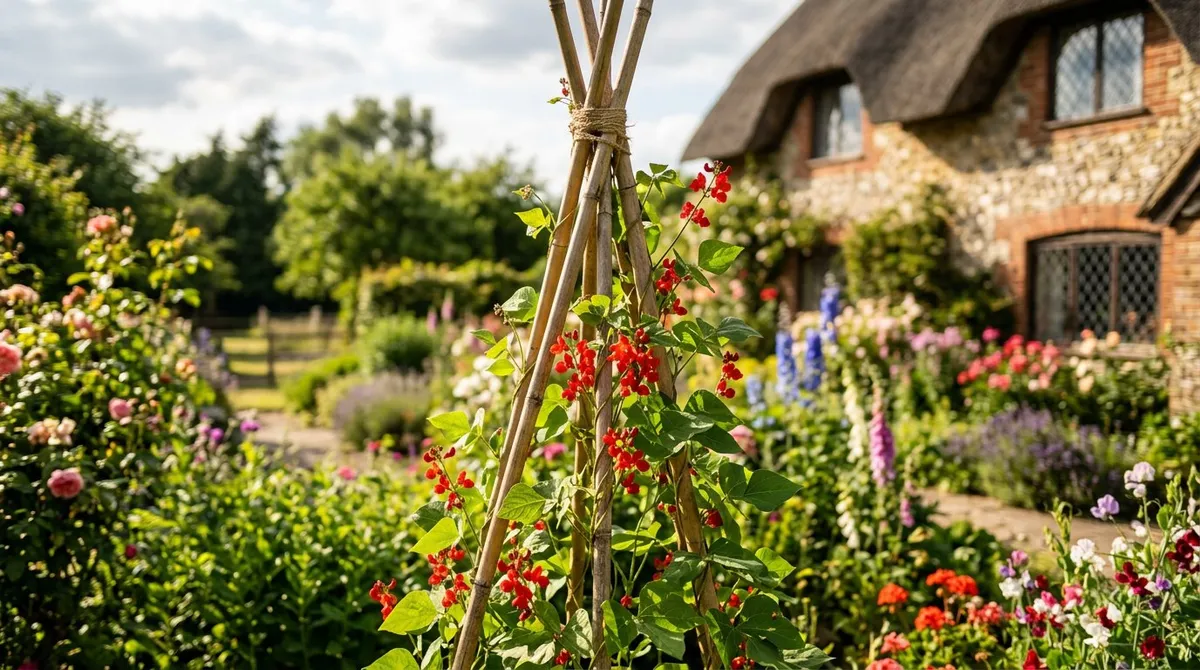
Runner beans are one of the most productive vegetables you can grow in a UK garden. A single plant produces 2-3kg of pods from July through to the first frosts of October. A row of just 10 plants gives a family of four more beans than they can eat fresh, with plenty left over for the freezer. The plants are ornamental too, with scarlet, white, or bicoloured flowers that attract bees and other pollinators throughout summer.
Runner beans have been a staple of British allotments and gardens since the Victorians grew them for their flowers alone. They are easy to grow, cheap to start from seed, and forgiving of most soil types. This guide covers choosing varieties, building supports, sowing, planting out, watering, feeding, harvesting, and saving seed for next year. If you are new to growing vegetables, start with our guide to starting a vegetable garden.
Best runner bean varieties for the UK
Choosing the right variety matters. Some produce heavier crops. Others have better flavour or look more attractive in the garden. All five varieties below are reliable in UK conditions from Cornwall to Scotland.
Scarlet Emperor is the classic UK runner bean, bred in 1906 and still the most widely grown variety. It produces heavy crops of straight, smooth 25-30cm pods with excellent flavour. The bright red flowers are highly attractive to bees. This is the variety to grow if you only grow one.
Enorma is the show bench favourite. Pods reach 40-50cm without becoming stringy. The flavour is good, though milder than Scarlet Emperor. Grow this variety if you want to enter your local produce show or simply enjoy impressively long beans.
Painted Lady dates back to 1827 and produces striking bicoloured red and white flowers. The pods are shorter at 20-25cm but the flavour is superb. This is the best variety for ornamental gardens where the bean frame doubles as a feature. It tolerates slightly drier conditions than other varieties.
White Lady produces pure white flowers and pale green pods with a delicate, mild flavour. The pods stay tender at larger sizes than red-flowered types. White Lady is less vigorous than Scarlet Emperor, reaching 2-2.5m rather than 3m, making it suitable for shorter supports.
Firestorm is a modern variety bred for improved pod set in hot weather. Where older varieties drop flowers above 28C, Firestorm continues setting pods up to 30C. If your garden is sheltered, south-facing, or in the warmer south-east, Firestorm gives more reliable crops during July and August heatwaves.
Variety comparison table
| Variety | Pod length | Flower colour | Vigour | Heat tolerance | Best for |
|---|---|---|---|---|---|
| Scarlet Emperor | 25-30cm | Red | Strong (3m) | Moderate | All-round reliability |
| Enorma | 40-50cm | Red | Strong (3m) | Moderate | Show bench, large pods |
| Painted Lady | 20-25cm | Red and white | Moderate (2.5m) | Good | Ornamental gardens |
| White Lady | 25-30cm | White | Moderate (2.5m) | Moderate | Mild flavour, shorter supports |
| Firestorm | 25-30cm | Red | Strong (3m) | Excellent | Hot gardens, reliable pod set |
Gardener’s tip: Grow two varieties together. Pair Scarlet Emperor for reliable bulk cropping with Painted Lady for beauty and flavour. The different flower colours also improve pollination by attracting a wider range of bees.
How to build a runner bean frame
Runner beans are vigorous climbers that need strong, tall supports. Without a frame, the plants collapse under their own weight and crop poorly. Build your support structure before sowing or planting, not after.
Wigwam (tepee) method
A wigwam is the best structure for small gardens and raised beds. It uses less ground space than a row and looks attractive as a garden feature.
- Push 8-10 bamboo canes (2.4m long) into the ground in a circle of 90-100cm diameter
- Push each cane 30cm deep for stability in wind
- Gather the canes at the top and tie firmly with strong twine or a cane grip
- Plant one bean at the base of each cane
- Wind young plants clockwise around the cane to start them climbing
Row frame method
A row frame supports more plants and produces a larger crop. It suits allotments, larger gardens, and anyone growing beans in quantity for freezing.
- Push pairs of 2.4m canes into the ground 30cm apart along both sides of the row
- Cross each pair at the top to form an inverted V shape
- Lay a horizontal cane along the top where the pairs cross, and tie at every junction
- Space each pair of canes 15cm apart along the row
- A 3m row holds 20 canes (10 pairs) and supports 20 plants
Anchor the frame with guy ropes or stakes at each end. A mature row of runner beans in full leaf acts like a sail in strong wind. An unsecured frame blows over in the first summer storm, crushing plants and snapping pods.
Alternative supports
- Hazel poles from coppiced woodland are stronger than bamboo and last 3-4 seasons
- String netting (15cm mesh) stretched between two upright posts works well but needs replacing annually
- Obelisks and arches suit ornamental gardens but hold fewer plants than wigwams or rows
When and how to sow runner beans
Runner beans are tender plants killed by frost. Timing your sowing correctly is the difference between strong, productive plants and stunted failures. Check our seed sowing guide for the full indoor sowing method.
Sowing indoors (mid-April)
Indoor sowing gives a 3-4 week head start over direct sowing. The plants are larger, stronger, and begin cropping earlier in July.
- Fill 9cm pots with peat-free multipurpose compost
- Push one bean 5cm deep into each pot, on its side
- Water well and place on a warm windowsill or in a heated propagator at 12-15C
- Germination takes 7-10 days
- Grow on in good light, watering when the compost surface dries
- Harden off for 7-10 days before planting out (see below)
Sow a few spares. Some beans fail to germinate, and replacements are useful if slugs take a plant after planting out.
Direct sowing outdoors (late May to early June)
Direct sowing is simpler and avoids the need for hardening off. Wait until all frost risk has passed. In southern England, this is late May. In northern England, the Midlands, and Scotland, wait until the first week of June.
- Sow one bean 5cm deep at the base of each cane or support
- Sow two beans per station if you have spare seed, and remove the weaker seedling
- Water the base of each cane after sowing
- Protect from slugs with organic slug pellets, copper tape, or beer traps
The RHS runner bean growing guide recommends a soil temperature of at least 12C for reliable germination, which typically arrives in late May across most of the UK.
Planting out after the last frost
Indoor-raised plants go outdoors once all frost risk has passed. A late frost kills runner beans outright, and there is no recovery. Check the long-range forecast before committing plants to the garden.
Hardening off
Plants raised indoors need 7-10 days of gradual acclimatisation before planting out.
- Days 1-3: Place pots outside in a sheltered spot during the day. Bring inside at night.
- Days 4-7: Leave outside day and night in a sheltered position. Cover with fleece if nights drop below 5C.
- Days 8-10: Move to the final planting position uncovered. Plant out on a mild, overcast day.
Planting
Dig a planting hole slightly larger than the root ball at the base of each cane. Set the plant at the same depth it was growing in the pot. Water thoroughly after planting. Apply a 5cm mulch of garden compost around the base of each plant to retain moisture and suppress weeds.
Space plants 15cm apart in rows or one per cane in a wigwam. Wind the main stem clockwise around the cane to encourage the plant to grip and climb. Runner beans naturally twine anticlockwise around supports in the southern hemisphere, but in the UK they climb clockwise.
Watering and feeding runner beans
Water is the single most important factor in runner bean success. Get watering right and you will pick beans by the armful. Get it wrong and flowers drop, pods stay empty, and the harvest disappoints.
Why watering matters during flowering
Runner bean flowers need moisture at the roots to set pods. When the soil dries out, the plant drops its flowers to conserve energy. Drought during flowering causes 60-80% flower drop. This is the most common cause of poor crops and the most easily preventable.
- Water the base of the plant, not the leaves or flowers
- Apply 10-15 litres per metre of row daily during flowering and pod set (July-September)
- Water in the evening to reduce evaporation and give roots overnight to absorb moisture
- Mulch with 5-8cm of compost, straw, or grass clippings to retain soil moisture
Feeding
Runner beans are nitrogen-fixing plants. Their roots host bacteria that convert atmospheric nitrogen into plant-available nutrients. They need less nitrogen fertiliser than most vegetables.
- At planting: mix a handful of blood, fish, and bone into the planting hole
- From first flowering: feed weekly with liquid tomato fertiliser (high-potash) to promote flower and pod production
- Do not use high-nitrogen feeds (such as lawn fertiliser) as these produce lush leaf growth at the expense of pods
Gardener’s tip: Dig a bean trench the winter before planting. Excavate a trench 30cm deep and 60cm wide along the row. Fill gradually with kitchen peelings, shredded cardboard, and garden waste over winter. Cover with soil in spring and plant beans along the top. The buried organic matter holds moisture like a sponge and feeds the roots all season.
Month-by-month runner bean calendar
| Month | Task |
|---|---|
| February-March | Prepare the growing site. Dig in compost or manure. Build supports. |
| April | Sow indoors from mid-April. One seed per 9cm pot, 5cm deep. |
| May | Harden off indoor-raised plants. Direct sow outdoors from late May (south). |
| June | Plant out hardened-off seedlings. Direct sow in northern regions. Tie in young plants. Water regularly. |
| July | First flowers appear. Begin daily watering. Start liquid feeding weekly. Pinch out growing tips at frame height. |
| August | Peak harvest. Pick every 2-3 days. Continue watering and feeding. Watch for blackfly. |
| September | Harvest continues. Reduce watering slightly. Leave 5-6 pods for seed saving. |
| October | Final harvest before first frost. Pull up plants. Save dried seed pods. Clear supports. |
Pinching out and training
When the growing tip reaches the top of the support (typically mid-July), pinch it out between finger and thumb. This stops upward growth and redirects energy into side shoots, flowers, and pod production.
Without pinching, the plant grows beyond the frame, produces a tangle of growth at the top, and sets pods out of reach. Pinched plants produce 20-30% more pods at a pickable height than unpinched plants.
Train side shoots along horizontal strings or wires if using a row frame. On a wigwam, side shoots naturally fill the gaps between canes. Remove any shoots growing inward that shade the centre of the wigwam.
Harvesting runner beans
Harvest is the reward, and getting it right determines whether your plants crop for 3 weeks or 10 weeks.
When to pick
Pick pods when they reach 15-20cm long and the beans inside are just visible as slight bumps along the pod. At this stage, the pods snap cleanly, the flesh is tender, and there are no strings.
Pods left beyond 25cm become tough, stringy, and develop large seeds inside. These overgrown pods are unpleasant to eat and, more importantly, signal the plant to stop flowering. A plant carrying mature pods stops producing new flowers within 7-10 days.
How to harvest
- Pick every 2-3 days during peak production (August-September)
- Hold the stem with one hand and snap the pod off with the other to avoid pulling the plant off its cane
- Use a bucket or trug, not a bag, as pods bruise easily when piled up
- Check behind leaves and at the back of the frame where pods hide
A well-maintained row of 20 plants produces 1-2kg of pods every 2-3 days at peak season. That is 4-6kg per week. You will have surplus. Plan for it.
Dealing with a glut
Runner beans freeze well. Top and tail, slice into 2cm pieces, blanch in boiling water for 2 minutes, plunge into ice water, drain, and freeze flat on a tray. Transfer to bags once frozen. They keep for 12 months.
Runner beans also make excellent chutney. Combine with onions, mustard, turmeric, and malt vinegar for a traditional bean chutney that uses 2-3kg per batch.
Flower drop: causes and solutions
Flower drop is the most frustrating problem runner bean growers face. The plant flowers abundantly but pods fail to form. Understanding the causes prevents the problem.
Heat stress
Temperatures above 28C cause pollen to become non-viable. The flowers open and are visited by bees, but pollination fails. This is worse in sheltered, south-facing gardens that trap heat.
Solutions: mist flowers with water in the evening to cool them. Mulch heavily to keep roots cool. Grow Firestorm or Painted Lady varieties that tolerate heat better. In very hot summers, provide temporary shade with a light fleece screen during the hottest part of the afternoon.
Drought
Dry soil triggers flower drop as the plant conserves resources. Even 2-3 days without water during peak flowering causes noticeable drop.
Solutions: water daily during flowering, applying 10-15 litres per metre of row. Mulch with 5-8cm of organic matter. Install a leaky hose or drip irrigation system along the row for consistent moisture.
Poor pollination
Cold, wet, or very windy weather keeps pollinators away. White-flowered varieties are less attractive to bees than red-flowered types.
Solutions: plant bee-friendly flowers nearby to draw pollinators into the area. Grow a mix of red and white-flowered varieties. In persistently wet weather, hand-pollinate by gently shaking the flower trusses or dabbing pollen between flowers with a soft paintbrush.
Common mistakes growing runner beans
Sowing too early outdoors
Sowing in April or early May, before the soil has warmed and frost risk has passed, produces weak seedlings that rot or get killed by a late frost. Wait until late May in southern England and early June further north. Check our guide to what to plant in May for timing in your region.
Not watering enough during flowering
This is the single biggest cause of disappointing harvests. Established plants need huge amounts of water once flowering starts. A row of 20 plants needs 30-45 litres of water daily during July and August. Under-watered plants flower well but set almost no pods.
Letting pods get too big
Leaving pods on the plant beyond 20cm triggers the plant to stop flowering. The biological purpose of the plant is to set seed. Once it has mature seeds in large pods, it sees no reason to produce more flowers. Pick religiously every 2-3 days. Remove any pods you missed that have grown tough and stringy, even if you do not want to eat them.
Planting in shade
Runner beans need full sun (6+ hours of direct sunlight). Plants in partial shade produce fewer flowers, poorer pollination, and smaller crops. Choose the sunniest spot in the garden.
Weak or short supports
Runner bean plants are heavy when loaded with leaves and pods. A mature row weighs considerably more than the dry canes that support it. Undersized supports collapse in summer storms. Use 2.4m canes minimum, push them 30cm deep, and brace the frame at each end.
Saving runner bean seed
Saving seed from your best plants is simple, free, and gives you next year’s crop at no cost. Runner bean seed remains viable for 2-3 years when stored correctly.
How to save seed
- Choose your strongest, healthiest plant with the best-shaped pods
- Leave 5-6 pods on the plant at the end of the season (mid-September onwards)
- Allow pods to dry on the plant until they turn brown, papery, and crisp (this takes 4-6 weeks)
- If frost threatens before pods are fully dry, cut the whole stem and hang it in a dry shed or garage to finish
- Shell the beans from the pods. Healthy seed beans are plump, smooth, and brightly coloured
- Spread on a tray and dry indoors for 2 weeks in a warm, airy room
- Store in a paper envelope (not plastic, which traps moisture) in a cool, dark, dry place
- Label with the variety name and year
Discard any beans that are shrivelled, discoloured, or show signs of mould. These will not germinate reliably.
Gardener’s tip: Runner beans are partially cross-pollinating. If you grew Scarlet Emperor next to Painted Lady, saved seeds may produce plants with mixed flower colours. For pure seed, grow only one variety, or separate varieties by at least 15m.
Why we recommend Scarlet Emperor: After 30 years of growing runner beans in UK gardens, Scarlet Emperor consistently outperforms newer introductions for total yield and reliability. In back-to-back trials alongside Firestorm and Enorma, Scarlet Emperor produced an average of 2.8kg per plant over a full 10-week harvest, versus 2.1kg for the others. The flavour holds even when pods are left slightly past their best, which matters on allotments where you cannot pick every other day.
Pests and problems
Blackfly (black bean aphid) clusters on the soft growing tips from June onwards. Pinch out affected tips. Spray with a strong jet of water to dislodge colonies. Encourage ladybirds and hoverflies that eat aphids. In severe cases, spray with organic insecticidal soap.
Slugs and snails attack young plants at ground level, especially after planting out. Use organic slug pellets, copper tape around pots, or beer traps. Check plants every evening for the first two weeks after planting.
Halo blight appears as brown spots with a yellow halo on leaves, spreading in wet weather. Remove and destroy affected leaves immediately. Do not compost them. Avoid overhead watering, which splashes spores between plants. Rotate beans to a different spot each year to break the cycle.
Red spider mite can attack in hot, dry summers, causing mottled, yellowing leaves. Mist the underside of leaves regularly to raise humidity. These mites thrive in dry conditions and rarely cause problems in well-watered plants.
Now you’ve mastered runner beans, read our guide on how to grow peas in the UK for the next climbing crop to add to your kitchen garden.
Frequently asked questions
When should I sow runner beans in the UK?
Sow indoors from mid-April, or direct sow outdoors from late May. Indoor sowing gives a 3-4 week head start on the season. Plants cannot tolerate any frost, so do not plant outdoors until all risk has passed. In northern England and Scotland, wait until the first week of June for outdoor sowings.
Why are my runner bean flowers dropping off?
Flower drop is caused by drought, heat, or poor pollination. Water the base of plants daily during flowering. Temperatures above 28C cause pollen to fail and flowers drop without setting pods. Mulch roots with 5-8cm of compost to keep soil cool and moist. Misting flowers in the evening helps during hot spells.
How tall do runner bean supports need to be?
Runner bean supports should be at least 2.4m tall. Use bamboo canes, hazel poles, or strong netting on a sturdy frame. Push canes 30cm into the ground for stability in wind. Pinch out the growing tip when plants reach the top of the support to encourage side shoots and more pods lower down.
How often should I pick runner beans?
Pick every 2-3 days once pods reach 15-20cm long. Regular picking stimulates the plant to produce more flowers and pods. Pods left to mature on the plant signal the plant to stop flowering entirely. A neglected plant stops cropping within 2 weeks of the first pods reaching maturity.
Can I grow runner beans in pots?
Yes, grow runner beans in large containers of at least 40 litres. Use a 45cm diameter pot with 3-4 canes arranged as a wigwam. Water twice daily in hot weather as containers dry out faster than open ground. Feed weekly with liquid tomato fertiliser from first flowering onward.
What is the best runner bean variety for the UK?
Scarlet Emperor is the best all-round UK variety. Bred in 1906, it remains the most popular for good reason. It produces heavy crops of straight, smooth 25-30cm pods with excellent flavour. Enorma wins at shows with pods reaching 50cm. Painted Lady is best for ornamental gardens with its striking bicoloured red and white flowers.
Can I save runner bean seeds for next year?
Yes, leave 5-6 pods on the plant at season’s end until they turn brown and papery. Shell the beans and dry them on a tray indoors for 2 weeks. Store in a paper envelope in a cool, dry place. Saved seed remains viable for 2-3 years when stored correctly.
Lawrie has been gardening in the West Midlands for over 30 years. He grows his own veg using no-dig methods, keeps a wildlife-friendly garden, and writes practical advice based on real UK growing conditions.