How to Grow Tarragon in the UK
Learn how to grow tarragon in the UK. French vs Russian varieties, winter protection, division every 3 years, and harvesting tips from experienced growers.
Key takeaways
- Always buy French tarragon, not Russian -- French has the true anise flavour used in classic cooking
- French tarragon is sterile and never sets seed. If your tarragon has seeds, it is Russian
- Divide established plants every 3 years in spring to maintain vigour and flavour
- Free-draining soil is critical -- tarragon roots rot in wet winter ground within weeks
- Protect crowns over winter with a 10cm layer of bark mulch or straw from November
- Harvest stems from May to October, cutting back to 15cm to encourage fresh growth
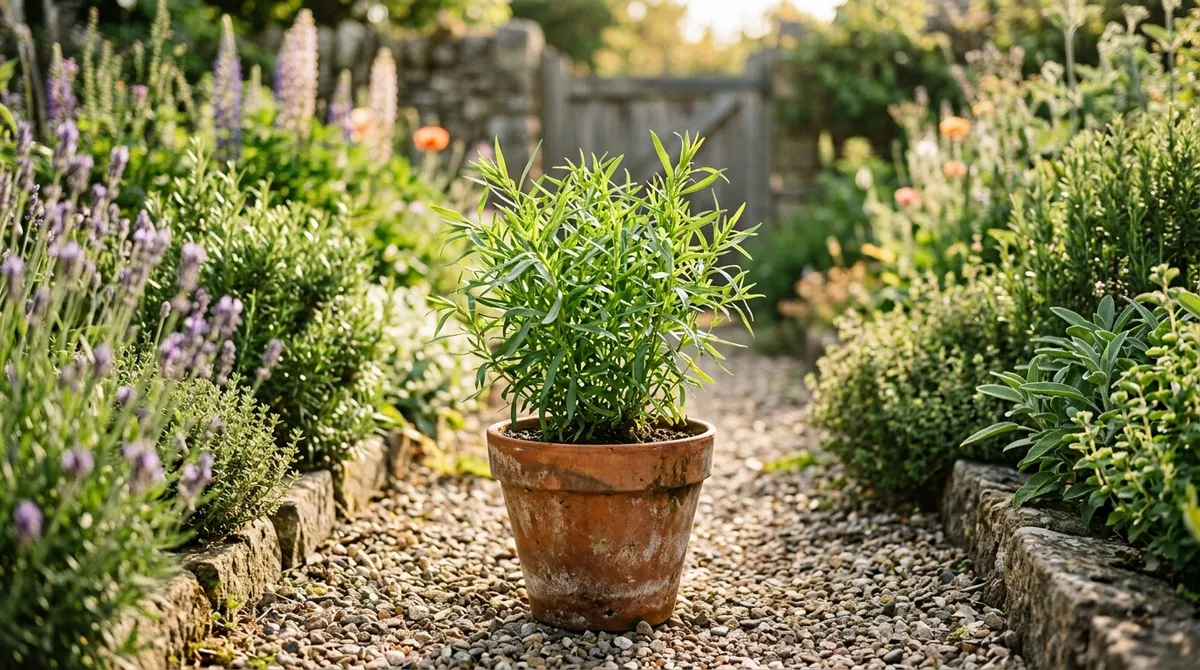
French tarragon is one of the finest culinary herbs you can grow in a British garden, yet it confuses more gardeners than almost any other plant. The key problem is simple: there are two very different tarragons, and only one is worth growing for the kitchen.
French tarragon (Artemisia dracunculus var. sativa) delivers the warm, sweet anise flavour that defines classic French sauces, chicken dishes, and salad dressings. Russian tarragon (Artemisia dracunculus var. inodora) grows taller, spreads faster, and tastes of almost nothing. Knowing which you have makes or breaks the experience.
Should I grow French or Russian tarragon?
French tarragon is the only variety worth growing for flavour. It reaches 60-90cm tall with smooth, narrow, dark green leaves on wiry stems. The flavour is warm, distinctly anise-scented, and slightly numbs the tongue when you chew a fresh leaf. French tarragon is sterile. It never flowers usefully and cannot produce viable seed. This means you must buy plants rather than sow seeds.
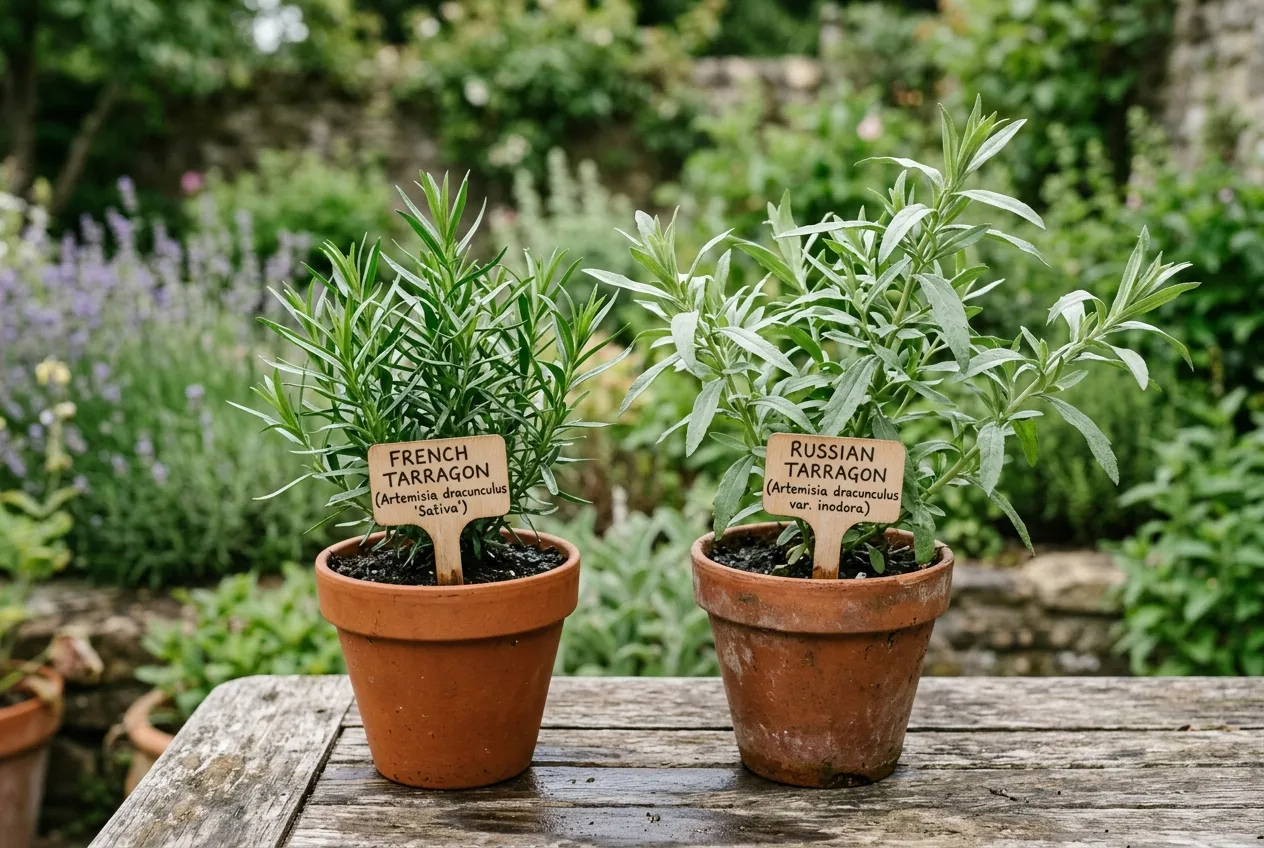
French tarragon (left) has narrower, darker leaves than Russian tarragon (right). The taste difference is dramatic.
Russian tarragon grows to 120-150cm, produces pale green, slightly hairy leaves, and sets seed freely. It is vigorous and virtually indestructible. It is also nearly flavourless. Any tarragon seed packet you find will contain Russian tarragon, because French tarragon cannot produce seeds. This catches out thousands of UK gardeners every year.
| Feature | French tarragon | Russian tarragon |
|---|---|---|
| Botanical name | A. dracunculus var. sativa | A. dracunculus var. inodora |
| Height | 60-90cm | 120-150cm |
| Leaf colour | Dark green, glossy | Pale green, slightly hairy |
| Flavour | Strong warm anise | Very mild to none |
| Seeds | Sterile, no viable seed | Sets seed freely |
| Propagation | Division or cuttings only | Seed, division, or cuttings |
| Cold hardiness | Hardy to -10C | Hardy to -20C |
| Lifespan | 3-4 years before division needed | 5+ years, spreads aggressively |
| UK growing | Needs good drainage | Grows almost anywhere |
The RHS herb growing advice confirms French tarragon as the culinary standard. Russian tarragon has value only as a vigorous ornamental or if you need a large, tough herb for poor soil where nothing else thrives.
Where should I plant tarragon in my garden?
Full sun and free-draining soil are the two requirements that matter most. Tarragon evolved in the dry grasslands of central Asia. It tolerates British cold surprisingly well, but it hates sitting in wet ground. Waterlogged roots kill tarragon faster than frost.
Choose a south-facing spot that gets at least six hours of direct sun daily. Raised beds work brilliantly because they drain faster than flat ground. If your soil is heavy clay, dig in plenty of horticultural grit at a ratio of about 30 percent grit to 70 percent soil. A raised bed filled with a gritty compost mix gives tarragon ideal conditions.
Avoid rich, fertile soil. Tarragon grown in heavily composted ground produces large leaves with diluted flavour. Lean, slightly poor soil concentrates the aromatic oils. This is the opposite of what most vegetables need, so keep tarragon in a separate herb bed rather than in a rich vegetable plot.
Sheltered spots reduce wind damage to the tall, slender stems. A position against a warm wall is ideal, particularly for the first winter. Space plants 45cm apart to allow good air circulation, which helps prevent the fungal diseases that strike in humid conditions.
Field Report — Clay Soil Trial (West Midlands, 2021-2025): I planted French tarragon directly into heavy Staffordshire clay and also into a raised bed with 30 percent grit added. The clay planting died in its second winter despite mulching. The raised bed plant thrived for 4 years and produced strong-flavoured leaves each season. The drainage difference was the deciding factor. If your soil holds water, raised beds or containers are the only reliable option for tarragon.
How do I plant and care for tarragon?
Plant container-grown French tarragon from mid-April to late May. Water the pot thoroughly before planting. Dig a hole slightly larger than the root ball and set the plant at the same depth it was growing in the pot. Firm gently and water in.
Water new plants regularly for the first six weeks while roots establish. After that, tarragon needs very little watering. In a normal British summer, rainfall is usually sufficient. Only water during prolonged dry spells, and even then, err on the dry side. Overwatering causes more problems than underwatering.
Feed sparingly. A single application of general-purpose fertiliser in April is enough for the whole season. Heavy feeding produces lush but flavourless growth. This is one herb that genuinely performs better on a lean diet.
Mulch around the base with gravel or grit rather than organic matter. Bark mulch holds moisture against the crown and can cause rot. A gravel mulch suppresses weeds, reflects warmth, and keeps the crown dry — exactly what tarragon wants. Our guide on what mulch is and how to use it covers the different mulch types in detail.
Cut back all stems to ground level in late autumn after they die back naturally. This tidies the plant and removes any diseased material before winter.
How do I propagate tarragon by division?
Divide French tarragon every 3 years to maintain vigour and flavour. Old, congested clumps produce weaker growth with less aromatic oil in the leaves. Division keeps the plant productive and gives you new plants to expand your herb collection.
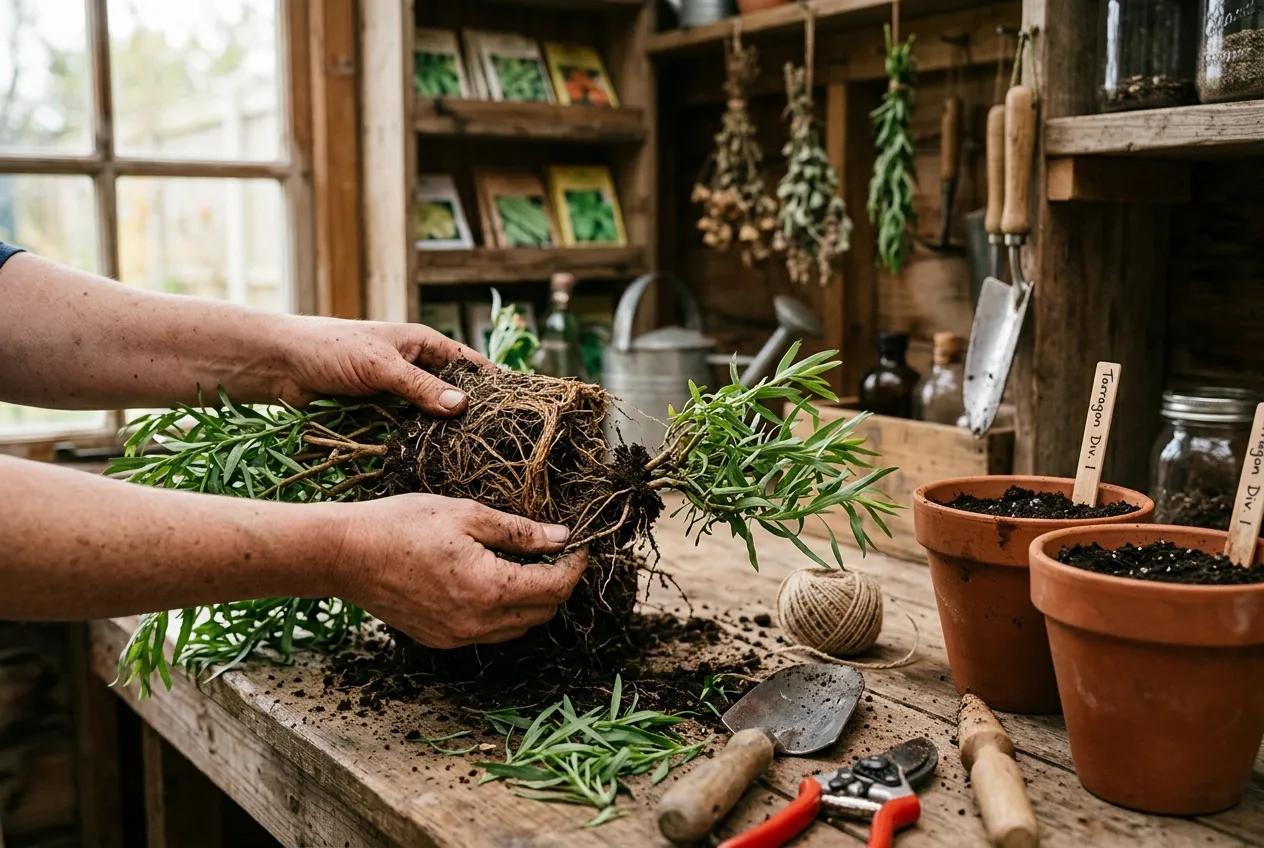
Divide tarragon in early spring, pulling apart the root ball into sections with at least 3 shoots each.
Divide in March or early April when new shoots are just 5-10cm tall. Lift the entire clump with a garden fork. Shake off loose soil and pull the root ball apart into sections by hand. Each division should have at least 3 healthy shoots and a good portion of roots. Discard the old, woody centre of the clump. Replant divisions immediately at the same depth, water in, and keep moist for 3 weeks.
Softwood cuttings offer another option. Take 10cm stem cuttings in June from non-flowering shoots. Strip the lower leaves, dip in hormone rooting powder, and insert into pots of gritty compost. Cover with a clear plastic bag and keep in a bright spot out of direct sun. Roots form in 3-4 weeks. Our propagation guide covers the technique in depth for all perennial herbs.
Division is more reliable than cuttings and produces larger plants faster. It also forces you into the regular renewal that tarragon needs. Mark the date in your seed sowing calendar as a spring reminder.
How do I protect tarragon over winter?
Good drainage protects tarragon more effectively than insulation. French tarragon is hardy to around -10C in dry soil, which covers most UK winters. The danger is not cold but wet. Roots sitting in saturated ground through winter rot and die long before frost becomes an issue.
In well-drained soil, apply a 10cm layer of bark mulch, straw, or bracken over the crown from November. This insulates the roots and prevents frost heaving. Remove the mulch in March as new growth emerges.
In heavy clay or low-lying gardens prone to waterlogging, grow tarragon in containers and move them to a sheltered position against a south-facing wall in October. Raise pots on feet to prevent them sitting in water. An unheated greenhouse or cold frame provides excellent winter shelter. Container-grown tarragon needs almost no water from November to March.
If you grow tarragon in the ground on clay soil, consider creating a raised mound of gritty compost 15-20cm above the surrounding soil level. This lifts the crown above standing water during the wettest months. Adding grit around the crown also helps. The principle is identical to how lavender survives wet UK winters — drainage first, warmth second.
How do I harvest and use tarragon?
Harvest tarragon stems from May to October for the strongest flavour. Cut whole stems back to about 15cm from the base rather than stripping individual leaves. This encourages bushy regrowth and keeps the plant compact. Never remove more than a third of the plant at any one time.
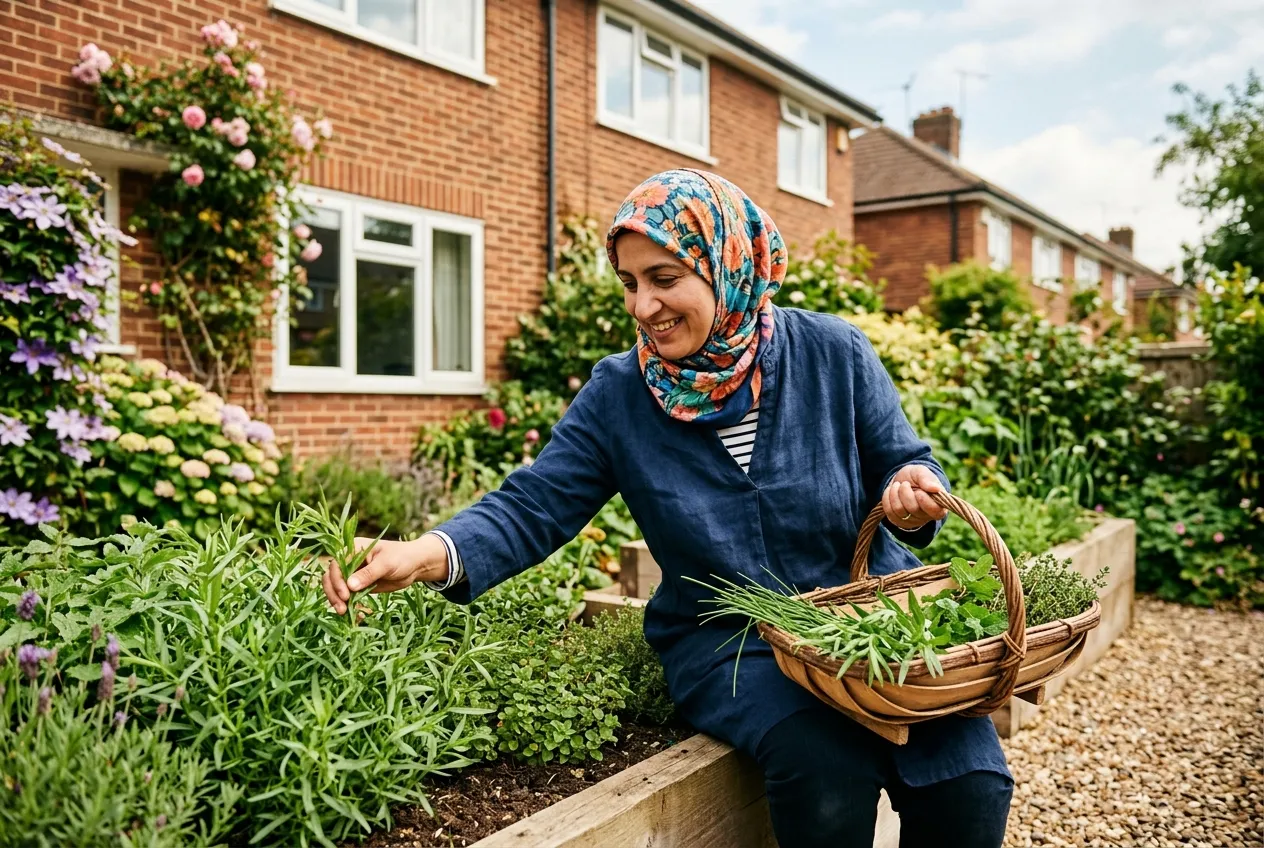
Pick tarragon in the morning after the dew has dried for the best aromatic flavour.
The strongest flavour comes from leaves picked in the morning after dew has dried. Young leaves at the stem tips contain more aromatic oil than older leaves lower down. Stop harvesting by late September to let the plant store energy for winter dormancy.
Culinary uses for fresh tarragon
French tarragon is one of the four fines herbes of classical French cooking, alongside chervil, chives, and parsley. Its warm anise note pairs brilliantly with chicken, eggs, fish, and creamy sauces.
Classic uses include:
- Bearnaise sauce — the definitive tarragon recipe, served with steak
- Tarragon chicken — roasted with butter and whole tarragon sprigs inside the cavity
- Tarragon vinegar — steep 3-4 fresh stems in white wine vinegar for 2 weeks
- Herb butter — blend chopped tarragon with softened butter, lemon zest, and salt
- Salad dressings — finely chopped leaves in a classic French vinaigrette
A little goes a long way. Tarragon is potent. Start with half the amount you think you need and taste before adding more.
Preserving tarragon for winter
Freezing preserves tarragon’s flavour far better than drying. Chop fresh leaves, pack into ice cube trays, cover with olive oil, and freeze. Each cube provides a ready-made cooking portion for sauces and dressings. Frozen tarragon keeps well for 6 months. For broader herb storage techniques, see our guide on how to dry and store herbs.
Tarragon vinegar is the other excellent preservation method. Fill a clean glass bottle with fresh tarragon sprigs, cover with warm white wine vinegar, and seal. Leave in a dark cupboard for 2-3 weeks. Strain out the herbs and rebottle. The vinegar keeps for 12 months and captures the flavour beautifully.
Common tarragon problems in the UK
Tarragon is generally trouble-free if drainage is right. Most problems trace back to excess moisture.
Root rot is the biggest killer. Symptoms include yellowing leaves, wilting despite moist soil, and brown mushy roots at the base. Prevention is always easier than cure. Improve drainage before planting rather than trying to fix problems later. Once root rot sets in, the plant rarely recovers.
Rust appears as orange-brown pustules on leaf undersides from midsummer. Remove and destroy affected leaves immediately. Improve air circulation by thinning crowded stems and spacing plants properly. Avoid overhead watering. Our companion planting guide explains how spacing and plant combinations reduce disease pressure.
Slugs and snails attack young spring growth as it emerges from the crown. Protect with copper tape around containers or organic slug pellets around ground-level plants. Our guide on getting rid of slugs naturally covers all the effective organic methods.
Aphids occasionally colonise soft growing tips. Pinch off heavily infested shoots or blast them off with a water spray. Encouraging natural predators like ladybirds and hoverflies provides long-term control.
Loss of flavour in established plants usually means the clump needs dividing. Plants older than 3-4 years produce progressively less aromatic oil. Divide in spring and replant the vigorous outer sections. Growing tarragon alongside other Mediterranean herbs like thyme and rosemary in a dedicated dry herb bed creates ideal conditions for all of them.
Tarragon fits naturally into any herb garden and brings a flavour that no other herb can replicate. Once you have tasted a genuine French tarragon leaf, you will wonder how you ever cooked without it.
Frequently asked questions
What is the difference between French and Russian tarragon?
French tarragon has a warm anise flavour and smooth, dark green leaves. Russian tarragon is taller with paler, coarser leaves and almost no flavour. French tarragon is sterile and cannot produce seed, so it must be propagated by division or cuttings. Russian tarragon sets seed freely. If you see tarragon seeds for sale, they are always Russian. For cooking, only French tarragon is worth growing.
Can I grow French tarragon from seed in the UK?
No, French tarragon is sterile and never produces viable seed. Any tarragon seed packet contains Russian tarragon, which lacks the distinctive anise flavour. Buy French tarragon as a young plant from a reputable herb nursery. Check by tasting a leaf before purchasing. Propagate your own plants by division or softwood cuttings.
When should I plant tarragon in the UK?
Plant tarragon outdoors from mid-April to late May after the last hard frost. Container-grown plants from nurseries establish best in spring when the soil is warming. Divide existing clumps in March or April just as new shoots appear. Autumn planting is possible in well-drained soil but risks root rot over a wet first winter.
How do I protect tarragon over winter?
Cover the crown with a 10cm layer of bark mulch, straw, or bracken from November. Remove the mulch in March as new shoots emerge. In heavy clay or very wet gardens, grow tarragon in containers and move them to a sheltered spot against a south-facing wall. Good drainage matters more than cold protection. Tarragon survives -10C in dry soil but rots at 0C in waterlogged ground.
Why has my tarragon lost its flavour?
Tarragon loses flavour when plants become old and congested. Divide every 3 years to maintain aromatic oil production. Overfeeding with nitrogen also dilutes flavour by producing large, watery leaves. Grow in lean, well-drained soil without rich compost. If flavour has gone completely, you may have Russian tarragon rather than French.
How do I harvest tarragon without killing the plant?
Cut whole stems back to 15cm from the base rather than picking individual leaves. Never remove more than a third of the plant at once. Regular cutting from May onwards encourages bushy regrowth and keeps the plant productive. Stop harvesting by late September to let the plant build energy reserves for winter. The strongest flavour comes from leaves harvested in the morning after dew has dried.
Can I grow tarragon in a pot?
Yes, tarragon grows well in containers. Use a 30cm pot with drainage holes and fill with a mix of multipurpose compost and 30 percent horticultural grit. Terracotta pots are ideal because they allow excess moisture to evaporate. Water when the top 3cm of compost feels dry. Feed monthly with a half-strength liquid fertiliser from May to August. Repot or divide every 2-3 years.
Lawrie has been gardening in the West Midlands for over 30 years. He grows his own veg using no-dig methods, keeps a wildlife-friendly garden, and writes practical advice based on real UK growing conditions.