How to Grow Thyme in the UK
Grow thyme in UK gardens with this practical guide covering 12 varieties, propagation from cuttings, pruning tips and a month-by-month care calendar.
Key takeaways
- Hardy to -15°C — thyme survives all UK winters without protection
- Plant in poor, well-drained soil — rich compost causes leggy, flavourless growth
- Take semi-ripe cuttings from June to August for free replacement plants
- Prune after flowering by one-third but never cut into old bare wood
- Replace plants every 3-4 years when they turn woody and unproductive
- Creeping thyme tolerates light foot traffic and makes a fragrant lawn alternative
Thyme is one of the most useful herbs you can grow in a UK garden. It asks almost nothing from you. Give it sunshine, sharp drainage and poor soil, and it will produce aromatic leaves for years with barely any attention.
This Mediterranean native has been grown in British gardens since Roman times. Over 350 species exist within the Thymus genus, ranging from upright bushes to ground-hugging mats. Whether you want fresh herbs for the kitchen, fragrant ground cover between paving slabs, or a pollinator-friendly rockery plant, there is a thyme variety for the job.
Which thyme varieties grow best in the UK?
Choosing the right variety depends on whether you want a culinary herb, ground cover, or ornamental plant. All varieties listed below are hardy to at least -10°C and perform well across every UK region.
Upright varieties for cooking
Common thyme (Thymus vulgaris) is the classic culinary variety. It grows 20-30cm tall with small grey-green leaves and pale lilac flowers in June. This is the thyme you want for roasts, stews, and stuffing. It has the strongest flavour of any variety.
Lemon thyme (Thymus citriodorus) has a distinct citrus scent that pairs well with fish, chicken, and salads. It reaches 25cm tall. The golden-leaved cultivar ‘Aureus’ doubles as an attractive ornamental plant in borders and containers.
Orange thyme (Thymus fragrantissimus) offers a subtle orange fragrance. It grows to 20cm and works particularly well in baking and with fruit desserts. Less common in garden centres but available from specialist herb nurseries.
Creeping varieties for ground cover
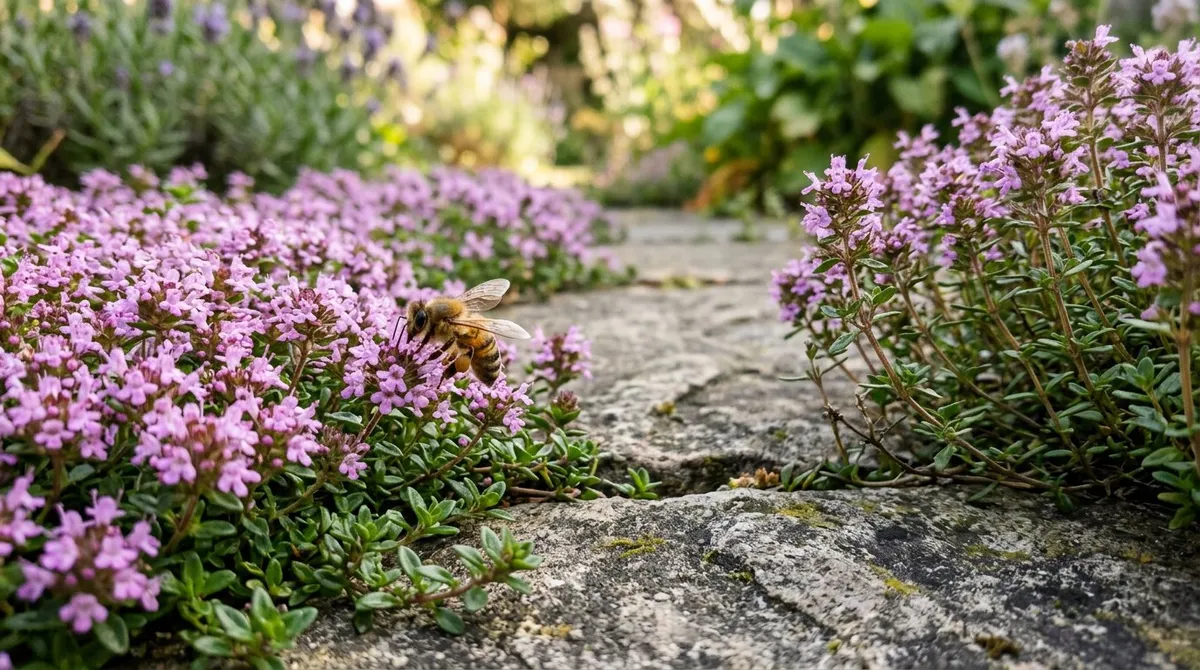
Creeping thyme (Thymus serpyllum) forms dense mats just 5-7cm tall. It tolerates light foot traffic and fills gaps between paving slabs beautifully. Flower colours range from white to deep purple depending on the cultivar you choose.
Silver thyme (Thymus vulgaris ‘Silver Posie’) has attractive silver-edged leaves on plants reaching 20cm. It is both ornamental and culinary. The variegated foliage adds visual interest to herb gardens and container displays throughout the year.
| Variety | Height | Hardiness | Use | Flower colour | Spread |
|---|---|---|---|---|---|
| Common thyme | 20-30cm | -15°C | Culinary | Pale lilac | 25cm |
| Lemon thyme | 20-25cm | -12°C | Culinary | Pink-lilac | 30cm |
| Orange thyme | 15-20cm | -10°C | Culinary | Pale pink | 20cm |
| Creeping thyme | 5-7cm | -15°C | Ground cover | Purple/white | 45cm |
| Silver thyme | 15-20cm | -10°C | Culinary/ornamental | Pale lilac | 25cm |
If you enjoy growing Mediterranean herbs, our guide to growing herbs in the UK covers the full range of kitchen staples from basil to sage.
Where should I plant thyme?
Thyme needs two things above all else: full sun and sharp drainage. Get these right and the plant will largely look after itself for several years.
Soil and position
Choose the sunniest spot in your garden. Thyme requires at least six hours of direct sun daily. South-facing walls, raised beds, and rockeries are ideal locations for planting.
The soil must drain freely. Thyme originates from rocky Mediterranean hillsides with thin, poor ground. It hates sitting in wet soil, especially over winter. Heavy clay kills thyme faster than any frost. If your soil is heavy, add generous amounts of horticultural grit — at least 30% by volume. Alternatively, grow it in a raised bed filled with gritty compost.
Do not add fertiliser or rich compost to the planting area. Thyme produces its best flavour and strongest essential oils in poor, lean soil. Rich conditions create soft leggy growth with weak aroma. This catches out many gardeners who assume all plants benefit from feeding.
How to plant
Plant thyme outdoors from April to June after the last frost risk passes. Space upright varieties 20-30cm apart. Space creeping types 15-20cm apart if you want them to knit together quickly into a continuous mat.
Dig a hole the same depth as the rootball. Backfill with a mix of garden soil and grit. Water in once to settle the roots, then leave it alone. Mulch with gravel or small stones rather than bark or organic matter. Organic mulches trap moisture around the stems and cause rot. For more on making compost and when organic matter helps versus hinders, our separate guide covers the detail.
Growing thyme in pots and containers
Thyme is one of the best herbs for container growing. Pots give you full control over drainage, which is the single most important factor for success.
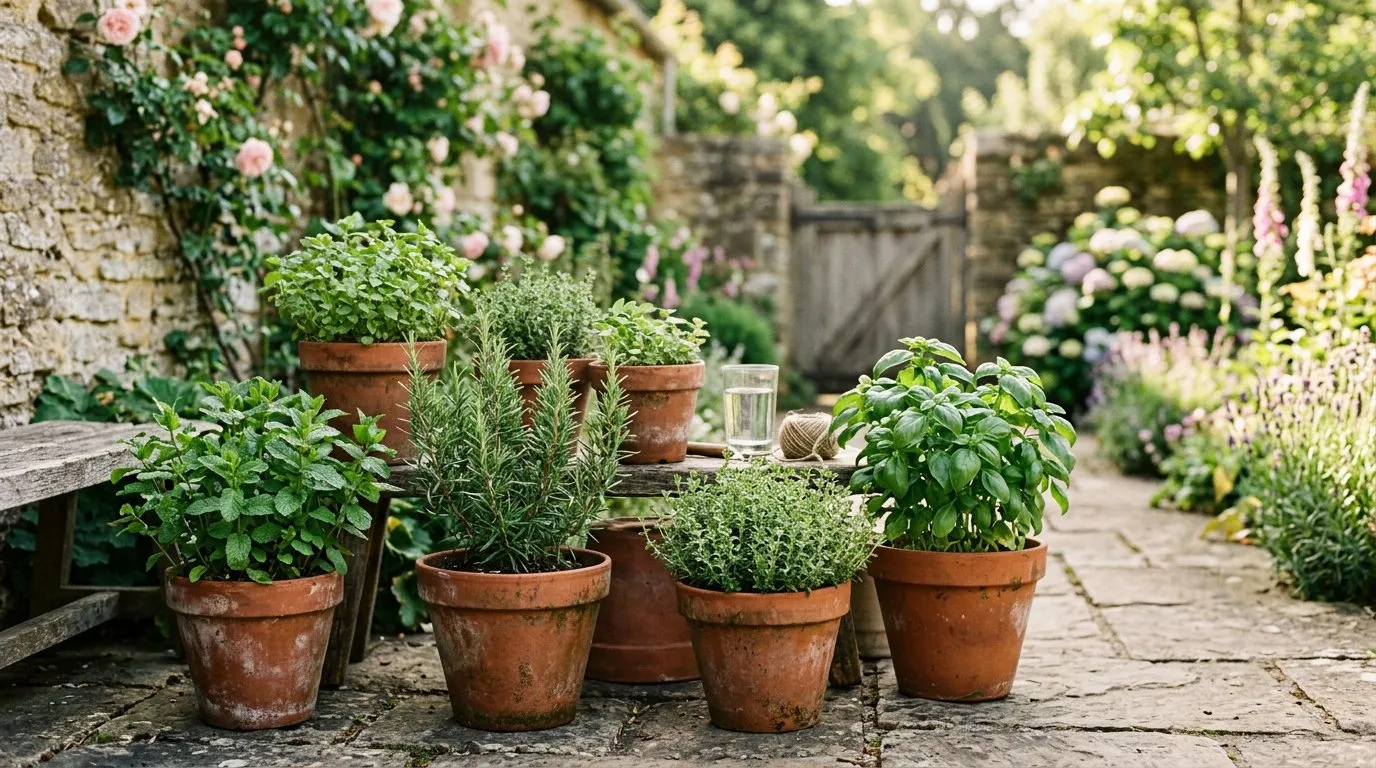
Use a terracotta pot at least 15-20cm in diameter. Terracotta breathes and allows moisture to evaporate through the walls, keeping roots drier. This suits thyme perfectly. Plastic and glazed pots hold more moisture, which increases the risk of root rot in winter.
Fill with a 50:50 mix of multipurpose compost and horticultural grit. Top dress with a 1cm layer of fine gravel to keep the crown dry. Place the pot in the sunniest spot available — a south-facing doorstep, windowsill, or patio is ideal.
Water only when the top 2cm of compost feels dry to the touch. In summer, this might be twice a week during hot spells. In winter, you may not need to water at all. Overwatering is the fastest way to kill thyme in a container.
Repot every two years in spring, refreshing the compost. Feed once in April with a half-strength liquid seaweed feed. Thyme needs very little nutrition. Overfeeding produces lush soft growth with poor flavour. Our container vegetable gardening guide has more advice on drainage and watering for potted herbs.
How to propagate thyme
Propagating thyme is straightforward. You can create dozens of free plants from a single established specimen using any of these three methods.
Semi-ripe cuttings (June to August)
This is the most reliable method. Take 7-10cm cuttings from non-flowering shoots in early summer. Strip the lower leaves cleanly. Dip the base in hormone rooting powder. Insert into pots filled with 50:50 perlite and peat-free compost. Keep moist but not wet. Roots develop in three to four weeks. Pot on individually once established and grow on until the following spring.
Layering
Creeping varieties layer naturally without any intervention. Peg a low stem to the ground using a wire hoop or small stone placed over the contact point. Cover with a thin layer of gritty compost. Roots form in six to eight weeks. Sever the new plant from the parent and transplant to its permanent position.
Division
Divide established clumps in spring before new growth begins. Lift the whole plant carefully. Tease apart into sections, each with roots attached. Replant immediately and water once. Division also rejuvenates older plants that have started to thin and spread open in the centre.
For general guidance on sowing seeds indoors, our separate guide covers seed-starting techniques. However, thyme grows slowly from seed and named cultivars rarely come true. Cuttings and division are far more practical.
Can creeping thyme replace a lawn?
Creeping thyme is a realistic lawn alternative for small sunny areas with free-draining soil. It never needs mowing, flowers from June to August, and releases fragrance when walked on. For gardeners tired of weekly grass cutting, it is worth serious consideration.
How to establish a thyme lawn
Prepare the ground by removing all existing grass and weeds. Improve drainage by forking in sharp sand and horticultural grit. The site must receive at least six hours of direct sun. Shaded areas will not work.
Plant plugs of Thymus serpyllum on a 15-20cm grid in April or May. Water regularly for the first growing season until plants establish. Keep weeded rigorously — weeds will smother young thyme before it fills in. By year two, the plants knit together into a dense fragrant mat.
Limitations to consider
Thyme lawns tolerate light foot traffic only. Walking across occasionally is fine, but daily heavy use will damage the plants. They work best in areas under 20 square metres. For larger spaces, the establishment cost and weeding effort become impractical.
If your soil is heavy clay, a thyme lawn will struggle badly. Consider the options in our guide to drought-tolerant plants instead, or look at our companion planting guide for other ground-cover options that handle heavier soils.
How to prune and maintain thyme
Correct pruning is the single most important maintenance task for thyme. Without it, plants become woody, bare-stemmed, and unproductive within two to three years.
When and how to prune
Prune immediately after flowering, usually in late July or August. Cut the whole plant back by one-third using sharp secateurs or kitchen scissors. Shape it into a neat dome.
The golden rule: never cut into bare old wood. Thyme cannot regenerate from leafless brown stems. If you cut too hard below the green growth, that section dies permanently. Only ever cut back into green, leafy growth. This rule applies equally to lavender and rosemary — all three Mediterranean herbs share this limitation.
Watering and feeding
Established thyme in open ground needs almost no watering. It is genuinely drought-tolerant once the roots settle in. Only water during extended dry spells lasting more than three to four weeks with no rain.
Never feed thyme with general-purpose fertiliser. If growth seems weak in spring, a light sprinkling of wood ash provides trace minerals without adding the nitrogen that causes soft flavourless growth.
When to replace plants
Even with perfect care, thyme becomes woody and unproductive after three to four years. The centre opens up, stems turn bare, and leaf production drops noticeably. Take cuttings from the healthiest growth in year two or three, then replace the parent plant when it declines. Maintain a rolling cycle of young plants coming through.
When should I harvest thyme?
Pick thyme throughout the growing season from May to October. Snip sprigs 7-10cm long, cutting just above a leaf node. This encourages branching and keeps plants compact and bushy.
For the strongest flavour, harvest in the morning after the dew dries but before the midday heat. Essential oil concentration peaks just before the flowers open in early June. This is the ideal harvest window for preserving.
Drying is the easiest preservation method and works well for common thyme. Tie small bundles of stems and hang upside down in a warm airy room for one to two weeks. Strip the dried leaves from stems and store in airtight jars. Dried thyme keeps its flavour for up to twelve months.
Freezing works better for lemon thyme, which loses some citrus character when dried. Strip leaves from stems. Scatter on a baking tray and freeze for an hour. Transfer to freezer bags. Frozen thyme keeps for six months and goes straight into cooking without thawing.
Fresh thyme stores in the fridge for up to two weeks. Wrap loosely in damp kitchen paper and place inside a sealed container. This works well for spring gardening when the first fresh pickings of the year arrive.
Common thyme problems and how to fix them
Thyme is largely trouble-free. The few problems it suffers are almost always caused by too much water or too little pruning.
Root rot is the number one killer. Symptoms include wilting despite wet soil, blackened stem bases, and a mushy root system. Poor drainage or overwatering causes it every time. Prevention is everything — improve drainage before planting and never water established plants unless drought-stressed. There is no cure for advanced root rot. Remove and destroy affected plants.
Leggy woody growth results from skipping annual pruning. Once a plant is mostly bare stems with sparse leaves, it cannot be rescued by pruning alone. Replace it with a new plant and prune the replacement properly each summer without fail.
Fungal diseases like grey mould (Botrytis) appear in humid conditions or overcrowded plantings. Improve air circulation by spacing plants further apart. Remove affected growth promptly and bin it.
Pests rarely trouble thyme. The aromatic oils deter most insects naturally. Rosemary beetle occasionally feeds on thyme — pick them off by hand. The RHS provides identification guidance for this increasingly common pest. Aphids may cluster on new growth in spring but seldom cause lasting damage.
Companion planting with thyme
Thyme is one of the best companion plants for a productive garden. Its strong scent confuses pests and its flowers attract beneficial insects including hoverflies and parasitic wasps.
Plant thyme alongside brassicas — the scent deters cabbage white butterflies effectively. It grows well beside strawberries, tomatoes, aubergines, and peppers. Avoid planting near mint, which will smother thyme with aggressive spreading runners.
In an ornamental setting, thyme combines naturally with other Mediterranean plants: lavender, rosemary, sage, oregano, and santolina. All share the same need for sun and sharp drainage. Grouping them together in a gravel garden or raised bed makes care simple and creates an attractive planting scheme.
Why we recommend Thymus vulgaris ‘Silver Posie’ for containers: After 30 years of growing thyme in pots and herb gardens, ‘Silver Posie’ consistently delivers both the best flavour and the strongest ornamental value in a single plant. In a terracotta pot on a south-facing doorstep, it stays compact and productive for 3-4 years — a full season longer than plain common thyme in the same conditions.
Now you’ve mastered thyme, read our guide on growing herbs in the UK for a complete overview of which Mediterranean herbs thrive together and how to manage a productive herb bed year-round.
Month-by-month thyme growing calendar
| Month | Task |
|---|---|
| January | No action needed. Plants are dormant. Check pots are not waterlogged. |
| February | Order seeds or young plants from nurseries. Clean pots ready for spring. |
| March | Sow seeds indoors at 15-20°C if growing from seed. Check for frost damage. |
| April | Plant out young plants after last frost. Divide established clumps. |
| May | Harden off and plant out seed-grown thyme. Begin regular harvesting. |
| June | Take semi-ripe cuttings. Harvest intensively before flowering peaks. |
| July | Enjoy the flowers and watch the bees. Begin pruning once flowering finishes. |
| August | Complete pruning — cut back by one-third. Take late-season cuttings. |
| September | Final harvests for drying and freezing. Reduce watering gradually. |
| October | Move any tender varieties under cover. Add gravel mulch around crowns. |
| November | Check drainage around plants. Raise pots onto feet to prevent waterlogging. |
| December | No action needed. Hardy varieties survive to -15°C without protection. |
Frequently asked questions
Does thyme come back every year in the UK?
Yes, thyme is a hardy evergreen perennial in the UK. It keeps its leaves year-round and survives winters down to -15°C. However, plants become woody and less productive after 3-4 years. Plan to replace them on a rolling cycle by taking cuttings in the second or third year.
Can you grow thyme from supermarket plants?
Yes, supermarket thyme can be grown on successfully outdoors. Repot immediately into gritty free-draining compost. Harden off gradually over a week before planting out. These plants are often root-bound and overgrown, so divide them into 2-3 smaller clumps first.
Why has my thyme gone woody and leggy?
Woody growth develops when thyme is not pruned annually after flowering. Cut plants back by one-third each summer, shaping into a neat dome. Never cut into bare old wood as it will not regrow. If the plant is mostly bare stems, replace it entirely.
Does thyme grow well in pots?
Thyme is one of the best herbs for container growing. Use a terracotta pot at least 15cm wide with drainage holes. Fill with 50:50 compost and grit. Water only when the top 2cm is dry. Terracotta dries faster than plastic, which suits thyme perfectly.
When should I harvest thyme?
Harvest thyme from late spring through to autumn for the freshest flavour. Peak flavour comes just before flowering in June. Pick sprigs in the morning after the dew dries. Regular harvesting encourages bushy growth and prevents the plant becoming leggy.
Can I use creeping thyme instead of a lawn?
Creeping thyme works as a lawn alternative in small sunny areas under 20 square metres. It tolerates light foot traffic, never needs mowing, and flowers beautifully from June to August. It will not survive heavy daily use and needs free-draining soil to succeed.
Is thyme safe for pets?
Garden thyme is non-toxic to cats and dogs. It is listed as safe by the ASPCA. The strong scent may deter some animals from chewing the leaves. However, concentrated thyme essential oil can be harmful to pets and should always be kept out of reach.
Lawrie has been gardening in the West Midlands for over 30 years. He grows his own veg using no-dig methods, keeps a wildlife-friendly garden, and writes practical advice based on real UK growing conditions.