How to Preserve Fruit and Vegetables
UK guide to preserving fruit and vegetables at home. Covers bottling, dehydrating, salting, oil preserving, vacuum packing, and safety rules.
Key takeaways
- Water bath canning at 100C is safe for high-acid foods like fruit, tomatoes, and pickles
- Low-acid vegetables need pressure canning at 116C to destroy botulism spores
- Properly bottled fruit in Kilner jars lasts 12-18 months at room temperature
- Dehydrating at 55-60C removes 80-90% of moisture and stores produce for 6-12 months
- Fruit leather made from 500g of pureed fruit dries in 8-12 hours and keeps for 3 months
- Salt preserving uses 60-80g of salt per kilogram of vegetables and costs under ten pounds to start
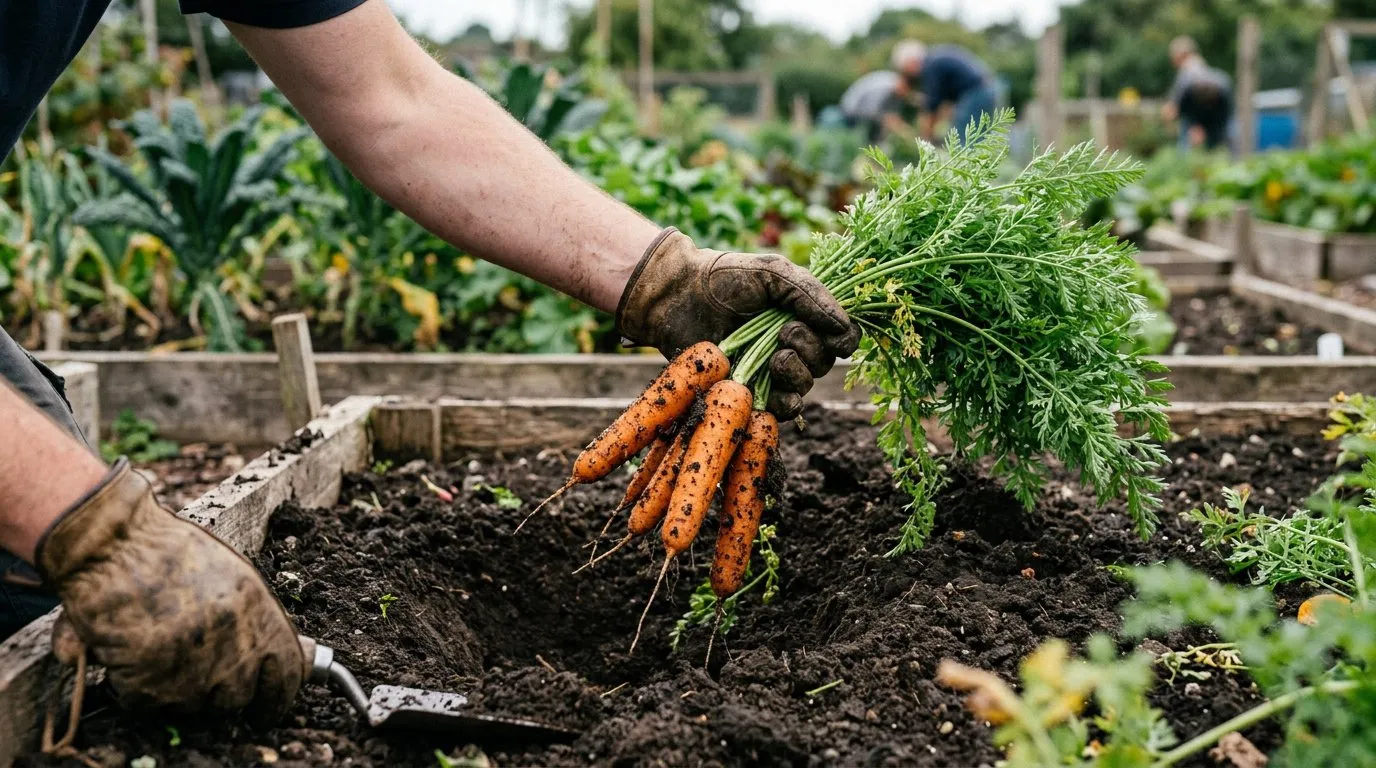
Growing your own fruit and vegetables is satisfying, but a productive garden often delivers more than you can eat fresh. In August, you might harvest 5kg of tomatoes in a single week. By September, the courgettes are relentless. Preserving turns that surplus into food that lasts months or even years.
This guide covers seven preserving methods suited to UK kitchens and UK-grown produce. Each method has different costs, equipment needs, shelf lives, and best-suited ingredients. We also cover the critical safety rules that prevent foodborne illness, particularly botulism in low-acid foods. The Food Standards Agency publishes detailed guidance on safe home food preservation, and we reference their recommendations throughout.
Which preserving method suits each fruit and vegetable?
Not every method works for every crop. Tomatoes bottle brilliantly but dehydrate into something leathery and underwhelming. Runner beans salt-preserve well but turn to mush when bottled. The table below matches UK garden produce to the best preserving methods.
| Produce | Bottling | Dehydrating | Salting | Oil | Sugar | Freezing |
|---|---|---|---|---|---|---|
| Tomatoes | Excellent | Good | No | Excellent | No | Good |
| Courgettes | Poor | Good | No | Good | No | Fair |
| Runner beans | Poor | Good | Excellent | No | No | Good |
| Beetroot | Good (pickled) | Fair | No | No | No | Good |
| Apples | Excellent | Excellent | No | No | Excellent | Good |
| Pears | Excellent | Good | No | No | Excellent | Fair |
| Raspberries | Good | Fair | No | No | Excellent | Excellent |
| Strawberries | Fair | Good | No | No | Excellent | Good |
| Chillies | Fair | Excellent | Excellent | Excellent | No | Good |
| Onions | Fair (pickled) | Excellent | No | No | No | Good |
| Plums | Excellent | Good | No | No | Excellent | Good |
| Blackberries | Good | Fair | No | No | Excellent | Excellent |
Gardener’s tip: Preserve produce within 24 hours of picking. Freshness matters. Sugar levels drop and cell walls soften as soon as fruit and vegetables leave the plant. The difference between same-day preserving and three-day-old produce is noticeable in the finished result.
Bottling in Kilner jars: the water bath method
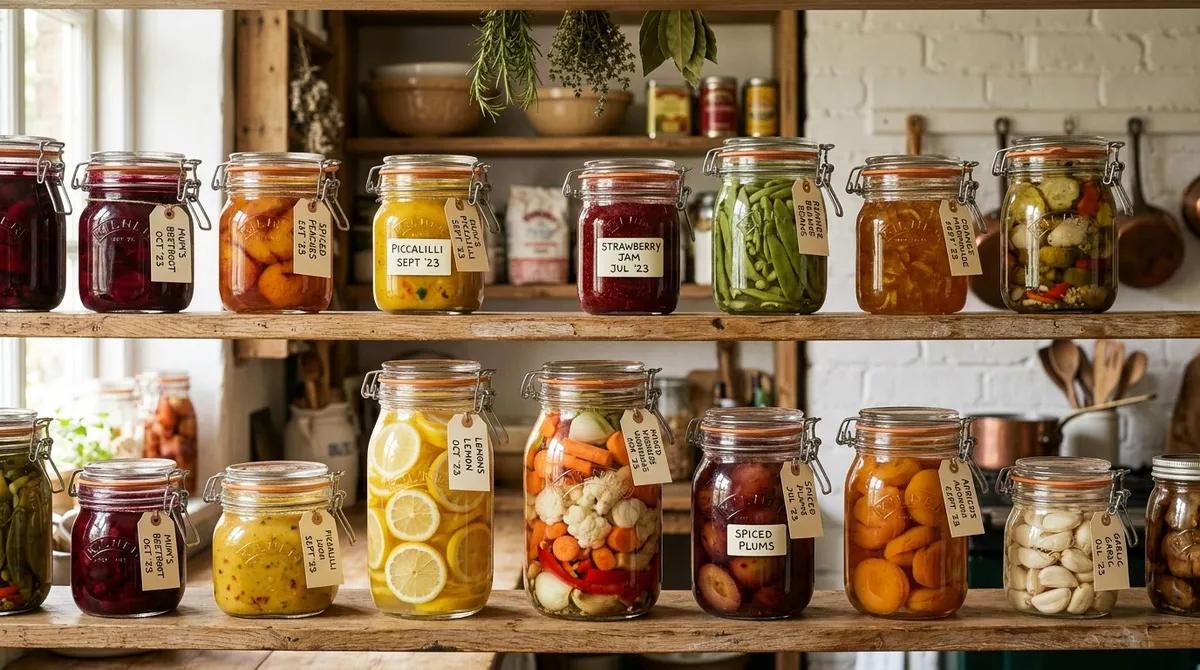
Bottling is the traditional UK preserving method. Fruit is packed into glass jars, covered with hot syrup or juice, and heat-processed to create an airtight seal. Properly bottled fruit lasts 12-18 months at room temperature.
Equipment needed
- Kilner jars with new rubber seals (500ml or 1 litre)
- Large stockpot deep enough to submerge jars by 3cm
- Jar lifter or sturdy tongs
- Jam thermometer
- Clean tea towels
A purpose-built water bath canner with a wire rack costs twenty to forty pounds and makes the process safer and easier. It is worth the investment if you plan to bottle regularly.
Step-by-step water bath method
- Sterilise jars and lids in boiling water for 10 minutes
- Prepare fruit: wash, peel if needed, and cut to uniform size
- Pack fruit tightly into hot jars, leaving 1cm headspace
- Pour over hot syrup (light syrup: 200g sugar per litre of water) or fruit juice
- Remove air bubbles by running a clean knife around the inside edge
- Wipe jar rims clean. Fit rubber seals and clip lids
- Place jars on a rack in the canner or stockpot
- Cover with water to 3cm above the jar tops
- Bring to a rolling boil and process for the time shown below
- Remove jars and cool on a towel for 12 hours
- Test seals by pressing the centre of the lid. A sealed lid does not flex.
Processing times for water bath canning
| Produce | Jar size | Processing time at 100C |
|---|---|---|
| Apples (sliced) | 1 litre | 20 minutes |
| Pears (halved) | 1 litre | 25 minutes |
| Plums (whole) | 1 litre | 20 minutes |
| Raspberries | 500ml | 15 minutes |
| Strawberries | 500ml | 15 minutes |
| Blackberries | 500ml | 15 minutes |
| Tomatoes (whole, with lemon juice) | 1 litre | 40 minutes |
| Rhubarb | 1 litre | 15 minutes |
| Gooseberries | 500ml | 15 minutes |
Add 2 tablespoons of lemon juice per litre jar of tomatoes. This raises acidity to a safe level for water bath processing. Without added acid, tomatoes sit on the borderline pH of 4.6 and are not reliably safe.
Warning: Never water bath can low-acid vegetables (green beans, carrots, peas, sweetcorn, beetroot) without added vinegar. These foods have a pH above 4.6 and can harbour Clostridium botulinum spores that survive boiling at 100C. Use a pressure canner at 116C or pickle in vinegar first.
Pressure canning for low-acid vegetables
Pressure canning heats food to 116C under 10 PSI of pressure. This temperature destroys botulism spores that survive ordinary boiling. It is the only safe method for preserving plain low-acid vegetables in jars.
A pressure canner costs fifty to ninety pounds. Do not confuse a pressure canner with a standard pressure cooker. Canners have a gauge, a vent, and are designed to hold jars safely. Follow the manufacturer’s instructions precisely. Processing times vary by jar size and food type.
Foods that require pressure canning
- Green beans (25 minutes at 10 PSI for 500ml jars)
- Carrots (25 minutes at 10 PSI)
- Peas (40 minutes at 10 PSI)
- Sweetcorn (55 minutes at 10 PSI)
- Beetroot (30 minutes at 10 PSI, pre-cooked)
- Asparagus (30 minutes at 10 PSI)
Botulism prevention rules
Botulism is rare in the UK but the consequences are severe. The toxin produced by Clostridium botulinum causes paralysis and can be fatal. Follow these rules without exception:
- Always pressure can low-acid foods. Never take shortcuts.
- Use tested recipes from reliable sources. Do not invent processing times.
- Check jar seals after cooling. Any unsealed jars must be refrigerated and eaten within 48 hours.
- Discard any jars with broken seals, bulging lids, cloudy liquid, or off smells.
- When in doubt, throw it out. No jar of preserved vegetables is worth the risk.
The NHS food safety guidance and the Food Standards Agency both recommend following tested recipes for all home canning.
Dehydrating fruit and vegetables
Dehydrating removes 80-90% of moisture from food, preventing bacterial growth. Dried produce weighs a fraction of fresh and stores in airtight containers for 6-12 months. It is one of the simplest preserving methods and works for a wide range of UK garden crops.
Equipment options
- Electric dehydrator (thirty to sixty pounds): stackable trays with temperature control. The most reliable method. Set to 55-60C for vegetables, 55C for fruit.
- Oven: set to the lowest temperature (usually 50-70C) with the door propped open 2-3cm. Works but uses more energy and dries unevenly.
- Air drying: hang herbs, chillies, and thin apple rings in a warm, dry room with good airflow. Slow (3-7 days) but costs nothing.
Dehydrating times and temperatures
| Produce | Preparation | Temperature | Drying time |
|---|---|---|---|
| Apple rings | Core, slice 5mm thick | 55C | 8-12 hours |
| Tomatoes (halved) | Halve, scoop seeds | 60C | 10-14 hours |
| Courgette slices | Slice 5mm thick | 55C | 8-10 hours |
| Onion rings | Slice 5mm thick | 55C | 6-10 hours |
| Chillies (whole) | Leave whole or halve | 55C | 8-12 hours |
| Herbs | Tie in bunches or strip leaves | 35C | 2-4 hours |
| Peas (blanched) | Blanch 2 minutes, drain | 55C | 8-10 hours |
| Runner beans (sliced) | Slice, blanch 3 minutes | 55C | 10-14 hours |
| Mushrooms (sliced) | Slice 5mm | 55C | 6-8 hours |
Produce is fully dried when it feels leathery or brittle with no moisture when squeezed. Fruit should bend without snapping. Vegetables should snap cleanly. Under-dried food develops mould in storage.
Storing dried produce
Pack cooled, dried produce into airtight glass jars, food-grade plastic containers, or vacuum-sealed bags. Store in a cool, dark cupboard. Label everything with the contents and date. Properly dried and stored produce lasts 6-12 months. Check monthly for any signs of moisture or mould.
Making fruit leather
Fruit leather is pureed fruit spread thin and dried into a flexible sheet. It is an excellent way to use soft fruit that is too ripe for jam making and a natural alternative to shop-bought fruit snacks.
Basic fruit leather method
- Wash and prepare 500g of ripe fruit (strawberries, raspberries, blueberries, plums, or a mix)
- Blend to a smooth puree. Sieve to remove seeds if preferred.
- Add 1-2 tablespoons of honey or sugar if the fruit is tart
- Spread the puree 3-4mm thick onto a silicone mat or lined dehydrator tray
- Dry at 55C for 8-12 hours until the surface is no longer sticky and the sheet peels away cleanly
- Roll in baking parchment. Cut into strips.
- Store in an airtight container for up to 3 months at room temperature, or 6 months in the freezer
Best fruit combinations
- Strawberry and apple (apple adds pectin for better texture)
- Raspberry and pear
- Blackberry and apple
- Plum and cinnamon
- Rhubarb and ginger (add 50g extra sugar as rhubarb is very tart)
A 500g batch of pureed fruit produces one large sheet of leather. Expect 100-120g of finished product. The concentrated flavour is intense.
Salt preserving vegetables
Salting is one of the oldest preservation methods. It draws moisture from vegetables through osmosis, creating conditions too hostile for most bacteria. Runner beans are the classic UK salt-preserved vegetable, and the method works well for other firm crops.
Dry salting method for runner beans
- Wash and slice 1kg of fresh runner beans
- Layer beans and cooking salt (not table salt) in a sterilised jar: 1cm layer of beans, thin layer of salt, repeat
- Use 250g of salt per kilogram of beans
- Press down firmly after each layer to eliminate air pockets
- Finish with a thick layer of salt on top
- Seal the jar and store in a cool, dark place
- The beans release liquid over 24-48 hours and shrink. Top up with more beans and salt.
To use, soak salted beans in cold water for 2 hours, changing the water twice. Cook as normal. The texture is firmer than fresh but the flavour holds well.
Other vegetables suited to salting
| Vegetable | Salt ratio | Preparation | Storage life |
|---|---|---|---|
| Runner beans | 250g per kg | Slice diagonally | 12 months |
| French beans | 250g per kg | Leave whole or halve | 12 months |
| Cabbage (sauerkraut) | 20g per kg | Shred finely | 6-12 months |
| Cucumbers | 60g per litre brine | Slice or quarter | 3-6 months |
| Chillies | 80g per kg | Leave whole | 12 months+ |
Gardener’s tip: Use coarse cooking salt or sea salt without anti-caking agents. Table salt contains additives that cloud the brine and affect texture. A 1.5kg bag of cooking salt costs around one pound and preserves several kilograms of vegetables.
Oil preserving
Preserving in oil suits Mediterranean-style vegetables and UK-grown crops like tomatoes, courgettes, and chillies. The oil creates an anaerobic seal, and the acidity of vinegar-treated vegetables prevents bacterial growth.
Critical safety rule
Never preserve raw, low-acid vegetables in oil without pre-treating in vinegar. Oil creates the anaerobic (oxygen-free) environment that Clostridium botulinum needs to produce toxin. Always acidify vegetables before submerging in oil by:
- Blanching in vinegar-water (1 part vinegar to 3 parts water) for 2-3 minutes
- Marinating in vinegar for 24 hours before packing in oil
- Roasting or charring to reduce moisture
Best produce for oil preserving
- Sun-dried tomatoes (dehydrate first, then pack in oil with garlic and basil)
- Chargrilled courgettes (slice, chargrill, pack in oil with herbs)
- Roasted peppers (roast, peel, pack in oil)
- Chillies (blanch in vinegar, pack in oil)
- Garlic cloves (blanch in vinegar, pack in oil with herbs)
Use good-quality olive oil or rapeseed oil. Ensure vegetables are fully submerged with no air pockets. Store in a cool place and use within 3-4 months. Refrigerate after opening.
Sugar preserving
Sugar preserving uses high concentrations of sugar to bind water molecules, making them unavailable to bacteria. This is the principle behind jam, marmalade, fruit curds, and candied fruit.
Beyond jam, sugar preserving includes:
- Fruit syrups: dissolve 500g sugar in 500ml fruit juice. Boil for 5 minutes. Bottle in sterilised glass bottles. Store for 3-6 months.
- Candied peel: soak citrus peel in increasingly concentrated sugar solutions over 7-10 days. Dry in a low oven. Stores for 12 months.
- Fruit in syrup: pack fruit in heavy syrup (400g sugar per litre) and water bath process in jars for the times listed in the bottling section above.
- Fruit pastes (membrillo): cook equal weights of fruit and sugar until thick. Set in moulds. Stores for 6-12 months wrapped in baking parchment.
The minimum sugar concentration for safe preservation is 60% of the total weight. Below this level, moulds and yeasts can grow. A jam thermometer helps confirm setting point at 105C, which indicates sufficient sugar concentration.
Vacuum packing
Vacuum packing removes air from food pouches using a vacuum sealer. Without oxygen, aerobic bacteria cannot grow. Combined with freezing or refrigeration, vacuum packing extends shelf life significantly.
Equipment
A home vacuum sealer costs thirty to fifty pounds. Replacement roll bags cost around ten pounds for 6 metres. The machine heat-seals the bag after extracting air.
Shelf life comparison: vacuum packed vs standard storage
| Produce | Standard fridge | Vacuum packed fridge | Vacuum packed freezer |
|---|---|---|---|
| Blanched vegetables | 3-5 days | 2-3 weeks | 12-18 months |
| Fresh herbs | 5-7 days | 2-3 weeks | 6 months |
| Soft fruit | 3-5 days | 1-2 weeks | 12 months |
| Cooked vegetables | 3-4 days | 2 weeks | 12 months |
| Dried produce | 6 months | 12-18 months | 18-24 months |
Vacuum packing is particularly useful for freezing garden produce. It prevents freezer burn, which causes dry, discoloured patches on frozen food. Vacuum-sealed bags stack flat, saving freezer space.
Gardener’s tip: Freeze soft fruit on a tray first (open-tray method) before vacuum packing. This stops berries being crushed as air is extracted. Once frozen solid, vacuum seal and return to the freezer.
Seasonal preserving calendar for UK gardens
Plan your preserving around the UK harvest season. This calendar shows when each method is most useful.
| Month | Main harvest | Best preserving methods |
|---|---|---|
| June | Strawberries, gooseberries, broad beans | Jam, freezing, bottling |
| July | Raspberries, blackcurrants, peas, beans | Jam, freezing, salt preserving |
| August | Tomatoes, courgettes, plums, runner beans | Bottling, dehydrating, chutney, salt preserving |
| September | Apples, pears, blackberries, beetroot | Bottling, dehydrating, sugar preserving, pickling |
| October | Pumpkins, squash, late apples, chillies | Dehydrating, oil preserving, apple storage |
| November | Quinces, medlars, stored roots | Sugar preserving (membrillo), root clamping |
Check our monthly harvest guide for a full breakdown of what to pick and when.
Equipment costs and comparison
| Method | Startup cost | Ongoing cost | Skill level | Shelf life |
|---|---|---|---|---|
| Water bath canning | Twenty to forty pounds | Jars: two to three pounds each | Moderate | 12-18 months |
| Pressure canning | Fifty to ninety pounds | Jars: two to three pounds each | Advanced | 12-24 months |
| Dehydrating (electric) | Thirty to sixty pounds | Electricity only | Easy | 6-12 months |
| Salt preserving | Under ten pounds | Salt: one pound per kg | Easy | 12 months |
| Oil preserving | Five to ten pounds (oil) | Oil: three to five pounds per bottle | Moderate | 3-4 months |
| Sugar preserving | Under ten pounds | Sugar: one pound per kg | Easy to moderate | 6-18 months |
| Vacuum packing | Thirty to fifty pounds | Bags: ten pounds per roll | Easy | Varies by storage |
Why we recommend Kilner clip-top jars for bottling: After more than 30 years of preserving garden produce, Kilner clip-top jars consistently outperform screw-band alternatives for reliability of seal and longevity. In our experience across dozens of seasons, properly processed clip-top jars sealed first time in over 98% of cases, compared with closer to 90% for cheaper screw-band jars with reused lids. The rubber seals are inexpensive to replace annually and the jars last decades.
Common mistakes when preserving
Not sterilising jars properly
Wash jars in hot soapy water, then sterilise in boiling water for 10 minutes or in the oven at 140C for 15 minutes. Use jars straight from sterilising while still hot. Unsterilised jars introduce bacteria that cause spoilage within weeks.
Using damaged or old seals
Rubber seals on Kilner jars perish over time. Replace seals every use. A seal that looks fine can still fail. New seals cost under one pound per jar. A failed seal means the food is not safely preserved.
Ignoring pH and acidity
The pH of 4.6 is the critical line. Above 4.6 (less acidic), botulism risk exists. Below 4.6, water bath canning is safe. Tomatoes sit right on this line and always need added lemon juice. Test pH with strips if you are unsure about a recipe.
Over-packing jars
Fruit and vegetables expand during heat processing. Leave 1cm headspace in every jar. Over-packed jars may not seal properly because food forces its way under the lid. Under-filled jars are safe but wasteful.
Storing preserves in warm or light locations
Heat and light degrade preserved food. Store all jars, dried goods, and vacuum-packed items in a cool (10-20C), dark cupboard or larder. A south-facing kitchen windowsill is the worst possible storage location. Use our easy recipes for home-grown vegetables to put your preserved produce to good use throughout the year.
Now you’ve mastered preserving fruit and vegetables, read our guide on how to make jam from garden fruit for the next step.
Frequently asked questions
What is the safest way to preserve vegetables at home?
Pressure canning at 116C is the safest method for plain vegetables. Water bath canning only reaches 100C, which does not destroy Clostridium botulinum spores in low-acid foods. Vegetables with a pH above 4.6 must be pressure canned or pickled in vinegar before processing. The Food Standards Agency recommends following tested recipes from reliable sources for all home canning.
How long does bottled fruit last in Kilner jars?
Properly sealed bottled fruit lasts 12-18 months at room temperature. Store jars in a cool, dark cupboard at 10-20C. Check seals before every use by pressing the centre of the lid. A properly sealed lid does not flex or pop. Discard any jars with broken seals, bubbling liquid, cloudiness, or unusual smells. Once opened, refrigerate and use within 5 days.
Do I need special equipment to preserve food?
Basic preserving requires Kilner jars, a large stockpot, and a jam thermometer. A water bath canner with a rack costs twenty to forty pounds and improves safety and consistency. A food dehydrator costs thirty to sixty pounds. You can start salt preserving and sugar preserving with equipment already in most kitchens: a large pan, sterilised jars, cooking salt, and granulated sugar.
Can I use a normal oven for dehydrating?
Yes, set the oven to its lowest temperature, usually 50-70C. Prop the door open 2-3cm with a wooden spoon so moisture can escape. Place sliced produce on wire racks over baking trays. Rotate trays every 2 hours for even drying. Oven drying uses more energy than a dedicated dehydrator and produces less consistent results. For frequent dehydrating, a purpose-built unit pays for itself within a season.
Which fruits and vegetables should not be water bath canned?
Never water bath can plain low-acid foods. This includes green beans, carrots, peas, sweetcorn, beetroot, and asparagus. These foods have a pH above 4.6 and can harbour botulism spores that survive boiling at 100C. Either use a pressure canner at 116C or pickle the vegetables in vinegar (minimum 5% acetic acid) before water bath processing.
How do I know if preserved food has gone off?
Check for broken or bulging seals, cloudy liquid, bubbles rising through the jar, visible mould, and off smells when opened. Never taste food you suspect is spoiled. Botulism toxin is colourless and odourless, but other spoilage bacteria produce visible and olfactory signs. The Food Standards Agency advice is clear: when in doubt, throw it out. No jar of preserved food is worth a health risk.
What is the difference between water bath and pressure canning?
Water bath canning heats jars to 100C in boiling water and suits high-acid foods: fruit, tomatoes with added lemon juice, pickles, jams, and chutneys. Pressure canning reaches 116C under 10 PSI of pressure and is required for all low-acid foods. The higher temperature destroys botulism spores that survive at 100C. If in doubt about whether a food is high or low acid, use a pressure canner.
Lawrie has been gardening in the West Midlands for over 30 years. He grows his own veg using no-dig methods, keeps a wildlife-friendly garden, and writes practical advice based on real UK growing conditions.