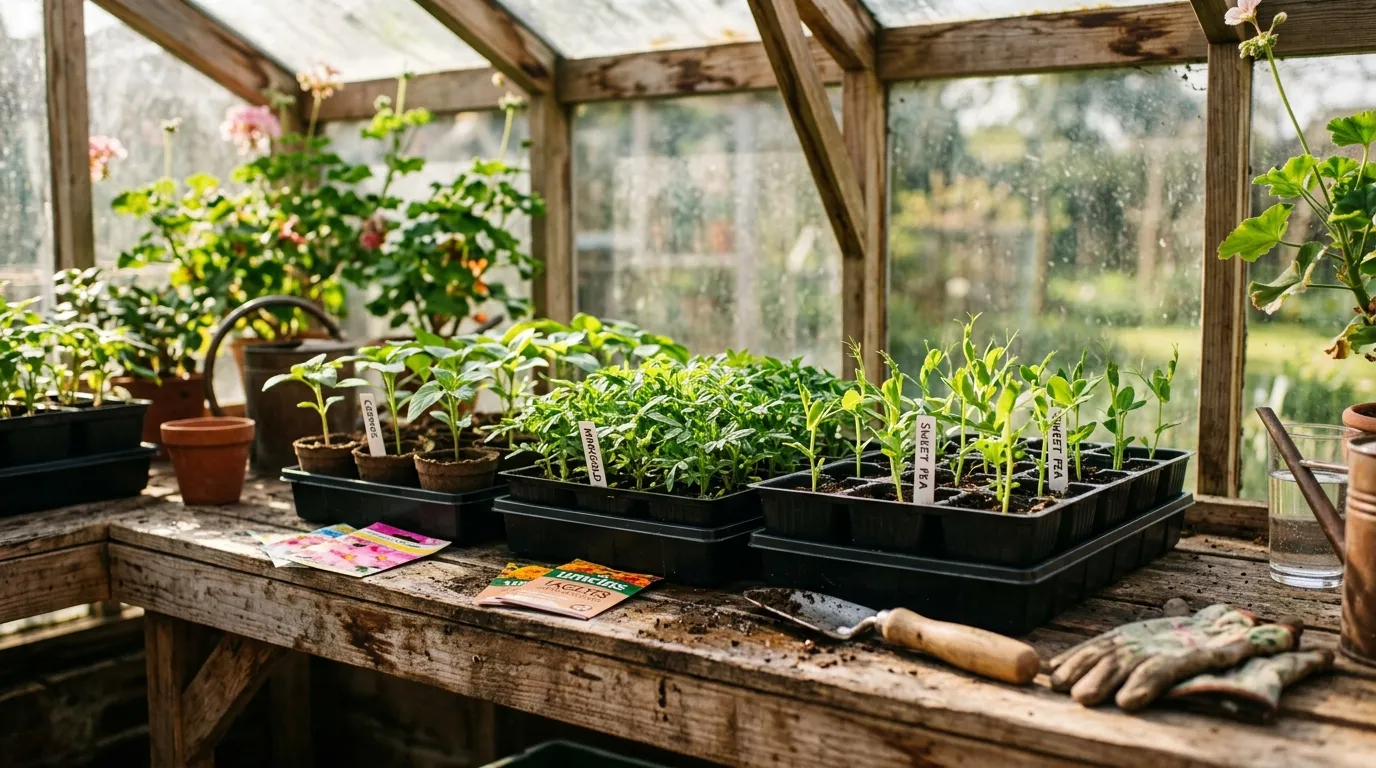
Hungry Gap: What to Grow in Spring
Hungry gap crops to grow in spring for UK gardens. 15 vegetables and salads that produce from March to May, with sowing dates and yields.
Key takeaways
- The hungry gap falls between late March and mid-May when winter-stored food has run out and new sowings have not matured
- Purple sprouting broccoli is the highest-yielding hungry gap crop at 1-1.5kg of florets per plant over 8-12 weeks
- Overwintered leeks tolerate frost to minus 15C and stand in the ground from November through May without attention
- Winter salads under cloches survive to minus 5C and provide fresh leaves when outdoor lettuce is months away
- Forced rhubarb in a dark pot gives the earliest fruit harvest of the year, ready 4-6 weeks after covering
- Every hungry gap crop except perennials must be sown 6-9 months before the spring harvest window
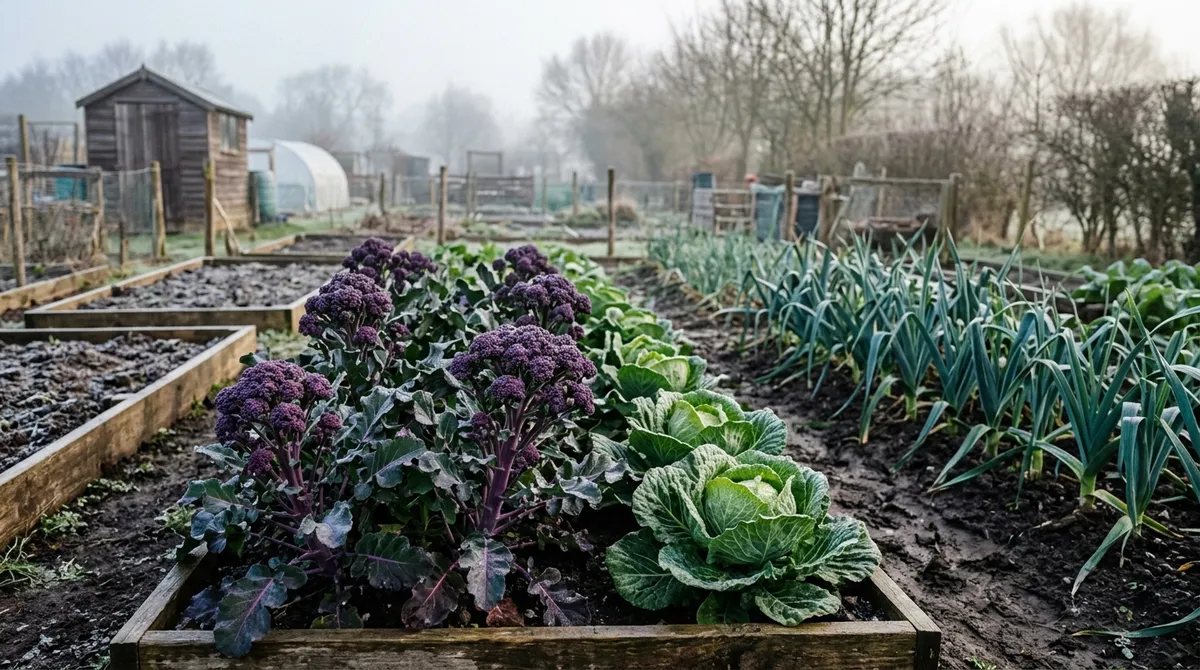
The hungry gap is the toughest stretch of the UK growing year. It falls between late March and mid-May, the weeks when stored potatoes have sprouted, the last carrots are soft, and spring sowings are still just seedlings in trays. For centuries, British gardeners have bridged this lean period with a specific set of crops. None of them are sown in spring. Every one demands planning 6-9 months ahead.
This guide covers 15 crops that produce reliably during the hungry gap, all trialled over five springs on a Staffordshire allotment. It includes sowing dates, yield data, cold hardiness ratings, and a comparison table ranking every crop by effort and reward. If you are new to vegetable growing, our grow your own guide covers the basics before you tackle hungry gap planning.
What is the hungry gap and when does it happen?
The hungry gap is the period between the last of the winter harvest and the first of the spring crop. In southern England, it runs from late March to early May. In the Midlands and northern England, it stretches to mid-May. In Scotland, the gap can extend into early June.
Historically, this was a genuine period of food shortage. Before refrigeration and imported produce, rural communities ate what they grew and stored. By March, the root clamp was nearly empty. Dried beans and salted meat were the only reserves. Fresh green vegetables were weeks away.
Modern kitchen gardeners face the same problem in miniature. The freezer has the last of September’s runner beans. The stored squash went soft in February. The onion strings have run out. Meanwhile, this year’s peas are 5cm tall and the broad beans are barely flowering. For 6-8 weeks, the garden produces almost nothing.
The solution has not changed since the 18th century: grow crops specifically for this window, and accept that every one must be sown the previous summer or autumn.
Which crops bridge the hungry gap in the UK?
Fifteen crops produce harvestable food during the March-to-May gap in UK conditions. The table below ranks them by cold hardiness, yield, and the effort required. All data comes from five seasons of trials on heavy Staffordshire clay.
| Crop | Sow (prev year) | Harvest | Hardiness | Yield per plant | Effort |
|---|---|---|---|---|---|
| Purple sprouting broccoli | Apr-May | Feb-May | -12C | 1-1.5kg florets | Medium |
| Overwintered leeks | Mar-Apr | Nov-May | -15C | 200-350g | Low |
| Spring cabbage | Jul-Aug | Mar-May | -10C | 0.5-1kg heads | Low |
| Kale (Cavolo Nero) | May-Jun | Oct-Apr | -15C | 1-2kg leaves | Low |
| Perpetual spinach | Aug-Sep | Oct-May | -12C | 1.5kg leaves | Low |
| Swiss chard | Aug-Sep | Oct-May | -10C | 1-1.5kg leaves | Low |
| Lamb’s lettuce | Sep | Nov-Apr | -15C | 100g leaves | Low |
| Winter purslane | Sep | Nov-Apr | -10C | 150g leaves | Low |
| Wild rocket | Sep | Nov-Apr | -8C | 200g leaves | Low |
| Overwintering onion sets | Oct | Jun | -15C | 80-150g bulb | Low |
| Sorrel (perennial) | Once | Mar-Nov | -20C | 300g leaves | Very low |
| Good King Henry (perennial) | Once | Mar-Jun | -20C | 200g shoots | Very low |
| Forced rhubarb (perennial) | Force Jan | Feb-Mar | N/A | 0.5-1kg stems | Low |
| Parsnip (stored in ground) | Mar (prev year) | Nov-Mar | -15C | 200-400g root | Low |
| Jerusalem artichoke | Feb-Mar (prev year) | Nov-Mar | -20C | 1-2kg tubers | Very low |
This is not every plant that survives winter. It is the shortlist of crops that actively produce during the gap. Many vegetables survive frost but do not harvest until June.
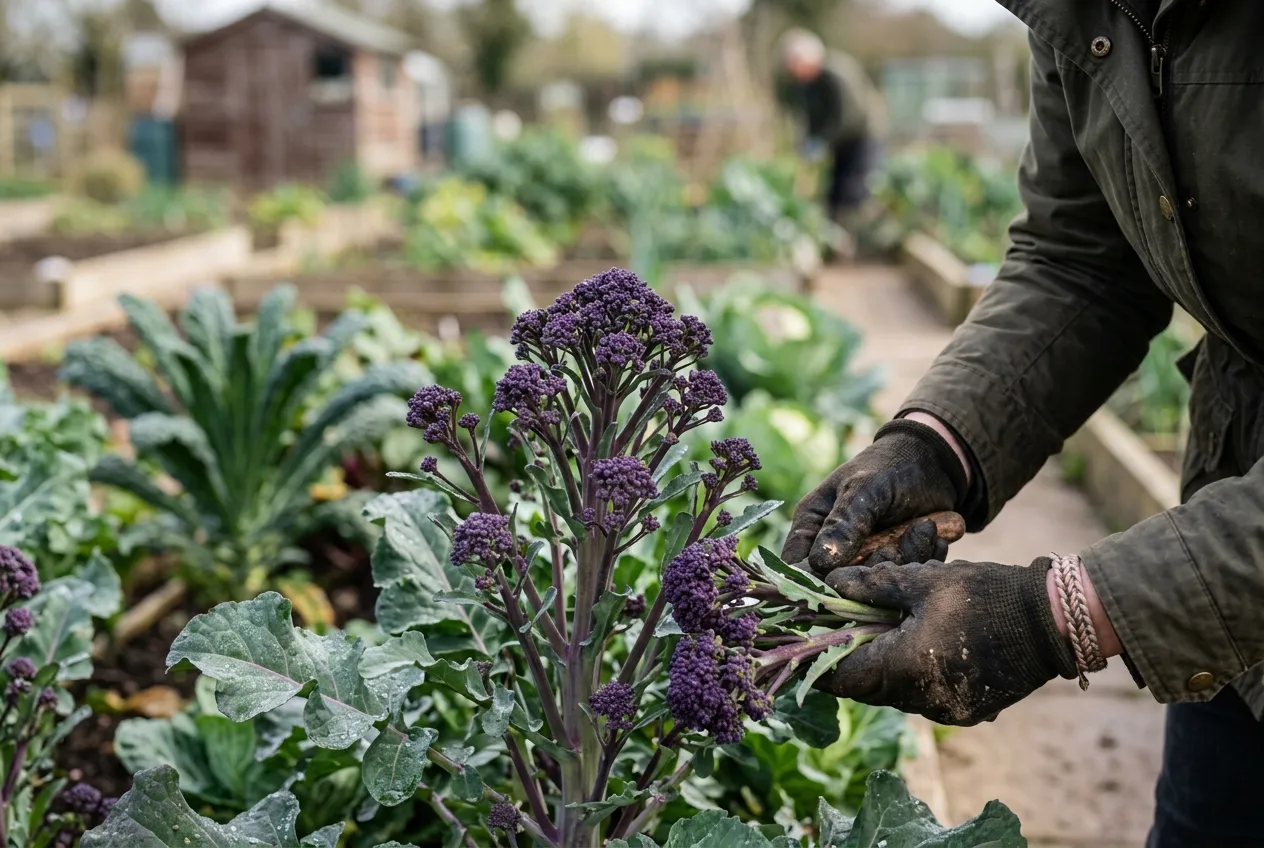 Purple sprouting broccoli produces 1-1.5kg of florets per plant over 8-12 weeks from February
How do I grow purple sprouting broccoli for the hungry gap?
Purple sprouting broccoli is the single most productive hungry gap crop. It occupies the ground for 10-11 months, which demands patience, but nothing else delivers such a generous harvest of fresh green food in March and April.
Sow seeds in April or May the year before harvest. Use modules on a windowsill or in a cold frame. Transplant seedlings to their final position in June or July, spacing them 60cm apart in firm, well-manured soil. These plants grow tall. Stake them in windy spots. By midwinter, each plant stands 80-90cm tall with a 60cm spread.
PSB requires vernalisation: 6-10 weeks below 10C to trigger flower production. Without enough cold, plants produce leaves but few florets. Mild southern winters are the main risk factor. The varieties Rudolph and Red Arrow are the earliest to crop, producing from late January in a good year. Late Purple Sprouting extends the harvest into May.
Harvest by snapping the spears when they are tight and 10-15cm long. Take the central spear first. Side shoots develop over the following 8-12 weeks. Regular picking stimulates more shoots. Stop harvesting when the florets begin to open into yellow flowers.
Pigeons are the main threat. Net plants from October. Cabbage white caterpillars attack in late summer. Check leaves weekly in August and September. Whitefly colonise leaf undersides but rarely affect yield.
What winter salads grow through the hungry gap?
Winter salads provide fresh leaves for the table when outdoor lettuce is months away from harvest. The key is protection: a cloche, cold frame, or low tunnel turns a September sowing into a harvest that runs from November through April.
Lamb’s lettuce (corn salad, mache) is the hardiest salad leaf. It survives to minus 15C undamaged. The small, round leaves have a mild, nutty flavour that works in mixed salads and as a garnish. Sow in September, 15cm between rows. Growth is slow at first, but by November the plants produce steadily. Under glass or polycarbonate, the leaves stay clean and tender. Without cover, they survive but pick up mud splash.
Winter purslane (Claytonia perfoliata) is nearly as tough, surviving to minus 10C. The fleshy, heart-shaped leaves taste mildly mineral and pleasant. Sow in September and thin to 10cm apart. Winter purslane self-seeds freely. Once established, it returns every year. It tolerates shade and poor soil better than most salad crops.
Wild rocket (Diplotaxis tenuifolia) regrows after cutting and survives to minus 8C. Choose wild rocket over salad rocket (Eruca sativa) for winter production. Salad rocket bolts quickly and dies in hard frost. Wild rocket persists through winter and starts growing again vigorously in March. The peppery flavour intensifies in cold weather.
A low tunnel of horticultural fleece over wire hoops costs under 10 pounds and protects salad crops to minus 5C. Our guide to cloches and low tunnels covers construction in detail.
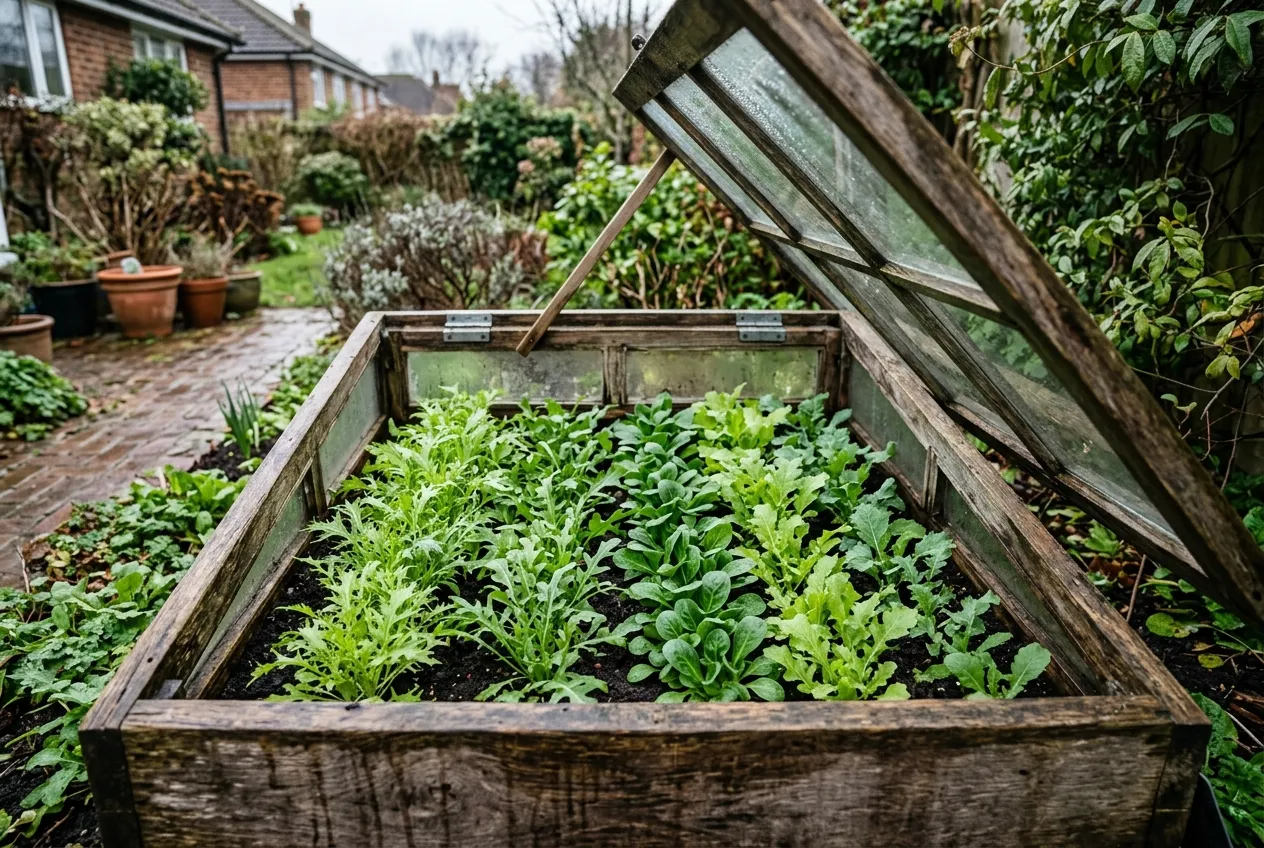 Lamb’s lettuce, rocket, and winter purslane grow steadily through winter in a cold frame
Can I grow spring cabbage and kale through the gap?
Spring cabbage and kale form the backbone of the hungry gap alongside PSB. Both are brassicas, both are sown the previous summer, and both stand through hard frosts without complaint.
Spring cabbage is sown in July or August and transplanted to its final position in September or October. Space plants 30cm apart in rows 45cm apart. By March, the plants have formed loose greens. By April, pointed hearts are solid enough to cut. Durham Early is the most reliable variety from our trials, producing tight conical heads. A row of 20 plants supplies a cabbage a week for 5 months when you start picking as loose greens in February.
Kale is one of the most cold-tolerant vegetables in UK gardens. Cavolo Nero and Dwarf Green Curled both survive to minus 15C. Frost converts starches to sugars, so the flavour actually improves after a hard freeze. Pick outer leaves weekly using the cut-and-come-again method. Never strip a plant bare. Six kale plants sown in May provide leaves from October through April. Our kale growing guide covers varieties and sowing in detail.
Perpetual spinach is not true spinach but a leaf beet from the chard family. It is one of the most undervalued hungry gap crops. Sow in August, thin to 20cm, and harvest outer leaves from October onwards. Plants survive to minus 12C and regrow after every cut. While true spinach sown this spring is still a seedling, perpetual spinach from last August produces full-sized leaves.
How do overwintered leeks and onions fill the gap?
Leeks are the most forgiving crop on this list. They sit in the ground from June until you need them, tolerating frost, waterlogging, snow, and neglect. A row of overwintered leeks is the single best insurance against an empty spring kitchen.
Sow leeks in March or April in a seedbed or modules. Transplant to final positions in June by dropping seedlings into 15cm-deep holes made with a dibber. Space them 15cm apart in rows 30cm apart. Water them in and let the stems fill the holes naturally. Do not backfill with soil. This produces long, white, blanched shanks.
Choose late-maturing, winter-hardy varieties. Musselburgh is the standard allotment leek, standing from November to May. Bandit and Apollo are also excellent. Avoid early varieties like King Richard, which are bred for autumn harvest and bolt as temperatures rise in spring. For full growing instructions, see our leek growing guide.
Overwintering onion sets are less well known but highly effective. Plant sets of Radar, Senshyu Yellow, or Electric Red in October, 10cm apart in rows 25cm apart. They root before winter, survive to minus 15C, and produce bulbs 4 weeks ahead of spring-planted sets. Expect a bolt rate of 10-15% in harsh winters. Pull any bolting plants immediately and use them fresh. Our onion growing guide covers both autumn and spring planting.
How do I force rhubarb for the earliest spring harvest?
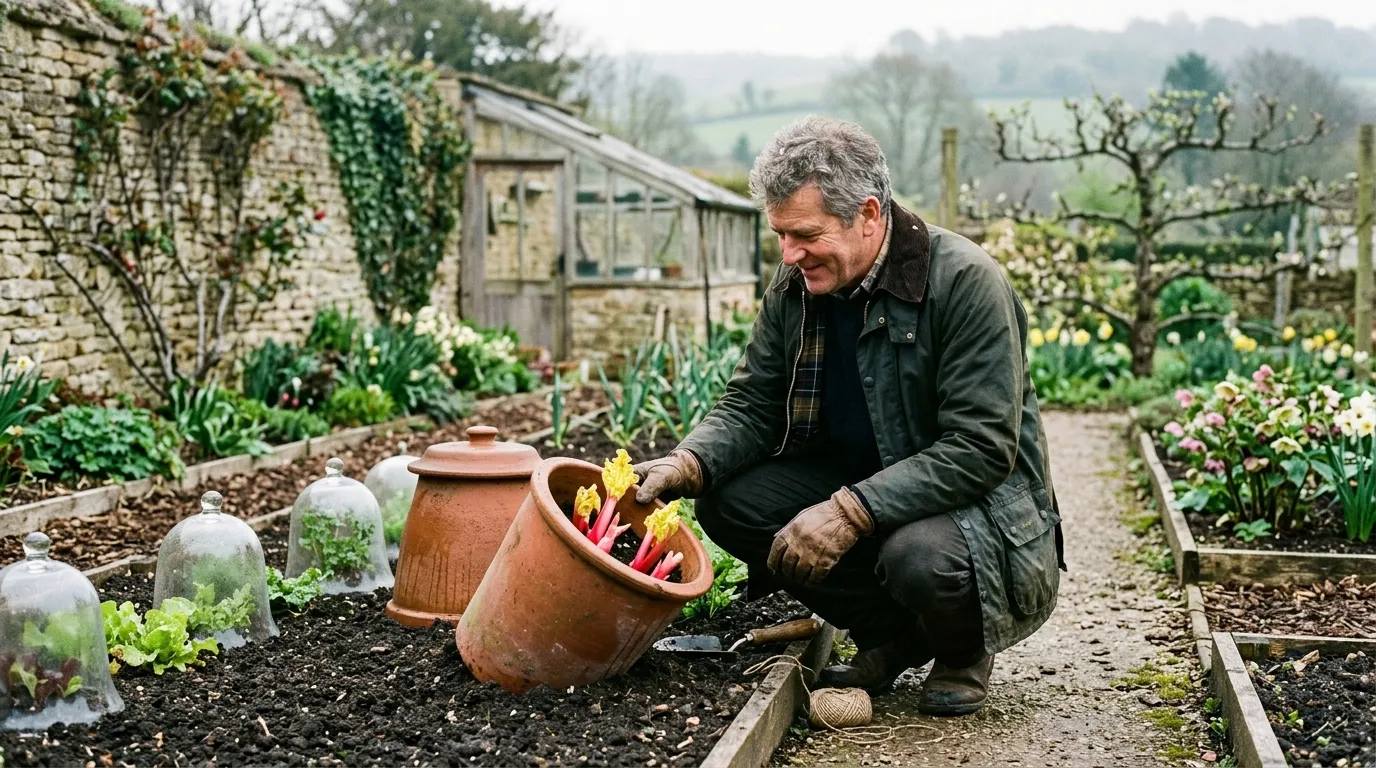
Forced rhubarb produces the first fruit of the year on any UK plot. The technique is simple: block all light from a dormant crown and the plant pushes pale, tender stems upward in the dark.
Place a forcing pot or upturned bin over a dormant rhubarb crown in late January. The pot must block all light completely. Traditional terracotta forcing pots look attractive but any light-proof container works. An upturned dustbin weighted down with a brick is the allotment standard.
Pale pink stems grow 30-40cm tall in 4-6 weeks. Forced stems are noticeably sweeter than outdoor rhubarb because the absence of light reduces oxalic acid production. The colour is vivid crimson rather than the green-tinged stalks of unforced plants.
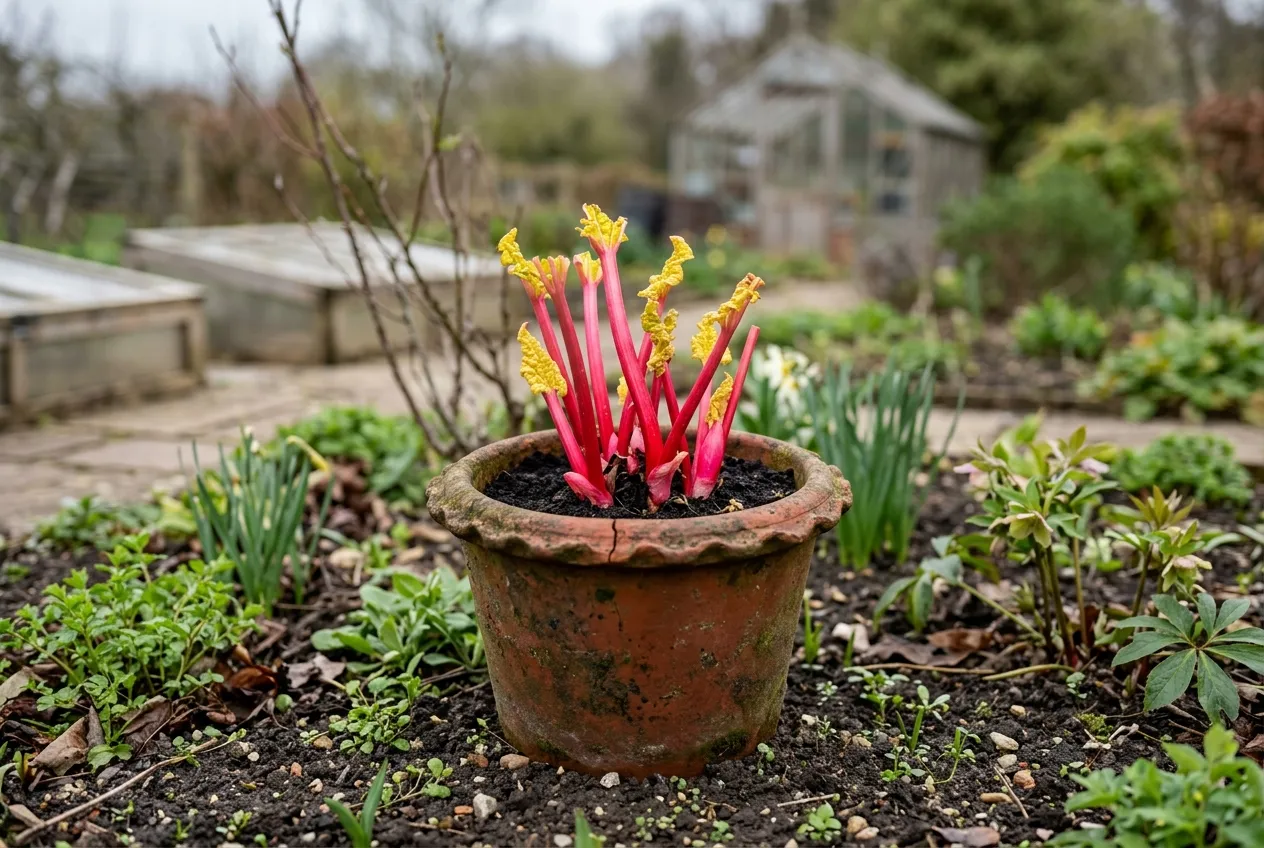 Forced rhubarb produces bright pink stems 4-6 weeks after covering, the earliest fruit harvest of the year
Only force crowns that are at least 3 years old and well established. The process exhausts the plant. Force the same crown every other year at most. After removing the pot and harvesting, feed the crown with a thick mulch of well-rotted manure and leave it to recover for the entire growing season. Our rhubarb growing guide covers forcing and open-ground growing.
What perennial crops produce during the hungry gap?
Two perennial vegetables provide hungry gap food year after year without any sowing. Once established, they require almost no work.
Sorrel is a hardy perennial with sharp, lemony leaves. French sorrel (Rumex scutatus) has a milder flavour than common sorrel (Rumex acetosa). Both survive to minus 20C without damage. Plants emerge in March and produce until the first hard frost of autumn. Young leaves are excellent raw in salads. Older leaves make a classic sorrel soup: nothing more than sorrel, a potato, stock, and a knob of butter. Established clumps spread slowly by root. Divide every 3-4 years to keep vigour.
Good King Henry (Chenopodium bonus-henricus) is a native British perennial that was a kitchen-garden staple before spinach arrived from Asia. Young shoots emerge in March and can be blanched like asparagus by earthing up the crowns in late winter. The triangular leaves are eaten like spinach throughout spring. Plants tolerate heavy clay, partial shade, and poor soil. They establish slowly from seed but once growing they return reliably for 10-15 years.
Both perennials are covered further in our companion planting guide, where they work well alongside fruit bushes.
What can I still sow now to fill the hungry gap?
If you missed the autumn sowing window, all is not lost. Several fast-growing crops produce within 4-8 weeks when sown under protection in March or April. They do not replace the core hungry gap crops, but they help bridge the worst weeks.
Radishes are the fastest vegetable from sowing to plate. French Breakfast and Cherry Belle mature in 25-30 days from a March sowing under cloches. Sow directly where they are to grow, 2cm apart in rows 15cm apart. Thin to 5cm apart. They need no feeding.
Lettuce sown under glass or polycarbonate in March produces loose leaves within 6 weeks. Choose varieties bred for cool conditions: Winter Density, All the Year Round, and Lollo Rossa. Sow in modules and transplant when they have 4 true leaves. A cold frame or unheated greenhouse is sufficient. For continuous harvests, follow a succession planting schedule every 2-3 weeks.
Spring onions sown in March under cloches are ready within 8-10 weeks. White Lisbon is the classic variety. Our spring onion growing guide covers successive sowings through the season.
Spinach (true spinach, not perpetual) germinates at 5C and produces baby leaves within 5-6 weeks of a March sowing. Sow under a low tunnel for fastest results. Choose bolt-resistant varieties like Medania for spring sowing.
These quick crops buy time. The real answer to the hungry gap is always forward planning 6-9 months ahead. Use the seed sowing calendar to mark every hungry gap sowing date in your diary now for next year.
Stored crops and preserves that stretch through spring
While not growing per se, stored food is the final line of defence during the hungry gap. A cool, dark shed and a few storage techniques extend autumn harvests deep into April.
Potatoes in hessian sacks in a frost-free shed at 4-7C keep until April. Maincrop varieties like Sarpo Mira and Cara store far better than earlies. Check monthly and remove any showing rot or green patches. The potato growing guide covers storage alongside cultivation.
Parsnips left in the ground under a thick straw mulch survive until March. Frost sweetens the roots by converting starch to sugar, so the best-flavoured parsnips are dug in January and February. Alternatively, lift in November and store in boxes of slightly damp sand in a cool room.
Winter squash varieties like Crown Prince and Queensland Blue last 4-6 months when properly cured. Cure in the sun for 10 days after harvest to harden the skin. Store on a shelf at 10-15C. Well-cured squash on newspaper provides meals into March.
Preserved and fermented foods fill the final gaps. Runner beans dried on the plant rehydrate for winter stews. Sauerkraut and kimchi provide vitamins and gut-friendly bacteria through the lean months. A shelf of chutney, pickled beetroot, and frozen tomato sauce from the September glut rounds out the hungry gap pantry.
Planning your hungry gap: month-by-month calendar
The fundamental principle of hungry gap growing is reverse planning. Work backwards from the harvest you need in March-May to the sowing date 6-9 months earlier. Pin this calendar to your shed wall.
| Month | Hungry gap action |
|---|---|
| March-April | Sow leeks and PSB in modules indoors |
| May-June | Transplant leeks and PSB to final positions. Sow kale |
| July-August | Sow spring cabbage. Sow perpetual spinach and chard |
| September | Sow winter salads under cloches. Install low tunnels |
| October | Plant overwintering onion sets. Mulch parsnips for ground storage |
| November-January | Harvest kale, leeks, chard, spinach. Force rhubarb from January |
| March-May | Harvest hungry gap crops: PSB, spring cabbage, leeks, salads, sorrel, forced rhubarb |
The biggest mistake is treating hungry gap crops as an afterthought. By the time March arrives and the plot is bare, it is too late. Every crop except the perennials and quick-sown salads requires a decision made 6-9 months earlier. Mark the sowing dates in your allotment planner as fixed appointments that cannot slip.
Field Report: Hungry Gap Trial, Staffordshire 2021-2026 Location: 250 sq m allotment, heavy clay, pH 6.8, south-west facing, 120m elevation Duration: 5 consecutive springs (2021-2026) Method: 15 crop varieties grown, weighed, and recorded per plant across all 5 seasons Key findings: Leeks had zero crop failures across all 5 years. PSB produced in every season, averaging 1.3kg per plant, with a peak of 1.5kg in spring 2025. Perpetual spinach had the longest harvest window at 8 months (Oct-May). Lamb’s lettuce under cloches survived the January 2025 cold snap (minus 8C for 5 nights) without losses. Spring cabbage bolted prematurely in 2 of 5 seasons when April temperatures topped 18C for a week. The lowest-effort crops were Jerusalem artichoke and sorrel, both producing without any annual input. The highest-value crop per square metre was PSB, justifying its 10-month occupation of the bed.
For further reading on hungry gap traditions and varieties suited to northern Britain, Garden Organic’s hungry gap guide provides additional cultivar suggestions and historical context. The RHS vegetable growing calendar offers region-adjusted sowing dates.
Frequently asked questions
What is the hungry gap in UK gardening?
The hungry gap runs from late March to mid-May in most of England. It is the period when winter-stored vegetables have finished and spring-sown crops are still immature. The term has been used in British farming for centuries. Northern England and Scotland experience a longer gap stretching into early June. The severity varies each year: mild winters deplete stores faster, while cold springs delay the emergence of new growth.
What are the best crops to grow for the hungry gap?
Purple sprouting broccoli, leeks, spring cabbage, and perpetual spinach are the four most reliable. PSB yields 1-1.5kg of florets per plant over 8-12 weeks. Leeks stand from November to May with zero maintenance. Spring cabbage provides solid pointed heads by April. Perpetual spinach survives minus 12C and regrows after every cut. All four tolerate heavy clay and frost.
When should I sow hungry gap crops?
Sow between April and October the previous year. Purple sprouting broccoli goes in during April-May. Spring cabbage is sown in July-August. Winter salad seeds go in during September. Overwintering onion sets are planted in October. The critical point is that hungry gap food production happens in summer and autumn, not in spring. Missing any sowing window means a 12-month wait.
Can I still grow food if I missed the sowing window?
Perennial crops produce without annual sowing. Sorrel, Good King Henry, and established rhubarb crowns deliver every spring once planted. For new plantings this spring, sow quick-maturing crops under cloches: radishes mature in 25-30 days, baby salad leaves in 5-6 weeks, and spring onions in 8-10 weeks. These are partial fixes while you plan properly for next year.
Do hungry gap crops need a greenhouse?
No, most hungry gap crops grow outdoors without any protection. PSB, leeks, kale, spring cabbage, chard, and perpetual spinach all survive UK winters in open ground. A cold frame or low tunnel extends the range to include winter salad leaves. Fleece over wire hoops protects to minus 5C for under 10 pounds. A greenhouse is useful for early salad sowings but is not essential for the core hungry gap crops.
How do I force rhubarb for an early spring harvest?
Cover a dormant crown with a light-blocking pot in late January. Use a traditional forcing pot, upturned dustbin, or bucket. Block all light completely. Pale pink stems grow 30-40cm tall in 4-6 weeks. Forced stems are sweeter than unforced outdoor rhubarb because darkness reduces oxalic acid. Only force crowns at least 3 years old, and rest forced crowns for a full season before forcing again.
How much food can I grow during the hungry gap?
A well-planned plot produces fresh food every week from March to May. Ten PSB plants yield 10-15kg of florets over the season. Thirty leeks provide a weekly meal for 6 months. Six kale plants give pickings from October to April. Add winter salads, stored roots, forced rhubarb, and perennial greens, and the hungry gap becomes a period of modest plenty rather than bare beds.
Lawrie has been gardening in the West Midlands for over 30 years. He grows his own veg using no-dig methods, keeps a wildlife-friendly garden, and writes practical advice based on real UK growing conditions.