Making Herbal Teas from Your Garden
Grow herbal teas in a UK garden with 9 easy herbs. Covers harvesting, drying, blending, and year-round tea garden planning from 5 seasons of trial data.
Key takeaways
- Nine herbs grow well for tea in UK gardens, with mint, chamomile, and lemon balm the easiest to start
- A 2m x 1m raised bed or a few pots on a patio is enough space for a full tea garden
- Fresh leaves brewed within minutes of picking produce the strongest flavour and aroma
- Air-drying herbs takes 3-7 days and produces tea that stores for up to 12 months
- Growing your own herbal teas saves over two hundred pounds per year versus shop-bought teabags
- Some common garden plants are toxic when brewed as tea, so always identify herbs correctly before use
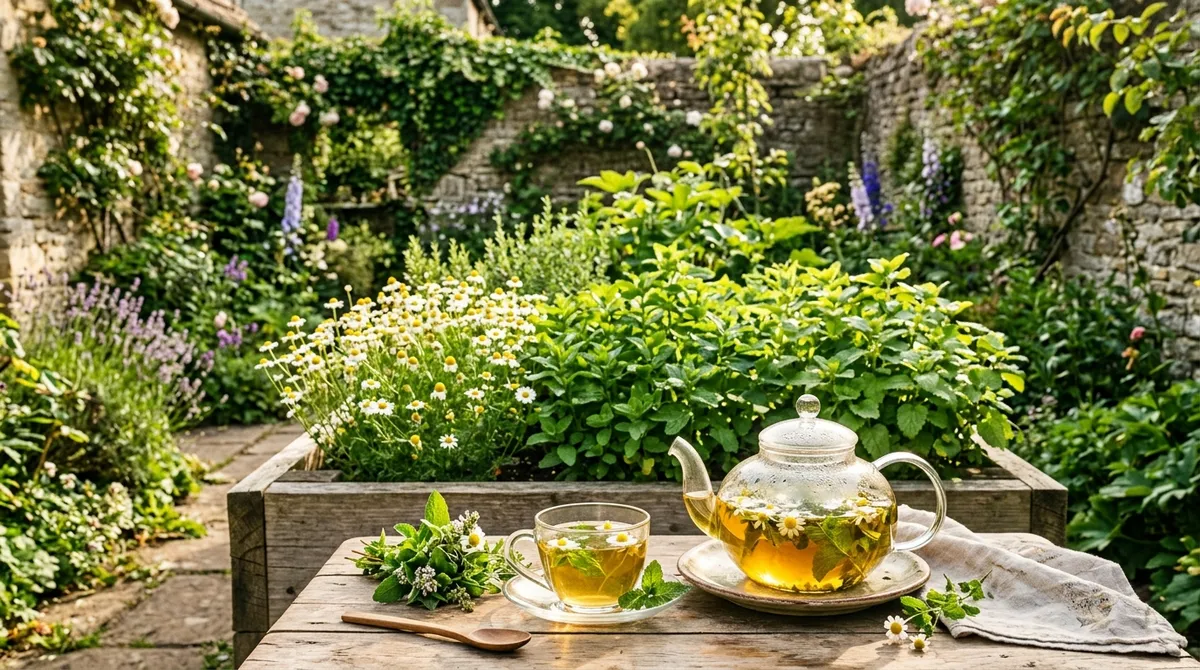
Herbal teas from a garden taste nothing like the dusty teabags on a supermarket shelf. The difference is freshness. A sprig of mint picked ten seconds ago and dropped into hot water releases oils and aromas that no packet can match. Growing your own tea herbs is one of the simplest, cheapest, and most satisfying things a UK gardener can do.
This guide covers the nine best herbs for tea in British gardens. It draws on five seasons of growing, harvesting, and comparing fresh and dried brews in a West Midlands kitchen garden with heavy clay soil. If these herbs thrive here, they will grow almost anywhere in the UK.
Which herbs make the best herbal teas?
Not every herb makes good tea. Some taste bitter. Others need tropical heat. These nine varieties grow well in UK conditions and produce genuinely pleasant brews.
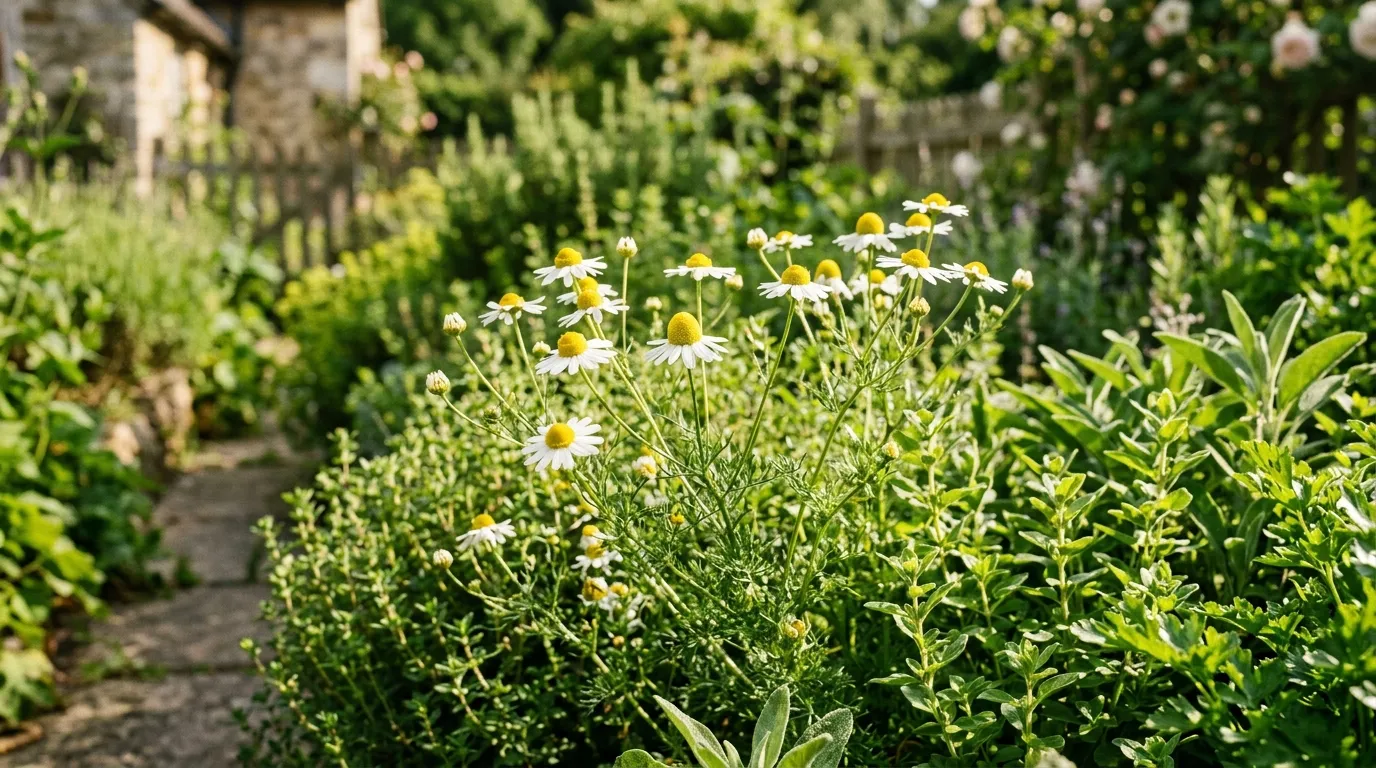
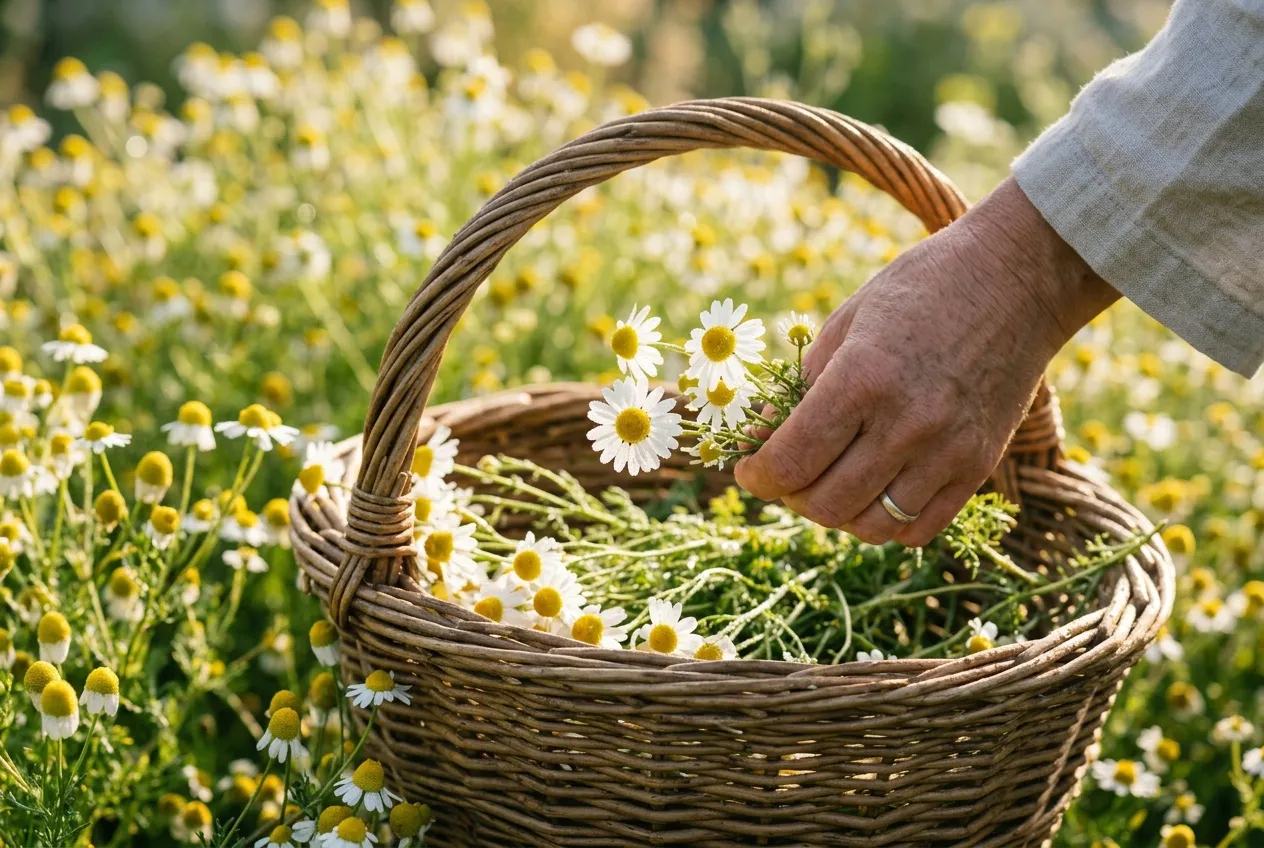 Chamomile flowers picked at their peak, when the petals fold slightly back from the centre.
Mint
The easiest tea herb to grow. Peppermint gives a strong, cooling brew. Spearmint is softer and sweeter. Both spread aggressively, so grow mint in a container to keep the roots under control. One plant produces enough leaves for 300 cups per season.
Chamomile
German chamomile (Matricaria chamomilla) is the variety grown for tea. Sow seed directly in spring, thin to 15cm spacing, and harvest the daisy-like flowers when petals begin to reflex. The apple-scented brew aids sleep. One square metre of chamomile produces roughly 200g of dried flowers per year.
Lemon balm
A hardy perennial that returns year after year with no effort. The lemon-scented leaves make a calming tea, hot or iced. Cut back hard in midsummer to encourage fresh, tender growth for a second flush. It self-seeds freely, so deadhead if you want to keep it contained.
Lemon verbena
The finest lemon flavour of any tea herb. Not fully hardy in the UK. Grow in a sheltered south-facing spot or in a pot you can move indoors when temperatures drop below minus five degrees Celsius. Worth the effort for its intense, clean citrus taste that no other herb matches.
Fennel
Fennel tea has a mild aniseed flavour. Use the feathery green fronds, not the bulb. Hardy, tall (up to 1.5m), and attractive in a border. The bronze variety looks striking and tastes identical. Cut stems regularly to encourage fresh leaf growth through summer.
Rosemary
A strong, resinous brew that suits cold winter days. Rosemary thrives in UK gardens with very little attention. Use just a 5cm sprig per cup; more than that and the flavour turns bitter. Pairs well with honey and a slice of lemon. It is evergreen and available for picking year-round.
Lavender
English lavender makes a floral, perfumed tea. Use Lavandula angustifolia varieties for the best flavour. Pick flower buds just before they fully open. Use sparingly: half a teaspoon of dried buds per cup is plenty. Too much tastes soapy.
Sage
A warming, slightly peppery brew. Garden sage (Salvia officinalis) is the right species. Pick young leaves for the mildest flavour. Sage tea has a long folk tradition for sore throats. The plant is evergreen in most UK winters and needs minimal care beyond annual pruning.
Thyme
A subtle, earthy tea. Common thyme and lemon thyme both work. Use fresh sprigs for a light brew or dried leaves for something stronger. Thyme grows well in poor, dry soil and sunny spots. It is the most drought-tolerant herb on this list.
How to grow a tea garden
You do not need much space. A 2m x 1m raised bed holds all nine herbs with room to spare. Alternatively, six to eight pots on a patio or windowsill works well for the smaller varieties.
Soil and position
Most tea herbs prefer free-draining soil in full sun. In heavy clay, add grit and organic matter to improve drainage. Building a dedicated herb garden with raised beds solves drainage problems on any soil type.
| Herb | Sun | Soil | Hardy | Spacing |
|---|---|---|---|---|
| Mint | Partial shade to full sun | Moist, any type | Yes | 30cm (in pot) |
| Chamomile | Full sun | Light, well-drained | Yes | 15cm |
| Lemon balm | Partial shade to full sun | Any, tolerates clay | Yes | 30cm |
| Lemon verbena | Full sun, sheltered | Well-drained | No (-5C) | 45cm |
| Fennel | Full sun | Well-drained | Yes | 30cm |
| Rosemary | Full sun | Well-drained, poor OK | Yes | 60cm |
| Lavender | Full sun | Well-drained, alkaline | Yes | 30cm |
| Sage | Full sun | Well-drained | Yes | 30cm |
| Thyme | Full sun | Well-drained, poor OK | Yes | 20cm |
Planting and care
Spring is the best planting time. Buy small plants from a nursery for instant results, or start chamomile and fennel from seed. Water new plants well for the first month. After that, most tea herbs need little attention beyond an annual trim and occasional feeding. Our complete guide to growing herbs covers planting methods in more detail.
Mint and lemon balm are the only two that need controlling. Both spread by underground runners and will take over a bed within a single season if left unchecked. Grow them in pots or bury a bottomless container in the soil to contain the roots.
How to harvest herbs for tea
Timing matters. The essential oils that carry flavour are at their peak in the morning, after the dew has dried but before the midday sun burns them off. Pick between 9am and 11am for the strongest taste.
For leaf herbs (mint, lemon balm, sage, thyme, rosemary): pinch or cut individual stems. Take no more than a third of the plant at once. Regular harvesting encourages bushy growth and more leaves.
For flower herbs (chamomile, lavender): pick flowers when they first open fully. Chamomile flowers are ready when petals begin to fold back. Lavender buds are best just before they open, when the colour is deepest.
The harvest window runs from May to October for most herbs. Rosemary, sage, and thyme are evergreen and can be picked year-round in mild winters.
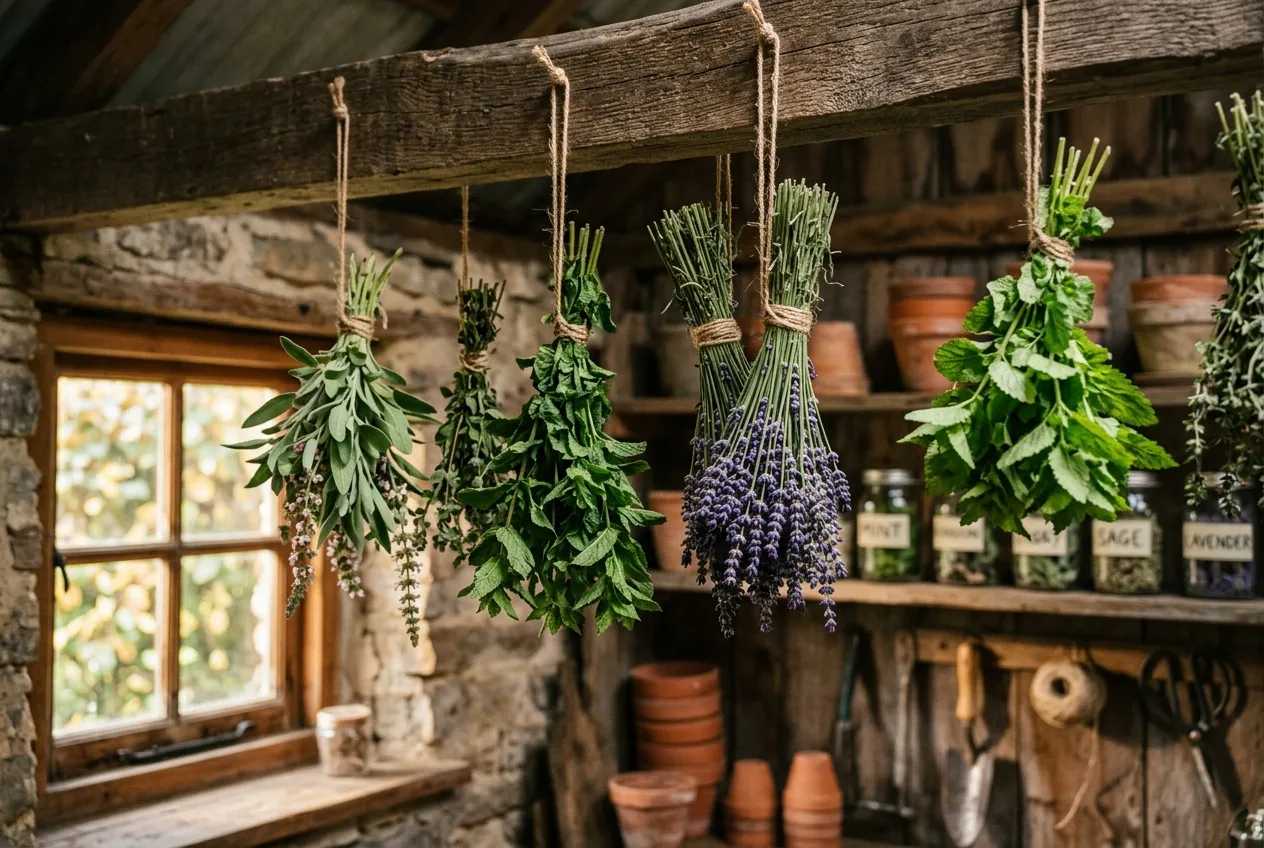 Herb bundles hanging to dry in a garden shed. Three to seven days in a warm, dark spot is all they need.
How to dry herbs for tea
Drying preserves the harvest for winter brewing. There are two reliable methods. For a full breakdown of every technique, see our guide to drying and storing herbs.
Air drying
The simplest approach. Tie stems in small bundles of 4-6 stems with string or rubber bands. Hang upside down in a warm, dry, dark place with good air flow. A garden shed, spare room, or airing cupboard all work. Avoid kitchens and bathrooms where humidity is high.
Drying takes 3-7 days depending on humidity and leaf thickness. Herbs are ready when leaves crumble easily between finger and thumb. Strip leaves from stems and store in airtight glass jars. Label with the herb name and date. Dried herbs keep their flavour for up to 12 months.
Oven and dehydrator drying
For speed, spread leaves on a baking tray and dry in an oven at 40-50 degrees Celsius with the door ajar. Check every 30 minutes. A food dehydrator set to 35 degrees works even better. Both methods take 2-4 hours. The trade-off is slightly less flavour than slow air drying.
“I always air-dry rather than oven-dry. The slow process keeps more of the volatile oils intact, and you can smell the difference in the finished tea. Patience pays off here.” — Lawrie Ashfield
Fresh vs dried: how to brew herbal teas
Both fresh and dried herbs make good tea. The method differs slightly.
Fresh herb tea
Place a generous pinch of fresh leaves (about 5-8 leaves for mint, a small handful for chamomile flowers) in a cup or teapot. Pour over water heated to 80-90 degrees Celsius. Do not use boiling water, as it scalds delicate leaves and destroys some flavour compounds. Steep for 5-10 minutes. Strain and drink.
Fresh tea is lighter, brighter, and more aromatic. It captures flavours that drying diminishes. The downside is seasonal availability, limited to the growing months.
Dried herb tea
Use roughly half the quantity of dried herbs compared to fresh, as drying concentrates the flavours. One teaspoon of dried leaves per cup is a good starting point. Use a tea strainer or infuser. Steeping time is the same: 5-10 minutes.
Dried tea is stronger, more concentrated, and available year-round. It stores easily and travels well. Most people find a mix of fresh in summer and dried through winter gives the best of both approaches.
Blending ideas and herbal tea recipes
Single-herb teas are good. Blends are better. Here are five tested combinations from the garden.
| Blend name | Ingredients | Character | Best time |
|---|---|---|---|
| Summer calm | Chamomile + lemon balm + lavender | Floral, relaxing | Evening |
| Morning lift | Peppermint + rosemary + thyme | Sharp, invigorating | Morning |
| Citrus garden | Lemon verbena + lemon balm + fennel | Bright, clean citrus | Afternoon |
| Winter warmer | Sage + rosemary + thyme + honey | Warming, savoury | Cold evenings |
| Iced garden | Spearmint + lemon balm + cucumber | Cool, refreshing | Hot days |
Start with equal parts of each herb and adjust to taste. Write down what works so you can repeat it. The Winter Warmer blend is particularly good for sore throats, combining sage and thyme which have mild antiseptic properties.
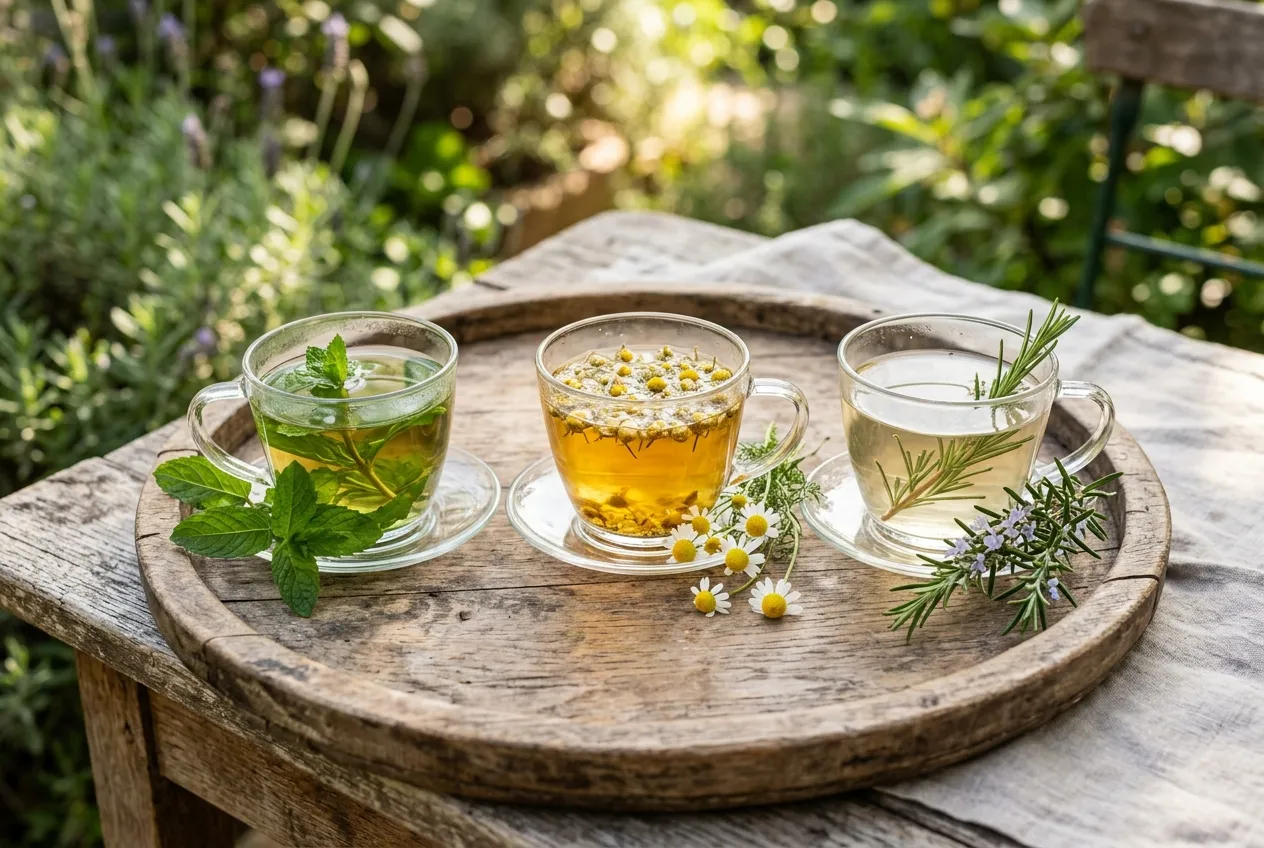 Three garden teas side by side: mint (green), chamomile (golden), and rosemary (pale). Each tastes entirely different from its shop-bought equivalent.
Safety: which plants to avoid
Not everything in the garden is safe to brew. The NHS advises caution with herbal remedies, and certain common garden plants are genuinely dangerous.
Never brew these as tea:
- Foxglove (Digitalis) — contains cardiac glycosides, potentially fatal
- Lily of the valley — toxic cardiac effects
- Monkshood (Aconitum) — one of the most poisonous UK garden plants
- Comfrey — contains pyrrolizidine alkaloids that damage the liver
- Pennyroyal mint — toxic to the liver in large doses
Use with caution:
- Sage and rosemary in large quantities during pregnancy
- Chamomile if you have severe ragweed allergies
- St John’s wort, which interferes with prescription medications
The rule is simple: never brew a plant you cannot identify with absolute certainty. Stick to the nine herbs listed in this guide and you will be safe. The RHS growing herbs guide covers identification and growing details for all common culinary herbs.
Year-round herbal tea garden plan
With the right selection, a tea garden provides fresh or dried herbs for every month of the year.
| Month | Fresh picking | Activity |
|---|---|---|
| January-February | Rosemary, sage, thyme (mild winters) | Order seeds, plan beds |
| March-April | First mint and lemon balm shoots | Sow chamomile and fennel seed |
| May-June | All nine herbs in active growth | Peak fresh tea season begins |
| July-August | Heaviest harvest period | Dry surplus for winter stocks |
| September-October | Late flush after summer cutback | Final drying batches |
| November-December | Rosemary, sage, thyme only | Use dried stock from summer |
This plan means you are never without herbal tea. Fresh from the garden for six months, dried from jars for the remaining six. A 2m x 1m bed and a shelf of glass jars is the entire infrastructure required.
Herbal tea herb comparison table
This table compares all nine herbs across the factors that matter most when choosing what to grow. Flavour and health notes are based on traditional use and published RHS guidance, not medical claims.
| Herb | Flavour profile | Traditional use | Difficulty | Harvest season |
|---|---|---|---|---|
| Mint | Cool, refreshing | Digestion, headache | Easy | May-October |
| Chamomile | Apple, floral | Sleep, relaxation | Easy | June-September |
| Lemon balm | Lemon, mild | Calm, stress relief | Easy | May-October |
| Lemon verbena | Intense citrus | Digestion, sleep | Moderate | June-September |
| Fennel | Aniseed, sweet | Digestion, bloating | Easy | June-October |
| Rosemary | Resinous, piney | Circulation, focus | Easy | Year-round |
| Lavender | Floral, perfumed | Relaxation, headache | Easy | June-August |
| Sage | Peppery, warm | Sore throat, memory | Easy | Year-round |
| Thyme | Earthy, subtle | Cough, antiseptic | Easy | Year-round |
Seven of nine herbs rate as easy. Lemon verbena is the only one requiring extra care due to its frost tenderness. Every other herb on the list survives British winters without protection.
Getting started this weekend
The fastest route to your first garden-grown cup of herbal tea is a pot of mint from a garden centre. It costs two to three pounds. Plant it in a container, water it, and within a week you can pick your first leaves. Add chamomile seed and a lemon balm plant the following week. By June, you will have three herbs producing enough tea for daily drinking.
The cost saving adds up quickly. A box of twenty premium herbal teabags costs two to four pounds. A single mint plant produces enough for 300 cups. Chamomile seed for one square metre costs under two pounds and yields enough dried flowers for a year of evening tea. The maths is clear, but the real reward is the taste. Once you have brewed tea from herbs picked thirty seconds ago, the supermarket version stops making sense entirely.
Lawrie has been gardening in the West Midlands for over 30 years. He grows his own veg using no-dig methods, keeps a wildlife-friendly garden, and writes practical advice based on real UK growing conditions.