Unusual Crops to Grow in the UK
20 unusual crops that thrive in UK gardens. From oca and yacon to cape gooseberries and shiso, tested growing advice from a Staffordshire grower.
Key takeaways
- Oca, yacon, and celeriac are three unusual root crops that produce heavy yields in UK soil without protection
- Cape gooseberries, honeyberries, and kiwi berries all fruit reliably outdoors in most UK regions
- Shiso, agretti, and land cress are cut-and-come-again leaves ready to harvest within 6-8 weeks of sowing
- Heat-loving crops like aubergines, chillies, and lemongrass succeed in containers against a south-facing wall
- Most unusual crops cost under five pounds for seeds or tubers, making them low-risk experiments
- A sowing calendar from February to June covers all 20 crops with no specialist equipment needed
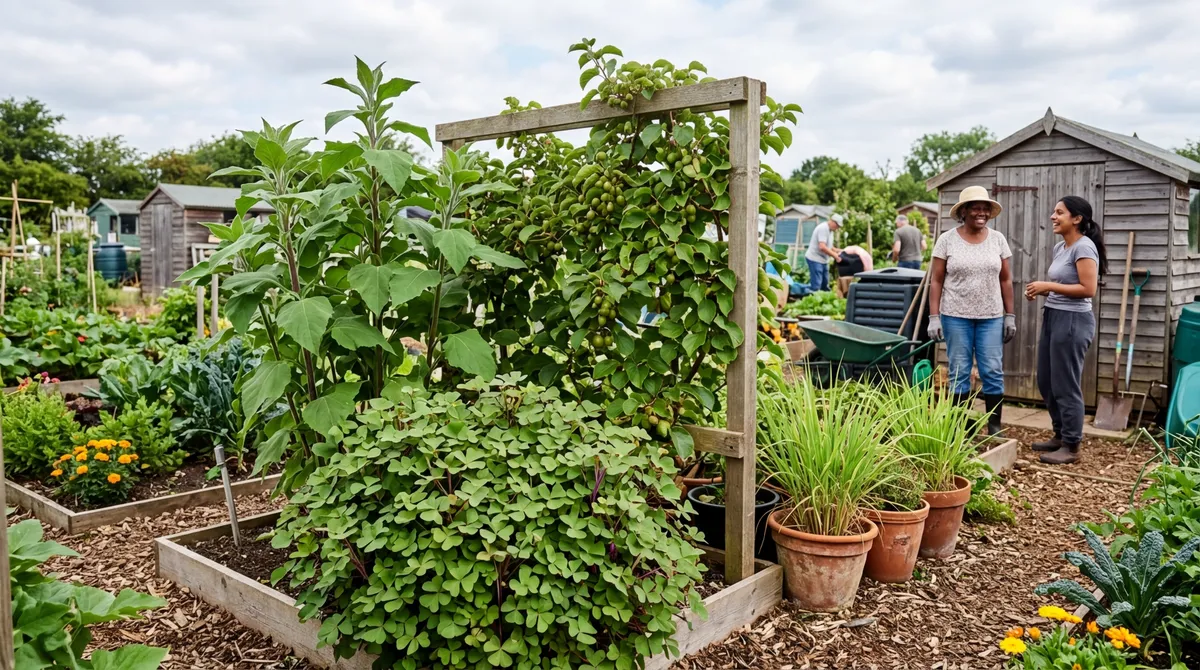
Unusual crops to grow in the UK go far beyond the standard potatoes and carrots. At least 20 edible plants from South America, Asia, and southern Europe thrive in British conditions, most without a greenhouse or any specialist equipment.
This guide covers roots, fruits, leaves, and heat-loving crops that produce genuine harvests on UK soil. Every plant listed here has been trialled in Staffordshire over multiple seasons on heavy clay — these are not wishful-thinking exotics that die at the first hint of frost.
What unusual root crops grow in the UK?
Root crops are the most rewarding place to start with unusual growing. They occupy ground that would otherwise sit idle after summer harvests, and several produce yields that rival mainstream vegetables.
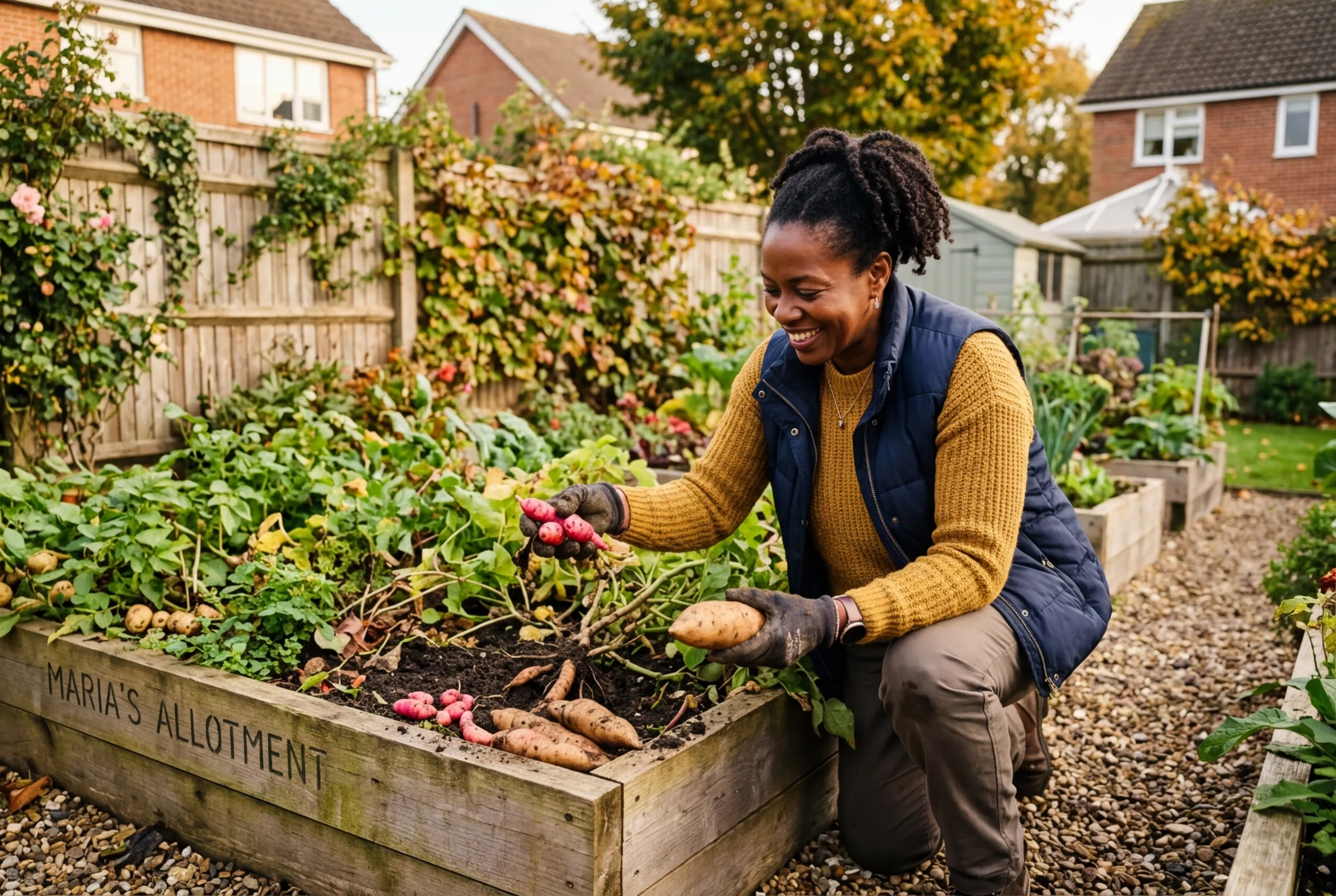
Harvesting oca tubers and yacon roots from a raised bed in autumn
Oca is the standout performer. This South American tuber produces 1-2 kg of colourful, lemony-tasting tubers per plant. Plant tubers 10 cm deep in April, space 30 cm apart, and leave them until the first frost blackens the foliage in November. The tubers come in pink, red, yellow, and orange. Eat them raw in salads or roast like potatoes. After a few days in sunlight, they sweeten noticeably.
Yacon produces enormous, crunchy tubers that taste like a cross between apple and watermelon. Each plant yields 2-4 kg. Start the growing crowns indoors in March and plant out after the last frost. The plants grow 1.5-2 metres tall with attractive foliage. Harvest in November when the stems die back. Eat raw — they are 90% water and naturally sweet.
Celeriac is underrated rather than truly exotic, but most UK gardeners never attempt it. Sow in February under cover, transplant in May, and harvest tennis-ball-sized roots from October. The flavour is intense celery with an earthy depth. It needs consistent moisture and rich soil. Remove lower leaves through summer to encourage the root to swell.
Salsify and scorzonera are old-fashioned root vegetables that deserve a comeback. Both taste like a mild, nutty artichoke. Direct sow in April in deep, stone-free soil. Harvest from October onwards. Salsify has white roots; scorzonera has black-skinned roots with white flesh. Both are completely hardy and can stay in the ground through winter, dug as needed. The RHS vegetable growing guide covers these and other heritage roots in detail.
Can you grow unusual fruit in the UK?
Several unusual fruits produce reliable harvests across the UK without any protection. The key is choosing species bred for cool, maritime climates rather than forcing tropical plants to survive.
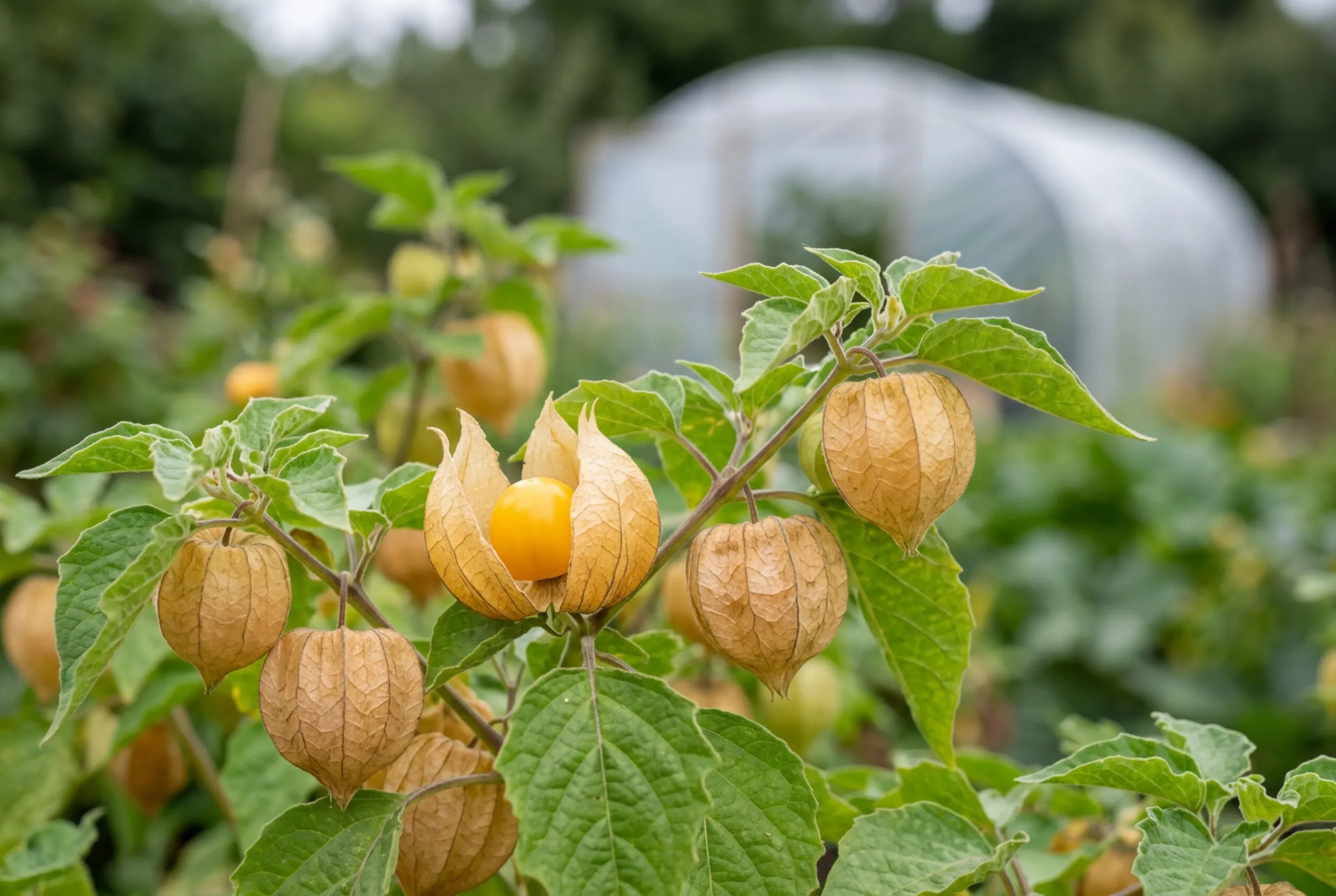
Cape gooseberries ripening in their papery husks, ready for picking from August
Cape gooseberries (Physalis peruviana) are the easiest unusual fruit to grow. Start seeds indoors in February, pot on, and transplant outside after the last frost. Plants reach 1-1.5 metres and produce 200-400 golden fruits wrapped in papery husks. The flavour is sharp, sweet, and tropical. Pick when the husk turns brown and papery. In good summers, harvests continue until October.
Honeyberries (Lonicera caerulea) produce the earliest garden fruit of the year, ripening in May — weeks before strawberries. The berries taste like blueberry crossed with blackcurrant. Plants are fully hardy to minus 40 degrees and tolerate partial shade. They need two different cultivars for cross-pollination. ‘Aurora’ and ‘Borealis’ are the best UK-performing pair. Each bush yields 2-3 kg once established after 3 years.
Kiwi berries (Actinidia arguta) are grape-sized fruits with smooth, edible skin and intense kiwi flavour. The vines are fully hardy to minus 25 degrees and grow vigorously to 5-8 metres. They need a strong frame, pergola, or fence. Plant both a male and female for pollination — one male pollinates up to eight females. Fruiting begins after 3-4 years but plants crop for 50+ years. ‘Issai’ is a self-fertile cultivar if you only have space for one plant.
Japanese wineberries are fully hardy raspberry relatives with stunning red, bristly stems. The orange-red berries ripen in late July and taste like a sweeter, more aromatic raspberry. Plants are self-fertile, virtually pest-free, and tolerate most soils. Train them against a fence or let them scramble through a hedge. They spread by tip-rooting, so cut back runners to keep them contained.
What unusual leaves can you grow in the UK?
Leaf crops offer the fastest results for adventurous growers. Most are ready to harvest within 6-8 weeks of sowing and produce repeat cuts through the season.
Agretti (Salsola soda) is the Italian succulent that chefs prize for its crunchy, slightly salty stems. Sow direct in April once soil reaches 15 degrees. Seeds germinate poorly when old, so buy fresh each year. Harvest young shoots at 15-20 cm by cutting above the base. The plant regrows for 3-4 cuts. Steam or stir-fry for 2 minutes — it turns mushy if overcooked.
Shiso (Perilla frutescens) is the Japanese herb essential for sushi, tempura, and salads. Green shiso has a basil-mint-anise flavour; purple shiso adds colour and a more intense taste. Sow indoors in March, transplant after the last frost. Plants grow to 60 cm and produce leaves from June to September. Pick leaves as needed. It self-seeds freely, giving free plants the following year.
Land cress is a peppery salad leaf that tastes like watercress but grows in ordinary garden soil. Sow direct from March to September for year-round harvests. It tolerates shade and cold, cropping through winter without protection. Pick outer leaves regularly to keep plants producing. It bolts in hot, dry conditions, so keep it watered in summer. This is one of the easiest unusual crops for beginners.
Perilla (also known as beefsteak plant) has large, deeply coloured leaves in green or deep purple. The flavour is unique — somewhere between basil, cinnamon, and mint. It grows to 60-90 cm and works well in containers. Use fresh leaves to wrap grilled meat or fish in the Korean style, or shred into salads.
Which unusual squash and gourds thrive in UK conditions?
Beyond standard butternut and courgettes, several unusual cucurbits produce well in UK summers. They need warmth to establish but grow fast once temperatures rise in June.
Tromboncino is an Italian climbing squash with long, curved fruits reaching 60-90 cm. Pick young as a courgette substitute or leave to mature for winter storage. The climbing habit saves ground space — train it up a sturdy frame or trellis. Sow indoors in April, plant out in June. Each plant produces 8-12 fruits in a good season.
Kabocha squash (Japanese pumpkin) has dry, sweet, chestnut-flavoured flesh — far superior to most UK-grown squash. ‘Uchiki Kuri’ (onion squash) is the most reliable UK variety, producing 4-6 orange fruits per plant. Sow indoors in April, transplant to a sunny, sheltered spot in June. Harvest in September before the first frost. Fruits store for 3-6 months in a cool room.
Cucamelon (Melothria scabra) produces grape-sized fruits that look like miniature watermelons and taste like cucumber with a citrus zing. Sow indoors in April, plant outside in a sheltered spot in June. The vines climb to 2-3 metres and produce dozens of fruits from July. Pick regularly to keep plants cropping. They are excellent in salads, pickled, or eaten fresh off the vine. Our guide to succession planting helps time these warm-season crops alongside your regular harvests.
How do heat-loving unusual crops grow in UK gardens?
Several crops traditionally associated with warmer climates succeed in the UK with a south-facing wall, containers, and an early indoor start. The secret is stored heat — walls, paving, and dark containers all raise the temperature around plants by 2-4 degrees.
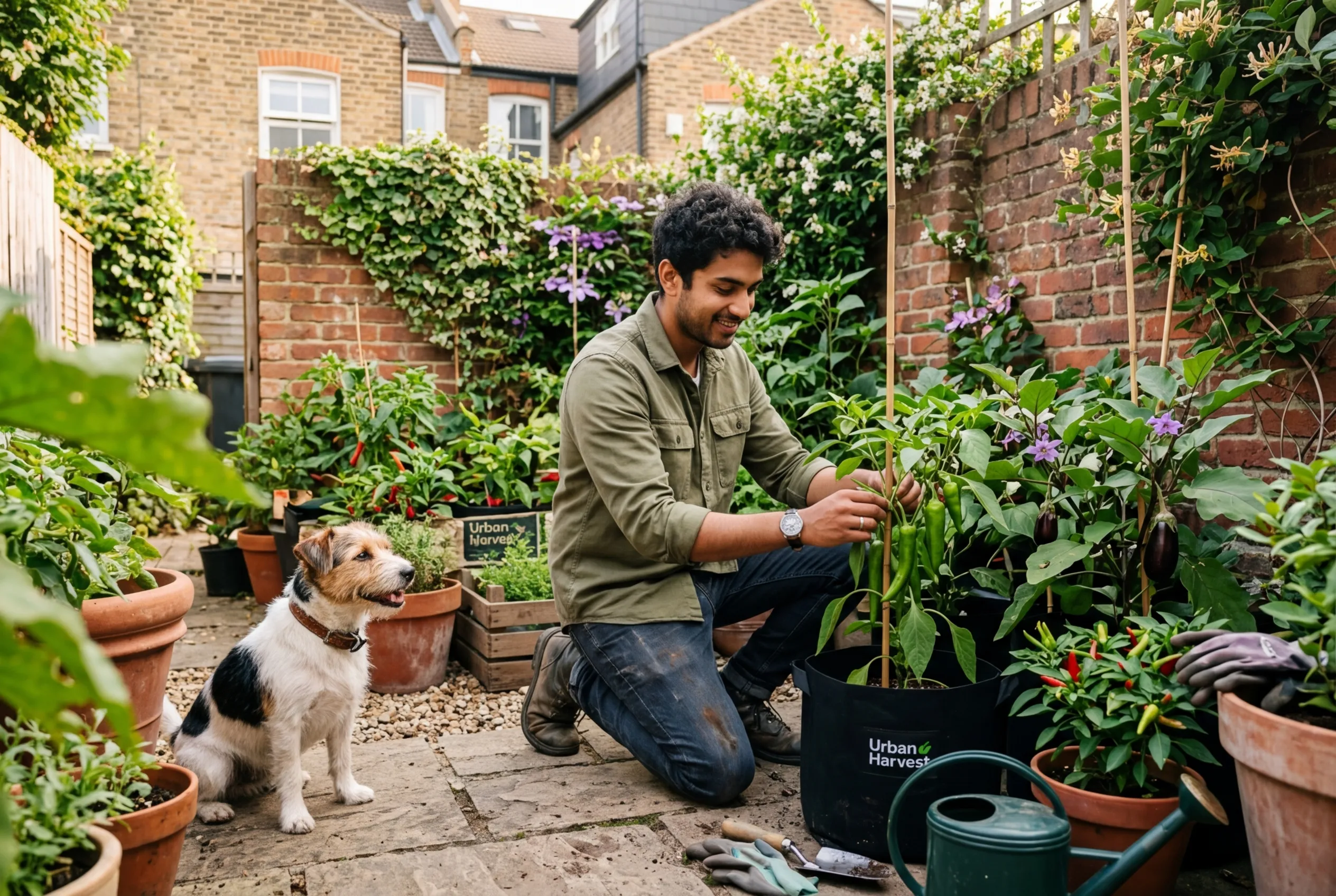
Chillies and aubergines thriving in containers in a sheltered urban courtyard
Aubergines crop well outdoors in southern England and in containers anywhere in the UK. Choose compact varieties like ‘Patio Baby’ or ‘Ophelia’. Start seeds indoors in February at 20-25 degrees. Grow in 30 cm pots of rich compost against a south-facing wall. Each plant produces 4-8 fruits from August. Pinch out the growing tip after 5 fruits set to concentrate energy. Our aubergine growing guide covers the full method.
Chilli peppers are one of the most successful unusual crops in UK growing. Hundreds of varieties thrive in pots on a sunny patio or windowsill. Start seeds in January or February at 20-28 degrees. Move outside in June to a sheltered, sunny position. Even in northern England and Scotland, compact varieties like ‘Apache’ and ‘Prairie Fire’ produce heavily in containers. See our chilli growing guide for variety recommendations and ripening tips.
Lemongrass grows surprisingly well as a UK summer container plant. Root fresh supermarket stalks in a glass of water on a warm windowsill — roots appear within 2-3 weeks. Pot into free-draining compost and grow in full sun from May. Harvest outer stalks from July by twisting and pulling from the base. Plants are not hardy below minus 2 degrees, so bring pots indoors before the first frost. They overwinter happily on a bright windowsill.
Tomatillos are the tangy green fruits used in Mexican salsa verde. They grow exactly like tomatoes but are hardier and more prolific. Sow indoors in March, plant two or more outside in June (they need cross-pollination), and harvest from August when fruits fill their papery husks. Each plant produces 50-100 fruits in a good year. The flavour is tart and citrussy — quite different from tomatoes.
Unusual crops comparison table
| Crop | Difficulty | Space needed | Start indoors | Plant out | Harvest | Yield per plant |
|---|---|---|---|---|---|---|
| Oca | Easy | 30 cm spacing | No | April | Nov | 1-2 kg |
| Yacon | Easy | 60 cm spacing | March | May | Nov | 2-4 kg |
| Celeriac | Moderate | 30 cm spacing | Feb | May | Oct-Mar | 1 root |
| Salsify | Easy | 15 cm spacing | No | April (direct) | Oct-Mar | 2-3 roots |
| Cape gooseberry | Easy | 60 cm spacing | Feb | May | Aug-Oct | 200-400 fruits |
| Honeyberry | Easy | 1.5 m spacing | No | Autumn | May-Jun | 2-3 kg |
| Kiwi berry | Moderate | 3-4 m spacing | No | Autumn | Sep-Oct | 5-10 kg |
| Japanese wineberry | Easy | 1.5 m spacing | No | Autumn | Jul-Aug | 1-2 kg |
| Agretti | Moderate | 20 cm spacing | No | April (direct) | Jun-Aug | 3-4 cuts |
| Shiso | Easy | 30 cm spacing | March | May | Jun-Sep | Continuous |
| Land cress | Easy | 15 cm spacing | No | Mar-Sep (direct) | Year-round | Continuous |
| Tromboncino | Easy | 60 cm + frame | April | June | Jul-Oct | 8-12 fruits |
| Kabocha | Moderate | 90 cm spacing | April | June | Sep | 4-6 fruits |
| Cucamelon | Easy | 30 cm + frame | April | June | Jul-Sep | 50+ fruits |
| Aubergine | Moderate | 30 cm pot | Feb | June | Aug-Sep | 4-8 fruits |
| Chilli pepper | Easy | 20 cm pot | Jan-Feb | June | Jul-Oct | 20-50+ fruits |
| Lemongrass | Easy | 25 cm pot | March | May | Jul-Oct | 6-10 stalks |
| Tomatillo | Easy | 60 cm spacing | March | June | Aug-Oct | 50-100 fruits |
| Perilla | Easy | 30 cm spacing | March | May | Jun-Sep | Continuous |
| Scorzonera | Easy | 15 cm spacing | No | April (direct) | Oct-Mar | 2-3 roots |
Month-by-month sowing calendar for unusual crops
January: Start chilli pepper seeds indoors on a heated mat or warm windowsill (20-28 degrees needed for germination).
February: Sow cape gooseberries, aubergines, and celeriac indoors. Root lemongrass stalks in water on a windowsill.
March: Start shiso, perilla, lemongrass (from seed), tomatillos, tromboncino, kabocha, and cucamelon seeds indoors. Sow land cress direct outdoors if soil is workable.
April: Plant oca and yacon tubers outdoors after the soil has warmed. Direct sow salsify, scorzonera, land cress, and agretti outside. Continue indoor sowings of tender crops.
May: Transplant all tender crops (cape gooseberries, aubergines, chillies, tomatillos, shiso, lemongrass) outdoors after the last frost in your area. Plant out tromboncino, kabocha, and cucamelon once nights are consistently above 10 degrees.
June: Final outdoor plantings for any remaining tender crops. Begin harvesting land cress, shiso, and agretti leaves.
July-October: Harvest season for most crops. Pick chillies, cape gooseberries, and tomatillos regularly to encourage continued fruiting.
November: Harvest oca and yacon after the first frost. Lift lemongrass containers indoors. Plant honeyberry and kiwi berry bushes and vines during dormancy.
For a full year-round planting schedule that fits unusual crops alongside standard vegetables, see our greenhouse growing calendar.
How to get started with unusual crops
The lowest-risk way to begin is with three or four crops that match your growing conditions. If you have an allotment or large garden, try oca, cape gooseberries, and tromboncino. For small gardens and containers, chillies, shiso, and lemongrass work brilliantly — our guides to container vegetable gardening and growing in grow bags cover the techniques.
Buy from specialist UK suppliers rather than general garden centres. Real Seeds, The Backyard Larder, and Incredible Vegetables stock well-adapted strains of every crop listed here. Garden Organic maintains a heritage seed library with unusual varieties you cannot find commercially.
Treat unusual crops as additions to your regular growing, not replacements. Dedicate 10-15% of your growing space to experiments each year. Some will fail — agretti germination is notoriously patchy, and kiwi berries need patience before they fruit. But the ones that succeed will become permanent fixtures.
For a broader foundation of reliable food crops to grow alongside these unusual varieties, our grow your own vegetables guide covers the essentials.
Frequently asked questions
What unusual vegetables can I grow in the UK?
Oca, yacon, celeriac, salsify, agretti, shiso, and perilla all grow outdoors in the UK without protection. Oca and yacon are South American tubers that crop from October. Agretti and shiso are cut-and-come-again leaves ready in 6-8 weeks. Celeriac needs a long season but produces large roots by autumn.
Can you grow cape gooseberries outdoors in the UK?
Cape gooseberries fruit reliably outdoors across most of the UK. Start seeds indoors in February, transplant after the last frost in May, and harvest from August to October. Plants reach 1-1.5 metres tall and produce 200-400 fruits each. They need full sun and well-drained soil.
What is oca and how do you grow it in the UK?
Oca is a South American tuber crop that tastes like lemony potato. Plant tubers 10 cm deep in April, space 30 cm apart, and harvest after the first frost in November. Each plant yields 1-2 kg of colourful tubers in pink, red, yellow, and orange. It needs no special care beyond watering in dry spells.
Are kiwi berries hardy in the UK?
Kiwi berries are fully hardy to minus 25 degrees Celsius. They grow as vigorous vines reaching 5-8 metres and need a sturdy frame or fence. Fruits are grape-sized with smooth edible skin. Plants take 3-4 years to fruit but then crop heavily for decades. Grow both male and female plants for pollination.
What unusual fruits grow well in UK gardens?
Honeyberries, kiwi berries, cape gooseberries, and Japanese wineberries all fruit well in UK conditions. Honeyberries produce the earliest fruit of any garden berry, ripening in May. Japanese wineberries are fully hardy, self-fertile, and almost pest-free. Cape gooseberries need starting indoors but fruit heavily outdoors.
Can I grow lemongrass in the UK?
Lemongrass grows well in UK summers as a container plant. Start from supermarket stalks rooted in water or from seed in March. Grow in a large pot of free-draining compost in full sun. Harvest outer stalks from July. Bring pots indoors before the first frost as lemongrass is not hardy below minus 2 degrees.
When should I sow unusual crops in the UK?
Start cape gooseberries and lemongrass indoors in February. Sow shiso, agretti, and chillies indoors in March. Plant oca and yacon tubers outdoors in April. Direct sow land cress and salsify outdoors in April. Transplant tender crops outside after the last frost in late May. Honeyberry and kiwi berry plants go in during autumn or spring.
Lawrie has been gardening in the West Midlands for over 30 years. He grows his own veg using no-dig methods, keeps a wildlife-friendly garden, and writes practical advice based on real UK growing conditions.