Allotment Planner: Month-by-Month
Month-by-month allotment planner for UK growers. Sowing, planting, harvesting and maintenance tasks for every month, tested on heavy clay over 7 seasons.
Key takeaways
- March to May is the critical sowing window — missing it delays harvests by 4-6 weeks or loses them entirely
- July and August are peak harvest months, with 15-20 crops ready to pick on a well-planned plot
- Sow green manures on empty beds from September onwards to protect soil structure over winter
- Start chitting potatoes indoors in late January, 6 weeks before your planned planting date
- Succession sow salads and radishes every 2-3 weeks from April to August for continuous harvests
- A four-bed crop rotation system prevents soil disease and reduces pest pressure year on year
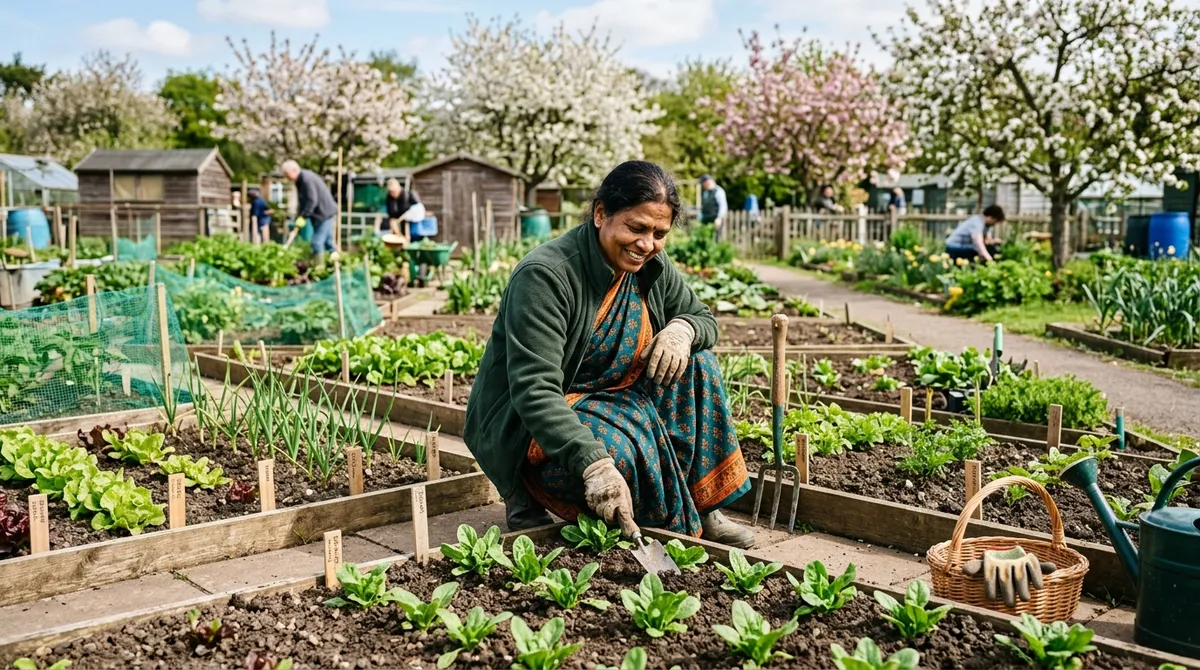
A good allotment planner turns guesswork into a structured growing year that keeps your plot productive from January to December. Without a month-by-month calendar, it is easy to miss sowing windows, forget key maintenance tasks, and end up with gluts in August followed by bare beds in October.
This planner is based on 7 seasons of hands-on experience on a full-size plot in Staffordshire, growing 40+ vegetable varieties on heavy clay. Every date has been tested against real UK weather, not textbook averages. If you are new to allotment growing, our allotment for beginners guide covers the basics of getting started before diving into the monthly calendar.
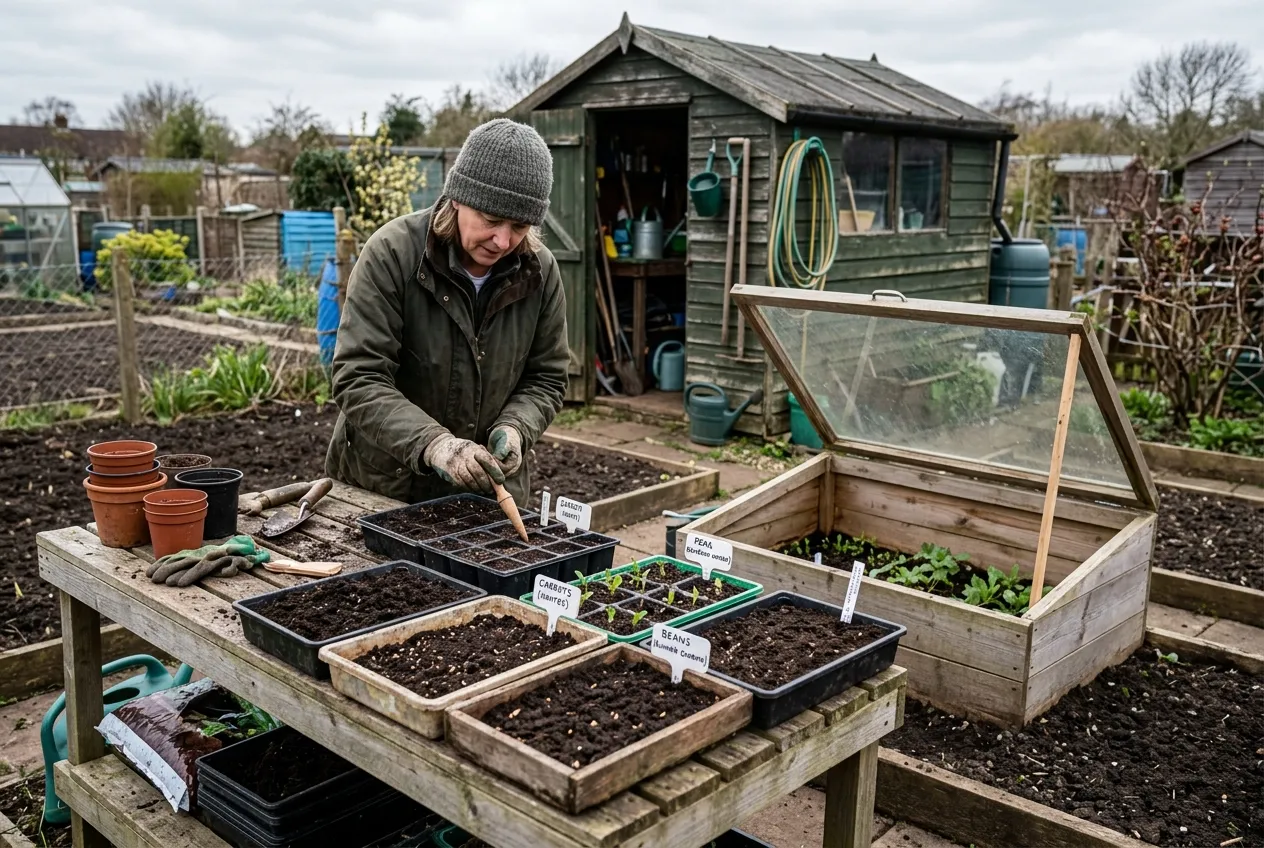
Seed trays labelled and ready for sowing on an allotment potting bench in March.
January: plan, order seeds, and chit potatoes
January is a planning month. The ground is too cold and wet for most tasks, but the work you do now sets up the entire growing year.
Order seeds early. Popular varieties sell out by February. Plan your crop rotation for the year and order accordingly. Keep a list of what worked last year and what failed.
Start chitting seed potatoes from late January. Stand them upright in egg boxes in a cool, bright room (10-15 degrees C). The shoots should reach 2-3 cm by planting time in March. Check stored root vegetables for rot and remove any that are soft.
Maintenance: Clean and sharpen tools. Repair cold frames and cloches. Check water butts for frost damage. Browse the seed sowing calendar and mark key dates.
February: indoor sowing begins
The first seeds go in this month, but all under cover. Soil temperatures outdoors are still below the 5-7 degrees C minimum most seeds need.
Sow indoors: Tomatoes, peppers, chillies, and aubergines in propagators at 18-22 degrees C. These slow growers need a 6-8 week head start before they go outside in late May.
Prepare beds on dry days. Spread compost or manure if you did not manage it in autumn. Cover beds with black polythene or old carpet to warm the soil 2-3 weeks before you plan to sow. On heavy clay, this makes a noticeable difference to March germination rates.
Plant: Jerusalem artichoke tubers go in now. They tolerate cold soil and establish well from a February start.
March: the outdoor sowing season opens
March is when the allotment year truly begins. Soil temperatures rise above 5 degrees C in most of England by mid-month, though northern plots may need to wait until late March or early April.
Sow outdoors: Broad beans, parsnips, early peas, spinach, rocket, and spring onions. All tolerate cool soil. Parsnips need fresh seed each year — germination drops sharply with old stock.
Sow under cover: Lettuce, beetroot, and calabrese in modules for transplanting in April. This gives them a head start without risking slug damage outdoors.
Plant: First early potatoes go in from late March. Space 30 cm apart in rows 60 cm apart, 12-15 cm deep. Earth up as shoots emerge. Onion sets can go in now too, pushed gently into prepared soil.
Maintenance: Hoe weed seedlings on dry days before they establish. Check your allotment layout plan and adjust bed assignments for the season.
April: peak sowing month
April is the busiest sowing month. Soil temperatures reach 8-12 degrees C and daylight hours increase rapidly. Nearly every vegetable can be started this month.
Sow outdoors: Carrots, beetroot, turnips, radishes, Swiss chard, lettuce, spring onions (succession sow every 2-3 weeks), and second early peas. Use succession planting to stagger harvests and avoid gluts.
Sow indoors: Courgettes, squash, pumpkins, French beans, and runner beans in individual pots. These frost-tender crops need 3-4 weeks indoors before planting out after the last frost.
Plant out: Onion sets, shallots, and early potatoes if not done in March. Transplant module-raised lettuce and calabrese under fleece.
Maintenance: Keep on top of weeding. Earth up potatoes as shoots reach 15-20 cm. Net brassica beds against pigeons. Water newly planted sets if April is dry.
May: harden off and plant out tender crops
May bridges spring and summer. The last frost date in most of England falls between late April and mid-May, though northern sites and frost pockets may see frost into early June.
Plant out after last frost: Courgettes, squash, pumpkins, runner beans, French beans, tomatoes (outdoor varieties), and sweetcorn. Harden off indoor-raised seedlings for 7-10 days before planting. Cover with fleece for the first week if nights are cool.
Sow outdoors: Main succession of carrots, beetroot, and salad leaves. Direct sow runner beans and French beans from mid-May. Sow swede and kale for autumn and winter harvests.
Maintenance: Water transplants daily until established. Stake or support peas. Pinch out broad bean tips when the first pods set (this also discourages blackfly). Refer to allotment rules if you are unsure about structures like bean frames or netting height on your site.
June: growing fast, weeding faster
June is all about maintenance. Long days and warm soil mean everything grows rapidly, including weeds. Stay on top of hoeing and the summer rewards follow.
Sow: Final succession of salad leaves, radishes, and spring onions. Sow French beans for a late crop. Sow Florence fennel.
Harvest begins: Early potatoes, broad beans, peas, lettuce, radishes, spring onions, spinach, and gooseberries. Pick courgettes when small (15-20 cm) for the best flavour. Cut-and-come-again lettuce produces for 6-8 weeks from a single sowing.
Maintenance: Water deeply once or twice a week rather than a light daily sprinkle. Mulch around courgettes, beans, and tomatoes with 5-8 cm of compost to retain moisture. Tie in tomato side shoots. Earth up maincrop potatoes for the last time.
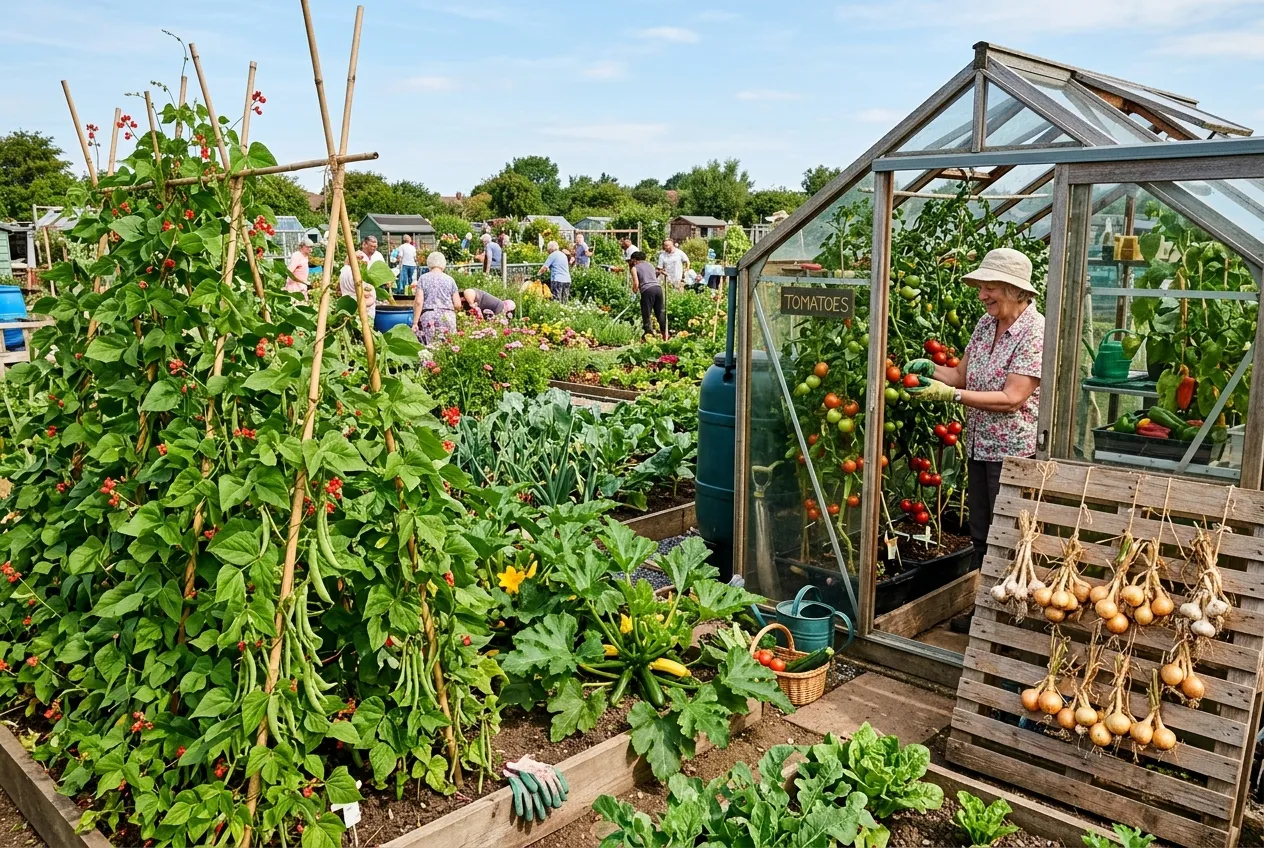
Peak harvest on a productive allotment in July, with runner beans, greenhouse tomatoes, and onions drying.
July: peak harvest month
July is the most rewarding month on the allotment. On a well-planned plot, 15-20 different crops are ready to harvest.
Harvest: Runner beans, French beans, courgettes, tomatoes (greenhouse), beetroot, carrots, new potatoes, onions (when tops fall over), shallots, garlic, peas, chard, calabrese, and soft fruit. Harvest regularly to keep plants producing.
Sow for autumn and winter: Spring cabbage, kale, and turnips for autumn. Sow a final batch of beetroot and carrots for late-season harvests.
Maintenance: Water consistently, especially beans and courgettes. Feed tomatoes weekly with a high-potash liquid fertiliser once the first truss sets. Remove yellowing leaves from the base of tomato plants. Check brassicas for caterpillar damage and pick off by hand.
August: second harvest peak and autumn prep
August continues the harvest and starts the transition toward autumn. Some beds are clearing now, creating space for green manures and overwintering crops.
Harvest: Sweetcorn (when tassels turn brown), maincrop potatoes, tomatoes (outdoor), runner beans, courgettes, onions, plums, and blackberries. Lift maincrop onions and dry on a rack for 2-3 weeks before storing.
Sow: Spring cabbage and winter lettuce. Sow green manure (mustard, phacelia) on cleared beds. These fast-growing cover crops protect bare soil and add organic matter when dug in before winter.
Plant: Autumn-fruiting strawberry runners. Transplant spring cabbage seedlings into final positions.
Maintenance: Continue watering and feeding. Prune summer-fruiting raspberry canes after the last pick. Organise your allotment shed and check stored seed viability for autumn sowings.
September: transition to autumn
The harvest continues but the pace shifts. Shorter days and cooler nights slow growth. This is the month to start building soil for next year.
Harvest: Squash and pumpkins (when stems go dry and woody), sweetcorn, runner beans, tomatoes (ripen green ones on a windowsill), apples, and pears.
Sow: Overwintering broad beans (Aquadulce Claudia variety) and overwintering peas. Sow green manures (field beans, grazing rye, crimson clover) on every cleared bed. These protect soil from winter rain erosion and fix nitrogen.
Plant: Garlic cloves in October-ready beds. Spring-flowering bulbs if your site allows them. Autumn onion sets (Radar, Shakespeare varieties).
Maintenance: Clear spent crops and add to the compost heap. Pull out bean plants but leave roots in the soil — the nitrogen-fixing nodules feed next year’s crops.
October: soil building and winter planting
October is for looking after the soil rather than the crops. The growing season is winding down, but there is plenty of useful work to do.
Plant: Garlic cloves 15 cm apart, 5 cm deep. This is the ideal month across most of the UK. Plant autumn onion sets. Transplant spring cabbage to final positions.
Harvest: Remaining squash, late beetroot, carrots (lift and store in sand), parsnips (leave in the ground for frost to sweeten them), leeks, and Brussels sprouts.
Maintenance: Spread 5-8 cm of well-rotted manure or compost on cleared beds. Leave it on the surface for worms to incorporate. Check our UK vegetable planting calendar for any final planting windows before winter.
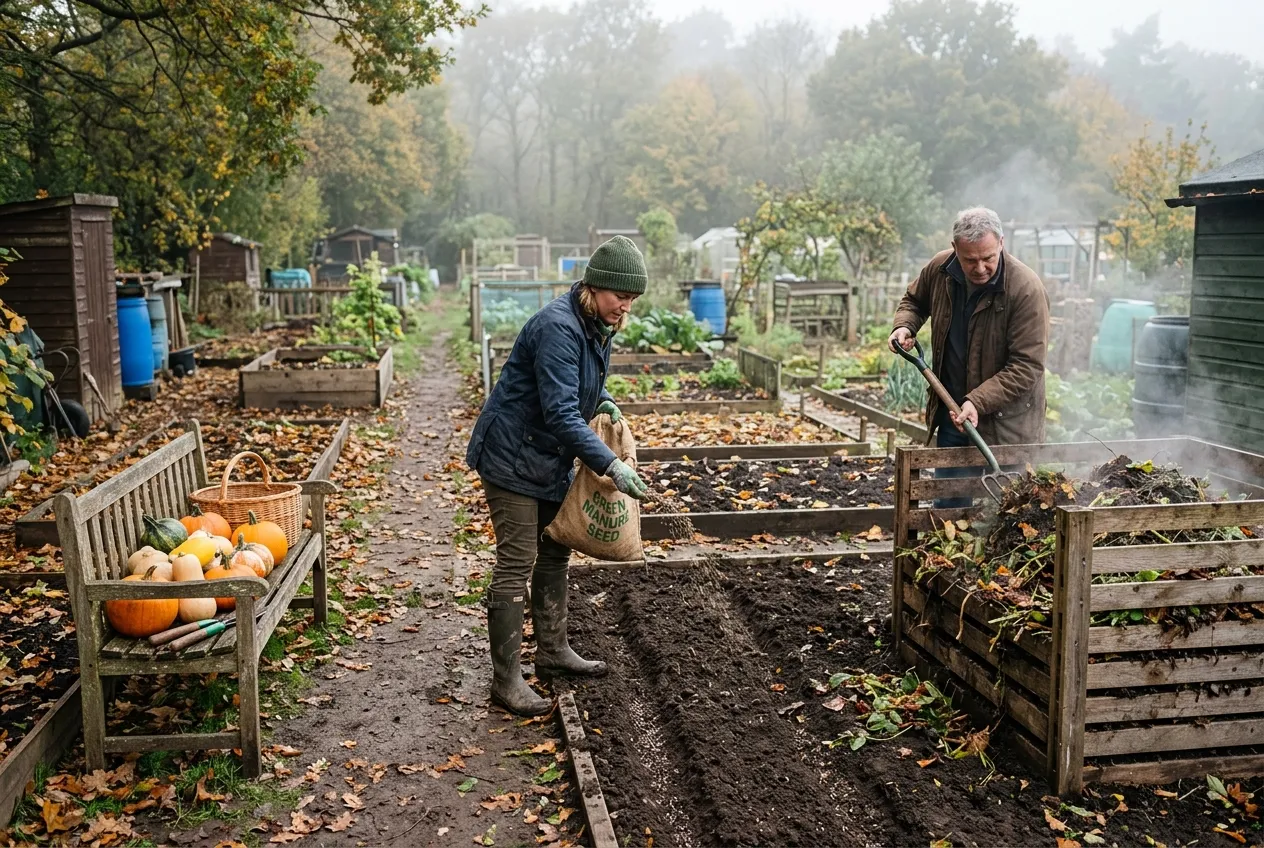
October allotment maintenance: sowing green manure on cleared beds and turning the compost heap.
November and December: rest, repair, and plan
The two quietest months. Very little grows, and the soil is often too wet to work without causing compaction.
Harvest as needed: Leeks, parsnips, Brussels sprouts, kale, celeriac, and winter cabbage. All of these stand happily in the ground until you need them.
November tasks: Finish spreading manure. Check green manure growth and resow any patchy areas. Drain and store hosepipes. Clean out the greenhouse. Prune fruit trees and bushes while dormant.
December tasks: Order seed catalogues and plan next year’s rotation. Sharpen and oil tools. Repair raised bed edges, paths, and structures. Check stored onions and potatoes for rot. This is the month to review your logbook and identify what to change next year.
Month-by-month sowing and harvest calendar
This table shows the key timing windows for 15 staple allotment crops. S = sow, P = plant out, H = harvest. Adjust by 2-3 weeks for northern England, Scotland, and exposed sites.
| Crop | Jan | Feb | Mar | Apr | May | Jun | Jul | Aug | Sep | Oct | Nov | Dec |
|---|---|---|---|---|---|---|---|---|---|---|---|---|
| Potatoes | P | P | H | H | ||||||||
| Broad beans | S | H | H | S | ||||||||
| Peas | S | S | H | H | ||||||||
| Runner beans | S | P | H | H | H | |||||||
| Carrots | S | S | S | H | H | H | H | |||||
| Beetroot | S | S | H | H | H | |||||||
| Courgettes | S | P | H | H | H | |||||||
| Tomatoes | S | P | H | H | H | |||||||
| Onions | P | P | H | H | P | |||||||
| Garlic | P | |||||||||||
| Lettuce | S | S | S | H | H | H | ||||||
| Kale | S | H | H | H | H | |||||||
| Leeks | S | S | P | H | H | H | H | |||||
| Parsnips | S | H | H | H | ||||||||
| Squash | S | P | H | H |
Northern vs southern UK timing
The UK spans 10 degrees of latitude. Sowing dates in Cornwall and Kent can be 3-4 weeks earlier than Northumberland or the Scottish Highlands.
Southern England (south of Birmingham): Follow the dates in this planner as written. Most years, outdoor sowing starts in early to mid-March. Last frost is typically late April.
Northern England, Scotland, and high ground: Add 2-3 weeks to all spring sowing dates. Start outdoor sowing from late March or early April. Last frost often falls in mid to late May. Choose short-season varieties of tomatoes, squash, and sweetcorn to ensure they ripen before autumn.
Coastal areas benefit from milder winters and later first frosts but may face stronger winds. Use windbreaks to protect tall crops like runner beans and sweetcorn.
The National Allotment Society publishes regional growing guides and connects you with local allotment communities that can advise on site-specific timing.
Frequently asked questions
When should I start sowing seeds on my allotment?
Start sowing indoors in February with tomatoes, peppers, and aubergines. Outdoors, direct sowing begins in March with broad beans, parsnips, and early peas. The main sowing window runs from March to May. Sowing too early into cold, wet soil causes poor germination and wastes seed. Check soil temperature with a thermometer — most seeds need a minimum of 5-7 degrees C.
What is the best month to plant potatoes on an allotment?
Plant first early potatoes in late March and maincrop varieties in mid-April. Chit seed potatoes indoors from late January, standing them in egg boxes in a cool, bright spot at 10-15 degrees C. Planting too early risks frost damage to emerging shoots. Cover foliage with horticultural fleece if a late frost is forecast.
How do I plan crop rotation on an allotment?
Divide your plot into four beds and rotate crops annually. Potatoes go in bed one, legumes (beans and peas) in bed two, brassicas (cabbage, kale, sprouts) in bed three, and roots and alliums (carrots, onions, garlic) in bed four. Each group moves one bed forward each year. This breaks pest and disease cycles and balances nutrient demands. Our crop rotation planner has a full four-year schedule.
What should I do on my allotment in winter?
Spread 5-8 cm of well-rotted manure on empty beds in November. Sow green manure crops like field beans or grazing rye on bare soil. Plant garlic cloves and overwintering onion sets in October or November. Repair sheds, paths, and raised beds. Order seeds for next year by January. Winter is for soil improvement and planning, not active growing.
Can I grow vegetables all year round on an allotment?
Yes, with planning you can harvest something every month. Winter crops include leeks, parsnips, Brussels sprouts, kale, and winter cabbage. Spring gap crops like purple sprouting broccoli and overwintered broad beans bridge March to May when little else is ready. Succession sowing and choosing varieties with different maturity dates extends summer harvests well into October.
How many hours a week does an allotment need?
A full 250 square metre plot needs 8-12 hours per week from April to September. Winter drops to 2-4 hours. A half plot (125 square metres) needs roughly half that commitment. Three or four short visits of 1-2 hours are more productive than one long weekend session. Little and often keeps weeds under control and catches pest problems early.
What are the easiest vegetables to grow on an allotment?
Courgettes, runner beans, potatoes, beetroot, and chard are the most reliable crops for beginners. They tolerate variable soil quality, produce heavy yields, and need minimal specialist care. Potatoes also break up compacted ground, making them the ideal first-year crop on a new plot. Our allotment for beginners guide covers the best starter crops in detail.
Lawrie has been gardening in the West Midlands for over 30 years. He grows his own veg using no-dig methods, keeps a wildlife-friendly garden, and writes practical advice based on real UK growing conditions.